Tech
Foundation’s Robotic Hand V2 Catches Baseballs Blind

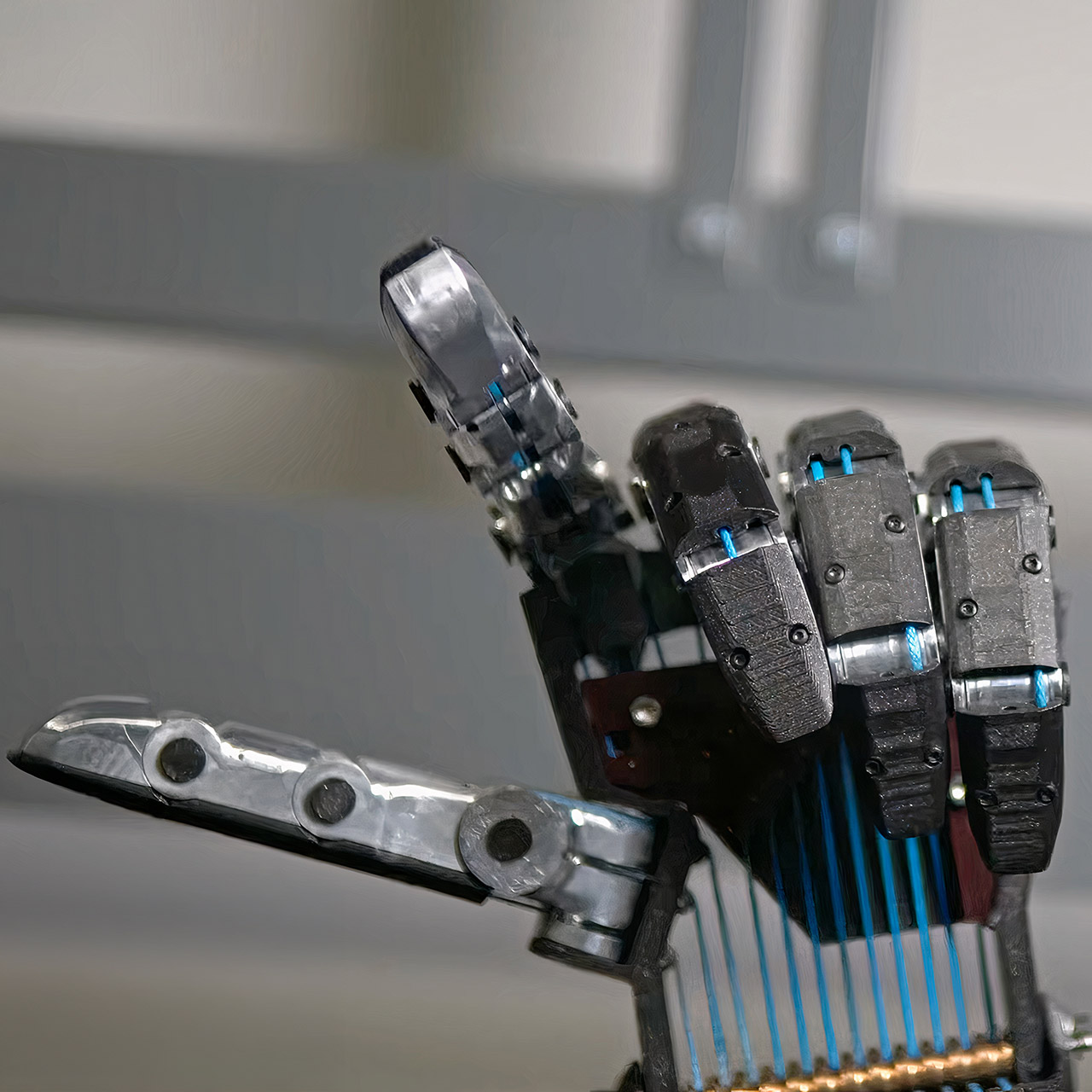
Foundation just put out a short video of its newest robotic hand closing around a baseball in mid-flight. The catch looks almost casual. The ball arrives, the fingers curl, and the grip holds. No frantic adjustments. No visible sensors twitching on the surface. The throw is timed and the motion is planned ahead of time, yet the repeatability is sharp enough that the team is already joking about the majors.


Andrea Esposito leads Foundation’s hand division, and his team spent months perfecting a tendon-driven design that moves the motors back into the forearm, leaving the fingers feeling light and slim. Months of tweaking resulted in fingers that remained thin. The gears on the fingers themselves remain thin. Strings go from those motors down well laid-out paths, reaching each particular joint. The flexion tendons close the fingers, while the extension tendons open them again. They also devised a technique in which finer side-to-side movements transform the hand into a cup to fit a sphere, or more precisely pinching edges.


Unitree R1 Humanoid Robot (White, R1 Air)
- Three models, one lightweight platform R1 Air (20 DOF, monocular camera), R1 (26 DOF, binocular camera, head+waist joints), and R1 Edu (26 DOF…
- Easy setup – no coding required for basic use Unbox, power on, and start. Manual teaching feature: physically pose the robot, and it replays the…
- More DOF = more expressive movement 26‑DOF models (R1 / R1 Edu) add head and waist articulation for smoother dance and running. For safety reasons…
The biggest technological leap occurs when the hand knows exactly where its own fingers are. Unlike how human hands work silently behind the scenes, with a sense of where each joint is even when we close our eyes, Foundation developed estimation software that roughly resembles this. This software is responsible for frequently monitoring the angles of the motors as well as the geometry of the actual tendon paths in order to calculate finger positions on the fly, all without the need of a single sensor. Of course, the system still requires tunnel magnetoresistance sensors sitting at each joint, which are effectively high-precision magnets that measure relative angles to less than 1 degree. These sensors function as backup and refining layers. When running alone, the hand will work normally even if a sensor fails or is knocked.
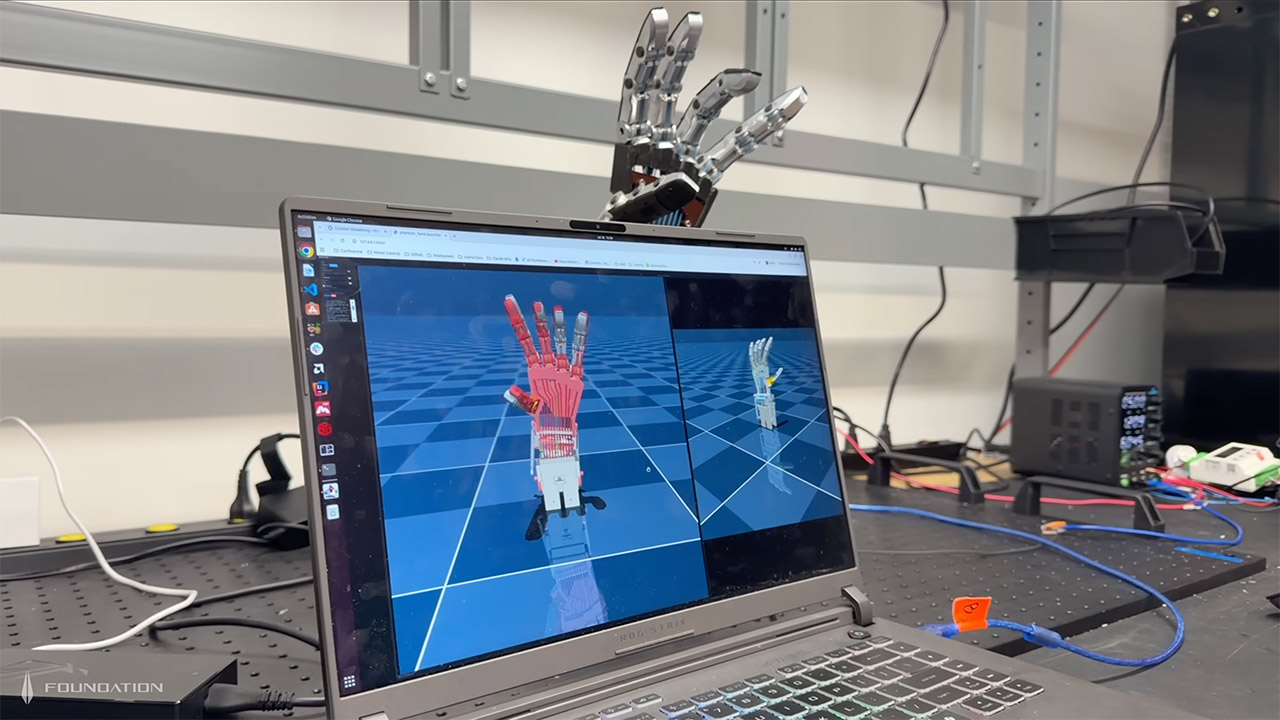
On the team video, there was a translucent red model of the desired finger position layered over the solid grey of the actual hand in place. The two positions remained in sync as the wrist altered and the fingers moved, even touching down pretty swiftly. This is largely due to the minimal friction throughout the tendon course. Friction would throw the motor angle and finger tip placement completely out the window. It’s probably only a matter of time before they have friction-free routing and the relationship remains spot on.

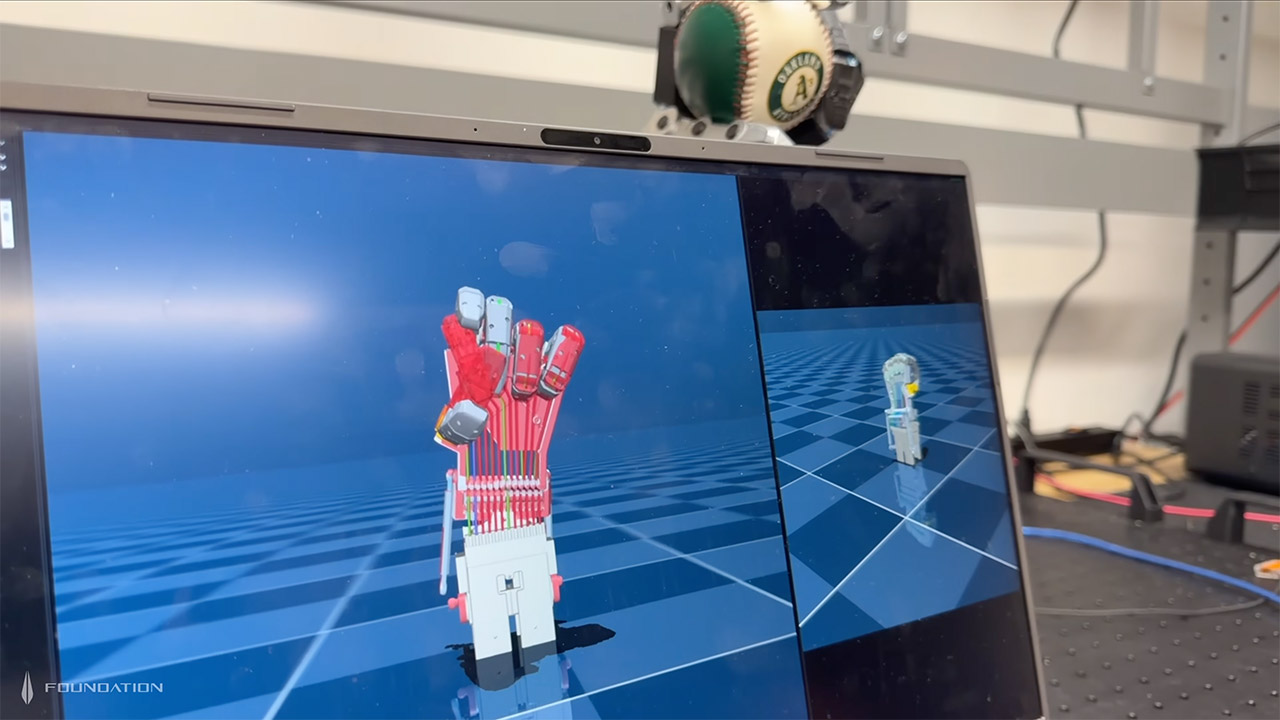
Catching a baseball places a greater burden on the hand than sheer position control. It arrives quickly, and the fingers must shut with speed and give to cushion the hit while avoiding bouncing the ball out or freezing up on it. The clean open loop performance we’re seeing strongly suggests that the mechanical design does the majority of the legwork. Later on, the crew will go in and integrate closed-loop tactile feedback, which should ensure those margins skyrocket.
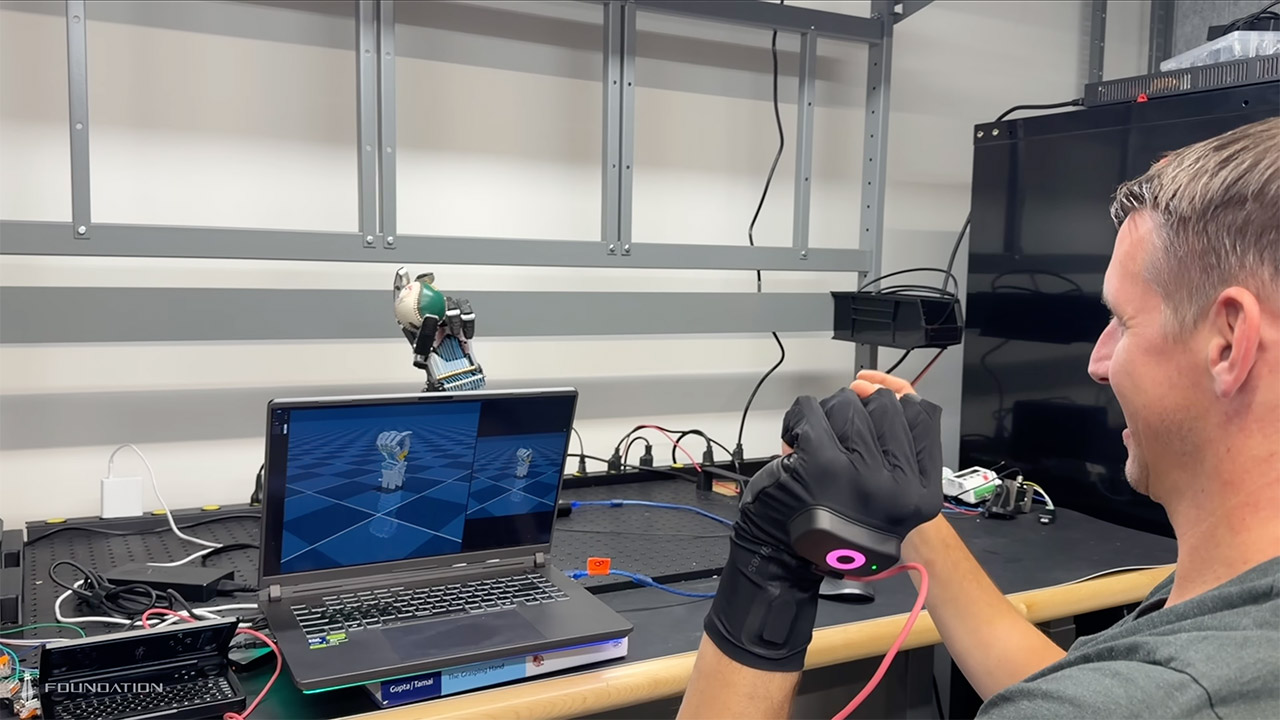
Foundation manufactures the Phantom range of humanoid robots that are slung into industrial floors and other tough settings. Their prior hand designs were more like smart grippers, with limited movement due to the fingers’ inability to move independently. This prototype, however, seeks to overcome those constraints. Anatomical joints, autonomous flexion/extension, and the capacity to estimate state from the motors themselves all contribute to hands capable of handling a wide range of unpredictable objects, including tools and small parts, without the need to disassemble the surroundings.
You must be logged in to post a comment Login