Tech
Friends 3D-Printed a Working Railway Pump Cart and Took It to Open Sauce

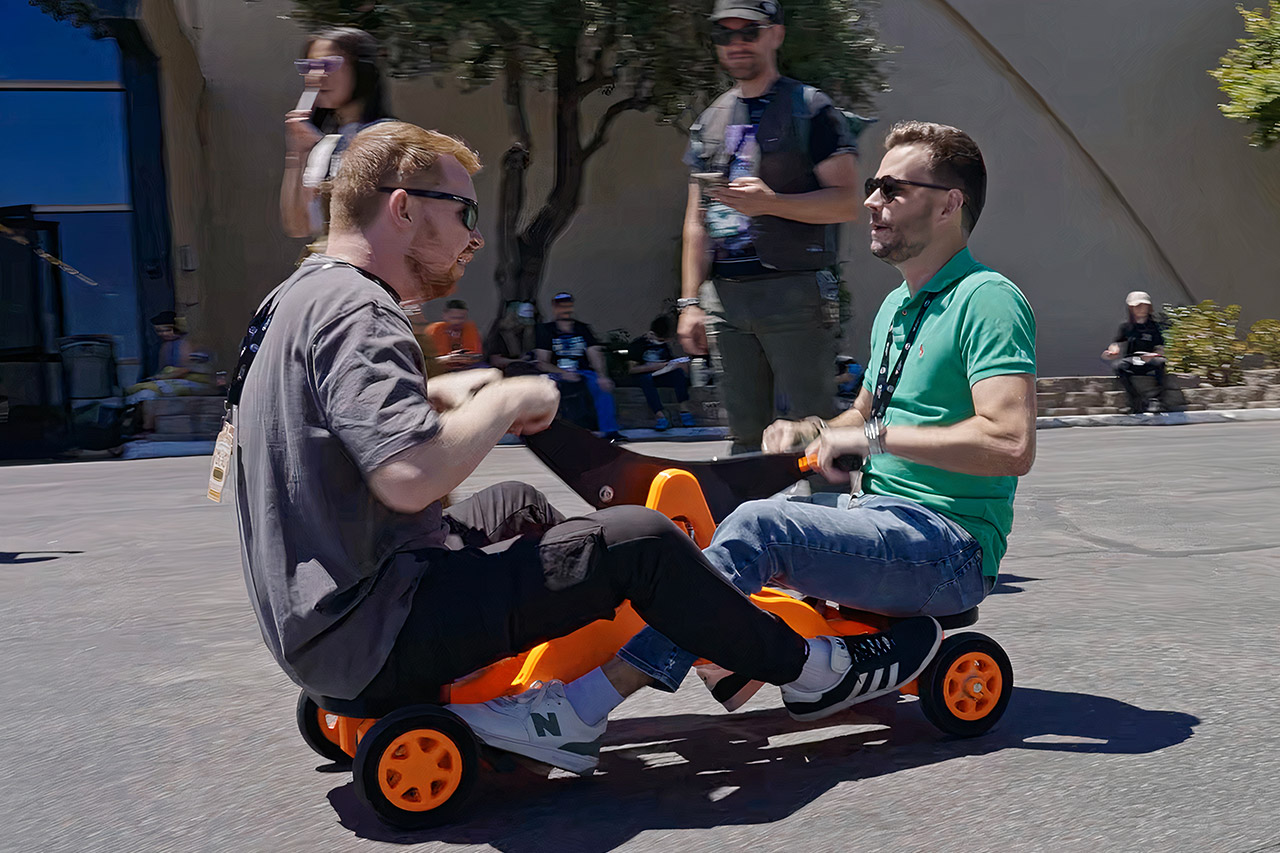
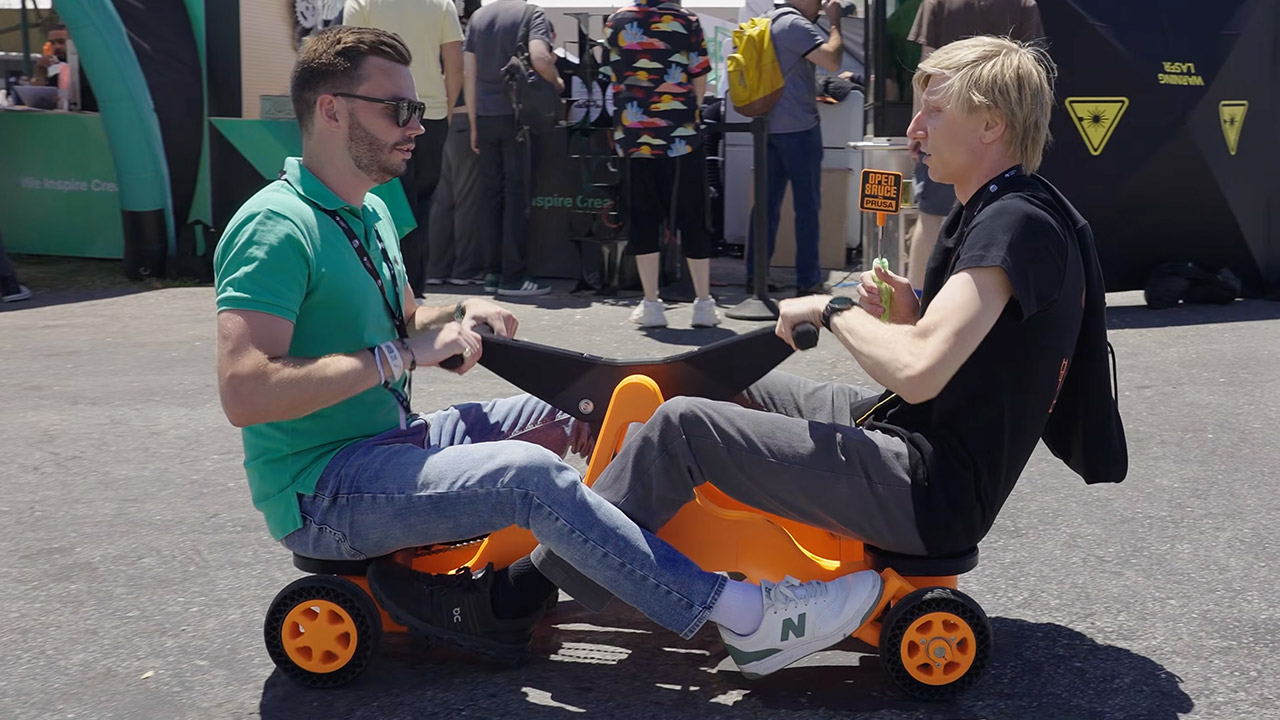
Old railway handcars appear in classic films as simple machines with a long beam that two people push up and down in opposite rhythm. That motion turns a crank and spins the wheels, sending the cart rolling along the rails at a steady, unhurried pace. Sam Barker and Tom decided the idea deserved a modern remake built almost entirely from plastic.


They spent long nights on FaceTime perfecting the design until every single item could be printed using a 3D printer. The majority of the cart is built of 3D prints from a Prusa XL, Core One, and Markforged machine, all of which are using Prusament PLA Freeze to produce items. Prusament PC Blend was applied to the crank, which bears strong stresses, to increase its strength. Bearings, steel shafts, and scooter tires are the last pieces that don’t come from a printer. The finished contraption weighs approximately 32 kg, yet it can still transport two large persons without complaint.
Sale


Bambu Lab A1 mini 3D Printer + LED Lamp Kit, Ready-to-Use for Beginners
- A1 mini + LED Lamp Kit for Creative Light Projects: Bring your ideas to life with the included LED Lamp Kit. Simply print compatible lamp models and…
- The Perfect 3D Printer for Beginners: A1 mini 3D Printer is designed to make 3D printing easy from day one with automatic calibration, simple setup…
- Experience the Bambu Lab Ecosystem: Access MakerWorld’s huge library of ready-to-print models, manage prints through the Bambu Handy app, and enjoy…
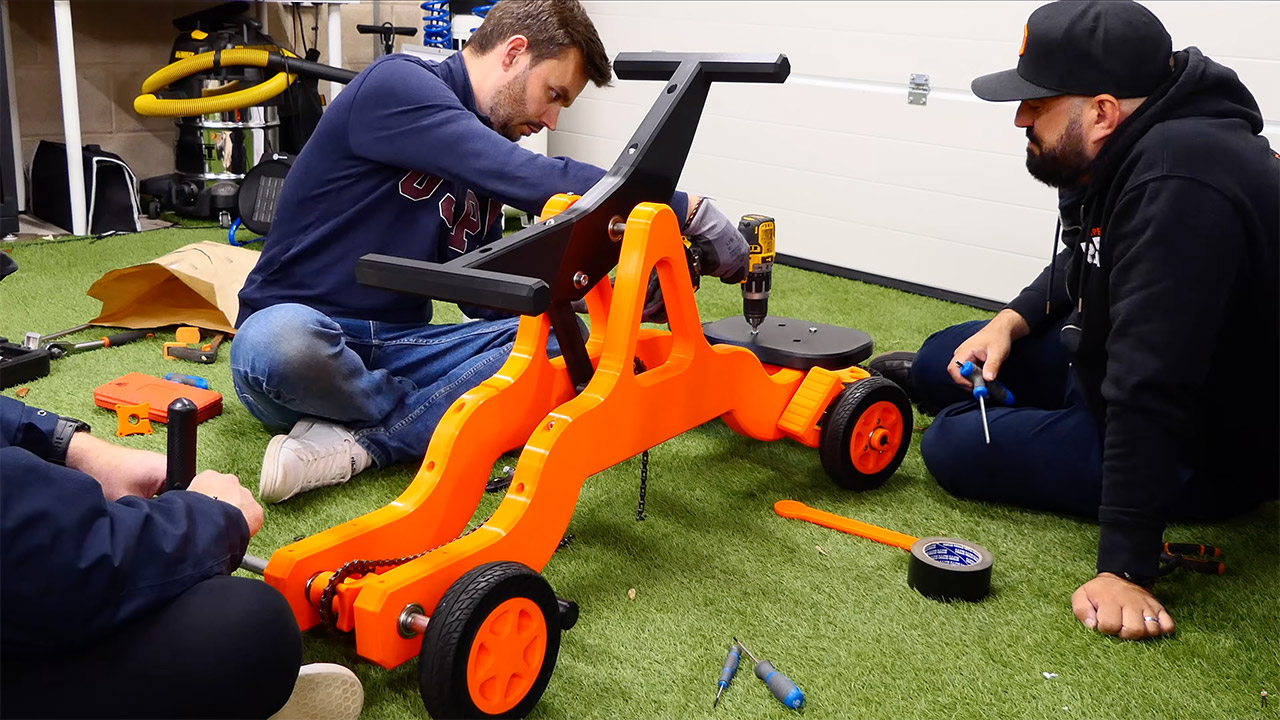
Size proved to be the most difficult issue to address, since the duo required the entire thing to fit in a standard airplane suitcase and return together in a hotel room before the Open Sauce event in San Francisco. Forget about standard-gauge rails; the cart has to be low and tiny, designed for amusement rather than as an industrial machine. The drive’s two-to-one gear ratio allows the operators to pump at a little faster rate than in previous versions, making it much more efficient to convert muscle strength into forward motion.

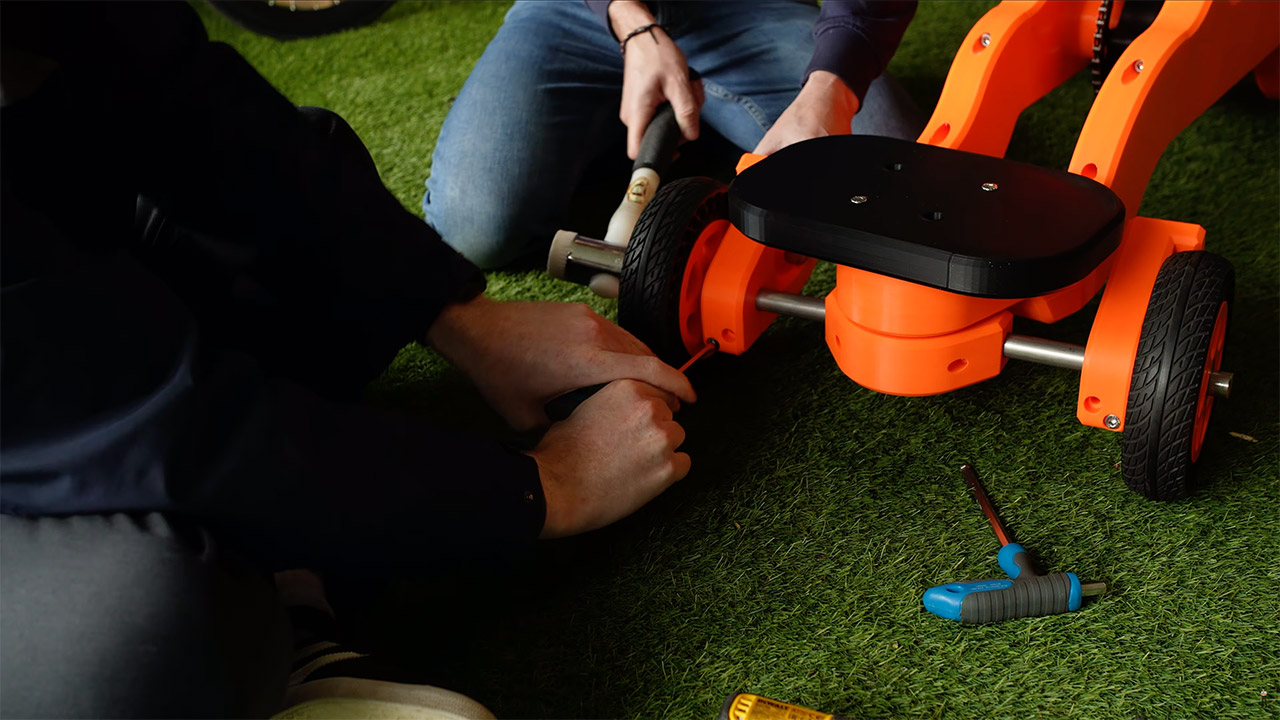
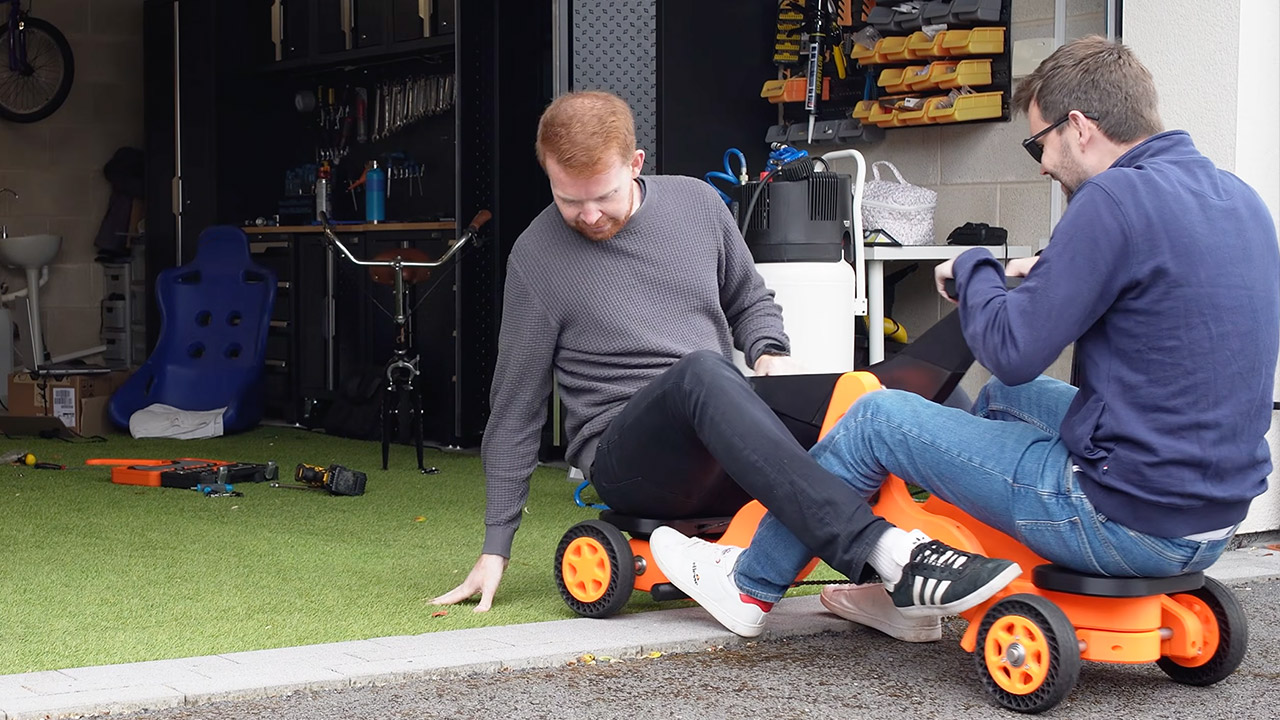
Assembly still revealed a few surprises, as tolerances that appeared to be flawless on screen would occasionally lock the shafts in place, demanding a careful whack with a hammer and a few snips. The wheel hubs were little faulty at first, but the crew repaired them. Once everything was in place, everything just rolled. Downhill in a hotel driveway, the two reached speeds of roughly four miles per hour, but on flat ground, they had to work hard. They both agreed that pumping felt harder than it appeared in the movies, but neither wanted to give up.
At Open Sauce, the bright orange object drew a crowd all day. People came to witness the seesaw beam rise and fall, the wheels revolve over, and they immediately understood why the previous design had lasted so long. This contraption only has two people working in sync, no motors, no batteries, and a pile of precisely printed pieces holding it all together.
The project files are now available on Printables, allowing anyone with a large enough printer to create the same thing. The hardware specifics for the bolts and shafts are still being finalized, but the overall construction is complete. Barker and Tom demonstrated that a classic piece of railroad history can simply roll out of a 3D printer, fit into a suitcase, and carry two grown men along the street with no more than some coordinated effort.
[Source]
You must be logged in to post a comment Login