Connect with us

Tech

Fugitive behind $73M ‘pig butchering’ scheme gets 20 years in prison

Published

on

Cryptocurrency bitcoin

A dual Chinese and St. Kitts and Nevis national was sentenced to 20 years in prison in absentia for his role in an international cryptocurrency investment scheme (also known as pig butchering or romance baiting) that defrauded victims of more than $73 million.

In pig butchering scams, criminals use messaging apps, dating platforms, and social media accounts to build trust with their targets before introducing fraudulent investment schemes. In the end, rather than investing the funds to deliver the promised huge profits, the scammers drain victims’ cryptocurrency wallets.

42-year-old Daren Li pleaded guilty in November 2024 to conspiracy to launder funds obtained through “pig butchering” scams operated from centers in Cambodia after his April 2024 arrest at Hartsfield-Jackson Atlanta International Airport.

Wiz

However, Li fled in December 2025 after cutting off his ankle monitor, becoming a fugitive before sentencing in California federal court. In addition to the 20-year prison sentence, he also received three years of supervised release after the prison term.

“As part of an international cryptocurrency investment scam, Daren Li and his co-conspirators laundered over $73 million dollars stolen from American victims,” said Assistant Attorney General A. Tysen Duva of the Criminal Division. “The Court’s sentence reflects the gravity of Li’s conduct, which caused devastating losses to victims throughout our country.”

Advertisement

Court documents revealed that Li and co-conspirators were part of an international crime syndicate that used a network of money launderers to move millions stolen from dozens of victims to U.S. bank accounts linked to approximately 74 shell companies, then transferred funds to domestic and international accounts and cryptocurrency platforms to conceal their origins.

He instructed accomplices to open bank accounts and transfer more than $73 million to Deltec Bank in the Bahamas for conversion into cryptocurrency, including Tether. The investigators also discovered more than $341 million in cryptocurrency in one of the crypto wallets the fraud ring used for money laundering.

Li is the first defendant directly involved in receiving victim funds to be sentenced among eight co-conspirators who have also pleaded guilty.

The Justice Department charged four additional suspects in December with involvement in another pig butchering scheme linked to over $80 million in losses.

Advertisement

The FBI’s 2024 Internet Crime Report noted that investment scammers stole over $6.5 billion from 47,919 victims, up from $4.57 billion in 2023.

Modern IT infrastructure moves faster than manual workflows can handle.

In this new Tines guide, learn how your team can reduce hidden manual delays, improve reliability through automated response, and build and scale intelligent workflows on top of tools you already use.

Source link

Advertisement
Continue Reading
Click to comment

Leave a Reply

Your email address will not be published. Required fields are marked *

Tech

The Best TVs We’ve Reviewed in 2026: Sony, Samsung, LG, and More

Published

on

Honorable Mentions

There are so many good TVs available, we can’t add them all to our top list. Here are some great options that either missed the cut or got knocked off our top list by their replacements.

Hisense U7: Hisense’s latest U7 series TV is the brightest TV in its class, with blazing punch for baseline SDR video and high-end 4K HDR Blu-rays. If you don’t need all that power, it’s easy enough to tame, and most importantly, it’s balanced by stark contrast thanks to tight blooming control. You’ll also get vibrant quantum dot colors and a uniform screen that steers clear of unsightly blotches for an overall picture that goes beyond what we expect at this level. The Hisense U75QG stacks up the features, including every major HDR format, and HDMI 2.1 support for top-line gaming features across all four HDMI ports—something even some flagship TVs lack. Like most TVs at this level, it’s got a few flaws, including mediocre off-axis performance and an odd Disney Plus streaming issue (which Hisense claims to be fixing), but you can’t beat the price for this kind of knock-your-socks-off performance.

Panasonic Z95B: The Panasonic Z95B is one of the best-performing TVs I’ve ever tested. The follow-up to last year’s Z95A utilizes LG’s breakthrough RGB tandem panel to brilliant effect, providing stunning brightness, perfect black levels, and colors so striking and realistic you’ll find yourself staring at inane details even in HD sitcoms. One of the traits that really makes this TV special is how naturally it renders lighting and shadow detail, letting you virtually feel the season or even the time of day in a properly lit scene as if you were there.

Advertisement

Sony Bravia 5: Sony’s Bravia 5 QLED TV doesn’t offer the brightest punch or best blooming control in its class, but its mini-LED backlighting does a solid job at both, while Sony’s excellent picture processing spiffs up everything you watch. This leads to impressive detail and a cinematic touch that outclasses plenty of similarly priced models, especially noticeable for Blu-rays or high-quality streaming via Sony Pictures Core. The Bravia 5’s gaming features are solid, with two ports offering HDMI 2.1 support for 4K gaming in VRR at up to 120Hz, and Google TV makes navigation intuitive. This won’t be your top option for bright rooms, but those who appreciate the kind of clarity upon which Sony stakes its name, the Bravia 5 is an affordable way to grab it.

Sony Bravia 8 II: Sony’s top OLED for 2025 once again transfixed me with its beautifully immersive picture. Replacing the bewitching A95L, the oddly dubbed Bravia 8 II adds some sweet new skills, including higher HDR brightness courtesy of Samsung’s most advanced QD-OLED panel yet. This TV is a dazzler, offering natural yet vivid colors, near-perfect screen uniformity, and perhaps the best picture processing I’ve ever evaluated, rendering 4K and even HD scenes so clearly you’ll feel like they’re going to spill into your living room. Lighter black levels and lower peak brightness than the knockout LG G5 are its main downsides, along with Sony’s miserly distribution of just two full-bandwidth HDMI ports. Otherwise, this is a regal experience with a kingly cost.

Advertisement

Sony Bravia 9: You may think your current premium TV is bright enough, but Sony’s masterful Bravia 9 QLED TV begs to differ. Its powerful mini-LED backlighting system is wonderfully punchy, while maintaining excellent light control. Add in Sony’s prized picture processing for vivid detail and vibrant yet restrained quantum dot colors, and you get a stunningly realistic viewing experience across content.

Samsung QN90D: The Samsung QN90D isn’t the brightest TV in its class, but its still-fiery mini-LED backlight system outshines similarly priced OLEDs, combining with its stealthy anti-reflection tech for fabulous performance in the full light of day. It adds full and natural colors, premium picture processing, and oily black levels for a killer way to waste a good Sunday watching basketball, especially now that its price has dropped dramatically.

Hisense U8QG: The U8QG is a great buy at its lowest price (around $1,000 for a 65-inch model) and a solid pick above that price, especially if you want eye-searing brightness above all else. I noticed some SDR color accuracy issues (some images looked way too red) and found it difficult to keep it from wildly over-brightening some content. Thankfully, you can always turn it down, and its nuclear power plant is paired with excellent black levels, deep contrast, and plenty of features. I actually prefer last year’s similarly punchy U8N, but it’s getting harder to find in stock.

Advertisement

TCL QM7K: I’ve had a love/hate relationship with the QM7K. Part of TCL’s new Precise Dimming series, its opulent black levels and contrast reach toward OLED heights, matched by good brightness for some spectacular moments. The problem? My review model’s colors were off-kilter, with an odd green tint in select black and grayscale content. Thankfully, I confirmed that TCL’s latest firmware update fixed the issue. The TV’s picture processing and colors still don’t catch premium TVs, and this is the second year in a row I’ve found a troubling performance issue with the QM7. You shouldn’t buy it at full price, but if you can get the 65-inch model for $1,000 or less, it’s a pretty enticing choice.

Samsung S90D (2024): Samsung’s S90D QD-OLED is still a great value, with a similar design to the latest S90F and only slightly lower brightness. The new model is the better buy at this point, but if you can find the previous model on a killer sale, I wouldn’t think twice.

Samsung S95D (2024): Samsung’s previous S95 matte-screen marvel is still a fabulous QD-OLED TV that would be adored in virtually any TV room. We like the newer version better, which begs fewer compromises when it comes to deep black levels, but if you can find the previous version on a killer deal, you won’t be sorry.

Hisense U7N (2024): If you’re after a TV at similar pricing to the QM6K but with some extra eye tingle, Hisense’s 2024 U7N offers a serious brightness boost over our top pick and still ranks among our favorite options for your money. Its blooming control and screen uniformity aren’t as refined as the QM6K’s but it’s got plenty of features, including great gaming credentials and a streamlined Google TV interface. It’s still a great buy while stock lasts, especially at $700 or less.

Advertisement

Sony A95L: Sony finally replaced this sweet screen with the 2025 Bravia 8 II, which offers similarly incredible picture processing and upscaling alongside enhanced colors and higher HDR brightness. That shouldn’t deter you from considering the A95L (9/10, WIRED Recommends) at a lower price. With fabulously immersive image quality and an intuitive Google TV interface, this is a premium package that’s very enticing on a good sale.

Sony Bravia 7: The Bravia 7 is a gorgeous display, offering brilliant brightness, naturalistic colors, and suave finesse in the subtle details. Its biggest knock is very poor off-axis viewing, which could be tough to swallow at its high list price. Otherwise, it’s worth considering for fans of that Sony glow, especially since Sony seems to be discounting its best QLED TVs much more liberally than its OLED models.

Other TVs We’ve Tested

Samsung The Frame Pro: I put the Frame Pro through our full review process and came away both in limbo due to software issues and (so far) unimpressed with the performance. The matte screen looks slick when displaying art, especially if you purchase one of the add-on frames (a frame for the Frame?) from Samsung or Deco TV Frames. Picture performance was otherwise middling at best. It’s much brighter than the traditional Frame, and the colors pop, but its edge-lit mini-LED system does not look good with dark 4K HDR content, even in the day. Moreover, I had trouble with its very sluggish operating system (which others have reported) and stuttering Blu-ray playback. We’re awaiting a second model, which we hope relieves the software issues, but steer clear for now.

Advertisement

TCL QM7 (2024): There’s only one thing holding back 2024’s beautifully balanced QM7: a software glitch. During my review, I experienced an issue where adjusting SDR backlight levels affected HDR, which can lead to severe brightness limitations. While TCL fixed the issue in a firmware update for me, I never got confirmation on a broader OTA fix. Most folks probably won’t have this issue, so the QM7 is still worth considering, but make sure and check it before throwing out the box.

TVs We’re Testing Next

LG C5: The follow-up to our favorite OLED for most people looks primed to another top offering, even if our initial hands-on time with the TV didn’t reveal any major differences. We’ll be testing it shortly to see how it compares with the previous C4.


Power up with unlimited access to WIRED. Get best-in-class reporting and exclusive subscriber content that’s too important to ignore. Subscribe Today.

Source link

Advertisement
Continue Reading

Tech

Google insists YouTube Music’s paywalled lyrics are just a ‘limited experiment’

Published

on

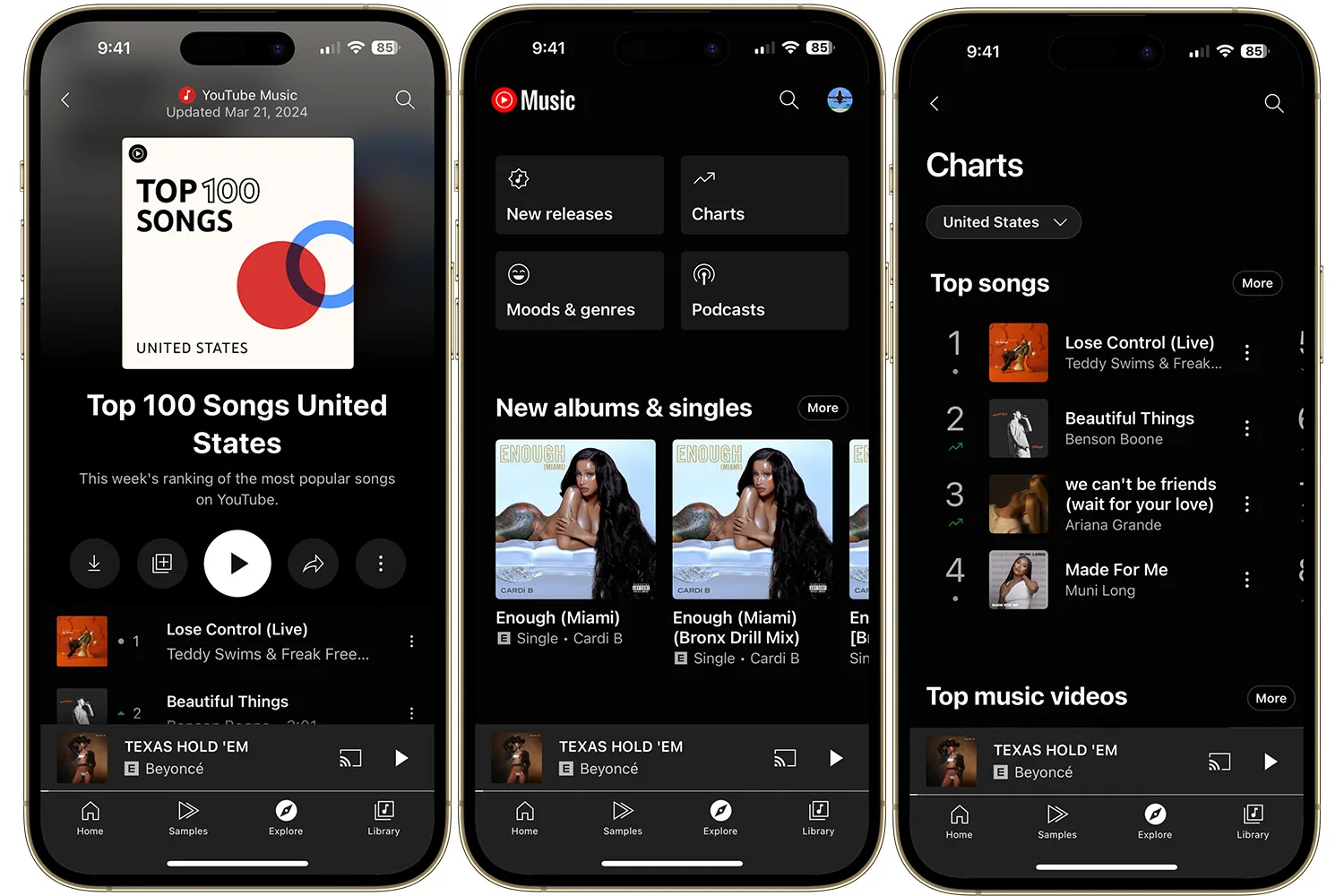
YouTube Music has reportedly started nudging its free listeners toward a paid subscription by, you guessed it, limiting access to full song lyrics. Free users seemed to be capped at five complete song lyrics per month, post which, only the first few lines of a song’s lyrics are visible, while the rest are blurred.

Full access, as far as I can tell, is only available if you cough up for the YouTube Music Premium ($10.99 per month) or YouTube Premium ($13.99 per month) subscriptions.

Dear @youtubemusic,

I recently noticed that the lyrics feature is now only available for Premium users. This has been disappointing because the lyrics were one of the main reasons I loved using the app, I hope you can make lyrics accessible for free accounts again. pic.twitter.com/duYUR5JsXD

— DEADLINE 🍀 (@j_nnie16) February 6, 2026

Advertisement

A new restriction for free users

Upon being asked about the development by Android Authority, Google has played it cool by stating that it’s merely testing the paywall.

“We are running an experiment with a small percentage of ad-supported users that may impact their ability to access the lyrics feature repeatedly,” clarifies Google.

It also notes that the experimenting isn’t affecting “the majority” of its global users; they shouldn’t see any changes to the lyrics feature.

While the company’s statement about routinely running experiments on YouTube Music to improve users’ experience is quite generic, there are plenty of user reports about the inaccessibility of lyrics, suggesting that this might not be a trial after all.

Advertisement

If it’s an experiment, it should go away soon

As mentioned in the report, free YouTube Music users can still access the Lyrics tab, but only with a warning at the top that reminds them about the remaining views and a message that says “Unlock lyrics with Premium.”

While we won’t go so far as to say that Google is intentionally hiding lyrics from users to force them into paying for the subscription, it is concerning that the company is calling it an “experiment.”

If it starts showing up for more people in the near future, it would be considered less of an experiment and more of a calculated push to convert free YouTube Music users into paid ones.

Source link

Advertisement
Continue Reading

Tech

NYC Private School Tuition Breaks $70,000 Milestone for Fall

Published

on

The top private schools in New York City plan to charge more than $70,000 this year for tuition, an amount exceeding that of many elite colleges, as they pass on the costs of soaring expenses including teacher salaries. From a report: Spence School, Dalton School and Nightingale-Bamford School on Manhattan’s Upper East Side are among at least seven schools where the fees now exceed that threshold, according to school disclosures and Bloomberg reporting

Fees among 15 private schools across the city rose a median of 4.7%, outpacing inflation. Sending a kid to New York private school has always been expensive, but the cost now is so high that even those with well-above-average salaries are feeling squeezed. Prices have risen dramatically in the past decade, up from a median of $39,900 in 2014.

Source link

Continue Reading

Tech

How a new terahertz antenna could unlock one-terabit 6G speeds

Published

on


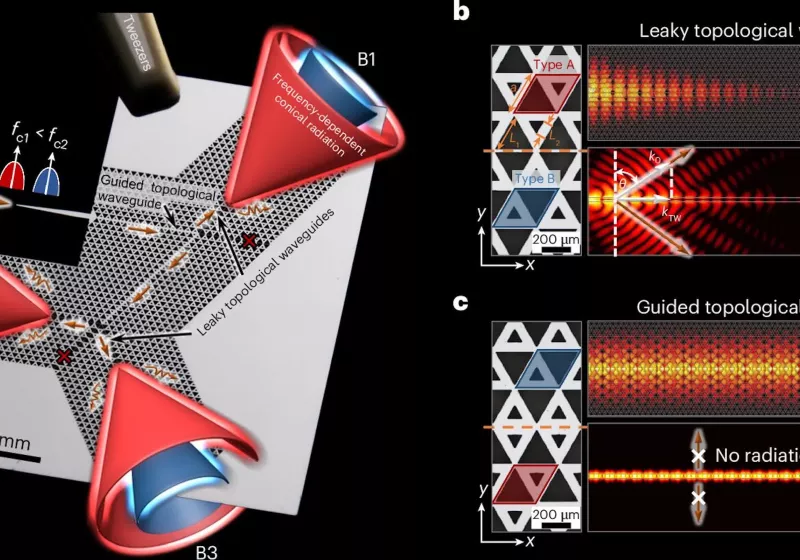
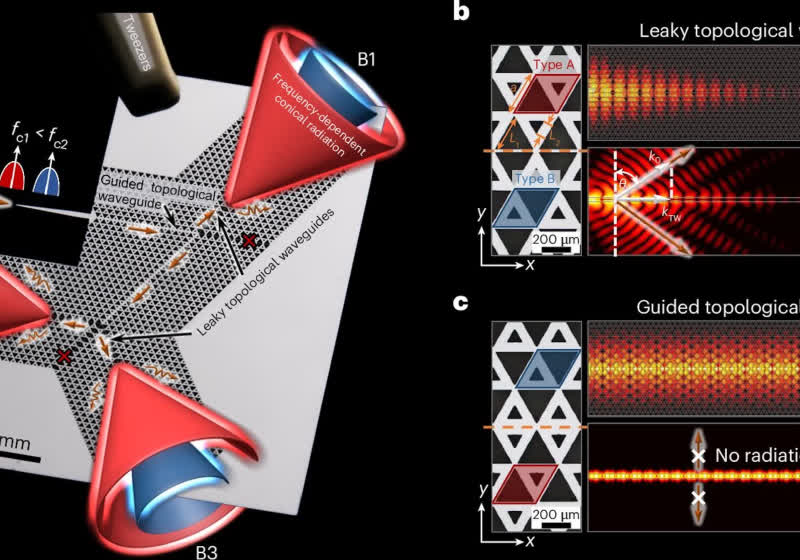
The breakthrough, detailed in Nature Photonics, centers on a fundamental problem facing 6G: how to efficiently transmit and receive data at terahertz frequencies. These frequencies, which are thousands of gigahertz above current 5G bands, can carry staggering amounts of information, theoretically approaching one terabit per second.
Read Entire Article
Source link

Continue Reading

Tech

The best tech deals to shop early from Apple, Sony, Samsung and others

Published

on

You can find a lot of good deals for Presidents’ Day, but to say it’s a tech-deal boon would be an overstatement. The best Presidents’ Day deals are usually on mattresses, appliances and furniture, but you can find some decent tech sales thrown in as well. This year, Presidents’ Day comes right after Valentine’s Day and Super Bowl 2026, which means there are even more chances to save as sales and discounts overlap. If you’re looking for a new streaming device, a fresh iPad or an upgraded vacuum so you can enter the spring-cleaning season properly, we have you covered. These are the best President Day sales on tech we could find this year.

Presidents’ Day deals under $50

Image for the mini product module

Disney+ and Hulu bundle (one month) for $10 ($3 off): You can get one month of Disney+ and Hulu access for only $10 right now. That represents a small savings over the standard $13-per-month price for the bundle, but a 58-percent discount when you compare it to the price of paying for both services separately. It’s a good way to test out the bundle without paying too much before you decide if you want to subscribe for the long haul.

Elevation Lab 10-year extended battery case for AirTag for $16 (30 percent off): This handy AirTag holder uses two AA batteries to extend the lifetime of Apple’s Bluetooth tracker to a whopping 10 years, so you don’t have to bother with replacing its built-in battery for a long time. It works with both first- and second-gen AirTags.

Anker Nano 45W USB-C charger for $30 ($10 off): Anker’s latest 45W charger has a small smart display on it that can show you real-time charging stats. It’s compact design is great for travel, as are its foldable prongs.

Blink Mini 2K+ — 2 cameras for $45 (50 percent off): Blink’s latest plug-in security cameras support 2K video and improved audio quality. Like previous versions, these cameras have two-way talk, motion alerts and support for Alexa voice commands.

Advertisement

Anker Nano 5K ultra-slim magnetic power bank for $46 (16 percent off): This Qi2 power bank measures less than a half inch thick and snaps onto the backs of the latest iPhones for wireless charging. Its 5K capacity will be enough to top up your phone when it’s close to empty, preventing you from searching for a charger or outlet.

Presidents’ Day deals on Apple devices

Image for the mini product module

Apple iPhone Air MagSafe battery pack for $79 (20 percent off): This magnetic power bank will add up to 65 percent additional battery charge to the iPhone Air, but note that it only works with Apple’s new, ultra-slim smartphone. We’ve tested plenty of others that also work with other iPhone and smartphone models.

Apple Magic Mouse for $68 (14 percent off): Apple’s sleek wireless mouse has a multi-touch surface that supports gesture control, and its battery should last about a month in between charges. And yes, it has a USB-C port.

Apple Watch Series 11 for $299 ($100 off): The latest flagship Apple Watch has excellent performance, a boosted battery life and a lightweight design that you can comfortably wear all day long — and even into the night to track sleep.

iPad mini (A17 Pro ) for $399 ($100 off): The updated iPad mini runs on the A17 Pro chip for improved performance, plus it has an 8.3-inch Liquid Retina display, a 12MP ultra wide camera with Center Stage, USB-C charging and compatibility with the Apple Pencil Pro.

Advertisement

Beats Studio Pro for $170 (51 percent off): Beats updated these cans to have improved sound quality, and you can really hear the difference from models that came before it. These headphones also have solid Transparency mode, good voice performance and USB-C audio.

Beats Solo 4 headphones for $130 (35 percent off): These on-ear headphones support spatial audio and dynamic head tracking, and they have up to 50 hours of battery life. The “fast fuel” feature allows them to get up to five hours of playback time with just a quick 10-minute power-up.

Beats Studio Buds+ for $100 (41 percent off): These tiny buds have both active noise cancellation and transparency mode, and they’ll work just as well with either Apple or Android devices.

More Presidents’ Day deals on tech

Image for the mini product module

Waterpik cordless rechargeable water flosser for $40 (20 percent off)

Ring Battery Doorbell for $60 (40 percent off)

Advertisement

Logitech MX Master 3S for $80 (20 percent off)

Levoit Core 300-P air purifier for $85 (15 percent off)

Shark Steam & Scrub steam mop for $125 (22 percent off)

Google Pixel Buds Pro 2 earbuds for $179 (22 percent off)

Advertisement
Image for the mini product module

Sonos Beam Gen 2 soundbar for $369 ($130 off)

Hisense 75-inch QD7 Mini-LED 4K smart TV for $548 (16 percent off)

DJI Mini 3 Fly More Combo drone bundle for $575 (20 percent off)

Google Pixel 10 Pro for $899 (18 percent off)

Sony 55-inch Bravia XR8B 4K smart TV for $998 (9 percent off)

Advertisement

Source link

Continue Reading

Tech

Seattle security startup led by husband-wife duo raises $8.4M

Published

on

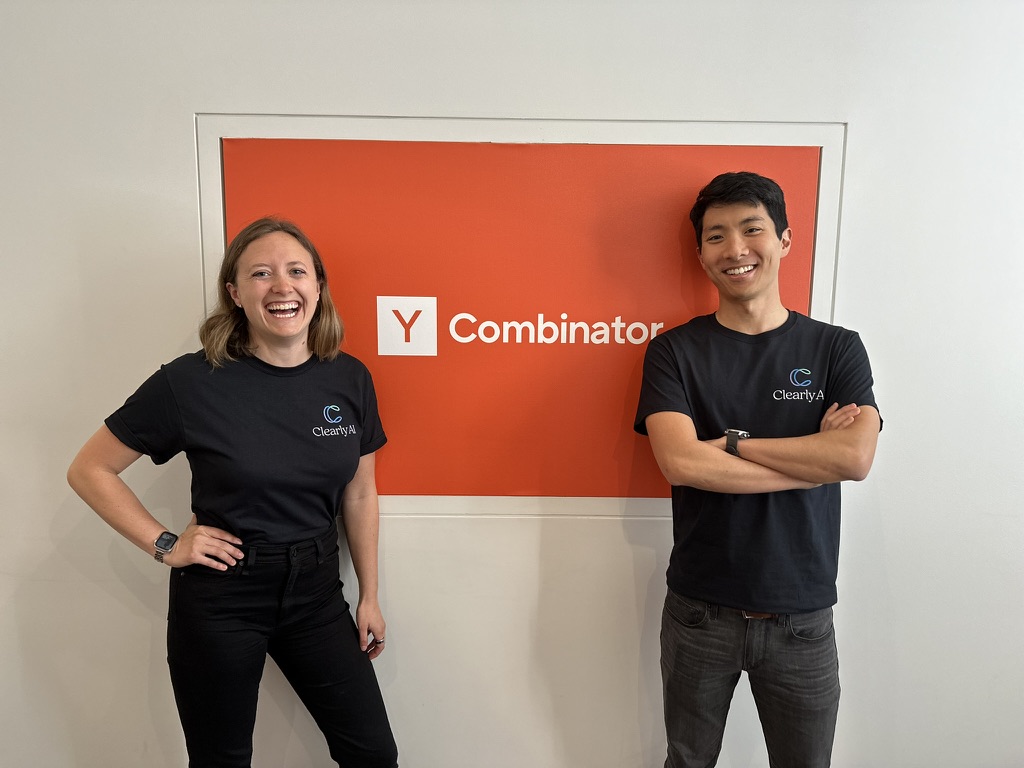
Clearly AI co-founders Emily Choi-Greene (left) and Joe Choi-Greene met at Amazon, later got married, and then launched a Seattle startup together. (Clearly AI Photo)

The co-founders of cybersecurity startup Clearly AI have a built-in edge: they’re married.

“There are so many benefits,” said Emily Choi-Greene, CEO of the Seattle-based company she runs with her husband Joe Choi-Greene. “There is full incentive alignment. We are fully on the same page about what we want in our lives.”

So far, it seems to be working. Less than two years after launching, Clearly AI just announced a $8.4 million seed round. The company was also named one of 10 finalists in the RSAC 2026 Innovation Sandbox Contest, a high-profile competition tied to the RSA Conference, a major event for the cybersecurity industry.

The round includes backing from Y Combinator, Basis Set Ventures, Crosspoint Capital, Argon Ventures, and Ritual Capital.

The company’s software helps security, privacy, and compliance teams review new products, features, vendors, and AI deployments before they ship. Instead of relying on spreadsheets, tickets, and manual interviews with engineers, the platform automatically gathers context, assesses risk, and flags where human review is needed.

Advertisement

The startup says its software is already used by 17 enterprise customers, including Rivian, Ericsson, Okta, Webflow, Affirm, and HID Global. Rivian is using Clearly AI to evaluate privacy and AI risk every time a new vehicle feature is introduced.

The co-founders originally met at Amazon. Emily worked on natural language understanding for Alexa and later on Amazon’s device security teams, while Joe focused on security and large language models, including work on Amazon’s Project Kuiper (now known as Leo). After Emily left Amazon for AI startup Moveworks — which was acquired by ServiceNow in 2025 — the couple joined Y Combinator together in 2024 and launched Clearly AI shortly after.

Emily said building the company with her spouse has been a strategic advantage, citing a communication foundation that predates the startup. She joked that Y Combinator’s internal guidance on co-founder relationships often sounds like couples therapy, but in their case that work was already done.

“It’s been absolutely awesome working together,” she said.

Advertisement

Clearly AI joins a small but notable club of companies launched by couples who were married or went on to get married — including Eventbrite, Canva, and SlideShare.

The company was previously featured in GeekWire’s Startup Radar feature. Clearly AI has 12 employees and is based in Seattle’s Ballard neighborhood.

Source link

Advertisement
Continue Reading

Tech

Spotify hits a record 751M monthly users thanks to Wrapped, new free features

Published

on

Swedish music streaming giant Spotify saw its user numbers peak last quarter, driven by its year-end “Wrapped” campaign, which rounds up stats and listening highlights for users, and new features on its free tier.

The company said it saw a record 38 million new users in the fourth quarter, taking its total to 751 million monthly active users, up 11% from a year earlier. Paying subscribers increased by 10% to 290 million in the quarter.

Spotify said the “Wrapped” campaign resulted in more than 300 million engaged users and 630 million shares on social media in 56 languages.

Revenue came in at €4.53 billion ($5.39 billion), about 7% more than a year earlier, thanks to an 8% increase in subscription revenue. However, the company’s ad-supported business saw revenue dip by 4% to €518 million ($616.6 million). Gross margin, an important metric investors watch for indications of improvements to Spotify’s profitability, improved by 83 basis points to a record high of 33.1% as the company sold more ads for podcasts and music.

Advertisement

The solid performance comes as Spotify’s new co-CEOs Gustav Söderström and Alex Norström take over the reins from co-founder Daniel Ek, and they will now oversee a business that has far outgrown what it initially set out to do.

After launching as a music streaming pure-play, Spotify has expanded its remit to include podcasts, audiobooks, and even physical bookstores. It’s launched music videos within the app as well as video podcasts, and has doubled down on its retention strategy by adding social features like group chats and letting users share what they’re listening to. You can even use Spotify to book tickets to concerts, or explore the story behind songs.

The company has also added AI features like an AI DJ, AI-generated playlists, and now lets users exclude tracks from being recommended to help them better tailor what they listen to.

Techcrunch event

Advertisement

Boston, MA
|
June 23, 2026

Profitability has been a big focus for Spotify in recent years, and the company has tried to achieve that by increasing subscription prices in the U.S. and Europe. It’s also added new features to its free, ad-supported tier to attract more people away from rivals like YouTube Music and Amazon Music, letting users search for and choose songs they want to listen to.

Advertisement

The company expects to reach 759 million users, and 293 million paying subscribers in the current quarter.

Source link

Continue Reading

Tech

ReMemory Is The Amnesia-hedging Buddy Backup You Didn’t Know You Needed

Published

on

What would happen if you lost your memory, even partially? With so much of our lives being digital, forgetting your passwords (or the master key to your password manager) could be disastrous. Haunted by that specter after a concussion, [eljojo] created ReMemory, a tool based on Shamir’s Secret Sharing to help your friends help you.

Shamir’s Secret Sharing, for the uninitiated, is a way to split up important data between parties so that the full picture is only available when a quorum comes together. The classic example is giving everyone a couple of digits out of the combination to the bank vault, but no one the full combination. Together, they can open the vault.

ReMemory works the same way. Rather than the combination to a bank vault, the locally-hosted, browser-based interface splits the encryption key to your sensitive data. If you’re old fashioned that might be a plaintext list of passwords, or for the more modern the recovery codes to your password manager. It could be literally anything, like your Aunt Edna’s famous cupcake recipe, which surely should not be lost to time.

Aunt Edna could probably handle this.

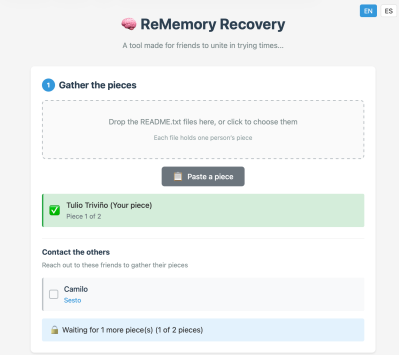
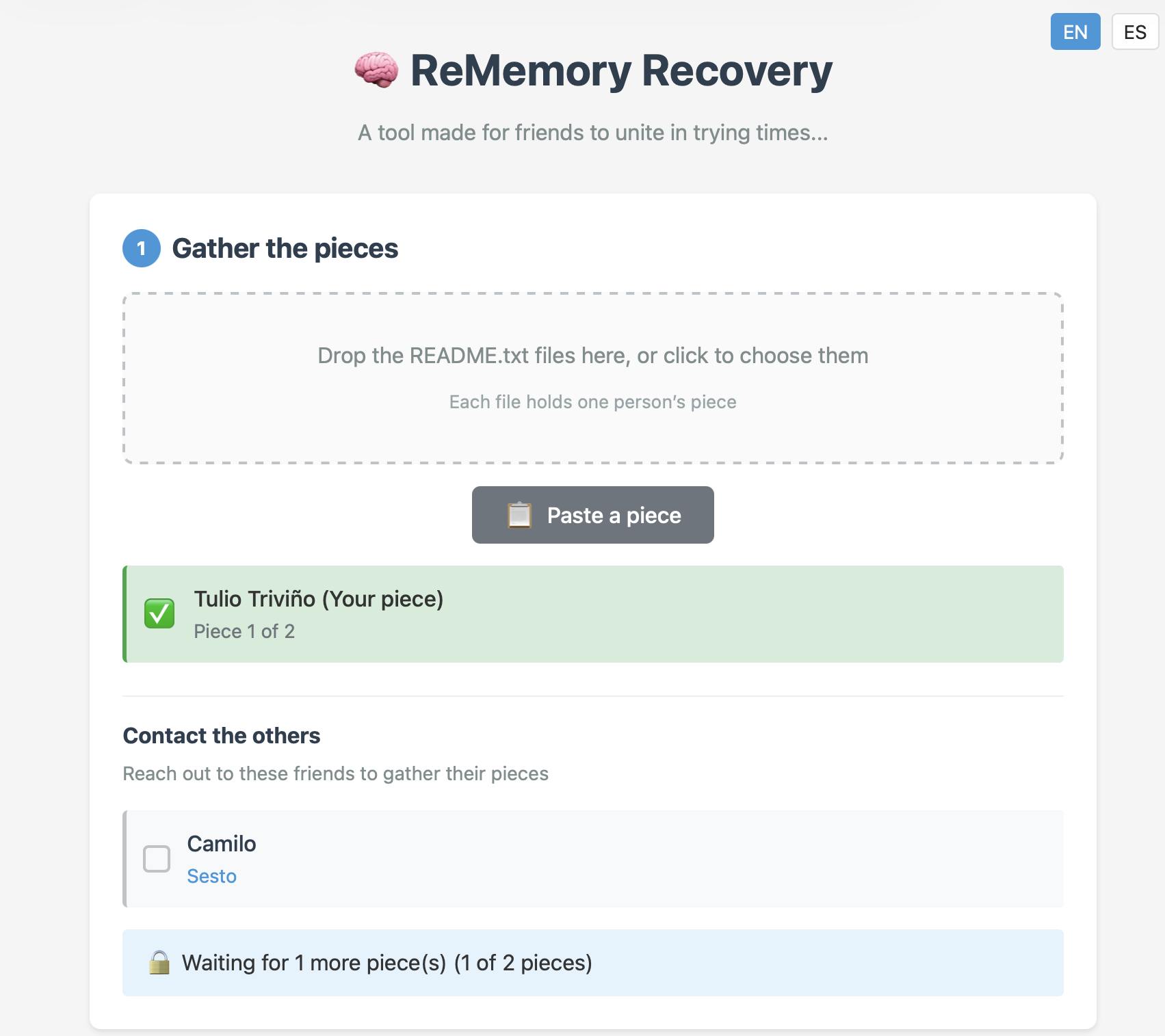
You can chose how many friends to split your data betwixt, and how many will be required to meet quorum– the minimum, of course, being two, but the suggested default is to split the data five ways, and allow decryption from any three parties. Each bundle includes the complete recovery tool, so anyone in your circle of trust can start the process of decrypting your data if they get the others on board. Since it’s self-hosted and browser based, those friends don’t have to be particularly tech-savvy, as long as they can be trusted to hold onto the files. Everything is explained in the readme included in each bundle.

This does have the downside of requiring you to have multiple close friends, at least some of whom you trust to come through in a crunch, and all of whom you trust not to collude behind your back. Still, if you’re the social type, this seems like it might be a useful tool. The code is available under an Apache 2.0 license, so you can audit it for yourself — a must for any tool you plan on entrusting your secrets to.

Advertisement

The best part of the sharing algorithm is that it’s not vulnerable to quantum computing. While [eljojo] was thinking of amnesia when he put the tool together, we can’t help but think this also solves the postmortem password problem.

Source link

Advertisement
Continue Reading

Tech

Anthropic’s India expansion collides with a local company that already had the name

Published

on

As Anthropic expands into India, a local software company has filed a court complaint saying it was already using the name “Anthropic,” spotlighting how the rapid global push of AI firms can collide with local incumbents.

The filing comes amid Anthropic deepening its focus on India, announcing an India office last October and more recently appointing former Microsoft India managing director Irina Ghose to lead its operations in the country, underscoring the South Asian market’s growing importance to global AI companies expanding beyond the U.S. and Europe.

In a complaint filed in a commercial court in Karnataka in January, reviewed by TechCrunch, the Indian company Anthropic Software says it has used the name since 2017 and that Anthropic’s recent entry into India has led to customer confusion. The firm is seeking recognition of its prior use and relief to prevent further confusion, along with ₹10 million (about $110,000) in damages.

Anthropic Software founder and director Mohammad Ayyaz Mulla told TechCrunch that the Indian company was not seeking confrontation, but clarity and recognition of its prior use in India, adding that litigation was a fallback if clean coexistence could not be achieved.

Advertisement

“As of now, I am exercising my legal right as it’s causing huge confusion to my customers,” he said.

India, the world’s most populous nation and one of the fastest-growing internet markets, has become a key battleground for AI companies like Anthropic and its rival OpenAI. The country is also set to host an AI Impact Summit in New Delhi next week, where Anthropic co-founder and chief executive Dario Amodei is appearing alongside other industry leaders like Sam Altman, Jensen Huang, and Sundar Pichai.

A court order dated January 20 and seen by TechCrunch shows that the court has issued notice and suit summons to Anthropic. However, it declined to grant an interim injunction and listed the matter to return on February 16.

Techcrunch event

Advertisement

Boston, MA
|
June 23, 2026

Anthropic did not respond to a request for comment.

Advertisement

Source link

Continue Reading

Tech

Newly Public Emails Sure Make It Look Like RFK Jr. Lied To Congress About His Trip To Samoa In 2019

Published

on

from the liar-liar dept

Way back in 2018, a series of events in Samoa brought about the country’s worst measles outbreak in years. It started in July of that year when two 1-year old children who were given a measles vaccine subsequently died. While anti-vaxxers around the world gleefully jumped into action to blame the vaccine for those deaths, it turns out that the vaccine didn’t kill the children at all. Instead, medical professionals had accidentally mixed the vaccine with a muscle relaxer solution instead of sterilized water like they were supposed to. Despite that fact, the anti-vaxxers sowed all kinds of fear and disinformation throughout the country, whipping up negativity around measles vaccines. As a result of that, the government put a 10 months ban in place on the vaccine.

In June of 2019, RFK Jr. visited Samoa. He met with anti-vaxxer crusaders and government officials. Despite that, he has said publicly and in testimony before Congress that his trip there had nothing to do with vaccines and was instead about a medical records and tracking system the country was interested in. You can see an example of that claim in his own confirmation hearing.

Lots of people questioned that claim. And rightly so. The people he was meeting with, the timing in conjunction with the vaccination ban, it all lined up to yet another anti-vaxxer visiting the country to push their anti-vaxxer message.

Advertisement

Two months later, Samoa experienced a massive measles outbreak.

An outbreak began in October 2019 and continued for four months. Before seeking proper medical treatment, some parents first took their children to ‘traditional healers’ who used machines purchased that claimed to produce “immune-protective” water.

As of 22 December, there were 79 deaths. This was 0.4 deaths per 1,000 people, based on a population of 200,874, an infection fatality rate of 1.43%. There were 5,520 cases, representing 2.75% of the population.61 of the first 70 deaths were aged four and under. All but seven of the deaths were from people aged under 15.

At least 20% of babies aged six to 11 months contracted measles. One in 150 babies died.

This past week, documents and emails obtained by The Guardian and The AP show that everyone on the Samoan government’s side of the house understood Kennedy’s visit to be explicitly about vaccines, contrary to his statements, including statements before Congress. He was sworn in for that confirmation hearing, to be clear.

Advertisement

Documents obtained by The Guardian and The Associated Press undermine that testimony. Emails sent by staffers at the U.S. Embassy and the United Nations provide, for the first time, an inside look at how Kennedy’s trip came about and include contemporaneous accounts suggesting his concerns about vaccine safety motivated the visit.

The documents have prompted concerns from at least one U.S. senator that the lawyer and activist now leading America’s health policy lied to Congress over the visit. Samoan officials later said Kennedy’s trip bolstered the credibility of anti-vaccine activists ahead of the measles outbreak, which sickened thousands of people and killed 83, mostly children under age 5.

The AP post has a ton of details further down the article, but here is an example of the content.

Embassy staffers got a tip about Harding’s involvement in the trip from Sheldon Yett, then the representative for Pacific island countries at UNICEF, the United Nations Children’s Fund.

“We now understand that the Prime Minister has invited Robert Kennedy and his team to come to Samoa to investigate the safety of the vaccine,” Yett wrote in a May 22, 2019, email to an embassy staffer based in New Zealand. “The staff member in question seems to have had a role in facilitating this.”

Two days later, a top embassy staff member in Apia wrote to Scott Brown, then the Republican U.S. president’s ambassador to New Zealand and Samoa, alerting him to Kennedy’s trip and Harding’s involvement.

Advertisement

“The real reason Kennedy is coming is to raise awareness about vaccinations, more specifically some of the health concerns associated with vaccinating (from his point of view),” the embassy official, Antone Greubel, wrote. “It turns out our very own Benjamin Harding played some role in a personal capacity to bring him here.” Greubel wrote that he told Harding to “cease and desist from any further involvement with this travel,” though the rest of the sentence is redacted.

Now, I have zero problem believing that Kennedy is lying about all of this. Lying is just what he does. And regularly. I also put the blood of all those dead children, and any long term health issues in the thousands of others, partially on Kennedy’s ledger. This is all simply common sense.

But the real travesty is something quite similar is happening right here, right now. The measles outbreak in America is speeding up, not slowing down. Kennedy, as with Samoa, is taking zero responsibility for it. If he’s taking any real concrete actions to combat it, I don’t know what those would be, nor would I understand why they’ve been hidden so completely from public visibility. Kennedy once opined that maybe it would be better if everyone just got measles.

If that is his real goal, it appears we’re on our way. But somebody besides a couple of press outlets should be investigating Kennedy for lying to Congress, at a minimum. And perhaps having a hand in the deaths of children, as well.

Advertisement

Filed Under: health & human services, lies, measles, perjury, rfk jr., samoa, vaccines

Source link

Advertisement
Continue Reading

Trending

Copyright © 2025