






Connect with us
DAPA Banner

Tech

Geeks Give Back: AI House and UW’s Center for an Informed Public to be honored at GeekWire Awards

Published

on

Top: Center for an Informed Public co-founder Kate Starbird speaking at a University of Washington lecture. Bottom: AI House managing director Jifan Zhang and an AI House event. (CIP and GeekWire Photos)

Each year, the GeekWire Awards celebrate the geeky endeavors making a meaningful impact across the Pacific Northwest. This year’s Geeks Give Back honorees are building community and sharing knowledge — one focused on advancing AI innovation, the other on education and research in our rapidly evolving media landscape.

The honorees are AI House, a first-in-the-nation hub fostering collaboration in the burgeoning AI sector, and the University of Washington’s Center for an Informed Public (CIP), a program that teaches everyone from students to seniors how to identify rumors and misinformation.

The GeekWire Awards will recognize nearly 50 finalists and honorees across a dozen categories, from Startup of the Year to Next Tech Titan. Geeks Give Back honorees are selected through community nominations and input from awards judges.

Geeks Give Back is presented again this year by BECU.

Winners will receive their coveted robot trophies live onstage on May 7 at Showbox SoDo in Seattle. Individual tickets are on sale now — grab a seat here — and keep reading to learn more about this year’s Geeks Give Back honorees.

AI House

In addition to events, AI House has 1,000 desks for tech workers. (GeekWire Photo / Kurt Schlosser)

Since launching a little more than a year ago, AI House has hosted more than 150 events at its collaborative space at Seattle’s Pier 70. The 108,000-square-foot waterfront facility brings together entrepreneurs, investors, students and community leaders to foster big ideas and forge connections in the pursuit of AI innovation.

The initiative launched out of AI2 Incubator, a startup organization and venture firm, and offers co-working space for companies, including those affiliated with the incubator.

Advertisement

The AI House calendar features events ranging from monthly Pitch Please gatherings, which have led to AI2 Incubator investments, to conversations with prominent leaders. The organization has also created affinity groups for female founders, founder mental health and B2C founders.

Yifan Zhang, managing director of AI House, says she regularly meets people who are new to the Seattle startup scene — whether they recently moved or graduated, have been building independently, or left Big Tech and are curious about the startup world.

“They’re often astonished and thrilled to land at a place like AI House while starting their explorations,” Zhang said. “This matters because in order for Seattle’s startup scene to succeed, we need it to be much much bigger than it is today. Our thesis is that AI House can be that ‘big tent.’”

Her goal is that everyone who visits leaves having met someone new and gained a perspective they hadn’t considered before — one that opens new possibilities in their entrepreneurial pursuits.

Advertisement

Center for an Informed Public (CIP)

CIP manager Liz Crouse, left, speaks with Ballard High School teacher Shawn Lee, at CIP’s MisinfoDay 2026. (UW Information School / Doug Parry)

When the UW’s Center for an Informed Public launched in 2019 with a $5 million grant, the central concerns were misinformation threatening upcoming elections and social media’s role in igniting rumors. CIP set out to better understand the sources of false information and map how it spreads, and to educate the public on how to recognize and guard against it.

More than six years later, information untethered from facts permeates social media, influencer posts, and many news outlets. Generative AI tools that fabricate images and videos — and help users craft deceptive, persuasive messages — continue to proliferate.

In response, CIP is expanding its efforts: connecting professors across disciplines, hosting high school students, librarians and teachers, and equipping people with the tools they need to make sense of modern life.

“The CIP is an organization that’s fundamentally about research and knowledge production, but really in service of the communities locally around the campus, and across the state, across the nation, across the world,” said Emma Spiro, CIPs’ faculty director and UW Information School associate professor.

Recent highlights include the launch of a free online humanities course titled “Modern-Day Oracles or Bullshit Machines?” examining AI use; co-hosting an intergenerational AI event with high school students and seniors; and webinars such as “Understanding and Navigating Political Divides” and “Preparing Informed Citizens in an AI-Powered World.”

Advertisement

Spiro credits the people involved with CIP for its impact. “We’ve been really successful at finding those mission-aligned, values-driven people who are invested in the mission and willing to take on what can be sometimes controversial work,” she said.

Astound Business Solutions is the presenting sponsor of the 2026 GeekWire Awards. Thanks also to gold sponsors Amazon Sustainability, BairdBECU, JLLFirst Tech and Wilson Sonsini, and silver sponsors Prime Team Partners.

Source link

Advertisement
Continue Reading
Click to comment

You must be logged in to post a comment Login

Leave a Reply

Tech

Musk v. Altman Kicks Off, DOJ Guts Voting Rights Unit, and Is the AI Job Apocalypse Overhyped?

Published

on

In this episode of Uncanny Valley, we get into how the Elon Musk-Sam Altman trial goes way beyond their rivalry and could have major implications both for OpenAI and also the AI industry at large.

Source link

Continue Reading

Tech

Timeline of Artemis II photos shows astronauts inside Orion

Published

on

Reid Wiseman looks back at Earth through Orion’s cabin window during Artemis II. Credit: NASA

NASA released Artemis II images from Orion’s Moon-bound leg, and this interactive timeline organizing them shows how an iPhone 17 Pro Max and other onboard cameras were used throughout the mission.

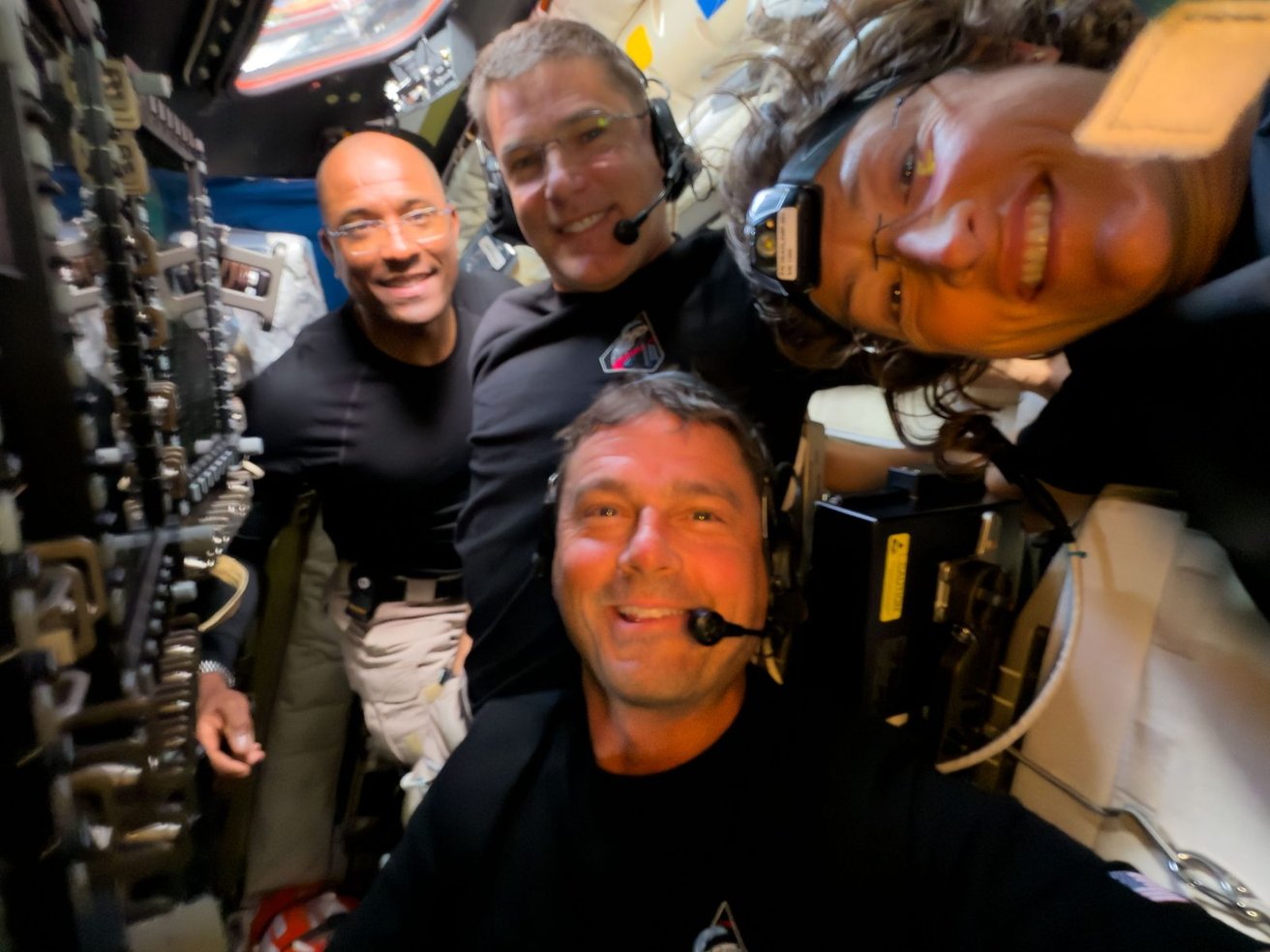
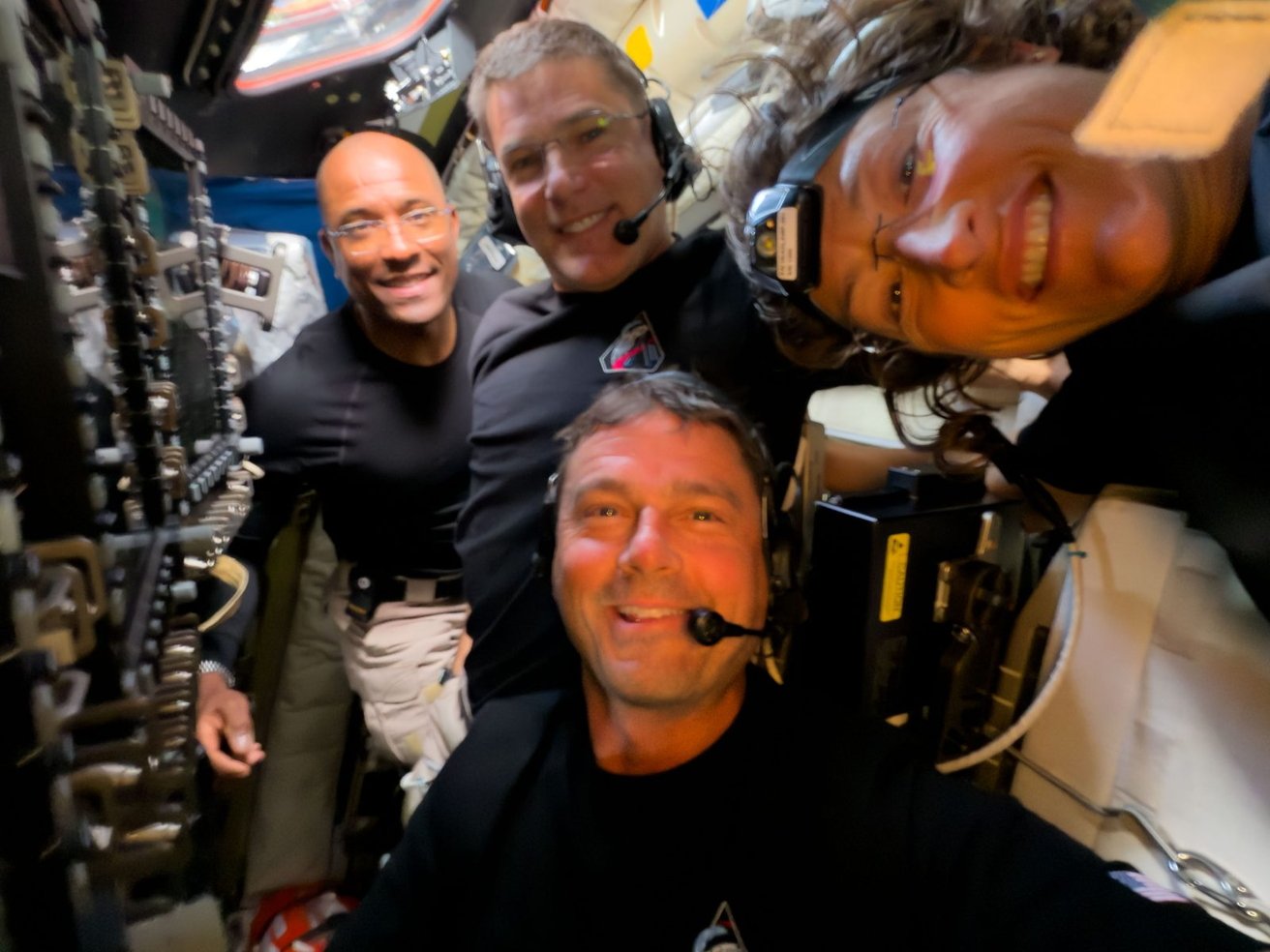
Astronauts aboard Orion captured images throughout the Artemis II mission, including selfies, eclipse shots, and views of Earth through the spacecraft’s forward windows, with some images taken on an iPhone 17 Pro Max. One image titled “Thinking of You, Earth” shows a crew member silhouetted against the planet as Orion moved deeper into cislunar space.

The timeline, recently published, shows life inside the cabin, including floating group shots, strapped-in seating positions, and handheld images in microgravity. It spans multiple points in the flight alongside imagery from dedicated cameras, including Nikon systems and GoPros mounted on Orion.

Advertisement
Four smiling astronauts in headsets float closely together inside a cramped spacecraft cabin, surrounded by control panels, cables, and equipment, suggesting weightlessness and teamwork in orbitVictor Glover, Jeremy Hansen, Reid Wiseman, and Christina Koch take a selfie inside Orion during Artemis II. Credit: NASA

The approach reflects how NASA approved personal devices for Artemis II. The iPhone flew as personal crew tools with wireless radios disabled and no direct connection to flight systems, secured with Velcro or stored in suit pockets during critical phases.

Photos and video routed through Orion’s onboard communication system for downlink to Earth rather than transmitting from the phones themselves. Inside the cabin, astronauts used the devices to capture what they saw during the flight.

Shuttle-era experiments briefly placed Macintosh systems close to crew workflows, where engineers studied how astronauts used software in microgravity. Later missions pushed consumer hardware out of operational contexts as certification standards tightened.

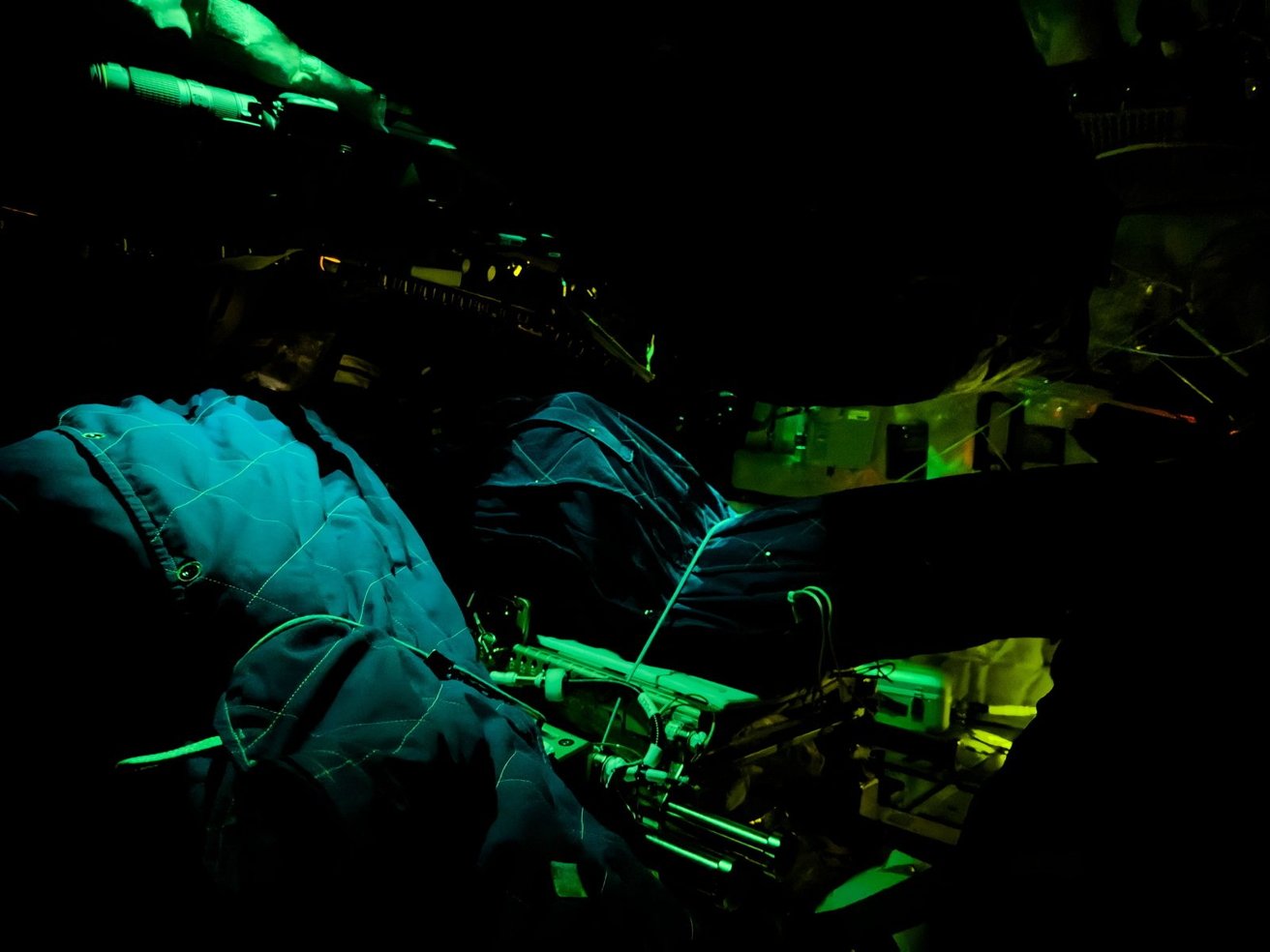
Dark cockpit scene lit by dim green light, showing pilot seats, control panels, and instrument cables with faint reflections on equipment in a low visibility nighttime environmentSleeping bags inside Orion ahead of Artemis II’s lunar flyby on April 6, 2026. Credit: NASA

Artemis II brought those devices back under tightly controlled boundaries. iPhones operated alongside mission systems as crew-held devices used throughout the flight, giving astronauts a modern version of the personal logs seen in “Star Trek.”

The timeline shows how the devices were used in practice. One phone captured a view of Earth through Orion’s window, followed by a floating group selfie and a dimly lit interior shot taken during a quieter period of the flight.

Apple’s current role in spaceflight centers on documenting the mission from inside the cabin. The hardware returned with a smaller and more controlled purpose, recording daily life inside Orion during a crewed mission beyond low Earth orbit, with the timeline making that usage visible across the flight.

Advertisement

Source link

Continue Reading

Tech

Apple M5 MacBook Air 32GB RAM drops to record low $1,399

Published

on

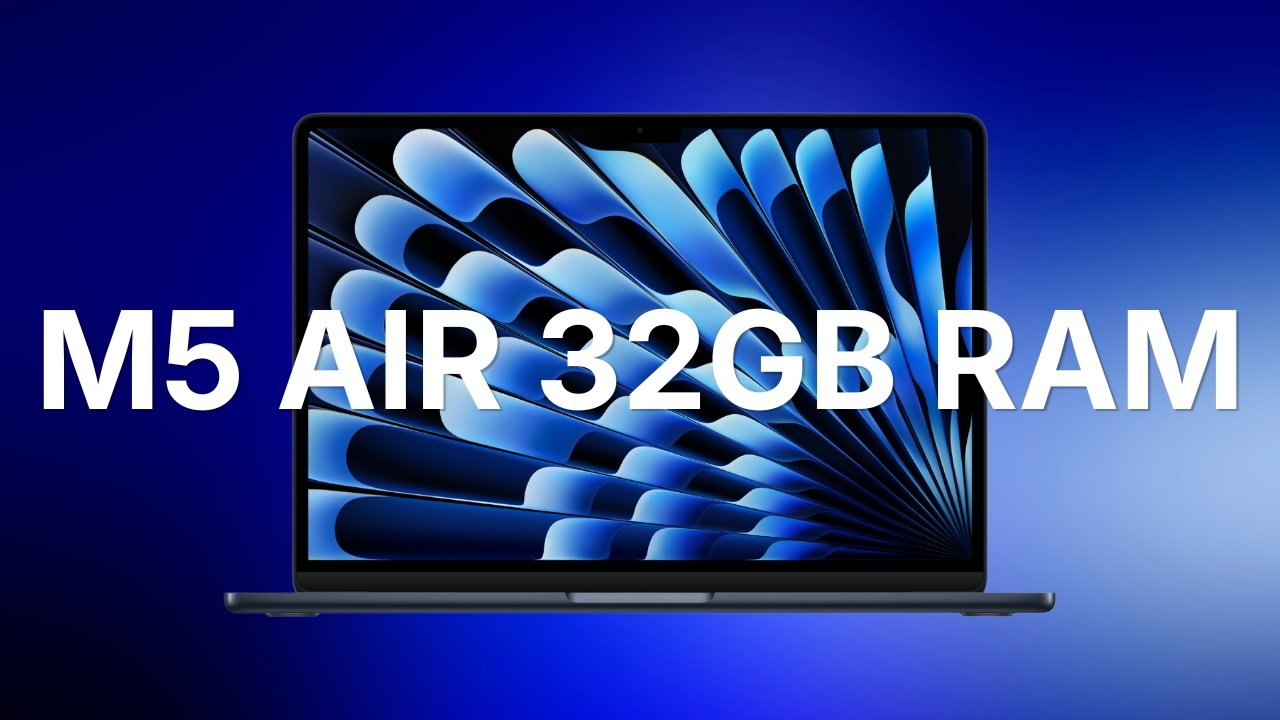
Save on every M5 MacBook Air, with a $100 discount on a 32GB RAM config – Image credit: Apple

Save on every new M5 MacBook Air today, with a 32GB RAM spec dropping to $1,399.

Apple Premier Partner Expercom is running a sale on every M5 MacBook Air, with this 13-inch configuration with 32GB of RAM and 512GB of storage marked down to $1,399 after a $100 discount.

Save on every M5 MacBook Air

Advertisement

This price drop delivers the lowest price available, according to our 13-inch MacBook Air Price Guide.

If you don’t need as much RAM, you can also score deals on the standard M5 model with 16GB of unified memory, with prices as low as $949.99 ($150 off) at Apple resellers.

Here’s a rundown of today’s top deals:

13-inch MacBook Air M5 discounts

Advertisement

15-inch MacBook Air M5 savings

Source link

Continue Reading

Tech

AI integration needs accountability, not just innovation

Published

on

Artificial intelligence has already embedded itself into the rhythms of modern life, shaping decisions in ways that often go unnoticed. Amy Trahey, founder of Great Lakes Engineering Group, believes that integration is exactly what makes it powerful and, in many cases, risky. From her perspective in engineering, she sees AI as something that directly influences outcomes tied to public safety, funding, and long-term trust. 

Her understanding of AI began outside formal systems. It revealed itself through daily interactions with technology, from predictive recommendations to voice-enabled tools that respond almost instinctively, which paved the way for a sudden epiphany.

Amy Trahey, P.E.

Amy Trahey, P.E.

She says, “I realized how AI is integrated into everything. Whether I watch something on streaming platforms, whether I’m talking on the phone, and suddenly I’m seeing ads for what I spoke about, it’s already part of how we live, and it’s moving faster than any of us can keep up with.” That speed, in her view, creates a leadership gap. Organizations are adopting AI at scale, and Trahey believes many leaders underestimate how quickly their teams are already relying on it. 

Advertisement

She points to studies showing that nearly three out of four companies now use AI in some capacity, interpreting that as proof that passive oversight is no longer viable. “You have to realize your team is going to use it. It’s not a question anymore. So if that’s the case, then it becomes your responsibility to understand it and make sure it’s being used the right way,” Trahey explains. 

Education became her first step toward that responsibility. She enrolled in a five-week intensive program focused on AI prompting, approaching it with the same discipline she applies to engineering work. What she found reshaped her perspective. “It truly is transformational technology. This is on the level of the World Wide Web, but it’s evolving even faster,” Trahey shares. “It has great power to make positive changes, and naturally, it has the potential to be used the wrong way. It all comes down to intent and whether you’re doing things with integrity.

At Great Lakes Engineering Group, Trahey finds it imperative to establish that duality to ensure that efficiency gains are measurable. She highlights using AI to translate complex engineering briefs and updates into concise and coherent communication for clients, to generate structured meeting documentation in minutes instead of hours. The value, she posits, lies in augmenting human capability, not replacing it. 

Oversight, however, remains fundamental to her process. She insists that no AI-generated output should move forward without human review, particularly in high-stakes environments. Within her work, which revolves around overseeing bridge and transportation infrastructure projects, due diligence finds greater relevance. 

It acts as an assistant for me, and sometimes as an advisor,” Trahey explains. “But everything still comes back to me. I review it before it goes anywhere. It’s known to hallucinate, and it can try to please you by giving you what it thinks you want to hear. That’s where human responsibility comes in. You cannot take your hands off the wheel.

Advertisement

Responsibility extends into organizational culture as well, as Trahey recognized early that AI adoption within her team required structure, not restriction. Observing younger engineers already integrating these tools into their workflows prompted her to formalize guidelines. “We do bridge design. We’re working on things that are technically complex and tied to safety,” she says. “If people are using AI, then I need to understand it so I can create policies around what’s acceptable and what’s not. That’s part of leadership. You don’t ignore it. You define how it’s used.”

Her framework draws a clear line between ethical efficiency and misuse. Automating administrative tasks or organizing large datasets represents what she considers appropriate use. In her view, misrepresenting AI-generated work or exploiting time savings for financial gain reflects a breakdown in professional integrity. She speaks directly to that risk.

 “There are people who will use it and then bill five hours for something that took five minutes. That’s not innovation. That’s a lack of integrity. And when you’re dealing with taxpayer money or public safety, that matters.

Her concerns also extend to societal implications. Trahey believes the accessibility of AI introduces new risks that require coordinated oversight. “When something this powerful is accessible to every human being across the globe, there has to be some level of legislative involvement. We need guidelines and accountability. This isn’t just for technically savvy people anymore. This is for everybody,” Trahey shares. 

Advertisement

Personal experience adds another layer to her perspective. Watching her son Quinn interact with AI as someone with autism has highlighted its potential and its complexity. She sees value in its ability to support communication, especially for individuals who struggle to express themselves. At the same time, she remains attentive to how that interaction is framed. “He sees it as something he can talk to, and there’s a benefit in that,” she explains. “But it’s my job to help him understand what it is and what it isn’t. It’s a tool, not a person. That distinction matters.”

Trahey’s approach to AI reflects a consistent principle. Innovation should be pursued with intention, supported by education, and governed by clear standards. She believes organizations that engage with AI thoughtfully will be better positioned to harness its benefits without compromising trust, and as the world accelerates into the new era of technological collaboration, that distinction, she says, makes all the difference.

Source link

Advertisement
Continue Reading

Tech

One tool call to rule them all? New open source Python tool RunPod Flash eliminates containers for faster AI dev

Published

on

Runpod, the high-performance cloud computing and GPU platform designed specifically for AI development, today launched a new open source, MIT licensed, enterprise-friendly Python programming tool called Runpod Flash — and it is poised to make creation, iteration and deployment of AI systems inside and outside of foundation model labs much faster.

The tool aims to eliminate some of the biggest barriers and hurdles to training and using AI models today, namely, doing away with Docker packages and containerization when developing for serverless GPU infrastructure, which the company believes will speed up development and deployment of new AI models, applications and agentic workflows.

Additionally, the platform is built to serve as a critical substrate for AI agents and coding assistants—such as Claude Code, Cursor, and Cline—enabling them to orchestrate and deploy remote hardware autonomously with minimal friction.

Developers can utilize Flash to accomplish a diverse set of high-performance computing tasks, including cutting-edge deep learning research, model training, and fine-tuning.

Advertisement

“We make it as easy as possible to be able to bring together the cosmos of different AI tooling that’s available in a function call,” said RunPod chief technology officer (CTO) Brennen Smith, in a video call interview with VentureBeat last week.

The tool allows for the creation of sophisticated “polyglot” pipelines, where users can route data preprocessing to cost-effective CPU workers before automatically handing off the workload to high-end GPUs for inference.

Beyond research and development, Flash supports production-grade requirements through features such as low-latency load-balanced HTTP APIs, queue-based batch processing, and persistent multi-datacenter storage.

Eliminating the ‘packaging tax’ of AI development

The core value proposition of Flash GA is the removal of Docker from the serverless development cycle.

Advertisement

In traditional serverless GPU environments, a developer must containerize their code, manage a Dockerfile, build the image, and push it to a registry before a single line of logic can execute on a remote GPU. Runpod Flash treats this entire process as a “packaging tax” that slows down iteration cycles.

Under the hood, Flash utilizes a cross-platform build engine that enables a developer working on an M-series Mac to produce a Linux x86_64 artifact automatically.

This system identifies the local Python version, enforces binary wheels, and bundles dependencies into a deployable artifact that is mounted at runtime on Runpod’s serverless fleet.

This mounting strategy significantly reduces “cold starts”—the delay between a request and the execution of code—by avoiding the overhead of pulling and initializing massive container images for every deployment.

Advertisement

Furthermore, the technology infrastructure supporting Flash is built on a proprietary Software Defined Networking (SDN) and Content Delivery Network (CDN) stack.

Smith told VentureBeat that the hardest problems in GPU infrastructure are often not the GPUs themselves, but the networking and storage components that link them together.

“Everyone is talking about agentic AI, but the way I personally see it — and the way the leadership team at RunPod sees it — is that there needs to be a really good substrate and glue for these agents, whatever they might be powered by, to be able to work with,” Smith said.

Flash leverages this low-latency substrate to handle service discovery and routing, enabling cross-endpoint function calls. This allows developers to build “polyglot” pipelines where, for instance, a cheap CPU endpoint handles data preprocessing before routing the clean data to a high-end NVIDIA H100 or B200 GPU for inference.

Advertisement

Four distinct workload architectures supported

While the Flash beta focused on live-test endpoints, the GA release introduces a suite of features designed for production-grade reliability.

The primary interface is the new @Endpoint decorator, which consolidates configuration—such as GPU type, worker scaling, and dependencies—directly into the code. The GA release defines four distinct architectural patterns for serverless workloads:

  • Queue-based: Designed for asynchronous batch jobs where functions are decorated and run.

  • Load-balanced: Tailored for low-latency HTTP APIs where multiple routes share a pool of workers without queue overhead.

  • Custom Docker Images: A fallback for complex environments like vLLM or ComfyUI where a pre-built worker is already available.

  • Existing Endpoints: Using Flash as a Python client to interact with previously deployed Runpod resources via their unique IDs.

A critical addition for production environments is the NetworkVolume object, which provides first-class support for persistent storage across multiple datacenters.

Files mounted at /runpod-volume/ allow for model weights and large datasets to be cached once and reused, further mitigating the impact of cold starts during scaling events.

Advertisement

Additionally, Runpod has introduced environment variable management that is excluded from the configuration hash, meaning developers can rotate API keys or toggle feature flags without triggering an entire endpoint rebuild.

To address the rise of AI-assisted development, Runpod has released specific skill packages for coding agents like Claude Code, Cursor, and Cline.

These packages provide agents with deep context regarding the Flash SDK, effectively reducing syntax hallucinations and allowing agents to write functional deployment code autonomously.

This move positions Flash not just as a tool for humans, but as the “substrate and glue” for the next generation of AI agents.

Advertisement

Why open source RunPod Flash?

Runpod has released the Flash SDK under the MIT License, one of the most permissive open-source licenses available.

This choice is a deliberate strategic move to maximize market share and developer adoption. In contrast to more restrictive licenses like the GPL (General Public License), which can impose “copyleft” requirements—potentially forcing companies to open-source their own proprietary code if it links to the library—the MIT license allows for unrestricted commercial use, modification, and distribution.

Smith explained this philosophy as a “motivating construct” for the company: “I prefer to win based on product quality and product innovation rather than legal ease and lawyers,” he told VentureBeat.

By adopting a permissive license, Runpod lowers the barrier for enterprise adoption, as legal teams do not have to navigate the complexities of restrictive open-source compliance.

Advertisement

Furthermore, it invites the community to fork and improve the tool, which Runpod can then integrate back into the official release, fostering a collaborative ecosystem that accelerates the development of the platform.

Timing is everything: RunPod’s growth and market positioning

The launch of Flash GA comes at a time of explosive growth for Runpod, which has surpassed $120 million in Annual Recurring Revenue (ARR) and serves a developer base of over 750,000 since it was founded in 2022.

The company’s growth is driven by two distinct segments: the “P90” enterprises—large-scale operations like Anthropic, OpenAI, and Perplexity—and the “sub-P90” independent researchers and students who represent the vast majority of the user base.

The platform’s agility was recently demonstrated during the release of DeepSeek V4 in preview last week. Within minutes of the model’s debut, developers were utilizing Runpod infrastructure to deploy and test the new architecture.

Advertisement

This “real-time” capability is a direct result of Runpod’s specialized focus on AI developers, offering over 30 GPU SKUs and billing by the millisecond to ensure that every dollar of spend results in maximum throughput.

Runpod’s position as the “most cited AI cloud on GitHub” suggests that it has successfully captured the developer mindshare required to sustain its momentum.

With Flash GA, the company is attempting to transition from being a provider of raw compute to becoming the essential orchestration layer for the AI-first cloud.

As development shifts toward “intent-based” coding—where the outcome is prioritized over the execution details—tools that bridge the gap between local ideas and global scale will likely define the next era of computing.

Advertisement

Source link

Continue Reading

Tech

Why critical infrastructure needs critical cybersecurity

Published

on

UL’s Dr Muzaffar Rao discusses the professional diploma in OT security programme, and what motivates his research in OT and ICS cybersecurity.

For Dr Muzaffar Rao, University of Limerick (UL) has been a research base for a number of years.

When Rao first joined UL in 2013, he was a PhD student conducting research on reconfigurable hardware for security, specifically field programmable gate array (FPGA)‑based cryptographic systems.

After his PhD, Rao began working at the university as a postdoctoral researcher with the Centre for Robotics and Intelligent Systems, a role that Rao says allowed him to further develop “expertise in hardware‑based cryptographic systems”.

Advertisement

Fast-forward to the current day, and Rao is now an associate professor in the Department of Electronic and Computer Engineering at UL, as well as an associate investigator with Lero, the Research Ireland Centre for Software.

Rao is also the course director of the professional diploma in operational technology (OT) security programme – a specialised Level 9 programme that Rao says is a “unique offering in Ireland”, as it’s dedicated specifically to OT and industrial control systems (ICS) security.

The primary objective of the programme, according to Rao, is to equip professionals with the practical knowledge and specialised skills required to “securely integrate IT and OT systems while effectively managing associated cyber risks”.

“Developed in close collaboration with industry partners, the course focuses on real-world operational challenges, OT-specific threats, relevant legal and regulatory frameworks, and risk mitigation strategies,” he explains.

Advertisement

“A strong emphasis is placed on bridging workforce skills gaps to ensure graduates can protect and secure complex operational environments.”

Rao tells SiliconRepublic.com that recently, the course was provided with the Airbus CyberRange, a simulation and training platform that provides “immersive, hands-on learning through realistic, scenario-based exercises that reflect real-world critical infrastructure and smart manufacturing systems”.

Securing OT and ICS

While his duties have expanded to new duties such as teaching and curriculum development, his cybersecurity research continues to be a major part of his post at UL.

Rao’s current research focuses on strengthening the security and resilience of OT and ICS, particularly in critical infrastructure environments that rely on legacy systems.

Advertisement

“These systems,” he tells us, “are often difficult or impossible to patch, replace or take offline, which makes conventional security approaches impractical.”

He says a “central strand” of his work involves developing lightweight cryptographic mechanisms specifically tailored for ageing industrial hardware with limited processing power, constrained bandwidth and long operational life cycles – with the goal of introducing strong security controls without disrupting industrial operations.

He also researches early‑warning and intrusion‑detection frameworks for “advanced, including nation‑state-level, threats in OT and ICS environments”.

“This includes addressing situations where monitoring is minimal or absent, with particular attention to unmonitored industrial sensors and peripheral devices that create blind spots attackers can exploit.”

Advertisement

But why is this research important?

Rao explains that much of Ireland’s critical infrastructure – including energy, water, healthcare and manufacturing – still depends on “ageing operational technology that cannot be easily upgraded or taken offline”.

“These constraints create significant security gaps and make essential services especially vulnerable to sophisticated cyberthreats, including those from nation‑state actors targeting industrial systems across Europe,” says Rao.

“By developing lightweight cryptographic solutions suitable for legacy devices, improving early‑warning intrusion detection and securing the increasingly interconnected IT/OT environment, this research directly addresses these risks.

Advertisement

“It enhances system visibility, limits lateral movement by attackers, and strengthens Ireland’s ability to prevent and respond to cyber‑physical attacks. Ultimately, this work contributes to national resilience, the continuity of essential services and public safety at a time when cyberattacks are becoming more frequent, targeted and complex.”

Misconceptions and motivation

Rao says he was drawn to this specific area of research because it lies at “the intersection of fields that have consistently shaped my academic path”.

In fact, he says his PhD research on FPGA‑based cryptographic designs naturally exposed him to the “unique and under‑addressed security challenges” of OT and ICS.

“These environments depend heavily on legacy hardware that underpins critical infrastructure yet lacks the protections expected in modern IT systems.”

Advertisement

One misconception about his research that Rao often encounters is the belief that improving security in OT and ICS environments is “simply a matter of applying traditional IT security controls or waiting for outdated systems to be replaced”.

“In reality, critical infrastructure rarely has the option of downtime, frequent patching or uniform visibility, and many industrial systems were never designed with security in mind,” he explains.

He adds that there’s also a belief that effective security requires heavy monitoring, expensive hardware or “intrusive changes that risk disrupting operations”. Rao says his research directly challenges this assumption by “demonstrating that strong security and early intrusion detection can be achieved using lightweight, domain-aware techniques that respect operational constraints”.

“These methods address blind spots such as unmonitored sensors and can detect sophisticated attacks well before they escalate into physical or safety incidents, without disrupting essential services.”

Advertisement

With a number of years spent in this research area, one has to wonder what keeps bringing Rao back to the OT and ICS domain.

As Rao explains to us, he continues to find motivation in “the combination of intellectual challenge and real‑world impact”.

“Unlike conventional IT systems, OT environments cannot simply be patched, replaced or taken offline, even as they face increasingly sophisticated nation‑state threats and growing IT/OT convergence,” he says.

“Developing lightweight cryptography, early‑stage intrusion detection and secure architectures under strict resource and operational constraints is both technically demanding and societally important.

Advertisement

“The opportunity to produce research that has practical relevance and contributes directly to the resilience of essential services is what keeps this work compelling for me.”

Don’t miss out on the knowledge you need to succeed. Sign up for the Daily Brief, Silicon Republic’s digest of need-to-know sci-tech news.

Source link

Advertisement
Continue Reading

Tech

This device keeps your data safe by doing something your computer was never designed to handle in the first place

Published

on


  • The Aegis Padlock DT FIPS processes PINs on the device, not on the connected computer
  • This drive functions where software-based encryption cannot, including embedded systems
  • Epoxy coating and locked firmware prevent physical tampering and BadUSB attacks on the Padlock DT FIPS

Most companies assume that encrypting their sensitive data is enough, but encryption only matters if the keys and authentication methods stay out of attackers’ reach.

Software-based encryption tools leave those secrets exposed on the host computer, where keyloggers, screen scrapers, and remote access trojans can capture them with ease.

Source link

Advertisement
Continue Reading

Tech

No, Sony won’t check your PlayStation game licenses every 30 days

Published

on

Sony has shut down claims that PlayStation games would soon require monthly online license checks, with the company confirming that it is not introducing any such system.

The concern started last week after screenshots circulated on X suggesting a “Valid Period” tied to digital purchases. That sparked worry among players and preservation groups, as they feared games could become unplayable if a console stayed offline for more than 30 days.

Sony has now clarified to Game File that this isn’t the case. Once a digital game is purchased, it receives a perpetual license after a single online verification. After that initial check, there are no ongoing requirements to reconnect or revalidate the license.

Advertisement

“Players can continue to access and play their purchased games as usual,” a Sony representative said. “A one-time online check is required after purchase to confirm the game’s license, after which no further check-ins are needed.”

Advertisement

PS5PS5

That statement directly contradicts the interpretation many users had after testing suggested that even setting a PS4 or PS5 as a “primary” console didn’t appear to override the supposed 30-day limit. This helped fuel the belief that Sony was quietly rolling out stricter DRM rules for digital ownership.

Sony hasn’t explained why the “Valid Period” language appeared in the first place. However, one theory links it to its 14-day digital refund window, where temporary validation could help prevent abuse. The company hasn’t confirmed this.

The episode has also revived familiar concerns around game preservation and ownership, especially in a market that is increasingly digital-first. It also inevitably brings back memories of Microsoft’s original Xbox One plans in 2013. Those plans required daily online DRM checks before they were reversed after widespread backlash.

Advertisement

For now, Sony is making one thing clear: buying a digital game on PlayStation still means permanent access, with no recurring online verification needed after the initial purchase check.

Advertisement

Source link

Advertisement
Continue Reading

Tech

What is the release date for Marshals: A Yellowstone Story episode 10 on CBS and Paramount+?

Published

on

When it comes to Marshals: A Yellowstone Story, the stakes just keep getting higher. Last week in episode 9, the Marshals strategized a risky assault on a paramilitary compound when one of their own was taken prisoner.

Kayce (Luke Grimes) led the team straight into the thick of it, risking everything to save their teammate. Frankly, he never looks better than when he’s playing the hero. But when does Marshals: A Yellowstone Story episode 10 arrive on CBS and Paramount+?

Source link

Advertisement
Continue Reading

Tech

Trashing Your Old Tech Hurts the Environment and Your Wallet. Some Still Do It Anyways

Published

on

What do you do with your old tablet or smartphone when you get a new one? CNET recently asked 2,638 adults how they get rid of their old devices, and the results are disappointing. Fewer than half (39%) recycle old tech, while 29% just stash them at home. What’s even more alarming is that 22% of US adults throw their devices in the trash. That route pollutes the environment, can be a fire hazard and is illegal in some states. 

So what should you be doing with that old iPad or TV? Your plan may depend on the device and its condition, but there are retailers that can safely recycle it for you, and some even offer cash or store credit for its trade-in value. You just have to know where to start. Here’s the data and a list of places to keep in mind as you tackle tech spring cleaning or upgrade your personal devices. 

Advertisement

♻️ Fewer than half (39%) of US adults recycle tech they no longer use. Some US adults keep old devices at home (29%), while 10% don’t know what to do with them.
 
♻️ 22% of US adults still throw old tech in the trash, which is illegal in some states.

♻️ National retailers, including Best Buy and Staples, offer recycling programs to safely dispose of your unwanted appliances and gadgets.

Advertisement

Only 24% of US adults trade in their old devices 

So what are most of us doing with the devices we no longer use? CNET found that typical plans vary. You may consider factors such as the device, its condition and your personal preferences. 

cnet survey old electronics

Cole Kan/CNET/Getty Images

Fewer than half (39%) of US adults recycle their old devices, with boomers making up nearly half (48%) of that group. On the other hand, 33% of US adults give away their old tech, while 29% stash these devices at home. 

Only US adults look at old tech as a way to make some cash by trading it in with a retailer (24%) or selling their gadgets online (18%). 

There are less desirable ways to dispose of your tech. It’s not a good idea to throw away old tech, but 22% of US adults say they do. CNET’s latest findings also show that nearly three in 10 (29%) hoard tech at home, with Gen Z making up 40% of this group.  

Advertisement

Watch this: Make Money for Recycling Old Tech and Let the Broken iPhone Go

Selling, donating or recycling your e-waste is better than polluting the environment with toxins and chemicals found in smartphones and tablets. Tossing one in the trash may seem like the most convenient way to get rid of it, but this may be illegal in your state. 

E-waste laws have been enacted in 25 states, according to the Electronics Recycling Coordination Clearinghouse. For example, South Carolina bans disposing of tech in solid-waste landfills. Computer monitors, TVs and printers must be recycled.

Advertisement
gettyimages-1371954835

Best Buy and Staples are two of several retailers that accept old personal devices. 

Witthaya Prasongsin/Moment/Getty Images

Where to recycle or trade in your old tech 

Here’s a list of retailers where you can recycle or trade in your old smartphones, laptops and other personal tech. When narrowing down where to drop off your old gadget, see what recycling and trade-in options are available through your tech manufacturer, such as Apple and HP. Your local recycling services and national services, including The Battery Network (formerly Call2Recycle),  Earth911 and Greener Gadgets, also have tech-recycling programs to safely get rid of your tech based on your ZIP code. 

Amazon Recycling Program

Amazon’s Recycling Program lets you trade in eligible devices to save on a new Amazon tech gadget. If your device doesn’t qualify, you can drop off your old tech at a participating store, such as Staples. Or you can mail it in with a free shipping label.

Apple 

Apple has a special Earth Day offer that lasts until May 16. You can trade in an eligible Apple device, such as an iPad, Mac, iPhone or Apple Watch, and get 10% off select accessories. Apple also has other trade-in offers for Apple and Android devices year-round that give you a credit as an Apple gift card for your used tech. Apple will recycle your device for free if the device is ineligible for a credit. 

Advertisement

Best Buy 

Best Buy lets you recycle up to three accepted items per household per day for free. It also offers a haul-away service to get rid of your old tech as a standalone service. Best Buy can remove and recycle up to two large products and unlimited select small products for $200. There are restrictions, such as not being able to haul away fitness equipment. You can also order a mail-in box from Best Buy and fill it to the weight limit with accepted electronics and ship it at a UPS Store using a prepaid shipping label.

GreenDrop

GreenDrop accepts various tech items on behalf of its nonprofits. However, large appliances, cabinet TVs, monitors and medical equipment are not accepted. Call your local GreenDrop about your specific device before dropping it off. Donations are tax-deductible.

Smartphone Recycling

Smartphone Recycling is a bulk recycling and trade-in program that lets you recycle smartphones and tablets. You can ship your old phone, computer and tablet using a FedEx shipping label. Smartphone Recycling may pay you up to $400 for your old devices, including locked and damaged ones. 

Staples

You can earn Staples’ Easy Rewards by recycling tech devices online and in-store. Points can be redeemed as savings on purchases. Staples also offers mail-in recycling kits to ship your tech starting at about $14, and you can receive electronic gift cards when you trade in an eligible device in stores only. There are a few restricted items, and Staples charges a fee for recycling monitors.

Advertisement

Target 

Target has a trade-in program that lets you trade your old tech in for a Target eGiftCard based on the value of your device. The gift card can be used at Target stores, Target.com, Target Tech kiosks, Target Optical and merchants within the Target store. 

Eligible trade-in items include hearables, mobile phones, MP3 players, tablets, smart speakers, video-game consoles and games, and wearables. The program is only available online.

What to do before you toss your old tech

Before you recycle, sell or give away your old device, there are a few steps you should take. 

First, make sure you back up any important data, such as files and photos, using cloud storage or an external hard drive. If you downloaded any software, make sure you make note of any license keys. Then restore your device to its original state by doing a factory reset. This wipes clean any personal information, software and files by restoring the phone to its original condition.

Advertisement

If you plan to donate or recycle your device, check for any special instructions to safely dispose of your e-waste. Some tablets, phones and laptops use lithium-ion batteries that can pose a significant fire hazard if damaged or not disposed of properly. The EPA also has a directory listing hazardous rechargeable batteries and where to dispose of them by ZIP code. 

For other ways to get rid of unwanted tech, check out the video below for charities that accept unwanted electronics and what to know before selling your used tech for a fair price

Methodology 

CNET commissioned YouGov PLC to conduct the survey. All figures, unless otherwise stated, are from YouGov PLC. The total sample size was 2,638 adults. Fieldwork was undertaken April 10-14, 2026, and the survey was conducted online. The figures have been weighted and are representative of all US adults, ages 18 or older. 

Advertisement

Source link

Continue Reading

Trending

Copyright © 2025