
Tech
Gigabyte Is Giving Away Onimusha: Way of the Sword With Radeon RX 9070 GPUs


Gigabyte has announced a new game bundle for gamers buying select AMD Radeon graphics cards and gaming desktops. As part of the limited-time promotion, eligible purchases will include a free copy of Onimusha: Way of the Sword, Capcom’s upcoming action title powered by AMD’s latest graphics technologies. The offer is available on select Radeon RX 9070 XT, RX 9070, and RX 9070 GRE products between August 25 and September 26, 2026.
Eligible Radeon RX 9070 GPUs Get a Free Onimusha Copy
The bundle applies to participating Gigabyte graphics cards and gaming desktops equipped with AMD’s Radeon RX 9070 series GPUs. Customers who purchase an eligible product during the promotional period will receive a game coupon through AMD, which can be redeemed for Onimusha: Way of the Sword. The game is scheduled to launch on September 4, 2026, while coupon redemption will remain open until October 24, 2026.
Gigabyte wants to showcase the capabilities of AMD’s RDNA 4 architecture, including improved ray tracing and support for AMD HYPR-RX, a suite of performance-enhancing technologies aimed at delivering smoother gameplay and lower latency.
Alongside AMD’s latest GPU architecture, Gigabyte is highlighting its own thermal design. The supported graphics cards, including the Nvidia ones, feature the company’s WINDFORCE cooling system, paired with its patented Hawk Fan design. According to the brand, the Hawk Fan increases air pressure by up to 53.6% and airflow volume by 12.5% compared to conventional fan designs. This should help maintain stable temperatures during demanding gaming workloads while keeping noise levels under control.

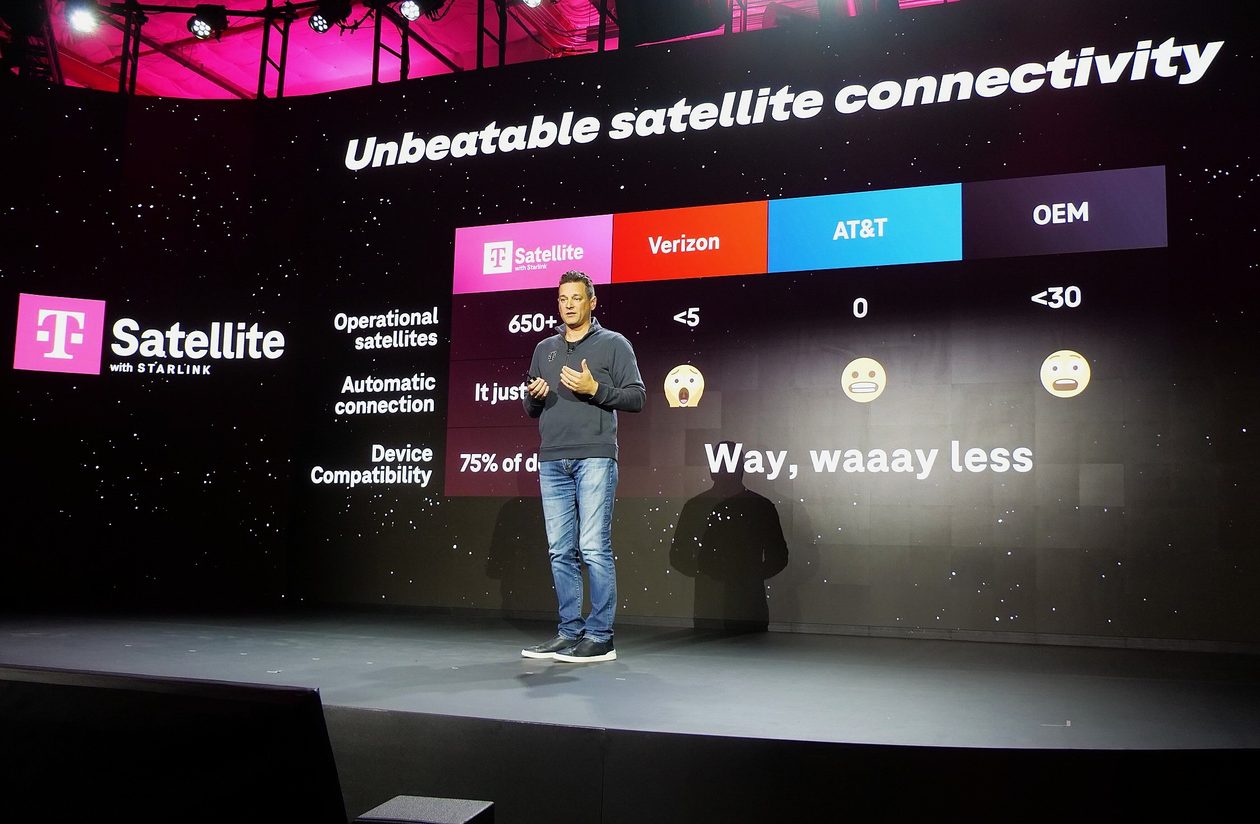
In 2012, T-Mobile was losing hundreds of thousands of customers a quarter. AT&T’s attempted acquisition of the Bellevue, Wash.-based wireless company had just collapsed. T-Mobile was the fourth-place carrier in a four-carrier market, with a network that was a punchline and no obvious plan for fixing any of it.
Mike Katz was one of the leaders responsible for figuring it out.
The result of their work was the “Un-carrier,” a series of moves starting in 2013 that upended one industry tradition after another, launched under CEO John Legere and continued by his successor, Mike Sievert.
T-Mobile today is worth nearly $195 billion and claims the country’s best network. The company is now led by Srini Gopalan, who became CEO in November 2025.

Katz, whose wireless career began selling VoiceStream phones at a Circuit City in Fort Collins, Colo., is leaving after 28 years. The company announced July 7 that Katz, then chief business and product officer, would pursue “new professional interests,” staying on as an advisor through December.
During his tenure at T-Mobile, Katz worked in sales and corporate strategy, ran the company’s prepaid business, led consumer marketing through the first Un-carrier moves, built the company’s business division, and served as chief marketing officer, before becoming chief business and product officer in December 2025.
In an interview with GeekWire, Katz reflected on his experience inside one of the most improbable and irreverent comebacks in American business.
Continue reading for the lessons we took from his story.
Use speed to your advantage against bigger competitors.
When the AT&T deal died, Katz was put on a small team assigned to assess the company’s position and come up with a plan. Their advantage, he said, was that T-Mobile was too small to compete on everyone else’s terms.
“We were so subscale relative to AT&T and Verizon at the start, and what we developed because of being subscale was agility,” Katz said. “We would do things, and AT&T and Verizon would take forever to respond, and by the time they responded, all their customers were gone.”
It started with Un-carrier 1.0. Under the standard model then, a customer could get a phone for well below cost if they signed up for a two-year plan. But the carrier recovered it through the monthly service rate, which never came down once the phone was paid off. Customers paid a penalty for leaving early.
T-Mobile separated the device from the service plan in March 2013, pricing service on its own and putting the phone on monthly installments that ended when the device was paid for.
Verizon didn’t stop signing new customers to two-year contracts until August 2015. AT&T held out until January 2016.
Getting copied was the point. Katz said one measure of success for every Un-carrier move was whether AT&T and Verizon would eventually imitate it, because by the time they did, T-Mobile had already gotten all the credit and attention.
Legere reveled in calling AT&T and Verizon “Dumb and Dumber” (it was never clear which was which in his eyes). He crashed AT&T’s party at CES in 2014 and was escorted out by security, generating multiple rounds of positive publicity for T-Mobile. He asked the public to vote on how to taunt his rivals next, with skywriting over their headquarters among the options.
They were clearly having fun. Asked whether T-Mobile ever worried it had gone too far in baiting its rivals, Katz said, “Not really.” The mission then, he said, was to change wireless for everyone and not just for T-Mobile’s own customers.
The mockery extended to the events themselves. Katz recalled preparing for an early Un-carrier launch in New York when Legere, around 10 p.m. the night before, decided he wanted to open by parodying AT&T’s “It’s Not Complicated” campaign, in which a man interviewed small children at a tiny table. That meant finding dolls. Katz said the team spent the night working out how to get into the American Girl store in Manhattan.
“It was wild,” Katz said. “There were so many things in those early events.”
The next morning the lights came up on Legere at a small table, talking to the dolls.
“Maybe we were the only ones that got it,” Katz said. “But it was funny to us.”
Look for the unexpected and find out why it’s happening.
Back in 2010, then-CEO Robert Dotson put Katz in charge of the company’s prepaid business. It was not a marquee assignment.
Prepaid customers of that era “didn’t really pick prepaid. Prepaid picked them,” Katz said. “They had no other choices. They had tough credit, or they socioeconomically were in a really tough place.”
T-Mobile was also losing ground. A price war broke out in January 2009, when Sprint’s Boost Mobile introduced a $50 unlimited plan and MetroPCS answered at $40. The recession was pushing customers toward prepaid, and the flat-rate carriers were taking market share.
Katz ran prepaid as a business of its own, operations and marketing together, and looked for a way to compete without matching the price. Those cheaper plans limited customers to 3G, so T-Mobile charged a bit more, gave them 4G, and called it Monthly 4G. (A deliberately clear and functional name, as he pointed out.)
It worked. Through 2010, 2011 and 2012, while the postpaid business was shedding customers, prepaid was the only part of T-Mobile that was growing.
The surprise: a lot of the new growth was coming from previously postpaid customers, people who had other options and were choosing prepaid anyway. Katz’s team asked them why.
“There’s no contract. I sign up for a $50 plan, and it actually costs $50 a month. It’s just simple and predictable,” Katz said, quoting customers. It might seem obvious now, he said, “but at the time it’s like, wow, that’s a pretty interesting insight.”
Expand what’s working to other parts of the company.
They found inspiration in that when they turned to what T-Mobile should do next. The idea was to give postpaid customers the same simplicity that was drawing them to prepaid.
They called it pain-free wireless. They mapped out six moves in advance, including the end of upgrade restrictions and international roaming fees. These were the origins of the Un-carrier.
They pitched it to Legere, and to Sievert, the chief marketing officer at the time. Both signed on. The launch was originally set for the end of 2013. Legere moved it to the beginning of the year.
“There is something about desperation that really helps create crisp decision-making,” Katz said. “You can keep trying to make a gameplan that’s been failing for years work, or take some swings and take on some risk. … Because what’s the downside? It can’t get much worse than it was.”
Make sure people know the ad was yours.
Storytelling is the thing companies and brands get wrong most often, Katz said, and he called it the biggest thing he learned from Sievert, whom he worked with for more than a decade. It’s especially important in the wireless industry, where customers are effectively buying a promise.
“At the end of the day, we sell invisible air. You don’t really see the product we sell,” Katz said. “There’s phones, but we don’t make the phones. Apple makes the phones. There’s towers that you can see, but the tower companies, those are their towers. We sell the invisible air in between.”
Katz divides the profession into two camps: the “award show CMOs,” motivated by collecting trophies at Cannes, and the ones who measure themselves by business impact. He puts himself in the second group.

One example: T-Mobile’s February 2025 Super Bowl spot, which launched the public beta of its Starlink partnership, offering satellite-to-cell texting in the parts of the country terrestrial networks don’t reach.
It was tempting to fill it with celebrities and gimmicks, he said. Instead the spot was built around a voiceover and a direct call to action: try it out for free during the beta, open to AT&T and Verizon customers too.
“If we wanted to build a Super Bowl commercial to win the best Super Bowl spot in Ad Age, we would have done something very different,” Katz said. “We would have done the celebrity-palooza.”
“Within 30 minutes of that Super Bowl spot running, we achieved all the goals that we had for the rest of the month in signups,” Katz said.
He contrasted that with Verizon’s 2024 Super Bowl ad starring Beyonce, which he said people recalled without necessarily remembering the advertiser.
Bad results don’t mean bad people.
One of the lessons Katz learned from Legere, in addition to taking risks and failing fast, came from how the incoming T-Mobile CEO treated the people who were already there when he arrived. Legere took over a company that was losing badly and kept the team in place.
“It would have been really easy for him to come in and assume, hey, company’s not doing well, we must have a bunch of bad people here, and change everybody out, and he didn’t do that,” Katz said. “Don’t assume simply because the results of the company are bad that the people are bad.”
Katz said that was in his head during the Sprint merger, where the same thing applied: a business in rough shape, staffed by people who weren’t the reason. T-Mobile’s leadership today is a mix of the two companies.
Perception can sometimes lag reality.
Katz said T-Mobile passed Verizon on network quality years before customers believed it. Verizon “had so much built up brand equity around being the best network,” he said, that four or five years later, people still named Verizon when asked who had the best network.

T-Mobile declared victory at an event in Bellevue in June 2025, citing an Ookla study built on half a billion crowdsourced data points. Verizon disputed the methodology, saying crowdsourcing can’t control for variables, and pointed instead to RootMetrics drive tests that it said still showed Verizon the most reliable.
T-Mobile then began running ads with Billy Bob Thornton declaring it the best network in the country. Earlier claims had carried qualifiers, like fastest 5G or most available 5G. This one didn’t. Katz said the gap in how customers rate the two networks is now down to a couple of points.
Staying on top is harder than the turnaround.
For all the attention the comeback gets, Katz said the more remarkable part has been what came after it.
“If you look at companies that have done big turnarounds, you don’t really see a lot that have had the kind of sustained success and continued growth for a decade and a half like T-Mobile has,” he said.
He gives much of the credit to the network. The Sprint merger gave T-Mobile a spectrum position it didn’t have before, and the company bet that 5G would play out in mid-band spectrum, which was seen as risky at the time. Protecting that advantage through later spectrum deals was one of the things he worked on.
Building the network was not.
“There’s a couple jobs that they never let me do, probably for very good reason,” Katz joked. “You actually need to know what you’re doing.”
A mature company also needs different things from its leadership than a struggling one does. Gopalan spent years on T-Mobile’s board before joining as COO and then taking over as CEO. Katz describes him as an operator who brings discipline to the details of a business that by now has years of success behind it.
Asked for his biggest mistake, Katz said he moved too slowly at times.
“There are big decisions, risky decisions, that I could have made a lot faster,” he said. “I wish I’d pushed harder to make some of those decisions.” Some of what became the early Un-carrier moves were ideas that had been floated years earlier, in corporate strategy.
Katz says he still believes the company’s best days are ahead.
As for what’s next for him? Stay tuned, he says.
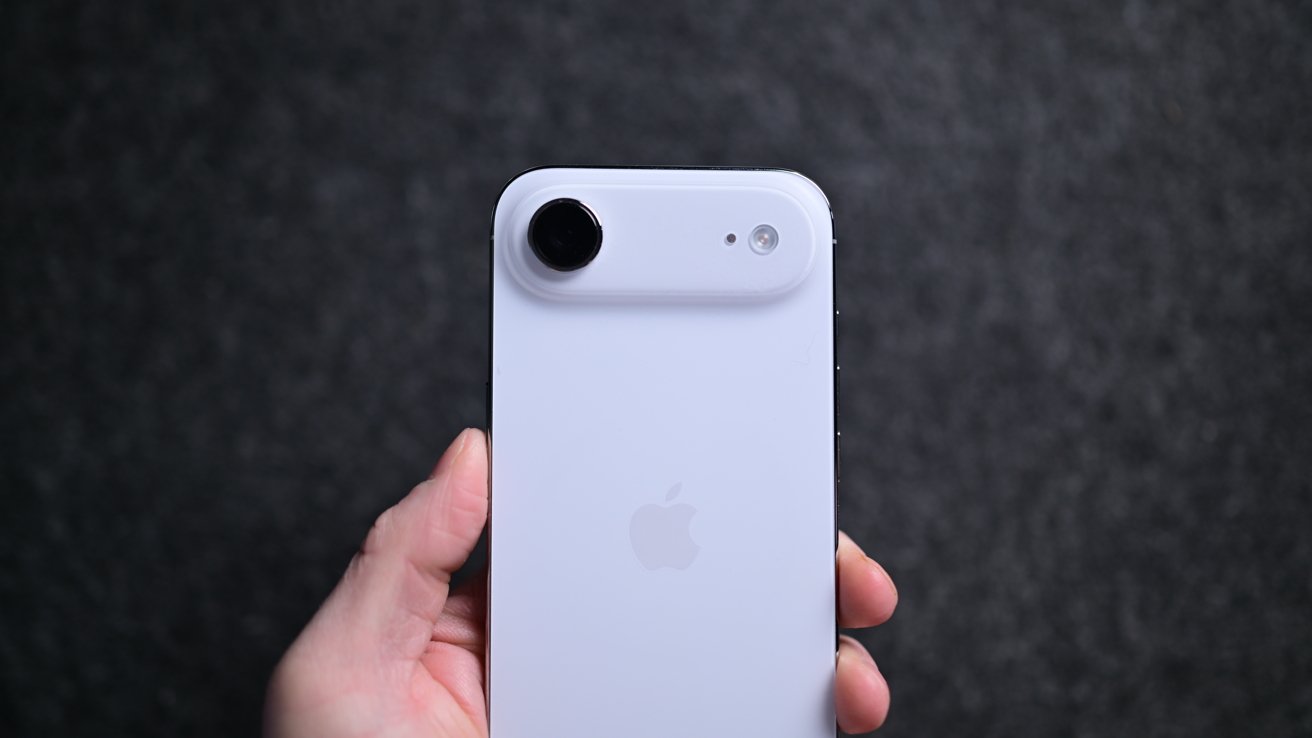
A year ago, people were hand-wringing over the iPhone Air’s failings, but 12 months later, it’s clear its detractors dropped the ball on an iconic iPhone.
The word “iconic” is thrown around all too easily these days. But it’s still one that fits the iPhone Air.
In a sea of all-too-familiar iPhones, the Air easily stands out from the crowd. It’s every bit as distinctive as the iPhone 4 or iPhone 6, devices that ushered in new design languages for Apple.
It’s also a damned good iPhone, regardless of what you might have heard or read in September 2025. I’ve carried an iPhone Air for the last year, and if September 2026 brought an iPhone Air 2, I’d jump on it.
But that’s not to be, and it’ll soon be time to move on. I’ll miss this iPhone Air, and it isn’t very often I say that about a smartphone.
The iPhone Air naysayers will claim I’m lying. That “Big Apple” got to me. That I’m being paid to say it.
But in reality, all I did was use it. And if more people actually had, I think they’d have fallen for the iPhone Air every bit as much as I did.
To focus on its flaws is to miss what makes it such a wonderful iPhone to use.
iPhone Air: Design and size
Normally, the design and size portion of an iPhone review is pretty standard fare. They’re all much the same, give or take a fraction of an inch here and a sliver of an ounce there. But the iPhone Air does things differently.

iPhone Air one-year review: iPhone Air is the coolest iPhone in years
At 6.15 inches tall and 2.94 inches wide, it sits firmly between the iPhone 17 Pro and iPhone 17 Pro Max in terms of dimensions. But things get more interesting when we look at thickness.
The iPhone Air comes in at 0.22 inches thick, compared to the iPhone 17 Pro and Pro Max’s 0.34 inches. The difference is even more stark in the hand.
The theme continues when the scales come out. The iPhone 17 Pro sits at 7.20 ounces, and the iPhone 17 Pro Max measures 8.15 ounces. The iPhone Air weighs just 5.82 ounces. Again, you really need to hold this thing to understand what those figures are trying to convey. The iPhone Air is worthy of its name.
Whereas Apple’s Pro models are made from aluminum, Apple went a different route with the Air. Titanium is the order of the day here, with four colors on offer: Space Black, Cloud White (the one I’ve been using,) Light Gold, and Sky Blue.
In reality, there’s a black one and three shades of white. Still, I prefer the pure, driven snow-like Cloud White to the other two.
Up front, there’s another key spec where the iPhone Air sits between Pro and Pro Max. Its 6.5-inch Super Retina XDR display is larger than the iPhone 17 Pro’s 6.3-inch display and smaller than the iPhone 17 Pro Max’s 6.9-inch offering.
I came to the iPhone Air as a fan of the Pro Max models. I liked the bigger displays, but I’ll admit, the iPhone Air doesn’t feel cramped. I’m not sure I’d want to go back to anything smaller still, though.
The iPhone Air maintains all of the features we’ve come to expect from Apple’s top-of-the-line models. Face ID, an always-on display with an adaptive 120Hz refresh rate, HDR and True Tone, they’re all present and correct. It even boasts the same 3,000-nit peak brightness when needed, too.
It goes without saying that the display is a stunner. All iPhone displays are, at this point. But its OLED panels just keep on finding new ways to look even better. The Air is no exception.
Other notable design features include the presence of the Action Button and Camera Control. I almost never use either, and I suspect I’m far from alone in that regard.
One design oddity that does bear calling out is the speaker situation. That is, there’s no speaker at the bottom of the iPhone Air. In turn, that means there’s no stereo output, which is a shame. But as I said in my three-month review, that’s what AirPods are for.
iPhone Air review: Cameras
One of the main knocks that people have against the iPhone Air is its single rear camera. There’s no triple-camera array here.
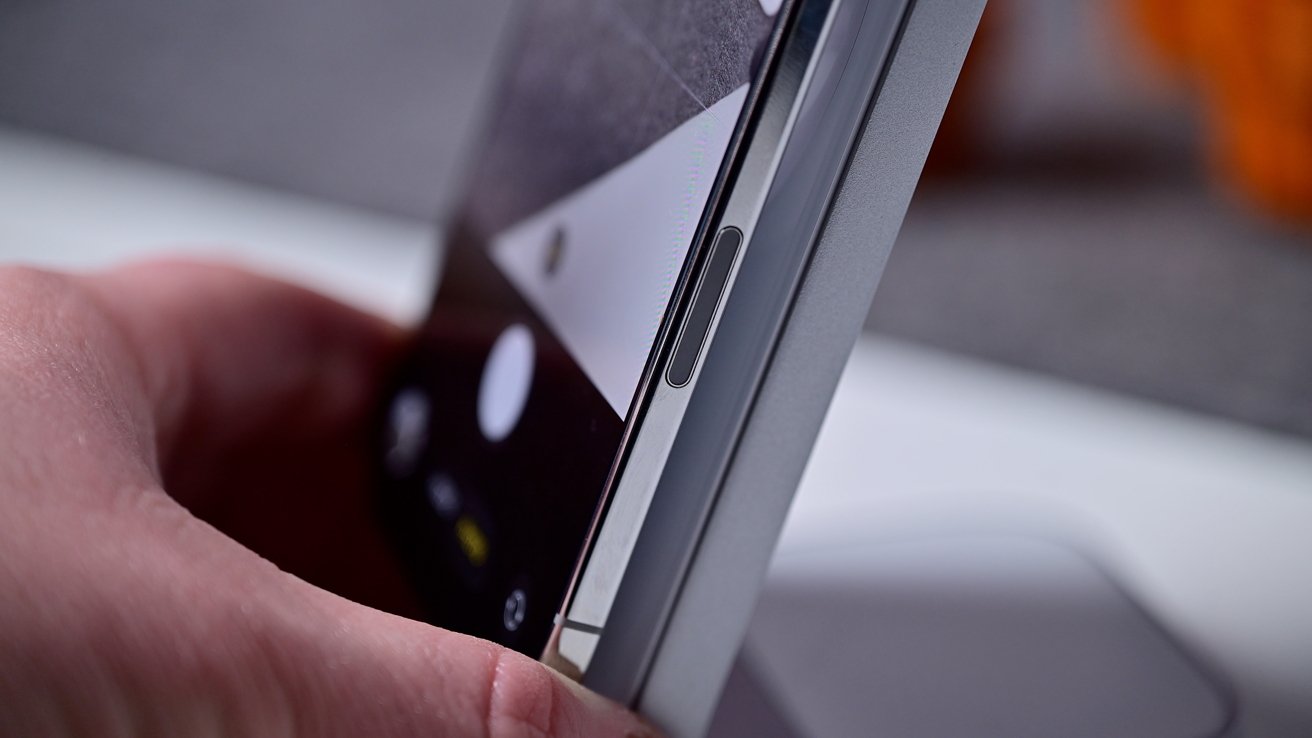
iPhone Air one-year review: The Camera Control is on the lower-right edge
Instead, you have one 48-megapixel Fusion camera with a digital zoom of up to 10x. It supports Deep Fusion, Smart HDR 5, Night mode, and all the other features Apple’s iPhone cameras can muster. It’s just that there’s only one of them.
The lack of a telephoto or ultrawide camera has put a lot of people off the iPhone Air over the last year, and I get it. I was worried about losing two cameras from my iPhone 15 Pro Max.
I took an iPhone Air on vacation shortly after its release to see how well that single camera would hold up. As it turns out, I didn’t use the telephoto or ultrawide anywhere near as often as I thought I did. That’s still the case all these months later.
Ultimately, I’ve found the iPhone Air’s camera to be excellent, whether taking high-resolution photos or 4K, 60fps videos. I’d be lying if I said there hadn’t been an occasion or two where one of the other cameras would have been handy. But it was so rare that I was never tempted to ditch the Air for something more camera-laden.
Apple’s Camera Control is a touch-sensitive button that can launch and then fire the camera. You can also use it to adjust camera settings inside the Camera app, too.
In truth, the only time I used Camera Control after the first few weeks was when I accidentally pressed it. In testing, it works as described, and I can imagine it being a popular option for photographers. It’s just not for me.
iPhone Air review: Performance
Despite its svelte dimensions, the iPhone Air still has Apple’s range-topping A19 Pro beating at its heart. But there’s a caveat: this isn’t the same A19 Pro as the one found in the iPhone 17 Pro.
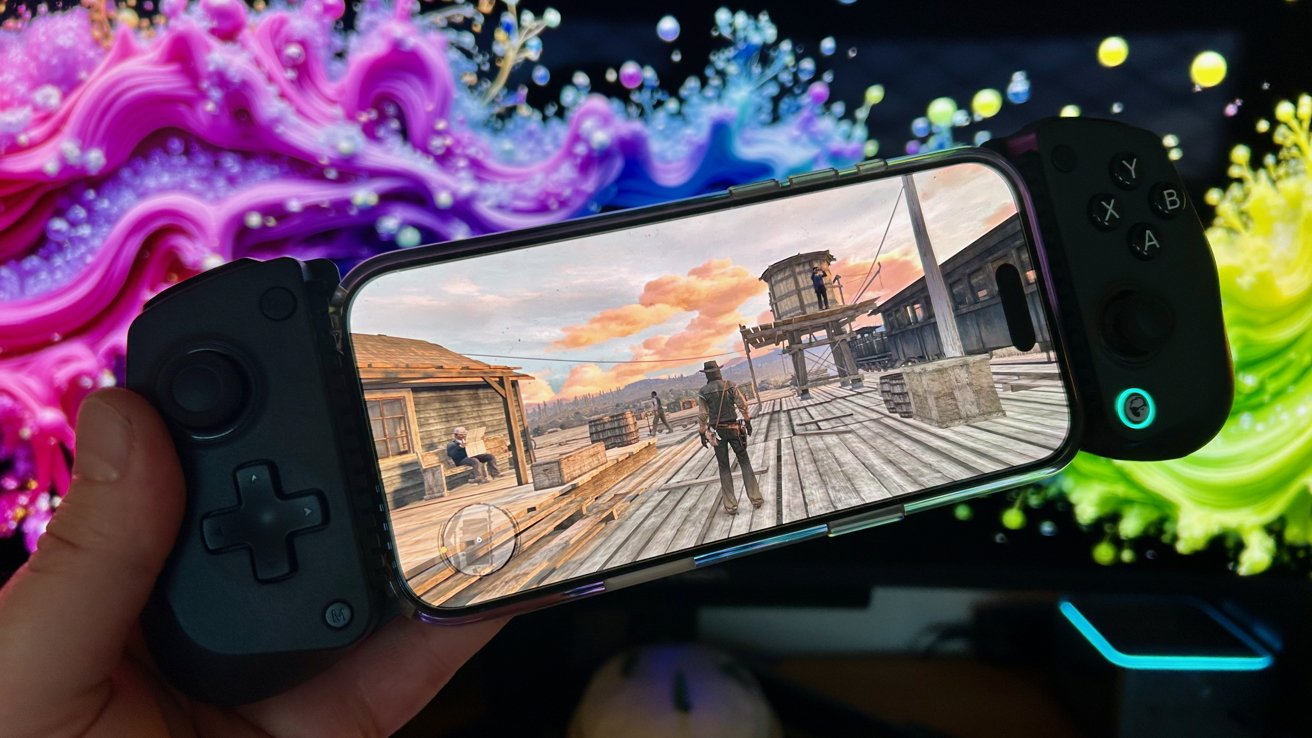
iPhone Air one-year review: The A19 Pro doesn’t break a sweat playing Red Dead Redemption
While the iPhone 17 Pro has a six-core GPU, the iPhone Air has to make do with one less. Each of its five GPU cores still has its own Neural accelerator, and the Air has the same six CPU cores as the iPhone 17 Pro.
In use, none of that matters one jot. Sure, if you run the iPhone Air and iPhone 17 Pro through your benchmarking tool of choice, it’ll spit out some different numbers.
But for the rest of us, the iPhone Air’s A19 Pro is every bit as capable as any other. I’ve played so-called console-quality games on the Air without issue, including Rockstar Games’ Red Dead Redemption.
The fact of the matter is that there’s no such thing as a slow iPhone anymore. Even iPhones from three and four years past are still incredibly performant when opening apps and doing general iPhone things.
Performance is about more than just an iPhone’s chip, and the Air uses Apple’s C1X modem for fast 5G and Wi-Fi 7 connectivity. Both have proven up to the task.
I’ve even come to enjoy the benefits of the eSIM, the iPhone Air’s only option. The lack of a physical SIM card tray continues to be an issue for some, but I’ve enjoyed the ease with which I can add and remove lines.
In terms of wired connectivity, the iPhone Air’s USB-C port is rated for USB 2 speeds. That’s just 480Mb/s compared to the iPhone 17 Pro’s USB 3 speeds of 10Gb/s. I only plug my iPhone in to charge, so it’s a non-issue for me. But it might be a problem for some.
iPhone Air review: Power and battery
Charging the iPhone Air means choosing between the USB-C port and MagSafe. Also rated for Qi2, the MagSafe induction charging is capable of 20W, more than fast enough for overnight charges.

iPhone Air one-year review: iPhone Air has been great, its battery needs to be considered
Unfortunately, the iPhone Air is also rated for 20W of wired charging. That’s slower than the around 30W you can pump into an iPhone 17 Pro or Pro Max.
However, it’s important to remember that the iPhone Air also has a smaller battery than either of those devices. It can be charged to 50% capacity in around 30 minutes if you need a quick boost before leaving home.
Given the iPhone Air’s relatively small 3,149mAh battery capacity, it’s obvious this isn’t a two-day phone. Most will need to charge it every night, as did I.
But not once did I ever run out of juice without some method of charging. I work from home, so the iPhone Air spends time plugged in as a matter of course. And in the car, it charges while connected to CarPlay.
Yes, iPhone 17 Pro Max owners need never think about their battery, because it’s huge. It can run for a couple of days without getting close to zero percent. But the iPhone Air is different.
I’ve never babied it, as such. But it’s important to remember what you’re dealing with. The iPhone Air is built to be thin and light, and that means being aware of your battery level before heading out. Or carrying a MagSafe Battery Pack.
iPhone Air review: Still the coolest iPhone, for now
I’ll admit that, in August 2025, I was ready for a change. Years of iterative iPhone releases were taking their toll, and I was ready to be wowed.
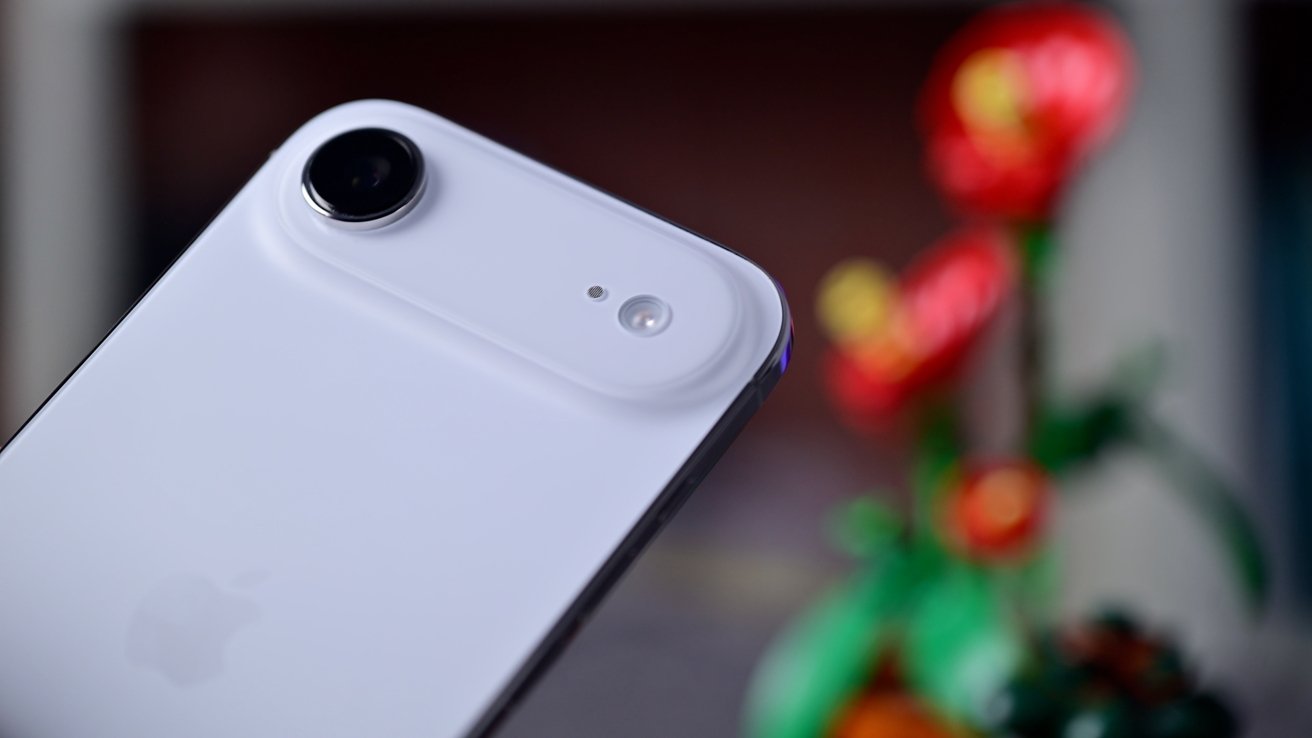
iPhone Air one-year review: The iPhone Air has a single rear-facing camera
September’s iPhone Air offered the wow-factor in spades. It looked every bit the futuristic smartphone, all thin and shiny. I had to try one out.
So I did, but I didn’t expect it to stick. I thought the Air would grow old, and that I’d eventually pick up an iPhone 17 Pro Max.
I’d been told that the battery was too small, and that a single camera in 2025 was enough to demand firings at Apple Park. The iPhone Air was all form over function, they said.
And they were right. The iPhone Air is flawed, but that’s far from unique. A two-seater sports car can’t carry a family of five, and a family SUV won’t win any awards for handling.
Life is about compromises. You can have all of the battery life and cameras in an iPhone 17 Pro Max, but it’ll pull your shorts down as soon as you stand up. That’s a compromise.
But for all its compromises, the iPhone Air has offered something no other iPhone could over the last 12 months. It’s been fun, and interesting, and cool. And I’ve enjoyed every minute with it.
Now, it’s 2026 and a new cool iPhone is on the horizon. And you know what? I’m sure that the iPhone Ultra will be flawed, too.
And I can’t wait to get my hands on one.
iPhone Air review: Pros
- A fresh new design
- Incredibly thin and light
- Storage starts at 256GB
- Excellent 48-megapixel Fusion camera
iPhone Air review: Cons
- Middling battery life
- No stereo speaker setup
- One camera isn’t enough for some
Rating: 4 out of 5
The iPhone Air has been a joy to use over the last 12 months. It’s fast, it has plenty of storage, and the one camera that it does have has proven to be excellent.
It isn’t a perfect phone, and its flaws are well documented. But the positives outweigh the negatives, and the iPhone Air goes down as one of my favorite iPhones yet.
Where to buy the iPhone Air at a discount
The iPhone Air starts from $999 with 256GB of storage, but there are many incentives available from carriers to bring the cost down.
Tech
AI learns nature’s code: Allen Institute, UW and Fred Hutch launch $95M open science initiative
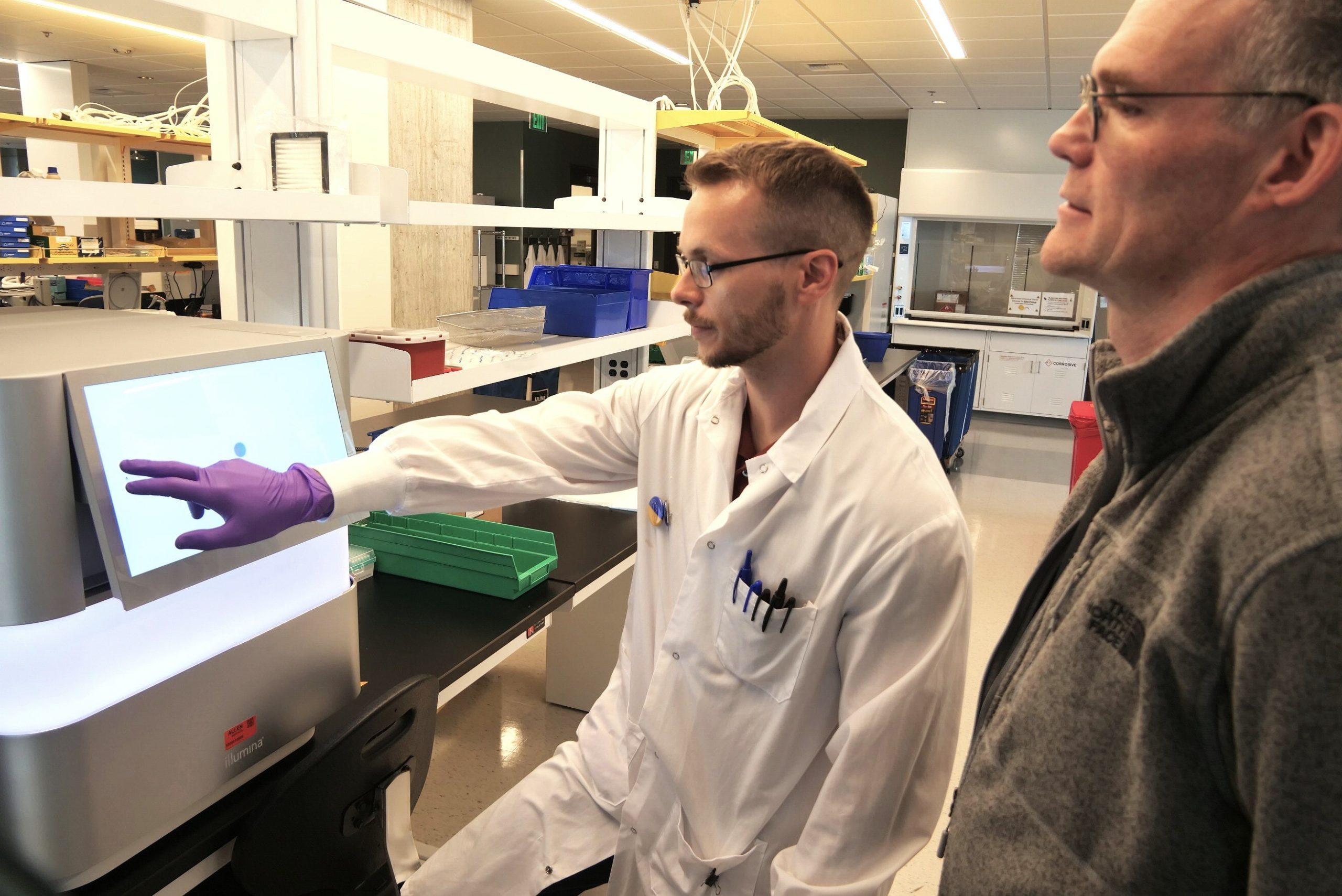
Three of Seattle’s top scientific institutions are launching a nearly $95 million research initiative that will generate data and train AI models to design proteins and genes that don’t exist in nature — sharing the results freely to help others develop new medicines and materials.
The initiative, called AI BioDesign, brings together the Allen Institute, the University of Washington and Fred Hutch Cancer Center, with funding from the Fund for Science and Technology (FFST), created by the estate of Microsoft co-founder Paul Allen.
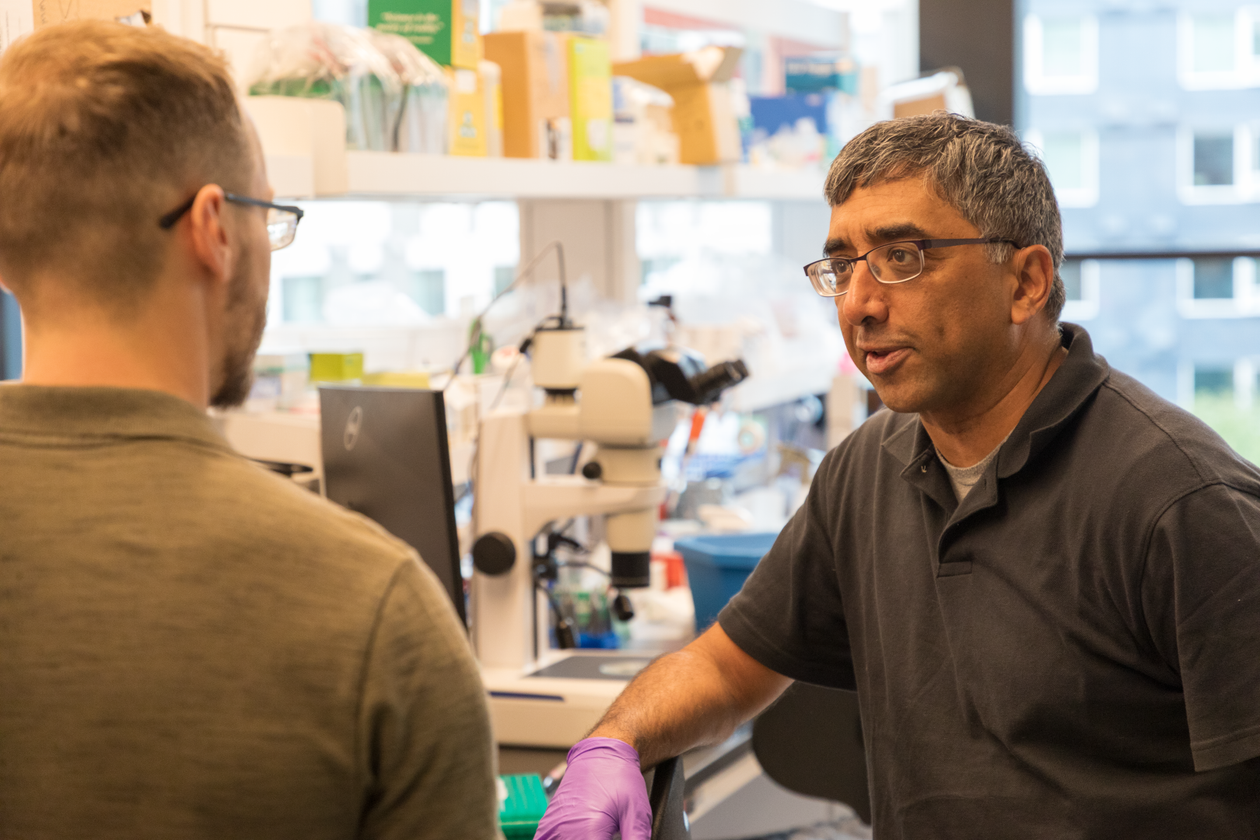
AI BioDesign is led by David Baker, the UW biochemist who won the 2024 Nobel Prize in Chemistry for using computers to design new proteins, and Jay Shendure, a leading genome scientist at the UW and the Allen Institute.
The plan is to “hijack a lot of the machinery that evolution provided us” — the cellular assembly line that turns DNA into proteins — to design and measure millions of novel biological molecules, Shendure said in an interview in advance of the announcement.
That will help AI models learn the rules of biological design from a huge set of examples, instead of inferring them from the relatively limited number that nature has produced.
The field, Shendure said, is “putting too much emphasis on taking the cranks that we have and just running with them, as opposed to building the right cranks.”
The goal is to make designing biology more like ordering a part: a molecule that latches onto a cancer cell, for example, or a genetic switch that fires only inside brain cells and nowhere else.
Potential outcomes could include everything from new therapies for disease, to proteins that dissolve plastic in the environment, to cells that travel through the body in a programmed way, said Sanjay Srivatsan, a Fred Hutch assistant professor who leads the cancer center’s work on the initiative, in a video released with the announcement.
“For the first time, the speed of AI is beginning to match the experimental power of synthetic biology,” Baker said in a statement. “That changes the question from ‘what has nature already made?’ to ‘what else is possible, and how can we test it?’”
Where the money goes
The Fund for Science and Technology is providing $94.6 million for AI BioDesign over five years. The foundation launched publicly last year with a mandate to direct a large share of Allen’s fortune into bioscience, environmental and AI research.
The funding from FFST is allocated as $46.1 million to the Allen Institute, $43.8 million to the UW and $4.7 million to Fred Hutch, according to an Allen Institute spokesperson.
The initiative had 62 people as of mid-August, including some new hires and others redirected from existing projects at the three institutions. The UW accounts for 41 of them, the Allen Institute 13, and Fred Hutch eight. AI BioDesign is expected to continue growing over time.
“AI BioDesign is exactly the kind of ambitious, collaborative science FFST was created to support,” said Marc Malandro, the foundation’s chief programs officer and co-lead, in a statement. He joined FFST in May after nearly a decade at the Chan Zuckerberg Initiative, most recently as chief operating officer of CZI and the Chan Zuckerberg Biohub Network.
Malandro and Chief Financial and Operations Officer Liz Carey have been leading FFST on an interim basis since founding CEO Lynda Stuart stepped down in May.
Inside the lab
On a recent tour of the AI BioDesign lab, research associate Jack Boylan pulled up results from a run he’d done on their new DNA sequencer that morning — on free kits donated by a neighboring biotech company, a year past their expiration date.
“We decided, let’s give it a roll,” he said. It worked fine.
The sequencer is what makes the whole approach possible. It reads all of the millions of DNA sequences in a single tube at once and reports which ones performed. One recent experiment ran 6 million distinct sequences through it at once.
“The scale comes not from robotics, but from parallelizing inside the test tube,” said Jesse Gray, executive director of strategy and platform for AI BioDesign and the Seattle Hub for Synthetic Biology, and a former Harvard Medical School geneticist.
The lab, at Dexter Yard in Seattle’s South Lake Union neighborhood, a short walk from the Allen Institute’s headquarters, is organized into teams of five or six people, each working on a different design problem.
A separate four-person team of machine-learning specialists takes the incoming results and works with the bench teams to decide which experiments come next — the ones that will teach the models the most. Each round is judged on how much the models improved.

The Allen Institute calls projects like this “accelerators,” a term Rui Costa, the institute’s president and CEO, traced back to Paul Allen himself. The word came up in early planning sessions, Costa said. Allen wanted to “exponentially accelerate the field.”
Other accelerators at Dexter Yard include the Seattle Hub for Synthetic Biology, the Allen Institute’s collaboration with the Chan Zuckerberg Initiative and the UW, which Shendure also leads; and Cell Science, which works on engineering cells to assemble themselves into tissues.
The Allen Institute for AI (Ai2), the separate Seattle research organization also founded by Paul Allen, is involved informally rather than as a funded partner, Costa said.
Its robotics team has been talking with AI BioDesign about scaling up the protein work, and the two expect to collaborate on models and on tools that generate research hypotheses.
Why give it away
The decision to focus on open science also came from Allen, Costa said in an interview this week. “He was so visionary in the early 2000s: radically open science to exponentially impact and change fields, not to compete.”
That raises a question the initiative will face as soon as it produces anything valuable: what happens if a company builds a lucrative drug on data given away free? In traditional science, Costa said, being beaten to a discovery counts as a loss. Here it’s the goal.
“We would be so lucky if many companies would be taking this data and changing the world for good,” he said.
At the same time, Costa left open the possibility of the three principal institutions spinning out their own startups, nonprofits, or other initiatives from the work done by AI BioDesign.
Betting against the field
AI BioDesign’s approach runs against much of the current thinking in the field. Costa said most efforts to apply AI to biology are chasing a single general model that could answer questions about how any cell works. AI BioDesign is betting on the opposite: narrow models built for specific design problems, trained on data generated for that purpose.
“This project is a clear bet on a different way of doing things,” Costa said.
The people running the initiative are careful not to oversell. Gray said it remains an open question as to whether their approach beats the alternatives. “The jury’s still out,” he said.
Shendure put it plainly: “It’s never as easy as you think it’s going to be,” he said.
Costa said AI BioDesign needs to show real progress within 18 to 24 months — ideally even sooner — and expand to researchers around the world within five years.
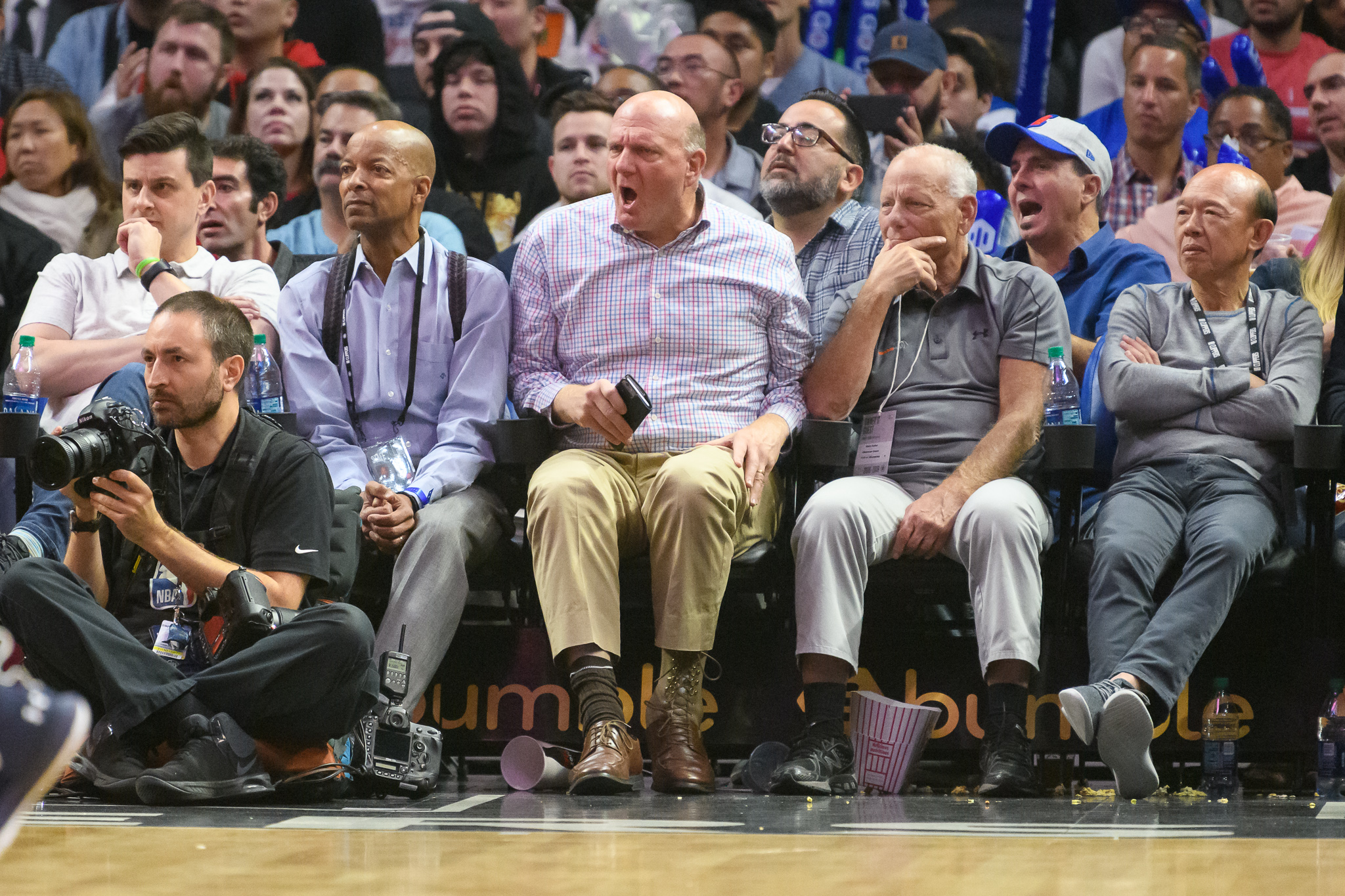

The NBA dropped the hammer on Los Angeles Clippers owner Steve Ballmer on Wednesday, suspending the former Microsoft CEO from all league and team activities for one year and fining the franchise $30 million following a year-long investigation into illegal salary-cap circumvention involving star forward Kawhi Leonard.
The sweeping sanctions mark one of the most severe punitive actions taken against an owner in modern sports history. Beyond Ballmer’s ban and the team fine, the Clippers were stripped of five consecutive first-round draft picks (2029 through 2033), several team executives were suspended, and Leonard was ordered to pay $700,000 in restitution. Leonard’s uncle and advisor, Dennis Robertson, was also banned from league activity for five years.
The league’s findings center on allegations that first surfaced in late 2025: that Ballmer and team management illegally funneled off-court income to Leonard to bypass the NBA’s strict salary cap limits.
Central to what the NBA identified as a salary-cap evasion scheme was Aspiration, a green-banking tech startup that filed for bankruptcy after its co-founder pleaded guilty to a $248 million fraud. Shortly after signing Leonard to a $176 million contract extension in 2021, Ballmer personally poured $50 million into Aspiration, while the team landed a $300 million sponsorship deal and Leonard secured a multimillion-dollar endorsement contract with the firm.
The NBA’s findings directly refute Ballmer’s aggressive defense. When allegations first surfaced last year, Ballmer strongly rejected the claims, labeling the idea that he used tech investments to pay Leonard under the table as “absurd” and framing the transaction as a standard startup investment gone wrong. However, league investigators concluded that Ballmer knowingly facilitated off-court financial opportunities to secure Leonard’s commitment.
The disciplinary action echoes the aggressive corporate posture that defined Ballmer’s era at Microsoft, where the company repeatedly pushed legal and regulatory boundaries to maintain market dominance. As Microsoft’s president and later CEO during its contentious antitrust battles with the U.S. Department of Justice and European regulators in the late 1990s and 2000s, Ballmer oversaw a corporate culture famous for playing hardball to secure competitive advantages.
The suspension marks a rare personal and organizational blow for Ballmer. He bought the Clippers in 2014 for a then-record $2 billion shortly after stepping down from Microsoft, leveraging his immense tech fortune — currently valued around $150 billion — to transform the franchise, including the opening of its state-of-the-art, tech-laden Intuit Dome.
NBA Commissioner Adam Silver called the circumvention “flagrant” in a statement, emphasizing that the salary cap system serves as “the bedrock of competitive balance in the NBA.”
Following the ruling, Leonard — whose trade to Toronto had been paused during the probe — said that he accepts “full responsibility for lapses in judgment by people within my inner circle,” adding he is focused on “closing this chapter and moving forward with a clean slate.”
It’s been a chastening couple of years for Sonos after the self-inflicted blow of an app update that was meant to improve discovery and send the app into the future – only for it to send the app into disarray, an issue that it a lot of time for Sonos to retrieve the situation.
So after the soft reboot that was the launch of the Play earlier in 2026, Sonos is back and determined to show that it’s still the multi-room king with the arrival of its latest operating system in Sonos27, which goes full send on AI which Sonos believes will set a path for its future.
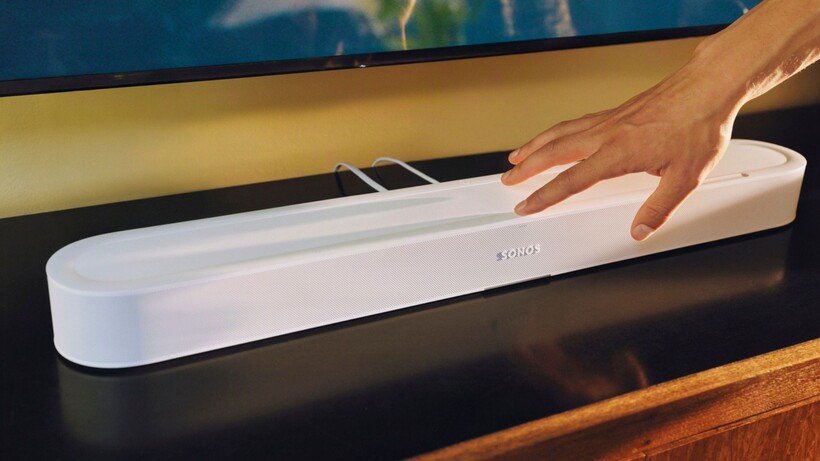
Sonos27 arrives at the same time as Sonos’ latest in its growing line of Ultra products, with the launch of the Sonos Ace Ultra and the Sonos Beam Ultra, the former offers tighter integration with the rest of the Sonos’ speakers and soundbars with the introduction of the Headphone Engine 2; while the latter aims to bring even more performance from the slim, compact soundbar form.
There’s plenty riding on these products, which arrive at an inflexion where AI is making its presence felt, but no-one seems altogether sure as to how to properly harness it – might Sonos have found a way to utilise AI for good?
AI now and forever more?
Artificial Intelligence is not everyone’s favourite subject of late. Despite it making waves in media cycles, you can’t mention AI without looking at both the good and bad it brings. AI may be making things more efficient and helping connectivity, but it’s also making things a great deal more expensive.
Sonos is looking at the positives, framing the Sonos27 OS as a major platform milestone that’ll bring improvements to all its products.
As I was told in a conversation with Sonos’ engineers and designers ahead of the launch, the “Sonos 27 is the operating system for your home… it’s the culmination of all the work that we’ve done over the 20 years”, and that this new platform wants to reshape what people view Sonos as, not just as a speaker company but what Sonos views itself as, “an audio operating system for the home”, with Sonos 27 being “a system that lets you create the sound experience in your home”.
There have been mumblings among users that Sonos’ current voice control is limited (and it is), but Sonos 27 Voice looks to change that, with Sonos investment in AI creating a custom LLM-trained-assistant that’s focused on audio and home context.

Using Sonos’ MCP (Model Context Protocol) and AI agents that’ll be able to plug into the system (ChatGPT, Gemini, Claude etc), users can prompt the system to deliver more natural and more specific answers. The example given was if you wanted to start “some music for my dinner party”, you’d ask through Voice Control and will serve up some tunes to go with your food. You voice, at least in this context, becomes the remote through which you can operate and find what you want.
The Sonos Custom Agents will allow users to create their own agents, each “with its own model, persona and voice”, creating a personalised assistant that’s by your side. It’s a cool idea, though I wonder if it’ll be able to learn from you over time but if there’s a thing that AI doesn’t seem to be great at, it’s specificity.
The ‘fabric’ that ties everything together

Sonos Fabric is what ties the system together, creating a whole that you can continually add, an organism that works in sync rather than coming up against brick walls in the system you can’t get past.
Ahead of the original Ace headphones launching, there was the belief that these headphones would link directly to your Sonos system, and you could fling music from a speaker to the headphone.
That wasn’t the case, if anything that was hype not from Sonos but from those excited about the headphones finally being a thing. The disappointment set it with the realisation that this direct linking could only be done with the soundbar through the TV Audio Swap feature, which admittedly was very good, but not what people were hoping.
Fabric can change that, and the new Headphone Engine 2 in the Ace Ultra makes that an actual reality. You can pull in sound from another speaker into the headphones if, for instance, you want some private listening, and you can push the sound back to a speaker in your home with the touch of a button. The headphone swap is no longer restricted to the Ace range and the soundbars.

You will now be able to use Sonos’ portable speakers within a home cinema set-up, though both speakers have to be of the same model to act as rear gunners. You cannot, for example, have a Move 2 and a Play speaker as your surrounds – it needs to be either two Move 2 speakers, or two Move Plays.
It’s that simple, and hopefully seamless, approach to unifying a system that AI’s potential seems to be able to unlock. Ahead of the launch, I wrote about Sonos needing to focus on its identity and be more Sonos. It looks like AI is helping them to do just that.
But it has to be good

The scope of what Sonos is doing and the improvements they’re bringing to the platform are all well and good but there was confidence about the previous major overhaul to the app – and look how that turned out. This can’t be another false dawn.
But the signs coming out of Sonos appear to be right. Before, you could argue that Sonos became arrogant and through the chaos of the previous app update, got hit with the hubris stick.
It’s led to big changes – a new CEO – and a new direction, ditching some products that weren’t fit for release (the mystery TV streamer) and a fresh focus in its embrace of AI.
The Ace Ultra needs to be better than the original Ace, which were solid but not up the standard of Bose or Sony. The Beam Gen 2 has arguably been the best compact soundbar since it launched, but the five-star JBL Bar 300Mk2 has knocked it off its perch in our best lists, and given the price difference between the new soundbar (£699 / $699!), it’s not a guarantee that the Beam Ultra will hop back atop the throne that Sonos has sat on for so many years.
We’ll see if Sonos is truly back once the new products are in the wild, and we’ll also have a gander of what the future holds in this increasingly AI-powered world.

from the electrified-bullies-and-cowards dept
This was inevitable. ICE has billions of new money to spend, zero shame, and not a single adult in a leadership position capable (or willing!) to talk the agency off the ledge.
ICE decided the neat new tool of cruelty it absolutely had to have were gloves that behave like stun guns or low-powered Tasers. Only one company makes these: Compliant Technologies. There’s a reason for that. Prior to ICE’s devolution during Trump’s second term, no agency of any size really had any reason to buy these stun gloves.
Early adopters were prisons and (wtaf) schools. These gloves made limited sense in prisons where guards are working in confined areas and possibly don’t want to utilize any weapon that might be taken away and used against them. Why they’re being used in schools is literally unimaginable. But here we are in the 21st century, witnessing schools pleading with law enforcement agencies to stop shocking their students with Compliant Technologies G.L.O.V.E., or (brace yourself) Generated Low Output Voltage Emitter, which sounds more like an electrician’s tool than something capable of rendering minors immobile.
With only one provider available, the decision was easy. ICE finalized its threatened purchase of 6,000 G.L.O.V.E.s from Compliant Technologies late last week, ensuring officers will have even more ways to inflict pain on thousands of non-criminals, ranging from ambushed migrants to peaceful protesters who have managed to momentarily inconvenience ICE’s kidnapping squads.
Everything about this is awful, but ICE’s defense of this purchase is both bizarre and palpably evil:
“ICE does not currently have an empty hand use of force device to provide to the field amidst unprecedented levels of threats and violence against ICE officers and agents to help ensure they can de-escalate tense situations before they turn violent,” the agency wrote in procurement documents.
WTF? Do you know who else doesn’t have “empty hand use of force devices?” 99.999% of US law enforcement agencies, including federal agencies that generally face more legitimate danger from arrestees, like the FBI, ATF, and Secret Service. And do you know why? Because it’s an absolutely psychopathic use of force “option.”
Somehow, it’s ICE that desperately needs this hideous option, even though all it’s really doing at this point is doing migrant mop-up work — arresting migrants by the thousands despite almost none of these remaining migrants having ever been arrested, much less convicted, for violent crimes.
The procurement document [PDF] contains more supporting statements from ICE that make it clear these gloves aren’t really meant to help subdue violent arrestees. The gloves are being purchased to give ICE officers the means and the opportunity to basically stun anyone they run into, including people they aren’t even seeking to arrest. This paragraph suggests stun gloves are nothing more than a violent way for ICE officers to “de-stress” while at work:
ICE requires a non-lethal, de-escalation device intended to diffuse situations of high-stress environments where physical altercations are likely, such as field domestic disputes or inmate transport in jails. It will be used when a subject is actively or passively resisting and an officer needs to gain control quickly to prevent injuries to both parties.
The document doesn’t explain what the phrase “field domestic dispute” means, nor does it provide context. Reading “domestic dispute” in its usual context, the sentence seems to suggest officers should be able to stun their domestic partners into compliance when things at home get a bit heated. Obviously that’s not what that phrase means, but it’s an extremely weird grouping of words that seems to be specific to ICE and its desire for gloves that can shock people.
Further down, ICE makes it clear it’s going to allow officers to deploy the gloves against peaceful protesters or anyone else who might be considered an obstacle to officers’ kidnapping plans.
“Soft” Empty-Hand Control- Enabling officers to briefly distract a subject who is resisting or hiding their hands to secure handcuffs without transitioning to higher, more forceful levels of control.
Civil Disturbance- Assisting crowd control units in moving groups or denying access to areas without requiring lethal or high-impact munitions.
ICE makes it sound like its officers will stop shooting or beating people because of these gloves. But I can guarantee you the gloves will be used whenever possible, especially when they might facilitate a beating. Since pretty much every ICE officer wears gloves, it will be impossible to tell who’s wearing the stun version and who’s just trying to look like a Call of Duty lobby idle animation. Officers are absolutely going to love these gloves because the element of surprise will always be on their side.
There’s no way ICE seriously believes 6,000 pairs of hand-worn cruelty application devices will actually limit the use of deadly force. But it can probably assume it might reduces shootings because its thousands of under-trained officers will probably be less willing to grab a metal gun from near their waist when they’re not sure whether or not their G.L.O.V.E.s are still activated.
This is just a way for ICE officers to hurt more people while pretending stunning anyone an officer touches is synonymous with de-escalation. This is just an agency loaded from top to bottom with sadists seeking out novel ways to inflict more pain.
Filed Under: cruelty, dhs, ice, mass deportation, police violence, stun gloves, trump administration
Companies: compliant technologies

A group of ill-prepared climbers had to be rescued because Gemini told them climbing Mt. Shasta would only take 8 hours.

A group of climbers set out to climb Mount Shasta in Siskiyou County, California thinking it would only take them eight hours, because that’s what Google’s Gemini chatbot told them. Gemini ended up being very, very wrong. Specifically, they relied on the chatbot for route research and asked it for recommendations on how much food and water to take with them.
Gemini reportedly told them to prepare for an eight-hour trek and pack food with simple carbohydrates instead of fats, because fats “take too long to digest.” As a result, they carried daypacks with just enough food and water for a short climb, with no plans for shelter and no warm clothing. As you may have surmised by now, they eventually had to be rescued by the US Forest Service Climbing Rangers with the Siskiyou County Sheriff’s Office Search and Rescue team.
The climbers set up a base camp on August 29, the sheriff’s office has reported, before setting out on August 30 at 3AM. It took them 16 hours just to reach the summit. That was already 7PM on August 30, way past the recommended turnaround time of 12PM. Since it was already dark when they descended, and they were ill-prepared, they ended up wandering off-route. They were using AllTrails for navigation, but the phone with the app died before they could make it down.
While they called 911 to ask for directions, it wasn’t until around 9:30AM on August 31 that the forest rangers had finally reached them. Further, weather conditions didn’t permit a helicopter rescue, so they had to descend on foot, which took another nine hours. “We relied too much on AI rather than our own critical thinking,” the climbers reportedly told SFGate. The Siskiyou County Sheriff’s Office is advising climbers to call the Mount Shasta Ranger station ahead of their trip for the most accurate information and to “never rely solely on AI” for planning.
Tech
Dallas garbage trucks are using AI cameras to flag code violations and give homes a “blight score”

WTF?! Want another reason why there’s a big pushback against artificial intelligence? In Dallas, AI-powered cameras mounted on trash collection trucks are photographing properties and assigning them a “blight score” – a rating based on perceived code violations.
NBC 5 obtained city records showing that Dallas started testing the AI cameras on bulk trash collection trucks in April, ramping up their use over the summer.
The cameras identified at least one possible code violation on more than 21,000 properties. These include grass height, litter, debris, overgrown weeds, and structural issues.
The properties are then assigned a “blight score” based on the level of violations. A score of 1 is the least severe, while 4 is most severe.
Some homeowners whose properties appeared on the list received code enforcement “courtesy notices,” which could result in fines if the violations aren’t addressed.
One person whose property was flagged by the camera for a chimney paint violation and given a score of 2 said the rating was too severe – even a 1 seems a little harsh.

Courtesy: Edward Ayala, NBC 5 Investigates
Plenty of other locals are far from happy about the cameras. There are the obvious privacy concerns about photos being taken of someone’s home without their consent, and many are asking who has defined what counts as blight on their property.
The system consists of 100 cameras mounted in pairs on 50 brush and bulky-waste trucks, with one pointing from each side of the vehicle. The 1920 × 1080 cameras use fixed-focal-length lenses and have no optical or digital zoom. Dallas officials say they operate at street level and cannot see above fences. The city expects the trucks to provide a visual scan of Dallas roughly once every 30 days.
City Detect, which operates the cameras, said it has no say in how the city uses the data for enforcement. CEO Gavin Baum-Blake said faces and license plates are blurred.
The company configures the AI according to Dallas’s requirements. The city says its models were trained on examples covering different seasons, building styles, neighborhoods, lighting conditions, weather, and geographic areas, with the aim of reducing inconsistent or biased detections. Images and other data are kept in cloud storage located in the United States, and City Detect maintains the data for the duration of the contract.
There’s also the problem of AI getting things wrong and just hallucinating things that aren’t there. There was a case last year in which a 16-year-old high school student was swarmed by police and handcuffed after an AI camera system mistook the bag of Doritos he was carrying for a gun.
The biggest concern surrounding the Dallas trucks is that the program could increase fines for those already struggling financially in economically challenged areas. The city said it has already sent out 1,800 courtesy notices, and its goal is to issue around 5,200 per year.
The good news for locals is that the cameras might not be around for much longer. Dallas City Councilmember Chad West has proposed an amendment to the budget to stop funding the three-year, $2.5 million camera contract.
West agreed to table his request to strip funding for the cameras after he said the city manager agreed to a hearing on the issue in December. While he believes the cameras do have uses, such as detecting illegal dumping sites, there needs to be further investigation into their impact on families and who can access the images.
Image credit: Sludge G

Vodafone has launched SuperMobile, a new premium mobile plan designed to offer faster speeds, more reliable performance and added security over its standard plans.
The service is powered by VodafoneThree’s 5G+ network and promises speeds of up to four times faster than standard plans, along with a guaranteed minimum download speed.
The launch comes just over a year after the Vodafone-Three merger, with VodafoneThree positioning SuperMobile as a move away from mobile plans that primarily compete on price. It’s also part of the company’s wider £11bn, eight-year investment in its UK network.
SuperMobile uses Vodafone’s new 5G+ FastTrack technology, which is designed to maintain higher performance for activities such as streaming, live TV, gaming and immersive media, even when the network is busy. Vodafone says the service is the first globally from a mobile network operator to guarantee a minimum download speed of 15Mbps. If customers don’t receive that minimum, they can leave the plan without paying a fee.
Security is another part of the package. SuperMobile includes 5G encryption alongside Secure Net Mobile, which provides protection against malware and viruses, identity protection, scam call protection and network-level parental controls at no extra cost.
How much does it cost?
For existing contract customers, SuperMobile costs £3 per month more than full-speed Xtra plans, £8 more than 100Mbps SIM-only plans and £4 more than 100Mbps handset plans.
There’s also a rolling monthly option costing £12. The service is available to small businesses with up to nine employees, while larger enterprises can get tailored packages with specific performance commitments.

VodafoneThree says its 5G+ population coverage has grown from 46% to 60% since the merger, with the company targeting 99.96% coverage by 2034.
For businesses, Vodafone has also introduced a National Business Slice, which gives organisations dedicated capacity separate from consumer traffic. Vodafone says this can deliver up to four times faster speeds with committed performance targets. A National Critical Slice for emergency services and other critical public services is planned for next year.
With SuperMobile, Vodafone is essentially offering customers the option to pay more for a higher-priority mobile connection rather than simply buying more data. Whether that extra performance is worth the premium will depend largely on how consistently FastTrack delivers its promised benefits in busy areas.

“Enshittification of car controls [is] rapidly accelerating,” writes longtime Slashdot reader sinij, pointing to a new report from Car and Driver. From the report: Remember when iPhones used to come with free headphones and a phone charger (including the wall plug)? It didn’t feel so much like Apple giving you free goodies as it did that the company was providing you with the relevant hardware to use the device. Apple stopped including headphones and charging blocks in 2020. Now, Hyundai is pulling some of its standard hardware from the box, at least for two models.
Hyundai is charging customers extra for a driver’s display in the new Elantra generation (more specifically, the Korea-market Avante), as well as the Ioniq 3, Motor1 reported. Both models feature Pleos Connect, Hyundai’s new infotainment setup that pairs a center touchscreen with a slim 9.9-inch instrument cluster mounted above the dashboard — except where it doesn’t.
In its domestic market, the instrument cluster screen is offered as a 350,000 won ($255) option for the base trim. Not the most expensive optional extra in the world, but still kind of a slap in the face for a feature traditionally viewed as standard fare. Things are more expensive for the electric Ioniq 3. In the EV’s case, the base trim gives customers the full Tesla-screen experience, meaning if customers want the driver’s display, they’ll need to fork over the additional $5000 necessary to move up to the next-level trim. […] Hyundai plans to have the setup equipped in 20 million cars globally by the end of the decade.


Read more of this story at Slashdot.
Cam Schlittler shines, Yankees beat Angels in 10

How to make industry giants chase you, and other lessons from 28 years inside T-Mobile

Japan Tested XRP Against SWIFT. The Result Surprised EVERYONE





-

 Fashion6 days ago
Weekend Open Thread: Maeve – Corporette.com
-

 Crypto World7 days ago
Bitcoin’s 22% rally now needs real demand to outlast Treasury liquidity boost
-

 Business7 days ago
Apple Confirms September 9 Keynote and Reveals Its Full Pre-Order Schedule
-

 Crypto World12 hours ago
CLARITY Act could advance within weeks, Atkins says
-

 Business6 days ago
Salesforce Stock Soars 19% as Blowout Earnings and Agentforce AI Growth Silence Software Skeptics
-

 Business5 days ago
Onto Innovation Stock: AI’s Next Bottleneck Is Yield (NYSE:ONTO)
-

 Crypto World5 days ago
Bitcoin price tests $82K resistance as Brandt stays long
-
 Tech5 days ago
Hugging Face built a $4.5 billion empire on free AI models. Now Nvidia is buying it for $12.9 billion
-

 Business6 days ago
iPhone 18 Pro Pre-Orders Could Shift to Saturday as Apple Reportedly Avoids September 11 Anniversary
-

 Crypto World6 days ago
Truflation calls for Fed rate cut after PCE forecast
-
 News Videos4 days ago
Charlie Munger on Robinhood: No one should believe that Robinhood’s trades are free
-

 Tech5 days ago
PaperCut releases second emergency patch for exploited flaws
-
 Entertainment6 days ago
‘Adults’ Creators Break Down Season 2’s Most Shocking Moments and Tease a Potential Season 3
-

 Crypto World1 day ago
Elon Musk Says Grok 4.7 Lands in 10 Days and Will Beat Every Model
-

 Tech6 days ago
The fix for the AI agent that hijacked a company’s DNS: it can propose the change, but it can’t approve it
-

 Tech5 days ago
Tamagotchi Ring Takes the 30-Year Digital Pet and Places it on Your Finger
-
 Tech4 days ago
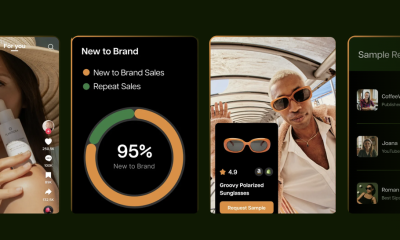
As the influencer economy drives retail sales, Seattle startup raises $22M to play matchmaker
-
 Crypto World1 day ago
Bitcoin slips below $77.5K as macro pressure offsets ETF inflows
-
 NewsBeat4 days ago
Trump posts AI video of ‘Lake America’ being protected by an army of bequiffed ‘Donald Ducks’
-
 Entertainment4 days ago
Taylor Swift Reportedly ‘Frustrated’ With Travis Kelce After ‘Short’ Honeymoon
You must be logged in to post a comment Login