



Connect with us
DAPA Banner

Tech

Google, Accel India accelerator choses 5 startups and none are ‘AI wrappers’

Published

on

Many artificial intelligence startup ideas are still little more than superficial “wrappers” built on top of existing models. But as the AI model makers add more features, investors are wary of startups that could become so easily unnecessary.

Case in point: when reviewing more 4,000 applications for the joint AI accelerator for India startups run by Google and venture firm Accel, “wrapper” ideas dominated. But none of them were among the five startups for the latest cohort, Accel partner Prayank Swaroop told TechCrunch (pictured above).

Announced in November, the AI-focused Atoms program by Google and Accel aims to back early-stage startups building AI products linked to India. Startups selected for the latest cohort will receive up to $2 million in funding from Accel and Google’s AI Futures Fund, along with up to $350,000 in cloud and AI compute credits from Google, the firms said.

Roughly 70% of the rejected applications were “wrappers” — startups that layered AI features such as chatbots on top of existing software but “were not reimagining new workflows using AI,” Swaroop said.

Advertisement

Many of the remaining applications that were denied, Swaroop said, fell into crowded categories such as marketing automation and AI recruitment tools, areas where investors saw little novelty. Startups in those sectors often struggle to differentiate themselves, he said.

This isn’t, perhaps, surprising. This year’s program received nearly four times the applications than previous Accel’s Atoms cohorts — with many first-time founders.

India’s growing AI ecosystem remains largely focused on enterprise applications and Swaroop said the applications reflected that. About 62% of the submissions focused on productivity tools and another 13% on software development and coding, meaning around three-quarters of the applications were enterprise software ideas rather than consumer products. (Swaroop had hoped to see more ideas for healthcare and education.)

Techcrunch event

Advertisement

San Francisco, CA
|
October 13-15, 2026

Jonathan Silber, co-founder and director of Google’s AI Futures Fund, said the five startups selected aligned closely with areas where Google expects AI to see deeper real-world adoption.

Advertisement

The program does not require startups to use Google’s models exclusively, Silber said, noting that many companies combine multiple models depending on the workflow. The goal, he said, is to gather feedback from startups on how Google’s models perform in real-world applications.

Insights from those startups can then be fed back to Google DeepMind teams to help improve future models, creating what Silber described as a “flywheel” between startup experimentation and AI development. “If a company is using an alternative model, that means Google has work to do to build the best model in the market,” he told TechCrunch.

This year’s startups selected are:

  • K-Dense, which is building an AI “co-scientist” to accelerate research in fields such as life sciences and chemistry;
  • Dodge.ai, which develops autonomous agents for enterprise ERP systems;
  • Persistence Labs, which focuses on voice AI for call centre operations;
  • Zingroll, which is building a platform for AI-generated films and shows;
  • Level Plane, which applies AI to industrial automation in automotive and aerospace manufacturing.

Source link

Advertisement
Continue Reading
Click to comment

You must be logged in to post a comment Login

Leave a Reply

Tech

Meta freezes AI data work after breach puts training secrets at risk

Published

on

In short: Meta has suspended its collaboration with Mercor, a $10 billion AI data startup, after a supply chain attack exposed what may be the AI industry’s most closely guarded secrets: not just personal data, but the training methodologies that power the world’s leading large language models. The breach, carried out via a poisoned version of the LiteLLM open-source library, has triggered investigations at OpenAI and Anthropic, and resulted in a class action lawsuit affecting more than 40,000 people.

When hackers poisoned a widely used open-source library last month, they did not just steal personal data. According to reporting by Wired, they may have walked out with the blueprints for how some of the world’s most powerful AI models are built.

Meta has paused its work with Mercor, a San Francisco-based AI data company that generates bespoke training datasets for the biggest names in artificial intelligence, after a cyberattack exposed sensitive information about how the company, and potentially several of its other clients, actually trains its models. The pause is indefinite, and the incident has sent a ripple of anxiety through an industry that has spent billions developing the proprietary methods it was counting on keeping secret.

The startup behind the curtain

Mercor is not a household name, but it sits at a critical juncture of the AI economy. Founded in 2023 by Brendan Foody, Adarsh Hiremath, and Surya Midha, three Bay Area high school friends who competed together on the Bellarmine College Preparatory Speech and Debate team, the company recruits networks of human contractors, engineers, lawyers, doctors, bankers, and journalists, to produce high-quality, proprietary training data for AI labs. Its clients have included Meta, OpenAI, Anthropic, and Google.

Advertisement

The startup’s rise has been extraordinary even by Silicon Valley standards. In October 2025, Mercor closed a $350 million Series C round that valued it at $10 billion, minting all three founders as the world’s youngest self-made billionaires at the age of 22. By September 2025, the company had reached $500 million in annualised revenue, up from $100 million just six months earlier. Its business model, generating the fine-tuning and reinforcement learning data that AI labs rely on but rarely discuss publicly, made it one of the most valuable private companies in the AI supply chain.

Advertisement

That same positioning is now the source of its vulnerability.

A poisoned package, a cascade of exposure

The attack that reached Mercor originated several steps upstream. According to analysis by Wiz, Snyk, and Datadog Security Labs, a threat actor group known as TeamPCP compromised the CI/CD pipeline of LiteLLM, an open-source Python library used by millions of developers to connect applications to AI services, with 97 million monthly downloads and a presence in an estimated 36% of cloud environments.

TeamPCP had earlier used a supply chain attack on Trivy, a widely used security scanner, to obtain credentials belonging to a LiteLLM maintainer. On 27 March 2026, the group used those credentials to publish two malicious versions of the LiteLLM package, 1.82.7 and 1.82.8, directly to PyPI, the Python package repository. The tainted packages were available for roughly 40 minutes before being identified and removed.

The payload was sophisticated. Version 1.82.7 embedded base64-encoded malware directly into the library’s proxy server code, executing on import. Version 1.82.8 used a malicious path configuration file that triggered automatically on every Python process startup. Both variants were designed to harvest environment variables, API keys, SSH keys, cloud credentials across AWS, Google Cloud, and Azure, Kubernetes configurations, CI/CD secrets, and database credentials, exfiltrating everything to a server at models.litellm[.]cloud.

Advertisement

Mercor, which confirmed it was “one of thousands of companies” affected by the attack, subsequently found that the breach had exposed approximately four terabytes of data. According to court filings and claims made by the hacking groups involved, the stolen cache includes 939 gigabytes of platform source code, a 211-gigabyte user database, and roughly three terabytes of video interview recordings and identity verification documents. The exposed information may include the full names and Social Security numbers of more than 40,000 current and former Mercor contractors and customers.

The secrets that matter most

The personal data exposure would be troubling enough. But what has alarmed Meta and drawn the attention of other AI labs is a different category of information entirely.

Because Mercor sits inside the data pipelines of multiple AI companies simultaneously, the breach may have exposed details about data selection criteria, labeling protocols, and training strategies that companies have spent years and billions of dollars developing. Competitors can replicate a dataset; replicating a training methodology is harder, and it represents a genuine competitive moat. The Wired report notes that the scale of that potential exposure has prompted multiple AI labs to investigate what, precisely, may have left their orbit.

OpenAI, which also uses Mercor’s services, has said it is investigating the incident but has not paused its current projects with the company. Anthropic, which raised $3 billion in early 2026 and has been expanding its research infrastructure aggressively, has not publicly commented on its exposure. Google, which operates competing data vendor relationships of a similar kind, is also understood to be assessing the breach’s scope.

Advertisement

The incident illustrates a structural risk that the AI industry has rarely had to confront: when multiple competitors rely on the same third-party data supplier, a single breach can expose the competitive secrets of all of them at once.

Extortion and legal fallout

The threat group Lapsus$, which has previously been linked to high-profile attacks on major corporations, subsequently claimed responsibility for the Mercor breach and began auctioning the stolen data on dark web forums. Security researchers believe Lapsus$ is acting in collaboration with TeamPCP, which has emerged as a systematic threat across the AI and enterprise software ecosystem. The same group is believed responsible for a wave of supply chain compromises affecting more than 1,000 enterprise SaaS environments via the earlier Trivy attack, including a breach of the European Commission attributed by CERT-EU to the same campaign.

On 1 April 2026, plaintiff Lisa Gill, a resident of Wahiawa, Hawaii, filed a class action complaint against Mercor.io Corp. in the US District Court for the Northern District of California. The suit alleges that Mercor failed to maintain adequate cybersecurity protections, leaving more than 40,000 people exposed to identity theft and fraud. The complaint states that the LiteLLM incident on 27 March was the entry point and that Mercor’s reliance on a compromised open-source dependency without sufficient monitoring created the conditions for the breach.

Meta, meanwhile, has said nothing publicly, a silence that speaks volumes. The company signed a $27 billion AI infrastructure deal with Nebius Group in March 2026 and has forecast capital expenditures of between $115 billion and $135 billion for the year, making its AI training pipeline one of its most strategically sensitive assets. Pausing a data vendor relationship, even an important one, is the kind of decision that gets made only when the risk to proprietary methodology outweighs the operational cost of stopping work.

Advertisement

A cautionary tale for the AI supply chain

The Mercor breach is, in one sense, a conventional supply chain attack: a threat actor found a weak link in an open-source dependency and exploited it for credential theft and data exfiltration. In another sense, it is something newer and more unsettling. The AI industry has built its most valuable intellectual property on top of an interconnected web of data vendors, open-source tools, and shared infrastructure, and that web now constitutes an attack surface that no single company fully controls.

Security companies have been warning about precisely this dynamic. Aikido Security, which reached unicorn status in January 2026, built its business on the premise that open-source dependency risk had become existential for enterprise software. The Mercor incident suggests the same logic applies, perhaps more acutely, to the AI training pipeline.

For the three young founders who built one of the fastest-growing companies in tech, the coming months will test whether Mercor’s extraordinary momentum can survive a breach that exposed not just its users’ data, but its clients’ most carefully guarded secrets. The AI industry’s breakneck 2025 was built on the assumption that the infrastructure underpinning it was secure enough to trust. That assumption is now under review.

Advertisement

Source link

Continue Reading

Tech

Microsoft spent years pushing Copilot, but now it says don’t rely on it

Published

on

For the last couple of years, Microsoft has been all-in on Copilot. It’s literally everywhere, be it Windows, Edge, Office, or even baked into core workflows where you can’t really ignore it. The messaging has been clear: this is the future of productivity, your AI assistant for getting real work done.

And now, suddenly, Microsoft is saying… don’t take it too seriously.

Microsoft is walking back Copilot’s “serious use” pitch

As reported first by Tom’s Hardware, the Microsoft Copilot Terms of Use state that Copilot is intended for “entertainment purposes only” and shouldn’t be relied on for important or high-stakes decisions. That includes things like financial, legal, or medical advice. Basically, the kind of stuff people are increasingly using AI for.

Copilot is for entertainment purposes only. It can make mistakes, and it may not work as intended. Don’t rely on Copilot for important advice. Use Copilot at your own risk.

On paper, this makes sense. AI can hallucinate, get things wrong, and occasionally sound far more confident than it should. From a legal standpoint, this disclaimer is almost expected, as it acts like a safety net to avoid potential liability as these tools scale.

Microsoft: Puts Copilot into every Office app under the sun

Also Microsoft: Don’t you DARE use this for work https://t.co/gDUC7wtyXT

Advertisement

— Hardware Canucks (@hardwarecanucks) April 3, 2026

But here’s where it starts to feel a bit off. This is the same Copilot Microsoft has deeply integrated into Word, Excel, Outlook, and Teams. In fact, they’re even baked into Microsoft’s own Enterprise solutions, as pointed out by users. Tools that people use for actual work, not casual experimentation. When your AI is summarizing emails, drafting reports, or analyzing data, calling it “entertainment” feels oddly out of sync with reality.

The internet isn’t exactly buying it

Unsurprisingly, the internet isn’t exactly applauding. The reaction has mostly been confusion mixed with plenty of eye-rolls. Because let’s be honest, if Copilot isn’t meant for serious use, why is it sitting front and center inside tools people rely on to do serious work?

The lawyers finally have caught up to AI. LOL this is a way to stop lawsuits from saying “the AI made me feel bad”

— 𝕂𝕒𝕥𝕋𝕪𝕡𝕖𝕄 🇺🇸 (@KatTypeM) April 3, 2026

Advertisement

It’s starting to feel less like a redefinition and more like a safety net. Push Copilot everywhere, make it unavoidable, sell it as the future, and then quietly add a “don’t rely on it” label when things get complicated. It’s a neat way to enjoy the upside of AI while sidestepping the responsibility that comes with it.

Now, sure, Microsoft isn’t alone here. Every AI tool comes with some version of this disclaimer buried in the fine print. But most of those tools are optional. You install them, you try them out, and you decide how much to trust them. Unfortunately, Copilot did not follow that route. It showed up across Windows and Office and made itself part of the experience, whether you asked for it or not.

And that is exactly why this feels off. After months of being told Copilot is the future of productivity, calling it “just entertainment” now feels like a strange U-turn. At this point, users are not just questioning the messaging; they are questioning the entire integration. Because if this is just for fun, maybe it should not be this hard to turn off.

Source link

Advertisement
Continue Reading

Tech

How NASA approved the iPhone 17 Pro Max for the Artemis II space mission

Published

on

Early images of the Artemis II launch showed an iPhone floating inside the spacecraft. Here’s how Apple’s smartphone got approved for spaceflight.

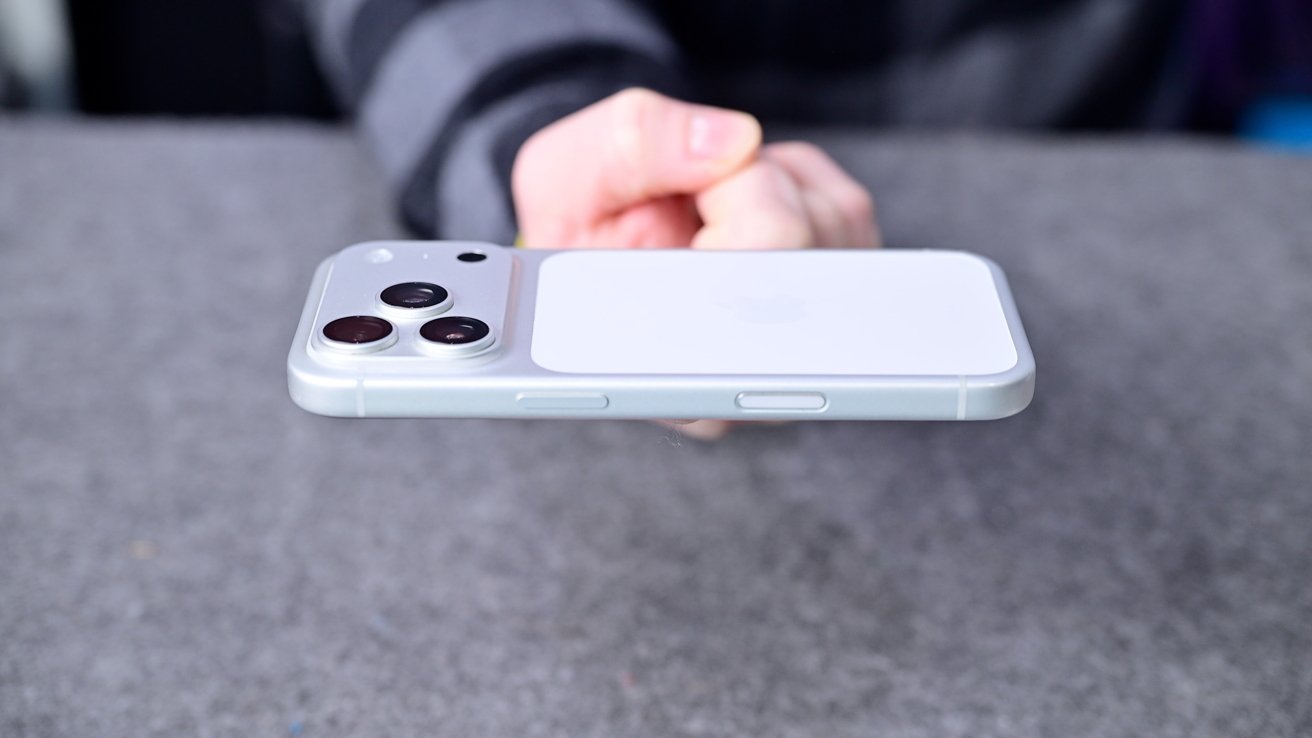
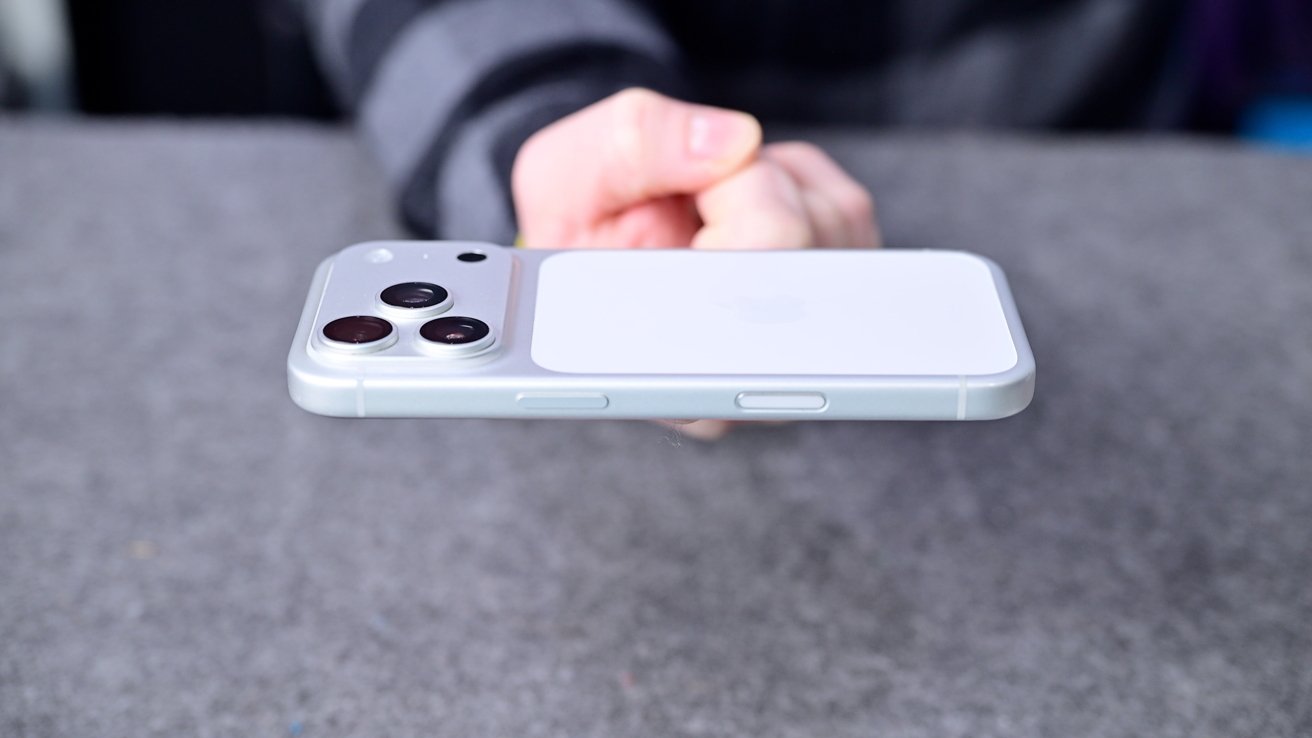
Hand holding a silver smartphone horizontally above a gray surface, showing triple rear cameras and buttons along the side, with a blurred person wearing dark clothing in the background
iPhone 17 Pro Max is now in space following NASA’s approval process

NASA is very strict when it comes to what items are flown into space with astronauts. With the Artemis II trip around the Moon, it’s marking the first time the agency is allowing the crew to carry iPhones in space.
This is a big deal, as NASA has strict rules about what actually goes into space, and thorough testing to match. On Friday, the New York Times reported on what the iPhone 17 Pro Max had to go through to be allowed in the cabin.
Continue Reading on AppleInsider | Discuss on our Forums

Source link

Continue Reading

Tech

Interview: Vernal talks testing, design, and the soul of its standing desks

Published

on

Standing desks have gone from being niche ergonomic upgrades to mainstream workspace essentials, driven by growing awareness of the risks associated with long, uninterrupted hours of sitting.

Alternating between sitting and standing throughout the day can help reduce back strain, improve posture, and encourage better circulation, while also helping users stay more alert during extended work sessions. For many people working from home, the standing desk has become a central part of creating a healthier, more flexible workspace.

Advertisement

Source link

Continue Reading

Tech

Apple iOS 26.5 public beta is now available

Published

on

Apple has released the first public beta for iOS 26.5, just a few days after the beta for developers came out. One of the biggest changes the new operating system brings is the “Suggested Places” feature in Apple Maps. It will show you trending places to visit, such as restaurants and other establishments, near your location or based on your search history. You can see Suggested Places when you tap on the search bar in the Maps app.

iOS 26.5 beta also will also come with notifications that the company will be putting ads inside Maps. Apple confirmed in March that it was going to expand its ads outside of the App Store and Apple News apps. The ads you see will be based on your location, the search terms you’ve used and what you’re looking up on Maps. They will show up at the top of your search results and in Apple’s Suggested Places list. Apple said the ads will be clearly marked and won’t be a danger to your privacy. Your current location and the ads you interact with will not be associated with your Apple Account, and your personal data will stay on your iPhone and won’t be collected.

In addition, Apple is testing end-to-end encryption for RCS messages on iOS 26.5 beta yet again. However, the company has yet to reveal whether the feature will roll out with the operating system’s stable release. To be able to get Apple’s public beta releases, go to the Apple Beta Software Program website and sign up using your Apple credentials.

Source link

Advertisement
Continue Reading

Tech

Acer Chromebook Spin 311 (2026) Review: a decent small-form-factor Chromebook

Published

on

Verdict

The Acer Chromebook Spin 311 (2026) is a decent small-form-factor Chromebook with solid endurance, okay power for basic tasks and a comfortable keyboard to boot. The screen here feels a little low-res in 2026, while its port selection also isn’t as strong as rivals.

  • Excellent battery life

  • Solid performance for basic tasks

  • Functional port selection

  • 1366×768 resolution feels dated

  • Thick bezels around the screen

Key Features

  • 11.6-inch HD IPS touchscreen:

    The Chromebook Spin 311 (2026) has one of the smallest touchscreens you’ll find on a laptop this affordable, making it a solid choice for the classroom.

    Advertisement
  • MediaTek Kompanio 540 processor inside:

    It also has an eight core MediaTek processor inside for reasonable performance for basic tasks.

    Advertisement
  • 1.30kg weight:

    This smaller Chromebook is quite light too, making it an easy one to carry around on the go.

    Advertisement

Introduction

The Acer Chromebook Spin 311 (2026) marks the latest iteration of the brand’s dinkiest ChromeOS-powered laptop.

This new model is designed strictly with efficiency and usability in mind, promising up to 15 hours of battery life and a boost in power with its new MediaTek Kompanio 540 processor, plus it has replaceable USB-C ports and a keyboard that needs two screws to remove it.

Alongside this, the 11.6-inch touch-enabled 1366×768 IPS screen is back, plus a decent port selection, snappy keyboard and more to like out of such an affordable laptop. For reference, it costs £369/$579.99, which makes it one of the cheaper Chromebooks of its kind, alongside the Acer Chromebook Spin 312 and HP Chromebook x2 11, even if US pricing pushes it up somewhat.

Advertisement

Advertisement

To see whether this little Acer laptop is one of the best Chromebooks we’ve tested, I’ve been putting it through its paces for the last week or so.

Design and Keyboard

  • Compact plastic frame
  • Meagre port selection
  • Snappy keyboard, but a small trackpad

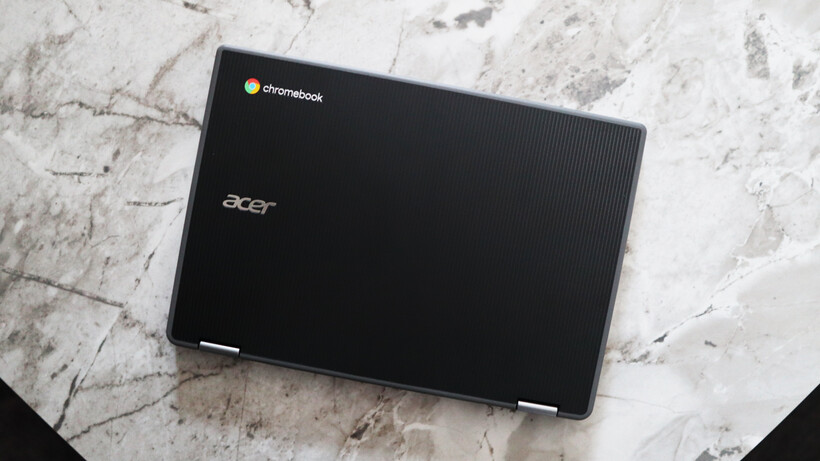
Owing to its small form factor, the Chromebook Spin 311 (2026) is a very compact customer indeed, which makes it one of the most portable laptops you’ll find out there. Its all-black finish is pleasant, and the textured black plastic feel provides a semblance of durability, too. I’m not a big fan of the large bezels around the screen, though, which give this Chromebook a bit of a dated look.

There is a bit of flex at the corners when pressed, and on the keyboard deck, too, although as this is a cheaper laptop, I don’t mind too much. It tips the scales at 1.3kg, which is on the heavier side for such a small laptop. With this in mind, the 11-inch screen size and its associated form factor make this easily portable in a rucksack or bag.

Lid - Acer Chromebook Spin 311 (2026)Lid - Acer Chromebook Spin 311 (2026)
Image Credit (Trusted Reviews)

Advertisement

The port selection on the Chromebook Spin 311 (2026) doesn’t set the world alight, but for such a small laptop, it’s reasonable. Each side is home to a USB-C port and a USB-A each, plus the right side has a headphone jack, too. The larger Chromebook Spin 312 model I tested last year supplements this with an HDMI and SD card reader.

The keyboard deck of this laptop is a smaller form factor, complete with arrow keys and a function row. The keys themselves have decent tactility to them, and it’s reasonably easy to get up to speed with them. There isn’t any form of backlighting for after-dark working, though.

Advertisement
Left Ports - Acer Chromebook Spin 311 (2026)Left Ports - Acer Chromebook Spin 311 (2026)
Image Credit (Trusted Reviews)

I’m less enthusiastic about the trackpad, though, with its distinct lack of vertical space feeling quite restrictive. It’s reasonably accurate, although quite stiff in use.

For the benefit of repairability and because this is a device designed for harsh educational environments, the USB-C ports here are serviceable (a feature borrowed from business laptops that are a lot more expensive than this one, such as the Dell Pro Max 16 Plus), while the keyboard deck is easily replaceable, too. 

Keyboard & Trackpad - Acer Chromebook Spin 311 (2026)Keyboard & Trackpad - Acer Chromebook Spin 311 (2026)
Image Credit (Trusted Reviews)

Advertisement

The laptop also comes in plastic-free packaging and is somewhat assembled with PCR plastics to give it some sustainability cred.

Display and Sound

  • 1366×768 resolution isn’t too brilliant
  • Reasonable brightness and colours
  • Okay speakers

The display here is a touch-enabled 11-6-inch IPS screen with a 1366×768 resolution and a classic 16:9 aspect ratio that feels very dated against this Chromebook’s rivals, not least with huge bezels surrounding the panel.

The problem I have is the resolution, which feels subpar in 2026. Even the Chromebook Spin 312 and other more compact choices have a Full HD screen, rather than an ‘HD Ready’ one as it were. This leaves it lacking detail, and it can feel a little fuzzy at times. Considering this is a touch-screen designed for budding creatives, it leaves a bit of a sour taste.

Screen - Acer Chromebook Spin 311 (2026)Screen - Acer Chromebook Spin 311 (2026)
Image Credit (Trusted Reviews)

There isn’t a quoted brightness figure for the Chromebook Spin 311 (2026)’s display, although it feels a little dimmer than our usual 300 nit target to my eye when put at full blast. For indoor working, I think you’d be okay, although taking it outside probably isn’t the best idea. Colours look reasonable to my eye, but owing to the lower brightness, there is an element of the panel that feels a smidgen washed out.

Advertisement

Advertisement

To its credit, this Chromebook has a Corning Gorilla Glass coating for added durability, which is important considering the target audience of children, and the touchscreen nature felt surprisingly responsive.

Screen - Acer Chromebook Spin 311 (2026)Screen - Acer Chromebook Spin 311 (2026)
Image Credit (Trusted Reviews)

The Chromebook Spin 311 (2026)’s speakers are downwards-firing and are mostly mids, as you’d expect from a cheaper laptop. They’re okay for casual viewing, but little beyond that. For more extended listening, utilise the headphone jack on the right hand side.

Performance

  • Okay performance for casual tasks
  • 4GB of RAM is low in 2025
  • eMMC storage is a shame

The press release for the Chromebook Spin 311 (2026) made a lot about it being one of the first Acer Chromebook devices to ship with the MediaTek Kompanio 540 processor. This is one of MediaTek’s latest low-power mobile chips that features eight cores, including two Arm Cortex-A78 ‘big cores’ and six Arm Cortex-A55 cores, plus a dual-core GPU.

It’s not a chip that’s necessarily designed for outright grunt, and is more for zippy performance for basic tasks where it’s needed. Think of it as a competitor to Intel’s N-series of chips – quiet, but efficient.

Advertisement

Profile - Acer Chromebook Spin 311 (2026)Profile - Acer Chromebook Spin 311 (2026)
Image Credit (Trusted Reviews)

In running it through the Geekbench 6 benchmark test, the Chromebook Spin 311 (2026) provided scores that were very similar to an Intel N100 in the same test. The multi-core result is a bit lower than I expected, owing to the quantity of cores this MediaTek chip has over the N100.

With this in mind, though, outright speed and performance aren’t the name of the game for the Chromebook Spin 311 (2026). Its purpose is to be a portable and efficient laptop for light productivity loads, which it performs decently well. I didn’t experience too much of a slowdown while using multiple Chrome tabs for Docs, Slack and Spotify. 

Advertisement
Right Ports - Acer Chromebook Spin 311 (2026)Right Ports - Acer Chromebook Spin 311 (2026)
Image Credit (Trusted Reviews)

This particular configuration also nets 4GB of RAM and 64GB of eMMC storage. For the price, I’m not too bothered about this, although it would have been nice to see solid-state storage in 2026 on a more affordable device. The RAM headroom is just enough for basic tasks, although for any extended multi-tasking, going for a model with more RAM is advisable.

Software

  • Lightweight and clean ChromeOS install
  • No Chromebook Plus features

Advertisement

The first thing to note with the Chromebook Spin 311 (2026) is that it runs ChromeOS, meaning it’s got a clean and lightweight UI with no real bloatware pre-installed, that’s easy to get your way around and jump into apps such as Google’s G-Suite of productivity apps.

This specific Chromebook Spin 311 (2026) model also doesn’t meet the Chromebook Plus minimum spec requirements, although even with those models that do, they’ve made the decision not to designate this laptop as one. This also means we aren’t getting new features such as Help Me Read, the Quick Insert key or Magic Eraser, for instance.

Profile - Acer Chromebook Spin 311 (2026)Profile - Acer Chromebook Spin 311 (2026)
Image Credit (Trusted Reviews)

There is one benefit to this being a newer model, as it comes with Google’s new Quick Insert key, where the Caps Lock is, which opens a Spotlight Search-style menu which can be used for everything from inserting a link to looking up files.

Battery Life

  • Lasted for 13 hours 47 minutes in the battery test
  • Capable of lasting for between one and two working days

The Chromebook Spin 311 (2026) comes with a modest 45Whr battery, which isn’t the biggest it must be said. Owing to the increase in efficiency that MediaTek has touted from the processor inside this laptop, Acer is quoting up to 15 hours of runtime from this laptop before it’ll conk out.

Advertisement

In running a Full HD video loop test at around 50 percent brightness, this small Chromebook lasted for 13 hours and 47 minutes. That’s pretty good and isn’t too far off from Acer’s original estimates. It means you’ll be able to get through two working days with this Chromebook before needing to plug it back into the mains.

Advertisement
Screen - Acer Chromebook Spin 311 (2026)Screen - Acer Chromebook Spin 311 (2026)
Image Credit (Trusted Reviews)

The Chromebook Spin 311 (2026) also comes with a dinky 45W USB-C charger that’s one of the smallest I’ve seen, and was reasonably brisk at putting charge back into the laptop’s battery. A 50 percent charge took 38 minutes, while a full charge took 86 minutes.

Should you buy it?

You want a very small touchscreen Chromebook:

The Chromebook Spin 311 (2026) is one of the smallest touchscreen Chromebooks out there, and if you want the flexibility in a dinky chassis, this is a decent choice.

Advertisement

This Chromebook is quite limited in power with its MediaTek chip and especially with just 4GB of RAM. If you can forgive a touchscreen, the asking price goes a long way in more standard Chromebooks.

Advertisement

Final Thoughts

The Acer Chromebook Spin 311 (2026) is a decent small-form-factor Chromebook with solid endurance, okay power for basic tasks and a comfortable keyboard to boot. The screen here feels a little low-res in 2026, while its port selection also isn’t as strong as rivals.

For instance, the Acer Chromebook Spin 312 model ups the screen size a smidgen, but also brings the resolution to Full HD. It also has a much further-reaching set of ports, and matches this smaller choice in battery life. It’s also around the same price in terms of RRP, making it a bit of a no-brainer in my eyes. For more choices, check out our list of the best Chromebooks we’ve tested.

Advertisement

Advertisement

How We Test

This Acer laptop has been put through a series of uniform checks designed to gauge key factors, including build quality, performance, screen quality and battery life. These include formal synthetic benchmarks and scripted tests, plus a series of real-world checks, such as how well it runs popular apps.

FAQs

What processor does the Acer Chromebook Spin 311 (2026) have?

This sample of the Acer Chromebook Spin 311 (2026) has a new MediaTek processor inside for efficiency over outright power.

Advertisement

Test Data

  Acer Chromebook Spin 311 (2026)

Full Specs

  Acer Chromebook Spin 311 (2026) Review
UK RRP £369
USA RRP $579.99
CPU MediaTek Kompanio 540
Manufacturer Acer
Screen Size 11.6 inches
Storage Capacity 64GB
Front Camera 1080p webcam
Battery 45 Whr
Battery Hours 13 47
Size (Dimensions) 292.3 x 204.4 x 18.9 MM
Weight 1.30 KG
Operating System ChromeOS
Release Date 2026
First Reviewed Date 12/02/2026
Resolution 1366 x 768
Refresh Rate 60 Hz
Ports 2x USB-C, 2x USB-A, 1x 3.5mm headphone jack
RAM 4GB
Display Technology IPS
Screen Technology IPS
Touch Screen Yes
Convertible? Yes

Source link

Continue Reading

Tech

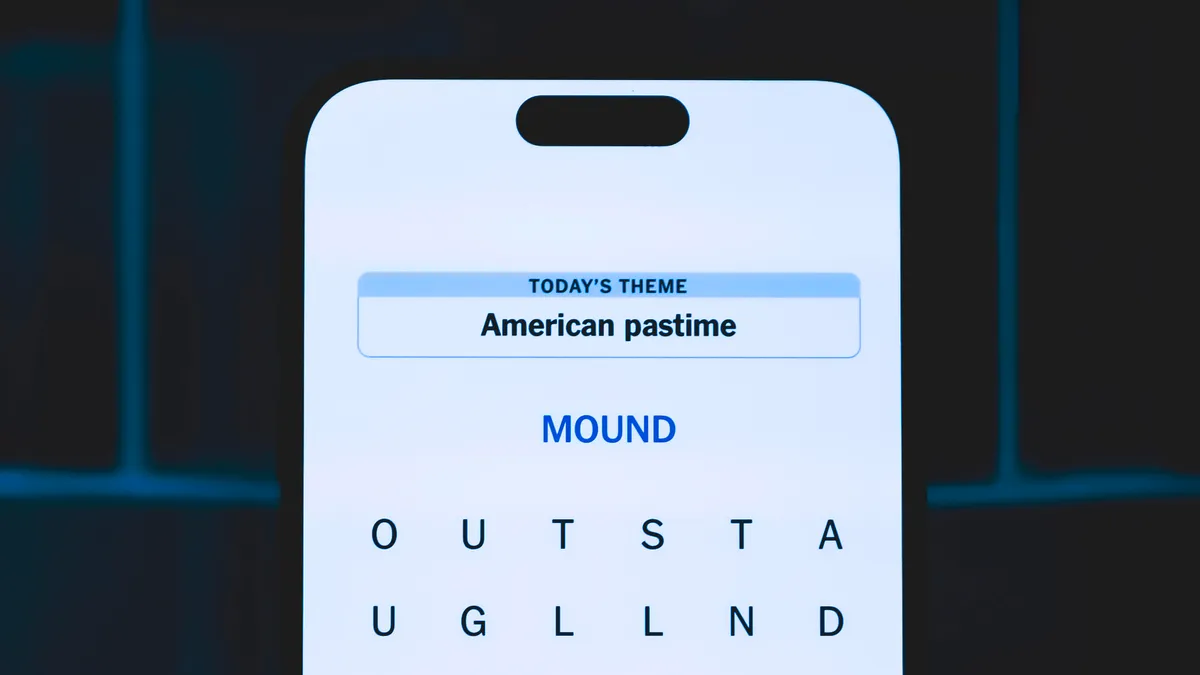
Today’s NYT Strands Hints, Answer and Help for April 5 #763

Published

on

Looking for the most recent Strands answer? Click here for our daily Strands hints, as well as our daily answers and hints for The New York Times Mini Crossword, Wordle, Connections and Connections: Sports Edition puzzles.


Today’s NYT Strands puzzle could be tough. Hope you know your animals! One of them is an animal I had never heard of before. Some of the answers are difficult to unscramble, so if you need hints and answers, read on.

I go into depth about the rules for Strands in this story

Advertisement

If you’re looking for today’s Wordle, Connections and Mini Crossword answers, you can visit CNET’s NYT puzzle hints page.

Read more: NYT Connections Turns 1: These Are the 5 Toughest Puzzles So Far

Hint for today’s Strands puzzle

Today’s Strands theme is: Pouch perfect

Advertisement

If that doesn’t help you, here’s a clue: Helps to be Australian.

Clue words to unlock in-game hints

Your goal is to find hidden words that fit the puzzle’s theme. If you’re stuck, find any words you can. Every time you find three words of four letters or more, Strands will reveal one of the theme words. These are the words I used to get those hints but any words of four or more letters that you find will work:

  • POUR, BALL, LAYS, PAIL, TAIL, RUSK, BAIL

Answers for today’s Strands puzzle

These are the answers that tie into the theme. The goal of the puzzle is to find them all, including the spangram, a theme word that reaches from one side of the puzzle to the other. When you have all of them (I originally thought there were always eight but learned that the number can vary), every letter on the board will be used. Here are the nonspangram answers:

  • BILBY, KANGAROO, WALLABY, WOMBAT, KOALA, OPOSSUM

Today’s Strands spangram

completed NYT Strands puzzle for April 5, 2026.

The completed NYT Strands puzzle for April 5, 2026.

NYT/Screenshot by CNET

Today’s Strands spangram is MARSUPIALS. To find it, start with the M that’s five letters down on the far-left vertical row, and wind up and over.

Advertisement

Source link

Continue Reading

Tech

It’s Always Surreal in Philadelphia, Where Art Meets AI in a Sweeping Space

Published

on

Climbing up flights of stairs in a bank building full of rooms draped in surrealist art, tunnels with lurking beasts called “skin horses” and exhibits of keepsakes imaginary and real, I find myself looking at an art mural across a domed ceiling that I can explore with instruments next to me. Speaking into a microphone, I see my words scroll across the edges. My hands, thrust into a small chamber, are projected across the ceiling, highlighting parts of the mural. Suddenly, AI-generated descriptions emerge where I’d put my hands.

This is the Ministry of Awe, a new installation experience in Philadelphia that I was lucky enough to visit ahead of its opening, and it’s a welcome East Coast dose of strangeness. Created by Meg Saligman and over 100 other artists, it’s a six-story space that makes me think of Meow Wolf or long-time LA oddity the Museum of Jurassic Technology — or even London’s very real Sir John Soane’s Museum.

Advertisement
A creepy sculpture of a long-nosed beast with humanlike eyes and hair.

This “skin horse” lurks in the basement, if you look hard enough.

Scott Stein/CNET

The former bank building’s now an immersive art gallery full of hands-on experiences to unravel and a storyline too: messages in drawers, phones that can be dialed or answered, bathrooms that record your “deposits” with audio messages. Everything at the Ministry is an exploration of the meaning of banks and their associated power. But what drew me here just as much was the idea of how tech would fold into a space like this.

Watch this: I Saw the Future of Tech Art in Philly

Much like Meow Wolf’s explorations of layers of tech into artist installations, something I talked about at SXSW recently, Ministry of Awe is playing with tiny doses of AI — nothing that generates or replaces the work of artists but rather in a way that highlights and possibly enhances. The Ministry of Awe’s signature fifth-floor artwork, The Heavens, is a giant mural work by Saligman that’s projected across the segments of the ceiling. Angled seats let visitors hang around and gaze up, but several “instruments” in the room let you play with the space, too, created by the tech company Spatial Pixel.

Advertisement
A room with glowing ceiling murals, white chairs and instruments, including a microphone in a glass container.

A full look at the projector-filled room where the Heavens mural exists, along with interaction instruments. This is just one room of many in the Ministry.

Scott Stein/CNET

Spatial Pixel is focused on “spatial computing for spaces, not faces,” and was founded by Violet Whitney, former director of product and associate director of design at Google Sidewalk Labs, and William Martin, an architect and designer. Both also teach a course in spatial AI at Columbia University. 

Exploring AI through art

The Heavens’ interaction tools and how they’re designed to feel integrated and somewhat invisible are part of Whitney and Martin’s explorations of where AI could work in subtler space-aware ways. This fascinates me because AI, smart glasses in particular, are already trying to solve for this with very mixed success. What I’ve found is that art and entertainment can often be better places to explore ideas of AI in contained ways, with rules deliberately made to respect the work and art.

Advertisement
Two people, who are the founders of Spatial Pixel, stand in a room filled with glowing murals.

Spatial Pixel’s team in the room they helped design.

Scott Stein/CNET

Whitney and Martin met Saligman in the same Philadelphia neighborhood, which is how they ended up collaborating on the Ministry of Awe’s exhibits. The Heavens experience is run using Spatial Pixel’s open-source platform, called Procession, that blends multiple AI models into a system that works in physical spaces. Whitney and Martin already have an interactive lab space for it at the School of Visual Arts in New York City, but the Ministry of Awe is a public test-bed, working off art that they want to keep sacred. 

“A lot of what we’ve been doing is finding ways of changing the mural, or the way that you see the mural through light. A core way we’ve been trying to allow visitors to interact with it is to pick up on the things that they’re saying in the space,” said Whitney. “We want to take the things they’re saying and change the mural based on their words and what they point at.”

Advertisement
A vaulted ceiling in a lobby with art and windows for Ministry of Awe in Philadelphia.

The Ministry of Awe’s multilevel former bank building has many rooms inside, many of them interactive, and they were designed differently by different artists.

Scott Stein/CNET

Right now, a lot of the mural interactions are simple and ephemeral: My words disappear, my highlights fade. But the Ministry of Awe’s toying with the theme of banking in personal data, too. And the software being used to run the installation is programmable, so Spatial Pixel aims to keep evolving what happens over time.

“Our goal is eventually to record what the people are contributing, with the right consent. But then maybe those ideas become like this bank. It is a bank, after all, to store these ideas, and then Meg can use them and review them and use it to evolve the painting and physical space. And so it becomes this sort of perpetual dialogue with the muralist,” said Martin.

Advertisement

It’s part of the thinking that Spatial Pixel wants artists to play with, as opposed to tech companies. 

A mural with an angel and words highlighting parts of the painting.

Words overlay with art, depending on how you interact. The work changes slightly over time.

Scott Stein/CNET

“What if you could actually talk to a painting? What if you could actually interact with a work of art and then explore it in new ways? We realized,” said Martin, “that accessing these tangible computing techniques, like being able to recognize gesture, move objects around — there’s certainly a lot of academic groups that are discussing this, but it’s still really inaccessible to the actual designers that want to make experiences in that way.”

Advertisement

The idea echoes experimental AI art I saw in Austin at SXSW just days after my Ministry of Awe visit — questions about agency and ownership, where boundaries between AI and personal work get drawn. And as I toured the Ministry space with Meta’s smart glasses on my face, it made me think about how smart glasses — and most AI tools — right now have almost no consideration for this delicate line. 

But they’ll need to. And maybe art spaces are the places to begin to think it out, with no glasses or personal wearable tech needed at all.

Source link

Advertisement
Continue Reading

Tech

Ireland is testing out a digital wallet that conducts age verification for social media users

Published

on

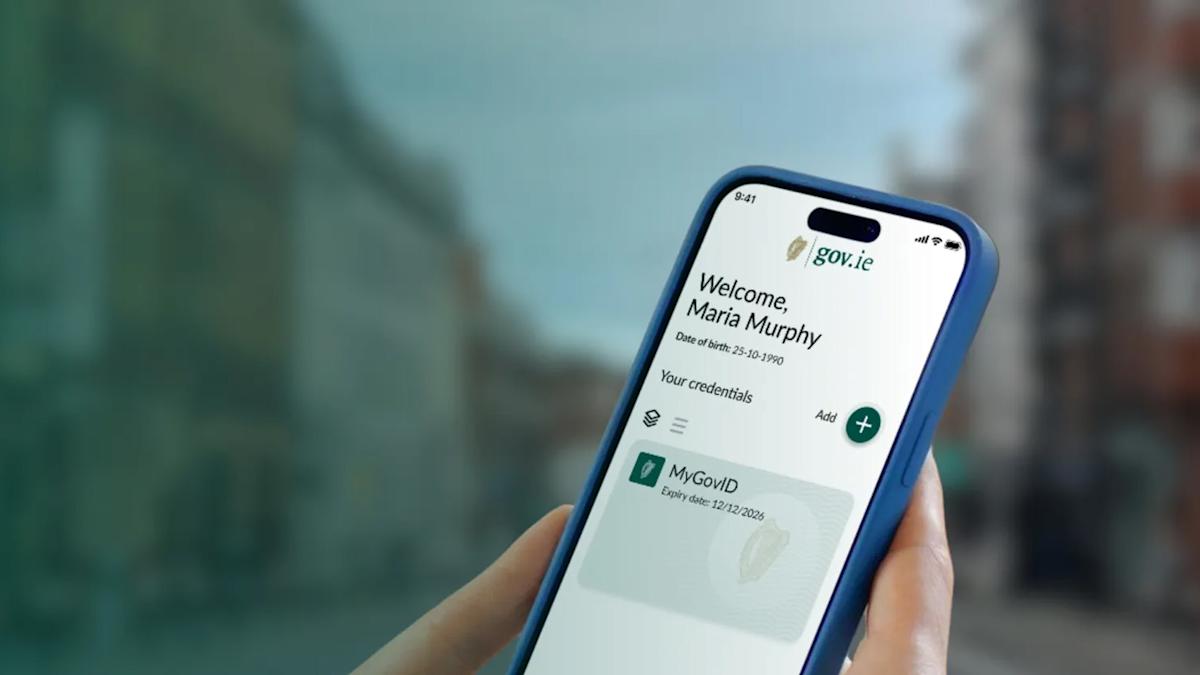
Before it’s publicly available later this year, the Irish government is trialing its Government Digital Wallet, which includes a way to verify a user’s age to access social media platforms. In its press release, the government’s Department of Public Expediture, Infrastructure, Public Service Reform and Digitalisation said people can store digital versions of their birth certificates, driving licenses, European health cards and more.

Frank Feighan, the department’s minister, said that this testing phase would help inform the development of the digital wallet and ensure it was user friendly. The government hasn’t laid out when the Government Digital Wallet graduates beyond the testing phase, but Ireland is required to create a digital wallet by the end of 2026 as part of a European Union regulation.

“It will be able to facilitate secure age verification capability as set out in Digital Ireland and the implementation of the Online Safety Code, under which designated platforms must have age verification measures in place to help protect, in particular, children and young people from online harm,” Feighan said of Ireland’s digital wallet.

The pilot phase will be done on an opt-in basis and the government has a short survey available for comments and concerns. Along with Ireland, many other European Union member states are working on their own age verification methods. Earlier this year, Spain’s prime minister Pedro Sanchez announced a law to ban social media for anyone under 16.

Advertisement

Source link

Continue Reading

Tech

Tracking Parts Box Usage With Stickers

Published

on

Many of us are guilty of toeing the line between having a ready supply of components at hand and simply hoarding for fear of throwing anything out. In a first admission of this problem, [Scott Lawson] decided to implement a couple of changes to assess his own position on this sliding scale.

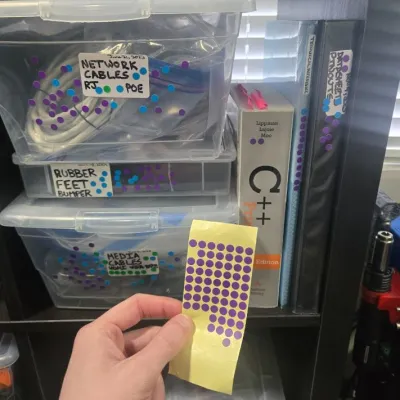
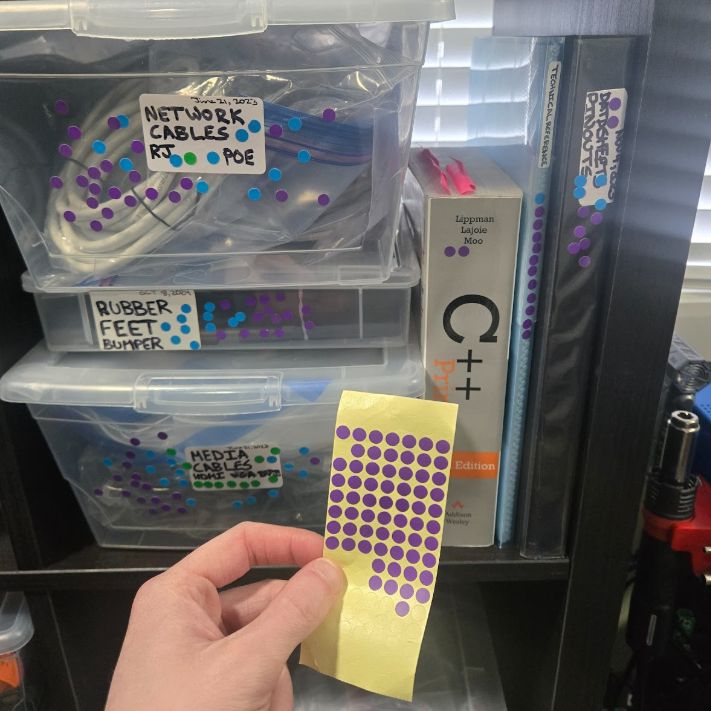
The first change was to only put parts, components, and supplies in transparent boxes. Next was to add a sticker on each box noting the contents and box creation date. This was extended to plastic bags inside the boxes when further subdivision was warranted.

Next, the question was about usage patterns, as you may think that you know how often you use something from a specific box, or how important its contents are, but it helps to add some objectivity to this. For this, [Scott] used sheets of dot stickers, with a sticker added each time he opened a box and used something from it.

By persistently doing this for a few years at his home lab, [Scott] was able to assess which boxes fell into any of three categories: hot, warm, and cold. Cold boxes are very rarely — if ever — accessed, and can thus be readily moved to the attic, shed, or even sold off if they have spent a year or longer in cold storage. Hot boxes should obviously be kept near the work areas. This way, one can make objective decisions of what boxes should go where for optimal access, and what things in your home lab are basically just there to look pretty and gather dust.

Advertisement

This is an effective low-tech way to get organized. Or you can go the opposite direction.

Source link

Advertisement
Continue Reading

Trending

Copyright © 2025