Single datacenter and just three services taken down by ‘upstream’ power problem, while the rest of a zone and region kept humming
Google Cloud last week experienced an outage that analysts say demonstrates that not all promises of cloudy resilience are created equal.
Google’s incident report explained that three services – the VMware Engine (GCVE), NetApp Volumes, and Bare Metal Solutions (BMS) – experienced a 15-hour outage due to a cooling failure in its europe-west4-a zone.
Advertisement
The report includes the following detail: “The datacenter serving europe-west4-a for GCVE, BMS, and NetApp has experienced a power failure, which subsequently caused a cooling failure.”
The important detail there is that Google uses a discrete datacenter for those three services.
Another notable element of the incident report is the admission that “An electrical fault occurred on the utility grid upstream of the datacenter, disrupting the electrical distribution gear and cooling equipment.”
Google hasn’t explained how an upstream failure caused that disruption but did say it “proactively turned down workloads in order to protect customer data from any risks posed by running infrastructure in a high temperature environment.”
Advertisement
Whenever your correspondent talks to hyperscalers or datacenter operators about how they ensure resilience, they tell me about their use of multiple redundant pieces of energy infrastructure, plus on-site generation capabilities that can keep a datacenter powered for days if necessary.
We’ve asked Google if it had generators or other energy sources at this site, and if so, why it nonetheless had to turn down workloads. We’ve not received a response at the time of writing. Google told us its incident analysis “is currently ongoing” and promised to follow up once it is available.
Hidden dependencies
We also asked Google if it advertises the fact that some of its services are tied to a single datacenter, a matter of interest because like other hyperscalers it divides its cloud into “regions” that typically comprise multiple “zones” spread across a city or other locale. Like its hyperscale peers, Google recommends placing workloads across different zones and regions to ensure resilience. Yet this incident shows some services can be tied to a single datacenter in a zone – and that those single datacenters can experience problems while the rest of the zone keeps working.
Analysts told The Register the outage shows organizations need to dig into clouds’ promises of resilience.
Advertisement
“The real issue is transparency: customers are generally told to use multiple zones and regions for resilience but are rarely given visibility into whether a particular managed service has a single-datacenter dependency within a zone,” said Biswajeet Mahapatra, principal analyst at Forrester. “As a result, many organizations assume the cloud abstraction provides more facility-level redundancy than may actually exist for specialized services.”
“The underlying architecture is not necessarily unusual,” he added. “AWS, Azure, and Google all operate services that rely on dedicated hardware, storage platforms, or tightly coupled infrastructure that may not be distributed across multiple facilities in the same way as core compute and storage services.”
Gartner Director Analyst Adrian Wong reminded The Register of the 2023 outage at Google Cloud’s europe-west9-a region, the cause of which was a water leak that Google said “originated in a non-Google portion of the facility.”
Google uses a tool called “Spanner” to replicate data across zones, but in the flooded zone Google’s Spanner configuration didn’t work once one building became unavailable.
Advertisement
“It is very hard to figure out how an individual region is architected,” Wong said. “Our customers are often surprised by that,” he added.
The incident report for last week’s outage includes an apology.
“We know how much you rely on Google Cloud, and we regret the impact on your productivity,” the document states, before promising a final incident report will detail “preventative actions.”
But as this incident shows, knowing how Google plans to avoid future incidents of this sort won’t arm customers with the knowledge to understand if those mitigations will address hidden design issues that can reduce resilience. ®
Disclaimer: Unless otherwise stated, any opinions expressed below belong solely to the author.
Given the number of various support schemes provided by the government in Singapore, one might question whether there aren’t too many of them and if it wouldn’t be simpler to simply disburse one cash payment to every eligible person.
After all, it’s not like the government isn’t doing that already, depositing funds directly for GST Vouchers, Assurance Package payments and cost-of-living support, regularly appearing in recent years.
So why bother with CDC Vouchers, which require an entire digital infrastructure to allow their issuance and redemption? Wouldn’t a simple bank transfer be better?
Advertisement
Cash is not king
At least not for everybody, and certainly not for the government, which is using its power to direct the money to specific parts of the economy.
Cash is liquid, and you can do whatever you want with it, including going for a nice day trip to JB to spend it there instead of Singapore. You may also use it for online shopping on one of the many ecommerce platforms, with most of the funds being sent to sellers in China or other countries.
This sees Singapore dollars exiting the domestic economy, benefiting others instead.
More prudent Singaporeans could opt to save it instead, which isn’t terrible in itself, but does keep the funds out of circulation.
Advertisement
Finally, the more reckless consumers could simply waste it on more “sinful” pleasures, still ending up short of money for daily necessities.
The voucher format allows the government to set strict rules on their use: with 50% allocated to shopping in supermarkets and another half to hawkers and smaller, heartland merchants.
This ensures that this pool of money is spent in the most beneficial way and provides the authorities with data on how the money is spent and where.
There is, however, one other purpose they have served very well since their launch six years ago, which is not spoken of.
Advertisement
Going digital—and staying there
CDC Vouchers originated as a COVID-19-era relief scheme, originally issued on paper and directed to the poorest households.
With the pandemic dragging on throughout 2021, the scheme was ultimately expanded to all citizen households by the end of the year and went digital with the launch of the RedeemSG app. Merchants could use it to accept the vouchers by scanning digital QR codes on customers’ phones, instead of dealing with paper.
In parallel, the government launched the Hawkers Go Digital scheme in Jun 2020, with generous subsidies and transaction fee waivers, which were meant to help hawkers adopt digital payments and reduce the risk of spreading the virus.
It was also a good opportunity to prod them to adopt mobile payments, which have become a staple in many countries around the world (most notably China, through its giant superapp WeChat).
Advertisement
The final waiver of the 0.5% fees ended just recently on Jun 30, 2026, after several past extensions. This means that hawkers are now going to have to bear the cost themselves, which might mean that some of them may prefer to return to cash-only payments.
But this is where the CDC scheme comes in.
Throughout the push for digital payments, the critics lamented that many elderly sellers might be struggling with the transition, not being very tech-savvy. What’s more, a skill once developed needs to be kept in use before it falls out of favour. Old habits die hard, after all.
Well, while we might see some return to cash, there is no returning to paper for CDC vouchers.
Advertisement
And because of the scale of the program, currently exceeding S$1 billion annually, hawkers have a strong incentive to keep their RedeemSG app to accept voucher QR codes.
In other words: there’s no exit from the QR era.
Of course, using the CDC app doesn’t force merchants to accept all digital payments, but since they still have to deal with QR codes to accept the vouchers, it provides very useful stickiness, which is going to keep most of them on the digital train.
Read other articles we’ve written on Singaporean businesses here.
Nvidia is hyping up its new Vera Rubin chip system this week, revealing new performance benchmarks for the GPU and CPU combo ahead of rival AMD’s annual product event in San Francisco on Thursday.
During a lengthy technical workshop last week at the company’s headquarters in Santa Clara, California, Nvidia executives boasted to a small group of journalists about the chip system’s increased power and efficiency capabilities. The biggest takeaway: Nvidia, which has long specialized in making GPUs, is increasingly trying to position itself as a supplier of CPUs that can power AI agents.
While GPUs are still the main hardware that companies use to train and run their AI models, the industry’s shift toward more complex, agentic systems has increased demand for CPUs, which can orchestrate data flows, networking, and other software tasks. That’s likely one reason Nvidia has been eager to promote itself as a supplier of complete AI systems rather than just AI chips.
Vera Rubin is Nvidia’s successor to its hybrid superchip system Grace Blackwell and represents the linchpin of its near-term future powering the AI industry. It’s designed to offer one CPU for every two GPUs. In a single Vera Rubin NVL 72 super chip system, there are 36 Vera CPUs for every 72 Rubin GPUs. Nvidia is also selling the Vera CPU as a stand-alone product, and it has reportedly told Chinese customers these could be ready as soon as August.
Advertisement
The CPU chip Nvidia is using for its new Vera Rubin hardware system.
Courtesy of Nvidia
Nvidia executives emphasized that its new Vera Rubin NVL72 racks—a stack of chips packed into a single liquid-cooled platform—are much more “plug-and-play” than some of its earlier products. During a brief tour of a Nvidia data center lab in Silicon Valley, Nvidia executives shared that OpenAI already has one Vera Rubin rack in use.
Nvidia CEO Jensen Huang didn’t make an appearance at the workshop in Santa Clara last week; he was in Japan announcing the chipmaker’s new partnerships with a number of Japanese firms to develop AI for robotics. The briefings were instead led by Ian Buck, Nvidia’s longtime vice president of accelerated computing and the architect behind the company’s CUDA software.
“We’re on a road map to crank out new architectures, not just GPUs but CPUs,” Buck told reporters. “We’re going to keep innovating, because it’s do this or die in Silicon Valley.”
Advertisement
The meetings were held in Huang’s executive briefing center, where multiple desks nearby were piled with bags of Taiwanese snacks that the CEO brought back from his recent trip to Computex, a massive annual semiconductor trade show in Taipei, an Nvidia spokesperson told WIRED.
If you’re a fan of the Ford F-Series pickup trucks, then you’re likely familiar with their technology and design. For example, you may know about the automaker’s legendary Twin I-Beam front suspension. But you might not know that Ford chose to move away from this design on the F-150, not because it was flawed, but because trucks evolved to more modern solutions.
The Twin I-Beam initially gave Ford a way to improve ride comfort while also maintaining the rugged performance that truck buyers were accustomed to. But as pickups began to shift from being used primarily as utility vehicles to everyday drivers, customer expectations began to change. Ford redesigned the F-150, focusing more on precise handling, improved steering, and better control over the truck’s front end. Newer designs like dual A-arm suspension addressed those concerns, leading Ford to move the redesigned 1997 F-150 to a different front suspension design.
Even as the F-150 transitioned from the Twin I-Beam, the design remained one of Ford’s most well-known truck innovations and continues on the F-250 and F-350 trucks to this day. In fact, the Twin I-Beam setup was exclusive to Ford when it was introduced in 1965 and became closely associated with their most popular pickups. Vehicle axles are more complicated than you might think and as other companies used different suspensions for their trucks, Ford’s approach was more forward-thinking. It gave drivers a vehicle with independent front-wheel movement, while also maintaining durable performance.
Advertisement
The evolution of Ford truck suspension
Jetcityimage/Getty Images
As Ford was developing its innovative Twin I-Beam concept, the automaker introduced the Twin Traction Beam in 1980. This suspension was designed for four-wheel-drive trucks like the F-150 and Bronco, using the independent movement of Twin I-Beam while adding components for a driven front axle. Twin Traction helped reduce weight, improve ride quality, and lower the truck’s overall height. This design helped Ford modernize its 4WD lineup at the time of its production.
In the years since the development of the Twin I-Beam, Ford’s approach to truck suspension has continued to evolve. Instead of using a single design for every truck in the automaker’s lineup, the F-150 now features different suspension setups depending on its intended purpose. For example, the standard F-150 has a Hotchkiss-style suspension, with a solid rear axle and leaf springs for both towing and payload. In contrast, the F-150 Raptor features a five-link rear suspension with coil springs, and the all-electric F-150 Lightning uses a fully independent rear suspension.
Advertisement
This design evolution extends beyond the F-Series as well, with the 2025 Expedition getting a redesigned suspension influenced by the F-150. The Expedition may be one of Ford’s dinosaurs, but its new setup does include modified shocks, springs, and other components. These improvements function to match the Expedition’s combination of passenger comfort, towing capability, and off-road performance. This gives drivers the handling and towing ability they expect from a Ford vehicle.
Fall only took up the job three months ago in April 2026
The departure is likely to once again shake up the administration’s AI strategy
The head of the Trump administration’s Center for AI Standards and Innovation (CAISI) has resigned from his role, Axios has reported.
Chris Fall served in the role for just three months following his appointment in April 2026, and no reason has so far been given for his departure from the agency.
Arvind Raman, the current head of the Commerce Department office that oversees the AI testing institute is set to temporarily take up the mantle as head of CAISI until a permanent alternative is found.
Latest Videos From
Another Trump admin departure
Fall’s departure is just one in a string of Trump administration departures so far in 2026. Before resigning, Fall was responsible for working closely with leading US AI labs such as Anthropic, Google‘s DeepMind, OpenAI, Microsoft and Elon Musk’s xAI to test their frontier and unreleased models for vulnerabilities to prevent them from being maliciously abused.
Advertisement
Trump has placed a big focus on developing AI, with the technology now a key part of both the US economy and its security, with AI models being deployed across federal agencies, police, and the armed forces.
Despite interventions by the US, China has been rapidly closing the gap between its own models and those of US companies. Many Chinese models are cheaper than their US alternatives, making them attractive to US companies feeling the token-cost of US models.
The resignation will likely once again shake up the Trump administration’s AI strategy. The administration has taken a very hands on approach to AI technologies, requiring contractors to provide unrestricted access to their systems and allow the use of their technologies for any lawful purpose. When Anthropic rejected these demands, the company was designated a supply chain risk.
Advertisement
Sign up to the TechRadar Pro newsletter to get all the top news, opinion, features and guidance your business needs to succeed!
Trump has also called on AI companies to provide stakes in their companies in what Trump has said will “create almost a partnership with the American public”. Trump hasn’t revealed exactly how this partnership would benefit the American public.
Physical media collectors have three very different 4K restorations to keep on their radar: Michael Mann’s Manhunter, Hammer’s Dracula, and Criterion’s upcoming 4K edition of 12 Angry Men.
This is a weird trio, which is exactly why it works for me.
Manhunter is Michael Mann before everyone decided they had discovered Michael Mann. It is cold, controlled, stylish as hell, and still one of the most unsettling serial-killer films of the 1980s. It needs 4K because the color, lighting, architecture, and dead-eyed calm are the movie.
Dracula is Hammer at full strength: Christopher Lee, Peter Cushing, blood, capes, religious dread, and enough Gothic atmosphere to make modern horror look like it was assembled in a conference room. If the restored footage and color work are handled properly, this could be the Hammer release fans have been waiting for.
Advertisement
12 Angry Men is the outlier, but only on the surface. No monsters. No synth score. No blood. Just Henry Fonda, twelve men in a room, and a film that gets tighter and more suffocating by the minute. That is exactly the kind of black-and-white classic that can benefit from a serious 4K restoration because every face, bead of sweat, cigarette, shirt collar, and hard stare is what made this film interesting in the first place.
The important caveat: only 12 Angry Men currently has a fully confirmed 4K UHD release date, price, disc configuration, HDR format, audio format, and supplement list. Manhunter and Dracula are confirmed new 4K restorations with theatrical and home entertainment plans, but final 4K UHD disc specifications and pricing have not been fully announced yet.
Related Reviews:
Mann’s Neon Nightmare Needs the Right 4K Treatment
Michael Mann’s Manhunter is returning as Manhunter: The Final Cut, with StudioCanal celebrating the film’s 40th anniversary through a new 4K restoration. The film opens in select U.S. theaters through Rialto Pictures on July 24, 2026, followed by a StudioCanal UK theatrical release on September 25, 2026, with further international releases planned for the fall. 4K Blu-ray and Blu-ray release details are expected later this year.
Advertisement
That means buyers should not treat this as a finalized UHD preorder yet. There is no confirmed U.S. 4K disc price, HDR format, audio format, region coding, packaging, or supplement list at this stage.
What we do know is enough to make this one worth watching. Manhunter was shot by Dante Spinotti and remains one of Mann’s most visually controlled films. Its cold architecture, blues, greens, whites, glass surfaces, and nightmarish calm are central to the experience. A strong 4K restoration should preserve the film’s hard visual edge without scrubbing away the texture.
The cast also makes it more than a Mann completist title. William Petersen, Joan Allen, Dennis Farina, Tom Noonan, and Brian Cox give the film its unnerving edge. Cox’s Hannibal Lecktor, spelled that way in Manhunter rather than Thomas Harris’s original “Lecter,” is not the grand theatrical monster Anthony Hopkins later created. Hopkins is the more iconic nightmare. Cox is colder, quieter, and more clinical, which makes his version unsettling in a very different way.
Hammer’s Full Restoration Is the Collector Hook
Advertisement
Hammer’s Dracula from 1958, released in the U.S. as Horror of Dracula, is also receiving a major 4K restoration. Hammer has confirmed that Peter Cushing and Christopher Lee will return in 4K, with the film coming back to cinemas and making its worldwide home entertainment debut in 4K.
Advertisement. Scroll to continue reading.
This is not just another catalog cleanup. Hammer says the new restoration uses film materials supplied by Warner Bros. and restores the full version of the film as director Terence Fisher intended it before censorship cuts. Hammer also says the release will include the newly restored full-length version alongside the UK theatrical version and the U.S. Horror of Dracula version.
That is the real hook for collectors. Dracula has existed in several versions, and earlier releases have had to deal with incomplete or compromised Japanese elements. Hammer says Warner’s archive uncovered pristine reels of the Japanese version, allowing the restored material to be reintegrated properly.
Advertisement
A combo pack release of the 4K restoration is scheduled to arrive later this year, with theatrical screenings planned for early October in association with Warner Bros.
Pricing has not been confirmed. Final disc specs, HDR format, audio format, region coding, and complete extras have not been announced. Hammer has said this will be part of its Limited Collector’s Edition range, so expect collector packaging and supplements, but do not treat any price as final until Hammer posts the actual preorder.
Why should buyers care? Because Hammer horror lives or dies by color, contrast, and atmosphere. Jack Asher’s cinematography, the blood, the costumes, the candlelit interiors, and Lee’s physical menace all need careful handling. Bad compression and weak grading make Hammer look cheap.
Criterion Sends 12 Angry Men Back to the Jury Room in 4K
Criterion’s 12 Angry Men is the safest confirmed buy of the three because the details are already listed.
The 4K UHD plus Blu-ray special edition arrives September 8, 2026 for $49.95, along with standard Blu-ray at $39.95, and DVD version at $29.95.
The 4K edition includes a new 4K digital restoration, Dolby Vision HDR, and an uncompressed monaural soundtrack. The package includes one 4K UHD disc with the film and one Blu-ray with the film and special features.
Criterion also lists the 1954 television version directed by Franklin J. Schaffner for Studio One, archival Sidney Lumet interviews, production history material, interviews related to Reginald Rose and Boris Kaufman, Lumet and Rose’s 1956 teleplay Tragedy in a Temporary Town, the trailer, English SDH subtitles, and an essay by Thane Rosenbaum.
Technically, this is not a spectacle disc. It is black and white, 1.66:1, mono, and 96 minutes long. A good 4K restoration should improve texture, facial detail, sweat, cigarette smoke, white-shirt contrast, window light, and the claustrophobic feel of the jury room. If the transfer is done right, the walls should feel like they are moving inward.
Apple says it fixed a vulnerability that could expose real addresses behind Hide My Email on or around July 3, but we reproduced the flaw two weeks after the company’s claimed repair date.
The company told 404 Media that it deployed a patch on July 3, 2026, and fully resolved the vulnerability. AppleInsider successfully reproduced the behavior on July 17.
Our test found that a sender who possessed a specific Hide My Email alias could reveal the real address behind it with much technical knowledge.
We’ve reached out to Apple about the matter. We will update when we hear back from the company on the matter.
Advertisement
Apple spent roughly a year responding to the flaw
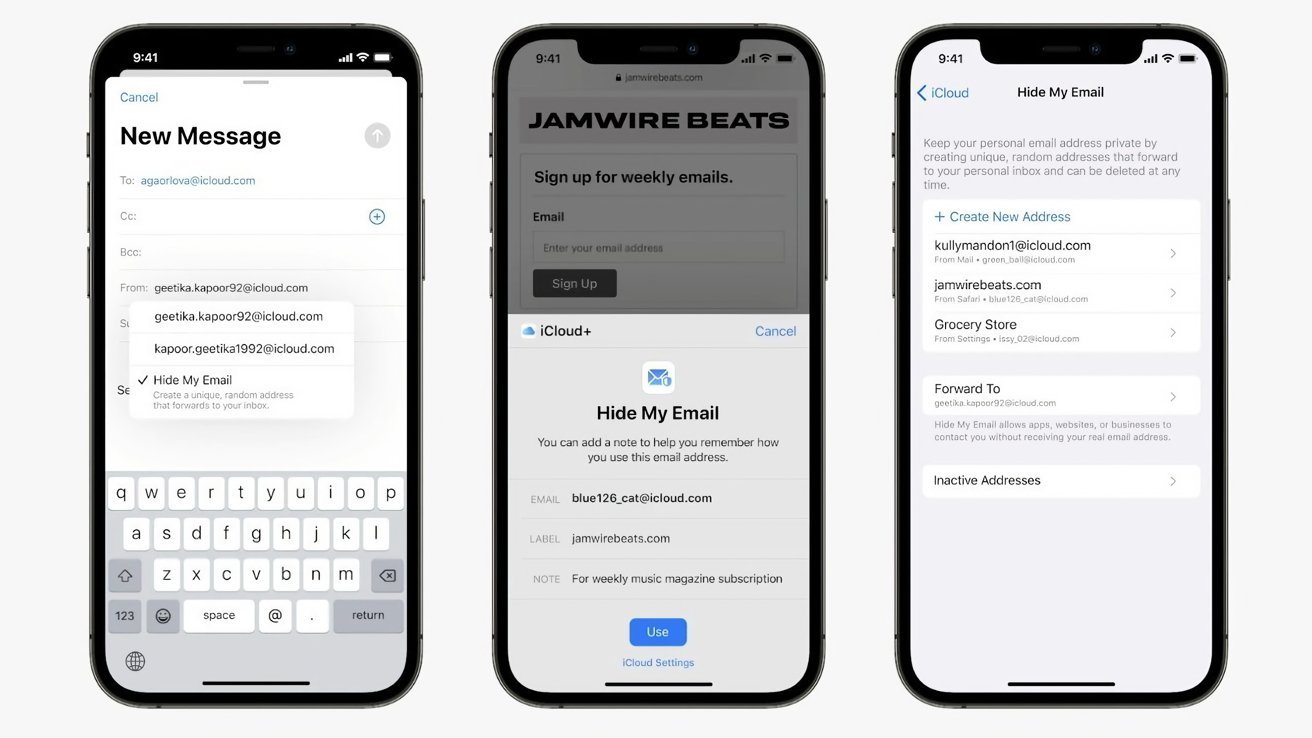
The vulnerability affected iCloud Hide My Email, which creates aliases that forward messages to a user’s real inbox. Users can provide a different alias to each website or service instead of sharing a permanent email address.
EasyOptOuts co-founder Tyler Murphy began reporting Hide My Email vulnerabilities to Apple in mid-2025. 404 Media says Murphy first alerted Apple in June 2025, while EasyOptOuts’ published timeline lists a related report on July 9.
Murphy and EasyOptOuts co-founder Ben Weiner exchanged reports and test results with Apple for roughly a year. EasyOptOuts says Apple declared the vulnerabilities fixed on March 3 and June 30, but the researchers reproduced the problems after both claims.
Murphy later contacted 404 Media, which reported the flaw on July 1 without publishing instructions that could help others exploit it.
Advertisement
Apple told 404 Media that a patch deployed on July 3 fully resolved the vulnerability. The company hasn’t said whether July 3 marked the start or completion of the deployment, but we expect it is the former.
AppleInsider reproduced the flaw on July 17
AppleInsidertested the flaw on July 17 and confirmed that the process could reveal the real address behind a Hide My Email alias.
The process required little technical knowledge once the sender possessed a specific alias, though each address had to be targeted individually. We withheld the instructions because publishing them while the vulnerability remained reproducible would have created unnecessary risk.
The test doesn’t prove the vulnerability remained active for every user or mail provider. It does show that July 3 can’t be treated as a definitive endpoint without further explanation from Apple.
Advertisement
Apple hasn’t explained whether the patch was deployed in stages, when the rollout finished or why the July 17 test succeeded. Without those details, the company’s claim of a complete July 3 resolution remains difficult to reconcile with independent testing.
The vulnerability was real, but its practical risk was limited
The flaw undermined the core promise of Hide My Email. A sender who possessed an alias could potentially discover the permanent address that the service was supposed to conceal.
EasyOptOuts said every address in its limited volunteer tests was vulnerable. Murphy and Weiner also said the vulnerability had been fixed, but warned that the privacy risk may continue after the patch.
Hide My Email on an iPhone
Murphy and Weiner told 404 Media that rejected messages may have exposed real addresses still retained in third-party logs. EasyOptOuts recommends treating addresses linked to aliases created before July 7 as potentially exposed.
EasyOptOuts’ warning doesn’t mean every Hide My Email user was affected. A sender first needed a specific alias, which limited the number of accounts that person could target, and there’s no public evidence of a coordinated exploitation campaign.
Advertisement
The vulnerability didn’t expose passwords, unlock Apple Accounts or grant access to inboxes. The demonstrated consequence was the loss of an alias’s privacy protection, which could allow a permanent address to be connected with leaked or publicly available information.
A proposed class action filed after the disclosure seeks repayment of subscription fees and other relief. The complaint doesn’t allege that the named plaintiff’s address was exposed or that anyone exploited the vulnerability against him.
Apple still needs to explain the conflicting dates
The available evidence supports calling the flaw a genuine privacy failure. It doesn’t show widespread exploitation or measurable harm to subscribers.
Apple says the vulnerability has been eliminated, and Murphy and Weiner also say the bug has been fixed. We can’t reproduce it today, after our July 17 testing.
Advertisement
The available evidence doesn’t show that users need to disable Hide My Email entirely. Users should nevertheless treat real addresses attached to older aliases as potentially disclosed and understand that deleting an alias won’t erase information already retained in another provider’s logs.
Earlier this year “Border Czar” Tom Homan, with an apparently straight face, told the media that if Democrats didn’t stop calling ICE murderers for the murders they committed, then they would have no choice but to murder more people. A few weeks later, when ICE did murder another person, he doubled down and blamed people for calling ICE murderers for the additional murder. So it’s little surprise that he’s at it again. He’s taking the fact that ICE has been on something of a killing spree over the last few weeks as… vindication for the batshit crazy statement he made earlier about how calling ICE murderers makes them only more likely to murder.
Homan: “I said this a year ago — if they hateful rhetoric doesn’t stop there will be bloodshed. And unfortunately I was right. And I’ll tell you something else — it’s not over yet … I’m afraid we’re gonna bury an ICE agent.”
This is classic psychopathic abuser language. “Baby look what you made me do.”
It should never be coming out of the mouth of a government official. It’s horrifying and disqualifying. No, calling ICE murderers for the murders they committed should have zero impact on future murders, and if (accurately) calling ICE murderers leads them to murder more people, then what the fuck are we doing here? Shut down ICE. Fire everyone associated with them, including Tom Homan.
Advertisement
Of course, Homan wasn’t just blaming people for calling murderers murderers. He also wanted to blame the people they murdered for not “complying.”
Homan on people getting killed by ICE: “It comes down to one simple fact — these people failed to comply with law enforcement … all they had to do is comply. If they did, they’d be alive today.”
Once again, saying shit like that should lead to an immediate firing and possibly an investigation. First of all, it’s clear from the videos released after some of the recent ICE shootings that it had nothing to do with people not complying, and appeared to be almost entirely about raging ICE agents who had no interest in de-escalating situations and seemed to be looking to cause harm.
But, more to the point, not complying with a law enforcement demand (especially a ridiculous one) should not result in your execution.
Advertisement
Tom Homan has been credibly accused of accepting $50,000 in a fast food bag to try to curry favor with President Trump. Does Tom Homan think it would have been okay for law enforcement to shoot Tom Homan dead in a Cava restaurant, claiming that he was clearly violating the law in accepting a bribe? Or does he only accept due process when it comes to himself and his friends?
And just as bad, Tom Homan, like so many MAGA leaders, absolutely positively refuses to take any responsibility at all for his own mistakes. First he claims that the mess in Minnesota he inherited didn’t involve any mistakes at all.
Of course it’s funny because in that clip he suggests that he was the one who refused to buy ICE body cams because of the government shutdown (which is a lie; ICE received a ton of money in the earlier budget bill, and Homan knows this. ICE can afford body cameras). But then a couple minutes later, when a reporter asks about the now-revealed anger issues and mental health problems of one of the ICE murderers from last week, suddenly Homan deflects and says to talk to someone at ICE instead.
REPORTER: Oo the ICE officer in Maine — is there any more clarity on how he got his job considering the vetting concerns his wife raised? Are there potential changes coming in vetting?HOMAN: That’s a question for ICE
Dude. Weren’t you just talking about how you were in charge of properly outfitting ICE.
It’s truly astounding how this MAGA administration appears to be fundamentally allergic to ever taking responsibility for anything. This seems like an impossibly short-term strategy. Or simply the product of a government run by people who are in way, way over their heads, but too vain to admit it.
Apple may be getting ready to let you pay off your next iPhone, iPad, or Mac in installments. The company is reportedly planning to introduce a new financing option called “Apple Upgrade” in the US on July 28 in partnership with Klarna, according to Bloomberg’s Mark Gurman.
Payment terms may vary by device
Gurman says Apple could offer the buy-now, pay-later (BNPL) program for most current iPhone, iPad, Mac, and Apple Watch models, though the specific terms may vary depending on the product’s typical price and expected upgrade cycle. Buyers could get a 24-month payment plan for new iPhones and Apple Watch models, likely reflecting how often people tend to upgrade these devices, while the payment plan may stretch to 36 months for iPads and Macs.
BREAKING: Apple will launch Apple Upgrade next week, an iPhone, iPad, Mac and Apple Watch leasing/subscription program. It’s partnering with Klarna to launch in the U.S. at online and retail stores. https://t.co/eM3J46MXJZ
The plan may offer buyers some level of flexibility, allowing them to pay off the remaining balance early, switch to a newer device before their term wraps up, or hold onto their device once they’ve finished paying for it. Cheaper models across Apple’s product lineup might be left out, including the Apple Watch SE, the base iPad, the iPhone 16, and the MacBook Neo.
Advertisement
The current iPhone Upgrade Program is reportedly going away
Apple already offers financing through its iPhone Upgrade Program, which launched back in 2015 and bundles AppleCare+ coverage into monthly payments. According to Gurman, the company plans to stop accepting sign-ups for the iPhone Upgrade Program once Apple Upgrade goes live, effectively phasing it out in favor of the Klarna partnership.
Unlike the iPhone Upgrade Program, Apple Upgrade reportedly won’t include AppleCare+ as part of the base plan. That means anyone financing a new device may need to add coverage separately. Apple hasn’t confirmed any of these details publicly, and pricing for the financing plan and added AppleCare coverage, if any, remains unclear.
Have you ever found out that something you remember from your youth is now gone, and you didn’t even notice? If you are a certain age, you might feel that way when I deliver the news: You haven’t been able to buy International Reply Coupons (IRCs) at a US Post Office since early 2013. By the end of 2026, you won’t be able to buy them anywhere. The age of the IRC is over.
What’s an IRC?
An IRC from 1978 (public domain).
If that didn’t mean anything to you, you might be too young to remember, or maybe you just weren’t into shortwave listening or ham radio. Although there were other reasons to get IRCs, a radio hobby is the most likely reason a Hackday reader would have bought an IRC.
For radio purposes, here’s the problem. You’ve worked on your station for months, and one winter night, you finally pull in that rare station from Luxembourg. They’ll send you a QSL card to verify that you heard them. You only have to send them a letter telling them what time you heard them, what frequency, and some details about the program you heard. But they probably don’t want to pay the postage required to send hundreds or thousands of cards overseas.
While this is a radio-specific problem, you might find the same issue with pen pals or when trying to buy things from an overseas company.
SASE
If everyone were in the same country, the solution would be easy. Take a stamp, put it on an envelope that has your address on it, and stuff it in with the letter. Or, you could just drop a stamp or two in the letter you sent.
Advertisement
The problem is, US postage won’t help Radio Luxembourg. On the other hand, the effort required for you to buy postage that works in Luxembourg would have been a nightmare.
Enter the UPU
The Universal Postal Union is a UN agency that is effectively an association of post offices in 192 countries. Their charter is to facilitate mailing things worldwide.
The IRCs date back to 1906. The idea is you buy an IRC at your post office. You send it to Radio Luxembourg, or wherever. There, the mail person at the radio station could go to their post office and trade the coupon for enough local postage to send a surface letter worldwide.
Slow Death
A more recent IRC (UPU).
As demand has dwindled, post offices worldwide have quit selling IRCs. As of last year, Australia still did. But Germany, Britain, the United States, and many other countries gave up on them long ago. In fact, Britain’s Royal Post claimed that the average post office sold less than one IRC per year at the time it threw in the towel.
UPU decided to end IRCs altogether by December 31, 2026. The end of an ear and, apparently, not just for radio hobbyists. It is telling that the UPU’s recent editions of IRCs had print runs of 1,000 or even 500. So they obviously weren’t selling very many.
Advertisement
IRCs Other Claim to Fame
If you’ve heard of these before and you aren’t interested in radio, then it might have been in economic history. Have you heard of the Ponzi scheme? It has become a generic term for any business scheme that relies on raising money from new investors to service debt owed to old investors.
However, the original Ponzi scheme dates back to 1920, when Charles Ponzi realized he could buy IRCs in a country where they were cheap and sell them for more in another country. He was happy to accept investors, of course.
The problem is that profits are thin, and the costs of acquiring and transporting large numbers of IRCs quickly swamp most potential profits. Fluctuations in currency exchange rates take the rest.
Advertisement
Goodbye!
So the end of the IRC marks a closed chapter for ham radio and swindling. There were probably other uses, too, that are now consumed by electronic mail, payment systems, and the like.
You have to wonder what adventures IRCs went on during their global travels. The video below shows one’s story.
The Ring Wired Video Doorbell Elite (2nd-gen) is easily the best video doorbell Ring has ever produced. The Retinal 4K footage is superb, low-light performance is genuinely impressive, and the native PoE setup delivers the kind of reliability Wi-Fi doorbells still struggle to match.
This is a proper premium smart home device aimed squarely at high-end installs, luxury homes and serious smart home enthusiasts. If you already have a PoE setup in place, or you’re upgrading from the now very long-in-the-tooth original Ring Elite, this feels like a huge leap forward.
But there’s no getting around the fact that it’s wildly expensive. And, as is so often the case with Ring products, many of the best features sit behind a subscription paywall that pushes the overall cost even higher.
The hardware is excellent. The ongoing costs are far less appealing.
Excellent video quality
Neat installation with PoE
Flexible motion detection
Key Features
Advertisement
Review Price:
£449.99
PoE
Advertisement
Power and data from one Ethernet cable.
3D Motion Detection
Advertisement
Uses radar to only detect motion at a set distance.
4K resolution
Advertisement
Sharp video day and night.
Introduction
It has taken Ring a very long time to properly revisit its Elite line. The original Ring Elite launched around eight years ago and, while the Power over Ethernet setup made it popular with professional installers and smart home enthusiasts, the actual camera hardware had long since been overtaken by cheaper Ring doorbells further down the range.
For anyone wanting all the latest Ring features, using genuine PoE power, there had been a huge waiting game. The new Ring Wired Video Doorbell Elite (2nd-gen) changes that.
Ring has finally thrown its best camera tech, radar-powered motion detection, Low-Light Sight colour night vision and its new Retinal 4K branding into a proper PoE doorbell.
Advertisement
Advertisement
There’s also remote gate access support for higher-end properties, alongside the sort of flush-mounted installation that looks far cleaner than most battery-powered video doorbells stuck onto brickwork.
The catch, naturally, is the price. Not just the upfront cost either, but the continuing subscription fees needed to unlock much of what makes this doorbell feel “elite” in the first place.
Design and installation
Requires Ethernet
Backbox provided
The Elite (2nd-gen) still looks unmistakably like a Ring product, but it feels far more purpose-built than the company’s mainstream doorbells.
Image Credit (Trusted Reviews)
In the box you get two mounting options. One is designed for in-wall mounting for the neatest possible finish, while the other works as a surface mount option. Both include rubber cushioning to help keep moisture out and give the installation a reassuringly solid fit once secured.
Advertisement
Advertisement
Interestingly, the blue backbox is the same as the previous-generation Ring Elite, which will be very handy for anyone upgrading from the original model.
Image Credit (Trusted Reviews)
This time around Ring has ditched the old security screw setup too. Instead, there’s a removal tool included for releasing the unit from the mount.
Despite the “Elite” branding, this actually sits a little less flush than the original Ring Elite. Presumably Ring simply couldn’t squeeze all the 4K hardware and upgraded internals into such a slim body.
Image Credit (Trusted Reviews)
Even so, it still looks excellent once mounted and feels extremely solid and the main button and front facing unit is just much more premium than the usual array of Ring devices.
Advertisement
Image Credit (Trusted Reviews)
One thing worth stressing is that this is proper native PoE, not the USB-converter approach Ring used on the Battery Doorbell Pro with optional PoE accessories. That means cleaner power delivery, more reliable connectivity and no bulky adapter hanging around somewhere nearby.
Image Credit (Trusted Reviews)
You do still have the option to connect it to a traditional chime system too, although PoE remains mandatory for the overall setup.
Installation itself is refreshingly straightforward considering this is very much a pro-level product.
Advertisement
Advertisement
After scanning the QR code in the Ring app, the setup process walks you through motion zones, smart alerts and privacy areas.
Thankfully, the Ring app remains one of the better smart home security apps around for tweaking settings after installation.
You don’t need to stress too much about getting everything perfect first time because it’s easy to go back in and endlessly tinker to your heart’s delight.
Features
Requires subscription for main features
Flexible motion settings
Advertisement
Out of the box, the Elite (2nd-gen) covers the basics very well. You get live view, two-way audio, notifications and motion alerts without paying extra.
But the moment you start looking at the more advanced features, the subscription prompts arrive thick and fast.
24/7 recording requires the higher-tier Ring Home Pro subscription, otherwise recordings are motion-based only. Smart search features are locked away too, alongside AI-powered tools like Video Descriptions, Familiar Faces beta and enhanced event filtering.
Ring’s Smart Responses feature is here as well and remains one of the more useful additions to the ecosystem, particularly if you miss deliveries regularly.
Advertisement
Advertisement
The actual event management system is excellent. Ring’s Event History page presents clips in a clean thumbnail-based timeline with adjustable thumbnail sizing and genuinely useful filtering options.
Combined with the live timeline view, it’s quick and painless to find, review and download specific footage.
The problem is that Ring increasingly feels like a platform where you’re buying expensive hardware first and then renting many of the standout features afterwards.
That becomes especially noticeable when brands like Reolink and Aqara now offer local storage, strong AI detection and excellent image quality for far less money and without such aggressive subscription dependency.
Advertisement
Ring clearly knows this Elite model is aimed at wealthier buyers and professionally installed smart homes, but even by those standards the paywalling feels excessive.
Advertisement
Video quality and performance
Very sharp daytime video
Full colour night vision
Video performance is where the Elite (2nd-gen) really earns its keep.
The Retinal 4K footage looks fantastic. Daytime video is exceptionally sharp, colours look rich without appearing overprocessed, and there’s enough detail here to genuinely take advantage of the 10x zoom feature.
That zoom initially sounds like one of those specs designed mainly for marketing slides, but it actually proved surprisingly useful during testing.
Advertisement
I was able to zoom far enough to check whether it was our cat hopping over a wall across the road, and also clearly make out the number plate on a delivery van that dropped a parcel without ringing the bell.
Low-Light Sight is equally impressive. The colour night vision produces bright, detailed footage in lighting conditions where many rival doorbells would already have switched over to muddy monochrome infrared.
Advertisement
I did notice occasional flickering between the infrared mode and colour mode at night though. I suspect using the larger wedge mount to alter the viewing angle slightly could help reduce that behaviour.
Ring also offers a Retinal Tuning AI feature designed to reduce juddering, pixelation and other visual artefacts. During testing though, the combination of native Ethernet connectivity and the already excellent 4K feed meant I rarely felt it was actually necessary.
Unsurprisingly, this feature also sits behind the subscription paywall.
Advertisement
Motion detection is excellent too. The radar-powered 3D Motion Detection system delivered very accurate alerts during testing, with far fewer false triggers than older Ring doorbells.
Advertisement
Call quality is another strong point. Ring continues to deliver some of the clearest two-way audio in the video doorbell market and conversations through the Elite sounded crisp and natural on both ends.
Should you buy it?
You want the absolute best
PoE for neatness and reliability, the full suite of motion detection, and incredible image quality make this doorbell stand out.
Advertisement
You want something cheaper
Advertisement
This doorbell is super expensive and you can find similar features on Ring’s cheaper doorbells.
Final Thoughts
The Ring Wired Video Doorbell Elite (2nd-gen) is a seriously impressive video doorbell. From the excellent Retinal 4K image quality to the rock-solid PoE connectivity, almost every part of the experience feels premium.
Advertisement
For existing Ring users upgrading from the original Elite, the improvement is massive. That old model had fallen badly behind Ring’s newer hardware, whereas this finally feels like a flagship again.
But this is also a product that feels unapologetically aimed at affluent smart home buyers who won’t blink at the upfront cost or the continuing subscription fees.
Without a Ring Home plan, the experience feels stripped back compared to what rival brands now offer locally and for free. With the subscription added in, this quickly becomes one of the most expensive video doorbell ecosystems around.
Still, if money is less of a concern and you want one of the best professionally installed PoE video doorbells currently available, Ring has absolutely delivered the goods here.
Advertisement
How We Test
We test every security camera we review thoroughly over an extended period of time. We use industry standard tests to compare features properly. We’ll always tell you what we find. We never, ever, accept money to review a product.
Find out more about how we test in our ethics policy.
Used as our main security camera for the review period
We test compatibility with the main smart systems (HomeKit, Alexa, Google Assistant, SmartThings, IFTTT and more) to see how easy each camera is to automate
We take samples during the day and night to see how clear each camera’s video is
Advertisement
FAQs
Do you need PoE to use the Ring Wired Video Doorbell Elite (2nd-gen)?
Yes, PoE is required for this doorbell.
Advertisement
Can the Ring Wired Video Doorbell Elite (2nd-gen) sound an internal chime?
Yes, you can wire this doorbell to a chime, but you still need PoE.








.jpg)






















































You must be logged in to post a comment Login