Tech
Google Home Speaker With Gemini Takes Aim at Alexa and Siri: Too Little, Too Late?

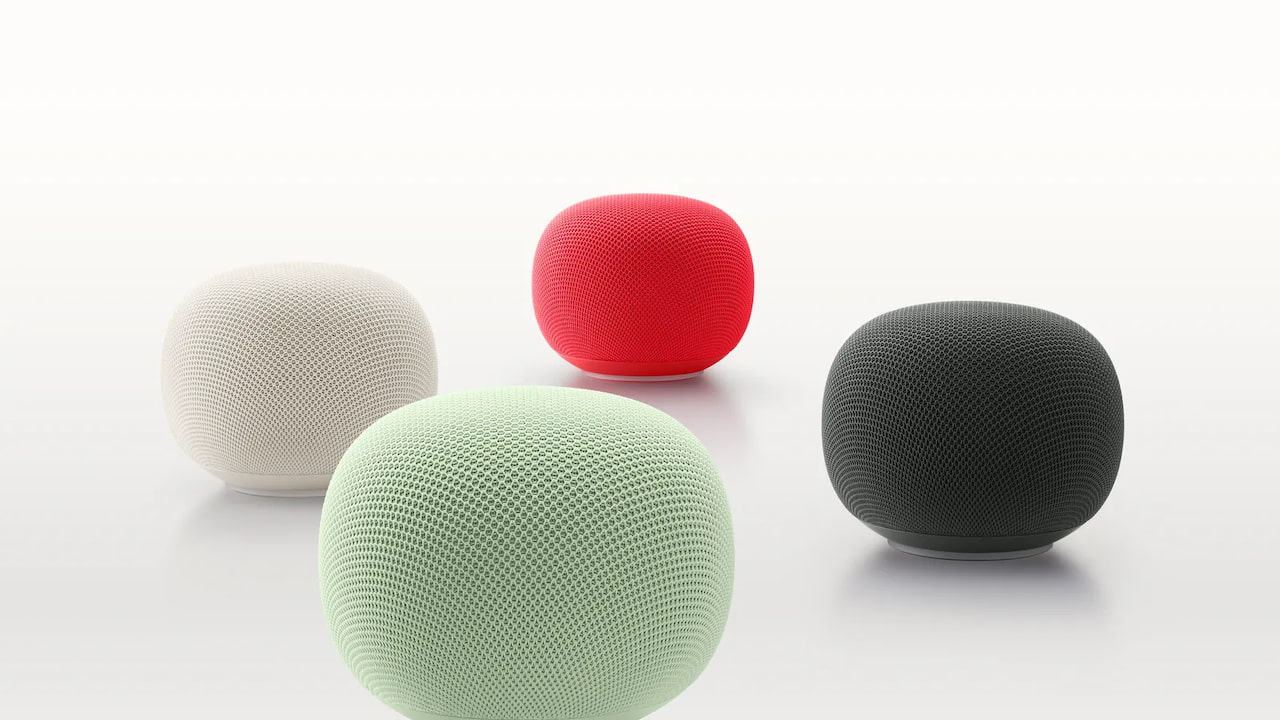
Google’s long-awaited new smart speaker is finally official, although it will not actually land on store shelves until June 25. The $99.99 Google Home Speaker is not just a long-overdue hardware refresh; it is Google’s first audio product built specifically around Gemini for Home, with 360-degree sound, improved microphone processing, more natural conversations, and the ability to handle multi-step requests without making users speak like they are submitting a help-desk ticket.
AI is not slowly creeping into consumer A/V. It has been living in the category for years through voice control, streaming recommendations, picture processing, room correction, smart cameras, automation, and the increasingly complicated network of devices sitting in people’s homes. What has changed is the scale of the fight. Google’s Gemini for Home now faces Amazon’s Alexa+ and Apple’s newly introduced Siri AI in a much larger battle to become the preferred control layer for the living room, the smart home, streaming services, connected cameras, and whatever paid ecosystem each company can build around them.
The speakers may remain relatively inexpensive gateway products, but the stakes are enormous. Google, Amazon, and Apple are not competing simply to answer trivia questions or switch off a lamp from across the room. They are competing for the household interface: the assistant consumers trust to control devices, surface information, make recommendations, manage routines, and potentially keep them inside one company’s hardware and services ecosystem.
Google Home Speaker is the latest opening shot in that phase of the war. Whether Gemini proves genuinely more useful than its rivals, rather than simply more articulate while failing to dim the correct lights, is the part that will matter.

Google Is Rejoining a Smart Speaker Market That Did Not Wait Around
The $99.99 Google Home Speaker does not require a monthly subscription for its core Gemini voice-assistant features, including smart-home control, music playback, timers, reminders, and general questions. But Google Home Premium is where the more ambitious version of the platform lives.
The Standard plan costs $10 per month in the U.S. or £8 per month in the U.K., adding Gemini Live, automation assistance, intelligent alerts, and 30 days of event video history. Google includes six months of the service with eligible new speaker purchases, but once that trial ends, consumers will need to decide whether the more conversational and capable Gemini experience is worth another recurring smart-home bill.
Google also arrives at a moment when its smart-speaker ecosystem has been looking rather thin. The JBL Authentics 300 and Authentics 500, launched in 2023, remain among the few meaningful third-party speakers to offer Google Assistant, and both are notable because they also support Amazon Alexa. They are still capable products, but they are hardly evidence of a platform firing on all cylinders in 2026.
Amazon, by comparison, has kept moving. Its own lineup includes the Echo Dot (5th Gen), the newer Echo Dot Max, Echo Studio, Echo Show 8, and Echo Show 11, all positioned around Alexa+ and Amazon’s broader smart-home ecosystem. Alexa has also found its way into products beyond the Echo family.
The Sonos Era 300 and new Sonos Play support Alexa in compatible regions, while Bose has now launched the Lifestyle Ultra Speaker and Lifestyle Ultra Soundbar with Alexa built in and Alexa+ support in the U.S.
Denon’s new Home 200, Home 400, and Home 600 show that the multi-room wireless speaker category is still evolving as well, even if those models are more about HEOS, Dolby Atmos Music, and higher-quality streaming than becoming another Alexa endpoint. That distinction matters. Google is not simply trying to catch up in smart-speaker hardware; it is trying to persuade consumers, manufacturers, and developers that Gemini for Home deserves to be the intelligence layer sitting in the middle of their connected homes.
That is a much harder job than playing a playlist or switching off the kitchen lights, especially when Amazon already has a deep hardware bench and Apple continues to keep Siri tightly tied to its own ecosystem.
Related Reviews:
More Than a Gemini Badge
The Google Home Speaker is not just old Google hardware with a Gemini logo stamped on the fabric. Inside the compact 3.4-inch-high, 4.2-inch-wide enclosure is a quad-core 2.0GHz Cortex-A55 processor with an NPU, 1GB of LPDDR4 memory, and 4GB of eMMC storage. Google is clearly treating this as a more capable local smart-home endpoint, not merely a cloud-connected speaker waiting for instructions.
Audio is handled by a single 58mm full-range driver designed for omnidirectional playback. Google calls the result balanced 360-degree sound, which sounds sensible for a small room speaker, podcasts, casual music listening, and background use. It is not a multi-driver Sonos Era 300, an Echo Studio, or anything pretending to replace a real stereo system. Google has not published amplifier power, frequency-response, or maximum-output figures, so any serious assessment of its musical performance will have to wait until retail units are available.
The microphone array is more important than the driver count. Google uses three far-field microphones and says its processing adapts to the room so Gemini can better understand natural requests, corrections, and follow-up questions. A two-stage physical microphone-mute switch remains on the hardware, which matters when the speaker is designed to keep up with a conversation rather than simply wake, answer, and go back to sleep.
Connectivity is also more current than Google’s last dedicated speaker generation. The Home Speaker supports Wi-Fi 6 on 2.4GHz and 5GHz networks, Bluetooth 5.4, and Thread 1.3, and it can serve as a Matter hub within Google Home. That gives it a legitimate role as a smart-home controller, not just a voice-controlled music puck. Google does not list direct Zigbee support, a line input, battery power, or a second driver in the published specifications; that is where Amazon’s Echo Dot Max and more ambitious wireless speakers retain practical advantages.
For A/V users, the most interesting feature is the Google TV connection. Two Google Home Speakers can pair with a Google TV Streamer for spatial surround sound, while the speaker can also join groups with Nest speakers, Nest displays, and other Google Cast-enabled devices. It will not replace an AVR or a serious soundbar, but it gives Google a cleaner bridge between its smart-home and TV platforms than it has had in years.

The Bottom Line
Google’s strongest pitch is not that it suddenly has the deepest smart-speaker catalog. It does not. The more interesting shift is that Gemini can move beyond isolated commands and work with context. Gemini Live allows a more fluid back-and-forth conversation, while Help me create lets users build automations by describing what they want rather than digging through a settings menu like it is 2014. For Nest camera owners, the higher Google Home Premium Advanced tier can also search camera history and generate daily summaries of what happened while nobody was home.
That is useful, but it also exposes the catch. The speaker includes six months of Google Home Premium Standard, which unlocks Gemini Live and complex automation creation. After that, the fuller experience costs $10 per month, while the camera-history search and Daily Summaries features sit behind the $20-per-month Advanced tier. Google is selling a $99 speaker, but the differentiators that make Gemini feel genuinely different can turn into another household subscription before the year is out.
Amazon remains the safer choice for Prime members, Ring households, and anyone who wants more hardware options. Alexa+ is included with Prime, and Amazon’s current AI-focused range includes the Echo Dot Max, Echo Studio, Echo Show 8, and Echo Show 11. The Echo Dot Max is particularly awkward competition at the same $99.99 price: it adds a two-way speaker system and supports Zigbee, Matter, and Thread, while Google lists Matter and Thread but not Zigbee support for the Home Speaker.
Apple is not yet competing on equal terms here. Siri AI has been announced for iPhone, iPad, Mac, Apple Watch, and Vision Pro, but Apple has not announced its availability for HomePod or tvOS. That leaves HomePod and HomePod mini as strong choices for Apple Music, AirPlay, HomeKit, and privacy-minded Apple households, but not yet direct rivals to Gemini Live or Alexa+ as conversational AI speakers.
The Google Home Speaker is the right choice for people already living with Nest cameras, Google TV, Android, and the Google Home app who want a more conversational assistant and smarter automations. Alexa+ remains the more complete option for Prime, Ring, Echo, and Zigbee households. Apple remains the obvious answer for people who want their smart home to stay firmly inside Cupertino’s walled garden, even if Siri AI has not yet arrived in the HomePod.
You must be logged in to post a comment Login