Connect with us

Tech

Google launches Gemini 3.1 Pro, retaking AI crown with 2X+ reasoning performance boost

Published

on

Late last year, Google briefly took the crown for most powerful AI model in the world with the launch of Gemini 3 Pro — only to be surpassed within weeks by OpenAI and Anthropic releasing new models, s is common in the fiercely competitive AI race.

Now Google is back to retake the throne with an updated version of that flagship model: Gemini 3.1 Pro, positioned as a smarter baseline for tasks where a simple response is insufficient—targeting science, research, and engineering workflows that demand deep planning and synthesis.

Already, evaluations by third-party firm Artificial Analysis show that Google’s Gemini 3.1 Pro has leapt to the front of the pack and is once more the most powerful and performant AI model in the world.

A big leap in core reasoning

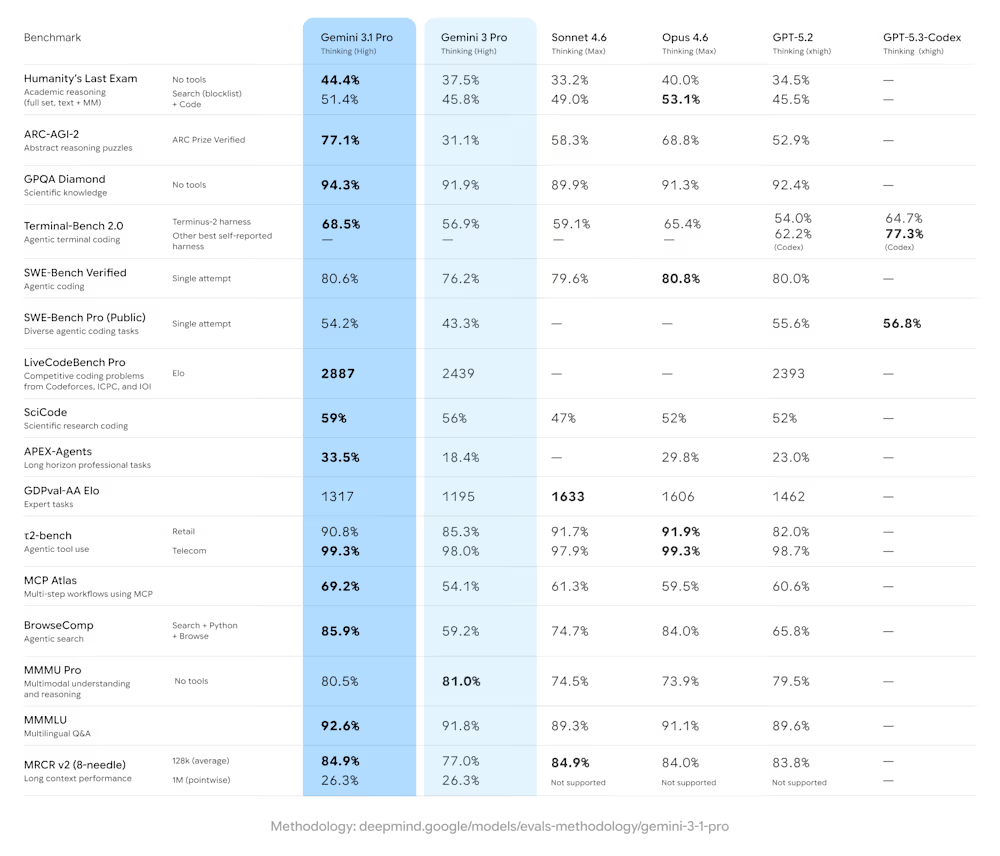
The most significant advancement in Gemini 3.1 Pro lies in its performance on rigorous logic benchmarks. Most notably, the model achieved a verified score of 77.1% on ARC-AGI-2.

Advertisement

This specific benchmark is designed to evaluate a model’s ability to solve entirely new logic patterns it has not encountered during training.

This result represents more than double the reasoning performance of the previous Gemini 3 Pro model.

Google Gemini 3.1 Pro benchmark chart

Google Gemini 3.1 Pro benchmark chart. Credit: Google

Beyond abstract logic, internal benchmarks indicate that 3.1 Pro is highly competitive across specialized domains:

Advertisement
  • Scientific Knowledge: It scored 94.3% on GPQA Diamond.

  • Coding: It reached an Elo of 2887 on LiveCodeBench Pro and scored 80.6% on SWE-Bench Verified.

  • Multimodal Understanding: It achieved 92.6% on MMMLU.

These technical gains are not just incremental; they represent a refinement in how the model handles “thinking” tokens and long-horizon tasks, providing a more reliable foundation for developers building autonomous agents.

Improved vibe coding and 3D synthesis

Google is demonstrating the model’s utility through “intelligence applied”—shifting the focus from chat interfaces to functional outputs.

One of the most prominent features is the model’s ability to generate “vibe-coded” animated SVGs directly from text prompts. Because these are code-based rather than pixel-based, they remain scalable and maintain tiny file sizes compared to traditional video, boasting far more detailed, presentable and professional visuals for websites and presentations and other enterprise applications.

Other showcased applications include:

Advertisement
  • Complex System Synthesis: The model successfully configured a public telemetry stream to build a live aerospace dashboard visualizing the International Space Station’s orbit.

  • Interactive Design: In one demo, 3.1 Pro coded a complex 3D starling murmuration that users can manipulate via hand-tracking, accompanied by a generative audio score.

  • Creative Coding: The model translated the atmospheric themes of Emily Brontë’s Wuthering Heights into a functional, modern web design, demonstrating an ability to reason through tone and style rather than just literal text.

Business impact and community reactions

Enterprise partners have already begun integrating the preview version of 3.1 Pro, reporting noticeable improvements in reliability and efficiency.

Vladislav Tankov, Director of AI at JetBrains, noted a 15% quality improvement over previous versions, stating the model is “stronger, faster… and more efficient, requiring fewer output tokens”. Other industry reactions include:

  • Databricks: CTO Hanlin Tang reported that the model achieved “best-in-class results” on OfficeQA, a benchmark for grounded reasoning across tabular and unstructured data.

  • Cartwheel: Co-founder Andrew Carr highlighted the model’s “substantially improved understanding of 3D transformations,” noting it resolved long-standing rotation order bugs in 3D animation pipelines.

  • Hostinger Horizons: Head of Product Dainius Kavoliunas observed that the model understands the “vibe” behind a prompt, translating intent into style-accurate code for non-developers.

Pricing, licensing, and availability

For developers, the most striking aspect of the 3.1 Pro release is the “reasoning-to-dollar” ratio. When Gemini 3 Pro launched, it was positioned in the mid-high price range at $2.00 per million input tokens for standard prompts. Gemini 3.1 Pro maintains this exact pricing structure, effectively offering a massive performance upgrade at no additional cost to API users.

  • Input Price: $2.00 per 1M tokens for prompts up to 200k; $4.00 per 1M tokens for prompts over 200k.

  • Output Price: $12.00 per 1M tokens for prompts up to 200k; $18.00 per 1M tokens for prompts over 200k.

  • Context Caching: Billed at $0.20 to $0.40 per 1M tokens depending on prompt size, plus a storage fee of $4.50 per 1M tokens per hour.

  • Search Grounding: 5,000 prompts per month are free, followed by a charge of $14 per 1,000 search queries.

For consumers, the model is rolling out in the Gemini app and NotebookLM with higher limits for Google AI Pro and Ultra subscribers.

Advertisement

Licensing implications

As a proprietary model offered through Vertex Studio in Google Cloud and the Gemini API, 3.1 Pro follows a standard commercial SaaS (Software as a Service) model rather than an open-source license.

For enterprise users, this provides “grounded reasoning” within the security perimeter of Vertex AI, allowing businesses to operate on their own data with confidence.

The “Preview” status allows Google to refine the model’s safety and performance before general availability, a common practice in high-stakes AI deployment.

By doubling down on core reasoning and specialized benchmarks like ARC-AGI-2, Google is signaling that the next phase of the AI race will be won by models that can think through a problem, not just predict the next word.

Advertisement

Source link

Continue Reading
Click to comment

Leave a Reply

Your email address will not be published. Required fields are marked *

Tech

Horizon Europe Action Plan to boost Irish SME participation

Published

on

The Government strategy has a renewed focus on improving Ireland’s SME involvement in Europe’s €95bn research and innovation programme.

Ireland’s Government has launched a “strengthened” version of the Horizon Europe Action Plan, Ireland’s gateway to a €95.5bn EU funding programme focused on research, innovation and investment to address global challenges for the years 2025 to 2027. 

The Action Plan, announced by the Minister for Further and Higher Education, Research, Innovation and Science James Lawless, TD, will set out measures designed to build on Ireland’s performance in Horizon Europe. In September 2025, Ireland reached a milestone of €1bn in secured funding. 

Noting that Ireland’s higher educational institutions have performed strongly in Horizon Europe, Lawless is of the opinion that this success, which demonstrates scale of opportunity, can be replicated by the country’s small and medium sized enterprises (SMEs). 

Advertisement

Commenting on the announcement, Lawless said it is important that “Ireland’s enterprise base, especially small and medium businesses, have the awareness, support and clear pathways to fully benefit from Horizon Europe”.

Core pillars

Looking ahead, the plan – which was developed with key research and innovation partners in the Horizon Europe focus group, including national support network members and higher education representatives – will focus on four core priorities.

The first of these is the further development of higher education institution engagement via tailored institutional supports, stronger post-award assistance efforts and enhanced alignment with research priorities.

The second is the enhancement of SME participation and performance through targeted engagement, improved visibility of financial support, and stronger links between SMEs, higher education institutions and research centres. 

Advertisement

The third priority is to encourage more Irish-led coordination roles, reducing administrative burdens, expanding mentoring and training, and strengthening incentives. 

Lastly is the aim of attracting and supporting newcomers, including early-career researchers and first-time applicants, through mentorship, developing networks and improving career sustainability supports.

Lawless said: “Ireland has already secured €1bn in Horizon Europe funding, with two years still remaining in the programme. This Action Plan will support both our higher education institutions and our small and medium‑sized enterprises to strengthen their participation, enhance performance and maximise the impact of EU research and innovation funding.

“The next phase of our national effort must see SME participation grow significantly. It is essential that Ireland’s enterprise base, particularly small and medium businesses, have the awareness, support and clear pathways to fully benefit from Horizon Europe. 

Advertisement

“Equally, our higher education institutions play a vital role in driving excellence, collaboration and innovation. This Action Plan commits to strengthening both, ensuring that Ireland’s research and enterprise communities succeed together.”

Earlier this month, it was discovered that, for the first time since 2018, annual venture capital funding into Irish technology SMEs fell, according to the Irish Venture Capital Association Venture Pulse report. 

The report, published in partnership with Irish law firm William Fry, indicated that funding in 2025 fell by 23pc to €1.1bn – a decline from 2024’s record €1.48bn. A total of 186 deals were completed in 2025, down from 217 in 2024 – a drop of 14pc.

Don’t miss out on the knowledge you need to succeed. Sign up for the Daily Brief, Silicon Republic’s digest of need-to-know sci-tech news.

Advertisement

Source link

Continue Reading

Tech

The latest iPhone update lets you chat to ChatGPT and Gemini in your car

Published

on

Apple’s latest iOS 26.4 public beta includes a cool new feature: the ability to chat with third-party AI like ChatGPT, Gemini, and Claude right through CarPlay.

This is the first time Apple has opened up CarPlay to conversational AI, offering a neat way for drivers to get info and help on the go.

The update brings a new voice control screen to CarPlay, so these AI assistants can give you both spoken and visual answers. Basically, you can launch ChatGPT or Gemini, ask your question, and see the response on your dashboard. It’s a significant upgrade for CarPlay, though it does have a few caveats.

Siri still holds the default voice assistant spot for now. These third-party bots won’t be able to control your car or iPhone settings, and you’ll have to tap to launch them; there are no wake words yet. Developers also need to update their apps to support CarPlay, so while the groundwork is laid, it might be a little bit before ChatGPT, Gemini, and Claude are fully operational in your ride.

Advertisement

Advertisement

It’s interesting timing, even if Apple hasn’t given a formal explanation. Siri is already hooked up with ChatGPT, and Gemini-powered Siri is on the way later this year. Opening CarPlay to other AI assistants isn’t just about giving users more choice; it also helps Apple show it’s open to alternative platforms, which is something EU regulators have been keen on.

The rumoured improved, Gemini-powered Siri is now expected to arrive with iOS 27 in September, not iOS 26.4. Meanwhile, iOS 26.4 does bring other improvements, including updates to Apple Music and Camera.

The public version of iOS 26.4 should be out in a matter of weeks. Once developers do their part, you’ll be able to chat with ChatGPT, Gemini, and Claude while driving. For Apple users, this is a clear look at a future where CarPlay transforms from just a dashboard display into an AI-powered conversational hub.

Advertisement

Source link

Continue Reading

Tech

Meta’s Pivot From VR Is Happening. Too Bad Glasses Aren’t Ready for This Moment

Published

on

I never loved Horizon Worlds, Meta’s best attempt at creating a social universe for its VR headsets. In fact, I’ve completely avoided it. So I’m not at all surprised that Meta now says it’ll be refocusing Horizon Worlds on Roblox-like phone games. 

Is the metaverse dead? No, because the metaverse isn’t just Meta: It just co-opted the philosophical term. But the company’s biggest investment in virtual worlds has turned out to be a failure. And it’s just the “tip of the iceberg pivot” that Meta’s doing right now, as it tries to turn its VR efforts into a win with future AR glasses.

I’ve been somewhat stunned by Meta’s series of seemingly give-up-on-VR moves over the last few months, which included shutting down its best VR game studio acquisitions, killing off the best and most innovative VR fitness platform (also an acquisition), and ending attempts to make its VR ecosystem into a work software tool.

Advertisement

Meta’s new head of Reality Labs content, Samantha Kelly, admitted in a new blog post that VR hasn’t been the big seller Meta expected, echoing recent statements from Meta CTO Andrew Bosworth. Though VR headsets will still exist going forward, according to Meta, the company will lean on third-party apps and games to sell the headset instead. 

And now it’ll be moving away from trying to make Horizon Worlds happen as the centerpiece of Quest VR.

The Meta Quest 3S VR headset and controllers with a pink and green background

Meta’s Quest headsets have always been geared toward gaming and low-priced fun, but Meta’s pulling back on the other pieces of the puzzle in favor of advancing glasses.

Advertisement

Scott Stein/CNET

That’s a bit of a cosmic joke to me, considering that until now, Meta had wasted no effort in trying to bury game developers’ apps by spamming its OS with links to Horizon Worlds. Meta’s Quest app on phones became Horizon-branded and tried to hide app content in favor of weird Horizon Worlds social experiences, too.

While the Quest 3 and 3S are still the best-for-the-money VR headsets, I have no idea what the future holds for these systems. At every turn, I see Mark Zuckerberg and Meta declaring a full-on push to AI and smart glasses. Meanwhile, AI has barely surfaced inside Quest headsets in any meaningful way. 

Meta always had its VR ambitions split between everyday work and kid-focused gaming. It got the latter, not the former. It became a kid’s console, even though Meta tried to keep kids away. As a result, I don’t think anyone ever took the Quest seriously as anything you’d use for anything else other than games. Neither does Meta anymore, apparently.

Advertisement
CNET's Scott Stein wearing the new Meta Ray-Ban Display smart glasses and neural wristband.

Meta’s current Ray-Ban Displays have only one display, and the apps on them are much more basic than those on any VR headset.

Scott Stein/CNET

So now what, Meta?

Meta’s next steps look like they’ll still be focused on VR a bit, but I think it’ll be as a bridge to glasses. A smaller headset expected sometime in the next year could be more of an attempt to focus on portability and higher-resolution video to compete with display glassesApple’s Vision headset and the Samsung Galaxy XR (or even Valve’s upcoming Steam Frame). 

However, this shift might signal the end of subsidized gaming hardware, leading to higher prices. It could also mean Meta’s VR pivots toward showcasing immersive films and games rather than building an entire computing universe — or at least one requiring such extensive custom software.

As Meta keeps trying to make advanced AR glasses happen at some point down the road, its glasses are slowly adding displays and apps, but the software on Ray-Ban Displays is embryonic and primitive. It’s nothing like VR, and I have no idea when AR glasses will even get close. 

Advertisement

Meta’s moonshot, the AR glasses prototype Orion, needed a separate processing puck to work. That’s basically a similar idea to Xreal and Google’s upcoming Project Aura set of glasses, which also uses a puck. But the difference between Google and Meta is that Google plans to eventually put the processing on next-gen phones to run these AR glasses. Meta has no ability to do that, because it’s bottlenecked by Google and Apple.

Three parts of an AR headset kit by Meta called Orion: computer, glasses and wristband

Meta’s concept for next-gen AR glasses, Orion, demoed in 2024, relies on a processor puck. 

Meta

And then what? Unlike Apple, Google and Samsung, Meta doesn’t have its own phone platform. Glasses are going to work with phones. That’s going to be Meta’s bottleneck, no matter how many times it tries to reshuffle its metaverse and device vision. VR headsets may have been a way to try to get around phones, but when it comes to glasses, it’s unavoidable. 

Advertisement

I don’t see how Horizon Worlds will ever be popular as another phone gaming app in a world dripping in Roblox-alikes. And as I said about Meta’s decision to destroy the fitness app Supernatural, what pieces does Meta have for its glasses push that are going to really be ready to compete with what Google, and likely Apple, are going to bring — fitness, app hook-ins, media, mapping, future car integrations and everything else? 

As Meta seems ever more ready to abandon so much of what it tried to build in VR, I wonder if it will realize that glasses just aren’t ready yet, app-wise, to pick up the journey on the other side. Even if the goal is to lean heavily on AI to do it.

Source link

Advertisement
Continue Reading

Tech

Amazon Prime Members: You Can Play These Games for Free

Published

on

Did you know that your Amazon Prime membership comes not only with delivery perks and Prime Video, but also free games? Amazon’s recently relaunched streaming gaming service, Luna, has added new titles for you to play this month.

With a Prime membership, you get a Luna Standard subscription for free. That includes games such as Hogwarts Legacy and Indiana Jones and the Great Circle. You’ll need a compatible device and either a controller or a mouse and keyboard to play. You can also use your phone as a controller with a stack of multiplayer GameNight games.

New games added to Luna in February include Indiana Jones and the Great Circle: The Order of Giants, the survivor horror game Alan Wake 2 and the music-based GameNight game Just Shapes & Beats. 

Advertisement

You’ll also find Disney Universe, RiMS Racing, Time on Frog Island, Valfaris, Worms Crazy Golf, Yooka-Laylee and the Impossible Lair, Disney Planes and Endzone: A World Apart.

Luna Standard is free with a Prime membership, which costs $15 per month or $139 per year. For a larger game library, you can also upgrade to a Luna Premium subscription for an extra $10 per month.

Advertisement

Source link

Continue Reading

Tech

Bondi Bragged About Forcing Facebook To Censor Speech. Now FIRE Is Suing.

Published

on

from the every-accusation-is-a-confession-tweeted-out dept

I seem to recall a years-long freakout among MAGA folks about the Biden administration pressuring social media companies to remove content. You may have heard about it.

Anyway. In unrelated news FIRE (the Foundation for Individual Rights and Expression), has filed suit against Attorney General Pam Bondi and DHS Secretary Kristi Noem on behalf of Kassandra Rosado, who ran a 100,000-member Facebook group called “ICE Sightings – Chicagoland,” and Mark Hodges, who created the Eyes Up app for documenting and archiving videos of ICE enforcement activity.

The suit alleges that Bondi and Noem coerced Facebook into disabling the group and coerced Apple into pulling the app from its App Store, in direct violation of the First Amendment. Because, you know, government officials calling social media companies and demanding they remove content is… bad.

The legal theory is straightforward, the evidence is overwhelming, and perhaps most remarkably, the government handed FIRE much of its case on a silver platter. In other words, for all the talk of “censorship” during the Biden admin, which went nowhere due to the lack of any actual evidence, here there not only is evidence, it was eagerly and readily provided by Pam Bondi and Kristi Noem themselves. In public. Repeatedly. Proudly.

Advertisement

Let’s start with the basics of what actually happened, because the facts here are almost embarrassingly damning. Kassandra Rosado created her Facebook group in January 2025, initially as a small community resource for Chicago-area small business owners trying to understand how ICE raids were affecting foot traffic and community events. The group grew to nearly 100,000 members by October as ICE enforcement escalated under what the agency publicly branded “Operation Midway Blitz.” According to the complaint, Facebook’s own moderators reviewed thousands of posts and found exactly five that violated its guidelines. Just five. Which Facebook removed, telling Rosado that participants acting badly don’t impact the group themselves (a good policy!).

Out of thousands of posts and tens of thousands of comments that members of the Chicagoland group created through October 2025, Facebook’s own moderators found and removed only five purportedly violating its guidelines.

Even as to these five posts, Facebook advised Rosado that they were “participant violations” that “don’t hurt your group.” Facebook further explained: “Groups aren’t penalized when members or visitors break the rules without admin approval.”

Then, on October 12, 2025, Laura Loomer tagged Noem and Bondi in a social media post flagging the group. Loomer’s role here deserves a moment of appreciation. This is a person who sued Facebook, claiming it was literally RICO to moderate her posts. Who sued all the major tech companies, arguing that content moderation violated her First Amendment rights. Her entire public identity has been built on the premise that private platforms moderating her speech is unconstitutional censorship.

And here she is, tagging federal officials to demand they force Facebook to suppress other people’s speech. The First Amendment, which constrains government action, apparently only matters when Loomer is the one being moderated. When she wants someone else silenced, she calls in the actual state.

Advertisement

The next day, a DOJ source confirmed to Loomer that DOJ had contacted Facebook to demand removal.

That same day, Facebook disabled the entire group. Then Bondi posted on social media claiming credit:

That’s the AG admitting to a pretty clear First Amendment violation. Not in a leaked email discovered through litigation. Not in a deposition. On X, taking credit. Proudly.

Today following outreach from @thejusticedept, Facebook removed a large group page that was being used to dox and target @ICEgov agents in Chicago.

…. The Department of Justice will continue engaging tech companies to eliminate platforms where radicals can incite imminent violence against federal law enforcement.

Noem piled on with her own post, crediting the DOJ for the takedown.

That’s the Secretary of Homeland Security saying:

Anti-ICE radicals are using social media apps to dox, threaten, and terrorize the brave men and women of ICE and their families.

Today, thanks to @POTUS Trump’s @TheJusticeDept under the leadership of @AGPamBondi, Facebook removed a large page being used to dox and threaten our ICE agents in Chicago.

These officers risk their lives every day arresting murderers, rapists, and gang members to protect our homeland. Platforms like Facebook must be PROACTIVE in stopping the doxxing of our @ICEgov law enforcement.

Advertisement

We will prosecute those who dox our agents to the fullest extent of the law.

The Eyes Up situation is even more instructive. Mark Hodges built Eyes Up specifically as a documentation and archiving tool for videos of ICE enforcement activity. The app uses manual moderation—meaning Hodges or other moderators personally review every video before it becomes publicly accessible.

The complaint specifically notes that:

Eyes Up is not useful for tracking ICE location or movement in real time. Because Hodges or other moderators manually review each video before it becomes publicly available, any ICE officers would be long gone by the time a video is posted.

Apple had independently reviewed and approved Eyes Up for the App Store in August 2025, raising no concerns about the content. On October 3, Apple removed it anyway—citing “information provided by law enforcement” that the app violated its guidelines on “Defamatory, discriminatory, or mean-spirited content.”

Advertisement

Bondi again made no effort to be subtle about DOJ’s role, gleefully telling Fox News:

“We reached out to Apple today demanding they remove the ICEBlock app from their App Store—and Apple did so.”

She later boasted at a roundtable that:

“We had Apple and Google take down the ICEBlock apps.”

For years, MAGA world has treated Murthy v. Missouri as a foundational text of government overreach—proof that the Biden administration ran a sophisticated censorship operation by pressuring social media companies to remove content. Jim Jordan convened hearings. The case went all the way to the Supreme Court, though MAGA folks love to ignore or downplay what the Supreme Court decision actually said about the case. The argument, reduced to its essence, was that White House officials sending emails asking platforms to review posts against their existing policies constituted unconstitutional “jawboning.”

The Supreme Court threw the case out because the plaintiffs couldn’t prove that the government’s communications actually caused the platforms to take action. The majority opinion by Justice Amy Coney Barrett found that the platforms were making their own independent decisions, often rejecting the government’s requests, and that the plaintiffs couldn’t trace any specific content removal directly to government coercion. The evidence, the Court concluded, just wasn’t there. Barrett’s opinion uses the phrase “no evidence” five times. And the little evidence plaintiffs did offer? She called it out as “unfortunately appear[ing] to be clearly erroneous.”

Advertisement

Bondi and Noem have now done something remarkable: they have provided, entirely on their own initiative and through public statements made to friendly media outlets, every single piece of evidence that was missing in Murthy.

Traceability? Bondi literally said “We reached out to Apple today demanding they remove the ICEBlock app—and Apple did so.” Coercion versus mere persuasion? The complaint details how Noem announced she was “working with the Department of Justice to see if we can prosecute” app developers, how Bondi told Fox News that ICEBlock’s creator “better watch out” because the speech was “not protected,” and how these explicit criminal threats preceded the removals.

The NRA v. Vullo standard, which the Supreme Court articulated just before the Murthy ruling (on a case they heard the same day as Murthy), holds clearly that a government official cannot use “the power of the State to punish or suppress disfavored expression” through third-party intermediaries. The complaint quotes this directly. There is no ambiguity here about what happened or who caused it.

In Murthy, investigators spent years poring over internal communications trying to find proof that the government’s requests had actually caused the platforms to act. And found nothing concrete. Here, the government’s own press releases and Fox News appearances serve that function. You don’t need subpoenas or discovery depositions when the Attorney General is posting on X to take credit.

Advertisement

The complaint captures the legal significance:

Attorney General Pamela Bondi and Homeland Security Secretary Kristi Noem want to control what the public can see, hear, or say about ICE operations. Wielding the power of federal criminal law, they coerced Facebook to disable Rosado’s Facebook group and coerced Apple to remove Kreisau Group’s Eyes Up app from its App Store. That’s unconstitutional. The First Amendment prohibits the government from coercing companies to censor protected speech. NRA v. Vullo, 602 U.S. 175, 190–91 (2024) (“[A] government official cannot do indirectly what she is barred from doing directly.”). Without this Court’s intervention, this unconstitutional coercion will continue.

That last line is important as well, because a key piece of Murthy was that to get an injunction, the plaintiffs had to show that these suppression efforts were likely to continue. That wasn’t there in Murthy. But here, we (again) have Noem and Bondi screaming to the heavens that they’re going to keep doing this.

The “officer safety” justification doesn’t survive contact with the actual facts. An app that archives manually reviewed videos of past ICE activity cannot be used to track officers in real time. The complaint notes that Apple had previously approved the app with full knowledge of what it did, then reversed course only after receiving “information from law enforcement”—which appears to mean a phone call from Bondi’s DOJ:

Apple cited its app review guideline 1.1.1, which prohibits “Defamatory, discriminatory, or mean-spirited content, including references or commentary about religion, race, sexual orientation, gender, national/ethnic origin, or other targeted groups.”

Apple had never previously stated that Eyes Up purportedly violated guideline 1.1.1 or included “Defamatory, discriminatory, or mean-spirited content.”

Advertisement

In fact, when Apple had independently reviewed Kreisau Group’s application to include Eyes Up in the App Store in August 2025, Apple did not conclude that Eyes Up violated guideline 1.1.1. During that review, Eyes Up was already available on its website, and Apple had full knowledge of the purpose of Eyes Up, of actual videos available on it, and of how it worked (including its location features). Apple flagged some unrelated issues, which Kreisau Group resolved before Apple approved the app. Apple raised no concern that Eyes Up contained “Defamatory, discriminatory, or mean-spirited” content in violation of guideline 1.1.1.

This appears to be the exact opposite of the situation in Murthy, where tech companies frequently rejected government requests if they didn’t violate policies. Here, it appears that, under pressure from Bondi, Apple changed its interpretation of the policies in a weak pretext to justify the government-led censorship.

And it was so clearly pretext:

Apple’s transparency reports show that from 2022 to 2024, it almost never removed apps for “Defamatory, discriminatory, or mean-spirited” content under guideline 1.1.1. Apple removed only three apps by US-based creators under guideline 1.1.1 in 2022, four apps in 2023, and none in 2024.

Eyes Up was not tracking anyone. It was creating an archive of documented government behavior in public spaces, exactly the kind of activity the First Amendment—and the Seventh Circuit’s precedent in ACLU v. Alvarez—exists to protect.

Advertisement

The viewpoint discrimination point in the complaint is also notable. The government targeted speech that was critical of ICE operations, while ICE itself actively posts on social media about its own enforcement activities, including specific locations and neighborhoods:

Bondi and Noem are not suppressing laudatory speech about ICE’s operations. ICE’s own social media accounts, for example, frequently share videos and photos of ICE arrests and other information indicating where enforcement operations occurred. Bondi and Noem only target such speech, like with Rosado’s Facebook group, that shares information about ICE operations in ways that are critical of those operations or that defendants perceive as such.

The same footage, in the government’s hands, becomes a success story, which make it textbook viewpoint discrimination.

Which brings us back to the political context that makes this so extraordinary to watch.

The people who spent years insisting that Biden’s White House committed the gravest sin against free speech in living memory by asking Twitter to look at some posts about COVID vaccines are, by and large, completely untroubled by Pam Bondi going on Fox News to brag about forcing Apple to remove an app.

Advertisement

The people who elevated Murthy v. Missouri into a constitutional crisis, who convened hearings and issued subpoenas and demanded that the “censorship industrial complex” be dismantled, have found absolutely nothing to say about a case where the Attorney General of the United States explicitly announced that she demanded a tech company remove an application and the company complied within hours.

Their position was, of course, never really about the principle. It was always about which direction the government’s thumb was pressing. When the Biden administration asked platforms to review COVID misinformation posts against their own existing policies—and platforms rejected the vast majority of those requests—that was tyranny.

When Bondi demands Apple remove an app and Apple does it the same day, that’s apparently just law enforcement doing its job.

The lawsuit asks for declaratory relief and injunctions preventing Bondi and Noem from continuing to coerce Apple and Facebook into suppressing this speech.

Advertisement

These irreparable harms will continue absent declaratory and prospective injunctive relief.

At no point have Bondi or Noem backtracked from their position that any involvement in ICE-tracking speech exposes an individual or business to criminal prosecution, nor from their demands that Apple and Facebook suppress such speech.

Accordingly, Bondi and Noem’s threats continue to hang over Apple and Facebook, who would risk adverse government action were they to reinstate Kreisau Group’s app or Rosado’s Facebook group

FIRE’s complaint frames the stakes with appropriate directness:

Our First Amendment right to speak “to oppose or challenge police action without thereby risking arrest is one of the principal characteristics by which we distinguish a free nation from a police state.” City of Houston v. Hill, 482 U.S. 451, 462–63 (1987). Plaintiffs bring this case to preserve our country’s fundamental character as a free nation, asking this Court to protect the basic First Amendment right to share information about our government and its activities.

The MAGA world spent four years constructing an elaborate theory of shadow-government censorship—one that required stretching reality to its breaking point, cherry-picked emails, and ultimately couldn’t survive Supreme Court scrutiny—when the actual government censorship they always claimed to fear was apparently just one phone call from the AG’s office away. They finally got the “coercive jawboning” they warned everyone about. Bondi and Noem are doing it out in the open, on television, and bragging about it in official social media posts.

Advertisement

And the free speech warriors have nothing to say.

Which tells you everything you need to know about what they actually believed all along. The principle was never “the government shouldn’t pressure platforms to remove speech.” The principle was “the government shouldn’t pressure platforms to remove our speech.” Now that the thumb is pressing in the direction they like, the constitutional crisis has mysteriously resolved itself.

Filed Under: 1st amendment, censorship, eyes up, free speech, ice sightings, iceblock, jawboning, kasandra rosado, kristi noem, laura loomer, mark hodges, pam bondi

Companies: apple, facebook, fire, meta

Advertisement

Source link

Continue Reading

Tech

Trump fights back, replaces struck-down reciprocal tariffs with 10% global import tax

Published

on

Hours after the Supreme Court struck down broad “reciprocal” tariffs as unlawful, President Donald Trump lashed out at justices, and said he will impose a 10% global tariff under a different trade law with more restrictions and a timetable.

Four suited men sit at a conference table; the central man with blond hair and red tie has eyes closed, appearing contemplative, while others look forward in a formal meeting setting
President Trump introduces a global import tax. Image credit: Chip Somodevilla/Getty Images

The announcement follows a 6-3 ruling that the earlier tariffs, imposed under the International Emergency Economic Powers Act, exceeded presidential authority and required congressional approval. The now-invalidated tariffs have cost Apple about $2 billion.
Section 122 provides a narrower legal pathway, but it doesn’t soften the economic impact. The statute permits temporary tariffs of up to 15% total for 150 days unless Congress votes to extend them.
Continue Reading on AppleInsider | Discuss on our Forums

Source link

Continue Reading

Tech

Final expands its gaming headphones line with the A2000 and VR3000

Published

on

Final has introduced a new wired in-ear monitor, the A2000, expanding its headphone line-up with a focus on affordable performance.

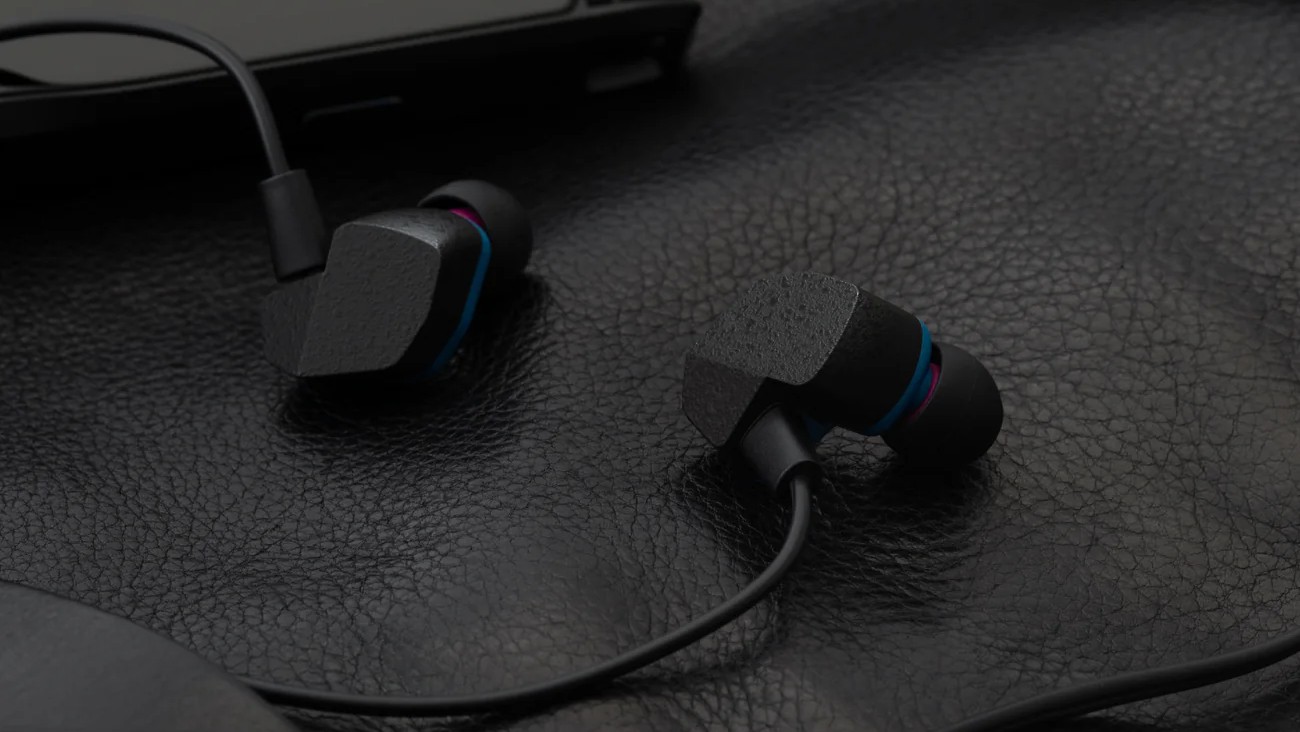
At the core of the A2000 is Final’s in-house 6mm “f-Core DU” dynamic driver, developed entirely by the company — from diaphragm and voice coil to magnet assembly.

Final says the result is a sound signature built around “exceptional clarity” paired with tight, energetic bass. Sensitivity is rated at 99 dB/mW, with 19Ω impedance. This makes it relatively easy to drive from everyday devices.

The A2000 is also the first model in its class to benefit from Final’s revised sound evaluation process, originally developed for its flagship A10000.

Advertisement

Instead of relying purely on lab-based sound pressure testing, the company evaluated performance across real-world listening scenarios. This included varied volumes and recording quality. The goal, according to Final, is more natural and controlled playback in everyday use.

Advertisement

Build details are equally considered. A brass front housing is used to reduce magnetic interference, while an ultra-fine 30μm CCAW voice coil is designed to improve transient response. Each diaphragm is pressed in small batches to ensure consistent performance and lower distortion.

Comfort remains a priority. Borrowing from the brand’s B Series design philosophy, the A2000 uses a three-point support fit across the ear pocket, eartip and tragus to reduce pressure while maintaining stability. The housing features a two-tone black-and-blue finish with Final’s textured “shibo” coating to resist fingerprints.

Advertisement

The earphones connect via a 0.78mm 2-pin connector, paired with a 1.2m black OFC cable designed to minimise microphonics. Five sizes of dual-hardness silicone eartips (SS to LL) are included to help achieve a secure seal.

While the A2000 leads this latest expansion, Final continues to offer models like the VR3000, aimed specifically at gamers seeking accurate positional audio.

Priced at $79.99 / £79.99 / €74.99, the A2000 is available to buy globally right now. It aims to deliver high-end tuning without the flagship price tag and, just as importantly, without straying from its audiophile roots.

Advertisement

Advertisement

Source link

Continue Reading

Tech

Porting Super Mario 64 To The Original Nintendo DS

Published

on

Considering that the Nintendo DS already has its own remake of Super Mario 64, one might be tempted to think that porting the original Nintendo 64 version would be a snap. Why you’d want to do this is left as an exercise to the reader, but whether due to nostalgia or out of sheer spite, the question of how easy this would be remains. Correspondingly, [Tobi] figured that he’d give it a shake, with interesting results.

Of note that is someone else already ported SM64 to the DSi, which is a later version of the DS with more processing power, more RAM and other changes. The reason why the 16 MB of RAM of the DSi is required, is because it needs to load the entire game into RAM, rather than do on-demand reads from the cartridge. This is why the N64 made do with just 4 MB of RAM, which is as much RAM as the ND has. Ergo it can be made to work.

The key here is NitroFS, which allows you to implement a similar kind of segmented loading as the N64 uses. Using this the [Hydr8gon] DSi port could be taken as the basis and crammed into NitroFS, enabling the game to mostly run smoothly on the original DS.

Advertisement

There are still some ongoing issues before the project will be released, mostly related to sound support and general stability. If you have a flash cartridge for the DS this means that soon you too should be able to play the original SM64 on real hardware as though it’s a quaint portable N64.

Advertisement

Source link

Continue Reading

Tech

Metadata Exposes Authors of ICE’s ‘Mega’ Detention Center Plans

Published

on

A PDF that Department of Homeland Security officials provided to New Hampshire governor Kelly Ayotte’s office about a new effort to build “mega” detention and processing centers across the United States contains embedded comments and metadata identifying the people who worked on it.

The seemingly accidental exposure of the identities of DHS personnel who crafted Immigration and Customs Enforcement’s mega detention center plan lands amid widespread public pushback against the expansion of ICE detention centers and the department’s brutal immigration enforcement tactics.

Metadata in the document, which concerns ICE’s “Detention Reengineering Initiative” (DRI), lists as its author Jonathan Florentino, the director of ICE’s Newark, New Jersey, Field Office of Enforcement and Removal Operations.

In a note embedded on top of an FAQ question, “What is the average length of stay for the aliens?” Tim Kaiser, the deputy chief of staff for US Citizenship and Immigration Services, asked David Venturella, a former GEO Group executive whom The Washington Post described as an adviser overseeing an ICE division that manages detention center contracts, to “Please confirm” that the average stay for the new mega detention centers would be 60 days.

Advertisement

Venturella replied in a note that remained visible on the published document, “Ideally, I’d like to see a 30-day average for the Mega Center but 60 is fine.”

DHS did not respond to a request for comment about what the three men’s role in the DRI project is, nor did it answer questions about whether Florentino had access to a PDF processor subscription that might have enabled him to scrub metadata and comments from the PDF before sending it to the New Hampshire governor. (The so-called Department of Government Efficiency spent last year slashing the number of software licenses across the federal government.)

The document itself says that ICE intends to update a new detention model by the end of September of this year. ICE says it will create “an efficient detention network by reducing the total number of contracted detention facilities in use while increasing total bed capacity, enhancing custody management, and streamlining removal operations.”

“ICE’s surge hiring effort has resulted in the addition of 12,000 new law enforcement officers,” the DHS document says. “For ICE to sustain the anticipated increase in enforcement operations and arrests in 2026, an increase in detention capacity will be a necessary downstream requirement.”

Advertisement

ICE plans on having two types of facilities: regional processing centers that will hold between 1,000 to 1,500 detainees for an average stay of three to seven days, and the mega detention facilities, which will hold an average of 7,000 to 10,000 people for an average of 60 days. It’s been referred to as a “hub and spoke model,” where the smaller facilities will feed into the mega ones.

“ICE plans to activate all facilities by November 30, 2026, ensuring the timely expansion of detention capacity,” the document says.

Beyond detention centers, ICE plans to buy or lease offices and other facilities in more than 150 locations, in nearly every state in the US, according to documents first reported by WIRED.

The errant comment in the PDF sent to New Hampshire’s governor is not the only issue the set of documents apparently had; according to the New Hampshire Bulletin, a previous version of an accompanying document, an economic impact analysis of a processing site in Merrimack, New Hampshire, referenced “the Oklahoma economy” in the opening lines. The errant document remains on the governor’s website, as of publication.

Advertisement

Across the country, ICE’s mega detention center projects have sparked controversy. ICE’s purchase of a warehouse in Surprise, Arizona, spurred hundreds to attend a city council meeting on the topic, according to KJZZ in Phoenix. In Social Circle, Georgia, city officials have pushed back against DHS’s proposal to build a mega center there, because officials say the city’s water and sewage treatment infrastructure would not be able to handle the influx of people.

Source link

Continue Reading

Tech

BeyondTrust RCE flaw now exploited in ransomware attacks

Published

on

CISA: BeyondTrust RCE flaw now exploited in ransomware attacks

Hackers are actively exploiting the CVE-2026-1731 vulnerability in the BeyondTrust Remote Support product, the U.S. Cybersecurity and Infrastructure Security Agency (CISA) warns.

The security issue affects BeyondTrust’s Remote Support 25.3.1 or earlier and Privileged Remote Access 24.3.4 or earlier, and can be exploited for remote code execution.

CISA added it to the Known Exploited Vulnerabilities (KEV) catalog on February 13 and gave federal agencies just three days to apply the patch or stop using the product.

Wiz

BeyondTrust initially disclosed CVE-2026-1731 on February 6. The security advisory classified it as a pre-authentication remote code execution vulnerability caused by an OS command injection weakness, exploitable via specially crafted client requests sent to vulnerable endpoints.

Proof-of-concept (PoC) exploits for CVE-2026-1731 became available shortly after, and in-the-wild exploitation started almost immediately.

Advertisement

On February 13, BeyondTrust updated the bulletin  to say that exploitation had been detected on January 31, making CVE-2026-1731 a zero-day vulnerability for at least a week.

BeyondTrust states that the report from researcher Harsh Jaiswal and the Hacktron AI team confirmed the anomalous activity that they detected on a single Remote Support appliance at the time.

CISA has now activated the ‘Known To Be Used in Ransomware Campaigns?’ indicator in the KEV catalog.

For customers of the cloud-based application (SaaS), the vendor states the patch was applied automatically on February 2, so no manual intervention is needed.

Advertisement

Customers of the self-hosted instances need to either enable automatic updates and verify that the patch was applied via the ‘/appliance’ interface or manually install it.

For Remote Support, the recommendation is to install version 25.3.2. Privileged Remote Access users should switch to version 25.1.1 or newer.

Those still at RS v21.3 and PRA v22.1 are recommended to upgrade to a newer version before applying the patch.

Modern IT infrastructure moves faster than manual workflows can handle.

In this new Tines guide, learn how your team can reduce hidden manual delays, improve reliability through automated response, and build and scale intelligent workflows on top of tools you already use.

Advertisement

Source link

Continue Reading

Trending

Copyright © 2025