Connect with us

Tech

Google Pixel 10a vs Pixel 9a: Should you upgrade?

Published

on

Google has just announced its latest affordable Pixel, but how does it compare to last year’s?

As 2025’s Pixel 9a saw a dramatic change over its predecessors, on paper the new Pixel 10a seems like more of a tweak rather than a complete overhaul. In fact, the Pixel 10a uses the exact same Tensor G4 chip as last year’s affordable smartphone.

With that in mind, what’s really new with the Pixel 10a? Are there enough differences to warrant an upgrade over the Pixel 9a? 

Ahead of our review, we’ve compared the specs of the Pixel 10a to the Pixel 9a and highlighted the key differences, alongside any noteworthy similarities, below. Keep reading to see what’s new with the Pixel 10a and whether it stands a chance at overtaking the Pixel 9a in our best mid-range phones guide. 

Advertisement

Price and Availability

At the time of writing, the Pixel 10a is available for pre-order and will officially launch on March 5th. It comes in a choice of four colours, Lavender, Berry, Fog and Obsidian, and has a starting RRP of £499/$499. 

Advertisement

SQUIRREL_PLAYLIST_10208265

Having launched in 2025, the Pixel 9a can be purchased now and has an official RRP of £499/$499. Having said that, as it’s nearly a year old, we not only expect its RRP to drop in the coming weeks, but you can also easily pick up the handset with a hefty price drop. For example, at the time of writing the Pixel 9a was available to buy on Google’s official store from just £349.

Advertisement

SQUIRREL_PLAYLIST_10207452

Both run on Google Tensor G4

In a somewhat disappointing move by Google, instead of kitting the Pixel 10a with the same Tensor G5 chip found in the rest of the Pixel 10 line-up, the brand has opted to reuse the Tensor G4 chip from the Pixel 9 series instead. Now generally speaking, this is something that brands tend to do with budget-friendly alternatives to their flagship models, however this isn’t something that Google does.

The Pixel 9a, Pixel 8a, Pixel 7a and even the Pixel 6a all ran on the same chip that powered the entirety of each respective series – including the Pro model. With this in mind, Google’s decision to reuse last year’s chip is undoubtedly a shame. 

Pixel 10a in handPixel 10a in hand
Google Pixel 10a in hand. Image Credit (Google)

Advertisement

Having said that, it’s worth noting that we still found the Pixel 9a’s performance to be admirable. While Google Tensor chips can never compete with the sheer gusto of Qualcomm or Apple’s flagship chips, the Pixel 9a still allows you to open apps, play casual games and stream without any hint of lag or stutter. With this in mind, we hope for the same level of performance in the Pixel 10a, but you could argue that if it’s the same chip why not save a bit of money and opt for the older phone?

Advertisement
Pixel 9a in handPixel 9a in hand
Pixel 9a in hand. Image Credit (Trusted Reviews)

Google Pixel 10a features Satellite SOS

Satellite SOS enables Pixel users to connect to emergency services via satellite if they find themselves without Wi-Fi or a mobile network. While the feature is found in most of the Pixel 9 series, it’s not available in the Pixel 9a. Instead, the Pixel 10a is the first A-Series to sport Satellite SOS.

It’s a shame the Pixel 9a doesn’t benefit from Satellite SOS, as it really could be a life-saving feature if users find themselves in an emergency situation but without any network connection.

Both the Pixel 10a and Pixel 9a are fitted with a dual rear camera system and include a 48MP main and a 13MP ultrawide lens. Considering we praised the Pixel 9a as being a “fantastic little snapper” that delivers exceptionally accurate results, the fact Google hasn’t made changes with the Pixel 10a is somewhat understandable. Even so, this decision makes the Pixel 10a harder to recommend when compared to the cheaper Pixel 9a.

Google-Pixel-9a-review-7Google-Pixel-9a-review-7
Pixel 9a cameras. Image Credit (Trusted Reviews)

Advertisement

However, Google has introduced some of its photo tools to the Pixel 10a which the Pixel 9a misses out on. These include Auto Best Take which helps ensure everyone in a group shot looks their best and Camera Coach. The latter was introduced with the Pixel 10 and uses Gemini to analyse what you’re taking a photo of and your current snapping conditions and gives you advice on how to perfect the shot. 

Whether the inclusion of such tools is enough to warrant the Pixel 10a is down to personal preference. Even so, we would argue that although they’re undoubtedly nice to have, they shouldn’t be the sole reason you upgrade. 

Advertisement

Pixel 10a promises up to 120-hours of battery with Extreme Saver 

While the Pixel 9a promises up to 100-hours battery life when Extreme Battery Saver is switched on, the Pixel 10a claims a massive 120-hours instead. Both figures sound impressive but do keep in mind that Extreme Battery Saver will pause most apps and notifications, slow processing and turn off many features, which means your handset won’t be quite as usable.

Google also promises the Pixel 10a has faster charging than the Pixel 9a, with speeds of up to 30W compared to just 23W. It’s an improvement at least, but 30W is still way behind many of the best mid-range phones

Pixel 10aPixel 10a
Pixel 10a. Image Credit (Google)

Pixel 10a is made with more recycled materials

Google claims the Pixel 10a is made with the “most recycled material of any A-series Pixel yet”, including recycled cobalt, copper, gold and tungsten. These, according to Google, add up to at least 36% of the product based on weight. In comparison, although the Pixel 9a is also made from recycled materials, they only make up at least 23%. 

Advertisement

Otherwise, both the Pixel 9a and Pixel 10a have an IP68 rating which means they can survive a dunking in water and have Gorilla Glass displays. However, the Pixel 10a does benefit from the newer Gorilla Glass 7i coating which is also found in the Motorola Edge 70 and promises to be up to two times more scratch resistant than its nearest competitors. 

Advertisement

The Pixel 9a, on the other hand, uses Gorilla Glass 3 on its display which first launched back in 2013. While we didn’t pick up any scratches during our time with the Pixel 9a, it’s definitely a disappointing addition. 

Early Verdict

We’ll refrain from providing a conclusive verdict until we review the Pixel 10a. Even so, with the same Tensor G4 chip and dual rear camera as its predecessor, we’d argue that there aren’t many reasons to upgrade to the Pixel 10a. Yes, the inclusion of Satellite SOS is admirable and it’ll charge slightly faster, but as the Pixel 9a will likely retail for a lot less than the Pixel 10a, it seems like a no-brainer to go for the former.

We’ll be sure to update this versus once we get our hands on the Pixel 10a.

Advertisement

Source link

Continue Reading
Click to comment

Leave a Reply

Your email address will not be published. Required fields are marked *

Tech

How To Sync Your Life On A Digital Display

Published

on


One of my favorite parts about my job is my ability to test new things and push the limits of my comfort zone with a new piece of tech. When I take on a review, I need to do my best to integrate that piece of tech into my workflow, and I never really know how that’s going to shake out.

I never pictured myself being a digital calendar guy. I mean sure, I live and die by my Google Calendar, but it never occurred to me to get a digital screen whose sole purpose it is to show me what’s coming up on a given day. I had the opportunity to test Skylight’s first calendar around this time last year (SlashGear has a Skylight Calendar (2025) review as well). 

Since then, I’ve tested a number of alternatives to the Skylight calendar. At the end of it all, I kept coming back to the Skylight. From a feature-completeness standpoint, it has just the right amount of features — without trying to be something that it’s not.

Advertisement

One of the pitfalls of a new platform is the temptation to try to do too much, and I tested a few calendars that did just that. But Skylight comfortably stays in its lane with some obvious low-hanging fruit, and some not-so-obvious fruit as well. I’ve been using a Skylight Calendar 2 review sample provided by Skylight for around two weeks, and this is my full review.

Advertisement

Two steps forward and a step back

Skylight actually has two calendars on the market right this minute — the Calendar 2 and the Calendar Max. The latter resides on my kitchen wall, and I’ll discuss that a bit as well, but the subject of this review is the former. The Calendar 2 replaces the previous version with a few upgrades, and a small step back from its predecessor. From a hardware standpoint, the screen on the Calendar 2 is faster, brighter, and more responsive than the previous generation.

If you’re using the calendar on a tabletop, the stand is mostly improved. The last calendar’s stand was solid metal, very heavy and to be honest, way overengineered. The new stand is lighter, but still sturdy, but it only works in landscape orientation…for some reason. This is actually the step back I referenced. I used the previous version of the calendar in portrait orientation on a shelf in between my desktop computer and another shelving unit. The calendar wouldn’t fit in landscape though, so it had to move it.

I’m not sure why Skylight made this call. I would imagine it was hard to simplify the stand and have it still work in both orientations. Whatever the case, I’m not thrilled, but that’s about the only thing I’m not happy about. By the way, you can wall mount the calendar in either orientation, so all is not lost.

One other improvement is the frame around the calendar is now magnetic and interchangeable, though the other frames won’t be coming for another month or so. Mine comes with black and it works just fine, but if you want more personality for your calendar, you’ll need to give it another 30 days or so.

Advertisement

Using a digital calendar

The idea of a digital calendar never really appealed to me, until I had one. My family uses Google Calendar for all of our family activities — work schedules, school schedules, meetings, and the like. You would think it’s easy enough to pull out your phone or open a new browser tab and see everything that way — and it is. But having a digital calendar on the wall that just shows you what’s coming up all the time is extremely convenient — much like an old-school paper calendar.

You can glance up at the wall and see whatever is coming up. If you want to add an event, you can tap on a plus symbol to add an event or reminder. This version of the calendar is much more responsive than last year’s which is a great upgrade. When you open the new event box, you get a virtual keyboard that betrays the fact that this is an Android build, but one that is highly customized.

When an event is coming up, you get a little tone with an “OK” button, which is handy except when you can’t reach the button to dismiss it. I’d like to see a timer on the OK button to auto-dismiss it, but overall, the calendar is just there when you need it.

Advertisement

It’s so much more

Beyond the calendar functionality, Skylight has built in some very smart features. Most of these are controlled with an app that I installed on my iPhone 17 Pro Max. In addition to the calendar (which syncs with Google, Outlook, Apple, Yahoo, and a few others) you can also set up reminders, repeating tasks or chores, and then there’s the one that’s most surprising and useful — meal planning, but it’s a little more than that.

At the risk of sounding like an infomercial “Don’t you just hate it when you get home form a hard day and you have to figure out what to eat? Well fortunately, Skylight can do all that for you!” If you have a black and white image of someone standing in their kitchen looking disheveled and shrugging in a very exaggerated way, you’re not alone. Ready for the super cringey part? Skylight does it with AI! But wait, don’t go anywhere. The AI is actually… kind of… good?

Advertisement

Your personal Sidekick

Skylight’s AI feature is called Sidekick and it’s a handy little tool you can use to perform certain tasks. The obvious one is using Sidekick to capture an event from a poster or something like that. It can find the date, time, and event title and create an event for you. That’s quickly becoming table stakes for AI, but what about creating table steaks?

Sidekick can create a comprehensive meal plan for you and your family. In my case, I typed something to the effect of “My family has one diabetic person, so we have a real focus on protein and reduced sugars. We typically have ground beef and chicken on hand, but we’re not opposed to salads and other vegetables.” From that prompt, Sidekick whipped up a dinner plan for my family for seven days, included the recipes for the meals and added the ingredients to our shopping list.

Advertisement

The limitation here is that it added the ingredients to Skylights List feature, which is fine, except my family already has an app we’ve bought into to accommodate shopping lists and whatnot. I would love to see some kind of integration with AnyList, an iPhone app not enough people know about, but if you do that, you open a can of worms with customers asking, “Well you support XYZ, why not ABC?” I get it, and I respect Skylight for evading that nightmare scenario.

Advertisement

It’s not perfect, but it’s close

I did not go into the digital calendar experience expecting it to be life-changing, but it really has been. Paper calendars are fine, but once you go digital, it’s hard to go back. Having your life digitized and hanging on the wall at all times is just so useful. Plus, compared to other digital calendars I’ve used, I can promise you Skylight is absolutely killing it. There is some room for improvement, and some caveats to be aware of.

The first is a big note — things like meal planning and magic import are behind a paywall called the Plus Plan. It’s $79 for a year, which isn’t too bad, but when everything in life is a subscription, it grates a little.

A feature that the Plus Plan unlocks lets you use your calendar as a digital frame when it’s not in use. This tracks because Skylight got its start in the digital photo frame industry. However, I never used the digital frame feature because to me, it defeated the purpose of having a digital calendar. The only way to turn off the frame is to tap on the screen, but that kills the ability to glance at the calendar and see what’s coming up.

Advertisement

Price, Availability, and Verdict

The Skylight Calendar 2 is available from Skylight’s website for $299. It will be coming to other retailers in the future as well.

That price is a tad on the high side. I love the digital calendar, don’t get me wrong, but that’s a pretty high barrier for entry. Personally, I think it’s worth it, especially if you spring for the Plus Plan (which also gives you an extra $20 off the purchase price) and really buy into the Skylight ecosystem. Skylight offers free returns for up to four months, so you can really test drive it to make sure it’s for you.

All that being said, the convenience of putting your digital life on the wall at all times is pretty intoxicating. I suspect you’ll forget about the purchase price soon enough once you get it set up and realize how helpful it can be.

Advertisement


Source link

Advertisement
Continue Reading

Tech

How S’pore’s pole & aerial studios survive

Published

on

Hanging midair may be difficult, but running an aerial or pole business comes with even higher stakes

Whether you’re suspended five metres above the ground on silks or spinning around a pole, the physical risks of aerial silk and pole classes are obvious. What’s less visible is the financial balancing act required to keep a studio open in Singapore.

The country has seen waves of fitness trends, from spin and reformer pilates to HYROX, many of which have shuttered in recent years. In contrast, aerial and pole studios have been around since over a decade ago, still surviving amid a saturated fitness scene thanks to a tight community and the versatility of the sports. 

Vulcan Post speaks to three studio owners to understand the economics behind their businesses and how the financial and operational stress keeps them on edge more than any stunt ever could.

The unglamorous side of running a studio

(Left): Adelene Chua-Adams, founder of Adedance; (Right): Students at an aerial class at Adedance./ Image Credit: Adedance

Setting up an aerial or pole studio isn’t as simple as renting any open space. Because both disciplines require significant ceiling height and structural integrity, not every commercial unit can accommodate the equipment safely.

For aerial silks, hoops, and pole rigs, ceilings must be high enough to allow tricks and inversions, while the floors and beams need to withstand dynamic loads—sometimes dozens of students swinging or spinning at once.

Advertisement

As such, for many studio owners, finding a suitable location proved unsurprisingly difficult, including the founder of Adedance Artistic & Aerial Productions (Adedance), Adelene Chua-Adams. 

“Aside from the old badminton hall in Geylang, nowhere was very big and able to cater to aerial properly,” shared Adelene. This led her to start offering small-scale aerial classes at her Yio Chu Kang family home in 2017, before eventually taking the gamble of opening her own studio in Tai Seng. 

cost to start an aerial studiocost to start an aerial studio
The costs one needs to pay to start an aerial studio, according to Adelene Chua-Adams./ Image designed by Vulcan Post

But the hunt for her own space was far from smooth. Adelene shared that many of the units she liked were classified under Zone B1, a commercial zoning category that requires businesses to pay 12 to 24 months’ upfront government levies before they can operate legally.

“We tried many avenues of appeal, but ultimately couldn’t get around this extra cost from the URA and SLA. Lesson learned there.”

That’s just one operational cost. Adelene also shared that starting an aerial and/or pole studio requires three to four months’ rent as a deposit, and renovations can cost anywhere from S$50,000 to over S$100,000, not to mention the additional cost of purchasing and installing the truss, sound systems, air conditioning, lighting and signage. 

Advertisement

All in, opening an aerial or pole studio can easily require a six-figure upfront investment before the first class even begins.

jasmine Han mad collection pole jasmine Han mad collection pole
(Left): Jasmine Han, founder of MAD Collection; (Right): A pole class at MAD Collection./ Image Credit: @cameranoire via Instagram/ MAD Collection

Jasmine Han, founder of MAD Collection (formerly known as SLAP Studio), pointed out that finding a space with strong ceilings and flooring is essential to protect the safety of the instructors and students. However, she emphasised the need to negotiate favourable quotes for renovations, as it can set the owners back before they can break even. 

“You need to have a professional engineer to come and certify the safety and ensure the rigging is up to a certain standard,” she added. “Nothing we do is rocket science, but it’s a lot of little, little things.” 

She also pointed out that most studios often run without the help of external investors and have to pay recurring expenses, such as managing their online payment systems, studio maintenance and staff salaries, even during holiday closures. 

Beyond capital, owners must also be able to adapt to unforeseeable situations, from finding last-minute teacher replacements to handling customer complaints and even fixing broken toilets. For them, the physical fear of falling is easier to manage than the constant uncertainty of running a small business in Singapore.

Advertisement

As a business owner, every single day, you are stepping on Legos and eating glass all at the same time. But this is what you need to have the ability to change directions quickly, to be able to get up when somebody punches you in the face.

Jasmine Han, founder of MAD Collection

Diversifying revenue streams in a competitive market

The costs of setting up and running aerial and pole studios make steady, predictable revenue essential: businesses cannot rely on hype alone.

All three studios offer class packages for students, ranging from trial classes to weeks to months-long term-based systems with varying price points. Here is a breakdown of their offerings and prices:

Category MAD Collection Adedance Aerial Milan Pole Dance Studio Singapore
Drop-In Class ~S$42 ~S$38–$48 S$48
Term Course (eight weeks) ~S$278 S$259–S$388 (varies) N/A (no rigid term)
Trial Package S$15 per one hour trial S$35 / S$85 (three-class) S$50/ S$85 (three-class)
Class Pack (10+ classes) S$410–S$453+ S$440
Practice Session S$12.50 S$15–S$20 S$15
Monthly Membership S$265+

With classes priced roughly between S$38 and S$48, studios operate within narrow margins—high enough to cover overhead costs, but low enough to remain competitive, especially in a market that has grown more saturated over the years.

Advertisement

According to Tracy Mak, the co-owner of Milan Pole Dance Studio Singapore (MPDS), there are over 30 aerial and pole studios in Singapore, among the highest per capita globally. 

tracy mak milan pole dance studio singaporetracy mak milan pole dance studio singapore
(Left): Tracy Mak, co-owner of Milan Pole Dance Studio Singapore (MPDS); (Right): MPDS offers classes from pole to aerial hoop and silks/ Image Credits: Milan Pole Dance Studio Singapore

“With increasing competition within aerial and pole, as well as the lifestyle dollar of travel and other fitness options, people are spoilt for choice, less committal and increasingly price sensitive,” she pointed out. 

As such, studios have to expand their class offerings to create additional revenue streams. For example, Adedance offers acrobatic, contortion and handstand classes, and MAD collection and MPDS offer heels and dance classes apart from pole. 

adedance walkover milan pole dance studio singapore kids aerial silks mad collection pole heels adedance walkover milan pole dance studio singapore kids aerial silks mad collection pole heels
(Left): Walkover classes at Adedance; (Middle): Kids aerial silk class at MPDS; (Right): Pole heels class at MAD Collection./ Image Credit: Adedance/ MPDS/ MAD Collection

These studios also offer corporate packages, where they perform for events such as dinners, dances and brand launches. Adelene noted that 75% of Adedance’s income comes from classes and 25% of it comes from performances, which provide higher-ticket revenue but are less predictable than weekly classes. 

“We’ve performed for massive events ranging from F1, the SEA Games Opening Ceremony, Mercedes car launches overseas and more,” she said. 

Collaboration is key to survival and growth

Over the years, aerial and pole have grown steadily in popularity, a trend the three business owners largely attribute to the strength of their community. In the early days, studios relied almost entirely on word of mouth to attract students.

Advertisement

Pole, in particular, has also seen a shift in perception, according to Tracy. 

She recounted that when she tried pole 18 years ago, she was admittedly sceptical as the sport was seen as taboo due to its association with strip clubs in the West. Today, more people view it as a “serious” form of fitness that is suitable for all ages.

“There are still lingering stereotypes, but overall, people are far more open,” added Tracy. “There’s much more recognition and respect, especially as people see how physically demanding and impressive it is when we perform tricks in the air.” 

Beyond running her studios, both located within Outram Park, the 46-year-old aims to elevate the entire industry to be recognised nationwide. In 2025, she gathered key players in the aerial and pole scene, including MAD Collection and Adedance, to organise the first Singapore Aerial Pole Fiesta as part of the Singapore Urban Sports and Fitness Festival 2025. 

Advertisement

Through the event, aerial and pole studios were able to present themselves through performance showcases and interact with the local mainstream crowd by offering try-outs. The two-day event drew over 3,000 participants, and the positive reception has pushed Tracy to form the Singapore Aerial and Pole Federation. 

As aerial and pole are still considered niche sports in Singapore, forming a federation can help them gain greater recognition from government bodies and corporates to advance these sports locally. This means having access to grants, donors and performance opportunities. 

However, since the federation has yet to officially launch, studio owners still often rely on their own resources to keep their businesses running. With rising rents and intensifying competition, collaboration may be a more sustainable strategy than aggressive discounting, a trap many fitness businesses in Singapore have fallen into.

Jasmine also cautioned that engaging in price wars would only decrease the credibility others have built for decades, and that teachers also play a huge part in maintaining it. 

Advertisement

“If you want to open a course, class or session, make sure your teachers are qualified enough to deliver and understand it,” she emphasised.

Despite its growth, there are some who believe aerial and pole are fads that will die off with time. Amid a wave of fitness studio closures in recent years, Tracy shared that it often keeps her on her toes as an owner. 

That said, she firmly believes that these two sports have long-term potential in the country, with their combination of sport and art encouraging greater involvement. Adelene also echoes this sentiment, adding that participation has been higher than ever. 

“I was actually surprised to hear this comment because we feel it’s anything but dying! Just pop into our studio at 7:30PM or on a weekend, and we are jam-packed!” 

Advertisement

Mastering tricks in the air may take strength and balance, but running a studio in Singapore demands something else entirely: capital, resilience, and the ability to adapt quickly. For these founders, staying afloat financially is often harder than hanging from the ceiling. 

For now, demand remains strong, and these founders are betting that discipline, not hype, will keep them in the air.

  • Learn about the businesses featured below:
  • Read more stories we’ve written on Singaporean businesses here.

Featured Image Credit: Adedance/ MAD Collection/ Milan Pole Dance Studio Singapore

Advertisement

Source link

Continue Reading

Tech

These are some of the most unique kitchen appliances you’ll see in 2026

Published

on

Midea has used KBIS 2026 to show it’s no longer just a budget-friendly appliance maker.

At this year’s Kitchen & Bath Industry Show in Orlando, the brand unveiled one of its broadest line-ups yet — spanning kitchen, laundry and even climate tech. However, it’s the kitchen gear that stands out for 2026.

Leading the charge is an expanded French Door refrigerator range, now available in 30-, 33- and 36-inch sizes in both standard and counter-depth formats. Some models feature OneTouch AutoFill with MaxSpace, designed to optimise storage while cutting down on the usual fridge juggling act. It’s a practical upgrade, but the real headline grabber sits elsewhere in the kitchen.

Midea’s new premium dishwasher introduces STRAWash and SENSOR TruDry, a system built specifically to clean reusable bottles, tall tumblers and even straws using dedicated internal jets. There’s also a one-hour wash-and-dry cycle aimed at households that don’t want to wait overnight for clean dishes. It’s a small tweak on paper, but one that feels tailored to how people actually use kitchens in 2026.

Advertisement

Advertisement

The cooking line-up is expanding too, with new four- and five-burner gas and electric freestanding ranges, plus a forthcoming slide-in platform. Meanwhile, the company’s new over-the-range microwave features Soft Close Technology — eliminating the familiar microwave door slam in favour of a smoother, quieter close.

Beyond major appliances, Midea is also fleshing out its small appliance portfolio, covering everything from air fryers to espresso machines. The goal seems clear: reduce countertop clutter while keeping everything connected within one ecosystem.

While this showcase focuses heavily on kitchens, Midea is also pushing deeper into laundry and HVAC. Redesigned washers and dryers now include PowerMix Spray, Flexi AutoDose, and large TFT displays. In addition, its DIY-friendly EasySplit mini-split system builds on the success of the original Midea U.

Advertisement

Taken together, Midea’s 2026 portfolio signals a shift from individual appliances to full-home solutions. And if the dishwasher that cleans your reusable straw doesn’t sum up modern kitchen design, it’s hard to know what does.

Source link

Advertisement
Continue Reading

Tech

Seattle startup Adronite raises $5M to help enterprises understand their codebases

Published

on

Adronite CEO Edward Rothschild. (Adronite Photo)

Seattle startup Adronite raised $5 million in a Series A round led by Gatemore Capital Management, as it looks to expand its AI-powered platform designed to give large organizations visibility into sprawling and complex codebases.

The funding comes amid intense competition in the AI developer tools market. Unlike many AI coding tools that operate at the level of individual files or snippets, Adronite ingests complete codebases, including both modern and legacy systems.

The idea is to help organizations understand how their software works as a system, with applications in security analysis, modernization, and active remediation at scale.

Adronite can also build apps from natural language prompts and offers an AI chat feature that provides details on system-wide insights.

The system supports more than 20 programming languages and has been proven on a codebase with 2.5 million lines of code.

Advertisement

The 15-person company expects initial commercial deployments to begin in the first quarter of 2026.

There are various companies that offer code review tools, including CAST and Sonar.

Adronite co-founder and CEO Edward Rothschild is a former software engineer at Facebook and director of engineering at Nayya. He helped launch Adronite in 2023.

As part of the funding round, Liad Meidar, managing partner of Gatemore, was named chair of Adronite’s board. Gatemore has offices in New York and London.

Advertisement

Source link

Continue Reading

Tech

EV Sales Boom As Ethiopia Bans Fossil-Fuel Car Imports

Published

on

An anonymous reader quotes a report from the Financial Post: In 2024, the Ethiopian government banned the import of fossil fuel-powered vehicles and slashed tariffs on their electric equivalents. It was a policy driven less by the country’s climate ambitions and more by fiscal pressures. For years, subsidizing gasoline for consumers has been a major drag on Ethiopia’s budget, costing the state billions of dollars over the past decade. The country defaulted on its sovereign bonds in 2023 after rising interest rates drove up the costs of servicing its debts, and it received a $3.4 billion bailout from the International Monetary Fund the following year.

In the two years since the ban on internal combustion engine vehicles, EV adoption has grown from less than 1% to nearly 6% of all of the vehicles on the road in the country — according to the government’s own figures — some way above the global average of 4%. “The Ethiopia story is fascinating,” said Colin McKerracher, head of clean transport at BloombergNEF. “What you’re seeing in places that don’t make a lot of vehicles of any type, they’re saying: ‘Well, look, if I’m going to import the cars anyway, then I’d rather import less oil. We may as well import the one that cleans up local air quality and is cheaper to buy.’”

For decades, Ethiopia’s high import tariffs on vehicles put new car ownership out of the reach of most of the country’s population. Per capita gross domestic product is only about $1,000, and even by the standards of low-income countries, it has among the lowest car ownership rates. At 13 vehicles per 1,000 people, it’s a fraction of the African average of 73. With few cars manufactured in the country, the vast majority are imported, and most are bought used. The government’s import policy has upended the market. In parallel, tariffs for EVs were dropped to 15% for completed cars, 5% for parts and semi-assembled vehicles, and zero for “fully knocked down” — vehicles shipped in parts and assembled locally. That has made new EVs cost-competitive with old gasoline cars.

Source link

Advertisement
Continue Reading

Tech

For open-source programs, AI coding tools are a mixed blessing

Published

on

A world that runs on increasingly powerful AI coding tools is one where software creation is cheap — or so the thinking goes — leaving little room for traditional software companies. As one analyst report put it, “vibe coding will allow startups to replicate the features of complex SaaS platforms.”

Cue the hand-wringing and declarations that software companies are doomed.

Open-source software projects that use agents to paper over long-standing resource constraints should logically be among the first to benefit from the era of cheap code. But that equation just doesn’t quite stick. In practice, the impact of AI coding tools on open source software has been far more mixed.

AI coding tools have caused as many problems as they have solved, according to industry experts. The easy-to-use and accessible nature of AI coding tools has enabled a flood of bad code that threatens to overwhelm projects. Building new features is easier than ever, but maintaining them is just as hard and threatens to further fragment software ecosystems.

Advertisement

The result is a more complicated story than simple software abundance. Perhaps, the predicted, imminent death of the software engineer in this new AI era is premature.

Quality vs quantity

Across the board, projects with open codebases are noticing a decline in the average quality of submissions, likely a result of AI tools lowering barriers to entry.

“For people who are junior to the VLC codebase, the quality of the merge requests we see is abysmal,” Jean-Baptiste Kempf, the CEO of the VideoLan Organization that oversees VLC, said in a recent interview.

Techcrunch event

Advertisement

Boston, MA
|
June 23, 2026

Kempf is still optimistic about AI coding tools overall but says they’re best “for experienced developers.” 

Advertisement

There have been similar problems at Blender, a 3D modeling tool that has been maintained as open source since 2002. Blender Foundation CEO Franceso Siddi said LLM-assisted contributions typically “wasted reviewers’ time and affected their motivation.” Blender is still developing an official policy for AI coding tools, but Siddi said they are “neither mandated nor recommended for contributors or core developers.”

The flood of merge requests has gotten so bad that open-source developers are building new tools to manage it.

Earlier this month, developer Mitchell Hashimoto launched a system that would limit GitHub contributions to “vouched” users, effectively closing the open-door policy for open-source software. As Hashimoto put it in the announcement, “AI eliminated the natural barrier to entry that let OSS projects trust by default.”

The same effect has emerged in bug bounty programs, which give outside researchers an open door to report security vulnerabilities. The open-source data transfer program cURL recently halted its bug bounty program after being overwhelmed by what creator Daniel Stenberg described as “AI slop.”

Advertisement

“In the old days, someone actually invested a lot of time [in] the security report,” Stenberg said at a recent conference. “There was a built-in friction, but now there’s no effort at all in doing this. The floodgates are open.”

It’s particularly frustrating because many of open-source projects are also seeing the benefits of AI coding tools. Kempf says it’s made building new modules for VLC far easier, provided there’s an experienced developer at the helm.

“You can give the model the whole codebase of VLC and say, ‘I’m porting this to a new operating system,’” Kempf said. “It is useful for senior people to write new code, but it’s difficult to manage for people who don’t know what they’re doing.”

Competing priorities

The bigger problem for open-source projects is a difference in priorities. Companies like Meta value new code and products, while open-source software work focuses more on stability.

Advertisement

“The problem is different from large companies to open-source projects,” Kempf commented. “They get promoted for writing code, not maintaining it.”

AI coding tools are also arriving at a moment when software, in general, is particularly fragmented.

Open Source Index founder Konstantin Vinogradov, who recently launched an endowment to maintain open-source infrastructure, said AI tools are running into a long-standing trend in open-source engineering.

“On the one hand, we have exponentially growing code base with exponentially growing number of interdependences, And on the other hand, we have number of active maintainers, which is maybe slowly growing, but definitely not keeping up,” Vinogradov said. “With AI, both parts of this equation accelerated.”

Advertisement

It’s a new way of thinking about AI’s impact on software engineering — one with alarming implications for the industry at large.

If you see engineering as the process of producing working software, AI coding makes it easier than ever. But if engineering is really the process of managing software complexity, AI coding tools could make it harder. At the very least, it will take a lot of active planning and work to keep the sprawling complexity in check.

For Vinogradov, the result is a familiar situation for open-source projects: a lot of work to do, and not enough good engineers to do it.

“AI does not increase the number of active, skilled maintainers,” he remarked. “It empowers the good ones, but all the fundamental problems just remain.”

Advertisement

Source link

Continue Reading

Tech

Apple said to be working on camera-enabled AirPods, AI-powered pin and full-on smart glasses

Published

on

Apple is reportedly developing a trio of AI-powered wearables, including smart glasses, camera-equipped AirPods and a new AI pin device.

According to Bloomberg’s Mark Gurman, the products are designed to give Siri more “contextual awareness” by letting it see and interpret the world around you.

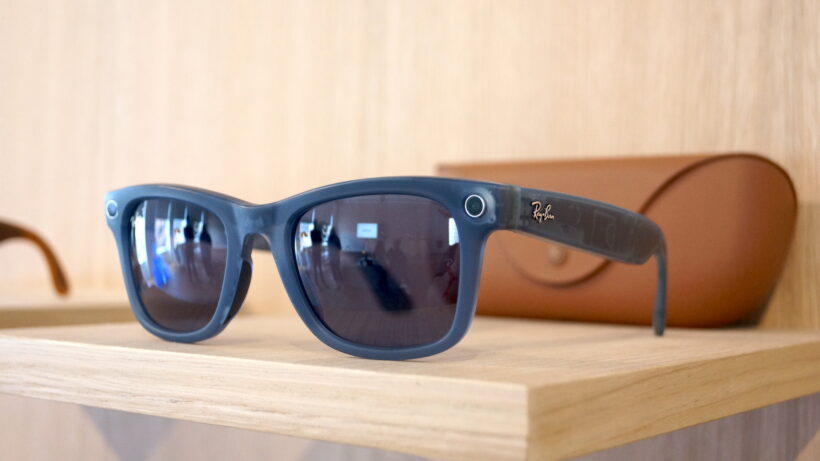
The headline device appears to be a pair of Apple-designed smart glasses aimed squarely at competitors like Meta’s Ray-Ban collaboration. Rather than partnering with an established eyewear brand, Apple is said to be developing its frames in-house.

The company is focusing on premium build quality and multiple size and colour options. Reports suggest the glasses will feature an advanced dual-camera system. One high-resolution camera captures photos and video, while a second sensor feeds environmental data to Siri.

Advertisement

Advertisement

If accurate, the goal is to create what sources describe as an “all-day AI companion,” offering hands-free contextual queries similar to what Meta currently provides. This would come with Apple’s tighter hardware-software integration.

Alongside the glasses, Apple is reportedly exploring AirPods fitted with lower-resolution cameras. These wouldn’t be designed for photography, but instead to gather visual context for Siri while maintaining the familiar earbuds form factor. Microphones would also allow for voice interaction. As a result, the AirPods would become another extension of the iPhone’s AI system.

The third device in development is said to be an AI-powered wearable pin. The concept echoes products like the Humane AI Pin. However, Apple’s version would reportedly rely on the iPhone as its processing hub rather than operating as a standalone replacement. A built-in speaker is being considered, though that detail is not confirmed.

Advertisement

The broader strategy appears clear: rather than replacing the iPhone, Apple wants to surround it with AI-enabled accessories, reducing the need to constantly take it out of your pocket. It’s a different approach to some early AI hardware experiments that attempted to fully supplant smartphones. Those efforts haven’t always landed well.

There’s no official confirmation from Apple, and none of these products are unlikely to arrive before 2027. Still, if the reports hold up, Apple could be preparing its most ambitious wearable push since the Apple Watch. This time, the focus is centred squarely on AI.

Advertisement

Source link

Advertisement
Continue Reading

Tech

Apple Music’s 5 new upgrades are just what the platform needs to one-up Spotify, but its new UI has users begging for simplicity

Published

on


  • Apple Music is rolling out five new features in iOS 24.6, including the new Playlist Playground and Concerts Near You functions
  • It’s also getting a new UI design for albums and playlists
  • Despite its new look, it’s divided users who have called out Apple for its lack of accessibility features

Apple will unveil its next slew of new products in a couple of weeks at its March 4 event, but it’s already teasing some of the new upgrades coming to Apple Music in iOS 24.6 — and there’s no doubt they’ll breathe new life into one of the best music streaming services.

If you’re enrolled in the iOS 24.6 beta, there’s a chance you’ve already caught a glimpse of the new Apple Music features that are expected to roll out widely in the coming weeks. Unlike Spotify, it’s not in Apple Music’s character to churn out one new feature after the next, so the fact that it’s bringing five new upgrades at once is big news.

Source link

Advertisement
Continue Reading

Tech

Mag-Lev Lemming Refuses To Fall

Published

on

Are you ready to feel old? Lemmings just turned thirty-five. The famous puzzle game first came out in February of 1991 for the Commodore Amiga, before eventually being ported to just about everything else out there, from the ZX Spectrum to the FM Towns, and other systems so obscure they don’t have the class to start with two letters, like Macintosh and DOS. [RobSmithDev] decided he needed to commemorate the anniversary with a real floating lemming.

The umbrella-equipped lemming is certainly an iconic aspect of the game franchise, so it’s a good pick for a diorama. Some people would have just bought a figurine and hung it with some string, but that’s not going to get your project on Hackaday. [Rob] designed and 3D printed the whole tableau himself, and designed magnetic levitation system with some lemmings-themed effects.

The mag-lev is of the top-down type, where a magnet in the top of the umbrella is pulled against gravity by an electromagnetic coil. There are kits for this sort of thing, but they didn’t quite work for [Rob] so he rolled his own with an Arduino Nano. That allowed him to include luxuries you don’t always get from AliExpress like a thermal sensors.

Our favorite part of the build, though, has to be the sound effects. When the hall effect sensor detects the lemming statue — or, rather, the magnet in its umbrella — it plays the iconic “Let’s Go!” followed by the game’s sound track. If the figurine falls, or when you remove it, you get the “splat” sound, and if the lemming hits the magnet, it screams. [Rob] posted a demo video if you just want to see it in action, but there’s also a full build video that we’ve embedded below.

Advertisement

A commemorative mag-lev seems to be a theme for [Rob] — we featured his 40th anniversary Amiga lamp last year, but that’s hardly all he gets up to. We have also seen functional replicas, this one of a motion tracker from Aliens, and retrotech deep-dives like when he analyzed the magical-seeming tri-format floppy disk.

Source link

Advertisement
Continue Reading

Tech

Grab this Elevation Lab 10-year extended battery case for AirTag for only $16

Published

on

If you’re an iPhone user who likes to keep tabs on where your stuff is, you can’t go far wrong with an AirTag. The second-gen model that Apple just released outpaces the original in every way (aside from the galling lack of a keyring hole, that is). While it’s easy enough to replace the battery in both versions of the AirTag, you might not want to have to worry about the device’s battery life for a very long time. Enter Elevation Lab’s extended battery case for the AirTag, which is currently on sale at Amazon for $16.

The case usually sells for $23, so that’s a 30 percent discount. It’s not the first time we’ve seen this deal, but it’s a pretty decent one all the same.

Image for the large product module

Elevation Lab

Elevation Lab says its AirTag case can extend the battery life of the tracking device to 10 years, and now it’s on sale.

Advertisement

This is arguably one of the more useful AirTag accessories around for certain use cases. It won’t exactly be helpful for an AirTag that you put in a wallet or attach to your keys, as it’s too bulky for such a purpose — and it doesn’t have a hole for a keyring anyway. Still, if you’re looking for an AirTag case that you can place in a suitcase or backpack and not have to touch for years, this could be the ticket.

Elevation Lab says that, when you place a couple of AA batteries in the case, it can extend the tracker’s battery life to as much as 10 years (the brand recommends using Energizer Ultimate Lithium batteries for best results). The AirTag is slated to run for over a year on its standard CR2032 button cell.

The case gives the AirTag more protection as well. It’s sealed with four screws and it has a IP69 waterproof rating. What’s more, it doesn’t ostensibly look like an AirTag case, so someone who steals an item with one inside is perhaps less likely to realize that the object they pilfered is being tracked.

Advertisement

There are some other downsides, though. Since the AirTag is locked inside a case, the sound it emits will be muffled. Elevation Lab says the device’s volume will be about two-thirds the level of a case-free AirTag. However, the second-gen AirTag is louder than its predecessor, which should mitigate that issue somewhat.

Image for the mini product module

Follow @EngadgetDeals on X for the latest tech deals and buying advice.

Source link

Advertisement
Continue Reading

Trending

Copyright © 2025