
GoPro Lit Hero: two-minute review
GoPro is a name that’s synonymous with the action cam market, with the brand having largely been responsible for the explosion in popularity of such cameras over the past two decades. The brand has come a long way since its first Hero camera, a 35mm film-compatible wearable model released in 2004.
That being said, the direction of the range can sometimes take an odd turn, and one such example is 2025’s GoPro Lit Hero, a sort of replacement for the GoPro Hero (2024), which was itself a weird compromise of price over specification.
You certainly can’t criticize the camera’s portability — it’s one of the smallest and lightest action cameras you can find anywhere, and there’s no danger of it weighing you down whilst out on a cycle ride or when travelling. Before hopping on a plane, there was none of the usual “Should I, shouldn’t I?” dilemma I often experience when choosing what to take on a trip, and it was a simple case of “Why not?” and throwing it into my camera bag.
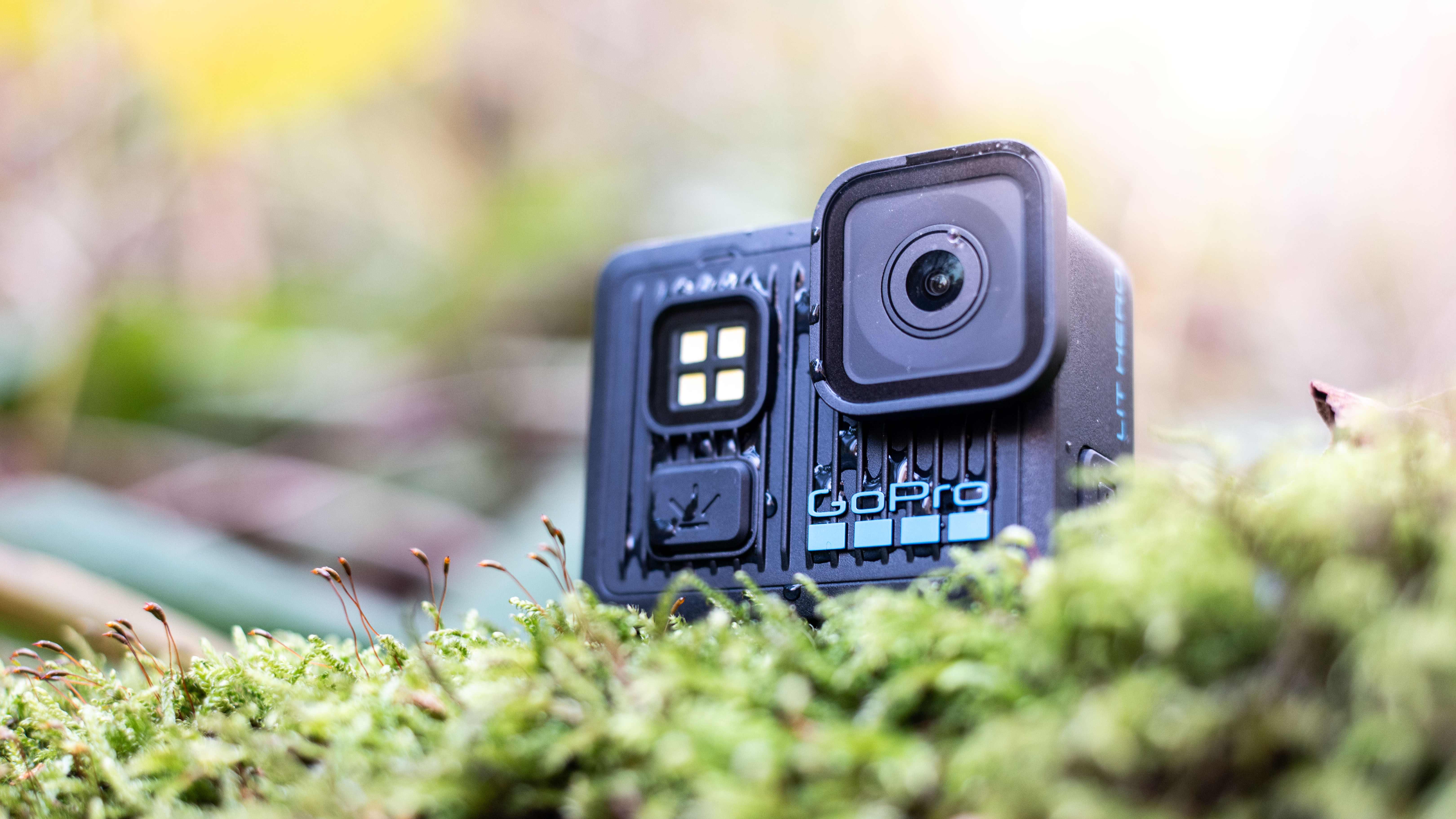

There haven’t been many compromises in terms of build quality, and the Lit Hero feels rugged despite its diminutive size.
However, the tiny screen makes changing settings a challenge, while there isn’t a lot of room for camera controls on the body, making the handling experience frustrating at times. The screen itself isn’t always easy to use for image previews and is quite fiddly. It’s not a camera you can use in a hurry, which is a problem given the type of content you’d probably shoot with it.
There’s very little in the way of manual controls: if you just want a point-and-shoot camera, you’ll be fine, but if you hope to take control over the image-making process, there isn’t much here to satisfy a creative appetite.
Image quality is passable, but not mind-blowing. The camera struggles in low light thanks to its tiny imaging sensor, and despite offering 4K shooting, footage is anything but pro-level. Stills and video are sharp enough, but quickly lose detail as the sensitivity is increased. Meanwhile, colors are quite natural.
Overall, the GoPro Lit Hero is an affordable entry to the action cam market, and is a good take-anywhere choice. It won’t draw too much unwanted attention, or take up room in a bag. The problem is that too much has been stripped away to facilitate the small size. If you were expecting a simplified Hero Black, with similar properties, just smaller, you would probably be disappointed.
I’m not sure who the Lit Hero was designed for, specifically. Yes, it’s an entry-level camera, so beginners might benefit. However, the naming convention is confusing, and I’m uncertain as to why such a powerful LED was incorporated. It’s also still not that cheap, which I fear is more because of the brand name than any real premium advantages it offers.
As a result, the camera doesn’t really hit any target market well. It sounds mean, but it might be best suited for filmmakers who want a camera that they’re happy to risk destroying in the pursuit of extreme shooting angles. Otherwise, I can’t think of anyone in particular to whom I’d recommend the Lit Hero.
GoPro Lit Hero specs
|
Type: |
Action camera |
|
Sensor: |
1/2.8-inch CMOS |
|
LCDs: |
1x rear 1.76-inch touchscreen |
|
Memory: |
Micro SD |
|
Lens: |
15mm equivalent, f/2.3 |
|
Battery: |
Embedded rechargeable 1255mAh Enduro Lithium-Ion |
|
Video: |
Up to 4K/60p, 4K/30p (4:3) |
|
Photo: |
12MP (4000 x 3000 pixels) |
|
Dimensions: |
56.6 x 48.4 x 29.45mm (W x H x D) |
|
Weight: |
3.3oz / 93g |

GoPro Lit Hero: Price and availability
- Released October 21 2025 worldwide
- The GoPro Lit Hero retails for $269.99 / £239.99 / AU$419.95
- The Starter Bundle includes a Shorty mini tripod, bike mount and case for $344.99 / £304.99/ AU$539.95
The GoPro Lit Hero went on sale from October 21 2025 for a price of $269.99 / £239.99 / AU$419.95, but months later and with the next generation of GoPros set for 2026 it can be purchased for less. The camera is available in kits too, including the Starter Bundle, which includes a bike mount and camera case and retails for $344.99 / £304.99 / AU$539.95.
Other activity-specific bundles are available, such as the Water Activities Bundle ($332.99 / £296.99 / AU$519.95), Bike and Camp Bundle ($349.99 / £399.99 / AU$ 546.95) and a Kid’s Bundle for $359.99 / £322.99 / AU$ 572.95, which supplies a Shorty mini tripod, case and Flexible Grip Mount.
GoPro Lit Hero: Design
- Small 1.76-inch LCD touchscreen
- Waterproof to depths of 16ft / 5m
- Super-lightweight at 3.3oz / 93g
The Lit Hero certainly looks the part, and has many of the traditional design markers of a GoPro product. The rear of the camera is dominated by the 1.76-inch LCD screen, with no physical buttons or controls whatsoever. This isn’t unusual for an action camera, and the same is true of a higher-end model like the DJI Osmo Action 6. The difference there is the screen size, which at 2.5 inches is much easier to interact with and operate.
The monitor on the Lit Hero is so small that my fingertips dwarfed some of the icons, making the precise selection of settings tricky when on the move and when outside in winter, digits numb from the cold. The active area of the screen is much smaller than the back of the camera, too, so there really isn’t much control real estate to be working with. If, like me, your hands are on the large side, it’s something to be aware of if the Lit Hero is on your shopping list.
It’s also not the most detailed LCD I’ve ever used, and it’s not ideal for judging the sharpness of captured images and footage. A few times, I thought I’d got the subject in focus, only to find the camera had back-focused upon opening the images and footage on the large screen of my laptop.
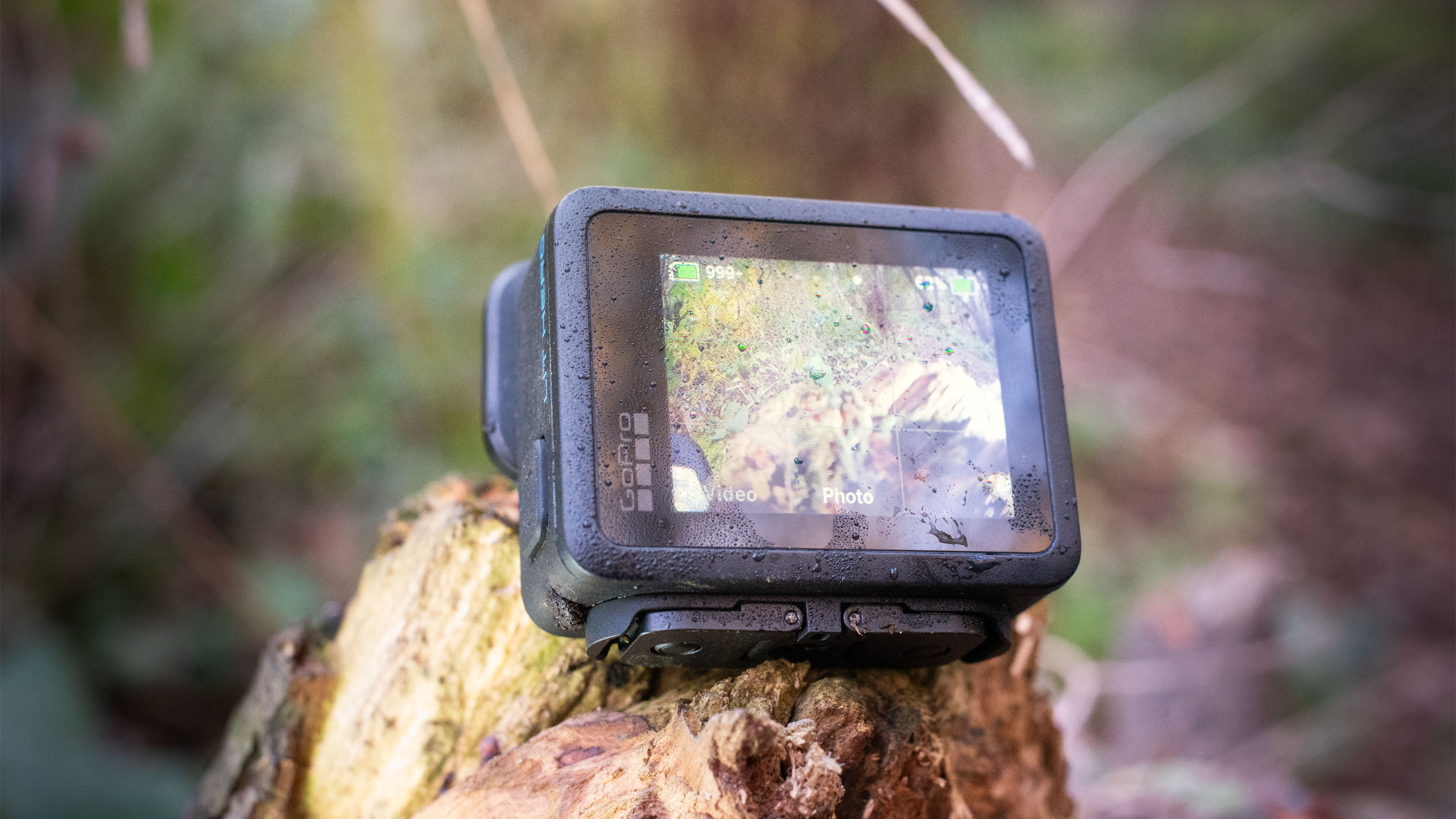
The touch function is useful (well, actually essential as it happens), but it isn’t hugely responsive, and it can take a few taps to get the desired menu to open, or multiple swipes with wet or muddy fingers to scroll through previews. Overall, it’s definitely a good idea to download the dedicated GoPro Quik app onto your phone, via which you can more accurately quality-control your footage.
The rest of the body is incredibly simple, which is both a negative and a positive. On one hand, this means you have to rely on the tiny screen to operate most of the camera’s functions, frozen fingers or not, but it also gives the Lit Hero a reassuringly unintimidating layout for beginners. There aren’t so many buttons that you might be worried about accidentally changing a setting you subsequently can’t figure out how to reset.
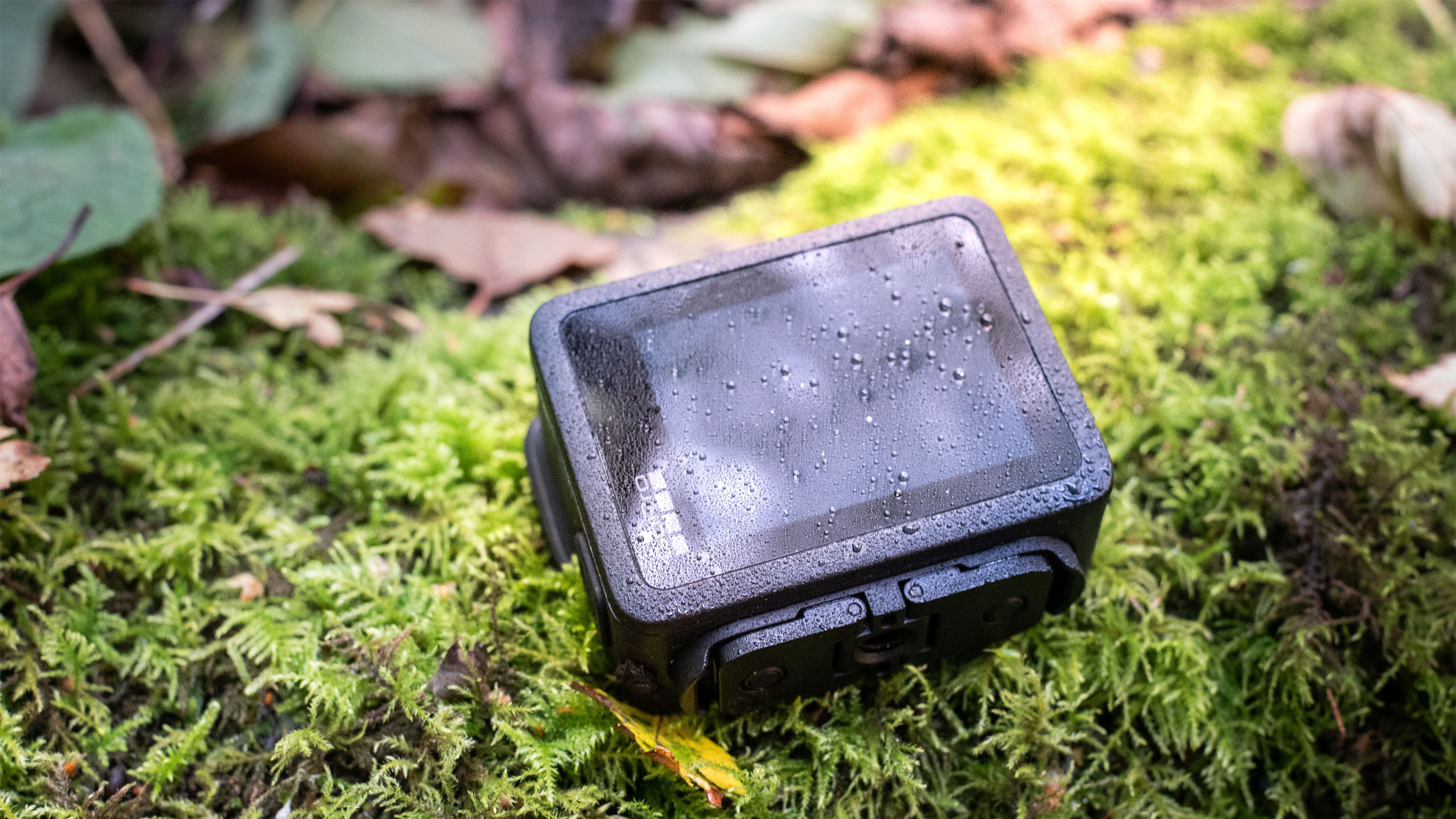
The Polycarbonate and TPE (thermoplastic elastomer) construction material is easy to grip, with a good amount of texture to provide friction even when the camera is wet. At no point did I worry about it slipping from my hands while using it handheld.
The other inescapable side-effect of such a small body is that when handling it, even just to remove it from a bag, it’s easy to touch the lens and leave behind fingerprints. It’s easily wiped clean, but this can be irritating.
GoPro Lit Hero: Performance
- Quick startup for rapid shooting
- Lack of built-in digital or optical stabilization is frustrating
- Super-powerful LED lamp is too intense for most uses
The camera itself is quick to start up, which was something I was concerned about, given the expected shrinking of the processor assembly to allow for the Lit Hero’s tiny dimensions. There’s very little delay between pressing the power button on the top of the camera and it being capture-ready.
Focus is also quick, at least as far as I could tell from my ‘hit rate’, looking back through captured images – looking at the screen, it’s very difficult to see the focusing in action, especially given the wide focal length. This was impressively maintained in low light and I didn’t notice a significant increase in out-of-focus shots in poor ambient lighting.
A big downside for me is the lack of integrated image stabilization. Rather than using an optical or sensor-shift IBIS system, you must first transfer footage to your smartphone using the GoPro Quik app, then apply algorithmic stabilization there. I’m not a fan of digital stabilization anyway, but not having it applied in-camera means you can’t preview how the final footage will actually look at the point of shooting. It’s a laborious extra step that slows things down.
Image 1 of 3
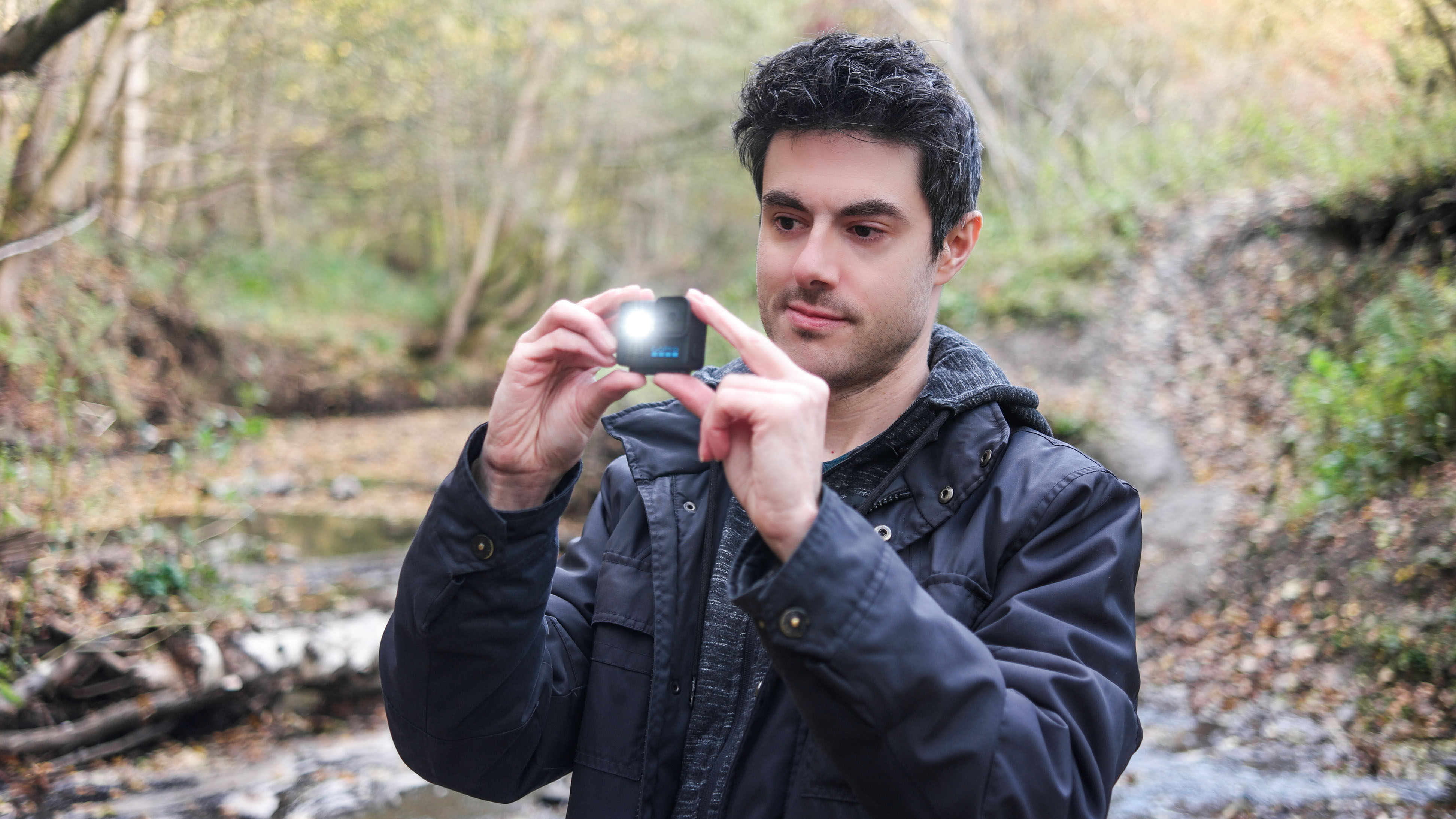
An added frustration is that the connection between my phone and the Lit Hero was fairly unstable. It kept dropping out, meaning that live previews of what the camera could see using my phone screen were so pixelated as to be largely useless. The transfer speeds were also predictably sluggish. Yes, it’s possible this is due to the age of my handset, or even a model-specific compatibility issue, but I’d experienced no such issue when pairing it to the Insta360 X4 Air and Insta360 X5 the day before.
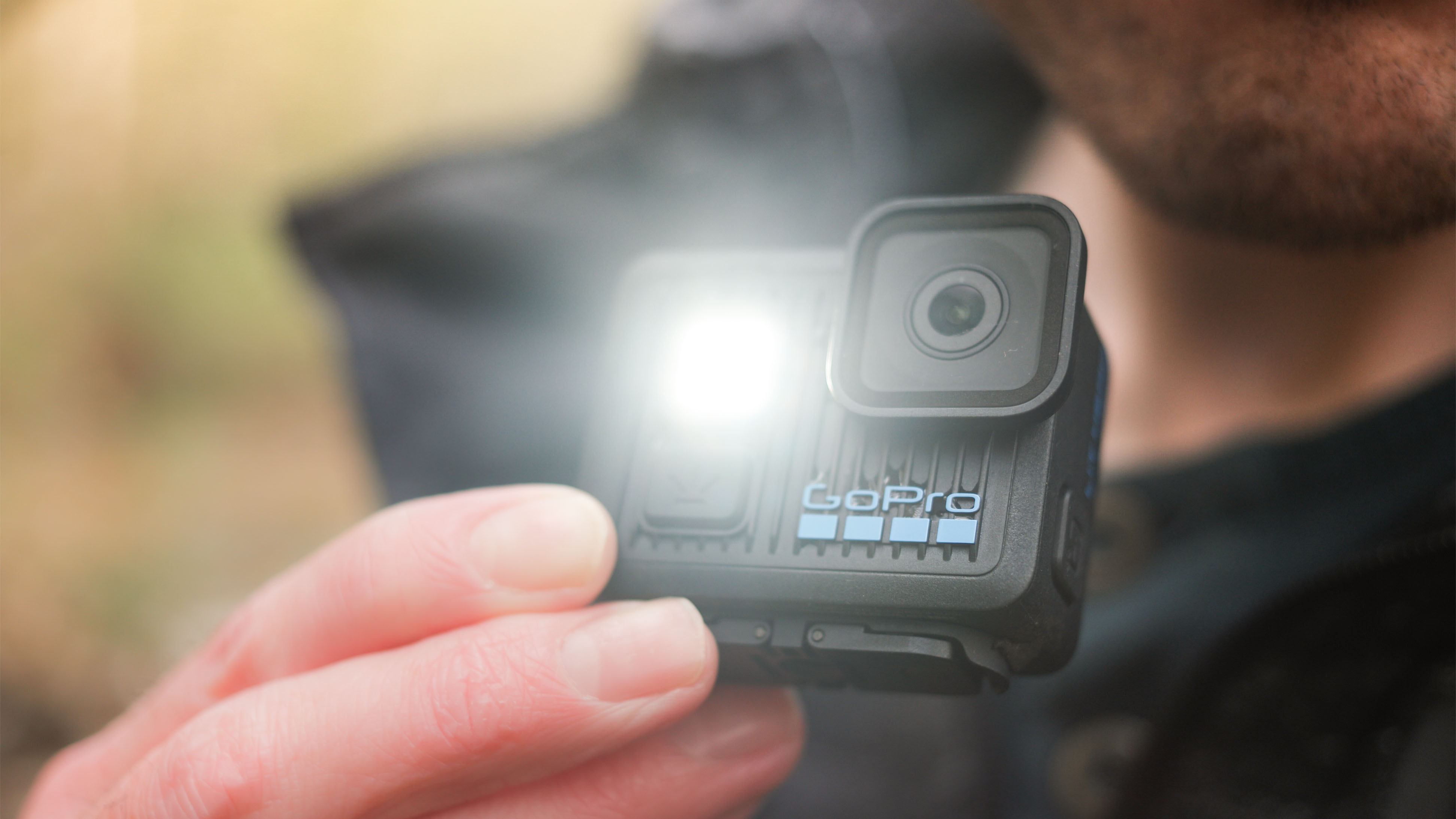
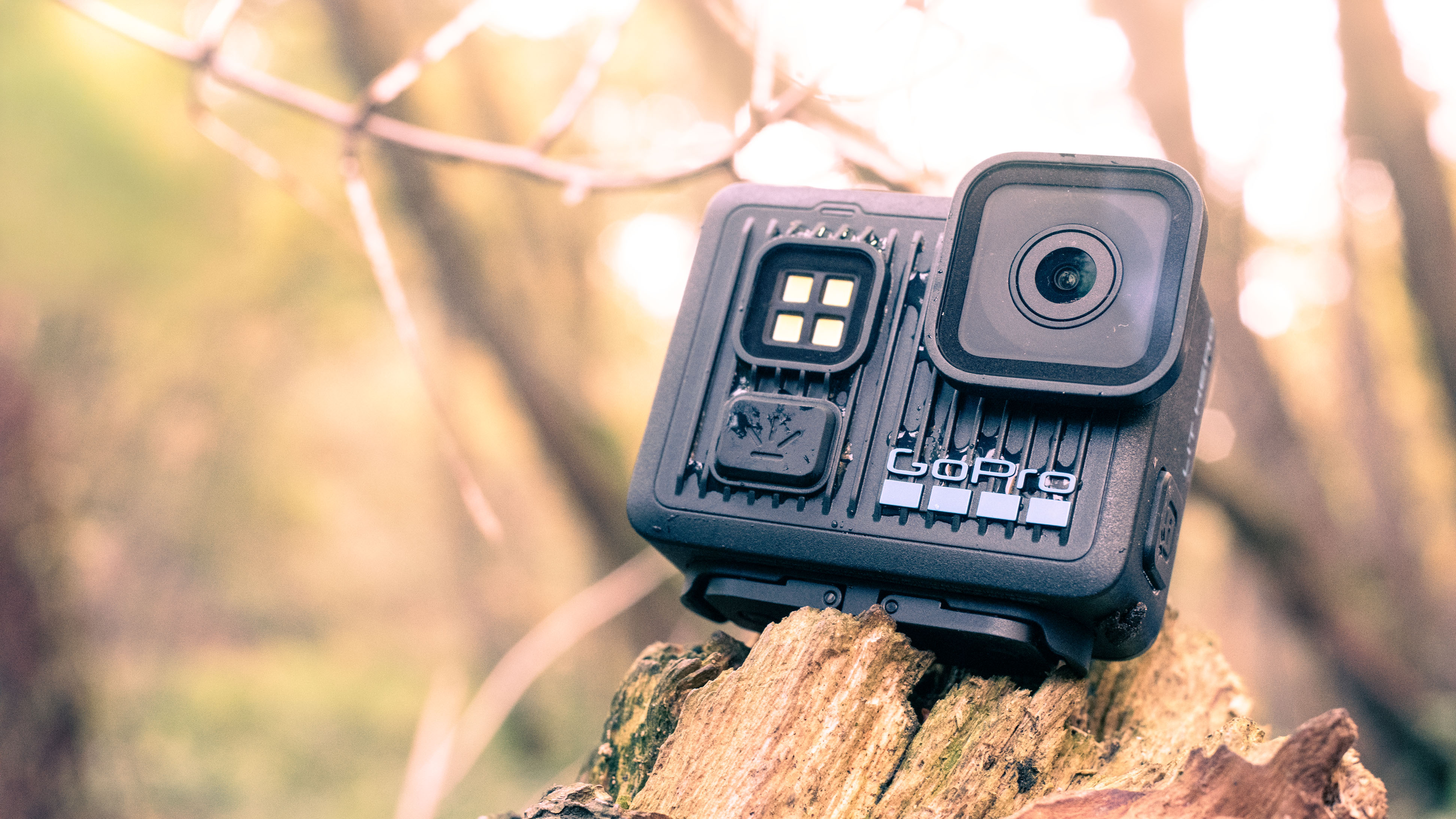
The ‘Lit’ element of the camera’s name stems from the powerful LED torch on the front of the body. It’s really the only instantly noticeable change from the GoPro Hero (2024). I wasn’t sure a camera could ever be defined by its built in flash or continuous light, but oh wow, did this thing get my attention.
It’s inexplicably bright. For the size of the camera, the light output is impressive if not completely overkill. It’s so bright at the maximum setting that I found it impossible to perform a piece to the camera with it shining in my eyes. Of course, it might come in useful in dark conditions, but I found it just looked ugly in most cases. I found it helped when shooting underwater clips in a sediment-filled stream, but the exposure fall-off is very obvious and unsightly.
On a positive note, the battery life is decent, and I could easily get around an hour and a half of continuous use out of it, in chilly outdoor temperatures, before it ran out of juice. Since the battery is integrated and can’t be swapped, this is good news.
I found the body warmed up pretty rapidly when shooting longer video clips; not problematic, but a little uncomfortable when using it handheld. I found the more powerful DJI Osmo Action 6 heated up less quickly after prolonged use.
GoPro Lit Hero: Image quality
- 4K video looks good in brighter light, with natural color rendition
- Photo and video quality drop significantly at higher sensitivities
- No log mode for later color grading
With such a small (1/2.8-inch) imaging sensor at its heart, the Lit Hero is limited in its light-gathering capacity. As such, noise levels are quite high at every sensitivity. There are very few manual controls, with no true PASM modes that allow the user to manipulate exposure settings, meaning you’re at the mercy of the camera’s own decisions, often resulting in grainy footage.
While it’s easier to hide in fast-moving video, the mushiness of detail is clearly visible in stills. In daylight conditions, results are actually quite sharp, but this isn’t maintained for long as ambient light falls.
The autoexposure system is fairly dependable, and it was able to quickly assess each scene during my testing and correctly adjust the parameters to prevent obvious overexposure. Similarly, the auto white balance does a good job of keeping colors natural, even under mixed lighting. This is all good news since there’s little opportunity to amend these settings yourself.



I’d equate the experience and resulting images to those from a basic smartphone or compact camera – I wouldn’t recommend the Lit Hero for ‘serious’ still photography work, but it’s good enough for off-the-cuff content creation and vacation shots.
There isn’t much latitude for post-processing work either. Shadows can be blocked quickly, probably because the camera seems to be biased towards underexposure to keep the highlights in check, but it’s not a good idea to lift these too far. There is no Log mode so color grading must be applied to the pre-processed video, which can break down the tones if pushed too far.
- Image quality score: 3.5/5
GoPro Lit Hero: testing scorecard
|
Attributes |
Notes |
Rating |
Header Cell – Column 3 |
|---|---|---|---|
|
Price |
As one of the most affordable action cameras available, the Lit Hero won’t break the bank, but it’s still questionable value for the spec on offer |
3.5/5 |
Row 0 – Cell 3 |
|
Design |
I have no real complaints about the design. Yes, it’s fiddly but that’s the trade-off for such a portable size |
4.5/5 |
Row 1 – Cell 3 |
|
Performance |
The screen isn’t particularly responsive, the camera isn’t that quick to operate, and it gets warm quite quickly after extended shooting |
3/5 |
Row 2 – Cell 3 |
|
Image quality |
While not terrible, the small sensor struggles in low light and detail turns mushy. Colors are good though, if not punchy. |
3/5 |
Row 3 – Cell 3 |
Should I buy the GoPro Lit Hero?
Buy it if…
Don’t buy it if…
Also consider
In many ways the Go 3S is the best of both worlds: you get both an incredibly portable, wearable action camera and the benefits of the Action Pod, including easier handling and improved battery life. You get 4K resolution at up to 30p, waterproofing up to 33ft / 10m, and a slow-motion mode in 1080p of 200fps. If you want a truely tiny action cam that is tough enough to withstand some punishment, the Go 3S has no true rival beyond the DJI Osmo Nano (see below).
Read our in-depth Insta360 Go 3S review
Proving there’s life beyond GoPro, the DJI Osmo Nano offers some brilliantly modular features. Not only does it weigh a mere 52g, but you also get the benefit of some professional features, like the excellent DJI D-Log M mode for advanced color grading possibilities in post-processing. It also provides 4K recording, using a larger 1/1.3-inch CMOS sensor – the same one featured DJI Osmo Action 5 Pro. If you want a camera that’s light enough to go everywhere with you, without compromising heavily on spec, this is a great choice.
Read our in-depth DJI Osmo Nano review
How I tested the GoPro Lit Hero
- I used the GoPro Lit Hero over one week, both indoors and out
- I worked in a range of lighting conditions and weather to test the durability of the body and functionality
- The camera was submerged to analyze the waterproofing capability
While I always like to subject action cameras to some degree of punishing conditions, I like to use them as I might as part of an average shoot for which it was designed. As such, I don’t make a habit of dropping them out of windows or running them over with a Jeep.
Instead, I took the GoPro Lit Hero with me on several outdoor shoots, in a range of weather, from rainy to full sun. I used the camera to capture behind-the-scenes content of my shoots and environmental imagery. This included submerging it in a stream and getting it down and dirty in muddy undergrowth.
I left the camera recording for extended durations to test battery life and heat management. I shot both still photos and video, then processed these in Adobe Lightroom and DaVinci Resolve to see how much detail I could recover from the extreme ends of the tonal range. Images shown here are the unprocessed out-of-camera Jpgs and video (cut together in the case of the latter).
- First reviewed February 2026