
Security teams log 54% of successful attacks and alert on just 14%. The rest move through your environment unseen.
The Picus whitepaper shows how breach and attack simulation tests your SIEM and EDR rules so threats stop slipping by detection.




Also high on list of reasons to buy the Mission 1 Pro is that, in my experience, when properly color graded, footage from the Mission 1 Pro pairs seamlessly with footage from any other camera. This is especially true in good light, but overall the look of footage is leaps and bounds beyond the Hero 13. Some combination of the bigger sensor, better lens, 10-bit GP-Log2, and higher bit rate leads to more cinematic looking footage than I’ve seen coming out of an action camera.
Other great improvements include support for fast charging. You can get to 80 percent in about 20 minutes, fully charged in just over 30 minutes. Battery life is great too, I managed about 3 hours shooting 4K 24fps. I was also impressed to see that the battery itself, while bigger, is backwards compatible with the Hero 13 and vice versa, which is a nice touch if you happen to have quite a few extra batteries lying around (and let’s be honest, what GoPro user doesn’t).
The low light performance is also a highlight. I don’t need a camera that sees in the dark, but it’s nice to be able to shoot in twilight and get usable results. For all the ballyhoo about how bad low light performance is in older GoPros, I never found it all that limiting, but if you did, the Mission 1 Pro is your camera. I’m happy to report that GoPro has exercised considerable restraint with the new Low Light mode, there is none of the heavy processing and weird artifacts that often plague low-light modes.
Out of the box with the default color profile the Low Light mode in the Mission 1 Pro most closely matches with you get from the Insta360 Ace Pro 2, which is really solid. But don’t forget that the real power of the Mission 1 Pro comes from shooting GP-Log. When you do that in low light, and then color grade yourself, the results are better than any other action camera I’ve tried. My one gripe is that you can’t control noise reduction in Low Light mode.
There’s way too much to cover in a short review like this, but it’s worth saying that audio is improved, with more mics, the rear screen is slightly bigger, and the settings menus are more extensive and easier to customize. It’s also worth calling out that GoPro Lab has alternative firmware for the Mission 1 Pro, which enables quite a few interesting features, including up to 300 Mbps video.

Photograph: Scott Gilbertson
To get the most out of the Mission 1 Pro you’re going to want to post process your video. It needs to be edited and color graded to pull the most value out of what you can shoot with the Mission 1 Pro. This makes perfect sense given that it’s partly aimed at pro filmmakers who are naturally going to edit and color grade their footage. If you go this route, you will end up with better looking movies than what you’ll get from any other action camera. The downside is that this is a lot of work. I’ve joked in quite a few WIRED guides that I have a massive amount of video footage sitting on hard drives waiting for me to edit it. I really do, and I still haven’t got around to editing it.


Europol has flagged 4,340 URLs for removal during a multi-week operation targeting online content linked to “The Com,” a loosely organized network of nihilistic violent extremist groups.
Investigators from nine countries (i.e., Belgium, Finland, Hungary, Ireland, Luxembourg, the Netherlands, Portugal, Spain, and Sweden) took part in what Europol called “Referral Action Days” between June and July 2026.
The joint action, which ties into the European Commission’s ProtectEU counterterrorism agenda and was organized by Europol’s EU Internet Referral Unit (EU IRU) and Spain’s Intelligence Centre against Terrorism and Organised Crime (CITCO), aimed to disrupt The Com’s online ecosystem, limit nihilistic violent extremism content disseminated online by The Com groups, and generate new investigative leads.

“The Com’s content is laced with coded language and emojis that adults may struggle to decipher, conveying sinister messages that encourage self-harm and the sexual exploitation of minors. [..] The content referenced in this operation includes violent videos and images depicting self-harm, suicide, child sexual abuse material (CSAM), animal cruelty, and violent attacks,” Europol said. “
“Other types of content include videos of violent street attacks, a practice known as ‘manhunt,’ or arson. Additionally, The Com produces manuals or guides covering topics such as grooming, murder, improvised explosives, or ideological viewpoints. These manuals are created by groups to instruct members on methods for committing violent attacks, grooming and (s)extorting vulnerable minors, or conducting doxing and swatting.”
This builds on Project Compass, a yearlong operation launched in January 2025 and led by Europol’s European Counter Terrorism Centre, which has brought together law enforcement from 28 countries.
As BleepingComputer previously reported in February, that broader effort has resulted in 30 arrests and identified 179 suspects tied to The Com, along with 62 victims.
In January 2025, Europol also published a notification on the rise of online cult communities specifically targeting young people.
Europol describes The Com (short for Community) as a decentralized network lacking unified ideology, where some factions pursue violent right-wing extremist and accelerationist beliefs.
The Com-affiliated groups recruit and groom victims through social media, messaging apps and gaming platforms, coercing them into self-harm, violence and the production of child sexual abuse material, often through extortion.
“They distribute propaganda on accessible platforms to attract young individuals, funnelling potential members and victims into private forums and chat rooms where radicalisation and victimisation occur. Victims are typically coerced into remaining under the perpetrators’ influence through (s)extortion,” Europol added on Friday.
According to Europol’s February announcement, The Com is organized into multiple subgroups, including:
Two alleged 764 leaders (20-year-old Prasan Nepal and 21-year-old Leonidas Varagiannis) were arrested in April 2025and are now facing life in prison for operating an international child exploitation ring.
The Com has previously been linked to high-profile ransomware attacks against Las Vegas casino breaches in September 2023 and Marks & Spencer, Co-op, and Harrods in April 2025.

Security teams log 54% of successful attacks and alert on just 14%. The rest move through your environment unseen.
The Picus whitepaper shows how breach and attack simulation tests your SIEM and EDR rules so threats stop slipping by detection.

 After previously using the fermenting of sugar to obtain ethanol fuel, [Hyperspace Pirate] figured that it’d be a waste to just blast the other half of the yeast production in the form of carbon dioxide into the air. This poses the slight problem that gaseous CO2 is fairly bulky, while compressing it into a liquid isn’t exactly for the faint of heart. This of course means that it’s a fun challenge, involving a beach ball, vapor-compression and various compressors.
Although at room temperature compressing CO2 into a liquid requires quite extreme pressures, if you lower it to freezing temperatures it becomes quite feasible to use more typical off-the-shell compressors.
In the video both oil-less and regular compressors are used, mostly because ultimately you want to get pure CO2 into the bottle, without oil or water. Here a few methods are explored, including a pre-cooler with the oil-less compressor as it cannot quite hit the same pressures. With a typical compressor linked to an oil-separator you can directly fill the tank, which is pretty nice, though even with this removal of water turned out to be a chore.
Desiccating the gas that comes out of the fermentation vat, is attempted using a converted water filter that’s filled with desiccant beads, but as the later tests show, this isn’t quite good enough to prevent moisture to make it into the bottle and clogging its nozzle. Of course, moisture here is more acceptable than oil for most applications, so with some more work this could be quite a feasible method to fill bottles with liquid CO2 for various nefarious applications like paintball guns and more.

By testing kids’ physical and mental limits, these toys help children learn where the boundaries of their knowledge lie, and how to transcend them. Take a look at some of our favorite ways to color outside the lines.

Photograph: Antosh Sergiew
This spinning sequencer is like musical roulette for budding ravers. Place the colored magnets anywhere on the four gray concentric rings, each of which controls a MIDI loop. Then plug the sequencer into a smartphone or computer, connect your favorite music software, and get creative. All four loops run simultaneously, with each magnet representing a different note or sound. You can adjust the pitch and mute individual loops too. Refreshingly mechanical, the Orbita makes visualizing music production child’s play. $458, playtronica.com

Photograph: Antosh Sergiew
By combining a new smart brick with programmable NFC tags and minifigures, kids of all ages can now design and interact with Lego creations like never before. The 2- by 4-stud rechargeable smart brick is packed with a synthesizer, speaker, accelerometer, gyroscope, light and sound sensors, and LEDs. A positioning system can sense orientation between multiple smart bricks. A big bonus: Lego’s Smart Play System works entirely without attention-sucking screens.
Lego’s first Pokémon collab almost crashed the website, so surely the Danes had IT on standby when 12 new Smart Play kits came online. There are two all-in-one kits: Pikachu’s 400-piece Training House and the 751-piece Charizard-Jolteon battle, which include rechargeable smart bricks and NFC tags that can trigger lights, sounds, motion and sensing.
Already got some Smart Play? The 10 other compatible kits, including Mewtwo’s Lab Break and Cubone and Gengar’s Spooky Showdown, have the tags but not the Smart Bricks. $70 and up, lego.com

Courtesy of Stapelstein
Interactive adventure play done with style, the Rainbow kit features six stacking stools, a balance board, plus a host of nesting pieces that can combine to be whatever their imagination demands. Stepping-stones, wobble course, color-sorting game, toddler throne, snack tray, spinner, fort barricades or floor-is-lava upgrade. The lightweight toxin-free, 100 percent recyclable EPP pieces are waterproof, wipe clean and strong enough for adults (396 pounds limit), so don’t forget to include grandma. $299, stapelstein.com

Courtesy of Kidzlane
We can’t promise it will turn Jnr. into Fred Astaire overnight, but this impossibly good value dance mat will get your kids moving and (hopefully) tuckered out. Suitable for ages 6 to 12, it features a built-in speaker, Bluetooth and AUX so you can connect your own favorite songs, four built-in games with five difficulty levels, including a great “Simon Says” mode that gets them thinking as well as boogying. And before you ask, yes, the volume is adjustable, and batteries removable. $19, walmart.com

Courtesy of Takway.AI
Oh good, it’s a reimagined Tamagotchi, but instead of a few beepy-bleeps and button presses to keep it alive, Sweekar has loaded it with generative AI and given it a long-term memory, evolving dialog and “personality.” We’re sure it’ll be fine, and neglect won’t result in a lawsuit when the Robots finally take over, but for now we suggest erring on the side of caution and make sure the kids care for it carefully through Egg, Baby, Teen, and Adult stages. The 89-gram pocket pet also simulates body warmth and breathing, which isn’t creepy at all. $149, takway.ai

Courtesy of TangibleFuture
LOOI turns your smartphone into a chirpy little tank-like desk robot, using the screen as its face and the camera, mic and processor as its brain. Snap on your phone (minimum iOS 17+, or Android 12+), open the app and, powered by ChatGPT, it can chat, remember preferences, react to touch and gestures, play motion games, avoid desk edges and make funny faces. It also doubles as a 10-watt wireless charger and adjustable phone stand, which makes it marginally more helpful than your last assistant—although it can’t, as yet, make the coffee. $239, looirobot.com

Courtesy of Crocs
As hyped as a Supreme x Louis Vuitton collaboration, just a whole lot more fun, the Crocs Mushroom Kingdom takeover is a joyous celebration of polyethylene vinyl acetate footwear. The Core Classic Clog, available in adult and kids’ sizes features a detailed graphic print with classic in-game items like coins, Super Stars, and Green Shells, while the sole is wrapped in dimensional detailing resembling the green pipes and grassy terrain. And, naturally, each pair comes with Super Mushroom outer rivets, a “?” Block badge on the backstrap, and eight Jibbitz charms featuring Mario and Luigi. $70, crocs.com

Courtesy of Loog
Loog has been making fine learn-to-play guitars for more than 10 years, and its intuitive three-string axes make it easier for anyone to learn the basics before transitioning up to a full fretboard. After a successful partnership with Fender, they’ve now teamed up with Gibson to produce a mini electric guitar in either classic SG—putting the young in AC-DC’s Angus Young’s favorite axe—or with the iconic Les Paul curves shown here. And before you ask, these are proper instruments, with a solid poplar body, Canadian neck, rosewood fingerboard, single coil pick-up and 19 finger-friendly 1.8 mm frets. $229, loogguitars.com

Courtesy of Woom
The perfect buy if your bambino has nailed the art of sitting and standing independently, and you want more chaotic fun and adventure in your life. This self-centering, self-balancing bike is designed for kids as young as 9 months (from 28 to 40 inches in height). It gives them a chance to become the next big name on Red Bull’s MotoGP roster before they’ve even realized that broccoli isn’t actually fun little trees. $199, woom.com

Courtesy of Kibu
Turn kids’ headphones into a brilliant STEM project, with snap-together parts they build before they listen. Kibu’s wired cans are 3D printed from recycled and plant-based materials, use a standard 3.5-mm jack, limit volume to 85 dB, and have a second aux port for daisy-chaining with friends. Every part can be customized, repaired, replaced and eventually recycled, an attention to detail far too rare in adult, let alone kid’s tech. WIRED wishes more grown-up gear followed the same sustainable approach, with gear designed to be understood, and to last. $73, kibu.family

Courtesy of The Little Marvin
By selling 35 million copies for the Gameboy alone, Tetris proved that a handful of simple shapes could become one of gaming’s most enduring obsessions. Marvin’s Miniblocks gives that idea a preschool-friendly, screen-free reboot with a wooden board, 42 chunky shapes and 10 pattern cards for building, matching, rotating and inventing. It is part puzzle, part construction set, and made from eco-friendly wood with non-toxic paint. There is one important detail missing though. $55, the-littlemarvin.com

Courtesy of HoverAir
This 34 mph follow-me drone has 10 flight modes, 4K, 100 FPS motion camera and floating waterproof housing making it also the first design capable of take of and landing on water. It weighs under 250 grams, meaning you wont need FAA registration to fly one. The battery has enough for 23 minutes of flying time, and there’s 128 GB built-in storage. Plus, with a level 7 wind resistance, it’s happy to fly in gusts of up to 38 mph, making it the ideal companion for capturing solo foiling, windsurfing and sailing follow-me footage. $1,299, hoverair.com

Courtesy of MODU
Think of this as a jumbo-sized Meccano set, with 17-pieces including four FSC-certified birch wood balance beams (27.6 inches long), four chunky blocks (7.9 x 7.9 x 3.9 inches) made from recycled EPP foam, eight pegs and an idea booklet. Designed for ages from 3 to 8, it’s great for imaginative play, coordination, construction, and problem solving. It’s also surprisingly good value for a kit of this scale. And when the kids finally get bored of balancing, they can be repurposed into a shelving unit. $203, modutoy.com

Courtesy of Timex
Tells time in any era, not just the Jurassic. Made just for kids, Timex’s 29mm dinosaur-themed watch boasts an easy-to-read dial, minute markers and adjustable elastic band. The quartz movement means accuracy is assured, while the front glass is actually polymer, so it’s not just got good impact resistance, it can be easily polished to remove scuffs should playtime get rowdy. One last boon: all of Timex’s kids’ watches come with a 100-percent worry-free replacement plan, so don’t fret about lost or broken watches. $49, timex.com

Courtesy of Mattel
This is the latest in a series of creative collaborations from Mattel Toys, bringing together the world’s best-selling card game and a selection of the most iconic artists from MoMa’s permanent collection. Featuring Sonia Delaunay, Henri Matisse, Piet Mondrian, Claude Monet, Liubov Popova and Vincent van Gogh, it’s a great limited-edition update to the 52-year-old game. And before you ask, sadly the Dutch post-impressionist painter still stacks the +4. $25, mattel.com

Courtesy of Blipblox
Are you frustrated that your kids don’t ask you enough about your love for The Human League, Cabaret Voltaire, and why Talk Talk’s The Party’s Over is the seminal synth album of 1982? Maybe you can Sparks their imagination with this brilliantly inclusive designed-for-all-ages synth. It comes pre-loaded with 300 built-in melodies and 100 drum sounds, meaning you (sorry, they) can get modulating, pitch-shifting and oscillating straight out the box. The built-in speaker and AA battery power make it easy to use anywhere, but the MIDI input and a quarter-inch output mean it can plug into “proper” gear later. $219, blipblox.com

Courtesy of Dex
Take a photo and Dex identifies what’s in the frame, then teaches the word in one of 16 languages. It can turn pictures into flash cards and use spoken stories to, you know, make learning fun. $249, dex.camera

Optical cavities – two mirrors arranged to reflect light multiple times between them – form the basis of lasers and certain optical filters. Since any angle between the two mirrors results in light being scattered away, parallel alignment is essential, yet difficult to maintain. Nevertheless, [Timothy Giles] managed to 3D-print and align such an optical cavity, and used it to detect minute shifts in space and wavelength.
The cavity has two semi-transparent mirrors facing towards each other. One mirror is held in a 3D-printed mount, and the other is attached to the diaphragm of a speaker with a hole drilled through the center. The hole avoids the speaker coil, and allows light exiting the optical cavity through the semi-transparent mirror to appear on a paper target, which is monitored by a webcam. On the other side of the optical cavity, a laser diode coupled to a single-mode fiber shines in through the other mirror. Alignment is challenging, but the webcam makes it easier; as the mirrors tilt relative to each other, the pattern seen on the paper target changes, providing feedback for more precise adjustment.
Light reflected within the cavity can interfere constructively or destructively with incoming light, changing the brightness of the emitted beam. [Tim] used the speaker as a linear actuator to vary the cavity’s length, which, by counting the peaks in brightness, allowed him to measure the diaphragm’s displacement. This also demonstrated a laser diode’s wavelength instability: when the cavity was set to a constant length and the laser started up, the output brightness would cycle a few times. As the diode was warming up, its output wavelength was shifting, creating the same changing interference pattern.
To get a Gaussian beam distribution, [Tim] used a fiber-coupled laser; if you’d like to build one, we’ve seen a coupling mechanism built before. Most lasers are built around an internal optical cavity, but some instead use an external cavity.

A U.S. district court “has dismissed Google’s case against SerpApi over that company’s scraping of search results to train AI models,” reports Computerworld. Google had claimed that it was protecting copyright holders — and that SerpApi’s actions breached America’s Digital Millennium Copyright Act (DMCA):
[Google] made two claims: first, that no person shall circumvent a technological measure that effectively controls access to a work protected under this title, and second that no person shall manufacture, import, offer to the public, provide, or otherwise traffic in any technology, product, service, device, or component protected by the Act. SerpApi claimed that the URLs and other links that were being served by Google did not in themselves entail copyright and the judge agreed. In her judgment, she said that there was no indication that the copyright holders had authorized Google to take action against SerpApi.
The case is not completely over as the judge has given Google 21 days to amend its complaint to demonstrate that it was acting on behalf of the copyright owners.
SerpApi’s CEO reacted to the court’s ruling as “a win not just for SerpApi, but for all who depend on an open internet. We’re pleased that the court rejected Google’s attempts to expand the DMCA to assert control over access to public pages. The internet’s founding principle — open access to usable information — is essential to driving innovation and ensuring everyone benefits from the promise of data. SerpApi will continue supporting developers, AI companies, researchers, and businesses that rely on access to public search information.”
Some analysis from Daring Fireball blogger John Gruber:
I’ve come around on SerpApi in the last few months. My initial take was that it surely must be illegal for a company to scrape Google’s search results and offer access to that data as an API. But I’ve come around to the argument that what SerpApi is doing to obtain Google search results is, well, exactly how Google scrapes the rest of the entire web to build its search index. It’s all just scraping publicly accessible web pages. This December piece by Mike Masnick at Techdirt is what began to change my mind.
In fact, Masnick wrote, Google “built its entire business on scraping the web without asking permission first. And now it wants to use one of the most abused provisions in copyright law to stop others from doing something functionally similar to what made Google a tech giant in the first place.”
Now Google is even getting heckled about the decision on social media. “If Google wants to refile the suit within the allowed 21 days, it has to admit that site owners have copyright protection of their work and THAT would open the door to them suing Google for scraping their content for AI Overviews.”
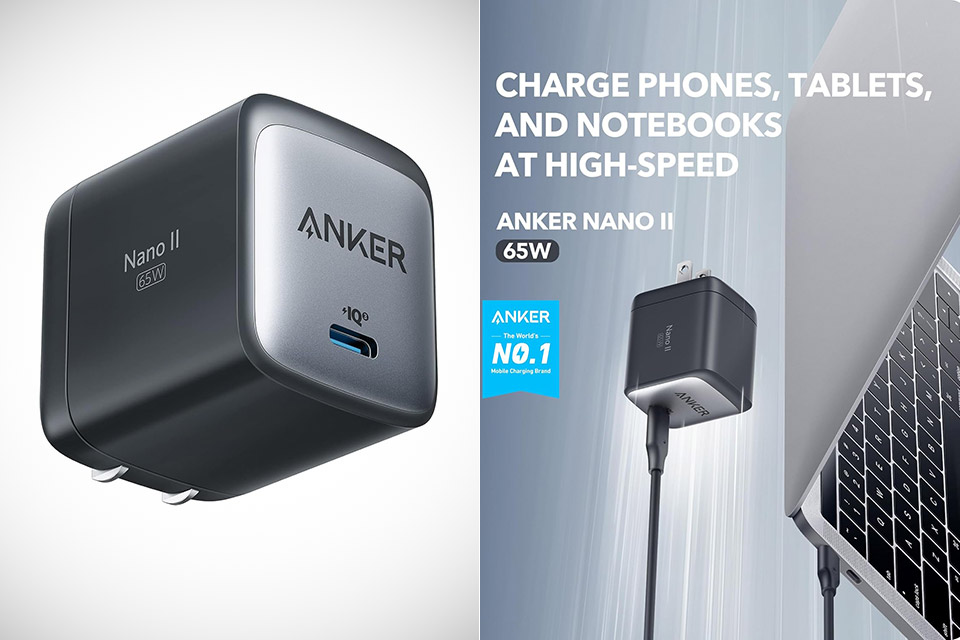
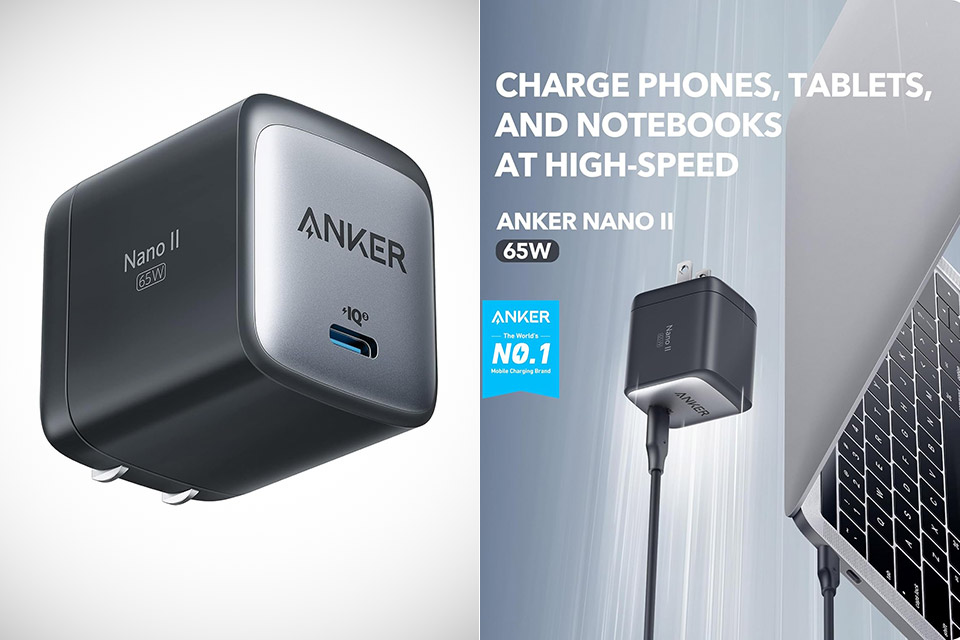
Travelers know the routine all too well. A laptop brick that eats half a bag, a phone charger that never quite keeps up, and a tablet adapter that somehow always gets left behind. Anker’s 715 Charger, priced at $19.99 (was $30), also called the Nano II 65W, collapses that pile into one small cube that still delivers serious speed.
This compact charger, measuring 1.65 inches by 1.42 inches by 1.74 inches and weighing just shy of 4 ounces, fits nicely in the palm of your hand or easily slides inside a pair of pants without causing any bulge. The foldable prongs keep the item very flat when you’re packing it away, so you don’t have to worry about it grabbing cords or scratching up any other gear you’ve brought along. Compared to a conventional 61-watt laptop charger, this one packs a punch in a considerably smaller compact, taking up approximately 58% less space while still providing enough power for most people’s on-the-go demands.


A single USB-C port delivers the full 65 watts. That’s more than enough to charge a MacBook Air from empty to full in under 2 hours, or a 13-inch MacBook Pro up to its maximum supported speed. It will charge tablets and phones juast as fast. When you charge an iPhone 17e, it will charge to 50% in about one-third the time it would take using Apple’s stock 5-watt charger. And if you’re using a recent Samsung flagship, you’ll enjoy Super Fast Charging as long as you have the proper cable. Android phones with a built-in Programmable Power Supply (PPS) provide more precise voltage management, allowing them to charge at the fastest possible rate.
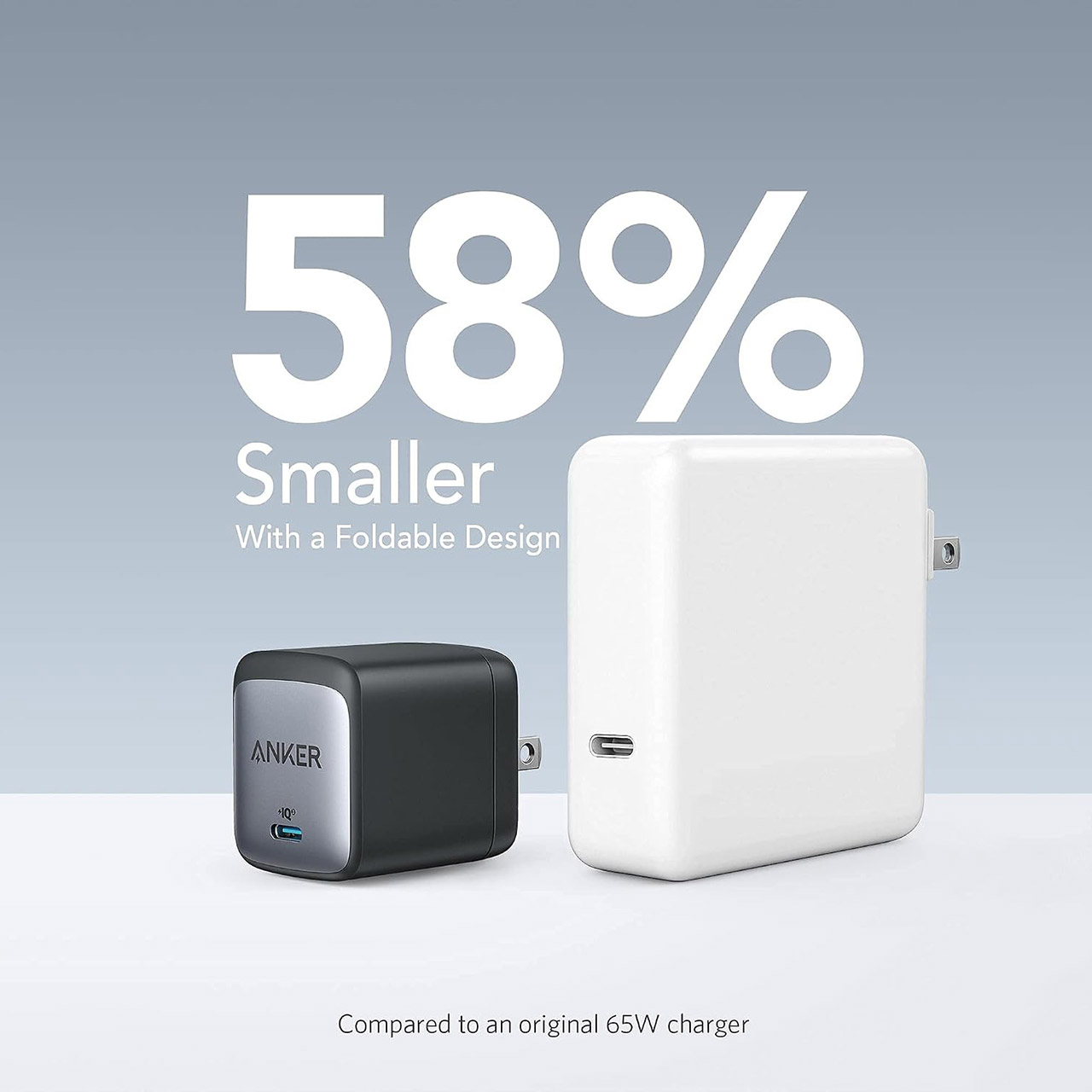
Inside this small package is Anker’s GaN II technology. Gallium nitride components can switch far faster than conventional silicon components, allowing Anker to reduce the number of transformers and capacitors while still keeping things cool even when they’re being utilized hard. The end result is a thick, efficient package that remains calm even when pushed hard over an extended period of time.

It’ll work with all of the usual suspects: MacBook Air and Pro 13-inch models, Dell XPS 13 machines, ThinkPads, Microsoft Surface Book 2, recent iPads, iPhones from the 8 model onwards, Galaxy S and Note series, Google Pixels, and even the occasional Nintendo Switch, and with universal voltage input, you won’t have to buy a separate charger for international trips; simply get the right plug adapter and you’re good to go.

Jimothy, the short-spined Seattle raccoon, has become a global sensation whose likeness has been immortalized in artwork, clothing, songs and tattoos — and now a video game created in the creature’s hometown.
Tech enthusiast and entrepreneur Chris Pirillo launched an 8-bit NES-style video game called “Jimothy” this weekend in which players can control the movements of the critter as he raids trash cans, crosses streets to the park, sneaks past the paparazzi, and climbs to the safety of a big tree.
Pirillo says the missions are pulled straight from Jimothy’s real life. No doubt the animal is busy these days trying to dodge curious onlookers who are hoping to capture the next photo or video that feeds the masses on social media.
The viral Jimothy sensation took off last week when Kiana Hall spotted the raccoon in Seattle’s Ballard neighborhood and posted a video on Instagram — viewed by millions since — asking the question heard around the world: “What am I looking at?”
An earlier video of Jimothy, captured by a home security camera and posted on Reddit, ignited further curiosity and adoration, and now Reddit is flooded with sightings, memes, artwork, food, crafts, poetry and more. The Mariners put a Jimothy mascot in the Salmon Run. There’s even a Lego Jimothy.
@media (max-width: 600px) {
aside.callout { float:none !important; max-width:100% !important; margin-left:0 !important; margin-right:0 !important; }
aside.callout .callout-img { display:none !important; }
}
Pirillo told GeekWire the game idea came to him on Saturday afternoon after seeing so many creatives flood his feeds with their own Jimothy fan art. He started to build a not-so-live tracker and realized it was a not-so-great idea. He hopes internet creativity is enough of a fix for the Jimothy-curious.
“This game is as close as any of us should ever get to him,” the game site states. “If you find yourself in his neighborhood: don’t go looking for him, don’t feed him, don’t try to touch him, and don’t crowd him for a photo.”
The game is easy enough to play, with challenges that are reminiscent of classic 1980s games “Frogger” and “Donkey Kong.”
Pirillo’s “Vibe Arcade” is loaded with other games he’s created. Earlier this year he vibe-coded a Resume Analyzer app and a pre-rejection letter generator called Dear Applicant to channel his frustrations with searching for a job.
Pirillo credits AI with changing the speed and ease with which a moment can go viral and be captured in new and creative ways.
“I remember when every big moment had a video game. But by the time a studio could create a video game around a meme pre-AI, the meme’s energy would have dissipated,” he said. “We are now at a day and age (certainly with AI as a tool) where almost literally anybody of any age or tech experience level can bring full-fledged experiences to life in just a few hours. We can simply talk our solutions into existence. It’s astounding.”
Pirillo built the game as a single HTML page, pitting OpenAI GPT 5.6 against Anthropic’s Claude Fable 5. One of the bigger challenges was getting the look of Jimothy right, as multiple AI models kept returning regular-looking raccoons.
Pirillo said he looks forward to sharing more about it all during a free vibe-coding community workshop in Seattle this Saturday.
His final takeaway for anyone looking to get in on the Jimothy hype — or whatever creature emerges next — is to not wait for the moment to pass.
“While it’s never been easier to make something, it’s also never been more challenging to get attention,” he said.


Jeff Bezos says stress comes from inaction and vanishes the moment you take the first step toward fixing a problem
Jeff Bezos, the founder of the company that just became the number one Fortune 500 business, says the cure for anxiety is not rest or meditation but action. Speaking at the Museum of Flight in Seattle in 2017, Bezos told an audience of students that stress is a signal from the body that something is being neglected, and that the feeling disappears the moment he starts working on whatever is causing it. “I find that the stress goes away the second I take the first step,” he said.
The comments, resurfaced by Fortune this week, offer a window into how the world’s fourth-richest person thinks about pressure. Bezos said he treats anxiety as diagnostic information rather than an emotional state to manage, and that the worst thing he can do is sit with a problem without acting on it. His preferred remedy is to recruit allies and turn the source of stress into a group exercise in invention.
“There’s nothing more fun than getting in a room with a group of inventors and saying: here’s the problem, let’s invent a solution to it,” Bezos said. “As soon as you start doing that, I find that it turns from something that might create stress into something that creates fun.” The philosophy is consistent with the leadership principles Bezos embedded at Amazon, where CEO Andy Jassy has described the company’s 16 codified principles as something employees must constantly work at.
The advice lands in a complicated context. Amazon has cut more than 57,000 corporate jobs since 2022, and employees who survived the rounds of layoffs have reported rising workloads and deteriorating work-life balance as fewer people cover the same ground. The idea that stress is solved by working harder reads differently when the people hearing it are already stretched thin, and when the company’s own workforce has described burnout as a structural problem rather than a mindset one.
Bezos built Amazon from a rented garage in the mid-1990s, famously taking 60 meetings to raise the first million dollars in seed capital at a time when most investors had never heard of online retail. The company he founded now generates more than $700 billion in annual revenue and is investing tens of billions in AI infrastructure. Whether the same advice that helped a founder push through rejection in 1995 translates to a workforce navigating layoffs and AI displacement in 2026 is a question Bezos did not address.


Hackers are changing the DNS settings on Wi-Fi devices at hotels and conference centers to redirect users to fake Microsoft 365 login pages.
The campaign has been ongoing since at least June and impacts organizations in various sectors, including financial services, professional services, legal, health care, energy, and retail.
Cybersecurity company ReliaQuest identified compromised Wi-Fi gateways in multiple U.S. cities as well as other regions of the world, such as India and Saudi Arabia.
Since the devices serve corporate events, hijacking the Microsoft 365 accounts could give attackers access to sensitive business information, communications, and private documents.
“We observed traffic to these compromised gateways from organizations in a range of industries, including financial services, professional services, legal, health care, energy, and retail- confirming this isn’t sector-specific targeting, but a campaign that highly likely goes after traveling employees wherever they connect,” ReliaQuest says.
The researchers believe this activity is similar to the FrostArmada router-based campaigns attributed to the Russian espionage group APT28 (a.k.a. Fancy Bear, Forest Blizzard).
It is unclear how initial access to the Wi-Fi appliances was gained, but ReliaQuest says the threat actor could have exploited weakly protected, exposed management interfaces (e.g., SSH, SNMP, web admin dashboards) or vulnerabilities.
Once the attacker gains administrator access, they can modify the gateway’s DNS settings to redirect connections to legitimate domains to infrastructure under the attacker’s control.
ReliaQuest says that the attacker registered at least four domains for setting up fake Microsoft login portals: m365-owa[.]com, owa-ms365[.]com, ms365-device[.]com, and ms365-live[.]com.
With DNS settings changed, users trying to access legitimate Microsoft login portals would land on the hacker’s phishing pages and enter their credentials.
In some cases, the researchers observed a device-code authentication flow in which targets were redirected to a fake Microsoft page with a prompt.
“What the user can’t see is that approving the prompt authorizes a session initiated by the attacker,” ReliaQuest says. The researchers note that authorizing the attacker-initiated request causes a legitimate OAuth token to be issued to the attacker’s client.
This bypasses the multi-factor authentication (MFA) protection without stealing any credentials or intercepting access tokens.

In roughly one-third of the investigated cases, the attackers also attempted to abuse Web Proxy Auto-Discovery (WPAD) by responding to Windows’ automatic WPAD lookup with a malicious proxy auto-configuration (PAC) file.
This theoretically would route traffic from Windows apps, including Chrome, through an attacker-controlled proxy, but ReliaQuest couldn’t confirm that these attacks were successful.
The researchers also emphasized that using public DNS servers such as Google’s 8.8.8.8 does not prevent this attack, as the gateway forges the plain-text requests before they reach the intended resolver.
ReliaQuest recommends using an always-on, full-tunnel VPN and encrypted DNS in strict mode as solid protection measures against these attacks.
Additionally, the cybersecurity company recommends disabling WPAD, reviewing logs for suspicious activity, and disabling Device Code authentication flow in Microsoft Entra ID when not needed.
Security teams log 54% of successful attacks and alert on just 14%. The rest move through your environment unseen.
The Picus whitepaper shows how breach and attack simulation tests your SIEM and EDR rules so threats stop slipping by detection.


Lithium-ion batteries changed tech forever, but the first consumer device to use one may surprise you.




Weekend Open Thread: Brooks Brothers


Grayscale Files For Worldcoin ETF, WLD Registers Sharp Rise


How a former Blue Peter presenter stunned America’s Got Talent judges


Sail Virtually Aboard The “Itanic” With IA-64 Emulator

Turtle Beach Command Series KB7 review: a nifty screen-equipped gaming keyboard


Unregistered fitter used Gas Safe logo on business flyers


Intel is reversing course and bringing hyper-threading back to its server chips

New Jersey voter registration controversy explained: How 6,600 noncitizens got on the rolls, and what happens next

Johnny Depp’s R-Rated Gothic Cult Classic Gets New Release Ahead of Sydney Sweeney Remake


Ethics, other provisions in crypto Clarity Act to be further discussed


Watch Flock Safety CEO Garrett Langley discuss the future of surveillance at TechCrunch Disrupt 2026

Shanghai science forum photos show China’s AI and robotics advances in rivalry with US


Circle’s President Sold Over 360,000 Shares, The Filings Explain Why


Subway Sandwich Computers Get a Second Life as Gaming Machines

Commonwealth Games boxing: Jadumani Singh seals dominant 5-0 win over Pakistan’s Sumama Rehman to enter quarter-finals | Commonwealth Games News


The Peugeot Family: How 200 Years of an “Old Money” Dynasty Died in A Boardroom


Spain sweeps the board at 2026 World Cup with individual awards


2026 3M Open leaderboard: Scottie Scheffler finds putter in Round 1, sits three back


16 Dresses for the High Summer Event


Andrew Cuomo joins OKX board as crypto exchange expands in U.S.


You must be logged in to post a comment Login