Got yourself a new Kindle Paperwhite or Colorsoft? Great! Let’s get a cover on that ASAP. A good cover will guard against scratches, scrapes and potential breakages, as well as adding a general protective layer. (These models are all IPX8 waterproof, but you can’t be too careful.)
I’ve rounded up a selection of my favorite Kindle Paperwhite and Colorsoft cases below — these e-readers have the same proportions, so all the cases will work for either. I’ve included Amazon‘s own-brand options and covers from third-party retailers; patterned and plain options in a range of materials; covers that just snap over the front, and cases that envelope the entire Kindle. Most of these have auto-Sleep/Wake functions — so your Kindle will automatically sleep when you close the cover — as well as useful things like handles for a more secure grip. If you like to read and eat at the same time, look out for a case with a built-in stand, so you can keep both hands free.
Our Kindle Paperwhite (2024) review and Kindle Colorsoft review will provide more info about the models these cases are designed for, or if you haven’t yet purchased your Kindle, my Kindle range guide can help you make sense of your options. If you’re not in a rush, it might be a good idea to wait for Amazon Prime Day before you buy, because I’m expecting a number of Kindles to drop in price for that event. You can also hop to the bottom of this page for a more in-depth guide to which models these cases will fit.
The Paperwhite and Colorsoft Kindle models have a 7-inch screen. These cases should fit the regular and Signature versions. Note that the Kindle Scribe Colorsoft is larger and won’t fit these cases.
The cases in this roundup will fit any Kindle with a 7-inch screen (occasionally referred to, more accurately, as a 6.8-inch screen), which is the Paperwhite and Colorsoft models (excluding the Colorsoft Scribe, which has a larger screen). They’ll definitely all work with the current generation of each model, which for the avoidance of doubt is:
Advertisement
Kindle Paperwhite: 12th gen (2024)
Kindle Paperwhite Signature: 12th gen (2024)
Kindle Colorsoft: 1st gen (2024)
KindleColorsoft Signature: 1st gen (2024)
They might also fit older Paperwhite models, but double-check the proportions to make sure before purchasing. The cases in this roundup won’t fit the Classic Kindle (6-inch screen), Kindle Scribe (11-inch screen), or Scribe Colorsoft (11-inch screen).

Sign up for breaking news, reviews, opinion, top tech deals, and more.
We spend hours testing every product or service we review, so you can be sure you’re buying the best. Find out more about how we test.
8849 TANK Pad Ultra: 2-minute review
The 8849 Tank Pad Ultra arrives as the company’s most ambitious device to date. It builds on the original Tank Pad’s projector concept and refines it considerably. Where the first Tank Pad offered a dim 100-lumen DLP unit running at sub-HD resolution, the Ultra steps up to 260 lumens and native 1920×1080 output. That is a 2.6x improvement in brightness in one generation, and it matters enormously in practice.
The hardware underneath is a MediaTek Dimensity 8200 paired with 16GB of LPDDR5 RAM and 512GB of storage. This is not the fastest platform available in 2026, but it is more than sufficient for field work, document management, and media playback. Android 15 ships out of the box, which is a refreshing improvement over the Android 14 found on many rivals.
Advertisement
The camera cluster is genuinely impressive for a rugged device. A Sony IMX766 50MP main sensor sits alongside a 64MP night-vision camera using an OmniVision OV64B sensor backed by four infrared LEDs. The 32MP front camera uses a Sony IMX616. This is a meaningful step beyond the dual-camera arrangements on most competing rugged tablets.
Battery capacity is the headline stat: 23,400mAh. 8849 claims this is 11% larger than its predecessor. Charging speed is 66W, which is serviceable but falls well short of the 120W found on the recently launched Ulefone Armor Pad 5 Ultra. At that battery capacity, 66W takes over two hours to fully recharge.
The body measures 268.3 x 170.3 x 24mm and weighs 1.345kg. It is a heavy device, though it sits below the Ulefone Armor Pad 5 Ultra’s 1.6kg. The integrated handle doubles as a kickstand and is the most practical design element here for outdoor projection use.
Advertisement
IP68 and IP69K certification allows for both submersion and high-pressure water jets. That is the expected baseline for a device at this price and positioning. A 4-metre laser rangefinder and an 800-lumen camping light round out the utility toolkit.
In the annals of tablets that came with a projector, this is clearly one of the best rugged tablets so far.
Sign up to the TechRadar Pro newsletter to get all the top news, opinion, features and guidance your business needs to succeed!
(Image credit: Mark Pickavance)
Advertisement
8849 TANK Pad Ultra: price and availability
How much does it cost? $690/£524/€605
When is it out? Available now
Where can you get it? You can get it directly from 8849.
At $689.99, this rugged tablet is priced way below the Ulefone Armor Pad 5 Ultra, which commands closer to $799. It sits significantly above the original Tank Pad’s sub-$400 positioning. The price increase reflects genuine hardware improvements rather than marketing inflation, particularly in the projector and camera departments.
UK pricing is £525.84 and in the EU its €604.79. There is a summer sale for US, EU, UK and CA customers with a further $20 reduction until the 12th of June.
Currently, this machine isn’t on Amazon.com, but given that everything else 8849-branded is, it’s probably only a matter of time before it is. The hardware is also sold by AliExpress, but it was more expensive than buying it directly for whatever reason.
Advertisement
Given the specification, even if the TANK Pad Ultra isn’t exactly cheap, it offers the best value for a tablet with a projector.
(Image credit: Mark Pickavance)
8849 TANK Pad Ultra: Specs
Swipe to scroll horizontally
Item
Spec
Advertisement
CPU:
MediaTek Dimensity 8200
GPU:
ARM Mali-G610 MC6
Advertisement
NPU:
MediaTek APU 580
RAM:
16GB LPDDR5
Advertisement
Storage:
512GB UFS 3.1 + dedicated microSD slot (up to 2TB)
Screen:
10.95-inch IPS LCD
Advertisement
Resolution:
1200 x 1920 (FHD+) pixels
SIM:
2x Nano SIM + TF (SD-XC)
Advertisement
Weight:
1345 g
Dimensions:
268.3 × 170.3 × 23.6 mm
Advertisement
Rugged Spec:
IP68 & IP69K rugged (water/dust/shock resistant)
Rear cameras:
50MP Sony IMX766 (primary) + 64MP OmniVision OV64B (night vision, 4x IR LEDs)
Advertisement
Front camera:
32 MP (Sony IMX616, fixed focus)
Networking:
5G NR, dual-band Wi-Fi, Bluetooth 5.3, NFC, FM radio, USB-C (OTG), 3.5mm headphone jack
Advertisement
Projector:
DLP, 260 lumens, 1920×1080, autofocus, 0.5-4m
Torch/Lamp:
800-lumen camping light, dual warning lights (red/blue) with sound simulation
Advertisement
OS:
Android 15
Biometrics:
Side-mounted fingerprint sensor
Advertisement
Battery:
23400 mAh (66W wired, 10W reverse charge)
Colours:
Black
Advertisement
8849 TANK Pad Ultra: design
Heavy duty
Kickstand issues
Idiosyncratic layout
On paper, the Tank Pad Ultra follows the established formula for rugged tablets. The body is thick and reinforced, with corner bumpers and rubberised edges. At 24mm deep it is not a device that slips into a jacket pocket unless you’re a friendly giant. The intention is clear: this is business equipment, not a lifestyle accessory.
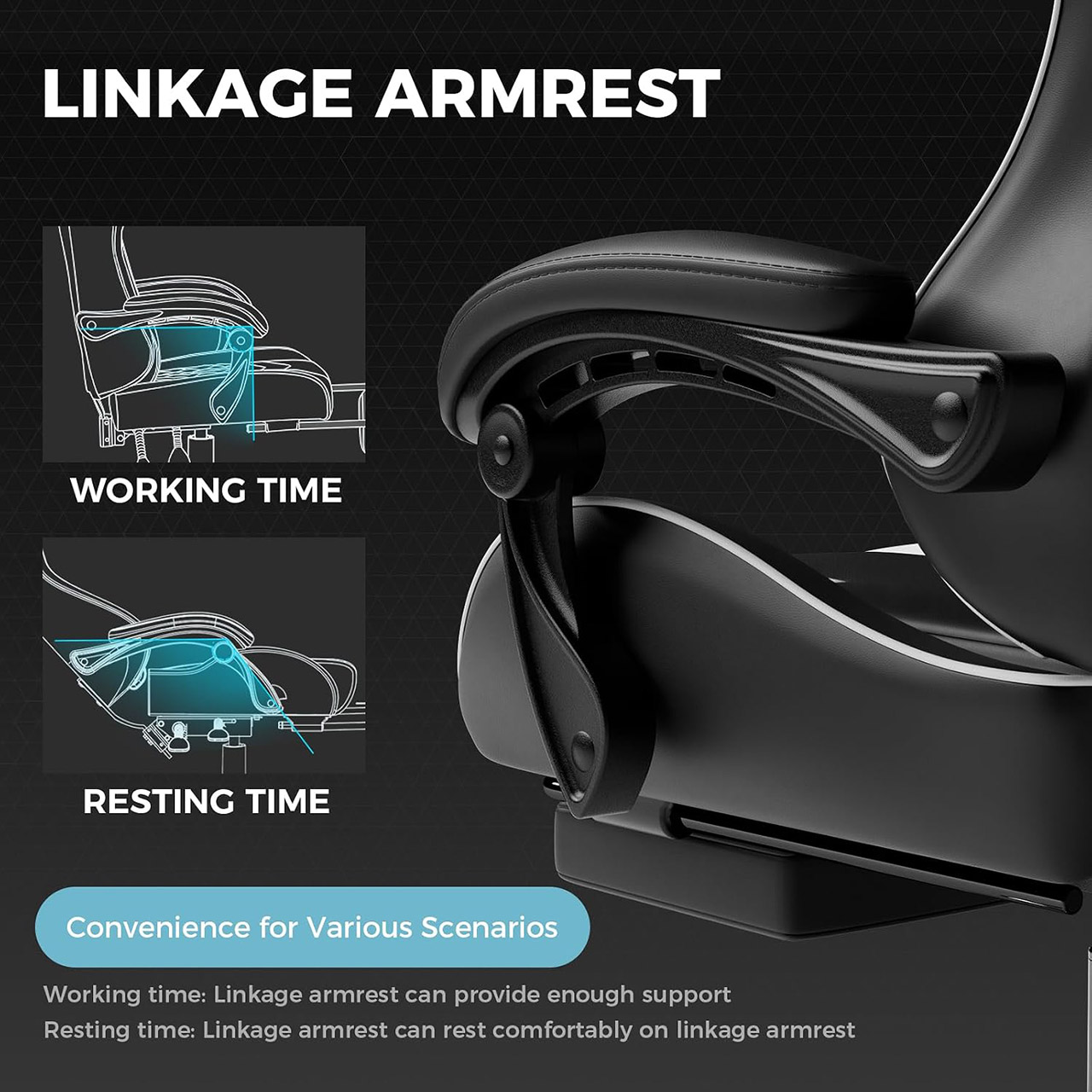
The integrated handle on the rear is a practical touch. It locks flat against the body for carrying and swings out to serve as a kickstand for projection or media use. For a device this heavy, the handle is not an option, it is a functional necessity.
Which is why I was annoyed when I couldn’t get the one that came with my tablet to fit correctly. The stand is metal and is pinned to the TANK Pad Ultra by a single large bolt that has a straight slot that a ‘8849 coin’ is provided to tighten. On mine, it would never tighten enough to fully engage the stand, making it loose.
Initially, I thought this was because of an excessive amount of blue thread-locker on the bolt, but after I’d scraped that off and realised it didn’t fix the problem, I concluded the thread in the tablet was poorly manufactured.
Advertisement
I didn’t have the thread cutter to fix this handy, so I filed the bolt down a little to make it extend less, and it fitted much better. Not sure why 8849 quality assurance didn’t notice this, but they need to make sure that they do in the future.
(Image credit: Mark Pickavance)
One oddity about the stand is that it has a square profile that engages, allowing for four possible ways to attach it. Except that only one direction works properly, because the others interfere either with the camera cluster or the camping light. Perhaps a polariser is needed to help users put it on correctly?
The top edge houses the volume keys and two PPT buttons in roughly the middle of that side, with the projector mounted to the left. The power button with an integrated fingerprint scanner is on the left side, where I kept accidentally hitting it while trying to take photos.
I tried to set that button up with fingerprint unlock and failed miserably. When you enter the fingerprint training mode, it tells you to firmly press the button, and when you do, the tablet turns off. Thankfully, the face unlock works much better, so it’s hardly a deal breaker.
Advertisement
The SIM tray is on the lower edge, and the USB-C and audio jack ports are under a rubber plug on the right side.
What’s missing here is any pogo pin pads or extra USB port that could be used to connect the tablet to a vehicle cradle. Which, when you have a tablet that’s 1345 g, you would reasonably expect to exist. There isn’t one, which explains why the designers never considered supporting that functionality.
Overall, the layout of this tablet isn’t the best I’ve seen, but most people could probably adapt to it.
(Image credit: Mark Pickavance)
Design score: 3.5/5
Advertisement
8849 TANK Pad Ultra: hardware
MediaTek Dimensity 8200 5G
260 Lumen Projector
23,400 mAh battery
The Dimensity 8200 is a solid midrange to upper-midrange platform. Built on a 4nm process, it delivers capable performance for multitasking, Android gaming, and field software use. It is not the Dimensity 9000 series or a Snapdragon 8 Gen equivalent, and buyers with heavy sustained workloads should note the distinction. For the use cases this device targets, it is more than adequate and a step up from the Dimensity 7400X that Ulefone used in its most recent design.
For no logical reason, rugged tablet makers seem to think decent processors or camera sensors aren’t required, when they’re as critical as they are in phones.
Sixteen gigabytes of LPDDR5 RAM is generous. Combined with the expandable storage via microSD, the Tank Pad Ultra avoids the storage cliff that afflicts cheaper rugged tablets.
But it’s the DLP projector that is the engineering centrepiece in this design. At 260 lumens, it is 2.6 times brighter than the original Tank Pad’s 100-lumen unit. Auto-focus handles throw distances between 0.5 and 4 metres. A micro-ranging laser assists the focus calibration for precise image sharpness. The native output resolution of 1920×1080 is a substantial step up from the 854×480 of the original device, and better than the 960 x 540 projector on the Ulefone Armor Pad 5 Ultra.
Advertisement
My only issue with the projector is that 8849 didn’t implement a low-throw solution where the tablet could be flat on a desk and still project an image on the wall. With this design, you need to use the stand or a pile of books to elevate the tablet to a height where the projection will work.
(Image credit: Mark Pickavance)
The 23,400mAh battery is enormous, even if some rugged tablets have even more. Runtime estimates in the field will depend heavily on whether the projector, camping light, and 5G radio are active simultaneously. With the projector running, expect significantly reduced endurance versus a typical standby or browsing scenario.
One last special feature of this tablet is the GPS solution. It uses dual frequencies L1+L5 GPS for more precise positioning, in theory. I’ve not seen this in a rugged tablet before, and it could be genuinely useful for those flying drones or doing surveys. In my testing, it did seem marginally more accurate than the GPS in a typical phone.
Advertisement
8849 TANK Pad Ultra: cameras
50MP, 64MP on the rear
32MP on the front
Three cameras in total
(Image credit: Mark Pickavance)
The 8849 Tank Pad Ultra has three cameras:
Rear cameras: 50MP Sony IMX766 , 64MP Omnivision OV64B1B Sensor (Night Vision) Front camera: 32MP Sony IMX616
The camera configuration is one of the Tank Pad Ultra’s stronger arguments over rivals. Most rugged tablets treat imaging as an afterthought. 8849 has invested meaningfully here.
The main camera uses a Sony IMX766 sensor at 50MP. This is the same sensor found in numerous premium Android smartphones, so expectations for image quality are reasonably well established. The large 1/1.56-inch format and all-pixel autofocus should deliver solid results in good light.
Advertisement
The night-vision camera is the headline differentiator. The 64MP OmniVision OV64B sensor is backed by four infrared LEDs and a dual-tone LED flash capable of 1.5A output. 8849 claims usable images in near-total darkness. This is genuinely useful for inspection work, security documentation, or field work in unlit environments.
The 32MP Sony IMX616 front camera is well specified for video calls and document scanning. For remote workers filing from a site office, the quality here matters more than it might for a consumer device.
Looking through my examples, the rear camera on this tablet produces some excellent results. The colour is accurate and not oversaturated, the edges of objects are crisp, and even the sky avoids being blown out. Using editing tools, it’s easy to get extra detail out of shadows and crop without making images appear blocky.
And, the 64MP Omnivision OV64B1B is one of the best choices for a night vision sensor, currently.
Advertisement
There are limited special photo modes, but you do get timelapse, super resolution, and QR codes, and there is a PRO mode. Video capture has scene modes and a full spectrum of resolutions from VGA up to 4K.
The only way this could get much better is if the optics had a proper zoom and not a digital one, but relatively few phones or tablets have that feature.
The only blot here is that 8849 wouldn’t pay for Widevine L1 encryption, so the best resolution you can stream from major providers is 480P, even if the screen would handle 1080p easily. Unfortunate, but a predictable limitation.
That point aside, this is one of the best camera solutions on a rugged tablet I’ve encountered, and for those doing surveys or wanting to capture property or vehicle damage, the provided tools are more than most will realistically need.
Advertisement
(Image credit: Mark Pickavance)
8849 TANK Pad Ultra Camera samples
Image 1 of 14
(Image credit: Mark Pickavance)
8849 TANK Pad Ultra: Performance
Modern SoC
Good battery life
Swipe to scroll horizontally
Tablet
Row 0 – Cell 1
8849 Tank Pad Ultra
UleFone Armor Pad 5 Ultra
Advertisement
SoC
Row 1 – Cell 1
MediaTek Dimensity 8200
MediaTek Dimensity 7400X
GPU
Advertisement
Row 2 – Cell 1
ARM Mali-G610 MC6
ARM Mali-G615 MC2
Mem
Row 3 – Cell 1
16GB/512GB
Advertisement
12GB/512GB
Weight
Row 4 – Cell 1
1345 g
1,600g
Advertisement
Battery Capacity
mAh
23,400
24,200
Advertisement
Geekbench
Single
1254
1047
Advertisement
Row 7 – Cell 0
Multi
3885
2900
Row 8 – Cell 0
OpenCL
Advertisement
4094
3022
Row 9 – Cell 0
Vulkan
4632
Advertisement
3046
PCMark
3.0 Score
15276
Advertisement
12199
Row 11 – Cell 0
Battery
30h 43m
28h 27 min
Advertisement
Charge 30
%
25%
27%
Advertisement
Passmark
Score
16894
13661
Advertisement
Row 14 – Cell 0
CPU
8413
6788
3DMark
Advertisement
Slingshot OGL
7711
6578
Row 16 – Cell 0
Slingshot Ex. OGL
Advertisement
Maxed
5477
Row 17 – Cell 0
Slingshot Ex. Vulkan
Maxed
Advertisement
5156
Row 18 – Cell 0
Wildlife
6280
3555
Advertisement
The Dimensity 8200 platform performs comfortably in daily use. Android 15 runs without the stuttering or lag that can affect less powerful rugged tablets. Multitasking between field apps, maps, and documents is smooth.
Gaming performance is functional rather than flagship. The Mali-G610 MC6 GPU handles lighter titles well. Sustained gaming or graphics-intensive applications will cause throttling, as is typical for this class of chip under prolonged load.
The projector introduces a notable power draw. Thermal management under combined projector and processing load is an area worth monitoring in extended field scenarios. The device body will warm noticeably during sustained projection.
If we compare the 8200 with the 7400X that the Ulefone tablet uses, this SoC is roughly 25% quicker across the board, and better than that in graphics performance.
Advertisement
However, with great performance comes even greater power consumption. And, while the battery life of the machine looks good at 30 hours and 43 minutes, there is a caveat that the Ulefone device still had 27% of its battery unused when the benchmark aborted. Where the 8849 machine only had 5%, therefore the win should go to the Ulefone.
That said, this is more than enough capacity for most uses, and if curated, a running time of more than five days is easily within reach.
(Image credit: Mark Pickavance)
8849 TANK Pad Ultra: Final verdict
For field engineers, survey teams, and outdoor professionals who project content regularly and need the clearest image possible from an integrated device, the Tank Pad Ultra earns a confident recommendation. For everyone else, the 8849 Tank Pad Ultra is the current high-water mark for built-in pico projection in a rugged tablet.
Advertisement
The leap from 100 lumens and 854×480 to 260 lumens and native 1080p is a generational step, not an incremental one. Add a Sony sensor main camera, a 64MP night-vision unit, a laser rangefinder, and a 23,400mAh battery at $690, and the value proposition is difficult to argue against.
The shortcomings are real but predictable. Sixty-six watts of charging is slow for a battery this large, even if it can manage a complete cycle in two hours. The device is heavy and thick by any standard other than the rugged-tablet category it occupies. The Dimensity 8200, while capable, is not a premium 2026 platform, even if it’s the exception to the rule that rugged tablets are typically underpowered.
Against the Ulefone Armor Pad 5 Ultra, its most direct rival, the Tank Pad Ultra wins on projector brightness, projector resolution, SoC power, weight and price. It loses on charging speed and the dual-floodlight provision. Which device wins depends entirely on which compromises suit your workflow, and how tight your budget is.
Advertisement
Should I buy a 8849 TANK Pad Ultra?
Swipe to scroll horizontally
8849 TANK Pad Ultra Score Card
Attributes
Notes
Rating
Value
Advertisement
Reasonable cost for an exceptional feature set
4/5
Design
Heavy and thick, with an awkward stand
Advertisement
3.5/5
Hardware
Modern SoC, lots of RAM and storage, and a bright projector
4.5/5
Advertisement
Camera
Decent sensor delivers good results
4/5
Performance
Advertisement
Powerful, power efficient and excellent battery life
Engineering physics students at the University of British Columbia finished a capstone project that produced something unusual in robotics. Their air hockey robot learned every move inside a computer simulation and then stepped onto real hardware ready to face human opponents with no further adjustments. The approach bypassed the usual slow and risky process of training directly on physical equipment.
Over the course of around two years, multiple student teams worked together to complete the project. Hudson Nock, Ian Hartley, and Mauro Ferraz led the last assault. They took over an early iteration of the hardware foundation, with the primary purpose of narrowing the gap between virtual training and real-world performance. The whole code and two pretty lengthy technical reports are now available on GitHub for anyone who want to read everything and understand every decision they made.
For any automated system, air hockey presents some significant issues. The table surface is never completely smooth, the puck travels at high speeds, bounces vary depending on where it hits the wooden rails, and motor efficiency degrades when the power supply voltage lowers under strain. Conventional physics models frequently fall short of adequately capturing these differences in order to transition from simulation to reality. Instead than relying just on a generic engine, the UBC team chose to meticulously measure the actual hardware and then mimic its unique characteristics within the code.
All the sensing is controlled by a single camera above. The puck is marked with retroreflective tape, while the opposing mallet is marked with a unique marker. Even when the camera uses very short exposures of only 100 microseconds to stop the movement, some bright LEDs close to the lens make both objects appear exceptionally clear and crisp. In order to keep the position error down to nearly precisely one millimeter over the entire surface, they also performed some calibration work using markers around the table edges. This is quite astounding given the little warping that would otherwise be an issue. A contour tracker can follow the puck all the way through even when the gantry obstructs the view. The human player’s mallet can be found by the same camera at a scorching 120 frames per second.
A Core XY gantry positioned high above one side of the table generates movement. The mallet is guided by two belt-driven motors and an STM32 Blue Pill microcontroller. During system testing, the team went to the trouble of determining how the mallet reacts to various voltage signals and recording it all as a third order transfer functions. They used a combination of feedforward controls and PID feedback to keep the mallet on track and virtually perfectly aimed. A sizable supercapacitor is also used to stabilize the voltage during rapid accelerations.
Custom code designed for speed and accuracy powers the simulation itself. The application employs analytical solutions to simulate both puck and mallet motion, reducing the need for time-consuming numerical integration stages. They use an adaptive collision timing technique to ensure that no impacts are missed. When the puck strikes the wooden rails, a small neural network with only 112 parameters kicks in, predicting both the departing velocity and angle, as well as a measure of uncertainty. The simulator then draws from that uncertainty distribution at random throughout each run, so the learning agent should expect slightly unfair and noisy bounces rather than flawless ones.
Vectorization allows a standard laptop to run thousands of game instances at the same time. On a normal Intel i5, the entire simulation runs approximately 230 times faster than real time, which is rather impressive. That kind of pace makes it absolutely practical to run extensive training sessions. To account for issues such as camera lag and control input latency, the agent is given a state that includes the most recent puck and mallet action over a variety of delays. It then outputs the voltage parameters for the motion profile together with the intended final mallet position.
Advertisement
The Soft Actor Critic reinforcement learning technique was used to train networks with about 200,000 parameters. The squad took action since self-play alone can result in one-dimensional strategies. After training, they just applied the policy to the actual controller without any further fine-tuning in the real world, resulting in some deviation. The round trip delays are all kept in sync while the entire system runs on a 60-Hz loop. [Source]
As spotted by Windows Report, a flag in the new Chrome Canary release called Fulfill Searchbox Queries in AI Mode appeared to confirm people’s worst fears. Read Entire Article Source link
Every year, the Verizon Data Breach Investigations Report serves as a ground-truth benchmark for the industry. Its value comes not just from the headline numbers but from the convergence signals: when multiple independent data sources point to the same structural shift in how attackers operate, that convergence is worth paying attention to.
This year, as a contributor to the Verizon 2026 DBIR, the Keep Aware team had early visibility into that convergence.
This post breaks down the specific areas where the 2026 DBIR data and Keep Aware’s own browser telemetry align — and where browser-layer data reveals what network and endpoint tools miss entirely.
Shadow AI Has Become a Mainstream Enterprise Risk
Shadow AI was identified in the Verizon DBIR as the third most common non-malicious insider action observed in Data Loss Prevention (DLP) datasets, representing a fourfold increase from the previous year.
Advertisement
Employees are not typically trying to exfiltrate data; rather, they are using the fastest available tool for a task, which increasingly means pasting internal documents or source code into a personal ChatGPT session before their organization has had time to approve and provision a governed alternative.
The scale of unauthorized AI usage in enterprise environments is one of the report’s most significant findings: 67% of users are accessing AI services on corporate devices through personal, non-corporate accounts, and 45% of employees are now considered regular AI users.
Keep Aware’s browser telemetry further provides insight into how these AI services are being used. Over half of AI prompt inputs are sent to personal accounts, and 23% of sensitive prompt uploads involve data transiting through personal or unverified accounts (i.e., outside the reach of any corporate DLP policy or logging infrastructure), conveying the real risks of AI usage.
Figure 9 from the Verizon 2026 Data Breach Investigations Report
Employees are pasting and uploading confidential data into ChatGPT, Gemini, and dozens of other AI tools every day.
Keep Aware’s free AI audit shows you exactly what’s leaving, and from which apps, before it becomes a breach.
The 2026 DBIR found that 39% of breaches involved credential abuse. Keep Aware’s attack data from 2025 puts browser-based credential theft as the number one browser-based attack, accounting for approximately 41% of observed threat activity, implying that credential theft in the browser will later contribute to successful future breaches.
Compounding this attack vector is the fact that the vast majority of these attacks are invisible to traditional tooling, as our data illustrates.
In Keep Aware’s analysis, 63% of Microsoft-themed phishing sites were not flagged by any VirusTotal vendor at the time of employee exposure, showing a glaring detection gap in intelligence feeds and endpoint tools.
More pointedly, 100% of the credential theft attempts Keep Aware observed passed through existing non-browser security controls unblocked — network proxies, DNS filters, and endpoint agents alike.
Advertisement
None of them caught it. The only reliable detection point is inside the browser itself, where the page is rendered and the user interaction actually occurs.
Browser Extensions: Privileged, Ungoverned, and Expanding
Add-ons can read, modify, and interact with any page’s content, and exfiltrate data from within the browser context, enabling extensions to operate with a level of browser privilege that should dictate regular scrutiny—yet data tells a different story.
The 2026 DBIR flagged that the average enterprise had more than 15% of users with unauthorized AI extensions installed. However, the extension problem is broader than AI tooling alone.
Keep Aware’s extension telemetry additionally shows that 13% of unique browser extensions observed across our customer base were classified as high or critical risk.
Advertisement
The more operationally significant finding: 93% of poor-reputation extensions were labeled as “productivity” tools by browser marketplaces — the exact category most allowlisting policies treat as safe. For this threat class, that makes category-based allowlisting functionally useless.
ClickFix and Browser-Native Social Engineering
Both the 2026 DBIR and Keep Aware’s State of Browser Security Report call out ClickFix as an emerging technique worth tracking.
The Verizon DBIR found ClickFix accounted for 2.7% of browser-detected attacks—a small share that nonetheless signals an evolution in browser-based social engineering.
Figure 57 from the Verizon 2026 Data Breach Investigations Report
ClickFix is a deceptive social engineering tactic used to get a user to unknowingly execute malicious code from the browser and on the host machine.
This threat begins in the browser—often by encountering compromised websites and sometimes through LLM chat responses—but quickly continues on the endpoint, compromising the machine with info stealers and remote access to attackers.
Advertisement
The endpoint bears the impact, but the browser is the social engineering medium—and the first line of defense.
The Human Element Continues to be a (Browser) Problem
The 2026 DBIR found that 62% of breaches involved the human element, with phishing initiating 16% of incidents. Keep Aware’s browser-layer data shows phishing and social engineering accounted for 46% of browser attacks observed across 2025.
The human element finding is often framed as a training and awareness problem. But attackers are constantly evolving browser-based social engineering tactics—phishing links to benign intermediary sites, redirect chains, pages that render differently for automated scanners, hosting content on legitimate websites, and silent clipboard injections.
Browser-level visibility does not solve the human element problem, but it shifts the detection point to where the human interaction is actually occurring, rather than looking for downstream artifacts after the interaction has already been exploited.
Advertisement
What This Means for Security Teams.
Shadow AI, credential theft, malicious extensions, and browser-native social engineering techniques like ClickFix share a common characteristic: they all execute inside the browser, and they all produce artifacts that are most visible, if not only visible, at the browser layer.
Security programs that rely exclusively on network, endpoint, and identity telemetry will continue to have blind spots in exactly the places attackers have learned to operate.
The browser is no longer just an application. For most enterprise users, it is the work environment. Securing it is no longer optional.
If your security stack lacks visibility into what’s happening inside browser sessions, that gap is worth understanding before attackers exploit it. Request a demo of Keep Aware to see what your current tools are missing
EU trade chief Šefčovič wants a new law forcing companies in sensitive sectors to have at least three suppliers, modelled on the Energy Union.
EU trade commissioner Maroš Šefčovič has called for a new “diversification instrument“ to reduce Europe’s dependence on single suppliers of chips and rare earths. He made the proposal at the European Policy Center’s Brussels Economic Security Forum on Friday. The tool would force companies in sensitive sectors to source from at least three different suppliers.
“If it’s critical supplies, you have to have three different suppliers to make sure that you cannot be punished because of a political reason,” Šefčovič said. He cited the Energy Union as his model, an initiative he previously led to wean Europe off Russian energy after the 2014 annexation of Crimea.
The urgency is real. The EU relies on China for more than 90% of its rare earth supplies. Beijing imposed export controls on rare earth magnets last October during a tariff dispute with the United States, and halted chip shipments from Chinese-owned Nexperia after the Dutch government seized control of the company.
Advertisement
Those disruptions hit European carmakers and exposed the bloc’s vulnerability. “Recent industrial cases, in particular supplies of chips and rare earths, have reinforced my conviction that a step change is necessary,” Šefčovič said. “Every high-risk sector must be weaned off single-supplier dependence.”
The EU has since joined forces with Washington and other nations to find alternative sources. Sweden’s discovery of Europe’s largest rare earth deposit offered a long-term glimmer, but mining timelines stretch well beyond a decade. In the meantime, Europe remains exposed.
The proposal comes a day after Šefčovič urged Brussels and Beijing to address the EU’s “unsustainable” trade deficit with China. That deficit widened to €360 billion last year, up 18% from 2024. EU leaders are set to discuss China’s industrial overcapacity and subsidised exports at a summit on 18-19 June.
Šefčovič will also meet Chinese counterpart Wang Wentao in Brussels later this month. He told reporters the next step is a formal legal proposal. “We have to specify what to really do with the legal proposal,” he said.
The broader push to reduce chip dependency has already produced the EU Chips Act, which aims to double Europe’s share of global chip production to 20%. A Chips Act 2.0 was proposed by the Commission in June 2026 with new measures to cut strategic dependencies further.
JBL has taken the wraps off its most ambitious home speakers yet. The company is launching the next-generation Summit Everest and Summit K2 models as part of a new flagship Summit Series. This series was unveiled at High End Vienna 2026.
These aren’t just updates to existing speakers. They continue JBL’s long-running “Project” lineage — a designation reserved for the brand’s most technically advanced loudspeakers. In addition, they arrive as part of the company’s 80th anniversary celebrations.
The new range sits at the very top of JBL’s line-up, joining models like Makalu, Pumori, and Ama. However, the Everest and K2 are the clear headline acts. They are reference-level systems for listeners who want no-compromise performance at home.
The Summit Everest sits at the top of the stack, carrying forward the legacy of four previous Everest generations. It uses a redesigned mid and high-frequency system built around JBL compression drivers and a large-format HDI horn.
Advertisement
This is supported with dual 10-inch mid-bass drivers and dual 15-inch woofers, with the intent on delivering deep bass while maintaining precision across the full frequency range.
Advertisement
Image Credit (JBL)
Slightly lower in the range, the Summit K2 follows a similar design philosophy but scales things back into a more “accessible” flagship format. Still, it uses JBL’s compression driver system and HDI horn design, paired with a 15-inch woofer and 10-inch mid-bass driver. This approach aims for the same sense of scale and clarity in a smaller footprint.
Both models share JBL’s updated internal architecture, including a redesigned crossover system intended to reduce signal loss and improve power handling. They have also reworked the cabinets, adding heavy internal bracing and damping to minimise unwanted resonance.
Furthermore, new isolation feet decouple the speakers from the floor, delivering cleaner bass response and sharper imaging.
Advertisement
Finish options lean fully high-end, with either high-gloss black with platinum accents or Macassar ebony veneer with gold detailing. Even the hardware has been treated as part of the design, using premium binding posts and high-grade internal wiring throughout.
Advertisement
Pricing underlines exactly where these sit in the market. The Summit Everest comes in at $159,990 per pair. Meanwhile, JBL prices the Summit K2 at $99,990 per pair, firmly placing both models in the ultra high-end territory when they arrive later in 2026.
A California man was sentenced to more than 26 years in federal prison for trafficking fentanyl and methamphetamine through Nemesis Market, one of the world’s largest dark web marketplaces.
39-year-old Darren Hughes of San Jose was convicted on drug trafficking charges in November 2025 and was sentenced by U.S. District Judge John F. Kness on May 26.
According to court documents, Hughes operated a store that offered potential clients free samples of methamphetamine on Nemesis Market.
After sending one of the free meth samples to an undercover law enforcement agent who reached out, Hughes also sold the agent methamphetamine and fentanyl pills on five separate occasions in 2023, in exchange for cryptocurrency as payment.
On June 28, 2023, the Redwood City Police Department arrested Hughes in California after arranging another sale with undercover agents.
Advertisement
Detectives from the Street Crime Suppression Team also found approximately 672 grams of methamphetamine and a loaded 9mm “ghost gun” bearing no serial number when searching his vehicle.
Evidence seized during Hughes’ arrest (Redwood City PD)
”Criminals selling poison on the dark web often act with impunity and brazenness because they mistakenly believe that they are beyond the reach of federal law enforcement. The Chicago U.S. Attorney’s Office and our law enforcement partners will identify, investigate, and prosecute drug traffickers regardless of where they operate—and, even if they operate on the dark net,” said U.S. Attorney Andrew S. Boutros.
“Drug dealers once relied on street corners; today, they use the internet to reach customers worldwide. Dark web marketplaces may seem anonymous, but no platform is beyond law enforcement’s reach. Darren Hughes used the internet to profit from addiction and distribute dangerous drugs,” added IRS-CI SAC Adam Jobes.
The Nemesis Market launched in 2021 and quickly grew into one of the world’s largest illegal online markets before being taken down by German and American authorities in March 2024.
At its peak, the dark web cybercrime marketplace hosted more than 150,000 user accounts and 1,100 seller accounts, and processed over 400,000 orders (including roughly 17,000 for opioids like fentanyl, heroin, and oxycodone, and more than 55,000 for meth, cocaine, and crack cocaine).
Advertisement
Germany’s Federal Criminal Police Office and Frankfurt’s cybercrime unit led the Nemesis Market shutdown on March 20, 2024, seizing infrastructure in Germany and Lithuania and confiscating roughly $100,000 in cash.
Investigations had begun in October 2022, involving German, Lithuanian, and American agencies, including the FBI, DEA, and the IRS Criminal Investigation (IRS-CI).
Security teams log 54% of successful attacks and alert on just 14%. The rest move through your environment unseen.
The Picus whitepaper shows how breach and attack simulation tests your SIEM and EDR rules so threats stop slipping by detection.
A new national AI strategy puts sovereignty front and centre as Canada moves to reduce its dependence on foreign cloud and AI providers.
On Wednesday, the European Commission launched its Technological Sovereignty Package, introducing new legislation to loosen the grip of US Big Tech on European cloud and AI infrastructure. Now Canada has followed suit with its own ‘AI for All’ strategy, built around six pillars and with the explicit goal of ensuring Canadians can “adopt, build and govern AI on their own terms”.
“We will strengthen Canadian sovereignty at a time when it is being deeply challenged,” the strategy states, in a clear reference to tense relations with its neighbours under the Trump administration.
“Too much Canadian innovation is captured and scaled elsewhere,” the strategy reads. “In an era where prosperity, resilience and sovereignty increasingly depend on the ability to build and govern AI on national terms, these are vulnerabilities Canada cannot leave unaddressed.”
Advertisement
The strategy, published yesterday (4 June), points to some of those “vulnerabilities” that Canada needs to address. Sovereign compute capacity is described as “nascent”, with Canadian organisations remaining heavily reliant on foreign providers for the infrastructure underpinning economic, scientific and public-sector activity.

GPU chip fabrication sits “almost entirely offshore”, and only 12pc of Canadian businesses currently use AI – well behind Nordic counterparts, the strategy claims, where adoption runs between 29 and 42pc. The strategy’s six pillars cover:
safety and democracy protections
AI skills and literacy for all Canadians
accelerated adoption across the economy
building sovereign compute infrastructure
scaling Canadian AI champions
forging trusted international alliances
On infrastructure, the Canadian government is committing to building a world-leading supercomputer by 2031 and growing sovereign cloud capacity to reduce dependence on foreign providers, echoing the EU’s CADA (Cloud and AI Development Act) proposals published on Wednesday.
Canada aims to increase business AI adoption from 12pc today to 60pc by 2034, create up to 250,000 new jobs through AI adoption by 2031, and create nearly $200bn in GDP gains from labour productivity improvements.
Priority sectors for investment will be: health and life sciences; energy and natural resources; transportation; agriculture; and manufacturing and robotics.
Advertisement
The strategy flags that Canada has already signed 20 new economic and defence international partnerships in the past year, 11 of which advance AI cooperation. The Canadian government said it will build a strategic multilateral alliance to move “from reliance to resilience” in key AI and technology capabilities.
For children and its citizens in general, the Canadian strategy commits to modernising privacy legislation, introducing online safety laws and providing free AI literacy training to 1m entry-level, post-secondary students.
Canada’s strategy and the EU’s sovereignty package this week are clear signs that the race to reduce dependence on a small number of US technology giants is now a mainstream policy priority on both sides of the Atlantic.
Don’t miss out on the knowledge you need to succeed. Sign up for the Daily Brief, Silicon Republic’s digest of need-to-know sci-tech news.
OpenAI announced a new feature that it says will provide additional protection from prompt injection attacks, where malicious chatbot instructions are hidden in webpages and other content sources.
Among other things, Lockdown Mode will disable live web browsing (so you can only access cached content), the retrieval and display of images from the web (you can still generate images), deep research, and agent mode.
The company says that even with Lockdown Mode turned on, ChatGPT could still be vulnerable to prompt injections — which could, for example, “appear in cached web content or in an uploaded file, and could still affect the behavior or accuracy of a response.”
But the goal is to reduce the likelihood that sensitive data gets shared in the process.
Advertisement
“Lockdown Mode is not intended for everyone,” OpenAI says. “It is designed for people and organizations that handle sensitive data and want stricter protection from data exfiltration risks related to prompt injection.”
The company says it’s currently rolling Lockdown Mode out to self-serve ChatGPT Business accounts, as well as eligible personal accounts.
Nearly two centuries have passed since a mechanical grass cutting device was first patented, and here’s what the first lawn mower looked like. The lawn care market in the U.S. hit 57.77 billion in 2024 with estimates showing a sizable increase into the next decade. Meaning, the familiar hum of small engines across American suburbs every weekend will continue to rise.
While homeowners across the country take pride in their well-manicured lawns, it’s important to remember to exercise caution around these machines. Unfortunately, one misstep around a lawn mower could land you or someone else in the hospital. In fact, per a Lawn Starter study from 2024, 90 people die annually in riding mower related incidents, far outpacing fatalities from bears, sharks and snake bites combined.
Some hazards include using the wrong type of mower for your property, being careless around the spinning blades, failing to collect loose items from your lawn prior to mowing, and blowing clippings onto the road. While some of these blunders seem obvious, there may be some you haven’t considered.
Advertisement
It’s important to get the correct mower for your property’s terrain
If you’re not familiar with landscaping equipment such as the difference between a zero turn vs. riding mower, you might conclude one option is just as good as the next. Unfortunately, the wrong type of machine could put you in danger, depending on the topography of your yard.
Advertisement
For instance, a zero-turn mower doesn’t perform as well on slopes. The maximum uphill angle you should navigate on a zero turn is 10 – 15 degrees. Anything greater and the front wheels can pop up, you can begin losing traction and sliding, or even tip over. Residential zero-turns can easily weigh well over 600 pounds, making a rollover accident potentially deadly.
If your lawn is hilly, you’d be much better off opting for a lawn tractor. These units can be more stable on inclines as the engine sits directly over the front wheels and the deck is mounted in the middle under the seat. A lawn tractor can typically handle slopes up to 20 degrees, making it a much safer choice for some. Although, you should always maintain a mowing path that takes you straight up and down a slope. Both zero-turns and lawn tractors alike can tip if navigating a hill at an angle.
Advertisement
Lawn mower blades spin at high RPM and can cause devastating injuries
Natasha Zakharova/Getty Images
Blades are the most obvious hazard posed by a lawn mower. These hunks of metal rotate up to 3,600 RPM underneath the deck and can certainly lead to serious injury if an operator or bystander get too close. Putting things into perspective, according to the American Academy of Orthopaedic Surgeons, the force imparted from a spinning mower blade can be compared to a .357 Magnum pistol firing a round into your hand, to say nothing about its ability to sever fingers or toes.
Often this happens due to careless actions. There are modern safety features which automatically turn off the machine when lifting off the operator seat of a zero-turn mower or lawn tractor. Push-behind mowers usually have a similar kill switch when you let go of the handle. That’s being said, these kill switches aren’t foolproof. It’s vital to always turn off the blades before getting anywhere near the ground around the cutting deck of your mower.
Advertisement
Walk through your yard looking for obstacles prior to mowing
Kiara Bloom/Getty Images
One of the ways to mitigate risk while mowing, is to briefly walk around your property looking for anything that might interfere with the mower’s job. This can include toys, fallen branches, rocks or any other debris that might get in the way. This serves multiple safety-related purposes.
First, things like rocks can damage your mower blades, creating chips, bends and curls. While a dull blade isn’t good for your grass, the consequences go deeper. Following contact, a blade can become weaker structurally, leading to parts of it potentially flying off at the time of impact or after. Metal shards becoming projectiles are clearly a hazard to both the operator and those in the immediate area. Even if a piece lands harmlessly on the ground, you’re still dealing with metal pieces strewn about your yard. Also, a bent or broken blade can easily be off balance which increases stress throughout the machine.
Even if the blade doesn’t suffer damage as a result of hitting debris, the debris itself becoming a projectile is still a significant concern. According to Mississippi State University, a mower can propel loose items in your grass at speeds as high as 200 mph. Most mowers are equipped with a cover over the discharge to help prevent projectiles from traveling farther. Regardless, it’s recommended to keep other people away from the immediate area while the mower is in operation.
Advertisement
Be careful not to discharge grass clippings onto your street
Ligora/Getty Images
It might seem harmless, but if you’re not bagging your grass, you should never coat your neighborhood road in clippings. Loose pieces of grass create a traction nightmare for two-wheeled vehicles like motorcycles or bicycles, especially on a corner. It’s even more dire if the clipping’s become wet, as it can be equivalent to an ice patch. It’s not only a perilous situation for motor bikes, but it’s also illegal in some areas of the country. For example, in the state of Virginia it’s considered a Class 1 misdemeanor.
Fortunately, there are some easy solutions to this issue, even if your lawn grows directly adjacent to the road. You can equip your mower with a bag to collect the clippings or install a mulch kit. Often, a mulch setup blocks the side chute, keeping the clippings under the deck to be cut multiple times and reduced in size. Regular deck cleaning is essential, otherwise wet build-up can cause a frustrating situation for your lawn mower.
Even without a bag or mulch kit, you can mow in a pattern that points the chute away from the road. This distributes the clippings back onto your lawn instead, making it safer for everyone.
You must be logged in to post a comment Login