Tech
Grell OAE2 Open-Back Headphones to Premiere at CanJam NYC 2026 with Newly Optimized Driver and Forward Projecting Soundstage

Veteran headphone engineer Axel Grell, best known for developing many of Sennheiser’s most advanced and commercially successful high-end models before launching his own brand, is bringing his latest design to North America. The Grell OAE2 open-back headphone will make its U.S. public debut at CanJam NYC 2026 on March 7–8, marking the model’s first appearance on this side of the Atlantic following its initial German release.
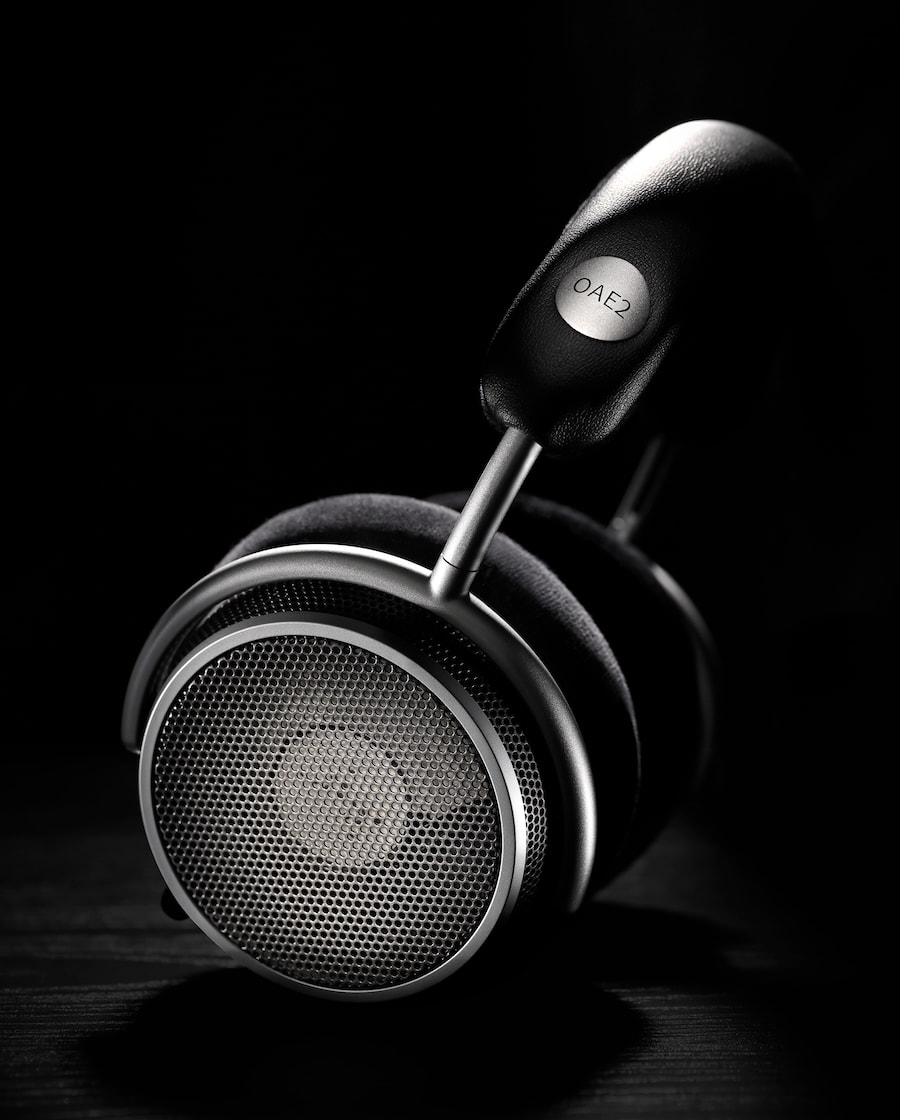
Building on the foundation of the original OAE1, the $599 OAE2 reflects Grell’s continued focus on tonal accuracy, mechanical precision, and long-term listening comfort. The open-back over-ear design incorporates a newly optimized dynamic driver and acoustically refined housing intended to improve airflow and deliver a more speaker-like soundstage presentation in front of the listener.
Grell describes the tuning as natural and neutral, with controlled low frequencies, a lifelike midrange, and extended detail up top without fatigue. Global availability is scheduled for March 31, 2026, priced at $599 / £499 / €499.
Recreating a More Speaker Like Listening Perspective
Designed and engineered in Germany, the OAE2 is built around a clear objective: reducing the “in-head” effect common to many headphones and moving the listening perspective closer to what listeners experience with loudspeakers. Rather than simply creating a wider soundstage, the focus is on reproducing depth, placement, and spatial stability in a way that feels more natural over long listening sessions.


Instead of following the typical open-back headphone layout where the driver fires directly into the ear canal, Axel Grell’s design positions the acoustic output to interact more deliberately with the outer ear. This allows the pinna and surrounding structures to contribute to spatial cues before the sound reaches the ear canal.
The idea mirrors what happens when listening to loudspeakers. Sound reaches the ears only after interacting with the head, outer ear, and upper body, creating subtle timing, phase, and tonal variations that the brain uses to interpret direction and distance. The OAE2 attempts to preserve more of those cues within a headphone format so that the perceived soundstage feels more externalised and stable.
This design philosophy is informed in part by Grell’s ongoing research into spatial hearing and headphone perception in collaboration with Leibniz University Hannover. The research helps guide practical design decisions such as driver positioning, acoustic structure, and overall tuning, with the goal of maintaining coherent imaging, natural treble perception, and controlled low-frequency behaviour.
The intention is not to create exaggerated width or artificial spatial effects. Instead, the OAE2 aims to present music in a way that resembles nearfield loudspeaker listening, where instruments and voices appear positioned in front of the listener rather than inside the head. For listeners accustomed to traditional headphone presentation, the perspective may initially feel different, but the design is intended to become more intuitive as the brain adapts to the spatial cues over time.

Engineering and Build Designed for Long Term Ownership
Beyond its acoustic design, the OAE2 reflects Axel Grell’s view that premium headphones should be durable, serviceable, and built for long-term ownership rather than short product cycles.
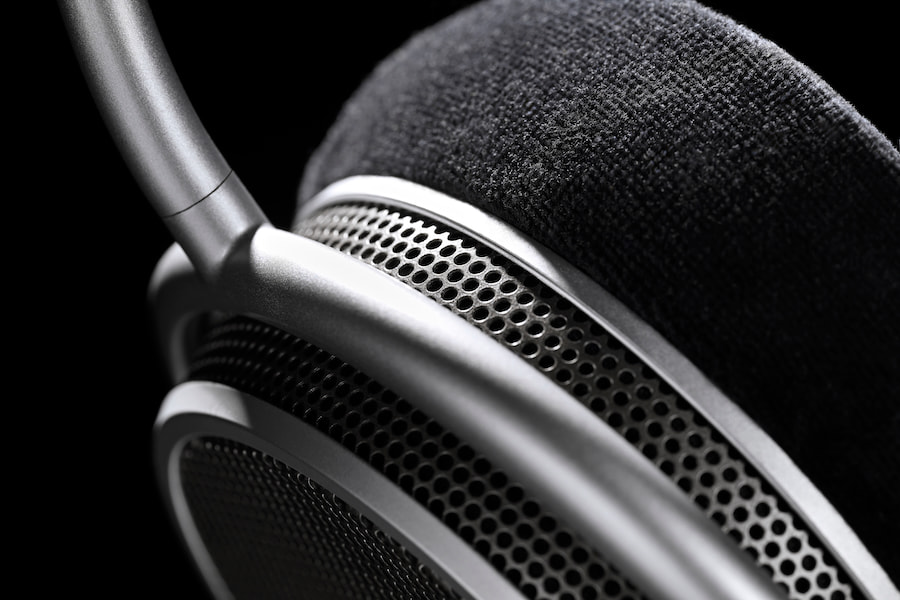
At the core of the design is a 40 mm wideband dynamic driver using a bio cellulose diaphragm. The driver works alongside a carefully developed damping system that includes a precision manufactured stainless steel mesh produced in Germany. This combination is intended to maintain controlled airflow and consistent driver behavior while supporting the headphone’s spatial presentation goals.
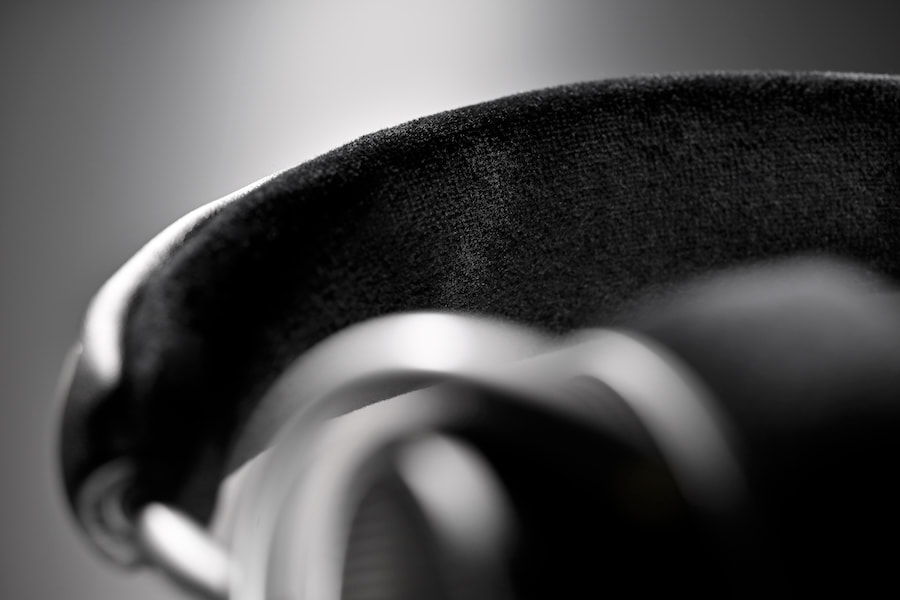
The physical construction follows a modular approach. The OAE2 uses a fully metal frame and replaceable components that allow the headphone to be maintained and serviced over time. Key parts can be removed or replaced if necessary, extending the usable life of the product and reducing the likelihood that the headphone becomes disposable when individual components wear out.
This design philosophy reflects a broader trend in the high end headphone market. Manufacturers including Meze Audio have helped popularize modular construction, where headphones are designed with replaceable parts and serviceability in mind so they can remain in use for many years rather than being replaced entirely.
Even the packaging follows the same thinking. The OAE2 ships in largely plastic free packaging designed to reduce unnecessary waste while aligning with Grell’s emphasis on sustainability and long term value.

Connectivity, Accessories, and Technical Specifications
The OAE2 is supplied with both balanced and single ended connectivity options, allowing it to work with a wide range of headphone amplifiers, portable players, and desktop audio systems. In the box, listeners will find two detachable cables: a 1.8 metre (5.9 ft) single ended cable terminated with a 3.5 mm plug and a 1.8 metre (5.9 ft) balanced cable with a 4.4 mm connector. A screw on 3.5 mm to 6.3 mm adapter is also included for compatibility with traditional headphone amplifier outputs, along with a protective carry case for storage and transport.
Technically, the OAE2 is a circumaural open-back headphone built around a dynamic transducer. Although specifications are nearly identical to the OAE1, the OAE2 are 3 grams heavier with an even wider frequency response rated from 12 Hz to 34 kHz within a ±3 dB window, extending from 6 Hz to 46 kHz at -10 dB. Nominal impedance is the same at 38 ohms with a sensitivity of 100 dB at 1 kHz (1 VRMS), suggesting that the headphone can be driven by a variety of modern sources while still benefiting from a capable headphone amplifier. Total harmonic distortion is rated at 0.05 percent at 1 kHz and 100 dB. The headphone weighs 378 grams (13.3 oz) without the cable attached.


The Bottom Line
The OAE2 represents the next step in Axel Grell’s effort to rethink how headphones present space. Rather than chasing exaggerated width or DSP tricks, the design focuses on repositioning the driver and shaping the acoustics so the sound appears more in front of the listener, and closer to how nearfield speakers behave. It’s a concept Grell has been refining for several years, and we first heard an early prototype of this approach at CanJam SoCal in 2023, where the forward projecting presentation immediately stood out from the usual “inside your head” headphone experience.
The new model builds on the earlier OAE1 concept but arrives with a more mature design and a higher price point at $599, compared to the roughly $300 launch price of the original. That shift reflects a more fully developed product with revised acoustics, upgraded construction, and a clearer articulation of Grell’s spatial listening philosophy.
Listeners who prioritize tonal balance, realistic imaging, and long term listening comfort are the most likely audience here. Those expecting the traditional wide but internalized headphone stage may find the presentation different at first, but the goal is a more natural spatial perspective that resembles listening to speakers at close range.
We’ll have the chance to spend more time with the OAE2 during its North American debut at CanJam NYC 2026, where Grell will be demonstrating the headphone publicly for the first time in the U.S. If all goes according to plan, we expect to have a full review ready before the end of March once production units become available.
For more information: grellaudio.com
You must be logged in to post a comment Login