Connect with us

Tech

Hackaday Links: March 1, 2026

Published

on

We’ll start this week off with a bit of controversy from Linux Land. Anyone who’s ever used the sudo command knows that you don’t see any kind of visual feedback while entering your password. This was intended as a security feature, as it was believed that an on-screen indicator of how many characters had been entered would allow somebody snooping over your shoulder to figure out the length of your password. But in Ubuntu 26.04, that’s no longer the case. The traditional sudo binary has been replaced with a one written in Rust, which Canonical has recently patched to follow the modern convention of showing asterisks on the password prompt.

As you might expect, this prompted an immediate reaction from Linux greybeards. A bug report was filed just a few days ago demanding that the change be reverted, arguing that breaking a decades-old expectation with no warning could be confusing for users. The official response from a Canonical dev was that they see it the other way around, and that the change was made to improve the user experience. It was also pointed out that those who want to revert to the old style of prompt can do so with a config change. The issue was immediately marked as “Won’t Fix”, but the discussion is ongoing.

Speaking of unexpected changes, multiple reports are coming in that the February security update for Samsung Galaxy devices, which is currently rolling out, removes several functions from the Android recovery menu. After the update is applied to phones such as the S25 and Fold 7, long-standing features, such as the ability to wipe the device’s cache partition or install updates via Android Debug Bridge (ADB), disappear.
Just like with the change to sudo, this is the sort of thing that will aggravate veteran users the most. There’s been no official explanation for these changes, and it’s not immediately obvious why Samsung would fiddle with the recovery menu that’s remain largely unchanged since Android’s introduction. As 9to5Google mentions, it could be an attempt to prevent users from installing leaked firmware builds — a practice that’s gotten the attention of the electronic giant’s legal department.

Advertisement

These days, software updates are just one of the things you need to keep track of. Add in emails, RSS feeds, and incoming chat messages, and keeping up with the notifications on your computer or smartphone can be a challenge. But that’s nothing compared to the 800,000 alerts fired off earlier this week by the Vera Rubin Observatory. The observatory uses a 3.2 gigapixel camera to take long exposure images of the night sky, which are then compared with earlier shots to detect visual changes. Astronomers create filters to narrow down what they’re after, and can be notified when the automated system detects a match. A preview image is available in just seconds, while the full-resolution imagery takes around 80 hours to process. It’s still early days, but once the VRO gets up to speed, it’s expected that as many as seven million alerts will be generated each night.
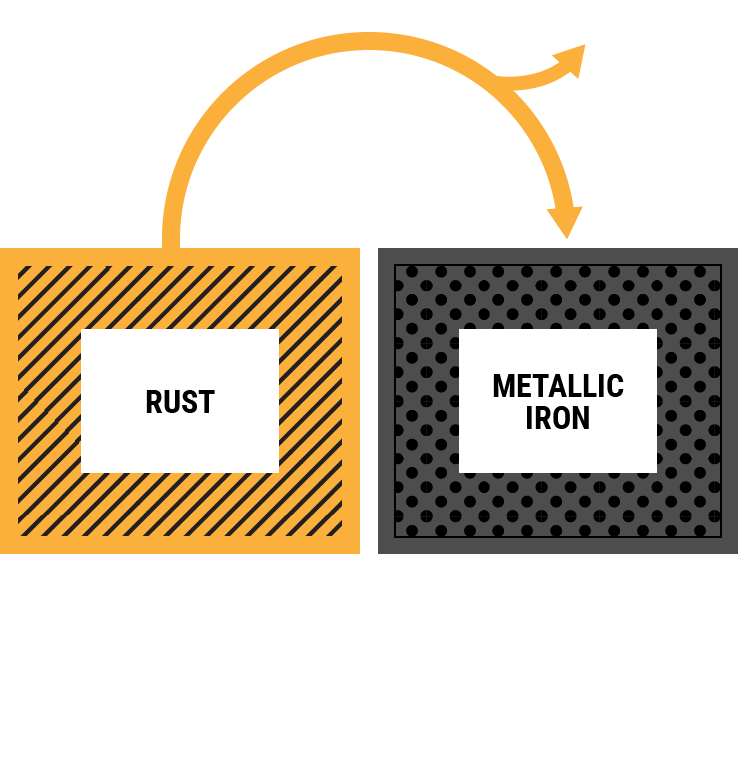
While on the subject of large-scale engineering projects, this week, Google announced that its new data center in Minnesota will be hooked up to the world’s largest battery. The 300 megawatt array built by Form Energy will use iron-air technology, which essentially uses a reversible rusting process to store energy produced by renewable sources such as wind and solar. When those sources aren’t available, the data center can run off of battery power for up to 100 hours.

While heavier and less efficient than lithium-ion, iron-air batteries have the advantage of being substantially cheaper to produce. So while it’s unlikely you’ll see the technology in smartphones anytime soon, it’s perfect for static installations like this.

Finally, some sad news from the world of retro computing/games: a very rare copy of Tsukihime Trial Edition was apparently destroyed while in transit from one collector to another. It might not look like much — the game was distributed by the indie developers on unbranded floppies at a Japanese convention in 1999 — but it represents one of only 50 copies known to exist. While the occasional damaged package is all but unavoidable, this one is particularly egregious as it appears that someone at US Customs intentionally ripped the disk to pieces. The purchaser has filed a complaint with Customs, and we’re interested in hearing what their version of the story sounds like.


See something interesting that you think would be a good fit for our weekly Links column? Drop us a line, we’d love to hear about it.


Advertisement

Source link

Continue Reading
Click to comment

Leave a Reply

Your email address will not be published. Required fields are marked *

Tech

Brutal truths of running a gym in S’pore

Published

on

Thinking of opening a gym? Don’t expect quick money.

Running a gym in Singapore is not cheap.

When Vulcan Post spoke to Ryan Cheal, Group Chief Operating Officer of Inspire Brands Asia—the exclusive regional master franchisee of Anytime Fitness (AF)—in Jan 2026, he shared that it takes up to US$450,000 to become a franchisee of an AF gym here.

Despite the high startup costs, more gyms have been popping up across the island. As of Oct 15, 2025, Singapore had 505 gyms—a 3.05% increase since 2023. With rising fitness trends like HYROX, it’s no surprise that both individuals and operators are trying to ride the wave.

But hopping on trends doesn’t always guarantee success. The industry has also seen its share of closures, including Ritual, which abruptly shut all four of its Singapore outlets in 2024, and high-profile names like UFC Gym.

Advertisement

These examples show that even well-known brands can struggle to sustain operations in a competitive market. Even with sufficient startup capital, keeping a gym running—attracting members, covering monthly expenses, and managing unexpected costs—requires careful planning and a strong financial runway.

So what does it really cost to open and operate a gym in Singapore?

To find out, we dug into industry data and spoke with two operators: Unstoppable Fitness, a homegrown bodybuilding gym, and Snap Fitness, a US-born fitness chain with 10 outlets in Singapore (and one more at West Mall slated to open in Apr).

Opening doors is just step one

Based on industry estimates online, the startup capital required to open a gym can range between S$150,000 and over S$800,000, depending on size, location, equipment needs, and franchise fees.

Advertisement

Broadly speaking, here’s how it breaks down:

Category Startup Investment Range Typical Size (sqft.) Focus Key Calculations/Factors
1. Boutique/ Specialist Studio S$150,000 – S$350,000 1,200 – 2,500 Personal training, Yoga, Pilates, or specialised strength. Renovation: ~S$100,000 (S$60–S$80/sqft. for high-aesthetic). Equipment: ~S$30,000 – S$80,000 (targeted).
Rental Deposit: ~S$45,000.
2. Mid-sized Commercial Gym S$350,000 – S$650,000 2,500 – 5,000 General population “neighbourhood” gyms (e.g., non-franchise 24/7). Renovation: ~S$200,000 (S$50/sqft., including showers/ HVAC).
Equipment: ~S$150,000 (full circuit). 
Rental Deposit: ~S$100,000+.
3. Franchise Gym S$400,000 – S$800,000+ 3,500 – 6,000 Global brands like Anytime Fitness. Initial Franchise Fee: S$40,000 – S$90,000.
Total Initial Investment: S$410,000 to S$650,000 (single outlet). 
Working Capital: Higher buffer required.

When we spoke to operators at Unstoppable Fitness and Snap Fitness, their startup costs largely lined up with these estimates.

Luke Yeo, 33, founder of Unstoppable Fitness, spent nearly S$400,000 to launch his 3,875 sqft. facility. On the other hand, Snap Fitness master franchisee Noah Oberman shared that it costs around S$600,000 to open a 4,000 sqft gym franchise. “Most gyms we’ve opened are anywhere between S$600,000 and over S$1 million,” he added.

Gym equipment is one of the highest upfront costs for the two businesses, with Unstoppable Fitness spending more than half of its startup capital on machines and weights, while Snap Fitness’ equipment expenses can roughly match the rental deposit.

Advertisement

On top of that, miscellaneous inventory—from water dispensers to towels—can add thousands more, quickly increasing the total initial outlay before a single member walks through the door.

how much to start a gym in singapore startup costs unstoppable fitness snap fitness singaporehow much to start a gym in singapore startup costs unstoppable fitness snap fitness singapore
Cost breakdowns from Unstoppable Fitness and Snap Fitness.

These figures only cover the cost of opening a gym. To sustain and keep it running, owners needs to have additional capital—to market the business, grow membership, and maintain a buffer for unexpected expenses or changing client needs.

For Snap Fitness, monthly operating costs can reach at least S$55,000. Luke, on the other hand, shared that his monthly expenses hit around S$25,300, meaning he would need roughly another S$300,000 in reserves to stay adequately funded for a year.

  • monthly running costs for unstoppable fitnessmonthly running costs for unstoppable fitness
  • monthly running costs for snap fitness singaporemonthly running costs for snap fitness singapore

Luke added that bills continue regardless of early traction or revenue earned, emphasising the need for sufficient runway in the first year.

“Cash burns fast. Without strong reserves, you won’t fail slowly—you’ll shut down quickly,” he said. “Most gyms don’t close because the owner lacks passion or knowledge. They close because they run out of money before they earn trust,” he explained.

Not the highest ROI business

Gyms aren’t a quick-profit business. It can take years before you start seeing a real return on your investment.

Advertisement

“As gyms are not the highest ROI business, you are likely to break even only in year 2.5 or more,” said Noah.

Industry Initial Capital Intensity Operational Break-Even Full ROI (Payback Period) Primary Revenue Driver
Gyms & Fitness High (Equipment/ Renovation) 4 – 18 Months 2 – 3 Years Monthly recurring subscriptions
F&B (Restaurants) Medium to High (Kitchen/ Interior) 6 – 12 Months 2 – 5 Years Daily individual transactions
Retail (Physical) Medium (Inventory/Fit-out) 12 – 24 Months 3 – 5 Years Seasonal product sales
SaaS/Tech Startups Low to Medium (R&D/Staff) 18 – 36 Months 3 – 7+ Years Scalable user licenses
The average number of years for businesses to break even, according to industry estimates.

When Vulcan Post compared this to other industries, the break-even period for gyms is actually shorter than in sectors like F&B or retail.

However, startup costs are higher for gyms, and the figures we found are based on established franchises such as Anytime Fitness, which benefit from brand recognition and pre-existing systems. Some even claim that AF gyms can break even within six months or even before they open

That said, these are outliers. Here’s a closer look at what it takes for different gym models to reach break-even:

Advertisement
Gym Model Typical Size (sq. ft.) Members Needed to Break-Even Each Month Monthly Fee (Avg) Time to Full ROI (Payback)
Boutique Studio 1,200 – 2,500 150 – 350 S$150 – S$350 18 – 24 Months
Mid-Sized Gym 2,500 – 5,000 400 – 700 S$90 – S$160 2 – 3 Years
Franchise Gym 3,500 – 6,000 800 – 1,000+ S$90 – S$130 2 – 3 Years
The average number of members for a gym to break even by gym size and monthly fees, based on industry estimates.

Based on its S$24,828 monthly costs and its lowest-tier annual plan (S$119/month), Unstoppable Fitness would need at least 277 members to break even each month.

Snap Fitness will need over 561 members to cover their monthly operating costs. It’s worth noting that more funds are needed to run a franchise gym than an independent gym, hence the difference in the number of members needed to break even. 

No one “owes you a chance”

As newer and smaller players, both Unstoppable Fitness and Snap Fitness have to find a way to stand out in a crowded market against established brands, as they face a higher risk of failure. 

snap fitness singapore West Mall renders snap fitness singapore West Mall renders
Mockups of Snap Fitness’s newest gym in West Mall, which is slated to open in Apr 2026. According to Noah, this location would be the biggest in Western Singapore, having taken over the space where used to be, and would include space for a pilates studio./ Image credits: Snap Fitness Singapore

“The real problem? Opening your doors and having no customers at all,” Luke candidly shared. “No one owes you a chance. If you’re new, unknown, and lack social proof, people simply won’t walk in.” 

As such, both operators not only have to spend more on marketing, but also focus their efforts on building strong communities within the brand that can tide them through the high and low seasons, through activities such as supporting members at competitions or celebrating physical transformations. 

Advertisement
gym goers at unstoppable fitness singaporegym goers at unstoppable fitness singapore
Gym-goers at Unstoppable Fitness./ Image Credit: Unstoppable Fitness

Independent gyms like Unstoppable Fitness often reinvest earnings into upgrades in their equipment and amenities. These might sound simple, but they help customers feel more comfortable in the space as they work out. 

“People can leave for cheaper gyms, but they rarely leave a place that feels like home,” added Luke. 

Hard-selling packages no longer work, and long-term, no-refund memberships can leave customers burnt when gyms shut down. Noah also emphasised that gyms need to maintain transparency with their customers, as they are also effective in increasing referrals. 

He added that many health and fitness businesses make the mistake of building around a single trend, so when the hype dies down, the brand goes with it. Building evergreen offerings beyond trends is key to long-term survival, and adjusting them to meet demand adds to their versatility. 

“There’s a fine balance between hopping on trends and diluting the brand by changing too much, versus staying to the core of what the brand is supposed to do and service. But generally, we try to keep an open mind and see what the market really wants and try our best to accommodate that.” 

Advertisement

Only those with strong foundations are likely to survive

Overall, opening a gym remains viable in Singapore, given the strong demand for health and fitness in the country. However, as the market becomes more saturated and competition for the lifestyle dollar intensifies, gyms can’t be seen as a way to get a quick buck. 

Aspiring owners must carefully assess whether they have the financial runway to sustain at least two years, offer competitive prices, and ensure that their services provide enough value for their members to increase loyalty. 

As Singapore’s fitness scene matures, newer players can’t win in scale: they have to differentiate themselves through other means to attract members and at least break even. Nevertheless, Noah and Luke remain optimistic.  

“I would agree that the first mover advantage is definitely real, and some of the longstanding gyms will be very hard to displace. But I do think there’s still plenty of opportunity in the market,” Noah encouraged. 

Advertisement

“We can’t compete with big box gyms on size. We win on service, elite equipment, and culture,” added Luke. 

  • Read more about the gyms featured below:
  • Read more stories we’ve written on Singaporean businesses here.

Featured Image Credit: Unstoppable Fitness/ Snap Fitness

Source link

Advertisement
Continue Reading

Tech

How Long Do CR2032 Batteries Last In A Key Fob?

Published

on


If you’re old enough to remember when cars had simple key ignition switches and not start buttons, you may find modern key fobs frustrating. With your key in hand, the only dead battery that could leave you stranded was the one in your vehicle. Modern key fobs, which do a lot more than unlock your vehicle, can also leave you stranded. Inside that little device is a button cell battery, often a CR2032 type. If that battery dies, you may be left standing in your garage, frustrated and late for work.

Key fobs have evolved from a simple way to lock and unlock your car. Many offer other functions, allowing you to open the trunk or back gate, lower your windows, and remotely start the car. Modern key fobs also talk to your car’s security system, transmitting a code that disables the immobilizer system and allows your car to start. So what happens if the battery in your key fob dies?

Luckily, key fobs typically drain batteries very slowly, and a CR2032 battery should last several years, perhaps up to five. Its life will partly depend on how often you use the fob, exposure to extreme temperatures, or a damaged or malfunctioning fob. Your key fob may require a bit more maintenance and care than a simple car key, but it also offers convenience that’s hard to beat.

Advertisement

When and how to replace a key fob battery

If you’ve owned your car long enough that the new car smell has worn off and or you bought your car pre-loved, you may worry that your fob may soon need a new battery. Luckily, there are several ways to tell. The first is the easiest, and doesn’t even require that you pay much attention. Some car apps, including KiaConnect and the Toyota app, will alert you if the battery is getting low, though be aware that this feature is not universal and may require a paid subscription. Similarly, however, you may receive a notification on your vehicle’s dashboard that your fob battery needs to be replaced.

You may also notice that the range of the key fob has decreased and your vehicle won’t unlock or lock unless you’re standing very close. Sometimes the fob loses sensitivity, and the buttons may be unresponsive or working intermittently. These are all signs of a dying battery. 

Advertisement

Once you know the fob needs attention, check your vehicle’s manual if you’re unsure how to get it open to swap the old battery for a fresh one. If you’re out and about and the fob suddenly dies, don’t panic. Most cars will still start if you simply press the fob up against the ignition button, and some automakers even hide a physical key inside the fob that you can use to gain access to your vehicle or start the engine. CR2032 batteries are readily available, and if you’re worried, keep one on hand in case your fob dies unexpectedly.


Advertisement

Source link

Continue Reading

Tech

Steam's hardware survey just flipped: new top GPU, Windows 11 crashes, Chinese takes the lead

Published

on


Valve said last week that it fixed an issue where VRAM on some graphics cards was not reported correctly in the Steam survey.
Read Entire Article
Source link

Continue Reading

Tech

This Android XR Feature Convinced Me Smart Glasses Aren’t So Pointless After All

Published

on

One of my biggest gripes when navigating a new area is that I’m too busy following directions on my phone to really take in my surroundings. But after trying on Google’s Android XR glasses, I’ve seen a promising solution. 

At Mobile World Congress in Barcelona, I got a demo of Google’s wearable prototype frames and was more impressed than I expected to be. I’m not big on wearables; I’m good with plain-old glasses and jewelry that can’t ping me with notifications throughout the day. But I decided to give the Android XR glasses a try as I explored a strip of the MWC conference hall dubbed Android Avenue. 

With a thick black frame and clear lenses, the Android XR prototype glasses look rather unassuming — especially because the display in the right lens is barely perceptible. Once I put them on, I long-pressed the right side temple to trigger Gemini and ask questions about objects around me. Then my skepticism slowly began to dissolve.

Advertisement

The feature that sold me was the Google Maps demo. I looked at a photo of Barcelona stadium Camp Nou and asked Gemini to “navigate here.” White text appeared in the center of the lens, showing me how far I’d need to go before turning right. And when I looked down, I could see a visualization of the route, like you’ll find in the Maps app on a mobile device, so I could just follow the highlighted path. That would solve my dilemma of wanting to know where I’m going while also trying to take in the view. 

I also looked at a vinyl cover for Barcelona, the album by Freddie Mercury and Montserrat Caballé, and asked Gemini to play a song from it. The audio quality was impressively comparable to what I’d hear with headphones — but without the feeling of something in or on my ears, which I appreciated. 

And lastly, I got a demo of live translation through the glasses. The Google employee showing me the prototype spoke in Spanish and then Farsi, and an overlay of text appeared as I looked through the glasses at him and my surroundings. Perhaps the coolest part is I also heard the English translation spoken aloud in his (AI-generated) voice. 

Google has also tapped this AI tech for its Pixel 10 phones, so if you’re on a phone call with someone speaking a different language, you’ll get real-time translation with a simulation of their voice. Google Translate also got an AI update last year that surfaces audio and text translations in the app as two people chat. Glasses feel like a good fit for this use case, too, since you don’t have to pull out your phone and look down at a screen when talking to someone. If the other person doesn’t have Android XR glasses, though, they’ll need to glance at their phone to see a translation of what you’re saying. 

Advertisement
A woman in a pink headscarf wears Google's Android XR prototype

A subtle display in the right lens shows projections of directions and other information.

Patrick Holland/CNET

I walked away from the demo finding I’d softened to the idea of potentially owning smart glasses of my own someday. I’m not completely sold, as I’m not sure I need more tech in my life, but there are certainly instances in which it could come in handy to see a subtle overlay of answers from an AI assistant like Gemini. And because Android XR glasses look more like standard specs than the doomed Google Glass, I could probably pull them off without looking too pretentious. CNET’s Patrick Holland had a similar conversion moment when he tried the Android XR glasses at Google I/O last year.

As CNET’s Scott Stein has noted, smart glasses “aim to be what you want to wear, ideally every day and all day long. They could well become constant companions like your earbuds, smartwatch, fitness band and wellness ring, and as indispensable as your phone.”

Advertisement

I’ll probably have to wait a bit longer before making that call for myself. Google hasn’t shared any specifics on a launch date for glasses with Android XR, though it has said that Warby Parker and Gentle Monster will be the first eyeglass brands to carry the AI-powered glasses. 

Source link

Advertisement
Continue Reading

Tech

Is a Vitamix Worth It? I Asked Several Experts to Weigh In

Published

on

The first time I got my hands on a Vitamix blender, I was in culinary school. While I sincerely believed I had been making some nice soups and purees with my immersion blender or conventional smoothie model, the Vitamix made that all seem like child’s play after one go.

Gone was the minuscule, vegetal particulate matter that otherwise defined my early attempts at a velvety butternut squash soup. A truly emulsified, homogeneous mixture was apparently only available with a professional device, a truth I would acknowledge time and time again, no matter which Vitamix model I encountered in various restaurant kitchens.

Professional devices come with professional price tags, however, and I never enjoyed the exceptional outcome available from a Vitamix in the privacy of my own home. But small kitchen appliances have come a long way in the last decade, and with high-functioning brands like Ninja in the mix, it begs the question: Is a Vitamix worth it?

Advertisement

What makes a Vitamix blender better?

Vitamix

Vitamix blenders have high-powered motors, but other brands offer similar pop for less money.

Vitamix

One of the primary attributes that sets Vitamix apart from many other blenders is its high-speed motor. If you’ve also had the privilege of ever using one, you will know well that the speed of its highest setting puts most other blenders squarely in the rearview mirror. Its power feels like something that could reasonably be put to use for supersonic travel.

Unlike a food processor and some standard blenders, which contain sharp blades that vivisect their contents into smaller and smaller bits, a Vitamix also relies on stainless steel, dull-edged blades that basically pulverize your food when combined with its ultra-rapid rotation and the gravitational pull of the vortex it creates. This is what creates its unparalleled smoothness, since nothing inside the jug is actually getting chopped to bits.

Advertisement

Vitamix vs. Ninja Twisti

Ninja Twisti blender

The Ninja Twisti next to a full-sized blender with 64-ounce blending jar.

David Watsky/CNET

In our most recent lineup of the best blenders, the Ninja Twisti model was neck-and-neck with the entry-level Vitamix Explorian for top honors. Here’s a side-by-side look at how they compare in terms of features, power and price.

Price

Advertisement

$370

$140

Power

1400 watts

Advertisement

1600 watts

Blades

Laser-cut, stainless steel

Hybrid-edge stainless steel

Advertisement

Jug

48-oz, BPA-free plastic

34-oz, BPA-free plastic

Settings

Advertisement

10 variable speeds plus pulse

5 speeds plus additional pre-set functions

Dishwasher safe

Yes

Advertisement

Yes

Self-cleaning

Yes

Not mentioned

Advertisement

Weight

10.5 lbs

7.2 lbs

Warranty

Advertisement

5-year full

1-year limited

One thing that stands out here is that, while the Ninja model has more available power, its lighter base may make blending less stable at top speed, especially with harder items such as nuts. The jug is smaller, which is fine for smoothies, but may make blending soups more cumbersome, assinceyou’ll likely need to do it in several batches. The warranty also pales in comparison to Vitamix. Does that warranty justify the Vitamix price, though, at nearly 2.5 times what you can pay to take home the Ninja?

Is a Vitamix worth it? Experts weigh in

Advertisement
Vitamix lid canister

Vitamix uses heavier, high-grade plastic that gives it a premium feel.

David Watsky/CNET

I asked several chefs and kitchen experts to share their thoughts on whether a Vitamix is worth it. Similar to the results of the same experience with Le Creuset — the (expensive) standard-bearer for Dutch ovens — brand loyalty is real, though everyone I queried brought up valid considerations about functionality, longevity, warranty, origin and whether or not you’re going to actually use the thing often enough to justify it.

First, “ask yourself, ‘how often do I use a blender?’” suggests Joanne Gallagher, co-founder and recipe developer at Inspired Taste. “Consider what you actually cook in a week. If a blender lives on your counter and gets consistent use, the investment is worth it,” she says. “If you make a smoothie every day, love to make your own nut butter, or blend hot soups straight from the pot, a Vitamix could be your best friend.”

Perhaps you believe you would do all of this more regularly if only you had a world-class appliance that inspired you to do so. “I end up cooking and trying new things the more confident I feel in the kitchen,” Gallagher says, and the right appliance can help. “When you know you’ll get the perfect tomato soup, for example, you’re likely to branch out and try new recipes and cooking methods,” she says. There is merit in that thinking, of course, but it’s a potentially expensive gamble if you don’t those sorts of things on a regular basis already.

Vitamix

Vitamix blenders start at around $300 and go up — way up — from there.

Advertisement

Vitamix

As for the quality of output, “in the past, I struggled with cheap blenders that left smoothies chunky and couldn’t handle hard spices like cinnamon when making homemade mole sauce,” says Jessica Randhawa, founder and head chef at The Forked Spoon. “I now own two Vitamix blenders, one in each of my test kitchens,” she says. “One is an entry-level model, which is an amazing blender and does everything a blender should do perfectly every time.

Vitamix control knob

Vitamix controls aren’t overly complicated, something we appreciate.

David Watsky/CNET

The other is one of Vitamix’s newer, top-of-the-line models with food processor attachments, which allowed me to get rid of my old food processor in that kitchen.” The latter point here is a worthwhile consideration. If a Vitamix can do the work of two appliances, the price tag starts to feel a little less like a reach.

Advertisement

Not every chef believes that it is worth it if you’re not really using it all the time. “For most home cooks, I don’t think a Vitamix is truly worth the price,” says Rena Awada, head chef and owner of Healthy Fitness Meals. “Unless you’re making soups, nut butters, etc., daily, or running a small food business, the speed and smoothness it offers rarely justify the cost.”

Chef Molly Pisula of Vanilla Bean Cuisine offers up a workaround. “The price point is high, but refurbished blenders are available, and even sold directly on the Vitamix website,” she says. (“Reconditioned” in Vitamix-speak.) “And Amazon often runs a great Black Friday sale on Vitamix blenders.”

Advertisement

If you do take the gamble on the cost of a new model, though, Randhawa points out some serious upside: “I love that Vitamix is made in the USA,” she says, “and comes with a warranty better than most cars.”

My own Vitamix alternative experiment: Chefman Obliterator

White Chefman blender

This $75 blender can match a Vitamix. How well it holds up over time is another question.

Pamela Vachon/CNET

I recently came into possession of a Chefman Obliterator, which has specs very similar to the Vitamix Explorian model, including a self-cleaning mode and speed dial that goes up to 5. (Each speed setting is subdivided by 5 hashmarks, making for effectively 25 speed settings.) Its price is listed at $75 on Amazon, putting it squarely in the budget blender camp. Despite not wanting to give up the moral of the story too soon, without taking you through my process: Run, don’t walk to pick up this blender at that price.

Advertisement

I freely admit that I was initially drawn to the Obliterator on hyperbole alone. “Obliterate” is a serious claim that feels like the blender should also come with a wand and a book of spells. Turns out, those props aren’t even necessary.

White Chefman blender

Chefman’s $75 blender offers similar power to the Vitamix models we’ve tested, albeit with a less premium build.

Pamel Vachon/CNET

Since butternut squash soup is apparently my personal benchmark for evaluating the success of a given blender, butternut squash soup was made. Into the Obliterator’s generous chamber went the chunky, “country style” pre-puree concoction, and then out came something that could reasonably be called obliterated, but in a good way. It was as smooth and ungranular as that which could have been served at any high-end restaurant, and pretty much obliterated the fantasy that I might someday actually spring for a Vitamix.

Advertisement

Source link

Continue Reading

Tech

Boeing F-47 Possibly Teased in New Video of Pratt & Whitney’s XA-103 Engine

Published

on

Boeing F-47 XA-103 Engine
A new video from Pratt & Whitney has reignited controversy over the Boeing F-47, which is slated to be the 6th Generation fighter that would eventually replace the F-22 Raptor. Halfway through a short animation focusing on engine progress, an animated fighter jet arrives in flight, its two engines burning brightly as it slashes through a picture-perfect blue skies. Observers quickly identified the image as a possible portrayal of the F-47 itself, powered by Pratt & Whitney’s XA-103 engine, which is now under development.


The F-47 was developed as part of the US Air Force’s Next Generation Air Dominance program, which aimed to create a long-range air supremacy fighter. Boeing received the contract to manufacture the F-47 in 2025, a beast capable of commanding swarms of autonomous drones while also delivering missiles over long distances. The Air Force planned only for a minimum of 185 of these aircraft. Right now, development has moved on to the engineering and manufacturing phases, with the first prototype scheduled to fly in 2028. The first tech demonstrators have been flying in secret since roughly 2020.


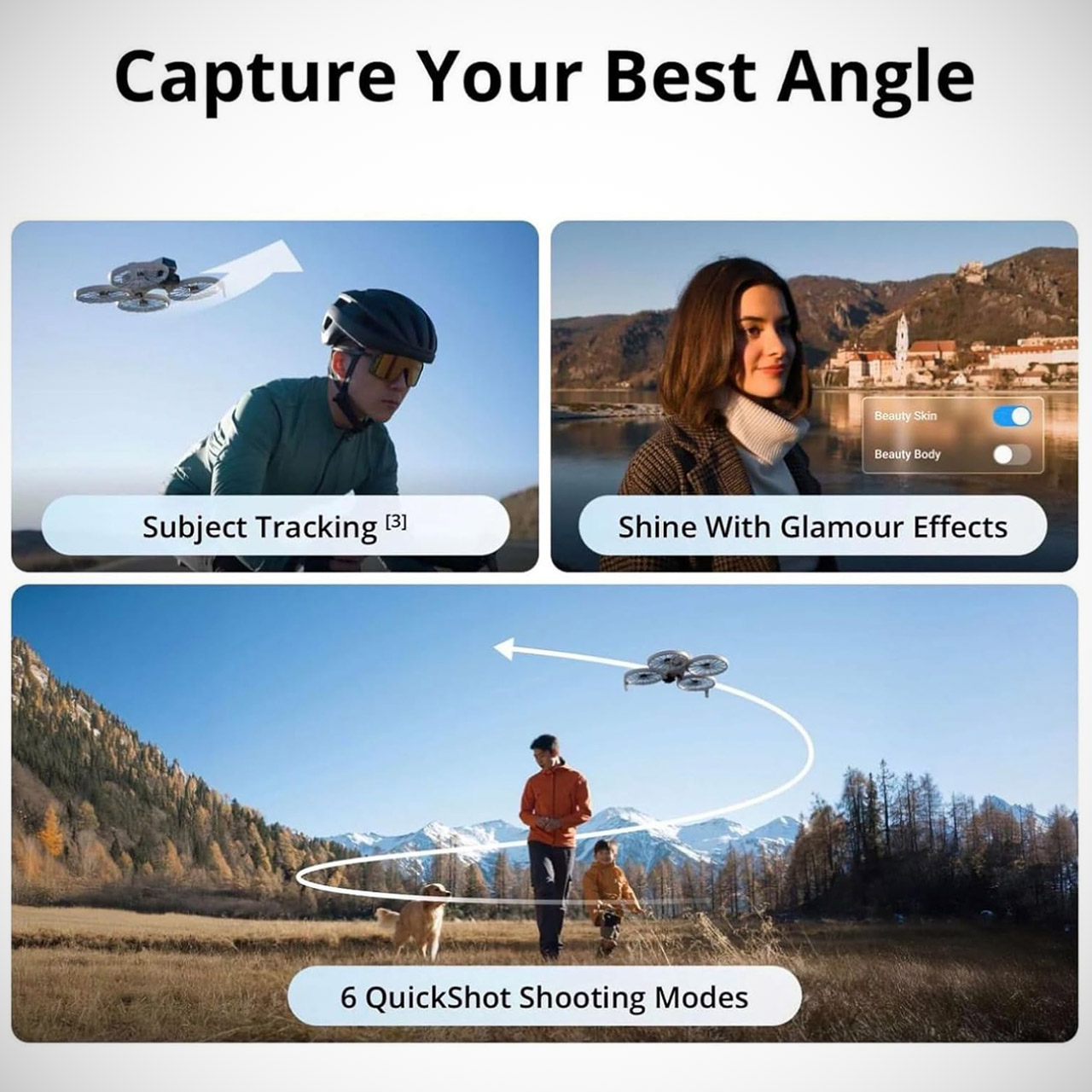
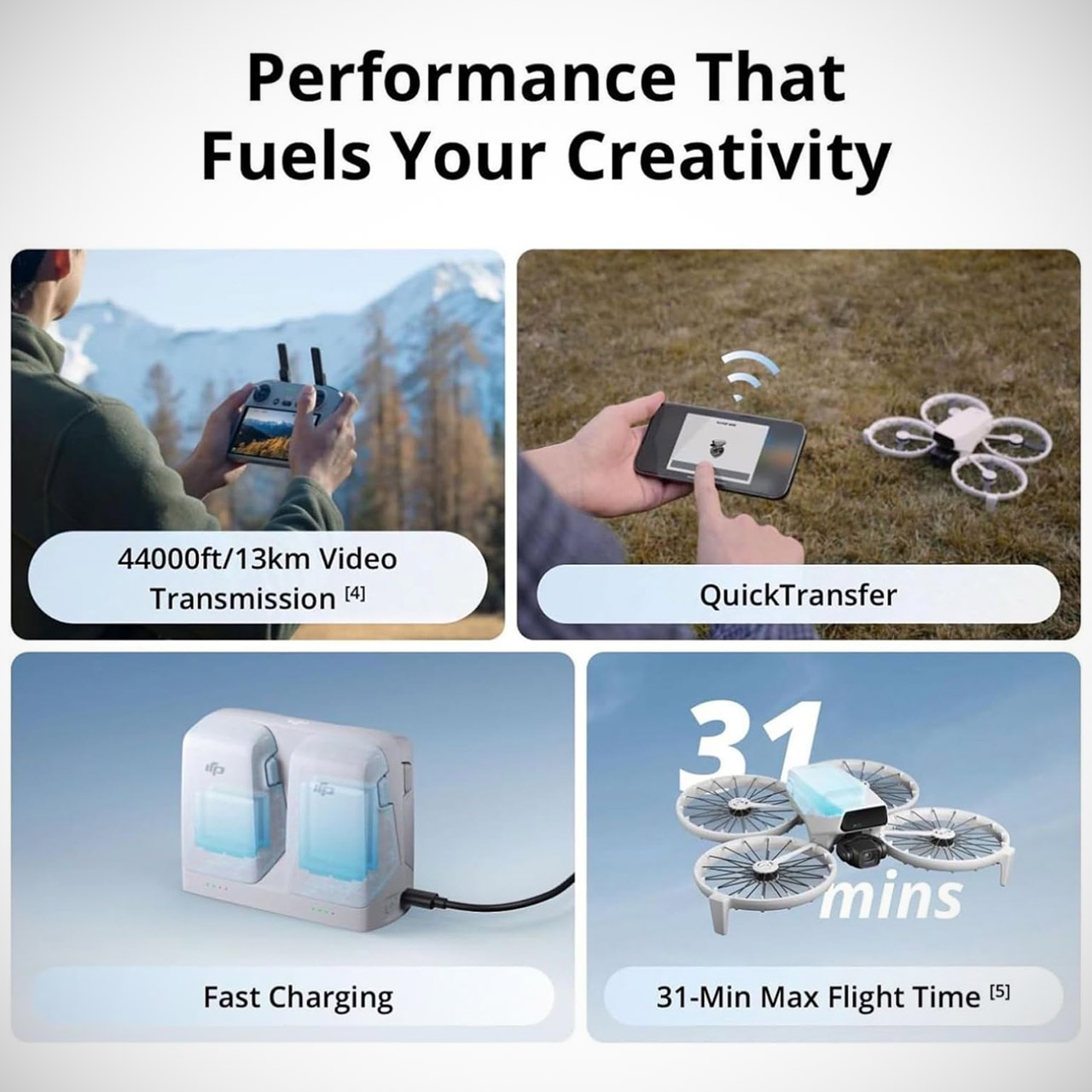
DJI Neo 2 (Drone Only), Lightweight & Foldable 4K Drone With Camera, Palm Takeoff & Landing, Gesture…
  • Lightweight & Portable Design – Weighing just 151g [9] and C0 certified, this compact drone features full-coverage propeller guards for safer…
  • Palm Takeoff & Landing [1], Gesture Control [2] – Enjoy easy palm takeoff and landing, plus intuitive gesture controls for hands-free operation and…
  • Smooth & Reliable Tracking – ActiveTrack [3] keeps your subject in focus, while Apple Watch lets you view live feed, check flight status, or use voice…

Pratt & Whitney’s Next Generation Adaptive Propulsion program was responsible for developing the XA-103 engine. This XA-103 engine is one of those ingenious adaptive-cycle engines that can alter modes to balance thrust and fuel burn dependent on mission needs. The results are amazing; it produces around 10% more thrust than the F-35 while increasing range by roughly 25%. This increased power will assist sustain all of the new sensors, and who knows, perhaps even directed energy weaponry. Meanwhile, the innovative thermal management system keeps the internal systems cool while also reducing the heat signature, which is an important feature in the aircraft’s stealth capabilities, particularly when operating in the Pacific theatre.


The video demonstrates an all-digital approach to engine design. Now, digital twins allow engineers to mimic engine performance, optimize components, and get a head start on testing without having to manufacture every part in person. Pratt & Whitney recently completed both preliminary and comprehensive design assessments. They are currently planning prototype ground tests for the late 2020s, as General Electric competes in the same propulsion contest with its own XA102 concept.

Advertisement

Notably, the F-47 rendering has characteristics such as a tailless shape to limit radar visibility, blended wing surfaces with less sharp edges, forward canards for control, and a high-placed cockpit for improved pilot awareness. The thrust-vectoring nozzles resemble those used on the F-22, which aid in fast maneuvers at high speeds. Last but not least, a dorsal refueling point indicates that long operations away from bases are a high priority.

Boeing F-47 XA-103 Engine
Top speed remains about Mach 2, with a combat radius of more than 1,000 nautical miles. Stealth is also impressive, outperforming the F-22 and F-35 combined. The aircraft is plainly meant to first penetrate defensive airspace and coordinate unmanned wingmen before engaging in close-range combat.
[Source]

Source link

Advertisement
Continue Reading

Tech

The agentic future: Why AI’s greatest power is amplifying human potential

Published

on

As artificial intelligence becomes integral to global business operations, we must retire the tired ‘AI vs. human jobs’ debate.

The real opportunity lies in augmented intelligence, a human-centric approach at the core of the emerging ‘Agentic Future.’ Rather than ceding control to machines, augmented intelligence positions AI as a force multiplier for human capability.

Kalyan Kumar

Chief Product Officer at HCLSoftware.

Source link

Advertisement
Continue Reading

Tech

Does a New Theory Finally Explain the Mysteries of the Planet Saturn?

Published

on

“Saturn and some of its 274 moons are pretty weird,” writes Smithsonian magazine:

[Saturn moon] Titan has strangely few impact craters, Hyperion is tiny and misshapen, and Iapetus has a tilted orbit. What’s more, planets tend to wobble along their rotational axes as they spin, like an off-kilter spinning top in the moments before it topples over. Formally called precession, scientists have long thought that Saturn’s wobble rate should match Neptune’s because they’re probably gravitationally linked. However, data from NASA’s Cassini spacecraft, which studied the ringed planet from 2004 to 2017, revealed that Saturn’s precession rate is slightly speedier than Neptune’s.

In 2022, some researchers suggested that the destruction of a hypothetical moon, called Chrysalis, around 160 million years ago may have knocked Saturn out of sync and formed the pieces that became the planet’s rings. But this work implied that Chrysalis probably would’ve crashed into Titan, posing a major problem, study co-author Matija Äuk, an astronomer at the SETI Institute, tells New Scientist‘s Leah Crane. In that case, Chrysalis’ debris couldn’t have become the rings, he says.

So, Äuk and his colleagues used computer simulations to investigate what would happen if Chrysalis did smack into Titan. If that happened around 400 million years ago, they found, the crash would’ve wiped away Titan’s craters and made its orbit more elliptical. The altered path may have slowly pushed the trajectories of other moons, which then scraped against one another and left chunks of ice and rock that now make up Saturn’s rings. The timing seems to align with the rings’ estimated age of roughly 100 million years. Additionally, one piece of kicked-up debris may have formed the weird moon Hyperion, which may have subsequently tilted the orbit of the moon Iapetus, according to the analysis. The scenario could also resolve Saturn’s unexpected wobble, which is currently “a little bit too fast,” Äuk tells Jacopo Prisco at CNN.
The study has been accepted for publication in the Planetary Science Journal, and is already available on the preprint server arXiv.

Advertisement

Source link

Continue Reading

Tech

Head of Amazon’s AGI lab is leaving in latest exit from high-profile Adept startup deal

Published

on

David Luan led the team responsible for Amazon’s Nova Act agentic technology. (Amazon Photo)

David Luan, who led Amazon’s San Francisco-based AGI Lab and oversaw one of its most important agentic AI initiatives, is leaving less than two years after joining the tech giant through an acqui-hire deal involving him and other leaders from AI startup Adept.

Luan announced his exit Tuesday in a LinkedIn post, saying he will leave at the end of the week “to cook up something new.”

“There’s incredible work to be done at Amazon and opportunities for me to take on more areas. But with AGI so close, I decided to spend 100% of my time on teaching AI systems brand new capabilities,” Luan wrote, adding later, “I have a bet for what’s next.”

With his departure, four of the five Adept co-founders who joined Amazon as part of the high-profile 2024 arrangement have left the company, a review of LinkedIn profiles shows.

Peter DeSantis, a 27-year Amazon veteran and senior vice president who oversees the company’s custom chips and quantum computing efforts, late last year took over the broader organization that includes the AGI team, which is responsible for Amazon’s Nova Act AI agent technologies. Luan wrote that the team “will be in great hands” with DeSantis.

Advertisement

Adept co-founder Kelsey Szot remains at the company on the AGI team, and Bryan Silverthorn, a director of applied science who also joined Amazon from Adept, continues to lead agent model training research on the AGI team, his Linkedin profile shows.

Amazon declined to comment beyond Luan’s post.

The arrangement between Amazon and Adept is one of several acqui-hire deals that have drawn scrutiny from the Federal Trade Commission in recent years amid concerns that tech giants are using the structures to absorb AI startups without triggering formal merger reviews. 

Under the deal, Amazon hired Luan and other Adept leaders, and licensed the startup’s agent technology and AI models, while Adept continued operating independently with its remaining employees. The FTC reportedly examined the Amazon-Adept deal in 2024.

Advertisement

At Amazon, Luan served as vice president of Autonomy and led the AGI Lab, which was formally established in December 2024 as a small, focused research group. Its first major release was Nova Act, an AI model and developer toolkit for building agents that can perform tasks autonomously in web browsers, which Amazon unveiled in March 2025.

“We really think agents are the last missing piece on the path to general intelligence,” Luan told GeekWire in an interview ahead of the Nova Act launch.

In his departure post on Tuesday, Luan said Nova Act had been adopted by customers including Hertz, 1Password, and Amazon.com itself, and had reached the top of the REALBench agent research leaderboard. The model became generally available as an AWS service at Amazon’s re:Invent conference in December.

The other Adept co-founders who left Amazon scattered across the industry. Erich Elsen departed after four months and is now a principal research scientist at Databricks. Augustus Odena and Maxwell Nye both left after about a year and are now research scientists at Meta.

Advertisement

Before founding Adept in 2022, Luan ran research and engineering at OpenAI for three years and led Google’s large language model effort. In his departure post, he described his career as a series of early bets, including incubating the first GPTs at OpenAI, and going all-in on agents at Adept before others. 

He said Adept’s technology and people “now drive computer-use efforts at every major lab.”

Amazon has separately invested up to $8 billion in Anthropic and offers third-party AI models alongside its Nova family through AWS, competing against cloud rivals Microsoft, Google, and others.

Source link

Advertisement
Continue Reading

Tech

5 Tech Tips To Keep Your Work Private And Personal Data Safe

Published

on


It’s often said that those with nothing to hide have nothing to fear, but we now live in a world where that attitude has a chance of upending your life. With hackers, identity thieves, rogue nation-states, data-hungry tech companies, and AI agents on the loose, information that would normally be innocuous can become a devastating weapon against you or your loved ones. Moreover, if an attacker steals company data you were responsible for, it could result in massive losses for your employer and the termination of your employment.

You’ve probably heard about some of the usual threats: suspicious emails that could be phishing attempts, pop-ups that claim your device is hacked, and so on. You’ve been told to change your passwords regularly and not to use the same one with multiple accounts. Many corporate workers have had details about these sorts of attacks and security reminders drilled into them through company training. 

But cybersecurity is an infinitely deep rabbit hole, and there are many more things you can do to keep your data private and safe as you work. Half of the battle is knowledge. You can’t fight back unless you know what you’re up against. So, from locking down your accounts and devices to practicing good digital hygiene, here are five tips that will leave you better equipped to deal with digital threats, keeping your work private and personal data safe.

Advertisement

Use passkeys, not passwords, where possible

Passwords have never been the best way to keep our digital lives secure, but we’ve been stuck with them out of necessity. They force us to choose between convenience and security. Do you use the same password for everything and risk having your entire digital life stolen when a single account is exposed, or do you set unique, complex passwords for each of your accounts and risk losing access when you inevitably forget one? Password managers have stepped in to fill that gap, remembering unique passwords so you don’t have to, but that just makes your password manager an attractive target for hackers.

One of the most basic steps anyone can take to improve their digital privacy and security is to use passkeys instead of passwords. Passkeys store an encrypted “key” on your device. When you sign into an account, you’ll be asked to use the PIN, password, or biometric scan you normally use to unlock the device itself. Instead of remembering a hundred passwords, your computer or phone’s unlock code becomes the only thing you need. This may seem less secure, but because passkeys are tied to your specific device, the website knows you aren’t some hacker on the other side of the world. The service checks your device, and your device confirms that it’s really you. 

Advertisement

You can already use passkeys on many commonly used accounts, including Google, Microsoft, and more. Check in the security sections of each service’s settings to make the switch. You should also pick a passkey manager to store your passkeys. Common options include 1Password, Proton Pass, NordPass, and Google Password Manager.

Advertisement

Use a password on your phone, not fingerprint or face unlock

When setting up the lock screen on your smartphone, you will be presented with a few options. All devices offer a password or PIN, while Android phones offer a pattern lock and often a fingerprint sensor or camera-based face unlock, and iPhones offer the three-dimensional Face ID system. However, due to legal and technical factors, the only options security-conscious users should choose are a password, PIN, or pattern. Although you must take care not to reveal your password, it cannot be forcibly extracted from you.

In the United States, police and other law enforcement officers cannot warrantlessly breach your password. That’s because the Supreme Court has ruled that a password is private knowledge protected by the Fourth Amendment, meaning that you cannot be compelled to divulge it against your will. However, the law currently does not prevent a law enforcement officer from physically forcing you to unlock your phone or other devices by forcibly pressing your thumb to the fingerprint reader or putting you in a headlock to hold your face still while Face ID scans you. 

Circuit courts have ruled in opposite directions, with a 9th Circuit judge finding in 2024 that forcing a defendant’s thumb to the phone’s fingerprint reader was no different than forcibly taking his fingerprints during booking. In 2025, the D.C. Circuit ruled the opposite, finding that a January 6th insurrectionist’s rights were violated when the FBI forced him to open his phone with biometrics. Until the Supreme Court weighs in, it’s a gray area. Either way, an individual officer may not know or care what the law says. For more information, see our explainer on why you should never give the police your phone without a warrant.

Advertisement

Be aware of your surroundings when dealing with sensitive information

Many people worried about their digital privacy and security go to great technical lengths to lock down their devices from prying eyes, but neglect to consider threats in the physical world around them. The weak point in all digital security is the human element, and the most effective hackers are often not typing on a supercomputer from some basement. Instead, they’re using what are called social engineering attacks  — in other words, chatting you up in an attempt to make you divulge the name of your first pet and the street you grew up on so they can reset your passwords, or asking you for your number so they can see you type your phone’s password.

Some attacks may not involve any interaction, but did you notice that the security camera in your favorite cafe is pointed right toward your laptop as you type in your banking credentials? What about the man seated next to you, whose wandering eyes may have taken note of the same? Of course, one easy solution for some accounts is to use passkeys in tandem with biometric authentication on your phone, eliminating the need to enter passwords. As we discussed above, biometric security can backfire if you’re ever in a tense situation with law enforcement, so it’s up to individuals to determine whether state or non-state actors are likely to present the larger threat to you.

It’s a bit crude, but a good rule of thumb when you’re unsure whether to handle sensitive information in a particular environment is to ask yourself whether you’d look at “not safe for work” content there. If the answer is no, it’s probably a good idea to wait until you’re in a more private setting.

Advertisement

Always update your devices to get the latest security patches

You should almost always install updates on your phone, laptop, PC, and other devices when prompted. Your devices are doing a lot of work on their own to protect you from threats. Major operating systems like Windows, macOS, Android, or iOS include multiple layers of defense that, in most cases, block the most severe threats without any work on your part. However, because of the complexity of our devices and OSes, there are always hidden vulnerabilities waiting to be discovered. In the worst case scenario, which is known as a zero-day exploit, a threat actor discovers them first and deploys them against defenseless users. In the best case, your OS vendor discovers them first and issues a security patch.

When you don’t update your phone or computer, you could lose a lot more than the five minutes it would have taken to install the latest software. Almost every system update to your devices contains at least a few security fixes, and if your OS vendor knows about those vulnerabilities, so do the bad guys. The sooner you update, the safer you’ll be. There are minor exceptions. In January, a series of bad updates wreaked havoc on Windows PCs, breaking important features and even causing boot cycle issues. Microsoft quickly released an out-of-band patch to rectify those issues, at which point responsible users finally updated. If an update is known to cause problems, you should hold off until they’re fixed.

Keep in mind that devices outside your phone and computer may need updates. Your smart TV, game console, smartwatch, wireless earbuds, and many other devices also receive occasional updates that should be applied as soon as possible.

Advertisement

Be cautious with Wi-Fi connections

In “The Lord of the Rings,” the corrupted wizard Saruman uses a scrying orb called a palantir to communicate with the villain Sauron. Gandalf, unaware that his old friend has succumbed to evil, warns him against using the orb, saying, “We do not know who else may be watching.” This is a particularly good metaphor for Wi-Fi, a technology nearly everyone relies on day-to-day. One of the things people aren’t taught about Wi-Fi is that it’s a two-way window. If a network is compromised, a threat actor could see everything you do and steal your most private work and personal data.

Evil twin attacks are among the most common Wi-Fi attacks, and happen most often in public areas like coffee shops, airports, and hotels, where lots of people are connected to the Wi-Fi. An attacker makes a network they control with the same name as the real network. Users may not notice that there are two networks named “Coffee Shop Guest” and connect to the fake one. Another common attack is man-in-the-middle, where an attacker positions themselves between two parties who are communicating, such as a payment vendor and a shopping site. And because Wi-Fi sends data through the air, sniffing attacks  — where an attacker uses a specialized sniffing tool to intercept data packets  — are also common.

Advertisement

You can prevent some attacks by encrypting your data, most commonly through a VPN. Because a VPN encrypts your network traffic, a network attacker will only see scrambled data if they breach a Wi-Fi network you’re connected to. However, not all VPNs are created equal, and there are plenty of shady-looking services out there. Be sure to choose one of the best VPN services to ensure that your traffic is properly anonymized.


Advertisement

Source link

Continue Reading

Trending

Copyright © 2025