Tech
HEDD D1 Review: The Best Reference Dynamic Open-Back Headphone Under $1,000?

At $799, the HEDDphone D1 enters a crowded part of the headphone market where established dynamic-driver models like the Sennheiser HD 650 and Beyerdynamic T1 have been reference points for years. What makes the D1 interesting is that HEDD is not trying to beat them by doing more of the same.
Heinz Electrodynamic Designs, better known as HEDD, was founded by Klaus Heinz and his son, Dr. Frederik Knop, with the goal of combining meticulous German engineering with new approaches to driver technology. HEDD is still a relatively young company, but its founders have considerably deeper roots in professional audio. Heinz previously co-founded ADAM Audio, while Knop came to HEDD with his own academic and engineering background in Berlin’s audio industry.
Klaus Heinz’s expertise with the Air Motion Transformer was developed during his years at ADAM and became central to HEDD’s earliest products. The original HEDDphone used the company’s Variable Velocity Transformer, a full-range descendant of the AMT, while HEDD’s studio monitors have continued to employ advanced AMT designs of their own.
That made the HEDDphone lineup instantly recognizable, both sonically and visually. The first several models used the VVT driver and distinctive squared-off earcups, including the HEDDphone TWO GT that we reviewed recently. The D1 breaks from both traditions.
Some will undoubtedly look at the D1 and conclude that HEDD simply needed a less expensive headphone for a broader audience, so it produced a more conventional dynamic-driver model. “Entry level” is already doing some heavy lifting at $799, but dismissing the D1 as HEDD’s ordinary dynamic headphone misses what is actually going on inside it.
HEDD prides itself on innovation, and apparently even the dynamic driver still had unfinished business.
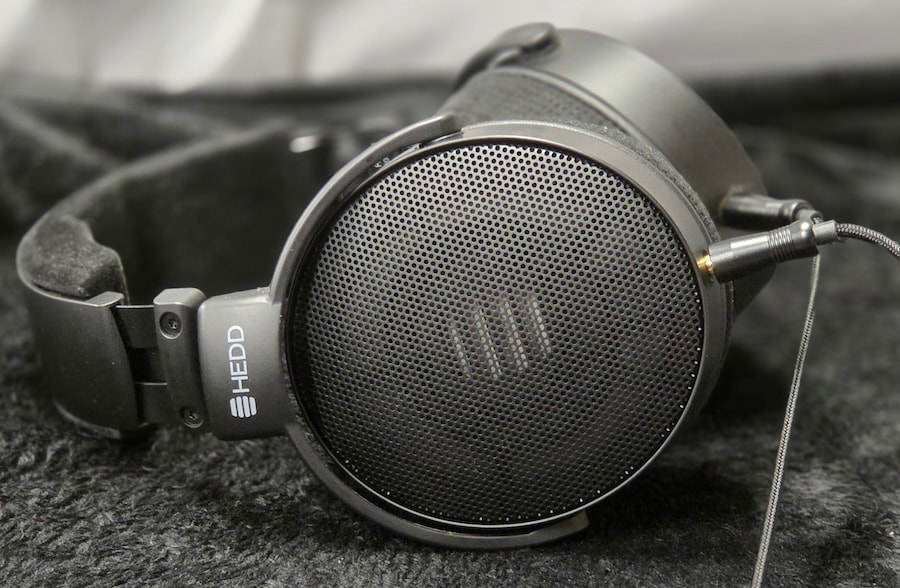

The HEDDphone D1 is the first dynamic-driver headphone to use Thin-Ply Carbon Diaphragm technology. Originally developed by Swedish researchers at Composite Sound, TPCD uses extremely thin layers of carbon fiber to create a diaphragm that is both exceptionally light and extremely rigid. Similar thin-ply carbon materials have found applications in aerospace, Formula 1, marine racing, and other fields where low weight and high strength are rather important.
For a dynamic headphone driver, those properties offer an obvious advantage. Traditional diaphragms can flex under load, creating localized breakup and additional harmonic distortion. The rigidity of the TPCD diaphragm allows it to behave more uniformly across its surface while also controlling resonance structurally rather than relying as heavily on external damping.
That may sound like a small engineering distinction, but controlling the motion of a dynamic driver has always been one of the fundamental challenges of headphone design. A diaphragm needs to start, stop, and change direction quickly without continuing to ring after the signal has moved on. The lighter and more rigid that diaphragm can be made without introducing other problems, the greater the potential for cleaner transients and lower distortion.
Which helps explain why HEDD was willing to move away from its beloved AMT technology to build an “ordinary” dynamic-driver headphone.
As it turns out, ordinary is not really what HEDD had in mind.
Related Reading:

Build & Fit
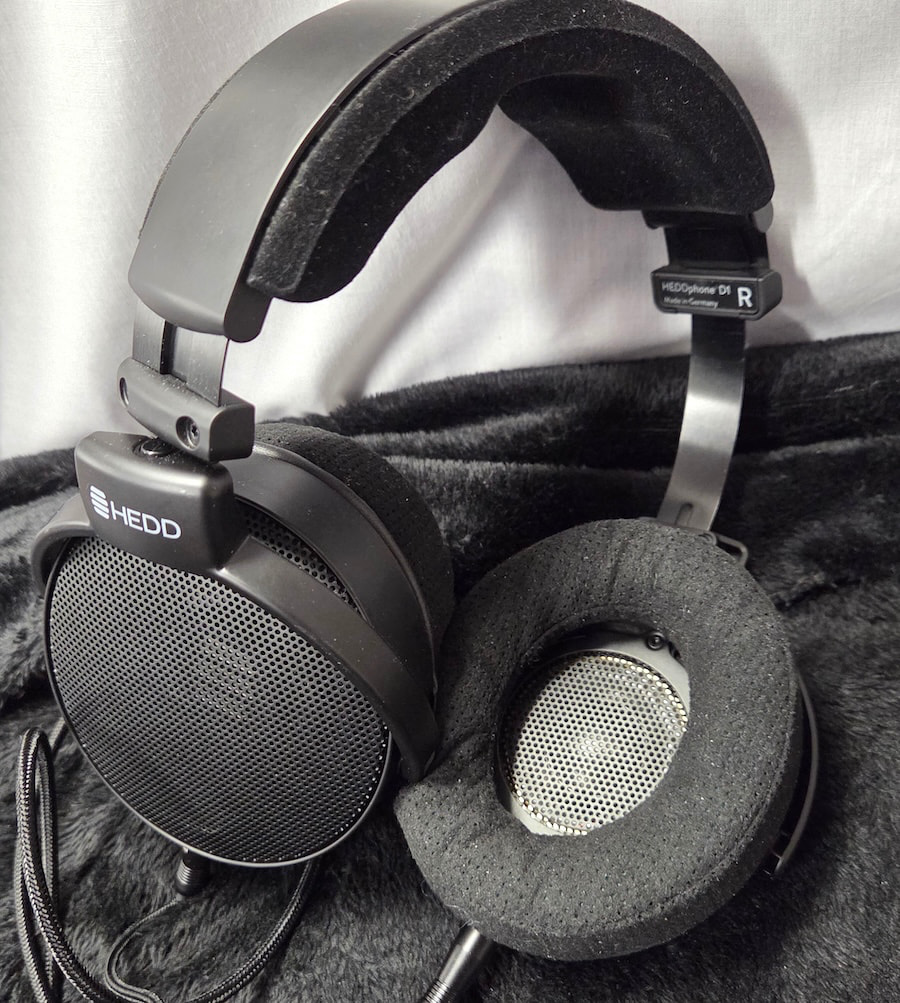
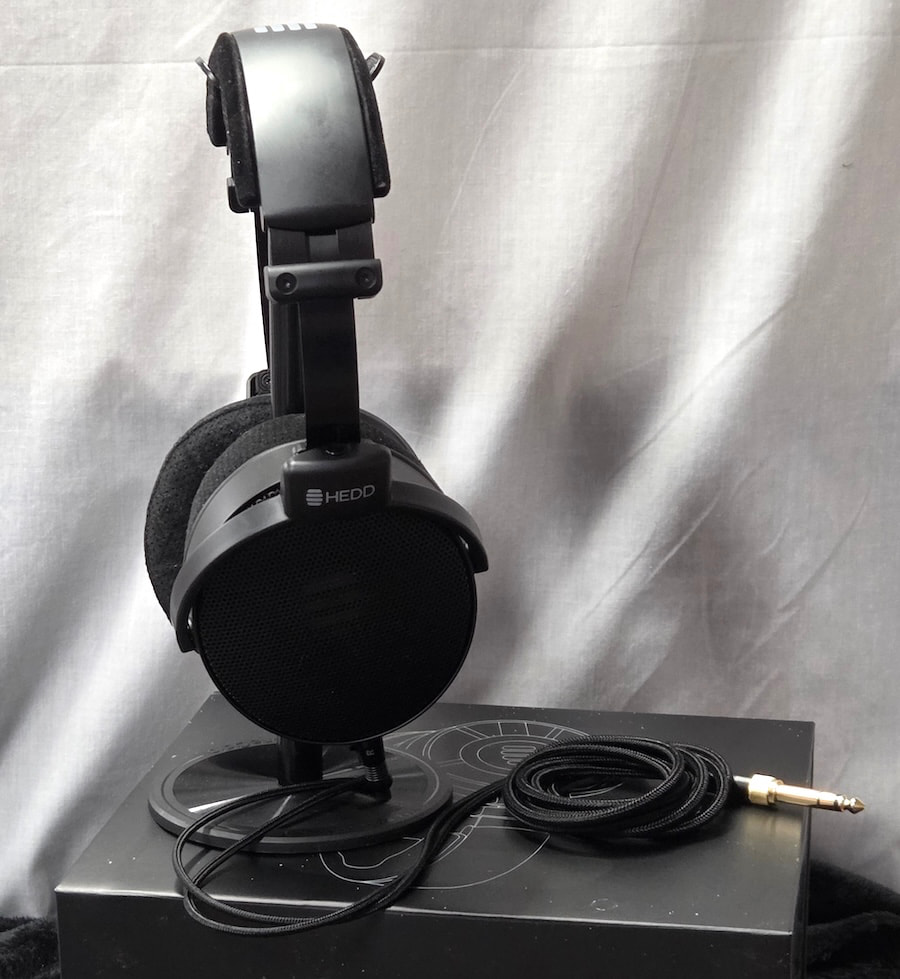
Construction is a mix of metal and polymer, with a steel headband and grilles paired with polymer gimbals and earcups. The underside of the headband is padded with memory foam and wrapped in a soft, suede-like material, while the outer section uses a polymer frame to keep the padding centered and properly positioned.
Headband adjustment is positive, with clearly defined clicks at each stop and enough range to accommodate most head sizes. The cups offer roughly 20 degrees of rotation on the vertical axis, divided evenly between the front and rear, along with approximately 35 degrees of horizontal movement. That gives the D1 enough flexibility to conform comfortably to a wide range of head shapes.
The ear pads use the same suede-like material as the headband, with softer internal padding and generous internal dimensions. My ears never touched the pads, nor did they come into contact with the driver screens.
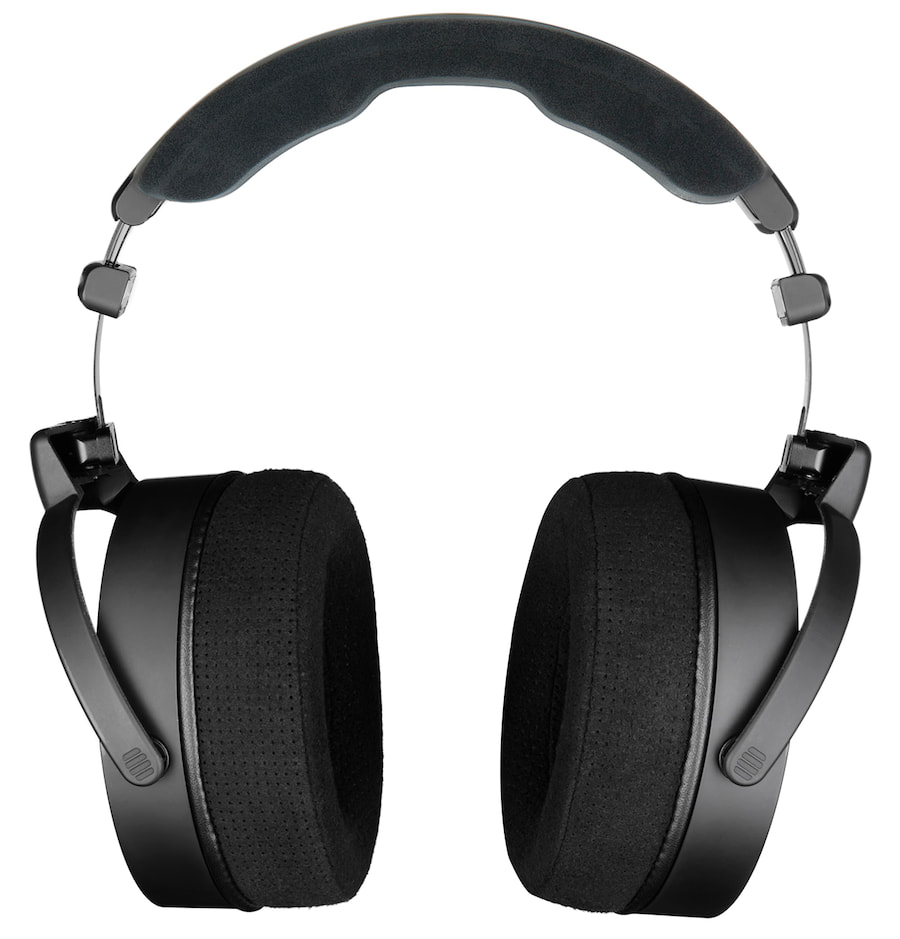

I also had no trouble achieving a good seal while wearing eyeglasses, helped by the wide adjustment range and relatively low clamping force. At 350 grams, the D1 is not especially light, but the weight is distributed well enough that I had no issues wearing it for extended listening sessions.
The supplied cable connects to each earcup through separate 3.5mm TS jacks positioned along the bottom. It is cloth-wrapped and terminates in a 3.5mm TRS plug, with a screw-on 6.35mm adapter included for use with full-size headphone amplifiers and other sources.
One of the more thoughtful aspects of the D1 is its emphasis on long-term serviceability. The perforated ear pads, headband cushions, structural yokes, and individual driver-baffle assemblies can all be removed and replaced independently by the owner rather than requiring the entire headphone to be sent back for relatively simple repairs.
Those who would rather leave the screwdriver in the drawer will also appreciate the five-year warranty.
Internals

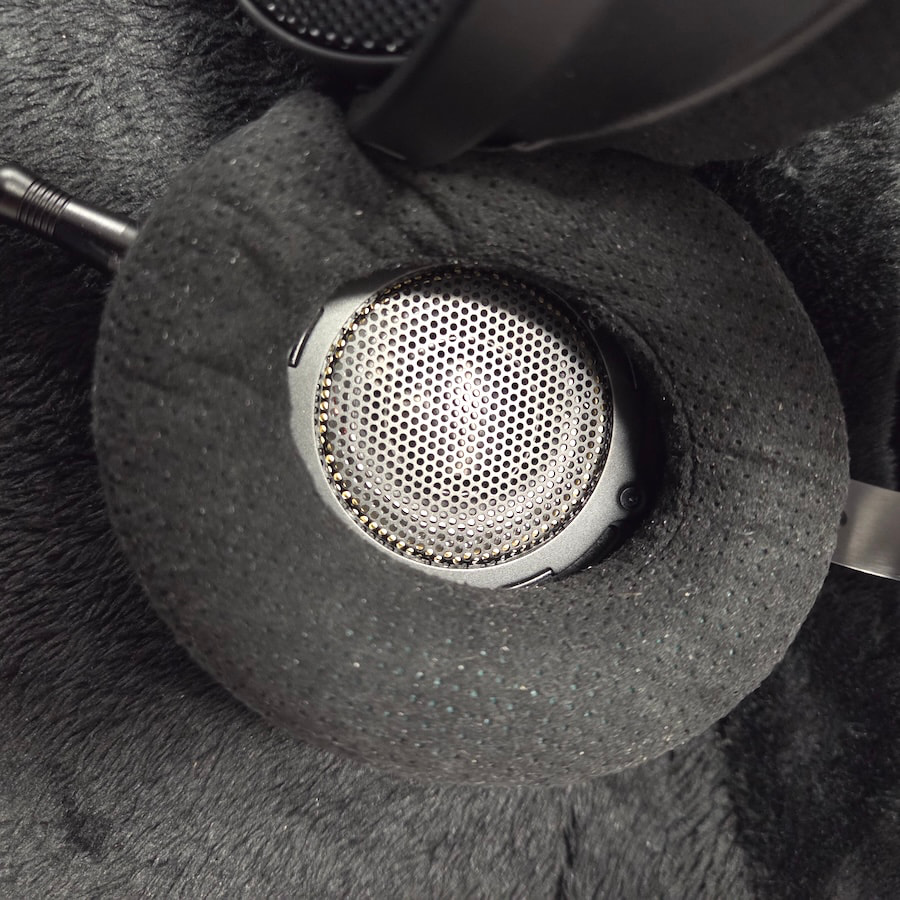
Having already spent a good deal of time on the 50mm TPC diaphragm used in the D1, I’ll keep the rest of the specifications brief. Nominal impedance is 32 ohms, sensitivity is rated at 100 dB/mW, and frequency response extends from 5Hz to 40kHz.
That places the D1 firmly in the easy-to-drive category, which is another significant departure from HEDD’s earlier AMT-based headphones. Those models demanded considerably more from the source and, combined with their greater weight, were never especially well suited to portable use.
The D1 is both easier to power and considerably lighter, making it far more practical for listeners who want to use it away from a full-size desktop headphone rig.
HEDDphone D1 Specifications:
- Design: Open-back, over-ear
- Driver: Dynamic, Thin-Ply Carbon Diaphragm (TPCD)
- Driver Size: 50mm
- Frequency Response: 5Hz-40kHz
- Impedance: 32 ohms
- Sensitivity: 100 dB/mW
- Weight: 350 grams
- Ear Pads: Perforated velour
- Cable: 2-meter textile-covered detachable cable
- Connections: Dual 3.5mm mono inputs
- Termination: 3.5mm TRS with 6.35mm adapter
- Warranty: 5 years with registration
- Manufactured: Berlin, Germany


Listening
The first thing I noticed about the D1’s low end was how much more punch it delivers than almost any other reference-tuned headphone near its price point. That does not mean the bass is pushed forward, because it really is not. It is simply palpable in a way that many neutral headphones are not.
The D1 should appeal to listeners who want slam and rumble without sacrificing a near-neutral overall balance. The next thing that becomes obvious is how clean the bass sounds and how well defined it remains even at the very bottom. Nothing sounds dull, thick, or droning, and the D1 maintains excellent definition as it reaches into the lowest octaves.
That makes tracks like Duran Duran’s “A View to a Kill” especially entertaining, with the walking bass line during the introduction having real weight and texture. The same is true with something like Tchaikovsky’s 1812 Overture, where the larger dynamic swings and cannon blasts can be properly celebrated.
There is no bleed from the mid-bass into the lower midrange, and just as I heard in the lows, instruments and voices through the mids retain their own space and definition. Lower-register vocals have good weight without sounding heavy, guitars growl and scream when called upon, and strings have the energy and attack they deserve.
Piano also sounds impressively natural, which is a rarer talent than it should be, while higher-pitched voices retain good energy without becoming nasal or strident. The overall clarity is excellent. Tracks like 40 Fingers’ “Sunset Jig” become particularly enjoyable because it is so easy to follow the individual contribution of each guitarist.
There is a slight lift in the lower treble, but it never becomes excessive. That added energy helps strings retain their bite and gives percussion plenty of snap and rattle. The lift appears to extend from roughly 3kHz through just above 11kHz before beginning to taper off, giving the D1 a somewhat brighter treble presentation than many reference headphones.
It never struck me as hot, however, and the stronger-than-average bass presence gives the overall presentation good balance. Cymbals sound realistic without becoming clicky, while air and sparkle are both very good. The D1 sounds exceptionally open through the upper registers.
The soundstage does not immediately announce itself as absurdly large or artificially stretched. With Cowboy Junkies’ “I’m So Lonesome I Could Cry” from The Trinity Session, the reverberation extends naturally into the surrounding space and reveals just how large the recorded environment really is.
On other recordings, the stage can sound more contained, which suggests that the D1 is reproducing what is actually present rather than imposing the same oversized presentation on everything. Imaging is extremely precise, and placing individual musicians within an orchestral recording is almost laughably easy.

The Bottom Line
The HEDDphone D1 is largely neutral in overall balance with a mild treble lift, but describing it that way risks underselling what makes it so compelling. Too many listeners still equate neutral with boring, and the D1 is anything but.
Bass is not exaggerated, yet it has more impact and physical presence than most reference-tuned headphones in this price range. It reaches deep, remains exceptionally clean, and delivers enough punch and texture that it can sound more substantial than the measurements might suggest. The midrange is equally well defined, while the slightly elevated treble adds energy, openness, and detail without pushing the presentation into harshness.
HEDD has also addressed one of the biggest complaints surrounding its earlier headphones. At 350 grams, the D1 is considerably lighter and easier to wear for long sessions. The improved comfort, lower power requirements, and more conventional form factor make it a far more practical headphone for everyday use without sacrificing the technical strengths that have defined HEDD’s more ambitious designs.
To my ear, the D1 is one of the strongest reference-tuned dynamic headphones available below $1,000. It offers better bass definition, greater dynamic impact, and a more engaging overall presentation than long-standing reference models such as the Sennheiser HD 650 and Beyerdynamic T1, while still maintaining the tonal balance and resolution expected from a serious reference headphone.
HEDD may have built its reputation around far more exotic driver technology, but the D1 proves that its most conventional headphone may also be its most broadly appealing.
At $799, it is not inexpensive. It is, however, exceptionally good value for what it delivers, and an easy Editors’ Choice.
Pros:
- Exceptionally clean, well-defined bass with impressive slam and extension
- Near-neutral tuning that still sounds engaging and dynamic
- Excellent clarity and separation through the midrange
- Slight treble lift adds openness, detail, and energy without sounding harsh
- Precise imaging and a soundstage that reflects the recording rather than exaggerating it
- Considerably lighter and more comfortable than previous HEDD headphones
- Easy to drive at 32 ohms and 100 dB/mW
- User-replaceable pads, headband cushions, yokes, and driver-baffle assemblies
- Five-year warranty
Cons:
- $799 is still expensive for a dynamic-driver headphone
- 350-gram weight is improved, but not especially light
- Mild treble emphasis may not suit listeners who prefer a darker presentation
- Open-back design limits portability and isolation
- More conventional styling may feel less distinctive than earlier HEDD models
Our Ratings:
★★★★★★★★★★ Sound Quality
★★★★★★★★★★ Comfort
★★★★★★★★★★ Build Quality
★★★★★★★★★★ Value
Where to Buy:
For more information: hedd.audio
You must be logged in to post a comment Login