Connect with us
DAPA Banner

Tech

Here are the most interesting smaller upgrades Google Workspace got at Google Cloud Next 2026

Published

on


  • You can now interact with data and create entire dashboards with Gemini in Sheets
  • Google Meet’s AI summaries now extend to in-person and third-party conferencing platforms
  • AI has allowed Google to make it even quicker to move from Microsoft 365 to Google Workspace

Google Cloud just held its biggest event yet, but with 260+ announcements across the entire portfolio at Google Cloud Next 2026, many of the smaller but no less important Google Workspace updates flew under the radar.

In a ‘one last thing’-like blog post, the company detailed a number of less headline-worthy improvements it’s rolled out to its Workspace online apps to make Gemini even more useful.

Source link

Advertisement
Continue Reading
Click to comment

You must be logged in to post a comment Login

Leave a Reply

Tech

Tech Lobbyists Hard At Work Undermining Proposed Alaska ‘Right To Repair’ Law

Published

on

from the fix-your-own-shit dept

There’s still a meaningful effort afoot to implement statewide “right to repair” laws that try to make it cheaper, easier, and environmentally friendlier for you to repair the technology you own. All fifty states have at least flirted with the idea, though only Massachusetts, New York, Texas, Minnesota, Colorado, California, Oregon, and Washington have actually passed laws.

Alaska could be up next. Two versions of a new right to repair law are winding their way through the Alaska state House and Senate. The bills would amend the Alaska Unfair Trade Practices and Consumer Protection Act, requiring tech hardware manufacturers to make parts, tools or software needed for repairs available to independent service providers and consumers.

As is always the case, the proposal has broad, bipartisan support among the actual public:

“In a lot of ways, this is a deeply conservative bill in the sense that for most of the 20th century, you could fix the stuff you bought, and the parts would be available, because it was another revenue stream for the businesses,” said Anchorage Democratic Sen. Forrest Dunbar, the sponsor of the Senate bill.”

As is also always the case, hardware vendors from a variety of sectors (agricultural, medical, tech, consumer hardware) are lobbying against Alaska’s proposal, falsely claiming that easier, more affordable repairs constitute a privacy and security threat to the public.

Advertisement

TechNet (a lobbying coalition that includes Dell, Apple, Amazon, Google, Nvidia, and Verizon), for example, is trying to convince the Alaska state legislature that everything is working fine currently, and that fixing anything would make consumers less safe. Apparently because truly independent repair professionals are too incompetent if they don’t have big corporate oversight:

“TechNet wrote that the bill would erode the current system where manufacturers work with authorized repair service providers, and that these agreements “ensure that technicians have the appropriate training, access to safe repair procedures, and the qualifications necessary to protect both the device and the consumer.”

TechNet is also trying to claim that the Alaska bill is “misaligned with language of right-to-repair bills from other states” such as New York. Granted they would say that, given that after New York passed its bill, tech lobbyists convinced NY Governor Kathy Hochul to water that states’s bill down to the point of uselessness.

The concern now is that lobbyists successfully manage to water the Alaska bill down so badly that it ultimately becomes similarly useless.

Something that’s broadly not mentioned in coverage of right to repair: while eight states have passed right to repair laws in recent years, not one of those states has actually managed to actively enforce it, despite no shortage of bad behavior by companies looking to secure repair monopolies. That’s something that needs to change if the movement is to have any serious impact.

Advertisement

Filed Under: alaska, bipartisan, hardware, independent, monopoly, right to repair, software

Source link

Advertisement
Continue Reading

Tech

Recycling PLA And Other Plastic Waste With Compression Molding

Published

on

After previously trying out low-tech compression molding with a toaster oven and 3D printed molds, [future things] is back with a video that seeks to explore some of the questions raised after the first video. Questions such as how well this method works with HDPE and PLA thermoplastics, whether the flashing could be cut off by the mold and the right temperatures and times to heat the plastic before a charge is ready for inserting into the mold.
In this video the same PHA-based mold is used, but in a three-piece configuration to allow for a more complex shape. This way game tokens could be made for use by the son of the author, which also shows one straightforward and very practical use of this method.

A big change here is that no more metal chopsticks are used to handle the charge, as this was found to cool down the heated plastic too much. Instead the hot charge is handled with fingers and wooden chopsticks, with the plastic heated until it has about the consistency of thick honey. For LDPE this takes about 5-7 minutes at 130°C. After compressing the charge into the mold, about 30 seconds are all it takes for the plastic to cool down enough.

There was a question about the use of mold release spray, but this didn’t seem to cause any issues, so can probably be used safely. As for other plastic types, HDPE works fine too when you heat it up at a slightly higher temperature and don’t mind it being tougher to handle.

Advertisement

Easiest is probably PLA, which would seem unsurprising. Using some chopped-up PLA printing waste it was easy enough to make a few more game tokens, demonstrating that this method is very viable for converting scrap FDM print waste into such items. As noted in the comments by [edmundchao] this method works great too for PETG, using PETG molds, while using a ratcheting clamp for extra pressure instead of just pressing by hand.

Advertisement

Source link

Continue Reading

Tech

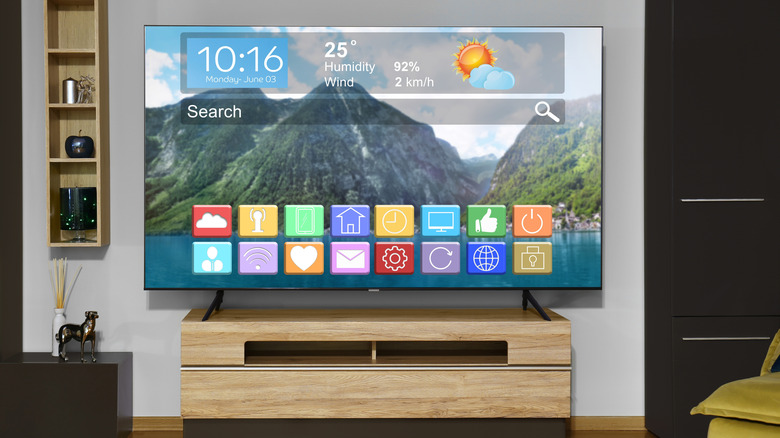
Why There’s Simply No Need For Smart TVs Anymore

Published

on


We may receive a commission on purchases made from links.

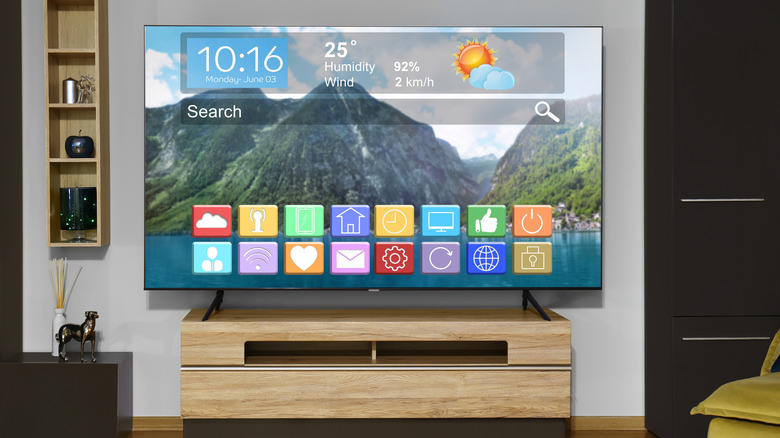
With the rise of streaming services came smart TVs with built-in apps and features that make it easier than ever to start watching content on the big screen from the moment you take it out of the box.  But let’s be honest, most smart TVs aren’t all they’re cracked up to be, and they really never have been. Many proprietary operating systems that come with your TV are both sluggish and confusing to navigate. They may drop support for popular apps over time, lack quality-of-life features, and turn the experience of using your smart TV into a constant headache.

Meanwhile, a few companies have created products that universalize the smart TV experience, adding features and app libraries inside of HDMI dongles that cost less than the sales tax you’ll pay on most TVs. That means you don’t even need to get a different television if you’re looking to escape the software experience on the one you own. It also means you can extend your TV’s longevity by years longer than you might think. Between all of those factors, the entire concept of a smart TV is becoming somewhat obsolete. Diving in a bit deeper, here’s why there’s hardly any need for smart TVs anymore.

Advertisement

Streaming boxes and dongles are cheap and capable

There’s one glaring reason to ignore your TV’s smart features: smart TV dongles and set-top boxes are cheap and often have a wider range of features. Even a “dumb” TV can instantly be made smart by plugging in something as cheap as an Amazon Fire TV Stick 4K or Roku Streaming Stick 4K for under $40, and even on the expensive side, a Google TV Streamer is just shy of $100. You can even flex your budget a drop more to $130 for an Apple TV 4K, which can integrate with other Apple devices. In essence, you’re plugging a brand-new operating system into your TV, and it will add just as much value to your setup, whether your display is a cheap computer monitor or a multi-thousand-dollar OLED with all the fixings.

Advertisement

All of the aforementioned products will immediately add features your TV may have lacked, such as voice control, the ability to pair Bluetooth headphones, and smart home integration. You can control Google Home through your Chromecast or control your Alexa ecosystem through your Fire TV Stick, and even Roku will integrate with both so that you can control media with voice commands by using a smart speaker.

Moreover, Fire OS, Roku OS, and Google TV (the respective operating systems used by those devices) have a robust app library that contains pretty much every streaming service you could ask for. No more hoping that the developers of that obscure service, which exclusively streams the movie you’re trying to watch, bothered to make an app for your Samsung Tizen TV. In the case of Google TV, you can even install many apps from the Play Store just like on an Android phone.

Advertisement

Many smart TV operating systems are simply awful

Not only do cheap streaming dongles make any TV into a modern smart TV, but you can configure most TVs to simply boot into the connected device when you turn them on, bypassing their built-in operating system entirely. That’s a good thing, because not only do some of the major smart TV operating systems have features your TV likely doesn’t have by default, but also because your TV’s operating system may not be particularly great to use.

On the high end, TVs may have enough processing power and memory to run their OS fluidly, but budget TVs rarely do. That makes them frustratingly sluggish as you wait for apps and menus to load. Another common issue is that, due to their relatively small user bases, many developers abandon app development for proprietary smart TV operating systems. Even if your TV has great app support when you buy it, just a few years later, you might have lost some of your favorites. Among the apps that have dropped support for certain smart TVs in some capacity are YouTube, Disney+, and Netflix, all streamers that are staples of the modern media ecosystem.

Although smart capabilities are still essential for modern TVs, the real brains have moved off-device to streaming peripherals. That’s actually good news, since it means you can keep your TV up-to-date without needing to buy a brand new one.

Advertisement


Source link

Advertisement
Continue Reading

Tech

How one venture firm is investing in an increasingly fragmented world

Published

on

The world today is riven by cultural differences, political divisions, and geopolitical disputes — a challenging environment for any investor hunting for startups that can grow large enough to deliver venture-scale returns.

Kompas VC has developed a regionally sensitive strategy to help it navigate, and invest in, this fragmented world. And it’s putting fresh capital towards this approach with a new €160 million fund ($187.5 million), the firm told TechCrunch.

“We see the world really falling into three main spheres of economic activity, of political activity — the U.S., Europe, and China,” Sebastian Peck, partner at Kompas VC, told TechCrunch. “We certainly see today that these three domains follow very, very different trajectories.”

Kompas has staked its reputation on backing startups that tackle core industrial competitiveness challenges, from manufacturing and supply chains to critical infrastructure and sustainability. Those themes haven’t disappeared, but different regions emphasize them to varying degrees.

Advertisement

“There was a lot of enthusiasm around these themes back in 2021,” Peck said. “In 2026, we’re in a very, very different paradigm. It’s all about AI, it’s all about fast growth, very explosive growth. A lot of big topics that we partially play to but also are not really part of what we stand for.”

“Our focus is in the physical world, anything around producing physical goods,” he added, saying that Kompas focuses on startups working on decarbonization, productivity, and risk management. “We’ve found our niche.”

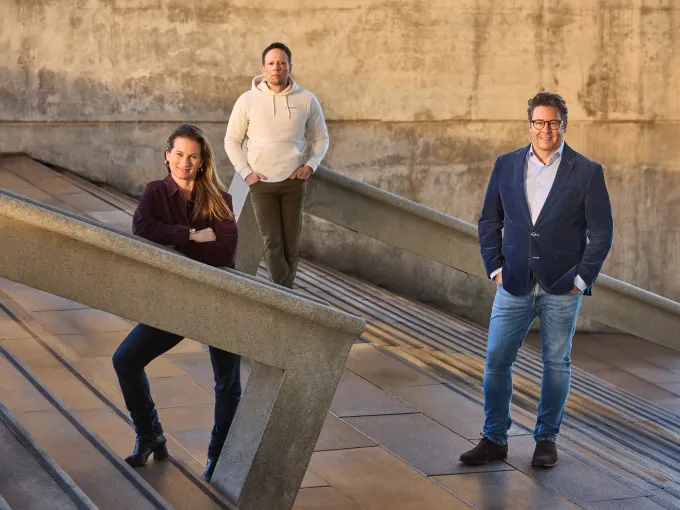
Three people standing on a stone stairway.
Kompas VC partners, from left: Talia Rafaeli, Andreas Winter-Extra, and Sebastian PeckImage Credits:Kompas VC /

That niche turns out to be pretty broad. Reshoring is en vogue in nearly every market, and depending on the startup, those markets typically have more than enough scale for a firm like Kompas.

Techcrunch event

San Francisco, CA
|
October 13-15, 2026

Advertisement

Though dwarfed by some venture funds these days, Kompas’s newly raised second fund should give it ample opportunity to lead early stage rounds with checks ranging from €3 million to €5 million. 

As a European fund, Kompas has access to a range of founders and startups in the region. But it must weigh how global fragmentation might limit the potential for some to deliver venture returns. Peck cites prefab housing as an example. The approach is widely used in Scandinavian countries, but it isn’t as common in Germany or the rest of Europe, let alone the United States.

Advertisement

“It feels like such an intuitive solution. It’s a product that is effectively an industrial product. It should be highly scalable,” he said. Ultimately, the reason it doesn’t resonate outside Scandinavia has more to do with “cultural conditioning” than the technology itself, he said. “In that industry, if the U.S. isn’t the market you can go to, you need to look very, very carefully at whether there’s a large enough addressable market.”

The fragmentation extends beyond housing. For example, in Europe, sustainability is still broadly attractive, in contrast to the U.S., where the theme doesn’t have the cachet it did several years ago. 

Still, a lot can change quickly, Peck acknowledges. “We are investing over 10-, 15-year horizons. That’s a few legislative periods to bridge, and sometimes things swing in unexpected directions.”

The shifting landscape poses a challenge, but also an opportunity for a smaller investor like Kompas. “I think there’s a great space for highly focused, highly specialized, smaller funds like ours to be the first check-in and bring sweep up certain themes and certain founders,” Peck said. 

Advertisement

When you purchase through links in our articles, we may earn a small commission. This doesn’t affect our editorial independence.

Source link

Continue Reading

Tech

Skullcandy Crusher Evo Wireless Headphones Give Bass Fans Exactly What They Want at a Fair Price

Published

on

Skullcandy Crusher Evo Wireless Headphones
When looking for some powerful wireless headphones, the Skullcandy Crusher Evo, priced at $99.99 (was $210), is a popular choice. Why? Users want something with a lot of bass, but not so much that it drowns out the rest of the track. On the right earcup, there is an adjustable slider that allows you to fine-tune the low end to your liking.


Crank it right down, and the sound remains pleasant and balanced, with nothing getting lost in the mix. Turn it up, though, and you’ll be rewarded with a KNOCK of bass that literally vibrates through the earcups, all the way to the top of your skull. Two full-range drivers handle the rest of the audio, so your voices and guitars stay exactly where they should, even when the bass is turned up to eleven.

Sale


Skullcandy Crusher Evo Wireless Bluetooth Headphones with Multi-Sensory Bass, Noise Isolating Over-Ear…
  • PATENTED MULTI-SENSORY CRUSHER BASS TECHNOLOGY. Featuring two full-range 40mm audio drivers plus additional dual bass drivers, your music and movies…
  • UP TO 40 HOURS BATTERY + RAPID CHARGE. Listen to your music for days with up to 40 hours of battery life. With Rapid Charge, just 10 minutes of…
  • PERSONAL SOUND IN THE SKULLCANDY APP. Download the app and participate in a hearing analysis that automatically adjusts the sound levels for your…

Real-world testing proves that the forty-hour battery is actually rather reasonable, as a single charge will last you several days, including commutes, dog walks, workouts, and so on. When you run low on battery, ten minutes plugged in provides you roughly four hours of music, which is quite useful, especially on those mornings when you’re racing around getting ready and don’t have time to think about your case. The Bluetooth remains rock steady even when you’re bouncing between rooms or working out, and we’ve had reports of zero odd drops from folks who’ve put these through their paces over the course of a few weeks.

Advertisement


The memory foam earcups and padded headband provide a highly comfortable experience, even after hours of use. The over-ear style effectively blocks out background noise, making it ideal for subway commutes or loud offices that do not require active canceling. Some people have reported feeling slightly warm after a few hours, but the fit is really good even if you wear glasses, and it’s rather forgiving on different skull sizes once you’ve worn them in. A handy small control panel on the earcup handles volume, skipping, and calls, eliminating the need to fumble for your phone.

Skullcandy Crusher Evo Wireless Headphones
The Skullcandy app adds a personal touch by running a fast hearing test and then adjusting the sound profile to match your individual ears. The Tile tracking embedded into the headphones means that if you ever misplace them, you can simply whip out your phone and it will show you precisely where they are – for example, under the back seat of your car or buried in a gym bag. When you’re going on a trip, packing is a breeze thanks to the easy-to-fold design and supplied case, and there’s even an aux cord in case you run out of juice after a long day.

Source link

Advertisement
Continue Reading

Tech

OpenAI’s models land on Amazon Bedrock, one day after Microsoft exclusivity ends

Published

on

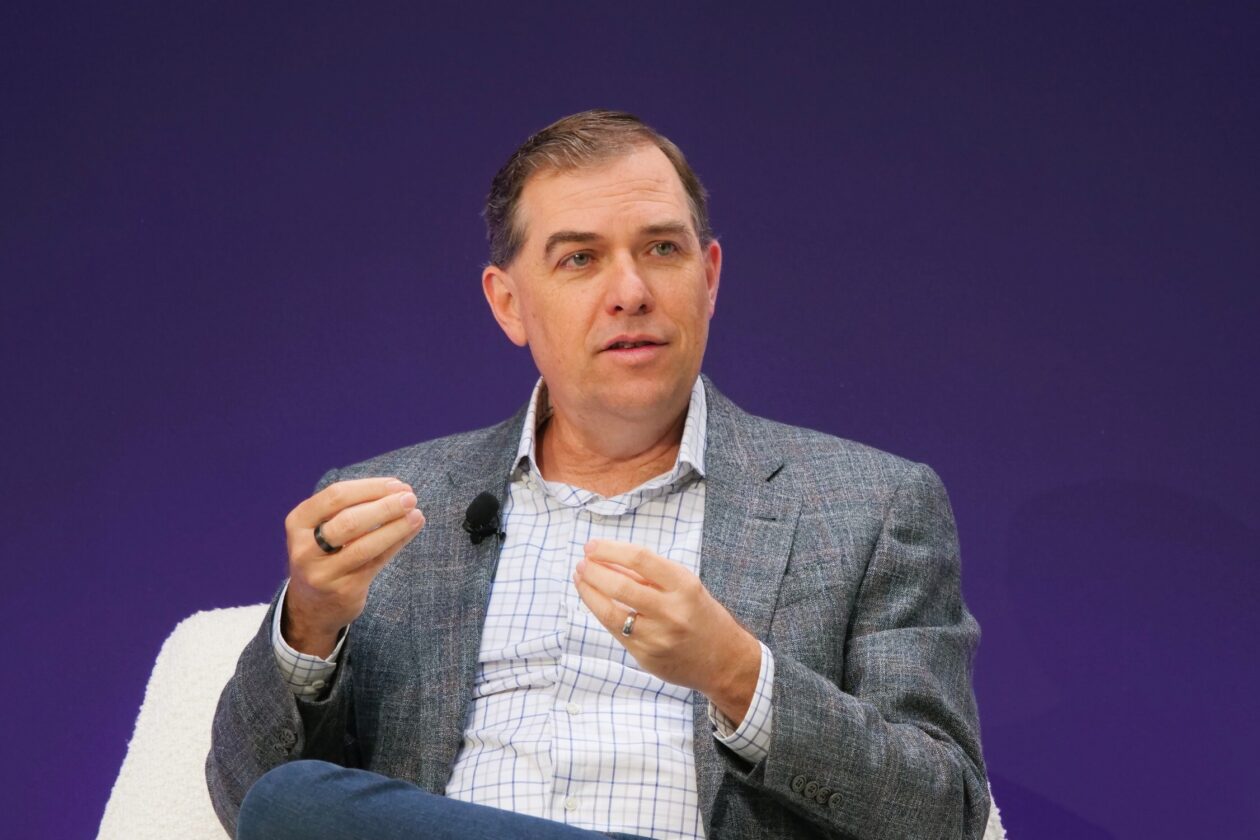
AWS CEO Matt Garman at the event Tuesday. (GeekWire Photo / Todd Bishop)

SAN FRANCISCO — Amazon moved quickly Tuesday to capitalize on OpenAI’s new relationship status with Microsoft, launching a preview of OpenAI’s models on its Bedrock platform less than 24 hours after the ChatGPT maker was freed from its previously exclusive cloud arrangement.

The companies described the news as meeting years of customer demand.

“Their production applications run in AWS. Their data is in AWS. They trust the security of AWS, and we’ve forced them for the last couple of years, to get great OpenAI models, to go to other places,” AWS CEO Matt Garman said at an event in San Francisco.

OpenAI CEO Sam Altman appeared at the event via recorded video, noting that his “schedule got taken away” from him for the day, an apparent allusion to the opening of the trial in Elon Musk’s lawsuit against him and OpenAI in nearby Oakland.

“The opportunity ahead of us is enormous, and the most exciting part is that this is not something in the future — it’s starting right now,” Altman said in the video. 

Advertisement
Sam Altman appears via recorded video at the event.

Altman also said OpenAI’s Codex coding tool will be available to AWS customers, and the companies unveiled Amazon Bedrock Managed Agents, powered by OpenAI — the product name for the enterprise agent platform previously described as a “Stateful Runtime Environment” when the two companies announced their partnership in February.

Denise Dresser, OpenAI’s chief revenue officer, said the hundreds of enterprise customers she has met since joining the company four months ago are past the experimentation phase with AI.

“They understand that to do that, they need to have powerful models. But even more importantly, they want those models in a trusted environment that they know and a trusted infrastructure. And so for me, that’s what’s so special about this partnership,” Dresser said.

It has been a whirlwind couple of months for both companies.

Amazon and OpenAI struck a $50 billion investment and cloud deal in February, with OpenAI committing to run workloads on Amazon’s custom Trainium chips and the two companies agreeing to co-build what they called a “Stateful Runtime Environment” on Amazon’s Bedrock platform. The cloud agreement alone is worth more than $100 billion over eight years.

Advertisement

An internal OpenAI memo that surfaced in April touted the Amazon partnership as a key enterprise growth driver. OpenAI chief revenue officer Denise Dresser wrote that the Microsoft partnership had “limited our ability to meet enterprises where they are,” adding that inbound demand for the AWS offering had been “frankly staggering.”

Amazon has also doubled down on its original AI partner, Anthropic, investing up to $25 billion and striking a similar $100 billion-plus cloud commitment in a deal announced earlier this month.

Both OpenAI and Anthropic have committed to running workloads on Amazon’s custom Trainium processors, and Facebook parent Meta recently signed a multibillion-dollar deal to use Amazon’s Graviton chips for agentic AI. 

Amazon CEO Andy Jassy disclosed in his annual shareholder letter that Amazon’s custom silicon business is generating more than $20 billion a year in revenue.

Advertisement

Things changed again for the AWS-OpenAI partnership just this week.

On Monday, Microsoft and OpenAI revamped their partnership, making OpenAI free to serve all of its products — including API-based services previously exclusive to Microsoft Azure — on any cloud provider. Amazon CEO Andy Jassy immediately signaled the impact, posting on LinkedIn that OpenAI’s models would be available soon on Amazon’s Bedrock platform.

Amazon reports first-quarter earnings Wednesday, with the company on pace to spend $200 billion this year on capital expenditures, most of it on AI infrastructure. Jassy has called AI “an extraordinarily unusual opportunity to forever change the size of AWS and Amazon as a whole.

Source link

Advertisement
Continue Reading

Tech

Loewe has bought French hi-fi brand Cabasse

Published

on

German electronics manufacturer Loewe Technology has acquired French loudspeaker company Cabasse, bringing a 76-year-old acoustic engineering brand into a premium electronics group best known for its high-end television and sound system products.

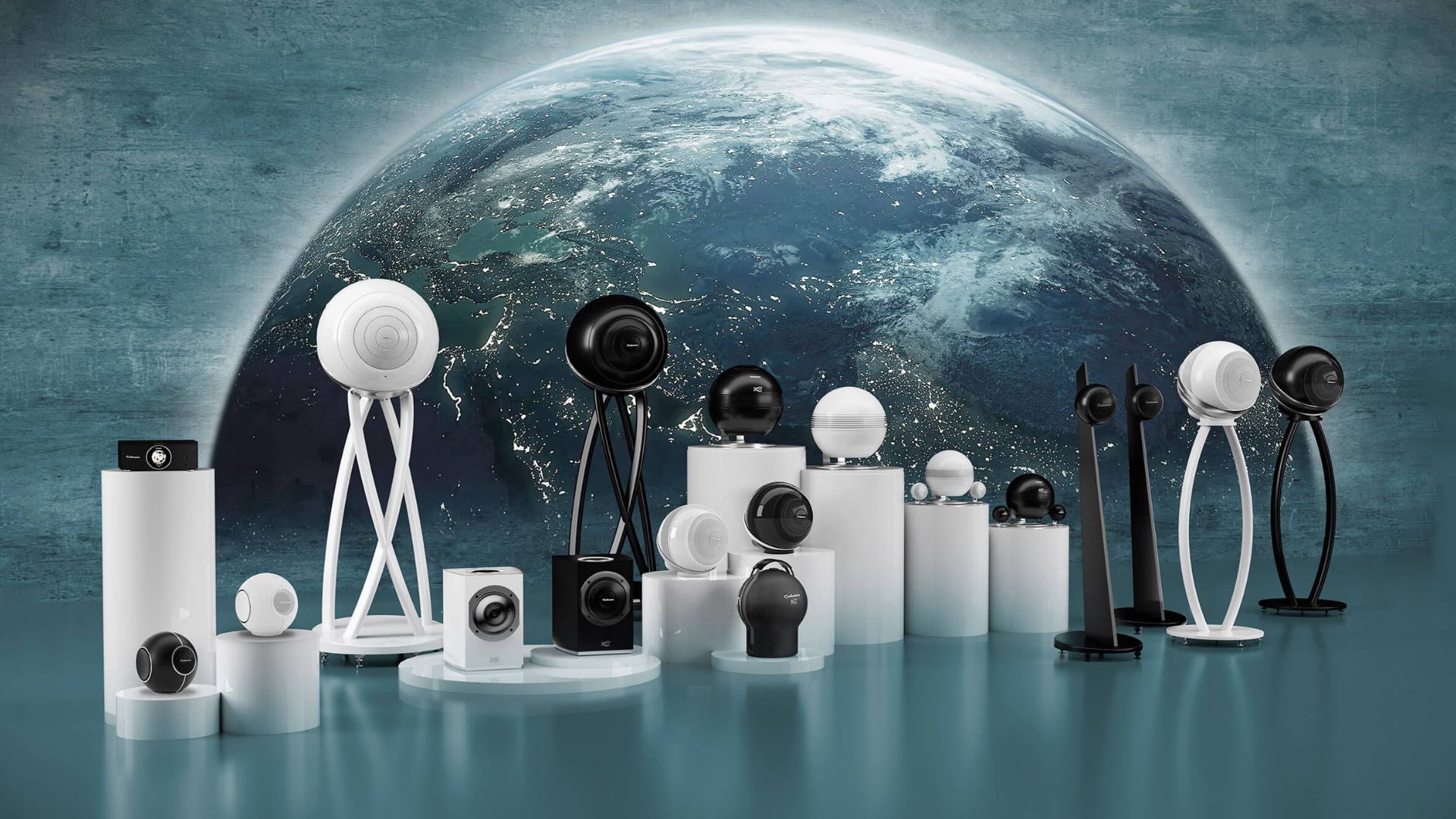
Cabasse, founded in 1950 in Brittany, has built its reputation around proprietary coaxial driver technology and a catalogue that includes the Sphere Evo loudspeaker. The brand currently has an independent research, development and production operation based in Brest, and this will continue following the transaction.

That operational continuity reflects the terms of the deal, under which Cabasse retains its brand identity and engineering autonomy while gaining access to Loewe’s international sales infrastructure and marketing resources to support wider distribution of its products.

Loewe’s own catalogue centres on its Stellar television range alongside a series of integrated sound systems, with the German brand carrying more than a century of heritage in premium consumer electronics that has positioned it as a design-led alternative to mainstream entertainment hardware manufacturers.

Advertisement

Loewe has outlined plans to use Cabasse’s technology portfolio, which spans advanced loudspeaker design, digital signal processing and acoustic calibration systems as the foundation for a new generation of integrated audiovisual products across both brands.

Advertisement

Those products are expected to include fully integrated home cinema and multi-room audio systems, along with wireless and connected audio hardware that draws on Cabasse’s proprietary calibration technology for use within future Loewe product lines.

Aslan Khabliev, CEO of Loewe Technology, said the acquisition would bring acoustic expertise that takes the group’s audio capabilities to a new level, while Cabasse Deputy CEO Arnaud Hendoux described the deal as a new chapter that preserves the brand’s Brest-based heritage while opening access to a broader international platform.

Advertisement

No financial terms for the acquisition were disclosed, and neither company has confirmed a timeline for when jointly developed products are expected to reach the market.

Source link

Advertisement
Continue Reading

Tech

UK’s IoT Tribe launches Dublin base with two new hires

Published

on

In nearly 10 years since being established, Tribe has supported more than 500 start-ups and scale-ups.

UK start-up IoT Tribe is opening its European operations, with Dublin as its first base. The deep-tech ecosystem builder has already made two hires in the country – a head of venture incubation and acceleration, and an associate of same.

Tribe was formerly known as the ‘Start-up Scale-up’, a European Commission-funded IoT accelerator which operated across four European hubs, Dublin included. The programme ran for one year, from 2015 to 2016, and supported more than 130 start-ups from 47 countries.

Tribe was formally established in 2017. That year, the start-up launched the IoT Tribe North Industrial Tech accelerator in partnership with Innovate UK to help its corporate partners adopt newer innovations.

Advertisement

In nearly 10 years since being established, Tribe has supported more than 500 start-ups and scale-ups, it said. It has also engaged with more than 150 corporations and public agencies, and has built a network of more than 200 experts and mentors, it added.

“Europe’s deep-tech moment is here and it will be won or lost on execution. Dublin is the natural launchpad for Tribe’s European operations – a city we’ve worked with for 10 years, home to world-class engineering talent and a corporate base serious about adopting frontier technology,” said Tribe founder and CEO Tanya Suarez.

“From here, we’ll scale the model that has already proven its value to corporate and government clients across Europe and beyond.”

Tribe Europe, as the new Dublin branch will be called, will work with founders, corporates and public bodies across Ireland to run accelerator programmes and facilitate open innovation challenges, it said.

Advertisement

“Corporates across Europe are done debating whether to engage with deep tech. They want partners who can de-risk adoption at speed. That is the gap Tribe closes in Ireland and across the continent,” said Tribe’s director of operations Marcus Roberts.

Don’t miss out on the knowledge you need to succeed. Sign up for the Daily Brief, Silicon Republic’s digest of need-to-know sci-tech news.

Source link

Advertisement
Continue Reading

Tech

‘It’s Undignified’: Hundreds of Workers Training Meta’s AI Could Be Laid Off

Published

on

Hundreds of workers in Ireland tasked with refining Meta’s AI models have been told that their jobs are at risk as the company embarks on a sweeping new round of layoffs, according to documents obtained by WIRED.

The affected workers are employed by the Dublin-based firm Covalen, which handles various content moderation and labeling services for Meta.

The workers were informed of the layoffs over a brief video meeting on Monday afternoon and were not allowed to ask questions, according to Nick Bennett, one of the employees on the call. “We had a pretty bad feeling [before the meeting],” he says. “This has happened before.”

In all, more than 700 employees stand to potentially lose their jobs at Covalen, according to an email reviewed by WIRED. Roughly 500 are data annotators. Their job is to check material generated by Meta’s AI models against the company’s rules barring dangerous and illegal content. “It’s essentially training the AI to take over our jobs,” claims another Covalen employee, who asked to remain anonymous for fear of retaliation. “We take actions as the perfect decision for the AI to emulate.”

Advertisement

Sometimes, the work involves cooking up elaborate prompts to try to bypass guardrails meant to prevent models from serving up child sexual abuse material, say, or descriptions of suicide. “It’s quite a grueling job,” claims Bennett. “You spend your whole day pretending to be a pedophile.”

Last week, Meta announced plans to cut one in 10 jobs as part of sweeping layoffs aimed at making the company more efficient. A memo circulated by the company reportedly indicated that layoffs were motivated by a need to increase spending on other aspects of the business. Though the memo did not mention AI, the company recently announced plans to nearly double its spending on the technology. In January, Meta CEO Mark Zuckerberg said, “I think that 2026 is going to be the year that AI starts to dramatically change the way that we work.” In the email reviewed by WIRED, Covalen employees were told only that the layoffs were a result of “reduced demand and operational requirements.”

In a statement, Meta spokesperson Erica Sackin said: “As we shared in March, over the next few years, Meta will be deploying more advanced AI systems to transform our approach to content enforcement and operations across our platforms, so that it delivers the safety and protection people expect. As we do that, we’ll be reducing our reliance on third-party vendors and strengthening our internal systems.”

The latest round of layoffs marks the second time that Covalen has cut staff in recent months. In November, the company announced plans for job cuts (reportedly to number around 400), culminating in a worker strike. Between the two rounds of layoffs, Covalen’s headcount in Dublin is on track to be almost halved, according to the Communications Workers’ Union (CWU), whose members include some Covalen staff.

Advertisement

For affected Covalen workers, the search for new work will be hampered by a six-month “cooldown period,” during which they are unable to apply to a competing Meta vendor, claims the CWU. “It’s undignified, you know,” says the Covalen employee who asked to remain anonymous. “It’s rude.”

Covalen did not immediately respond to a request for comment.

Unions representing the affected employees are pushing for Covalen to enter negotiations over severance terms. They also hope to meet with the Irish government to discuss how AI is impacting workers in the country. “Tech companies are treating the workers whose labor and data helped build AI as disposable,” says Christy Hoffman, general secretary of UNI Global Union. “To fight back, it’s absolutely critical that workers organize and demand notice about the introduction of AI, training linked to employment, and a plan for their futures. Workers should also have the right to refuse to train their AI replacements.”

But some of those caught up in the layoffs are doubtful of their chances of securing stable employment in a labor market being rehewn in real time by AI and the deep-pocketed companies leading its development. “It’s a universal battle between downtrodden white-collar workers and big capital, really,” claims Bennett. “That normally only goes one way.”

Advertisement

Update 4/28/25 3:30pm ET: This story has been updated to include comment from Meta.

Source link

Continue Reading

Tech

Elon Musk Testifies That He Started OpenAI to Prevent a ‘Terminator Outcome’

Published

on

Elon Musk and Sam Altman appeared in a federal courtroom together for the first time on Tuesday as they fight over OpenAI’s decade-long evolution and what it means for the company’s future.

The trial in Musk’s lawsuit against Altman could result in financial damages and, more significantly, governance changes at OpenAI that may complicate its plans for an initial public offering as soon as this year.

As the first witness on the stand, Musk immediately sought to frame his case as more than just about OpenAI. Siding with Altman “will give license to looting every charity in America” and shake the “entire foundation of charitable giving,” Musk told a panel of nine jurors advising US District Judge Yvonne Gonzalez Rogers on how to rule.

Musk has been concerned about computers becoming smarter than people “since he was a young man in college,” his attorney Steven Molo told jurors. Molo explained that Musk lobbied governments to pass regulations addressing the prospect of so-called artificial general intelligence, including meeting with then-president Barack Obama in 2015. “But the government was not stepping up,” Molo said. “Elon felt he had to do something.”

Advertisement

Around the same time, Musk met with Altman, a then-30-year-old investor “whom he didn’t know very well,” Molo said. They soon launched OpenAI together as a nonprofit. Google’s unchecked progress on AI development had sparked concerns for both OpenAI cofounders, and they wanted to create a competing lab with a greater focus on safety. “My perspective is [OpenAI] exists because Larry Page called me a speciesist for being pro-humanity,” Musk said, referring to the Google cofounder. “What would be the opposite of Google? An open-source nonprofit.”

While Musk believes AI could cure diseases and generate prosperity for humanity, he also told the court that he thinks the technology could veer off into catastrophic scenarios straight out of science fiction. “It could also kill all of us … the Terminator outcome. I think we want to be in a movie … like Star Trek, not a James Cameron movie,” Musk said. (While Musk has long raised alarms about AI safety, his current firm, xAI, has been criticized by researchers at other AI labs for its “reckless” safety culture.)

As OpenAI began notching some of its own successes, Musk and Altman agreed that a for-profit arm with fixed returns for investors was necessary to raise extraordinary sums of money needed to fund hiring and computing, according to Molo. He compared it to a nonprofit museum that receives some proceeds from a for-profit store. “I was not opposed to there being a small for-profit as long as the tail didn’t wag the dog,” Musk said on the stand.

Musk felt that the approach had gone too far when Microsoft, another defendant in the trial, agreed to invest $10 billion in 2023, and OpenAI increasingly moved intellectual property and staff to the for-profit company. “The museum store sold the Picassos so they were locked up where no one could see them,” Molo said.

Advertisement

OpenAI’s Rebuttal

William Savitt, an attorney for OpenAI, told jurors that OpenAI never promised Musk that it would remain a nonprofit and publish all its code. “The evidence here will show what Musk says happened did not happen,” Savitt said.

He added that Musk knew about plans to raise corporate investment exceeding $10 billion as far back as 2018. Musk even raised concerns about Microsoft’s involvement in a 2020 tweet. But he didn’t file a lawsuit until he founded a competitor, xAI, in 2023.

Source link

Advertisement
Continue Reading

Trending

Copyright © 2025