


Do you remember where you were when Clavicular got brutally framemogged by an ASU fraternity leader?
Tech
HiBy W4 is Portable Bluetooth DAC Amp for only $99

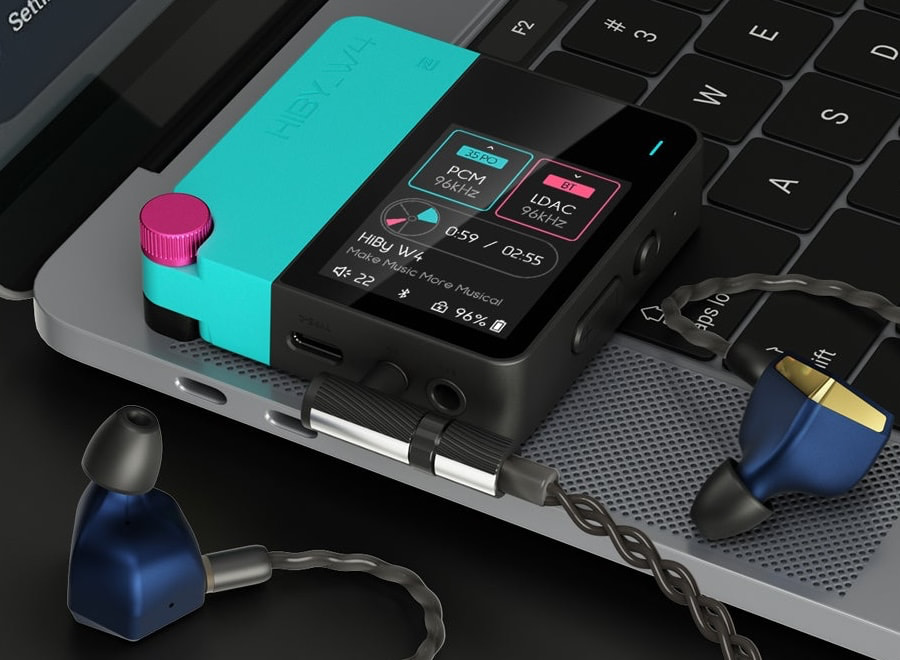
HiBy might not have household recognition in the U.S., but the company isn’t exactly new to this game. With 15 years of experience building digital audio players and portable electronics, and a HiByMusic app ecosystem that spans 100 countries with more than 3 million users on iOS and Android, the brand has quietly built serious infrastructure behind the scenes. Now it’s aiming a little more directly at the portable DAC and headphone amplifier crowd with the release of the HiBy W4.
The W4 is a Bluetooth enabled portable DAC and headphone amplifier designed to handle both wired and wireless hi resolution playback in one compact chassis. That matters because the appetite for Bluetooth capable DAC and headphone amps that can properly decode hi res formats and deliver enough output for modern IEMs and reasonably efficient headphones continues to grow. We saw that firsthand with the iFi GO Blu Air, which impressed us with its balance of sound quality, usable power, and everyday practicality.
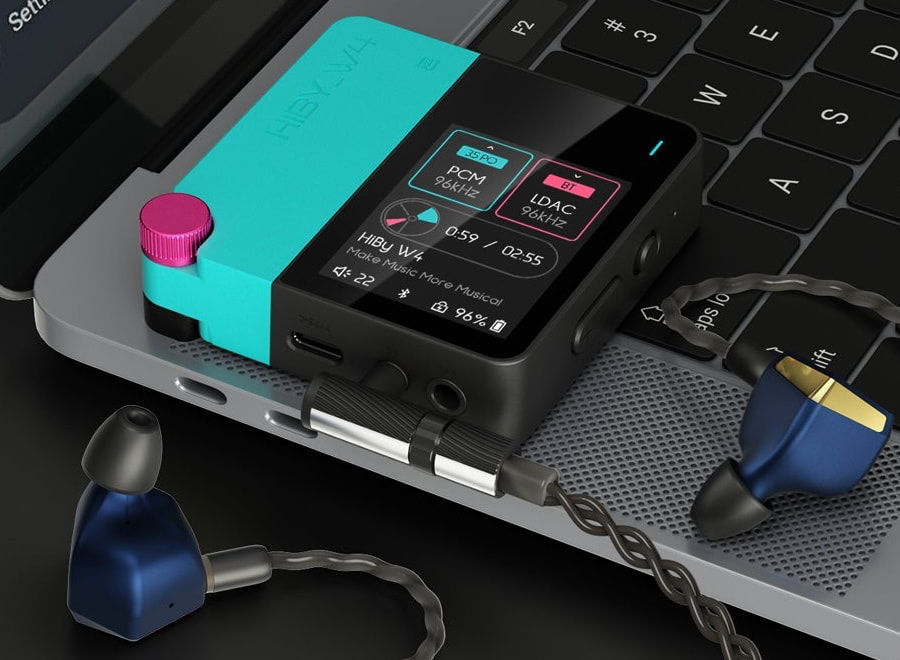
HiBy’s pitch with the W4 is similar in concept: fashionable industrial design, dual mode operation, and enough decoding and amplification muscle to make streaming from a smartphone feel less like a compromise and more like a system choice. Whether it can stand out in an increasingly competitive under $250 portable hi-fi segment is the real question.
The HiBy W4 features a flexible physical design that supports both clip on use and magnetic attachment for on the go listening. Its integrated magnetic system allows it to attach directly to compatible smartphones or MagSafe style phone cases, functioning much like a MagSafe accessory for a cleaner, cable managed setup.
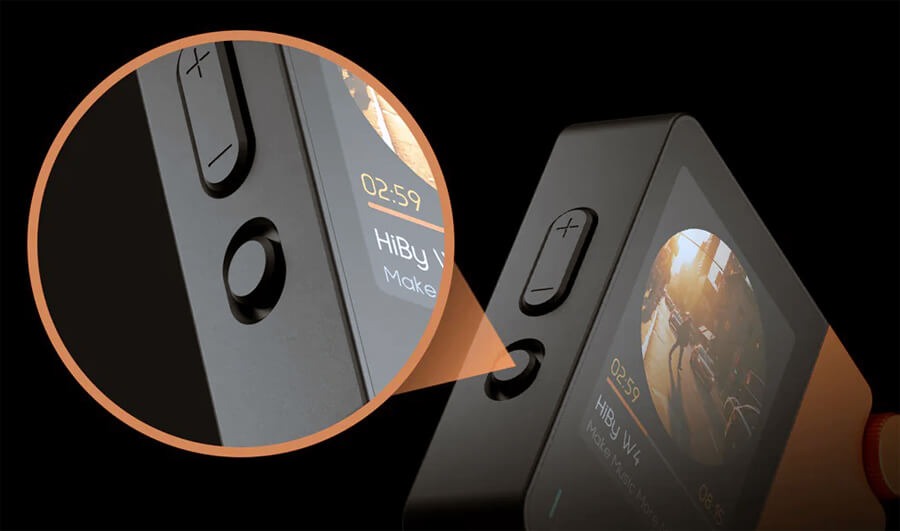
The W4’s Uncharge Mode shifts the power source to USB operation, isolating the unit from the connected smartphone so it does not draw from the phone’s battery. In addition to preserving battery life, this separation can also help reduce electrical interference from the handset.
The W4 includes a built in 1500 mAh battery to support extended playback sessions, and Uncharge Mode is engaged using a dedicated button located on the left side of the chassis.
On the inside, the HiBy W4 has dual Cirrus Logic CS43198 DAC chips, paired with dual headphone amplifiers. The DACs support PCM up to 768kHz/32-bit and native DSD512.
The HiBy W4 employs dual low phase noise active crystal oscillators operating at 45.1584 MHz and 49.152 MHz to support more accurate clocking and stable audio playback across common sampling rates.
Connectivity includes both 3.5 mm single ended and 4.4 mm balanced stereo outputs. In balanced mode, the W4 delivers up to 475 mW of output power, driven by dual SGM8262 amplifier chips. That is a substantial figure for a device in this category and nearly double the balanced 4.4 mm output we measured from the iFi GO Blu Air. It provides enough headroom for a wide range of in ear monitors and many relatively efficient over ear headphones, giving the W4 more flexibility than ultra sensitive IEM duty alone.

For wireless performance, the HiBy W4 incorporates a Qualcomm QCC5181 chipset, supporting Bluetooth 5.4, with codec support for Snapdragon Sound, aptX Adaptive, aptX Lossless, aptX HD, LDAC, AAC, and SBC.
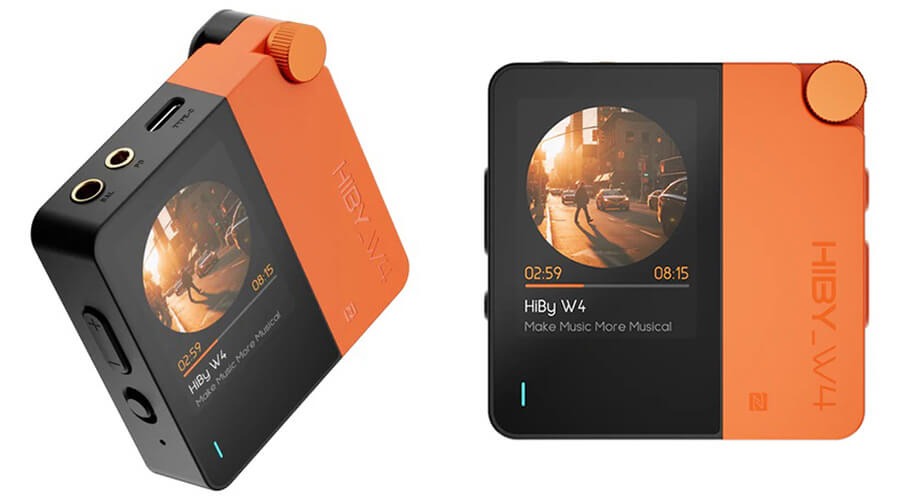
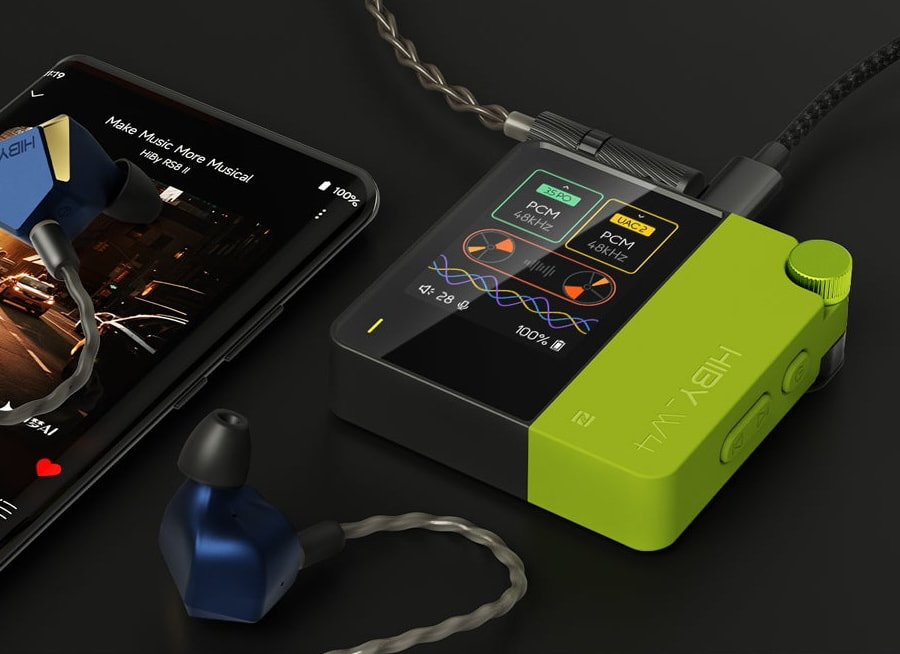
The HiBy W4 is positioned as a stylish everyday carry accessory, pairing a black front display with a contrasting, brightly colored rear module that makes it stand out at a glance.
A 2-inch touch screen provides full device control and can display album artwork when operating in Bluetooth mode. Users can manage pairing, playback, and system settings directly from the W4 itself, reducing the need to constantly reach for a smartphone and creating a more self contained, user friendly experience.
HiBy W4 Specifications
| HiBy Model | W4 |
| Product Type | Portable HiFi Bluetooth Headphone Amplifier |
| Price | $99 |
| Body Materials | Aluminum Alloy + ABS |
| Bluetooth Chip | QCC5181 |
| DAC | Dual CS43198 |
| Supported Audio Specifications | DSD512, PCM 768kHz |
| Bluetooth Version | 5.4 |
| Bluetooth Codec Support | aptX Adaptive,aptX lossless, aptX-HD, aptX, LDAC, AAC, SBC |
| Bluetooth Range | 10 Meters |
| USB Input | Yes |
| Control Methods | Touch Screen, Physical Buttons, Voice Prompt |
| Headphone Jacks | 3.5mm (CTIA Standard)
4.4mm Balanced Jack |
| Microphone | Supported via 3.5mm Headphone Jack |
| cVc Noise Reduction | Supported via 3.5mm Headphone Jack |
| Remote Control | Supported via 3.5mm Headphone Jack |
| NFC (Near Field Communication) | Yes |
| Power Follow Mode | Yes |
| Battery Capacity | 1500 mAh |
| Battery Life | 3.5mm: 6.3 hours
4.4mm: 5 hours Continuous AAC Playback |
| Dimensions (excluding clip) | 66.15 x 65.1 x 21.5 mm
2.06 x 2.56 x 0.85 inches |
| Weight | 93.3 Grams / 3 ounces |
| Color Options | White, Orange, Cyan, Black, Yellow, Green |
The Bottom Line
There is no shortage of portable Bluetooth-enabled DAC/AMPs, and the category now stretches from basic sub-$100 dongles to feature-heavy models approaching $1,000. At $99, the HiBy W4 lands at the aggressive low end of that spectrum but brings a feature set that is not typical at this price.
Support for aptX Lossless and LDAC gives it legitimate hi-res wireless credibility, while dual oscillators, balanced 4.4mm output rated at up to 475mW, and a built-in 1500mAh battery push it beyond entry-level expectations. The integrated 2-inch touch screen also sets it apart from competitors like the iFi GO Blu Air, which relies entirely on a smartphone for visual feedback and navigation. Some listeners may prefer controlling everything from their phone anyway, especially when switching between streaming platforms, but the W4 at least gives users the option of direct, on-device control without guesswork.
Add in the magnetic MagSafe-style attachment, clip-on portability, and a Car-Optimized Mode accessible through the HiByBlue app, and the W4 starts to look less like a budget experiment and more like a calculated move into the mainstream portable hi-fi space.
Who is this for? Smartphone listeners who want true hi-res Bluetooth support, enough power for serious IEMs and efficient headphones, and a self-contained interface without spending several hundred dollars. At $99, it is positioned squarely for commuters, students, travelers, and anyone building a compact everyday-carry audio setup without sacrificing codec support or balanced output. That is a hard combination to ignore at this price.
Price & Availability
The HiBy W4 is available for $99 USD via HiBy’s official online store and Linsoul.
Related Reading:
Continue Reading
Or maybe you saw the clips of the 20-year-old creator — alongside Andrew Tate and white nationalist Nick Fuentes — dancing to Kanye West’s “Heil Hitler” at a Miami nightclub.
Or maybe you have no idea what any of this means.
The internet subculture known as looksmaxxing, has recently jumped from obscure message boards into the mainstream — thanks in part to a 20-year-old creator who goes by Clavicular.
Clavicular’s real name is Braden Peters. And he’s not just posting about skincare routines or plastic surgery. Peters recently weighed in on the 2028 presidential election, arguing that if the race were between California Gov. Gavin Newsom and Vice President JD Vance, Newsom would win for one simple reason: He’s more attractive.
To understand how appearance, politics, and online extremism are brewing in this corner of the internet, Today, Explained co-host Noel King spoke with Atlantic staff writer and host of the podcast Galaxy Brain, Charlie Warzel.
Below is an excerpt of their conversation, edited for length and clarity. You can hear the full episode wherever you get podcasts — including Apple Podcasts, Pandora, and Spotify.
Clavicular is a young man — he’s in his 20s. He started posting on the internet as a teenager, around when he was about 15 years old, on these looksmaxxing forums, which are forums that are dedicated to making yourself as aesthetically perfect as humanly possible through body modification.
Clavicular basically toiled in obscurity for a really long time until he allegedly hit someone with his Cybertruck while he was live streaming on Christmas Eve of this past year.
Who are the looksmaxxers?
The looksmaxxers are complicated because they overlap with lots of other communities online. There’s the involuntarily celibate community, known as incels, that have links to violent extremism. But really there’s this core feeling in looksmaxxing that the only thing that matters in all of life is how good you look, that that is tied to your self-worth in every way, and that what you should be doing is trying by all means necessary — whether that is breaking bones in your body, whether that is chewing on a rubber ball for hours a day — to get your jawline to be straighter. To get a leg up, you need to do that because the best thing that you can do is go out in the world and look better than everyone else and document the heck out of it.
What do we know about what Clavicular has done to himself?
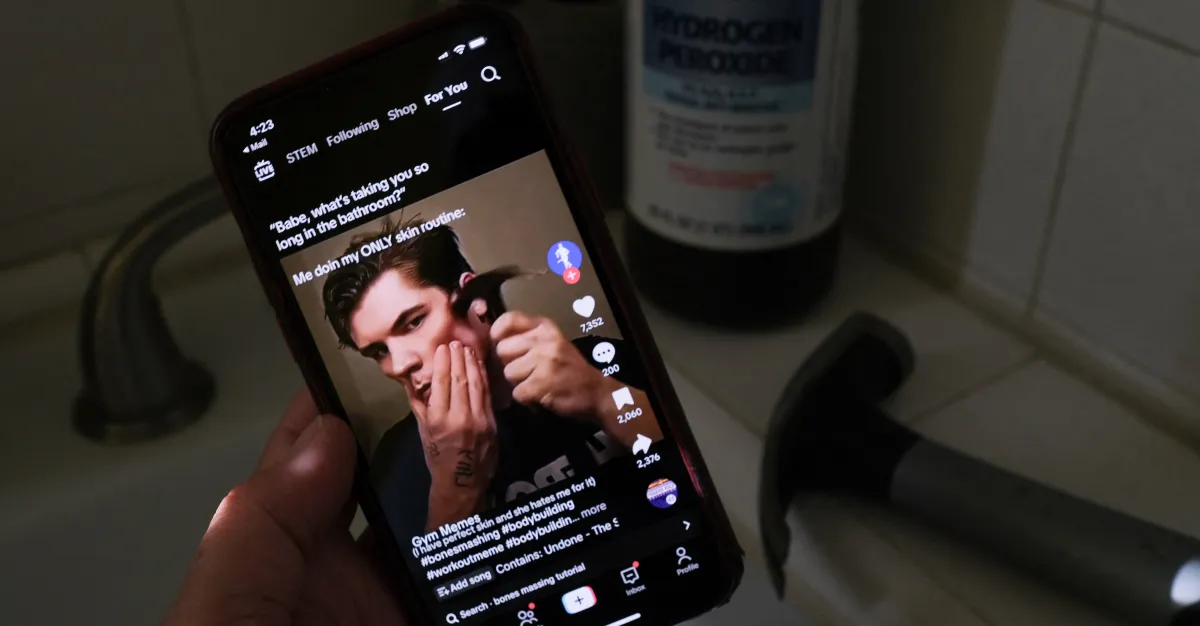
He has said on various podcasts, etc., that he has smashed his face with a hammer. The theory there is that when your bones break, they grow back stronger.
And so he has smashed his face, his jawline, in order to strengthen it to make it look better. He started, according to him, taking testosterone when he was around 14 or 15 years old in order to speed up his puberty and get his body looking like an adult. He’s said he’s taken methamphetamines in order to hollow out his cheeks.
The looksmaxxers have their own language, which I find very compelling. Can you define a couple of the terms?
“These guys are extremely effective attention hijackers, and that is important.”
Mogging is looking better than someone looking hot. And actually what I found is it’s a sort of an acronym, but it stands for alpha male of the group, [shortened to] male of the group — MOG.
There’s all kinds of words that they’re just making up on the spot too, like jestermaxxing, which is being jocular, jovial, having fun.
What is the objective of being hot? What is the purpose of all this?
It is social dominance really, or just dominance in general. This idea of mogging comes from this alpha male of group acronym: The “alpha” part of that, and the “male” part of that are both extremely important. And so going out in public as an extremely hot person is not just to show how beautiful you are, but it’s to be dominant over other people. You want to make other people look bad. You want them to feel bad about themselves based on how unbelievably attractive you are, and you also want to basically conquer women.
I’ve read your pieces and I listened to your podcast and there’s a thing that I think you both say directly and kind of dance around, which is…this seems stupid, but it isn’t actually stupid. Explain what you mean.
I think it’s stupid on the content level. It’s lacking in substance is how I would put it. There’s the clip of Clavicular, I believe he’s in Miami. He’s with this streamer, Sneako, who’s very popular, and Nick Fuentes, the white nationalist Groyper leader, also a streamer. And they are in a living room somewhere in an apartment and having a conversation that is incredibly stilted, just incredibly vapid. There’s just not a lot being exchanged there.
Clavicular seems to react like he is one of those wind-up dolls. You pull the string and there’s like five different reactions. So one of them’s like, “Hey dude, that’s so based, sick.” And so on the substance level, there’s that.
Then there’s the element of what he means, what that vapid content means, what the popularity of someone like Clavicular means. And I think that that is not stupid. The fact that I’m writing an article about him in The Atlantic because he’s hanging out with these people. The fact that he was able to leverage his popularity into this situation where he is meeting with Andrew Tate, the manosphere influencer. Fuentes, who is influential enough that he’s trying to force the MAGA coalition further towards white nationalism. That he’s able to go into a club with these guys and get them to play the Ye song, “Heil Hitler,” and turn that into this viral moment that then gets the mayor of Miami to have to react to it, to condemn it, to basically apologize on behalf of the city for letting this happen. These guys are extremely effective attention hijackers, and that is important.
Inspired by the super-popular anime and manga series Bleach, Type Soul is a Roblox game where players can roleplay as one of three main character races, each with unique abilities and progression systems. However, while the game offers an amazing experience, its complex game mechanics, races, and weapons can be overwhelming for new players. That’s where the Trello Board comes in.
What Is the Type Soul Trello Link?
The Type Soul official Trello board is your go-to destination for everything about the game. The developers update and revamp the game regularly to keep the experience fresh and fun for players. The Trello board is rich in detailed information, ranging from gameplay mechanics to guides and updates, to help players maximize their experience.
To remain up to date with these changes, the developers created a new Trello board, and it is named “Type Soul Info V2.” This one retains all the new mechanics, features, and strategies in an easily accessible manner to the community. The most amazing thing about this Trello board is that there is no complex verification process to see it.
Inside the Trello Board
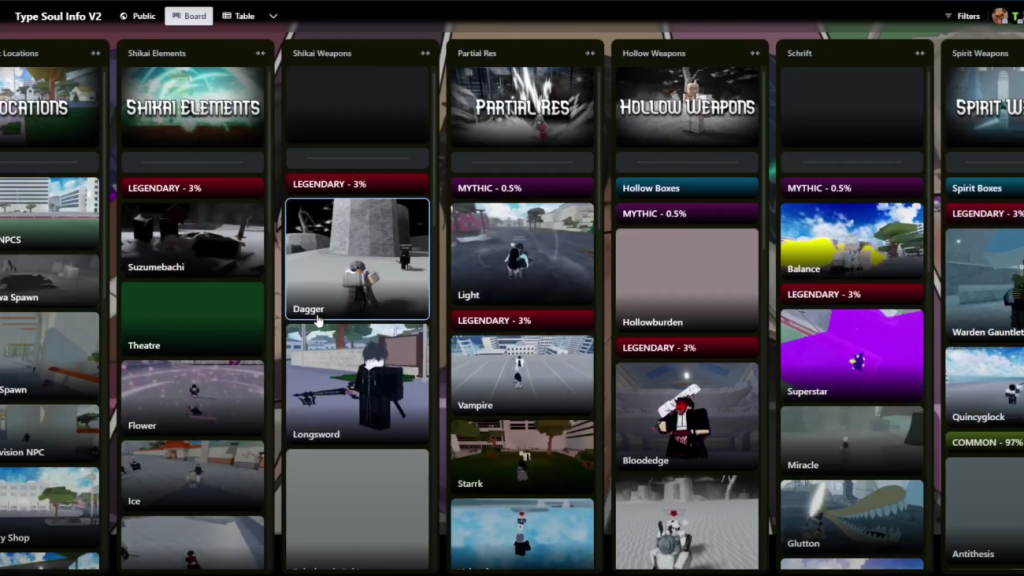
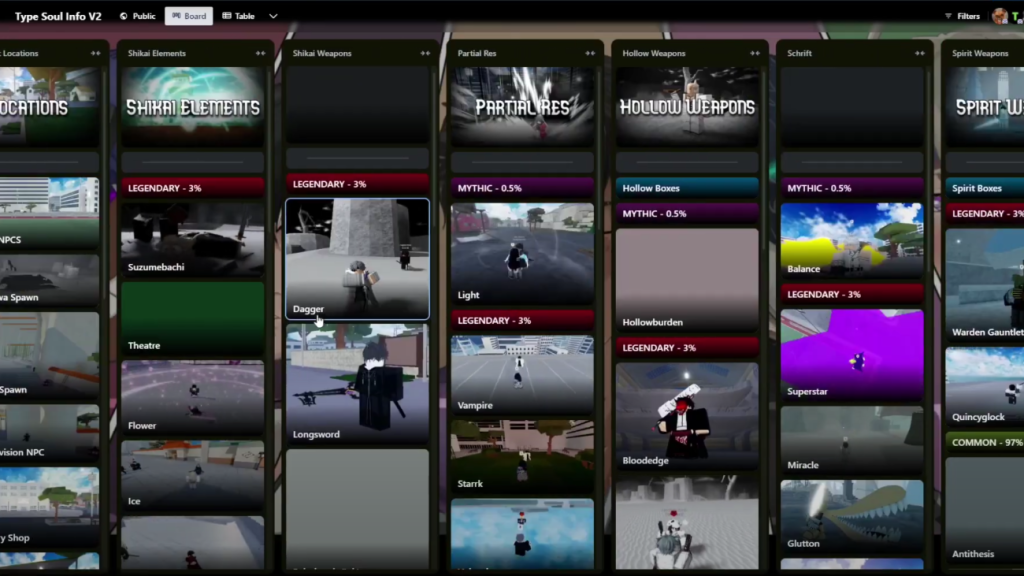
The Type Soul Trello V2 board simplifies your gameplay. It provides step-by-step instructions for selecting your class: Soul Reaper, Hollow, or Quincy, and browsing the skill trees and the weapon systems. The board also contains more in-depth info on the game mechanics, which makes it easy for you to master raids, unlock strong Shikai, and get rare Essences.
One of the highlights is its item categorization, which organizes loot boxes and other items by rarity. In addition, the board links to useful game materials, and there is a Q&A section to answer all your questions about Type Souls. With its full-page size, this board is an essential guide for each player.
Also, make sure to redeem the latest Type Soul Codes to enhance your gameplay and gain valuable in-game items.
Type Soul Discord Link
The Type Soul Discord server is your gateway to the game world and its creators. It’s where you can chat with other players, exchange tips, and get the latest news and announcements. It’s also where you can ask questions, exchange tips, or find raid and event groups. Developers also post significant news and updates, so you never miss a step. Don’t miss this handy resource!

The 2026 Winter Olympics come to an end this weekend. This year’s Closing Ceremony theme is “Beauty in Action.” The event will feature appearances from musician and DJ Gabry Ponte, actress Benedetta Porcaroli, and ballet dancer Roberto Bolle. Alfredo Accatino, the ceremony’s artistic director, has promised the ceremony will “begin with lots of colors and end with a party.”
The ceremony will kick off today at 2:30PM ET on NBC and Peacock. An encore broadcast will air on NBC at 9PM Here’s everything you need to know to watch the 2026 Milan Cortina Olympics Closing Ceremony. (And as we close out the Winter Games, here’s a look at the final medal count, too.)
How to watch the Closing Ceremony at the 2026 Winter Olympics

Date: Sunday, Feb. 22
Time: Airs live at 2:30PM ET; primetime re-air at 9PM ET
Location: Verona Arena, Verona, Italy
TV channel: NBC
Streaming: Peacock, DirecTV, NBC.com and more
Olympics Closing Ceremony start time
The ceremony will kick off at 2:30 PM ET on Sunday afternoon. An encore broadcast will also air on NBC at 9PM ET/PT.
How to watch the Closing Ceremony live for free
There are a couple of ways to watch the 2026 Milan Cortina Winter Olympics Closing Ceremony on Sunday, Feb. 22. You can tune in live Sunday afternoon on NBC or stream live on Peacock, or catch the encore broadcast on NBC, which is available with DirecTV, Hulu + Live TV, and more.
Peacock is the streaming home of the 2026 Olympics.
While a regular Peacock subscription begins at $10.99 for a Premium Plan and goes up to $16.99 for the ad-free Premium Plus plan, you can get an ad-supported subscription for free if you’re a Walmart+ subscriber.
Walmart+ members actually get their choice between Paramount+ or Peacock included in their membership at no additional cost. A monthly subscription to Walmart+ costs $12.99, and an annual plan usually costs $98. But you can try the service out totally free. Beyond free Peacock, Walmart+ has additional perks like five free months of Apple Music, discounts on Cinemark movie theater memberships, free shipping and delivery on Walmart purchases, discounts on gas and much more.
Instacart+ subscribers are able to get an annual Peacock Premium plan (a $109.99 value) for free. After a free 14-day trial, Instacart+ plans cost $99/year, meaning you’ll save more on Peacock simply by subscribing to the delivery service, but you’ll get tons of extras, like free grocery and restaurant delivery and a free subscription to the New York Times Cooking app.
DirecTV’s Entertainment tier gets you access to loads of channels where you can tune in to college and pro sports, the Winter Olympics and more. Channels include ESPN, TNT, ACC Network, Big Ten Network, CBS Sports Network, and, depending on where you live, local affiliates for ABC, CBS, Fox and NBC.
Whichever package you choose, you’ll get unlimited Cloud DVR storage and access to ESPN+’s new streaming tier, ESPN Unlimited.
DirecTV’s Entertainment tier package is $89.99/month. But you can currently try all this out for free for five days. If you’re interested in trying out a live-TV streaming service for football season but aren’t ready to commit, we recommend starting with DirecTV.
More ways to watch the closing ceremony without cable
You can watch the ceremony live or on demand on Peacock as well as on NBC.com, NBCOlympics.com and the NBC app.
For $11/month, an ad-supported Peacock subscription lets you stream live sports and events airing on NBC, including the 2026 Winter Olympics. Plus, you’ll get access to thousands of hours of shows and movies, including beloved sitcoms such as Parks and Recreation and The Office, every Bravo show and much more.
For $17 monthly, you can upgrade to an ad-free subscription that includes live access to your local NBC affiliate (not just during designated sports and events) and the ability to download select titles to watch offline.
Who is performing at the Closing Ceremony?
Italian musician and DJ Gabry Ponte is one of the headliners. Other confirmed performers include Italian actress Benedetta Porcaroli and Italian ballet dancer Roberto Bolle. Expect to see another parade of athletes, the flag handover to the 2030 Olympic hosts from France, and the ceremonial extinguishing of the Olympic flame.
Where is the Closing Ceremony being held?
The 2026 Winter Olympics Closing Ceremony will be held at the Verona Arena in Verona, Italy.

The Artemis 2 launch is edging closer as NASA has now set a target date for the 10-day mission to get underway. The agency is aiming to launch as soon as March 6 following a successful wet dress rehearsal on Thursday. The first attempt, which took place in early February, failed due to a hydrogen leak.
During Thursday’s rehearsal, NASA was able to fuel the Space Launch System (SLS) rocket with more than 700,000 gallons of liquid propellant and complete two runs of terminal count — the final step of the launch countdown — at the Kennedy Space Center in Florida. While there was a hiccup due to a loss of ground communications, NASA was able to move to a backup system before the regular comms channels were back in operation. The agency said engineers pinpointed the equipment that caused the problem.
“Following that successful wet dress yesterday, we’re now targeting March 6 as our earliest launch attempt,” Dr. Lori Glaze, NASA’s Moon to Mars program manager, said at a press conference on Friday. Glaze added that there’s still much that has to be done before launch, including an analysis of the wet dress, a flight-readiness review and work on the launch pad.
The four Artemis 2 astronauts are expected to go into quarantine later on Friday in preparation for the launch, which will mark the Orion spacecraft’s first crewed mission. It will be the first time in more than 50 years that a crew will travel around the Moon and it will be humanity’s furthest-ever journey into space. The astronauts will test Orion’s critical life support systems as a precursor to lunar landings.

Updated February 2026: We’ve added a new section on caring for down and some notes on Outdoor Vital’s Zero Stitch fabric.
What Does Down Fill Power Tell You?
The higher the fill power, the greater the loft. Down puffer jackets and sleeping bags keep you warm by trapping the warmth coming off your body, retaining it in air pockets between the down. A higher down fill power means the down has more loft, which means there are more air pockets, which means that more heat is retained. If everything else is equal, that means that a higher fill power garment will be warmer than one with a lower fill power.
Unfortunately, everything else is never equal. Fill power alone is not enough information to know how warm something will be. There is no direct correspondence between fill power and how warm a product will keep you, because there are many other factors to consider, like how much of that fill is in the product, how well it can expand within the baffles or down chambers, how well does the fabric stop the wind, and so on.
To know how warm a down jacket, sleeping bag, or comforter will be, you need to know at least one other number: the fill weight.
What Is Down Fill Weight?
.jpg)
Photograph: Tatiana/Getty Images
Down fill weight is a simple number. It’s the amount of down in the product, usually measured in ounces or grams. Using down fill weight and down fill power together can give you way to compare two items. For example, the relative ability of a puffer jacket to retain heat can be estimated by multiplying the fill power by the fill weight. This means that a 900 fill power jacket with 2 ounces of fill weight will be able to trap about the same amount of heat as a 600 fill power jacket with 3 ounces of fill weight. The big difference between them, and the reason they are priced differently, is the weight of each and the packed size.
In jackets, the weight difference isn’t huge. This is why some of our favorite puffer jackets are 600 fill power. When it comes to sleeping bags, though, things are different. Since there is a lot more down in a sleeping bag, the weight difference between equivalent amounts of fill power is more significant. Unless your budget is unlimited, you’ll want to pay attention to the warmth-to-weight ratio. How much warmth do you need, and how much weight do you mind carrying?
The one downside to down fill weight is that some manufacturers don’t list this. It sounds great to say your puffer jacket as 900 fill power down, but when you have to list that it only has 2 ounces of it, it sounds less impressive. Less reputable companies often don’t advertise the fill weight. We list fill weight of all the jackets we test.
Other Factors to Consider

Courtesy of REI
While down fill power and down fill weight together give us a way to compare items, there are other things to consider to get an idea of overall warmth. The third major factor is the baffles, the compartments that are built into the product. If you just sewed up a single piece of nylon as a shell and shoved some down inside, gravity and movement would push it all down near the hem in a matter of minutes. To avoid this, garment makers add baffles to keep the down in place. Baffle type and shape play a big part in how warm your jacket, sleeping bag, or comforter ends up being.
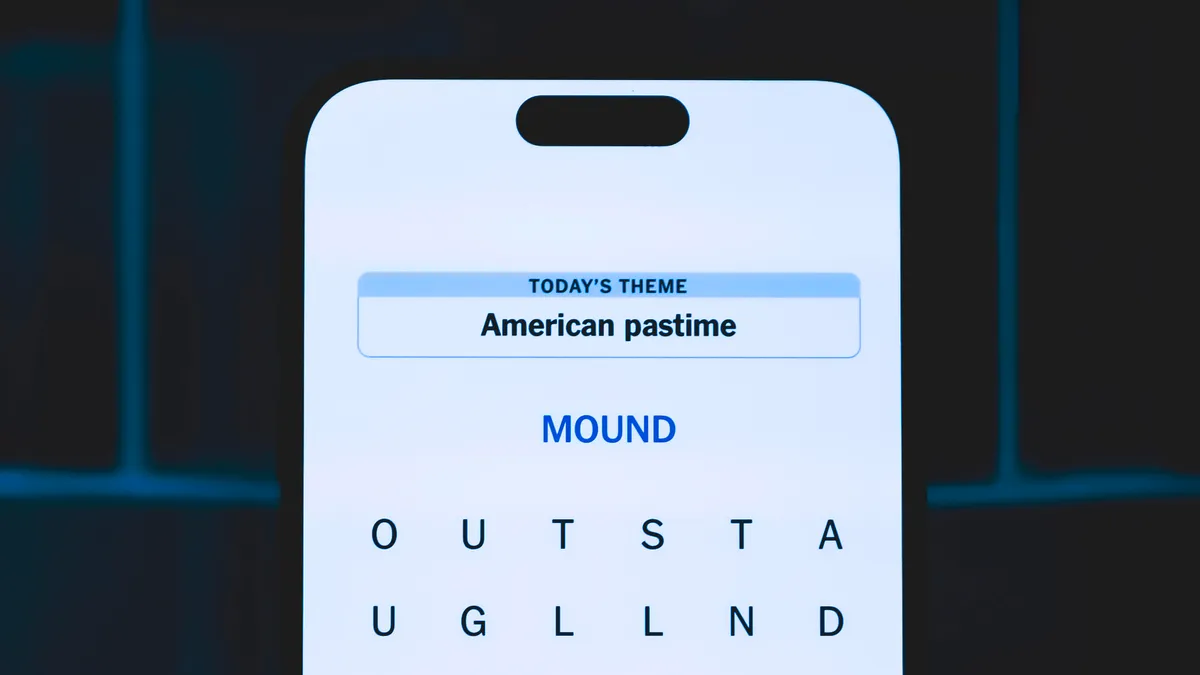
Looking for the most recent Strands answer? Click here for our daily Strands hints, as well as our daily answers and hints for The New York Times Mini Crossword, Wordle, Connections and Connections: Sports Edition puzzles.
Today’s NYT Strands puzzle is a pretty easy one, if you’re a fan of a certain major sporting event that’s been going on this month. Some of the answers are difficult to unscramble, so if you need hints and answers, read on.
I go into depth about the rules for Strands in this story.
If you’re looking for today’s Wordle, Connections and Mini Crossword answers, you can visit CNET’s NYT puzzle hints page.
Read more: NYT Connections Turns 1: These Are the 5 Toughest Puzzles So Far
Hint for today’s Strands puzzle
Today’s Strands theme is: Olympics wrap-up.
If that doesn’t help you, here’s a clue: Arrivederci, Milano Cortina!
Clue words to unlock in-game hints
Your goal is to find hidden words that fit the puzzle’s theme. If you’re stuck, find any words you can. Every time you find three words of four letters or more, Strands will reveal one of the theme words. These are the words I used to get those hints but any words of four or more letters that you find will work:
- DEAL, FLAP, HALT, THEM, GLAM, FADE, FLAM, THEN, THAT, CLAP, DEAR, CLOSE, CLOSED
Answers for today’s Strands puzzle
These are the answers that tie into the theme. The goal of the puzzle is to find them all, including the spangram, a theme word that reaches from one side of the puzzle to the other. When you have all of them (I originally thought there were always eight but learned that the number can vary), every letter on the board will be used. Here are the nonspangram answers:
- FLAG, FLAME, MEDAL, ANTHEM, PARADE, ATHLETE
Today’s Strands spangram
The completed NYT Strands puzzle for Feb. 22, 2026.
Today’s Strands spangram is CLOSINGCEREMONY. To find it, start with the C that’s two letters to the right on the top row, and wind around in the shape of a torch.
Tech
iFi GO Blu Air review: the Bluetooth DAC that’s no bigger than a battery and works so very, very hard to level up your music
Why you can trust TechRadar
We spend hours testing every product or service we review, so you can be sure you’re buying the best. Find out more about how we test.
iFi GO Blu Air: Two-minute review
The iFi GO Blu Air is a solution to tech firms taking away headphone jacks: it enables you to connect your wired headphones to Bluetooth streaming sources, and it features a 4.4mm balanced and a 3.5mm standard headphone output. It’s impressively powerful and runs for up to 10 hours between charges, delivering excellent bass and a spacious sound stage that’s particularly enjoyable on well produced music.
As we’ve come to expect from iFi, the GO Blu Air is well made, does exactly what it sets out to do and won’t break the bank. It sounds great and is surprisingly powerful for such a small device, but its small size and low price means it lacks some features of rivals such as a display, on-board EQ and USB DAC functionality. It’s emphatically one of the best portable DACs provided you don’t need that wired connectivity.
iFi GO Blu Air review: Price and release date

- Released August 2025
- Priced $129 / £129 / AU$229
The iFi GO Blu Air Bluetooth DAC was launched in August 2025 and is available now. In the UK its recommended retail price is £129; in the US it’s $129; and in Australia it’s AU$229.
The GO Blu Air is cheaper than its predecessor, the iFi GO Blu: that model was $199 / £199 / AU$399. A lower-priced model is a smart move in a sector that’s becoming increasingly competitive.
iFi GO Blu Air review: Features

- Up to 24-bit/96kHz over Bluetooth
- Cirrus Logic Master Hi-Fi DAC
- “S-balanced” 3.5mm and balanced 4.4mm outputs
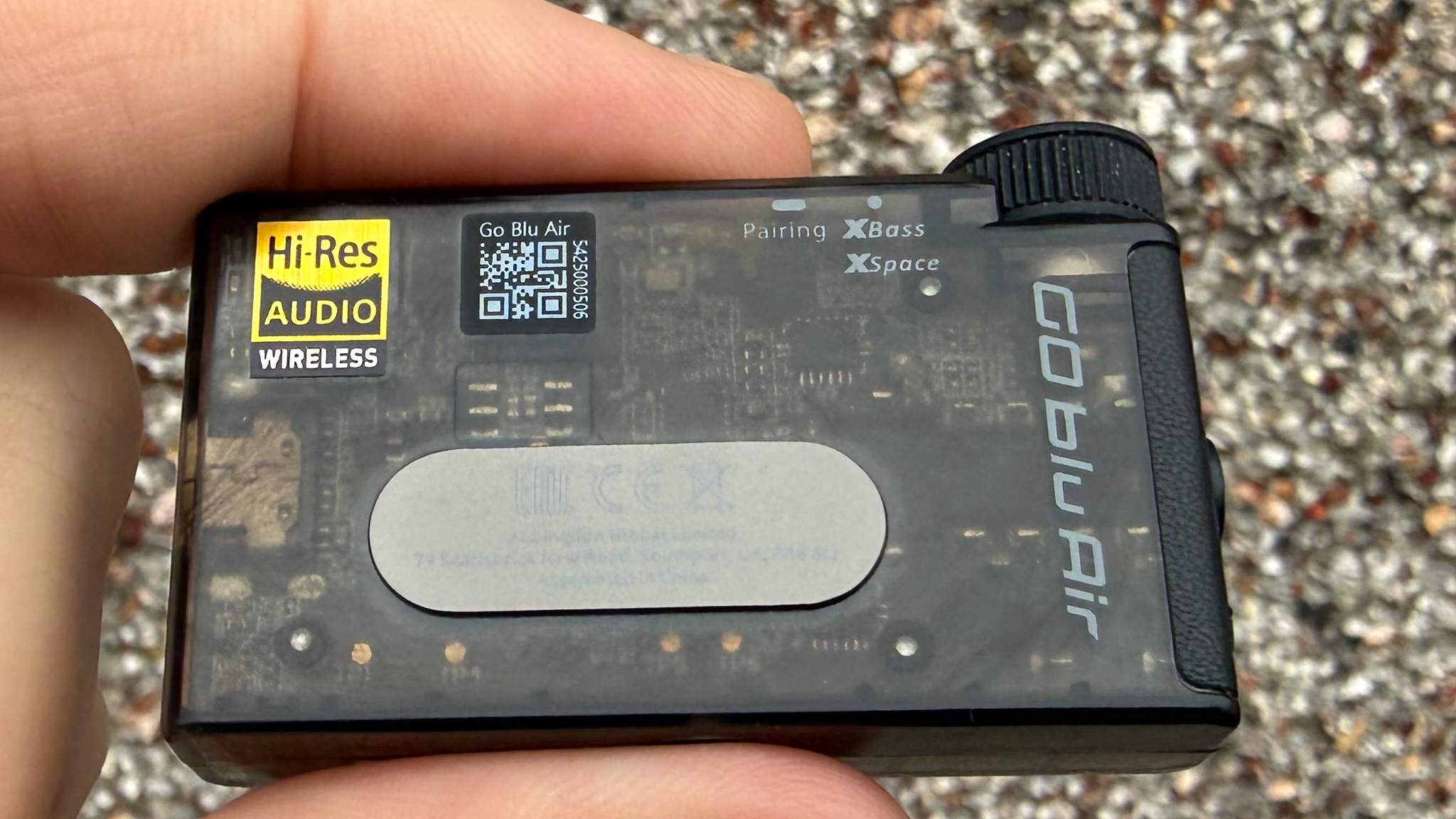
The iFi GO Blu Air is based around a Cirrus Logic Master Hi-Fi DAC and features iFi’s own XBass bass expansion and XSpace audio expander. There are also standard and minimum phase digital filter options to shape the sound further.
The headphone outputs deliver up to 165mW into 32 ohms on the 3.5mm out and up to 262mW into 32 ohms on the balanced output. iFi calls the 3.5mm output “S-balanced”, with dual-mono headphone amplification all the way to the output socket. You can read iFi’s tech note about it, but essentially the company says it’s particularly useful for ultra-sensitive IEMs. SNR (or signal-to-noise ratio) on both outputs is a highly respectable ≥110dBA and battery life is up to 10 hours via the internal 450mAh battery, dropping to about 7.5 hours if you’re using the LDAC codec. Recharging takes less than an hour.
The iFi GO Blu Air has Bluetooth 5.2 (up from the 5.1 of the GO Blu) with LDAC, LDHC and aptX Classic, aptX HD and aptX Adaptive as well as the obligatory AAC and SBC codecs. It supports resolutions of up to 24-bit/96kHz. Unlike the previous GO Blu the USB-C port is purely for charging; this model doesn’t double as a wired DAC.
Features score: 4 / 5
iFi GO Blu Air review: Sound quality

- Tons of fun on IEMs and over-ear headphones
- No on-board EQ to tame high-end harshness
- Audio enhancers are subtle but effective
The iFi GO Blu Air is a lot of fun with both headphones and IEMs, delivering an inviting soundstage and excellent clarity from a range of audio sources. It’s particularly good on well-produced, spacious tracks such as Bob Marley’s Could You Be Loved, Peter Gabriel’s Shaking The Tree, Christine and the Queens’ Tilted or The Blue Nile’s Tinseltown in the Rain, delivering a consistently enjoyable, revealing and dynamic listen.
The GO Blu Air doesn’t have its own equaliser, and I did find myself reaching for software EQ when I listened to fairly trebly recordings such as Junior Varsity’s Cross The Street, Sugar’s Changes and Kygo & Selena Gomez’s It Ain’t Me: getting the bass to smile-inducing levels in my IEMs made their high frequencies a little too prominent for my taste, although that was less of an issue in my less excitable over-ear headphones.
I’m wary of bass and space enhancement options as they often color the sound in too-noticeable ways, but I was pleasantly surprised by both XBass and XSpace here. Their effects are subtle, with the former adding a little more low end that gave my open-back headphones more of a closed-back punch without introducing distortion at sensible listening levels, overpowering the other frequencies or overly changing the sound. XSpace impressed me too, making the likes of Talk Talk and acoustic music more subtly spacious.
Sound quality: 5 / 5
iFi GO Blu Air review: Design

- Similar to GO Blu but more plasticky
- 3.5 x 33.7 x 19.5mm (WxHxD) and just 30g
- Magnetically attached clip is surprisingly strong
I’d suggest that the Air looks a little less premium than the GO Blu, but I’m not a fan of that model’s rather 1970s-cigarette-lighter appearance – and if a slightly more plastic appearance is part of the reason why the new model is cheaper, I’m all in favor.
The GO Blu Air is very compact at 3.5 x 33.7 x 19.5mm (2.11 x 1.33 x 0.77”) and it weighs 30g. There is a single rotary volume/transport controller, which iFi calls the ChronoDial, on the right. The dial is multi-mode: turn it to adjust the volume, press to play, pause or skip, and long-press to activate your phone’s voice assistant. Below the dial is a button for enabling or disabling Xbass and Xspace, for setting the digital filter and for Bluetooth pairing; on the other side there’s a single button for power on/off and Bluetooth format announcement. Up top you’ll find a 4.4mm balanced headphone output and a 3.5mm output plus the status light for Xbass, Xspace and Bluetooth.
One of the design features I like is the detachable magnetic clip, which saves you having to buy a clip-on case: you can use the clip to attach the GO Blu Air to your clothing, bag or belt. I’d like it even more if I could use the magnet to clip the GO Blu Air to the back of my phone; I did try, but while it does attach it’s not strong enough to clamp through my phone’s case.
Design score: 4 / 5
iFi GO Blu Air Review: Usability and setup
- Effortless Bluetooth pairing
- No display: color status lights instead
- Remembering what buttons do is hard at first
It’s very easy to set up the GO Blu Air: simply switch it on and it enters pairing mode the first time you use it. You can then connect it in your device’s Bluetooth settings and you’re good to go.
The lack of a display is understandable in such a small device, but it does mean trying to remember what the status light colors mean and which button does what can be tricky. It doesn’t take long to learn but the inclusion of a pocket-sized quick start guide comes in very handy.
Whether you’re working from the guide or from memory it’s all straightforward: single button presses take you from no enhancement to XBass only, to XSpace only, and to both XBass and XSpace; a spin of the ChronoDial adjusts the volume while a short click takes care of play/pause and a longer click skips to the next track.
Usability and setup score: 4 / 5
iFi GO Blu Air review: Value
- Competitively priced but some rivals have higher spec
- Previous model is now discounted so price gap is smaller
- A good buy if you don’t need a USB DAC
If the lack of a USB DAC isn’t a deal-breaker this is a very good Bluetooth dongle for a very good price. But it’s a very competitive market, and I’d suggest looking at some alternatives too – including the GO Blu Air’s predecessor.
The GO Blu Air is effectively a GO Blu without the USB DAC and as a result it has a significantly lower price tag, but at the time of writing I found the original GO Blu discounted to just under £169 so there’s less of a price gap than the two devices’ MSRPs suggest.
Value score: 4 / 5
Should I buy the iFi GO Blu Air?
Swipe to scroll horizontally
|
Attributes |
Notes |
Rating |
|---|---|---|
|
Features |
Bluetooth-only with all the key aptX options plus LDAC too. 3.5mm and 4.4mm balanced outputs. |
4/5 |
|
Design |
A little plasticky-looking and too small to have a screen, but it’s exceptionally small and light with a great magnetic clip |
4/5 |
|
Sound quality |
Tons of fun with a spacious soundstage and useful enhancers |
5/5 |
|
Value |
Competitively priced but up against very strong rivals |
4/5 |
Buy it if…
Don’t buy it if…
iFi GO Blu Air review: Also consider
The iFi GO Link USB DAC is an excellent and affordable wired headphone DAC, and if you want USB and Bluetooth capabilities the GO Blu is still available and often discounted.
The key rivals here include FiiO’s KA13 and BTR15. The former is a screen-free wired USB DAC and the latter is both USB and Bluetooth. It’s marginally cheaper than the iFi: at the time of writing the BTR15 is £114 in the UK, $119 in the US and $219 in Australia.
How I tested the iFi GO Link Max
- TIDAL, hi-res music files, vinyl and Logic Pro projects
- Beyerdynamic and Philips over-ears and SoundMagic IEMs
I tested the GO Blu Air over two weeks with a variety of headphones and IEMs including Beyerdynamic DT990 Pro and Philips Fidelio X2HR open-back headphones, Beyerdynamic DT770 closed-back headphones, and SoundMagic E11C IEMs.
I connected the GO Blu Air to a Samsung Galaxy S25 for hi-res streaming services over LDAC and listened to locally stored lossless audio and my own multitrack Logic Pro X projects via AAC from my MacBook Pro. I also connected my Audio-Technica turntable, which transmits aptX.

Advanced monitoring is becoming standard because modern facilities are judged on outcomes—air quality, uptime, safety, energy performance, and documented response—not on whether a checklist was completed last week. Ventilation and indoor air quality expectations are formalised through recognised standards, and newer editions increasingly emphasise controls, performance, and operations, which push organisations toward measurable, continuous data.
The changing risk profile (visibility is now a liability issue)
Facilities today are dense systems: people, HVAC, access control, OT/IoT, and vendors. The risk surface includes invisible variables (CO₂/ventilation adequacy, particulates, VOCs, temperature/humidity excursions) and failure modes that don’t announce themselves during routine walkthroughs.
ISO 41001 frames facilities management as a management system aimed at the effective and efficient delivery of FM, supporting organisational objectives and consistently meeting stakeholder and applicable requirements—language that aligns naturally with continuous measurement and documented processes.
Summary: Risk shifted from “obvious hazards” to “system behaviour,” and system behaviour requires instrumentation.
Real-time data is an operational requirement (not a dashboard hobby)
Real-time monitoring creates a new operating model: detect → triage → respond → document. That shift matters because it reduces the time between anomaly and action, and it creates auditable records of conditions and responses (useful for regulated sectors and insurer scrutiny).
Where standards are explicit about ventilation and IAQ, the operational burden increases. ASHRAE notes that 62.1/62.2 are recognised standards for ventilation and acceptable indoor air quality, and the 2025 edition highlights additional requirements and control sequences (e.g., demand-controlled ventilation control sequences, emergency control requirements, humidity control requirements).
Summary: Once you’re accountable for continuous conditions, periodic checks no longer scale.
Hardware built for harsh environments (define “rugged” with specs)
In industrial/institutional settings, monitoring often fails at the edges: vibration, dust, washdown, temperature swings, and physical impact. “Rugged computers” should mean measurable environmental tolerance—especially ingress protection.
IEC 60529 defines IP ratings with two digits: the first (0–6) indicates resistance to solid objects/dust, and the second (0–9) indicates resistance to liquids. In practice, this lets you specify hardware for the environment (e.g., dust-heavy warehouses vs washdown production areas) rather than buying consumer mini-PCs and hoping.
When NOT to ruggedise: If the device lives in a conditioned IT closet, you may be paying for durability you don’t need; invest instead in redundancy, power protection, and serviceability.
Summary: Reliability is a system property, and edge hardware specs are part of reliability engineering.
Environmental monitoring beyond compliance (IAQ as performance)
Facilities increasingly monitor more than temperature/humidity: CO₂ as a ventilation proxy, particulates, VOCs, and noise exposure. The point isn’t “more sensors”—it’s closed-loop improvement: correlate excursions with occupancy, HVAC modes, and outcomes (complaints, absenteeism, equipment faults), then adjust operations.
This aligns with how ASHRAE describes 62.1/62.2 as ventilation/IAQ standards and emphasizes updated requirements around filtration, controls, air cleaning, and operations/maintenance—areas where continuous sensing provides feedback rather than guesswork.
Summary: Environmental data is only valuable when it feeds decisions, not when it fills storage.
Integration with BMS (monitoring becomes control)
Monitoring is most valuable when integrated with building management systems (BMS) and incident response workflows. Without integration, you get alerts; with integration, you get controlled response: ventilation adjustments, escalations, and unified incident records.
A practical architecture pattern:
- Sensors (IAQ/asset/environment) → edge gateway → secure message bus
- Analytics/rules engine → ticketing/CMMS + BMS actions (where appropriate)
- Audit layer → immutable logs, retention policy, reporting
Summary: Standalone monitoring is reporting; integrated monitoring is operations.
Behavioural monitoring and policy enforcement (high value, high governance)
Behavioural detection (e.g., vape detectors) can reduce blind spots in low-visibility areas, but it introduces governance requirements: clear purpose, minimisation, retention limits, access controls, and documented response rules.
If you deploy behavioural monitoring, treat it like a policy-controlled safety system—not a surveillance toy. The technical bar should include false-positive management, tamper detection, and a defensible incident workflow.
When NOT to deploy: If you can’t articulate “what action follows an alert” and who is authorised to act, you’ll create noise, distrust, and compliance risk.
Summary: Behavioural monitoring is powerful—but only when paired with governance.
Data-driven maintenance (condition-based beats calendar-based)
Predictive maintenance is the economic engine behind monitoring adoption. If you can detect drift (fan performance, vibration anomalies, temperature rise, runtime patterns) you shift maintenance from “fixed schedule” to “based on condition,” reducing unnecessary work and preventing downtime.
Tie maintenance analytics to:
- Asset criticality tiers (what must never fail)
- SLAs (response time, uptime)
- Parts lead time risk
Summary: Monitoring becomes standard when it pays for itself via avoided downtime and targeted labour.
Compliance, documentation, and liability reduction (the audit trail is the product)
Standards-driven environments reward documented control. ISO 41001 emphasises consistently meeting the needs of interested parties and applicable requirements, which is easier to demonstrate when you have objective records of conditions, alerts, and responses.
The defensible story looks like:
- “Here were the thresholds.”
- “Here were the readings.”
- “Here were the alerts.”
- “Here’s what we did, and when.”
Summary: In modern facilities, data isn’t just insight—it’s proof.
FAQ
What’s the difference between monitoring and a BMS?
Monitoring and alerts: A BMS can control building systems. Value increases when monitoring is integrated into BMS workflows, so data becomes action.
Do we need rugged computers for monitoring?
Only where the environment requires it, IEC 60529 IP ratings define dust/water resistance with two digits, helping you specify equipment for harsh conditions.
What standards are pushing facilities toward continuous IAQ visibility?
ASHRAE 62.1/62.2 are recognised standards for ventilation and acceptable indoor air quality, and the 2025 edition highlights additional requirements around controls and operations that benefit from continuous data.
How does ISO 41001 relate to monitoring?
ISO 41001 defines requirements for an FM management system to deliver FM effectively/efficiently and consistently meet stakeholder/applicable requirements, which aligns with measurable monitoring and documented response.
Key takeaways
- Advanced monitoring is becoming standard because compliance and accountability increasingly require measurable outcomes and documented control.
- Rugged edge hardware should be specified according to environmental standards such as IEC 60529 IP ratings, not by vague marketing claims.
- The real leap happens when monitoring integrates with operations (BMS + maintenance workflows) and produces audit-ready records.

The generative AI boom minted a startup a minute. But as the dust starts to settle, two once-hot business models are looking more like cautionary tales: LLM wrappers and AI aggregators.
Darren Mowry, who leads Google’s global startup organization across Cloud, DeepMind, and Alphabet, says startups with these hooks have their “check engine light” on.
LLM wrappers are essentially startups that wrap existing large language models, like Claude, GPT, or Gemini, with a product or UX layer to solve a specific problem. An example would be a startup that uses AI to help students study.
“If you’re really just counting on the back-end model to do all the work and you’re almost white-labeling that model, the industry doesn’t have a lot of patience for that anymore,” Mowry said on this week’s episode of Equity.
Wrapping “very thin intellectual property around Gemini or GPT-5” signals you’re not differentiating yourself, Mowry says.
“You’ve got to have deep, wide moats that are either horizontally differentiated or something really specific to a vertical market” for a startup to “progress and grow,” he said. Examples of the deep-moat LLM wrapper type include Cursor, a GPT-powered coding assistant, or Harvey AI, a legal AI assistant.
Techcrunch event
Boston, MA
|
June 9, 2026
In other words, startups can no longer expect to slap a UI on top of a GPT and get traction on their product like they could, perhaps, in mid-2024 when OpenAI launched its ChatGPT store. The challenge now is to build sustainable product value.
AI aggregators are a subset of wrappers — they’re startups that aggregate multiple LLMs into one interface or API layer to route queries across models and give users access to multiple models. These companies typically provide an orchestration layer that includes monitoring, governance, or eval tooling. Think: AI search startup Perplexity or developer platform OpenRouter, which provides access to multiple AI models via a single API.
While many of these platforms have gained ground, Mowry’s message is clear to incoming startups: “Stay out of the aggregator business.”
Generally speaking, aggregators aren’t seeing much growth or progression these days because, he says, users want “some intellectual property built in” to ensure they’re routed to the right model at the right time based on their needs — not because of behind-the-scenes compute or access constraints.
Mowry has been in the cloud game for decades, cutting his teeth at AWS and Microsoft before setting up shop at Google Cloud, and he’s seen how this plays out. He said the situation today mirrors the early days of cloud computing in the late 2000s/early 2010s as Amazon’s cloud business started taking off.
At that time, a crop of startups sprang up to resell AWS infrastructure, marketing themselves as easier entry points that provided tooling, billing consolidation, and support. But when Amazon built its own enterprise tools and customers learned to manage cloud services directly, most of those startups were squeezed out. The only survivors were the ones that added real services, like security, migration, or DevOps consulting.
AI aggregators today face similar margin pressure as model providers expand into enterprise features themselves, potentially sidelining middlemen.
For his part, Mowry is bullish on vibe coding and developer platforms, which had a record-breaking year in 2025 with startups like Replit, Lovable, and Cursor (all Google Cloud customers, per Mowry) attracting major investment and customer traction.
Mowry also expects strong growth in direct-to-consumer tech, in companies that put some of these powerful AI tools into the hands of customers. He pointed to the opportunity for film and TV students to use Google’s AI video generator Veo to bring stories to life.
Beyond AI, Mowry also thinks biotech and climate tech are having a moment — both in terms of venture investment going into the two industries and the “incredible amounts of data” startups can access to create real value “in ways we would never have been able to before.”
Tech
Excalibur and Westworld Limited Edition 4K Review: Are Arrow Video’s New UHD Releases Worth It?

Arrow Video has unleashed Excalibur and Westworld in new Limited Edition 4K releases. Are these restorations worthy of Camelot and Delos, or are we about to discover that even legends and lifelike androids can misfire in Ultra HD?
Excalibur
A lifelong passion project for the filmmaker John Boorman, Excalibur favors the legend of King Arthur over historical fact, drawing as much from the distinguished filmmaker’s aborted adaptation of The Lord of the Rings as from Thomas Malory’s sweeping 15th-century Le Morte d’Arthur. The results remain unique to this day, a beautiful and often bizarre triumph of production design and notoriously complex costumes, filled with earnest thespians early in their careers, among them Helen Mirren, Patrick Stewart, Gabriel Byrne and Liam Neeson.

Taken as either fact or fantasy, it’s one hell of a story: The illegitimate child Arthur, raised humbly, reveals his true identity and divine right to rule by pulling the magical sword Excalibur from the stone. As king, he unites his people and defeats countless enemies, before treachery and betrayal brings his glorious monarchy to a bittersweet end.
A reasonable hit in theaters, the movie has only grown in popularity, largely for its sweeping adventure as captured in its hypnotic visuals. It’s long been a tough title to properly represent on video, with its heavy green mists and the specular highlights bouncing off hand-beaten suits of aluminum armor often reduced to a blocky mess. Arrow’s native 4K scan of the original camera negative is properly framed here at its proper 5:3 aspect ratio for the first time, bringing a newfound stability to the image while the Dolby Vision pass maintains the moody green and red filter effect that cinematographer Alex Thomson intended without blooming into the surrounding forest shadows. While the scenery might be bleak at times, the wide color gamut makes the most of what was shot, notably the lush greens.
The disc defaults to a lossless true mono audio track, and the best I can say here is that it gets the job done, conveying the necessary elements–dialogue, the clinking of swords, the gist of the music–but with no flex whatsoever. Significantly more engaging is the 5.1-channel remix, putting the action all around us without ever trying to sound like a Michael Bay joint. This option is also the best way to enjoy the needle drops by Carl Orff and Richard Wagner that gave the movie its distinctive, operatic feel. Either way, the dialogue is very obviously looped and the spotty lip-synch can be off-putting.
The movie is joined on Disc One by two new expert audio commentaries as well as an archival track by Boorman himself. Disc Two carries a menagerie of substantive new interviews with key talent; a new mini-documentary about Boorman; an archival making-of directed by “creative associate” Neil Jordan (The Crying Game), making its home video debut here; and quite a bit more.
As with some of Arrow’s most highly regarded limited editions, this release also includes an exclusive bonus disc that presents the film in an alternate form: a television cut. To be clear, this is not the fully reconstructed 1980s broadcast version that featured alternate takes, different camera angles, and occasional additional footage. Instead, it is a toned-down edit where sexual content and graphic violence have been adjusted to meet network broadcast standards of the era. With an SD tape from the Warner vault as a guide, this two-hour presentation was reconstructed from the new restoration, in 1080p at the theatrical aspect ratio. Welcome certainly, although not exactly the holy grail that fans have been seeking. (See what I did there?)
Excalibur – Movie Details
- STUDIO: Arrow Video
- FORMAT: Ultra HD 4K Blu-ray (February 24, 2026)
- THEATRICAL RELEASE YEAR:: 1981
- ASPECT RATIO: 1.66:1
- HDR FORMATS: Dolby Vision, HDR10
- AUDIO FORMAT: DTS-HD Master Audio 1.0, 5.1
- LENGTH: 141 mins.
- MPAA RATING: R
- DIRECTOR: John Boorman
- STARRING: Nigel Terry, Nicol Williamson, Helen Mirren, Nicholas Clay, Cherie Lunghi, Paul Geoffrey
Our Ratings
★★★★★★★★★★ Picture
★★★★★★★★★★ Sound
★★★★★★★★★★ Extras
Where to buy: $59.95 at Amazon
Westworld
On a fateful evening in June of 1993, as I sat in a darkened theater surrounded by enthralled fellow ticket-buyers, I was distracted from the events unfolding onscreen as one nagging thought persisted: “Damn, Jurassic Park sure feels a lot like Westworld.” Whereas Jurassic Park began life as a novel that triggered a high-profile bidding war among several A-list directors before landing at Steven Spielberg, Michael Crichton conceived Westworld very differently. Rather than adapting a book, Crichton wrote it directly as an original screenplay and went on to direct the film himself, marking his theatrical directorial debut in 1973.

For his first high-concept sci-fi theme park run amok, he envisioned the ultimate vacation destination for deep-pocketed guests, with three distinct environments populated by robots virtually indistinguishable from people. The cowboy-themed land has attracted a nice-guy lawyer/tourist (Richard Benjamin) and his cavalier buddy (James Brolin) for a week of gun-totin’ fun, but a series of minor malfunctions quickly gives way to deadly consequences, with no human likely to survive. Top-billed Yul Brynner has limited screentime yet steals his every scene as the menacing, black-clad Gunslinger, riffing slyly on his character from The Magnificent Seven.
Arrow’s new 4K/16-bit restoration serves up Westworld at a wide 2.39:1. Nighttime scenes and many of the interiors boast deep shadows that enhance the realism and the organic ‘70s vibe. There’s a lot of beige in the western locales but the trappings of neighboring Medieval World deliver more colorful pop. Grain varies quite a bit but it is definitely in evidence throughout. Director of photography Gene Polito didn’t employ a lot of sharp focus, but in closeups we can really see that crisp 4K sparkle.
The movie packs quite the array of audio options, starting with three original theatrical mixes. The disc defaults to the restored original 4.0 “stereo” (left/center/right/mono surround), along with 2.0 and 1.0, plus a more modern 5.1, all in DTS-HD Master Audio. The 4.0 is quite strong and surprisingly did not reveal much of a difference when we switched to 5.1, each offering an engaging if not jaw-dropping spread across the home theater. The major explosion during the jailbreak sequence lacks real impact across all included audio options, sounding more “.0” than “.1” in practice, with limited low-frequency weight. Meanwhile, Fred Karlin’s eclectic score does much of the heavy lifting, establishing the distinct atmosphere of each themed world before shifting into something far more ominous as the seemingly unkillable androids close in.
Westworld is a single-disc affair yet manages to round up some solid bonus goodies. Arrow corralled the two leads for new on-camera interviews, leading me to believe they probably could have gotten Yul too, if he was still with us. There’s also a producer interview, a middling audio commentary, an interesting “video appreciation,” and one of those terrific old behind-the-scenes featurettes created to promote upcoming films of the era. Well-intentioned but a tad incongruous is the pilot episode of the spurious, short-lived TV spinoff, Beyond Westworld.
As you can see from the photos, both titles arrive in premium packaging: A rigid box holding the plastic disc case with reversible sleeve artwork and a set of six photocards, a perfect-bound companion book and a two-sided poster, all surrounded by a cardboard slipcover. If you’re an Arrow fan, you already know how great these will look on your shelf, just like you know that either or both are destined to sell out.
Westworld – Movie Details
- STUDIO: Arrow Video
- FORMAT: Ultra HD 4K Blu-ray (February 24, 2026)
- THEATRICAL RELEASE YEAR: 1973
- ASPECT RATIO: 2.39:1
- HDR FORMATS: Dolby Vision, HDR10
- AUDIO FORMAT: DTS-HD Master Audio 4.0, 2.0, 1.0, 5.1
- LENGTH: 89 mins.
- MPAA RATING: PG
- DIRECTOR: Michael Crichton
- STARRING: Yul Brynner, Richard Benjamin, James Brolin, Norman Bartold, Alan Oppenheimer, Dick Van Patten
Our Ratings
★★★★★★★★★★ Picture
★★★★★★★★★★ Sound
★★★★★★★★★★ Extras
Where to buy: $59.95 at Amazon
Related Reading:

Entertainment36 seconds ago
Celebrity Scramble — Guess The Tequila-Sippin’ Hottie

NewsBeat4 minutes ago
Where you’ve seen ITV’s The Lady Jane Andrews actress before as fans left floored

Business5 minutes ago
EU lawmaker urges delay to US trade deal vote after tariff upheaval


-

 Video6 days ago
Bitcoin: We’re Entering The Most Dangerous Phase
-

 Crypto World5 days ago
Can XRP Price Successfully Register a 33% Breakout Past $2?
-

 Video2 days ago
XRP News: XRP Just Entered a New Phase (Almost Nobody Noticed)
-

 Fashion2 days ago
Weekend Open Thread: Boden – Corporette.com
-

 Sports5 days ago
GB's semi-final hopes hang by thread after loss to Switzerland
-

 Politics5 hours ago
Baftas 2026: Awards Nominations, Presenters And Performers
-
 Tech5 days ago
The Music Industry Enters Its Less-Is-More Era
-

 Business5 days ago
Infosys Limited (INFY) Discusses Tech Transitions and the Unique Aspects of the AI Era Transcript
-

 Entertainment4 days ago
Kunal Nayyar’s Secret Acts Of Kindness Sparks Online Discussion
-

 Video5 days ago
Financial Statement Analysis | Complete Chapter Revision in 10 Minutes | Class 12 Board exam 2026
-

 Tech4 days ago
Retro Rover: LT6502 Laptop Packs 8-Bit Power On The Go
-
 Sports3 days ago
Clearing the boundary, crossing into history: J&K end 67-year wait, enter maiden Ranji Trophy final | Cricket News
-

 Entertainment4 days ago
Dolores Catania Blasts Rob Rausch For Turning On ‘Housewives’ On ‘Traitors’
-

 Business4 days ago
Tesla avoids California suspension after ending ‘autopilot’ marketing
-
 NewsBeat7 days ago
The strange Cambridgeshire cemetery that forbade church rectors from entering
-

 Politics5 days ago
Eurovision Announces UK Act For 2026 Song Contest
-

 Crypto World4 days ago
WLFI Crypto Surges Toward $0.12 as Whale Buys $2.75M Before Trump-Linked Forum
-
 NewsBeat7 days ago
Man dies after entering floodwater during police pursuit
-

 Crypto World3 days ago
83% of Altcoins Enter Bear Trend as Liquidity Crunch Tightens Grip on Crypto Market
-
 NewsBeat2 days ago
Andrew Mountbatten-Windsor latest: Police search of Royal Lodge enters second day after Andrew released from custody