Tech
High-Tech ‘E-Nose’ Could Completely Change How We Determine Food Safety

Food poisoning is no fun, which is why people often eye their fruits and smell their milk beforehand. But it’s impossible to detect every germ and toxin in the food you eat. That’s why a research team at UC Berkeley led by Ph.D. student Carla Bassil has been working on an “electric nose” that can “sniff” spoiled food and allergens.
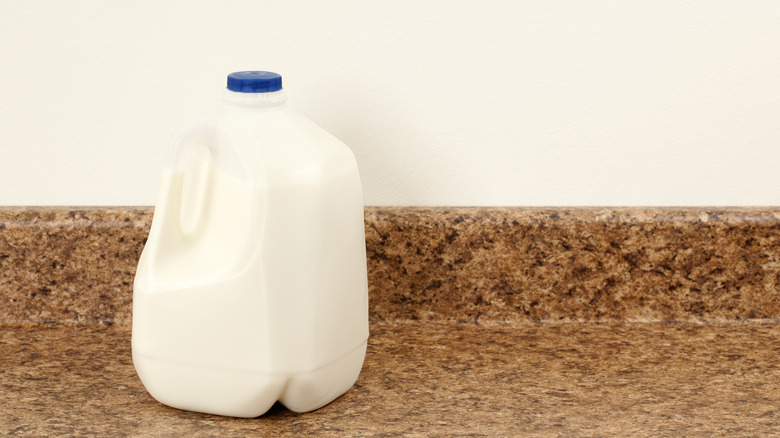
The e-nose has 16 small gas sensors, each one meant to target different compounds and turn them into electric signals. “You can think of it like a set of digital taste buds, where each sensor on this chip responds uniquely to the various gas molecules presented to it,” Bassil explained (via UC Berkeley). The e-nose has been trained with machine learning (which is not the same as AI) to recognize those signals in a wide range of foods, including the smell of raw chicken and milk when they are fresh and when they’ve been left out of the fridge for multiple days. Right now, the e-nose can predict spoilage and allergens with a 92.6% accuracy. Unfortunately, there have been some challenges in getting the e-nose to be fully accurate.

The challenges with an allergen-sensing e-nose

The artificial nose is more powerful than any human nose, able to smell even 0.05 grams of walnut (the equivalent of one hundredth of a shelled walnut). Unfortunately, there are still a lot of difficulties with getting the nose to accurately detect smells. The e-nose’s sensitivity hasn’t been tested in foods that have more than one gas, meaning it may not be able to sense that tiny piece of walnut in a salad or baked good. It’s also unclear if it would be able to consistently sniff out spoiled food that’s in a fridge, where other foods (and their gases) are present.
The e-nose is also still learning how everything smells — detecting one smell is easy, but attempting to detect multiple smells with one chip has proven tricky. It currently gets confused between hazelnuts and peanuts, which means the compounds they produce could trigger the same sensor and be difficult to differentiate. A rotten boiled egg and raw chicken also release similar raised levels of gaseous compounds, making that another challenge for the e-nose.
For now, Bassil plans to keep testing the e-nose in more environments to improve its sensitivity and accuracy. Some day, it could be available as an app on people’s phones. This is not the only time that UC Berkeley researchers have revealed interesting prototypes, like this insect-sized jumping robot or this wearable sweat sensor.
You must be logged in to post a comment Login