Tech
Hisense UR9 vs TCL QM8L: Which Next-Gen Mini-LED TV Should You Buy?

The year 2026 marked the arrival of a handful of new acronyms in the TV world, with regular old mini-LED now having to share space with SQD, RGB, Micro RGB, True RGB, and other related terms. While those last three are basically marketing labels for the same RGB-backlit LCD display technology, SQD was coined by TCL and stands for Super Quantum Dots. SQD is something entirely different from RGB tech, though it is mostly an evolution of the Quantum Dot technology long used in mini-LED TVs.
So far in 2026, eCoustics has reviewed two of TCL’s SQD Mini-LED TVs, including their flagship X11L, and their step-down QM8L, along with rivals featuring RGB Mini-LED TV technology from Samsung, Sony, and Hisense. Of these, the TCL QM8L and Hisense UR9, the company’s flagship RGB Mini-LED TV, are often similarly priced, especially at the 65-inch size with both currently selling for under $2,000. How do these two top Mini-LED TVs stack up, and which model is worth your hard-earned money? Let’s compare them side by side.
SQD Mini-LED vs RGB Mini-LED: What’s the Difference?
The Hisense UR9 and TCL QM8L are both Mini-LED-lit LCD TVs. Where they mainly differ is in the design approach of the TV’s backlighting system.
RGB Mini-LED TVs like the Hisense UR9 use micro-sized red, green, and blue LEDs in place of the blue or white LEDs found in mini-LED TV backlights. RGB backlighting can, in theory, at least, provide more accurate color reproduction than standard LED backlights, and it can also deliver enhanced brightness and color saturation, along with extended BT.2020 color space coverage.
Super Quantum Dots are essentially a refined version of standard Quantum Dot technology. In SQD Mini-LED TVs like the TCL QM8L, the SQD layer is paired with an Advanced Color Purity algorithm and an Ultra Color filter that uses 5-nanometer particles instead of the 60-nanometer particles that are standard for Mini-LED TVs. The end result, according to TCL, is more efficient and accurate pixel-level color transmission, along with extended BT.2020 color gamut coverage.

Hisense UR9 vs TCL QM8L: Features
The Hisense UR9 is available in 65-, 75-, 85-, and 100-inch screen sizes. It uses the company’s Hi-View AI Engine RGB processor, which provides multiple AI-based picture enhancements, including a Personalized Customization feature that guides you through the process of creating your own picture mode. An “Obsidian Panel” advanced low-reflection screen surface helps to reduce screen glare on UR9 series TVs, and they feature Dolby Vision IQ, HDR10+ Adaptive and Filmmaker Mode picture presets. A software upgrade scheduled for late 2026 will add Dolby Vision 2 Max to the UR9’s feature set. As this comparison was going live, we just received the Dolby Vision 2 update on our review sample, so stay tuned for more details on that in an upcoming article.
The TCL QM8L is sold in 65-, 75-, 85-, and 98-inch sizes and uses a high-contrast WHVA 2.0 Ultra Panel with a wide color viewing angle feature and an anti-reflective screen filter. TCL’s TSR AI Pro processor brings AI enhancements for contrast, color, motion handling, and upscaling. HDR format support includes Dolby Vision, HDR10+, HDR10, and HLG, and there are Filmmaker Mode and IMAX Enhanced picture presets. Like the Hisense UR9 series, the QM8L series is slated to receive a Dolby Vision 2 Max upgrade via a software update scheduled for late 2026.
Hisense UR9 vs TCL QM8L: Design
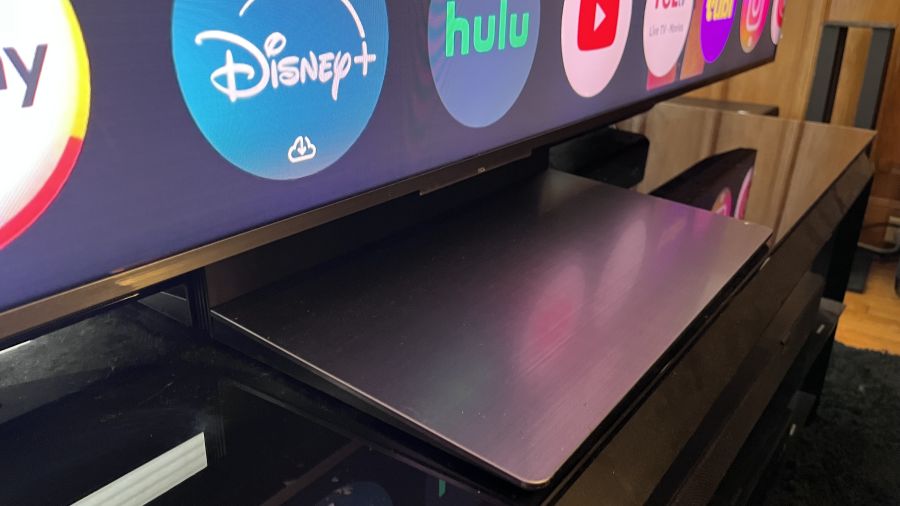
Hisense’s RGB Mini-LED TV has a slim bezel but the panel thickness approaches two inches, giving it a relatively bulky look. One advantage to the TV’s thick panel is it provides ample room for a powerful built-in 80W, 4.1.2-channel speaker system, which has been tuned by French audio manufacturer Devialet and supports both Dolby Atmos and DTS:X. An included aluminum pedestal stand has an adjustable height option to clear space for a soundbar, and Hisense’s full-featured remote control features a backlit keypad.
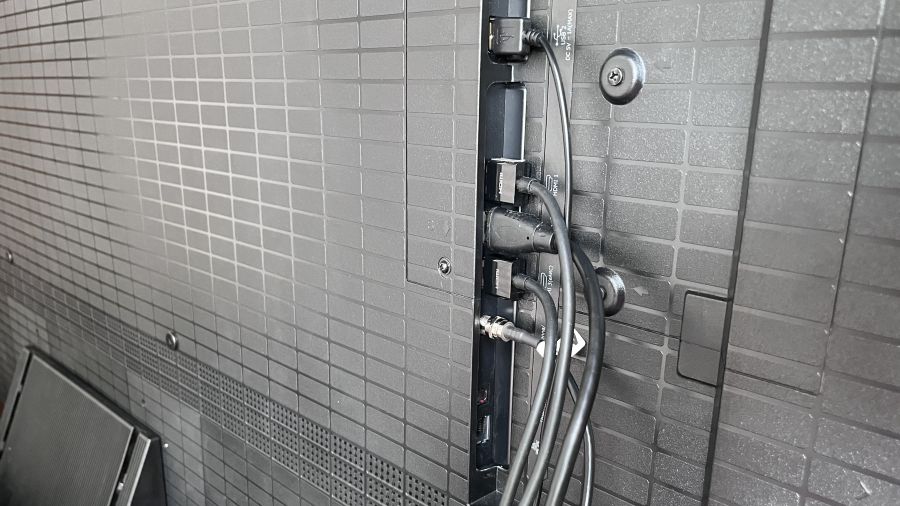
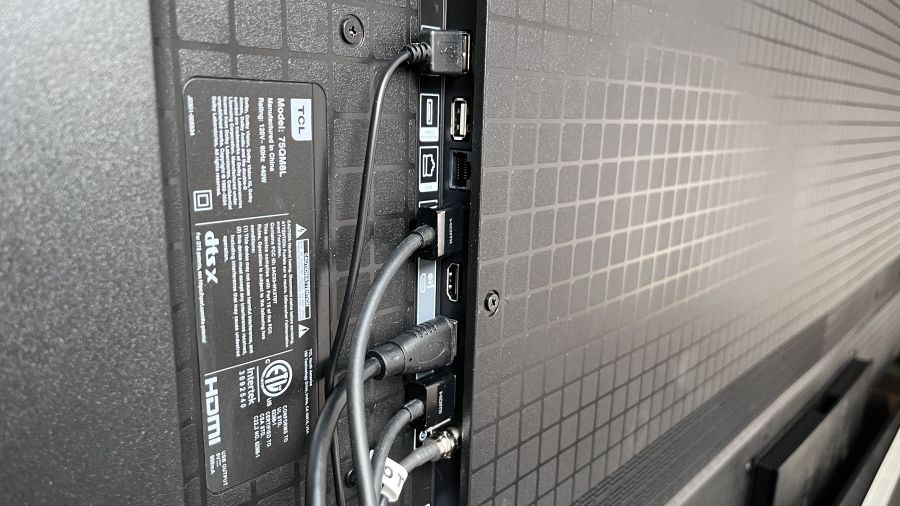
Three HDMI 2.1 ports are located on the UR9’s back panel, along with an antenna input for the TV’s ATSC 3.0 tuner. Curiously, there is also a DisplayPort-over-USB-C input, an unusual feature that lets you connect a computer, tablet, or phone directly to the TV’s bottom-left edge.
TCL’s SQD Mini-LED TV has a ZeroBorder design that gives it an appealing “all-screen” look, and while panel thickness tops out at two inches, the TV’s sides taper gently to create the illusion of thinness. The adjustable-height aluminum pedestal stand can be elevated or set flush with a TV stand surface, and TCL’s new, full-featured remote control has a backlit keypad. Connections on the QM8L include four HDMI 2.1 ports and an antenna input for the TV’s ATSC 3.0 tuner.
The QM8L has an Audio by Bang & Olufsen speaker array that uses down-firing speakers on the TV’s bottom surface combined with two “subwoofers” located on the back. The quality of the TV’s built-in sound is good overall, but you may want to instead take advantage of its Dolby Atmos FlexConnect support, which lets you pair up to four wireless TCL satellite speakers and a subwoofer for a 4.1.4-channel system.
Hisense UR9 vs TCL QM8L: Picture Quality
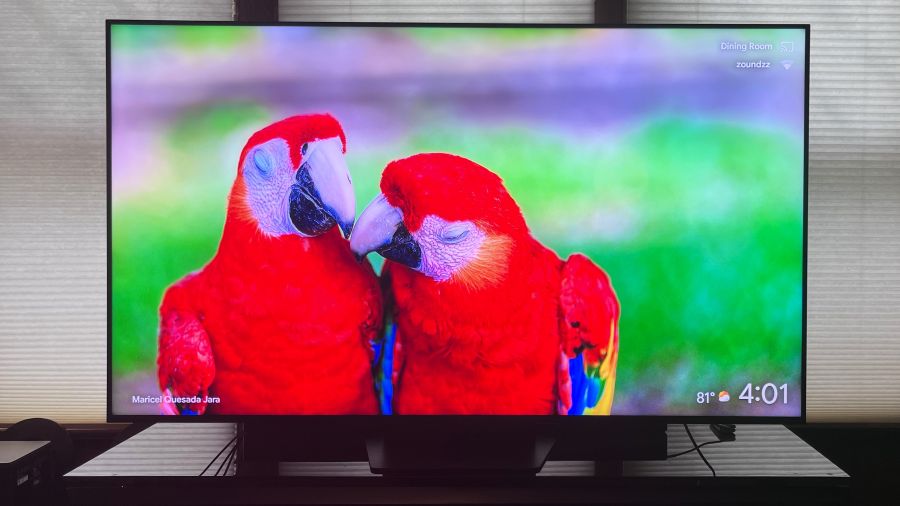
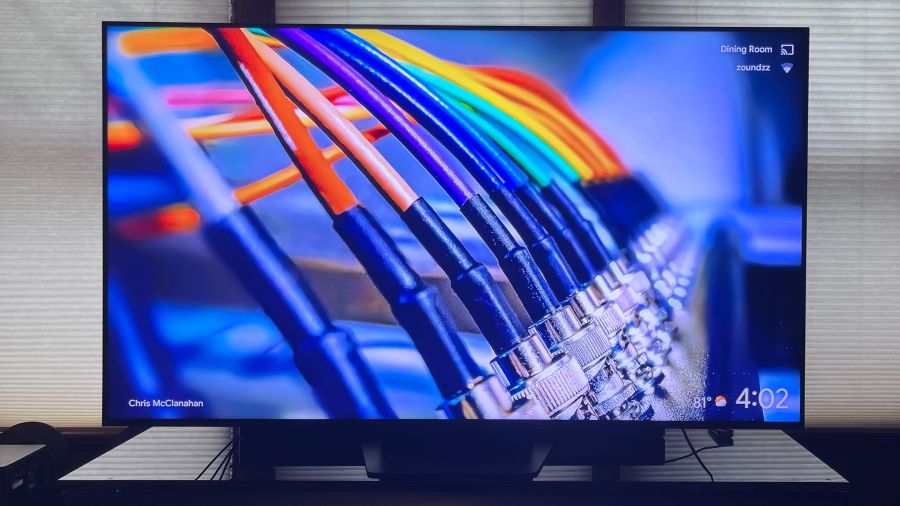
The Hisense UR9 had excellent brightness results when we tested it using Portrait Display’s Calman Color Calibration software, topping out at 3,345 nits in Filmmaker Mode for HDR and a whopping 1,698 nits for SDR. Color results were also very impressive, with the UR9 managing to cover 91.5% of the BT.2020 color gamut and 99.4% of DCI-P3. The TV’s measured color accuracy in Filmmaker Mode was also very good out of the box.
Numbers don’t always tell the full story, but the Hisense’s bright picture was great for daytime sports viewing, and movies with a rich color palette also came across as punchy and clean-looking. The UR9 performed well with reference “dark” movies, showing strong shadow depth and detail. Our main complaint from a picture quality standpoint was the TV’s off-axis picture uniformity, with both color and contrast fading noticeably when viewed from off-center seats.
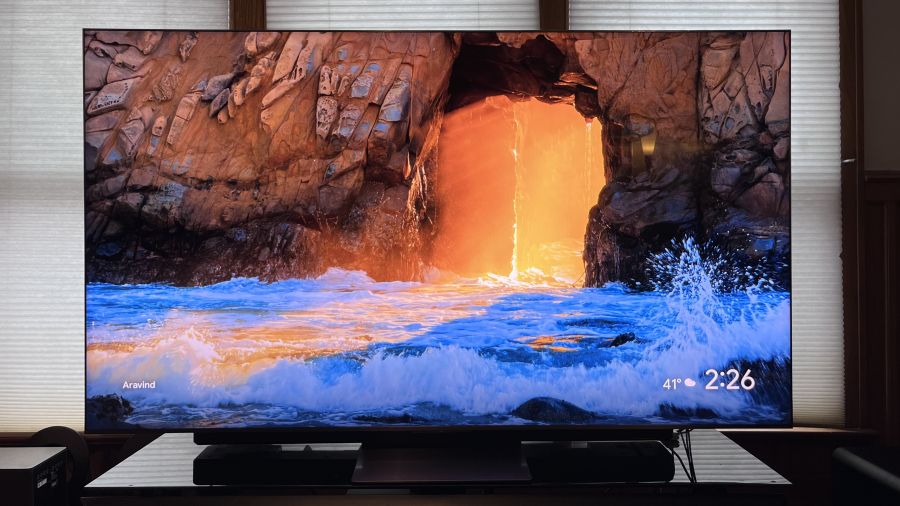
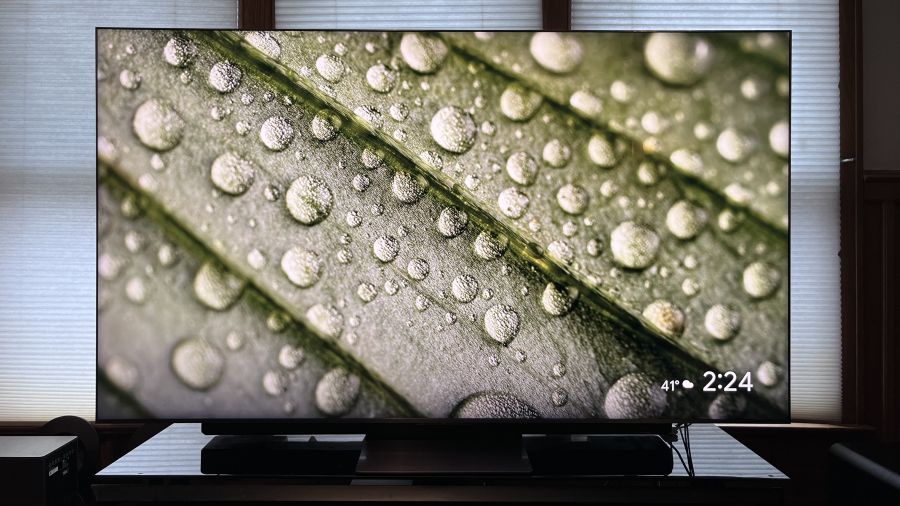
The TCL QM8L also had high brightness, peaking at around 4,500 nits on some measurements, though a more realistic expectation would be around 2,000 nits in Filmmaker Mode for HDR. Color measurements slotted in a bit below the Hisense UR9 at 89.3 for the BT.2020 color gamut and 97.7 for DCI-P3. Color accuracy was a bit disappointing at an averaged 4.9 for grayscale and 3.3 for color, but both results could be easily improved through calibration.
Like the Hisense, the TCL’s high brightness makes it great for sports viewing. The QM8L also benefits from a wide viewing angle, with color maintaining saturation even at far off-center seats. Also, its anti-reflective coating is effective at reducing screen glare in bright viewing conditions. Colors in movies look rich, but not exaggerated, and dark movies benefit from the TV’s strong contrast, refined shadow detail and almost non-existent backlight blooming artifacts.
Hisense UR9 vs TCL QM8L: Smart TV
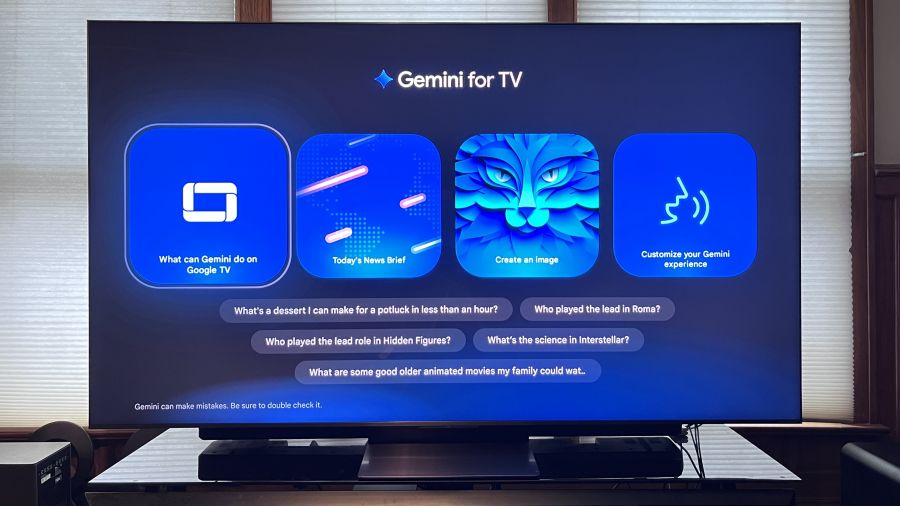
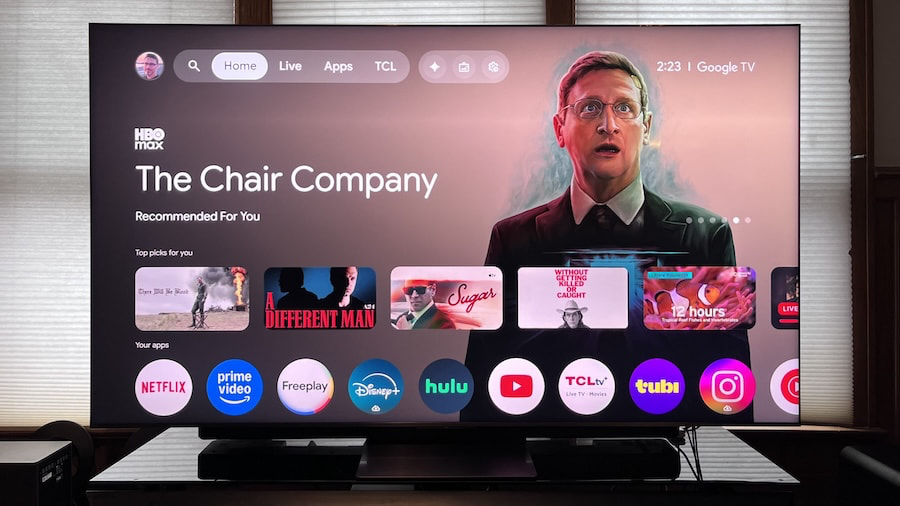
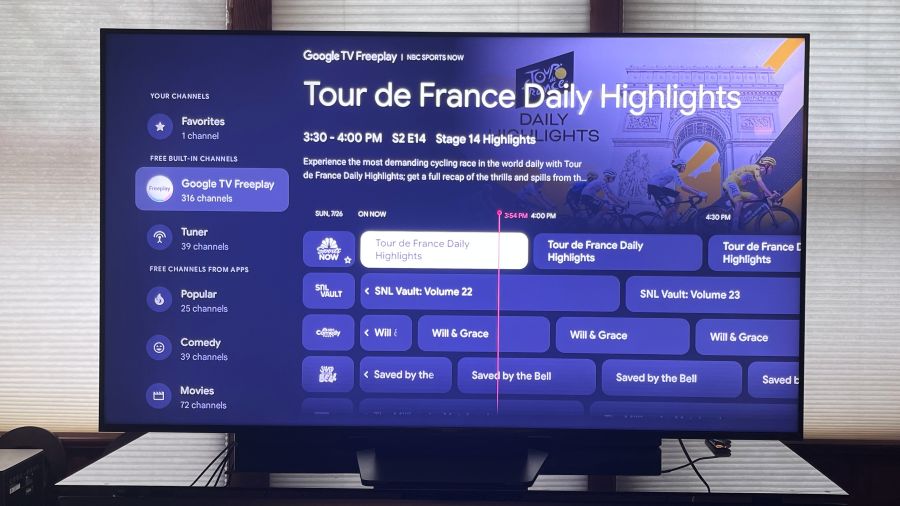
Both the Hisense UR9 and TCL QM8L use the Google TV platform for streaming and smart home control. Google TV has a relatively streamlined interface, and it can present customized program recommendations based on your viewing and web-browsing history when linked to a Google account. The version of Google TV found in both TVs is enhanced with the Gemini AI assistant, which lets you do everything from researching your next vacation to generating custom screensavers using voice commands (the Hisense and TCL feature a far-field mic option along with a built-in mic on the remote control). Both TVs additionally feature a Live TV grid guide for browsing Freeplay free ad-supported streaming channels and broadcast channels pulled in by the set’s ATSC 3.0 tuner.
Hisense UR9 vs TCL QM8L: Gaming
The Hisense UR9’s strong suite of gaming features includes a native 180Hz refresh rate, FreeSync Premium Pro VRR, ALLM and Dolby Vision gaming. HDMI 2.1 ports are limited to three, however, which can be a limiting factor for gamers with multiple consoles. Input lag measured using a Bodnar 4K meter clocked in at 12ms in Game mode on the UR9, a result below the 16ms threshold that serious gamers generally consider acceptable.
The TCL QM8L’s gaming features and performance are both a step above what we’ve found in previous TVs from the company. It supports a 144Hz refresh rate, along with 1080p/288Hz for PC gaming, and there’s also FreeSync Premium Pro, ALLM, and Dolby Vision gaming. Input lag measured 9.8ms for a 4K 60Hz input in our testing, a result that slightly bests the Hisense UR9 and is comparable to the best gaming TVs from LG and Samsung.
Hisense UR9 vs TCL QM8L: Value
At $1,899.99 for the Hisense UR9 and $1,399.99 for the TCL QM8L (both prices for a 65-inch model), each of these next-gen Mini-LED TVs is a strong value. Both offer high brightness, refined local dimming and extended color gamut coverage. And both can be upgraded for Dolby Vision 2 Max via software updates, making them among the few TVs to support that exciting new feature.
Compared to other RGB mini-LED TVs such as the Samsung R95H ($2,999.99 for the 65-inch model), the Hisense offers notably good value. It lacks some of that TV’s key features such as a matte finish Glare Free screen, and Samsung’s Tizen is a superior smart interface compared to Google TV, but it’s still tough to overlook that $1,000-plus price differential.
The TCL QM8L with its Super Quantum Dots tech is a different animal altogether from the Hisense and Samsung, but its measured performance makes it a close match for both, and we found its picture quality to be exceptional when we tested it. At $1,399.99, it’s a steal.
The Bottom Line
Both of these sets count among the best TV values you can find today, offering great overall picture quality with exceptional brightness and cutting-edge features such as Dolby Vision 2 and Gemini AI support. Both are also impressive gaming TVs.
Making a close comparison of the two, the Hisense has better measured performance, besting the TCL when it comes to BT.2020 and DCI-P3 color gamut coverage and out-of-box color accuracy. But in subjective tests, we found the TCL’s picture quality to be equally impressive, and its off-axis uniformity and screen glare rejection in bright rooms were both superior to those of the Hisense.
To cut to the chase, the Hisense UR9 is a great value for an RGB Mini-LED TV, but the TCL QM8L is a great TV value, period.
Where to buy
| Hisense UR9 | TCL QM8L | |
| 65-inch | $2,199 $1,699 at Best Buy |
$2,499 $1,399 at Amazon | Best Buy |
| 75-inch | $3,299 $2,499 at Best Buy |
$2,999 $1,699 at Amazon | Best Buy |
| 85-inch | $4,499 $3,499 at Best Buy |
$3,999 $2,799 at Amazon | Best Buy |
| 100″/98″ | $9,999 $4,999 at Best Buy |
$5,999 $3,999 at Amazon | Best Buy |
* MSRP pricing in bold, with current pricing listed at publication subject to change.
You must be logged in to post a comment Login