Tech
Homemade Nuclear Battery Harnesses Glow From Radioactive Vials

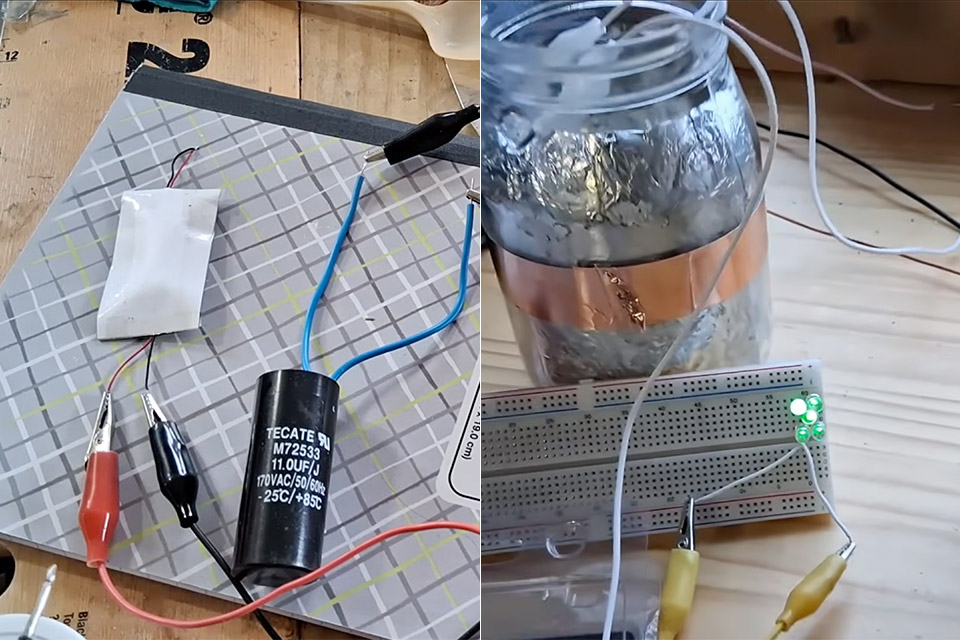
A recent project by Double M Innovations takes a really simple concept and turns it into something rather unique by sandwiching some tritium vials between conventional solar cells to create a self-contained nuclear power source.


Basic principles ensure that everything runs well without the need for additional help. See, the tritium inside each sealed vial emits low energy electrons as it gradually degrades, which is a really useful side effect. Those electrons then hit a phosphor coating inside the glass tube, producing a continuous greenish light. Now, amorphous solar cells tacked directly on the vials capture the light and convert it into a microscopic little electric current, just as they would on a gloomy day. The entire thing is shut up tightly with aluminum tape, so no outside light can get in.
Sale


Anker SOLIX C1000 Gen 2 Portable Power Station, 2,000W (Peak 3,000W) Solar Generator, Full Charge in…
- 49 Min UltraFast Recharging: With upgraded HyperFlash tech, fully recharge at 1,600W—for outage prepping, camping trips, or tailgating events…
- 2,000W Output via 10 Ports: Delivers 2,000W (3,000W peak) and 1,024Wh capacity. Power up to 10 devices—ideal for emergency backup, remote work…
- Compact and Portable: Easily carry, store, and move from room to room, your RV, or even on beach and park outings. C1000 Gen 2 is 14% smaller and…
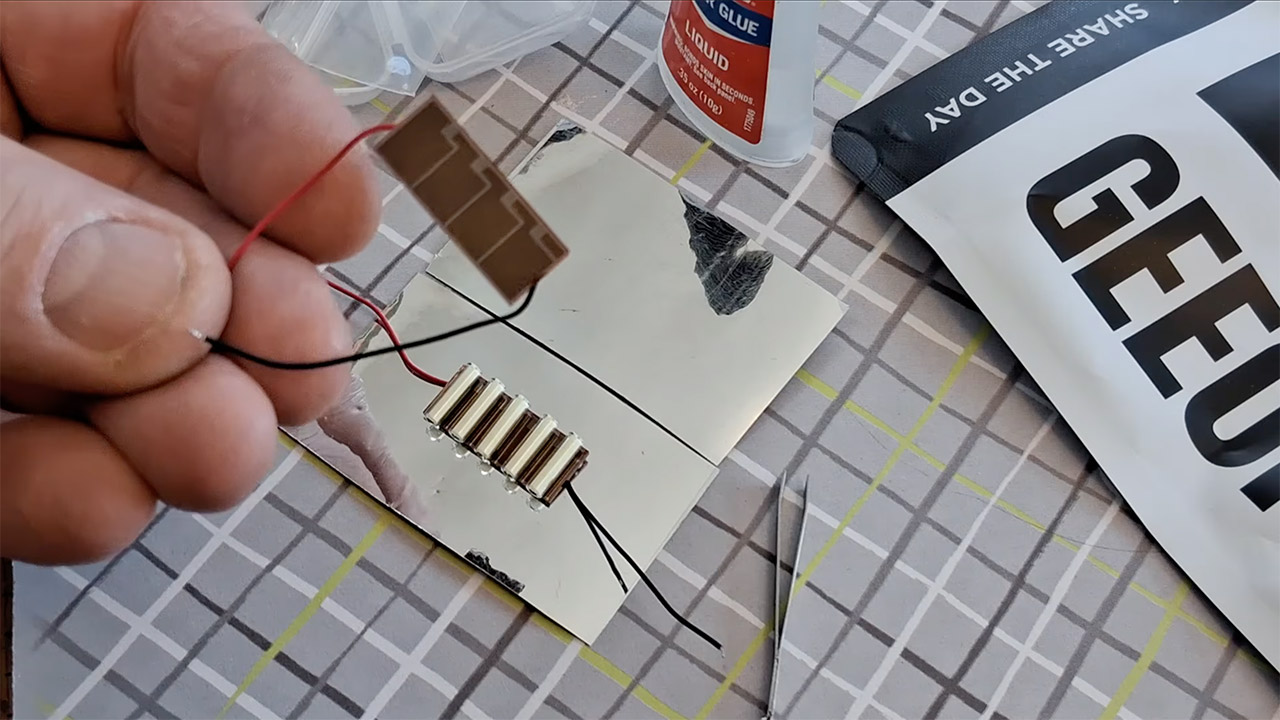
Putting it all together is a simple process that just takes a few minutes once all of the components are ready. You start with two tiny amorphous solar cells from a calculator panel, which are ideal for this because they are sensitive to the wavelengths that the phosphor emits. Five tritium vials, about 3mm wide and 11mm long, are lined up across the surface of the first one, and the second cell is slapped on top to complete the sandwich. The inside of the entire item is coated in a reflective substance before the aluminum tape is wrapped around to seal it all up tight. There is no soldering or complex wiring required, thus keeping everything rather simple.

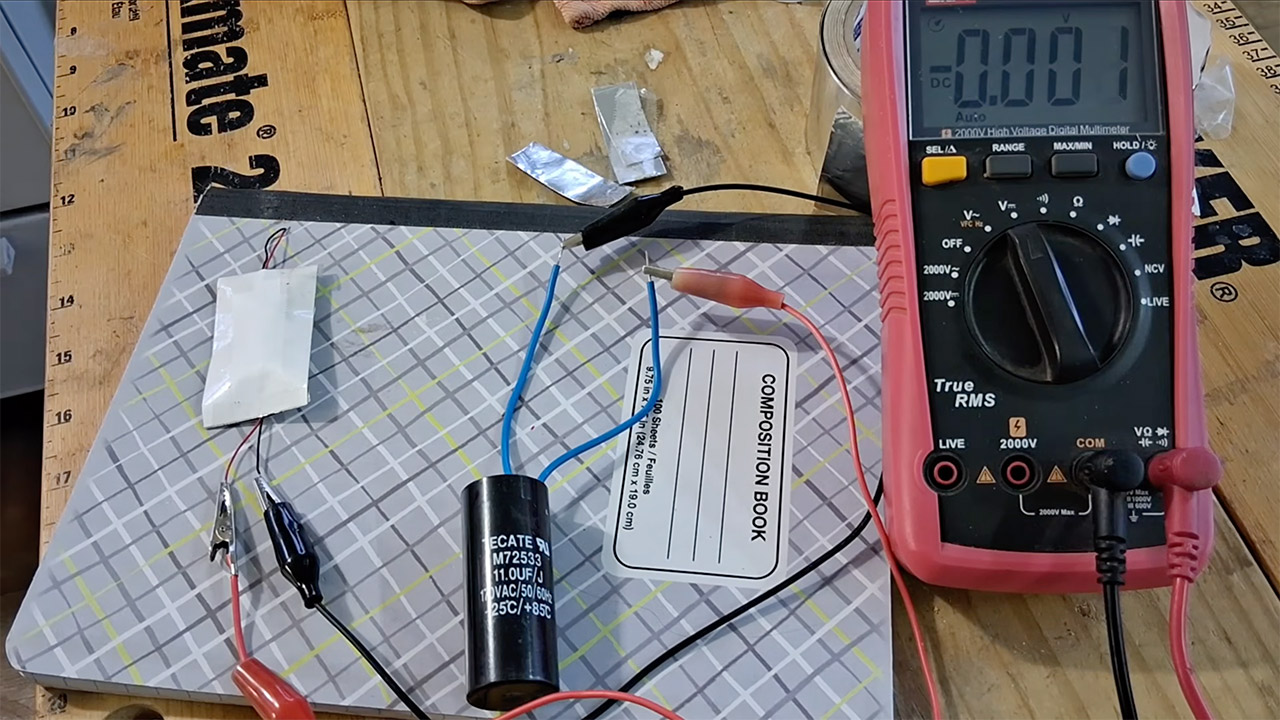
Not long after, the maker began testing it, discovering that each cell produced between 0.45 and 0.47 volts when measured with a conventional multimeter, but the current was so low that it was virtually undetectable on the majority of the cells. So they connected the cells in series and added a small capacitor to the circuit to allow the charge to develop. Ten minutes later, the capacitor had 2.2 volts. An hour later, it had risen to 2.4 volts, and after a full night of sitting, it had reached 2.9 volts on its own.
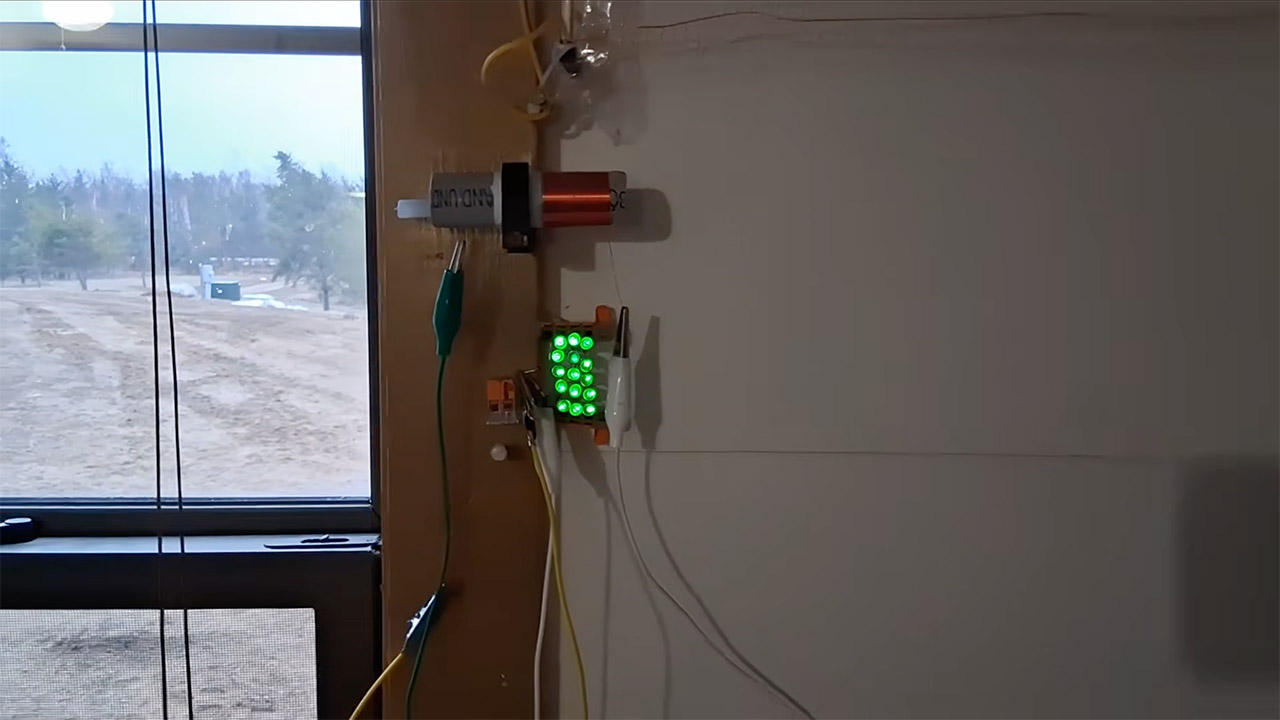
The power output is in the nanowatt region, which is far below what is required to even turn on an LED, let alone run a small sensor for any length of time. Still, the idea that it could charge up to that point in one night is rather astounding. Furthermore, tritium has a half-life of roughly 12 years, so it will be some time before the entire thing runs out of steam. Commercial nuclear batteries perform far better because they can align the radiation source very precisely with the cell materials. However, this handmade version is only a proof of concept, demonstrating that it is possible to generate a measurable electric current using off-the-shelf components and some internal radiation.
[Source]
You must be logged in to post a comment Login