Tech
How Bell Labs Stored Binary Information on Memory Devices Back in 1959

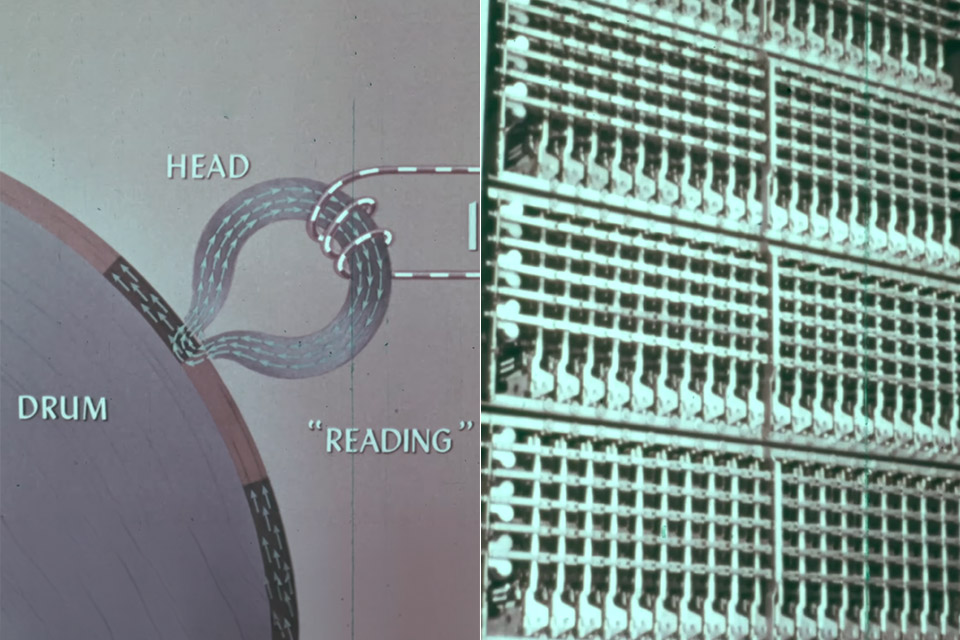
This 1959 Bell Labs film provides a glimpse into a world where computers were little more than a collection of clever mechanical and magnetic tricks for storing anything in memory. It’s the story of engineers seeking to develop a solution to store binary data that was fast, reliable, and non-volatile, and could be accessed at any time without having to wait for a drum to spin or a tape to scan. One segment stands out for its innovative solution: the Twistor memory.

![Memory Devices [Bell System 1959, 4K]](https://i.ytimg.com/vi/Px9ZfLyeAWU/hqdefault.jpg)
Engineers at the time were stuck with inefficient storage systems. Magnetic core memory was the best they had, with small ferrite rings threaded with wires holding magnetic states representing 0s and 1s. When they sent a pulse over the wires, it reversed the state and wrote some data, but reading it required slamming a little voltage through it and quickly erasing it. Access times were reasonable at 10 microseconds, but reading erased all data.
Then the brilliant minds at Bell Labs created the Twistor. Essentially, it is a device that substitutes all of the individual rings with a long, thin ribbon of magnetic material wrapped around a fine copper wire. Each twistor works as a small linear storage element. The current flowing through the wire and the surrounding solenoid generates a magnetic field that aligns the domains along the ribbon in one way or the other, allowing a bit to be stored right there. Its name comes from the helical wrap, which allows for quite thick packaging in sheets or modules.
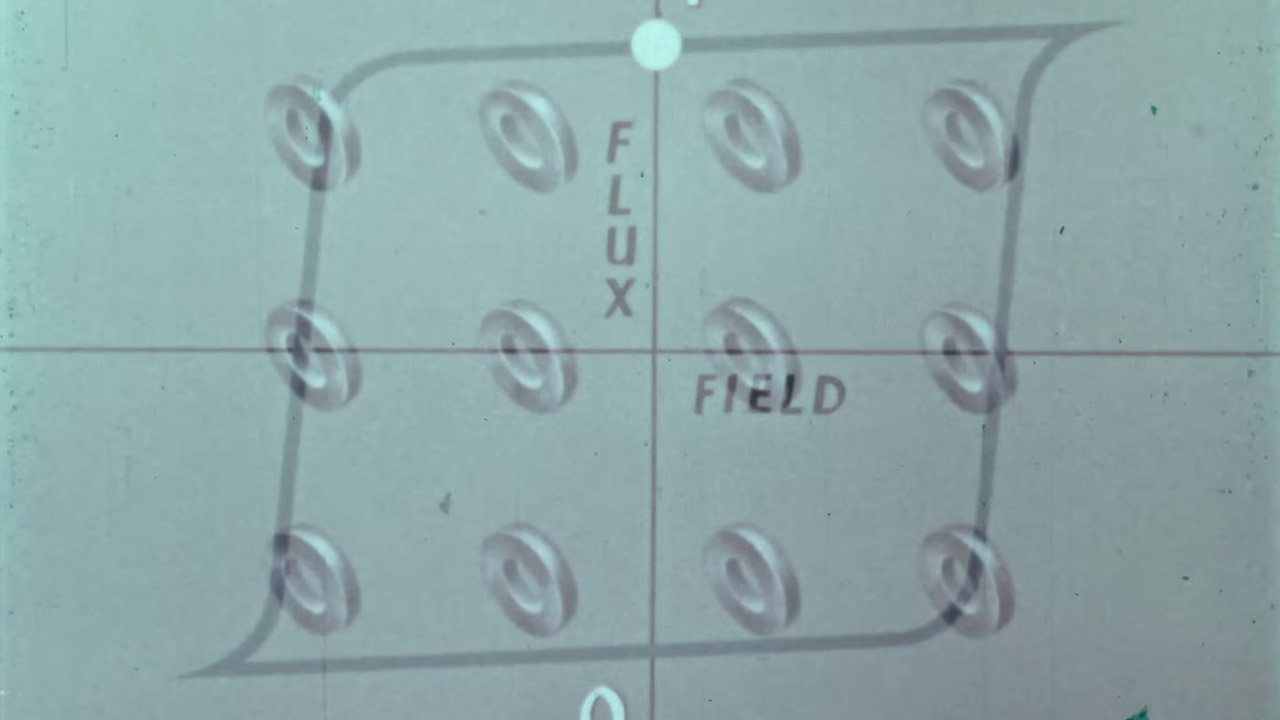
Twistor memory would be demonstrated with 26 wires, all of which were part of a large array. They could access it in around 5 microseconds and store thousands of bits per module. Larger versions simply employed broader bands to create even larger grids. Data remained stable even after the power was turned off, just as core memory. The concept claimed to be easier to build than manually threading all of those tiny little rings. One of the best features is that you can just slide a card in with a magnet on it to prevent writing to specific bits, preserving your data.

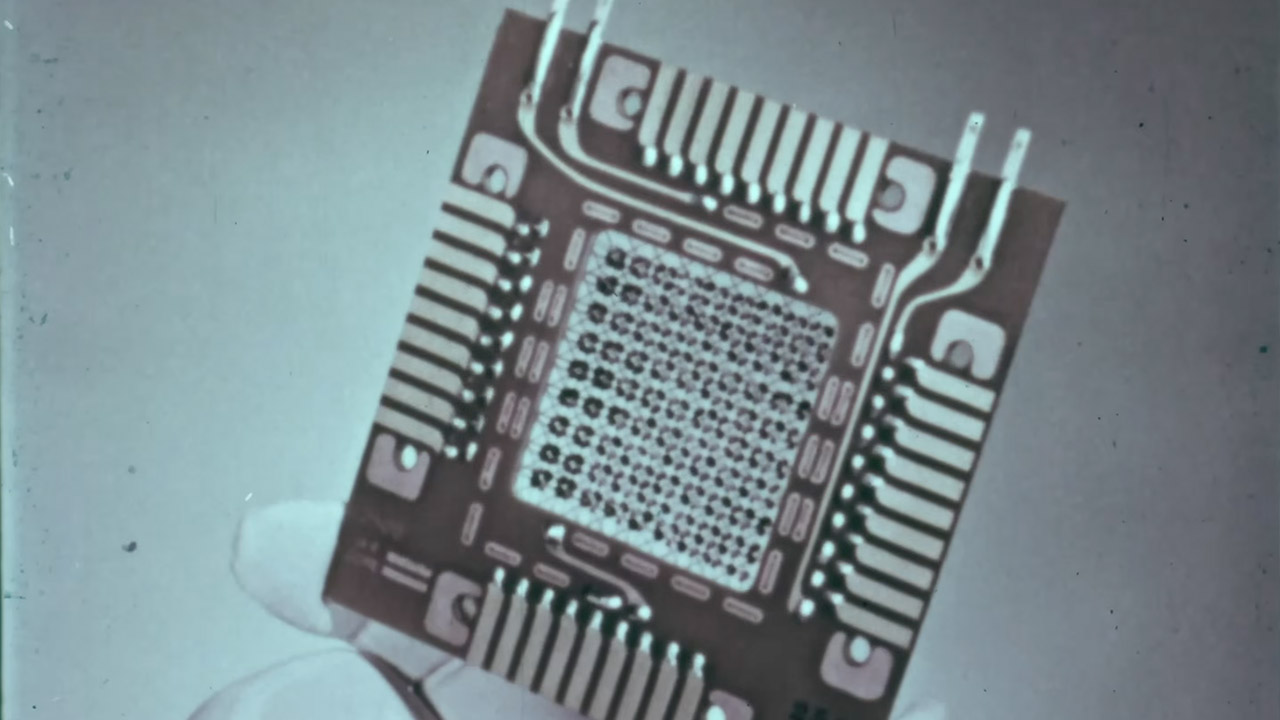
Now, we see in the film how the researchers were able to squeeze a lot of information onto just one plane of twistors, which is significantly less area than a drum or tape. Compare this to drum memory, which would spin a coated cylinder at thousands of revolutions per minute, storing only a thousand 20-bit words with access delays of about a millisecond while you waited for the proper location to spin under the head. Tapes provided a lot of space, but only sequential access, which was acceptable for backups but not good for running a program quickly.
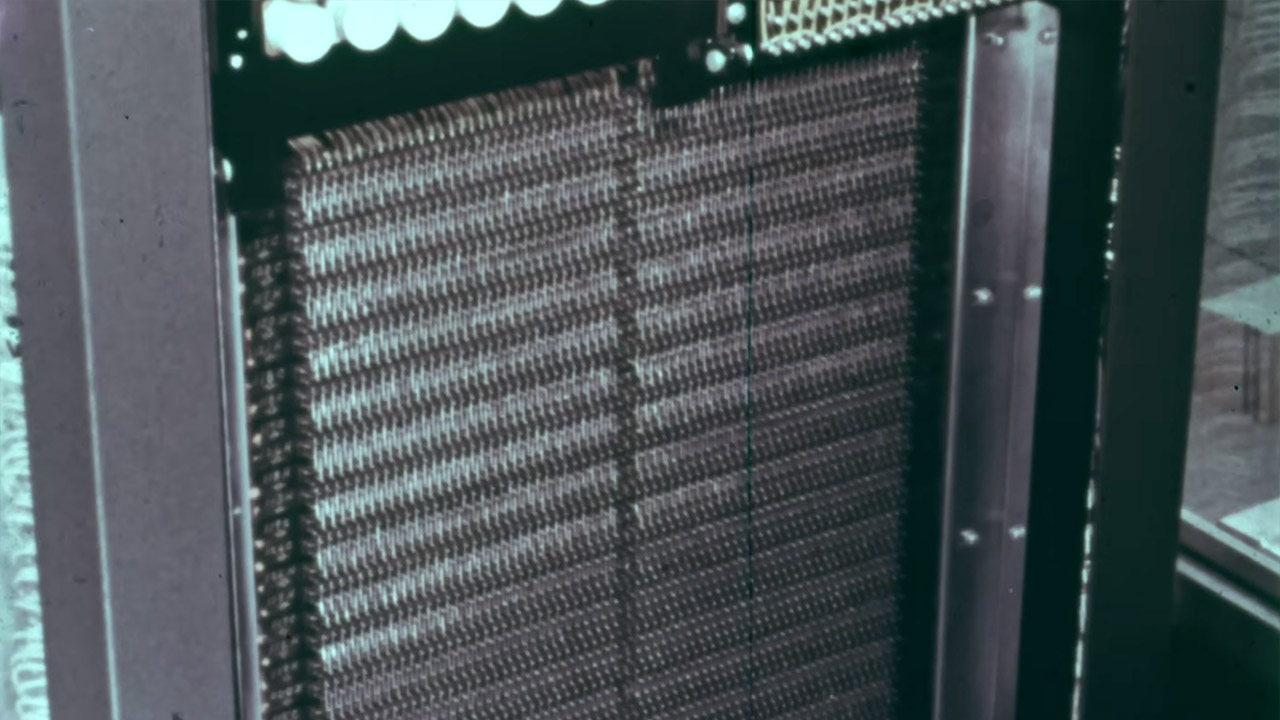
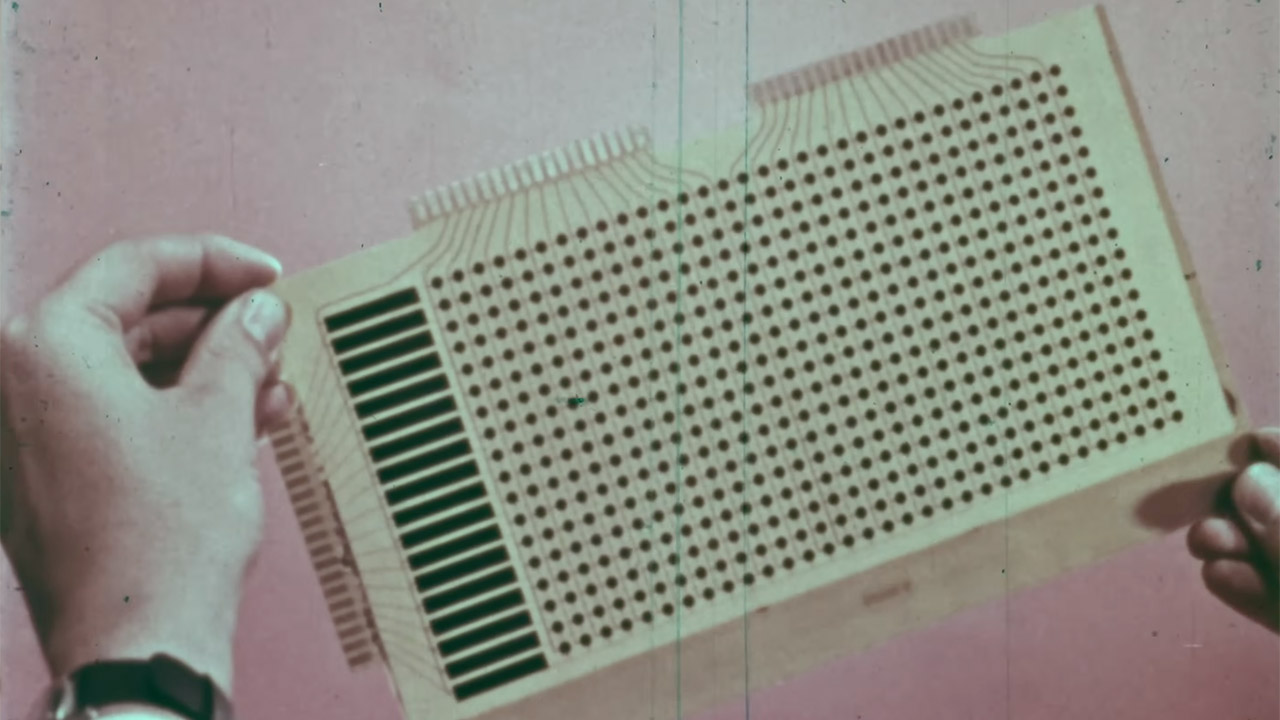
Ferrite sheet variations also emerged, some with holes pressed into thin magnetic plates to approximate difficult-to-replicate core designs but in a far more compact form, as well as stacking modules capable of storing 50,000 words or more. People were particularly drawn to the Twistor because of its ability to combine speed, density, and relative simplicity. Its beginnings stretch back to 1957, and by the mid-1960s, it had made its way into real-world applications, such as 1ESS telephone switching systems. In call routing tables, reliable semi-permanent storage was especially important.
Semiconductors appeared a little later and dramatically changed everything; memory shrunk down to small silicon chips that were much cheaper and could hold a lot more data. The Twistor only had a brief commercial presence before fading away, along with other contenders such as bubble memory and magnetic storage. Still, technology first appeared in 1959, and it gave us a true taste of what it was capable of, downsizing equipment to minuscule sizes that could one day fit in your pocket.
[Source]
You must be logged in to post a comment Login