Tech
How Bill Gates uses AI, and why he thinks nobody is preparing for it

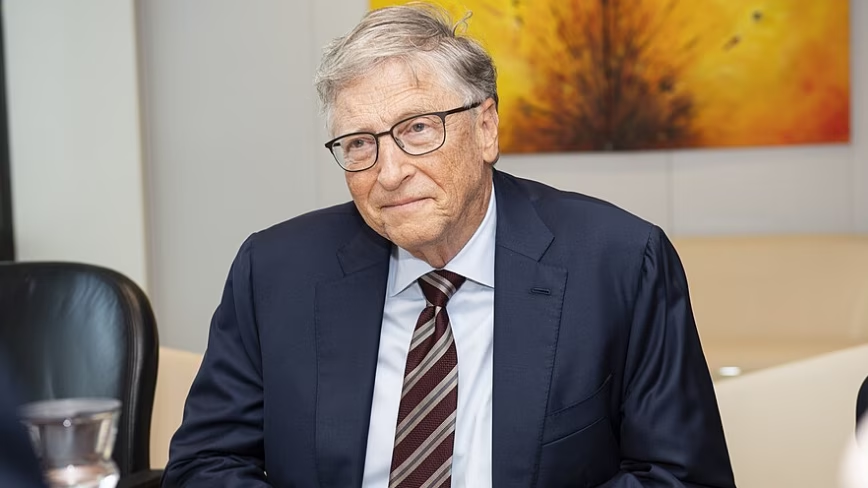

Bill Gates has published a memo proposing a tax on AI, a category of jobs reserved for humans and new institutions to manage the transition, and told GeekWire that industry leaders are worried privately while staying quiet publicly. He proposed a robot tax in February 2017, the same month the European Parliament adopted robotics rules that left the tax out.
Bill Gates says the people building AI are worried in private and quiet in public. “I know they’re all worried. Or all of them that I know, which is basically everybody but Elon,” he told GeekWire.
The reason he is talking is a memo he published this week. It argues the industry is crossing the safety lines it set for itself, and that nobody is preparing for what follows.
TNW covered the proposals when it landed. A tax on AI, a category of jobs reserved for humans, and new institutions to manage the transition.
The interview adds the part he did not put in writing. “Even lack of control that I thought would be many years from now, we’re seeing lack of control,” he said.
On the tax, Gates is repeating himself. He first proposed taxing robots in February 2017, when the argument was about factory automation rather than models, and the reasoning was the same.
Europe answered that question the same month. The European Parliament voted 396 to 123, with 85 abstentions, on rules for robotics, and the tax was not in what passed.
What passed instead is worth reading. The resolution asked the Commission to look at the viability of member states’ social security systems as robots spread, which is the diagnosis behind the remedy MEPs had just dropped.
It also floated something stranger. The adopted text raised electronic personhood for the most sophisticated autonomous robots, an idea that has gone nowhere since.
The rapporteur was not pleased. Mady Delvaux said certain coalitions in the Parliament had rejected a forward-looking debate about workers, and the robotics industry welcomed the outcome.
Nine years on the position has not moved. The AI Act regulates risk and requires human oversight, and TNW has asked whether it can protect jobs without stifling innovation.
It does neither of the things Gates wants. It does not tax a model, it does not reserve a category of work for people, and no member state has proposed either.
The evidence base is thinner than either side admits. TNW has argued that what AI is doing to jobs in Europe looks different from the headline numbers.
Which leaves the memo where it started. A man who proposed this in 2017 is proposing it again, and Europe has already voted.
You must be logged in to post a comment Login