Tech
How Long Does J-B Weld Last Once Opened?


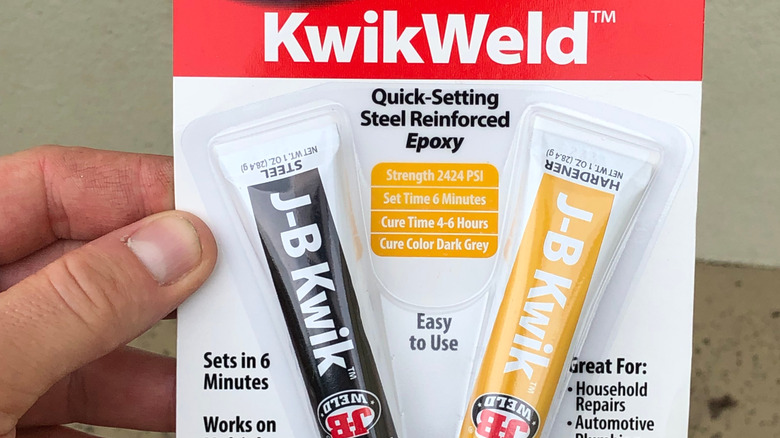
If you’ve ever been in need of a super-strong adhesive, epoxy is a godsend, and J-B Weld’s two-part Twin Tube is some of the best. J-B Weld products have a huge number of uses, from metalworking and woodworking to sealing up small holes, but like any adhesive, one it’s been exposed to the air, the clock is ticking.
The good news is that, even though you’re likely to have leftovers, they’ll last you a long time. J-B Weld says its twin tube epoxy can last up to three years if properly sealed, kept in a cool, dark place and, most importantly, if the resin and hardener never mix inside the packaging. It’s nice to have a little extra epoxy in reserve, in case you run into exotic use cases like “fixing” a specific USB vulnerability.
Fortunately, because J-B weld stores the resin and hardener separately, it’s much less vulnerable to air exposure than traditional one-part adhesives. The chemical curing reaction only actually kicks off after the two components are dispensed from the tube and mixed, after which the epoxy set in around four to six hours, and fully cured after about a day or so.
Other J-B Weld products have different timelines
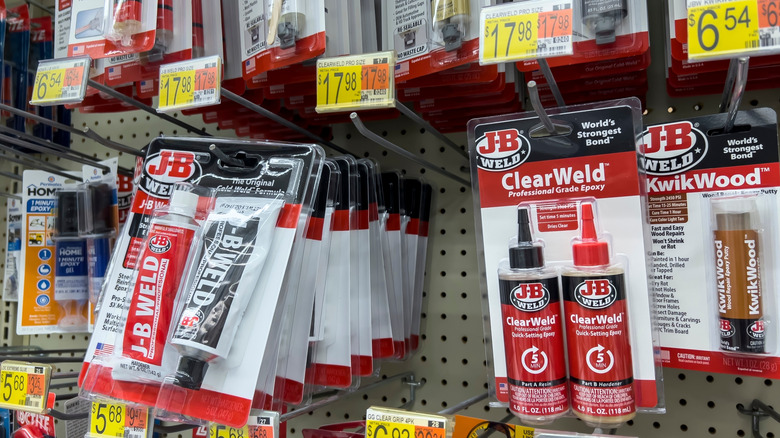
While the twin tube epoxy is no replacement for proper welding tools for metalwork, J-B Weld produces a whole line of products to cover various disciplines and use cases. Its MarineWeld, for instance, is great for aluminum, other metals and composites, and fiberglass, and shares the same, roughly three-year lifespan of the original formula. In fact, J-B Weld says the three-year shelf life is applicable to all of its Twin Tube and syringe-format products.
Longevity varies for some of the company’s other offerings, however. J-B Weld makes a number of putty sticks, sealants, adhesives, and other single-component products. According to an official FAQ, while you can expect the putty sticks to last around the same three years as the Twin Tube epoxy, the super glue may only survive up to a year and a half after opening. These sort of adhesives and sealants are more vulnerable to surface contamination from air exposure or moisture than the Twin Tube products.
To stretch their lifespan, close them as soon as you’re done using them, and make sure the packaging is sealed up as tightly as possible. Epoxy putty should stay wrapped in its original plastic film or container, and needs to be replaced when it dries out and cracks. The same goes for any sealant or adhesive that’s hardened in the nozzle or separated beyond remixing.
You must be logged in to post a comment Login