Tech
How Many Solar Panels Do You Need To Run A Refrigerator?


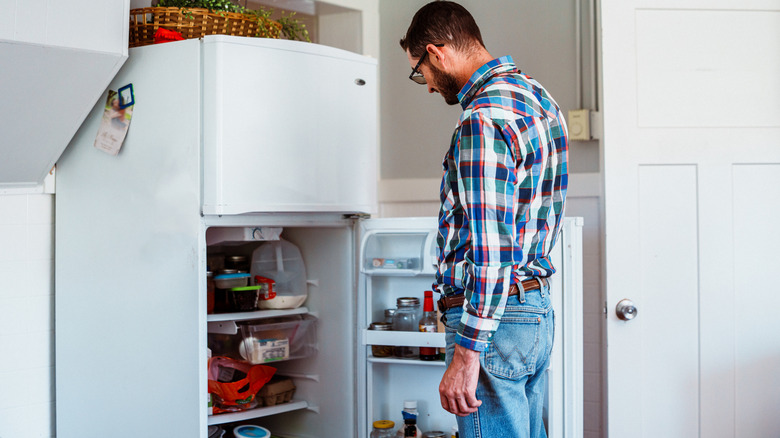
One of the more stubborn barriers to personal adoption of solar power is providing sufficient energy to certain power-hungry appliances. The average refrigerator, for example, can be quite the power hog, requiring a hearty injection of juice when it first starts up, followed by consistent power to keep it running. It’s not dissimilar to how an air conditioner works, and an A/C unit would require quite a few panels itself. Optimizing for solar power means figuring out exactly how many solar panels you need to power everything in your home, and if we’re factoring a refrigerator into the equation, you’ll likely need at least 3 to 4 dedicated solar panels for it alone.
The vital quantifier here is that, while just about every type of fridge is generally pretty power-thirsty, its exact power requirements can vary depending on factors like the fridge’s wattage and how large it is. If we’re assuming optimal sunlight draw, the aforementioned 3 to 4 panels can handle most refrigerators, but if you want to optimize even more than that, we need to take a look at the nitty-gritty details.
Requirements vary depending on the fridge’s size and wattage
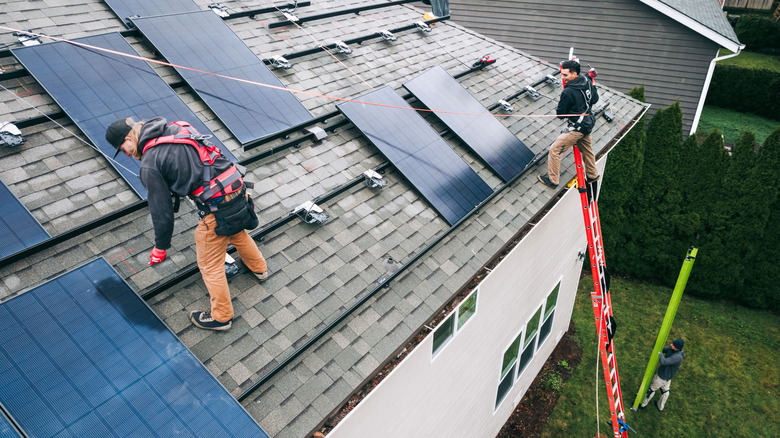
Let’s say, for example, you had a relatively tiny mini fridge, the kind you’d use in a small camper van or at a jobsite. Compared to full-size models, this kind of fridge has much lower power needs, approximately 300-400 watts to get it going and 100-200 watts to keep it running. For that kind of power, you would only need a single 300W solar panel. So long as you’re getting enough sunlight, that’s more than enough power for both initial plug-in and allowing the fridge to run its cooling cycles.
On the other hand, if you’re looking to power a full-scale French door refrigerator with a lot more cubic feet, that’s naturally going to incur greater power costs. A French door fridge would need about 1,200-1,800 watts to get rolling, followed by 500-700 watts to run its cycles. For that, you would need at least 3 to 4 300W solar panels, possibly more just for the initial startup.
It’s also worth noting that a solar panel on its own would only keep a fridge running for as long as the sun is shining, which obviously isn’t all day. If you wanted to power a fridge constantly, regardless of size, you’d also need to consider installing solar batteries on your home or buying a portable power station. Either would allow you to store sufficient excess power to keep things running through the night.
You must be logged in to post a comment Login