Connect with us

Tech

How Mike Markkula transformed Apple from garage experiment into the business that reshaped personal computing

Published

on


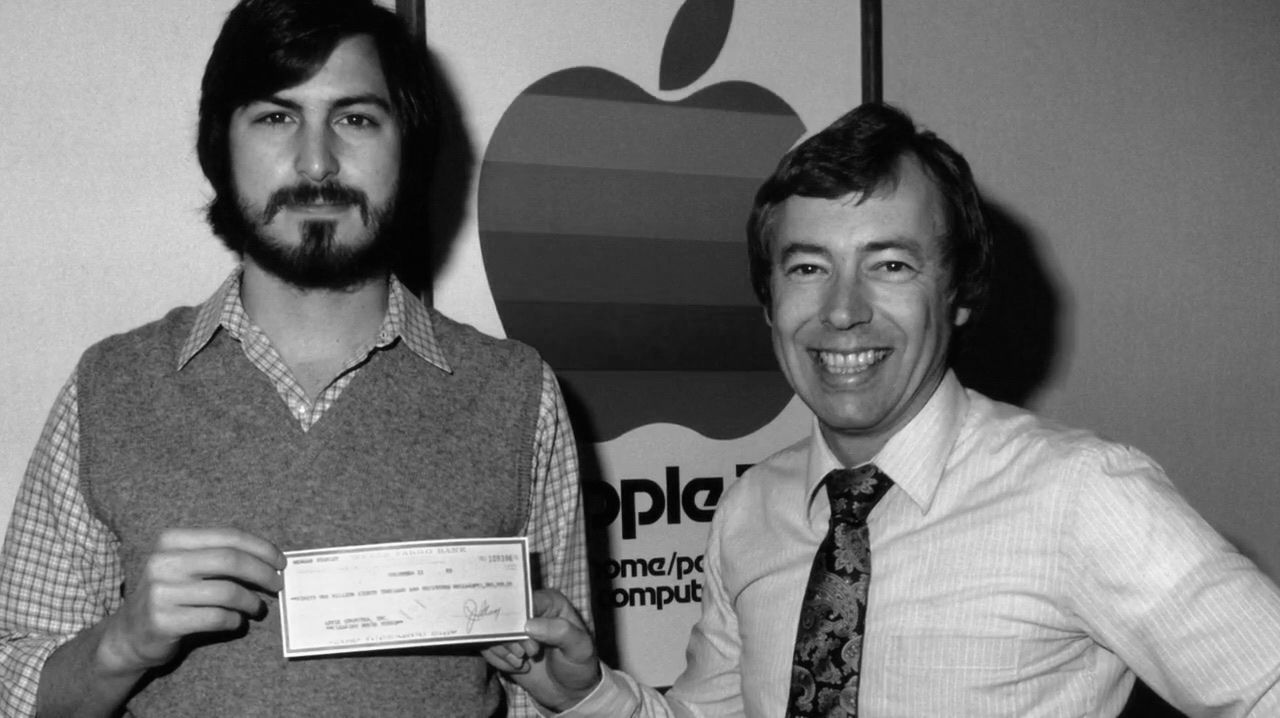
Long before Apple became synonymous with Steve Jobs’ product launches and minimalist design philosophy, the company’s survival depended on a quieter figure operating behind the scenes.

An InfoWorld article published on July 18 1983 described Mike Markkula as the person who turned Apple from a clever engineering experiment into a real business — the man who wrote its first proper business plan, secured crucial funding, and helped build the company that would later dominate consumer technology.

Source link

Continue Reading
Click to comment

Leave a Reply

Your email address will not be published. Required fields are marked *

Tech

The Stop Killing Games campaign will set up NGOs in the EU and US

Published

on

The Stop Killing Games campaign is evolving into more than just a movement. In a YouTube video, the campaign’s creator, Ross Scott, explained that organizers are planning to establish two non-governmental organizations, one for the European Union and another for the US. According to Scott, these NGOs would allow for “long-term counter lobbying” when publishers end support for certain video games.

“Let me start off by saying I think we’re going to win this, namely the problem of publishers destroying video games that you’ve already paid for,” Scott said in the video. According to Scott, the NGOs will work on getting the original Stop Killing Games petition codified into EU law, while also pursuing more watchdog actions, like setting up a system to report publishers for revoking access to purchased video games.

The Stop Killing Games campaign started as a reaction to Ubisoft’s delisting of The Crew from players’ libraries. The controversial decision stirred up concerns about how publishers have the ultimate say on delisting video games. After crossing a million signatures last year, the movement’s leadership has been busy exploring the next steps.

According to Scott, the campaign leadership will meet with the European Commission soon, but is also working on a 500-page legal paper that reveals some of the industry’s current controversial practices. In the meantime, the ongoing efforts have led to a change of heart from Ubisoft since the publisher updated The Crew 2 with an offline mode.

Advertisement

Source link

Continue Reading

Tech

Love Complex Automata? Don’t Miss The Archer

Published

on

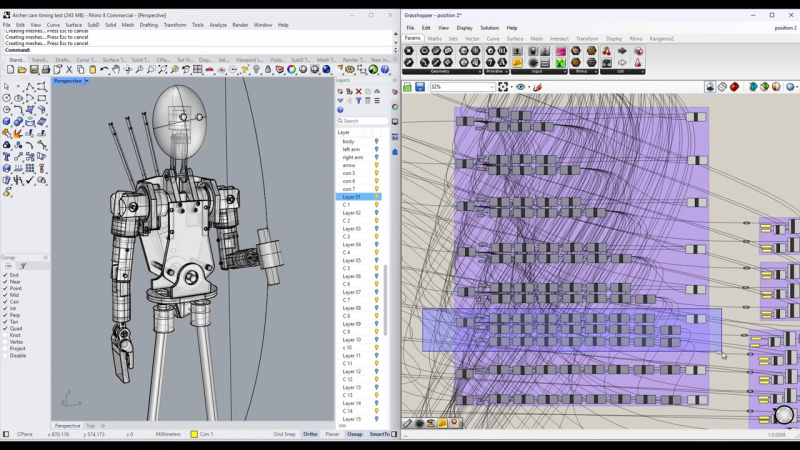
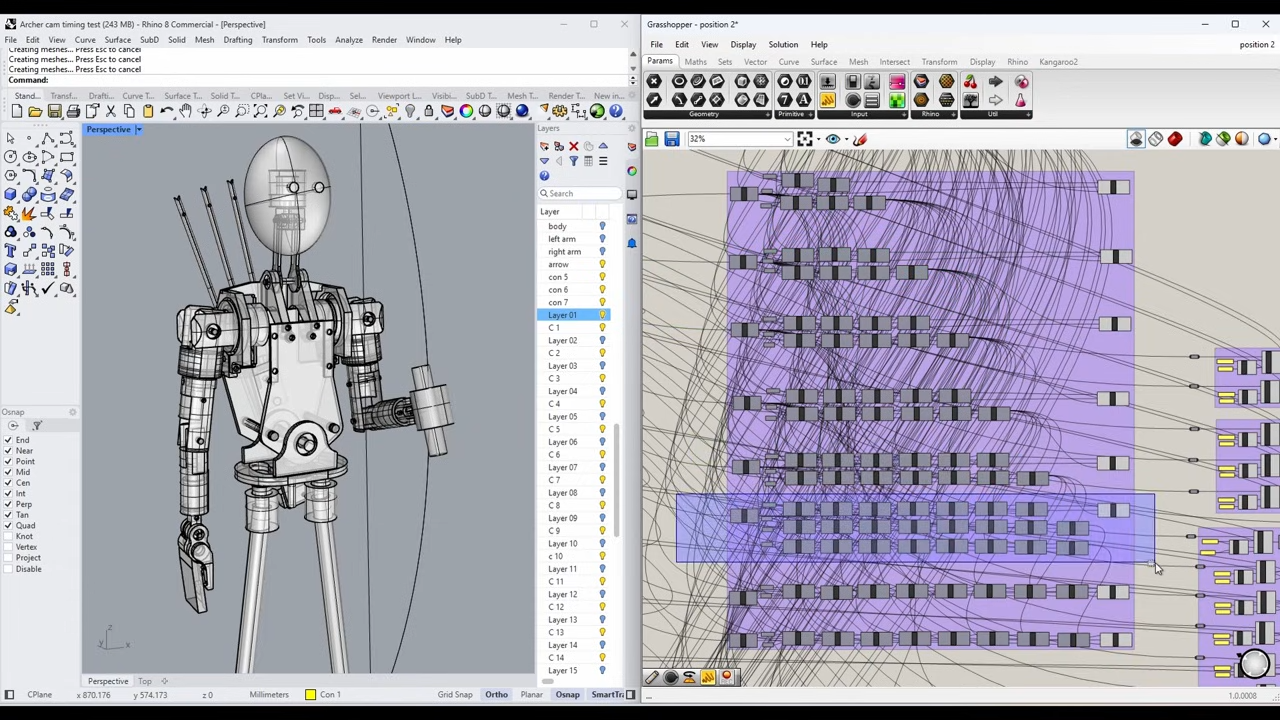
[Oliver Pett] loves creating automata; pieces of art whose physicality and motion come together to deliver something unique. [Oliver] also has a mission, and that mission is to complete the most complex automata he has ever attempted: The Archer. This automaton is a fully articulated figure designed to draw arrows from a quiver, nock them in a bow, draw back, and fire — all with recognizable technique and believable motions. Shoot for the moon, we say!

He’s documenting the process of creating The Archer in a series of videos, the latest of which dives deep into just how intricate and complex of a challenge it truly is as he designs the intricate cams required.

A digital, kinematic twin in Rhino 3D helps [Oliver] to choose key points and determine the cam profiles required to effect them smoothly.

In simple automata rotational movement can be converted by linkages to create the required motions. But for more complicated automata (like the pen-wielding Maillardet Automaton), cams provide a way to turn rotational movement into something much more nuanced. While creating the automaton and designing appropriate joints and actuators is one thing, designing the cams — never mind coordinating them with one another — is quite another. It’s a task that rapidly cascades in complexity, especially in something as intricate as this.

[Oliver] turned to modern CAD software and after making a digital twin of The Archer he’s been using it to mathematically generate the cam paths required to create the desired movements and transitions, instead of relying on trial and error. This also lets him identify potential collisions or other errors before any metal is cut. The cams are aluminum, so the fewer false starts and dead ends, the better!

Advertisement

Not only is The Archer itself a beautiful piece of work-in-progress, seeing an automaton’s movements planned out in this way is a pretty interesting way to tackle the problem. We can’t wait to see the final result.

Thanks [Stephen] for the tip!

Advertisement

Source link

Continue Reading

Tech

Google Pixel 10a Launched in India with Powerful AI Features

Published

on

On 18 February 2026, Google introduced the Pixel 10a in India, positioning it as an affordable gateway to its powerful AI ecosystem. The device is priced at Rs 49,999, the same as last year’s A-series device. The phone will be available starting 6 March 2026. With a strong focus on AI innovation and affordability, the Pixel 10a aims to make smart technology more accessible.

The Pixel 10a is all about functional AI that makes a difference in everyday use. Google is introducing flagship Pixel 10 AI capabilities to the A-series lineup, making advanced functionality more available. Camera Coach helps users take better photos in real-time. Auto Best Take helps group photos by picking the best expressions from a series of photos, even with up to 20 people in the photo. Google also launches Pixel Drops, which provide new features and enhancements on a regular basis.

Big Display with Longer Battery Life

The Pixel 10a comes with a 6.3-inch Actua display that provides crisp and colorful images and has a peak brightness of 3,000 nits, which is the brightest display on any Pixel A-series smartphone. This display is readable even in direct sunlight. The Pixel 10a comes with a 5,100 mAh battery, which is the largest battery in the A-series smartphones till date and provides more than 30 hours of battery life. The Pixel 10a is charged through 30W wired charging and 10W wireless charging.

Durability & Software Support

image for Google Pixel 10a

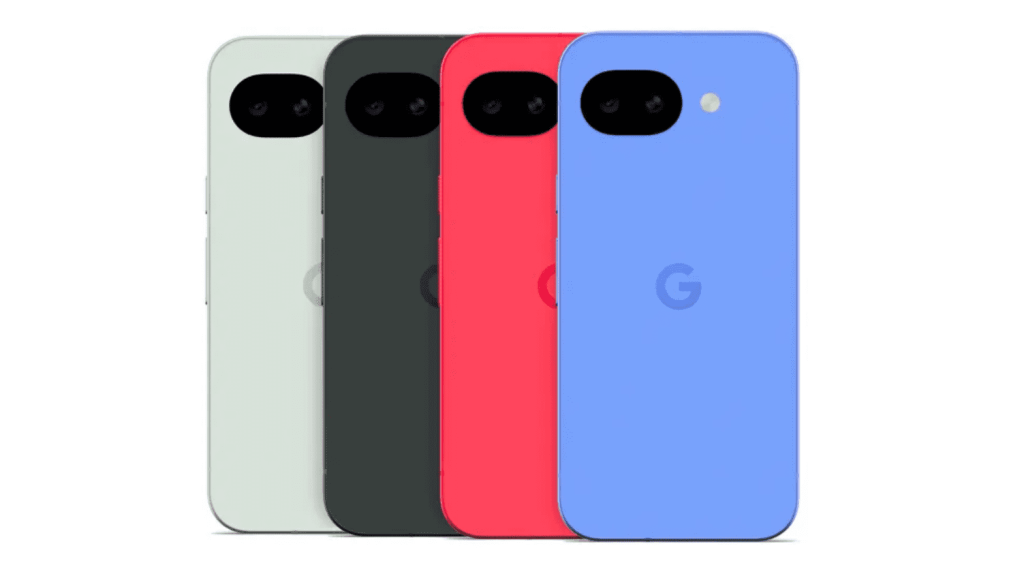
The Pixel 10a is supported by Google for software and security updates for a total of seven years. The device has a Gorilla Glass GG7i display and is IP68-rated, making it dust and water-resistant. Moreover, the phone comes with uniform 4mm bezels that create a balanced look. The colors available for the device are Lavender, Obsidian, Fog, and Berry.

In terms of sustainability, Google has highlighted the eco-friendly options available in the Pixel 10a. Google builds the device with an aluminium frame and an 81% recycled plastic back. The company also uses recycled cobalt, copper, gold, and tungsten, supporting more eco-friendly production.

Advertisement

Pricing, Offers & Pixel Upgrade Program

Google has some attractive offers for the Pixel 10a. You can get a cashback of Rs 3,000 and enjoy up to 24 months of no-cost EMI with the purchase of the Pixel 10a if you make the payment along with some HDFC Bank credit cards. There is also an exchange bonus of Rs 3,000. With the Pixel Upgrade Program, you can pay as low as Rs 2,083 per month with zero interest. In addition, after 9 EMI payments, you can upgrade to a new Pixel with an assured buyback guarantee.

Source link

Continue Reading

Tech

In Praise Of The Proof Of Concept

Published

on

Your project doesn’t necessarily have to be a refined masterpiece to have an impact on the global hacker hivemind. Case in point: this great demo of using a 64-point time-of-flight ranging sensor. [Henrique] took three modules, plugged them into a breadboard, and wrote some very interactive Python code that let him put them all through their paces. The result? I now absolutely want to set up a similar rig and expand on it.

That’s the power of a strong proof of concept, and maybe a nice video presentation of it in action. What in particular makes [Henrique]’s POC work is that he’s written the software to give him a number of sliders, switches, and interaction that let him tweak things in real time and explore some of the possibilities. This exploratory software not only helped him map out what directions to go, but they also work in demo mode, when he’s showing us what he has learned.

But the other thing that [Henrique]’s video does nicely is to point out the limitations of his current POC. Instantly, the hacker mind goes “I could work that out”. Was it strategic incompleteness? Either way, I’ve been nerd-sniped.

Advertisement

So are those the features of a good POC? It’s the bare minimum to convey the idea, presented in a way that demonstrates a wide range of possibilities, and leaving that last little bit tantalizingly on the table?

Source link

Advertisement
Continue Reading

Tech

The US just got an AI layer for immigration. The rules are still loading.

Published

on


What originated as a narrow procurement notice has grown into a broader effort that links machine-learning models with government and commercial records, creating an enforcement infrastructure with few historical parallels. As the software moves from early pilot to wider operational use, the arguments around it have hardened.
Read Entire Article
Source link

Continue Reading

Tech

Retrotechtacular: Bleeding-Edge Memory Devices Of 1959

Published

on

Although digital computers are – much like their human computer counterparts – about performing calculations, another crucial element is that of memory. After all, you need to fetch values from somewhere and store them afterwards. Sometimes values need to be stored for long periods of time, making memory one of the most important elements, yet also one of the most difficult ones. Back in the 1950s the storage options were especially limited, with a 1959 Bell Labs film reel that [Connections Museum] digitized running through the bleeding edge of 1950s storage technology.

After running through the basics of binary representation and the difference between sequential and random access methods, we’re first taking a look at punch cards, which can be read at a blistering 200 cards/minute, before moving onto punched tape, which comes in a variety of shapes to fit different applications.

Electromechanical storage in the form of relays are popular in e.g. telephone exchanges, as they’re very fast. These use two-out-of-five code to represent the phone numbers and corresponding five relay packs, allowing the crossbar switch to be properly configured.

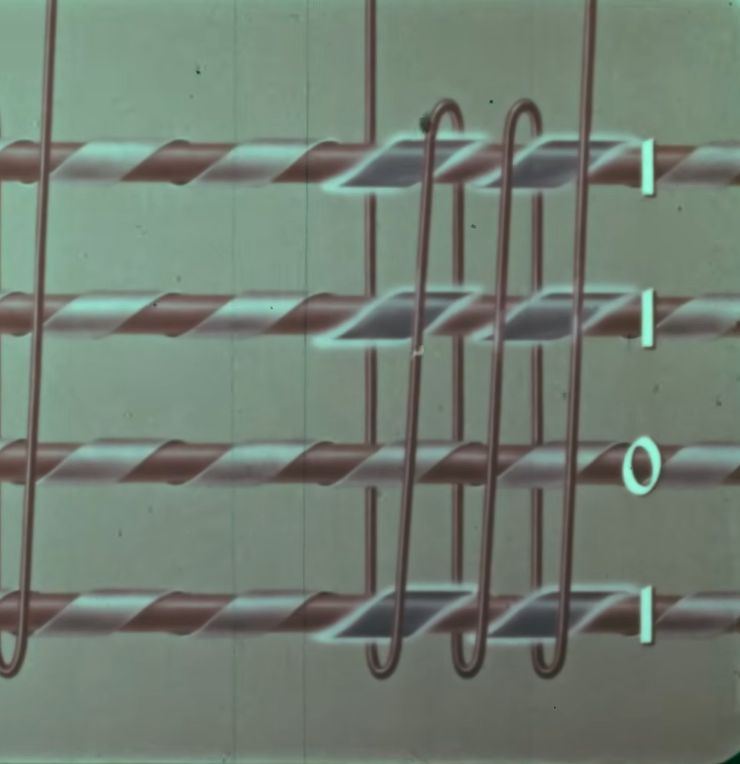
Twistor memory demonstration. (Credit: Bell Labs, 1959)

After these types of memory, we move on to magnetic memory, in the form of well-known magnetic tape that provide mass storage in relatively little space. There is also the magnetic drum, which is much like a very short and very fast tape and provides e.g. working memory. This is what e.g. the Bendix G-15 uses for its clock signal and working memory, while magnetic tape and punched tape are used for application and data storage.

Next we cover magnetic-core memory, which stores a magnetic orientation in its ferrite rings or on a ferrite plate. This is non-volatile memory, but has low bit density and performs destructive reads, preventing its use beyond the 1970s. Today’s NAND Flash memory has significant overlap with core memory in its operating principles, both in its advantages and disadvantages.

Advertisement

An interesting variation on core memory is Twistor memory, which saw brief use during the late 1960s and early 1970s. Invented by Bell Labs, it was supposed to make for cheaper core-like memory, but semiconductor memory wiped out its business case, along with the similar bubble memory. An interesting feature of Twistor memory was the ability to add write-inhibit cards containing permanent magnets.

Fascinatingly, a kind of crude mask ROM is also demonstrated, before we move on to the old chestnut of vacuum tubes. Demonstrated is a barrier-grid tube, which uses electrons to create an electrostatic charge on a mica surface. This electron beam is also used to read the value, which is naturally destructive, making it somewhat similar to core memory in its speed and functionality.

Finally, we get the flying-spot store system, which is a type of optical digital memory. This is reminiscent of optical disc systems like the Compact Disc, and a reminder of all the amazing breakthroughs that we’d be seeing over the next decades.

Perhaps the best part about this video is that it shows the world as it sidled still mostly unaware towards these big changes. Memory storage was still the realm of largely hand-assembled, macro-sized devices, vacuum tubes and chunky electromechanical relays. Only a few years after this video was released, we’d see semiconductor technology turn the macro into micro, by the 1970s nerds would be fighting over who had the most RAM in their home computers, and CD-ROMs would set the world of computer storage and home game consoles ablaze by the 1990s with literally hundreds of MBs of storage per very cheap disc.

Advertisement

Source link

Advertisement
Continue Reading

Tech

A $300 Radeon RX 9060 XT just smashed the world GPU overclocking record

Published

on


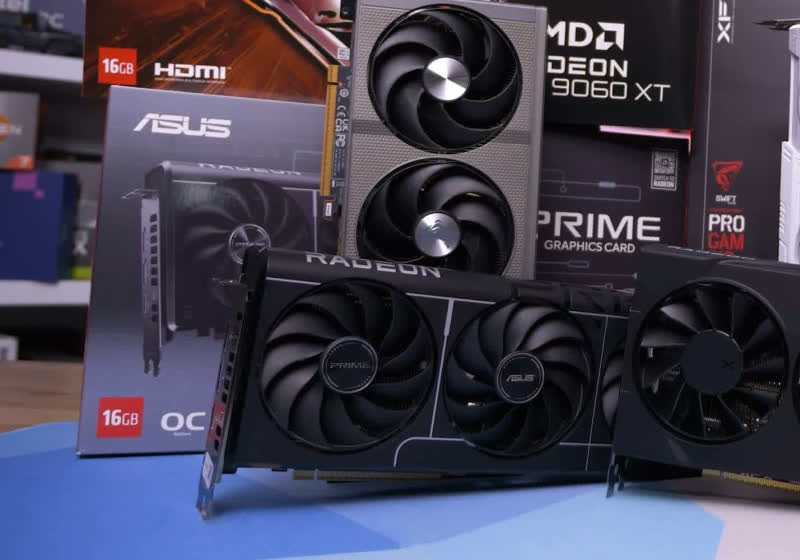
AMD teamed up with two well-known overclockers, Bill Alverson (aka “Sampson”) and Splave, to push a Radeon RX 9060 XT to 4,769 MHz. That’s a new world record for GPU frequency – and it wasn’t even close to the previous mark.
Read Entire Article
Source link

Continue Reading

Tech

Sony’s WH-CH720N headphones offer excellent value at full price, but right now they’re a steal.

Published

on

We’ve tested oodles of noise-canceling headphones and the Sony WH-CH720N might have an unfortunate name, but they’re the best budget-friendly pair we’ve tried. They usually offer good value when selling for the full $178 MSRP, but right now they’ve fallen to $95 shipped on Amazon and $100 on Best Buy.

 Sony WH-CH720N headphones

These headphones are well-built and well-designed, with great active noise cancellation and robust sound. They don’t fold up and they don’t come with a case, but you can get a case as a separate purchase if that’s a deal-breaker for you.

These are lightweight, with adaptive sound that can adjust itself to suit your environment. Moreover, if you want a pair of over-hear wireless headphones with active noise cancellation, it’s very difficult to get that in a package this affordable. Tack on the long-lasting 35-hour battery, and paying under $100 becomes a no-brainer if you’re in the market and on a tight budget. We haven’t seen them drop this low in price before.

We’re nowhere near a shopping event like Amazon Prime Day or Black Friday, but this is just one of several headphone deals we’ve spotted recently. Check those stories out if you’re on the hunt for wireless gaming earbuds or open earbuds.

Source link

Advertisement
Continue Reading

Tech

Miranda’s Unlikely Ocean Has Us Asking If There’s Life Clinging On Around Uranus

Published

on

If you’re interested in extraterrestrial life, these past few years have given an embarrassment of places to look, even in our own solar system. Mars has been an obvious choice since before the Space Age; in the orbit of Jupiter, Europa’s oceans have been of interest since Voyager’s day; the geysers of Enceladus give Saturn two moons of interest, if you count the possibility of a methane-based chemistry on Titan. Even faraway Neptune’s giant moon Triton probably has an ocean layer deep inside. Now the planet Uranus is getting in on the act, offering its moon Miranda for consideration in a kinda-recent study in the Planetary Science Journal.

Miranda and Uranus, the new hot spot for life-hunters. 
Photomontage credit NASA.

Even if you’re into astronomy, it may seem like this is coming out of left field. “Miranda, really? What new data could we possibly have on a moon of Neptune nobody’s visited since the 1980s?” Well, none, really. This study relies on reexamining the data collected during the Voyager 2 encounter and trying to make sense of the chaotic, icy world that the space probe revealed.

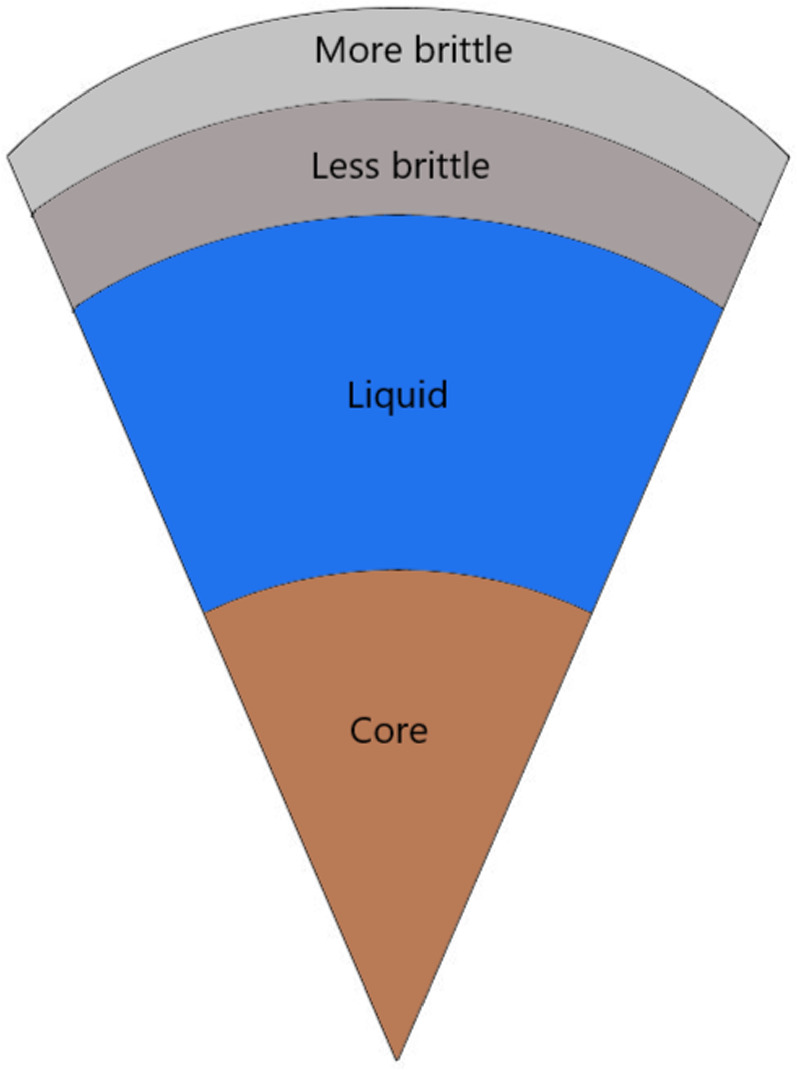
The faults and other features on Miranda indicated it was geologically active at some point; this study tries to recreate the moon’s history through computer modelling to find that Miranda probably had a ≥100 km thick ocean sometime in the last 100-500 million years, and that while some of it has likely frozen since, tidal heating could very well keep a layer of liquid water within the moon’s interior. Since the moon itself is only 470 km (290 mi) in diameter, a 100km deep ocean layer would actually be a huge proportion of its volume.

The model is a fairly simple one, with the ocean sandwiched between two layers of ice and a rocky core. Image from Caleb Strom et al 2024 Planet. Sci. J. 5 226

Right now, the over-optimistic thinking is that “water means life”, since that’s how it seems to work on Earth. It remains to be seen if Miranda, or indeed any of the icy moons, ever evolved so much as a microbe. Aside from the supposed presence of liquid dihydrogen monoxide, there’s nothing to suggest they have. Finding out is going to take a while: even with boots — er, robots — on the ground, Mars isn’t giving up that secret easily. Still, if we’re able to discover irrefutable evidence for such extraterrestrial life, it will provide an important constraint on one term of The Drake Equation: what fraction of worlds develop life. That by itself won’t tell us “are we alone,” but it will be interesting.

Of course, even if all these worlds are barren now, they might not be for long, once our probes start visiting.

Story via Earth.com

Advertisement

Header image: Miranda, imaged by Voyager 2. Credit NASA/JPL-Caltech

Source link

Advertisement
Continue Reading

Tech

Microsoft’s new gaming CEO vows not to flood the ecosystem with ‘endless AI slop’

Published

on

Microsoft announced a major gaming shakeup on Friday, with Microsoft Gaming CEO Phil Spencer departing the company, along with Xbox President Sarah Bond.

Spencer will be replaced by former Instacart and Meta executive Asha Sharma. With Sharma’s most recent role as the president of Microsoft’s CoreAI product, these moves suggest that Microsoft might be doubling down on bringing AI into video games.

The company had already been experimenting with ways to combine AI and gaming, for example developing an AI gaming companion and releasing a buggy, AI-generated level from “Quake II.” 

Indeed, in an internal memo published by The Verge, Sharma wrote that Microsoft “will invent new business models and new ways to play” and said that “monetization and AI” will both “evolve and influence this future.” At the same time, she said that the company “will not chase short-term efficiency or flood our ecosystem with soulless AI slop.”

Advertisement

“Games are and always will be art, crafted by humans, and created with the most innovative technology provided by us,” Sharma added.

That’s just one of three “commitments” Sharma made in her memo. The others involve building “great games beloved by players” and prioritizing Xbox.

Source link

Advertisement
Continue Reading

Trending

Copyright © 2025