Tech
How One Rider 3D-Printed His Own Airless Mountain Bike Tires

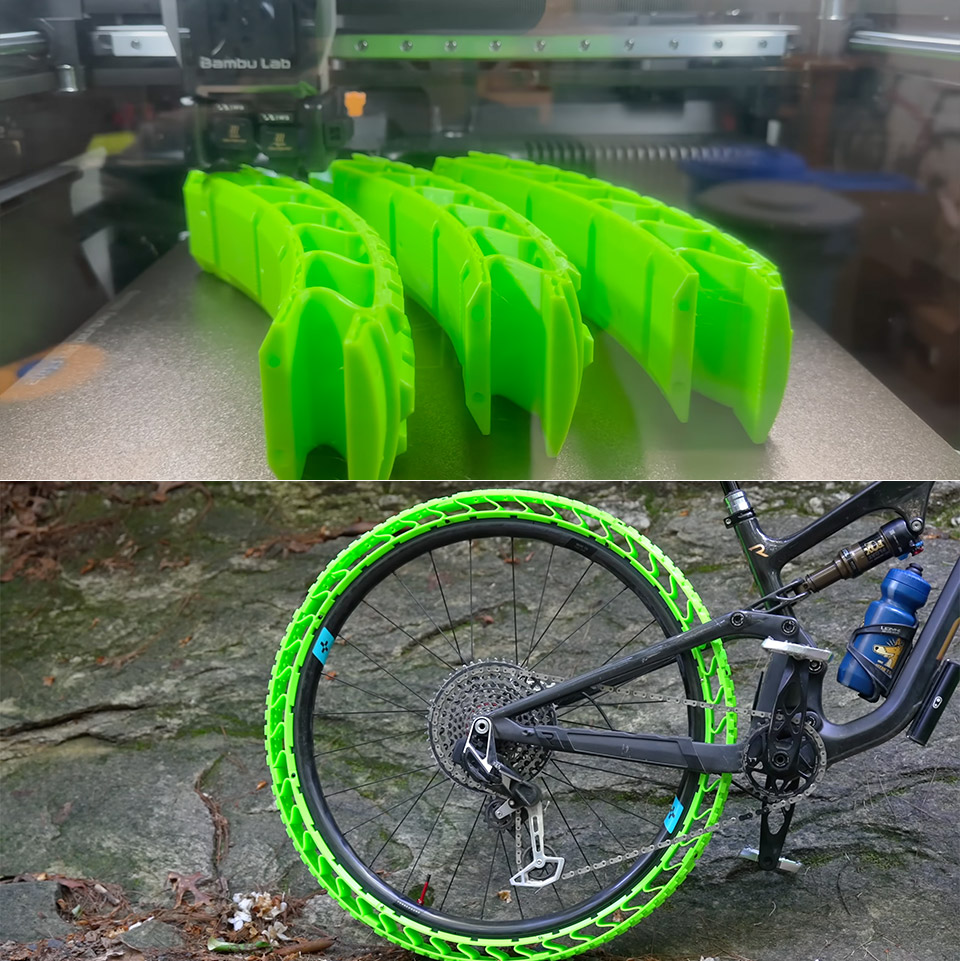
Companies have spent years showing off car tires that never go flat. Michelin and others roll out concept designs built from polymer webs that support the load without a single molecule of air. Those prototypes look sharp in tech demos, but almost never reach actual cars. Mountain bikes face a harder version of the same problem. A sharp rock or thorn can end a ride in seconds. Sealant inside modern tubeless tires already stops most punctures, yet the dream of a tire that simply cannot lose pressure still pulls people in. Berm Peak, the popular mountain-bike YouTuber known for building and testing unusual gear, decided the only way to get a real airless mountain-bike tire was to make one himself.

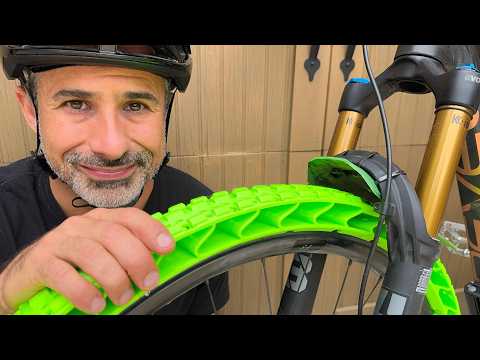
He started by looking for items that had already been made available for purchase. The search results showed foam inserts for children’s bikes and a few solid road tires that were the wrong size for him. Nothing came up with adequate knobs or a size that would fit modern mountain bike wheels. However, an older invention from 2012 drew his attention: the Britek Energy Return Wheel. Although cellphone videos showed it rolling across mud, the device never made it to market. That was enough to convince him to open his design file and turn on the printer.


Bambu Lab A1 3D Printer, Ready-to-Use FDM 3D Printer for Beginners and Kids
- High-Speed Precision: Experience unparalleled speed and precision with the Bambu Lab A1 3D Printer. With an impressive acceleration of 10,000 mm/s…
- Multi-Color Printing with AMS lite: Unlock your creativity with vibrant and multi-colored 3D prints. The Bambu Lab A1 3D printers make multi-color…
- Full-Auto Calibration: Say goodbye to manual calibration hassles. The A1 3D printer takes care of all the calibration processes automatically…
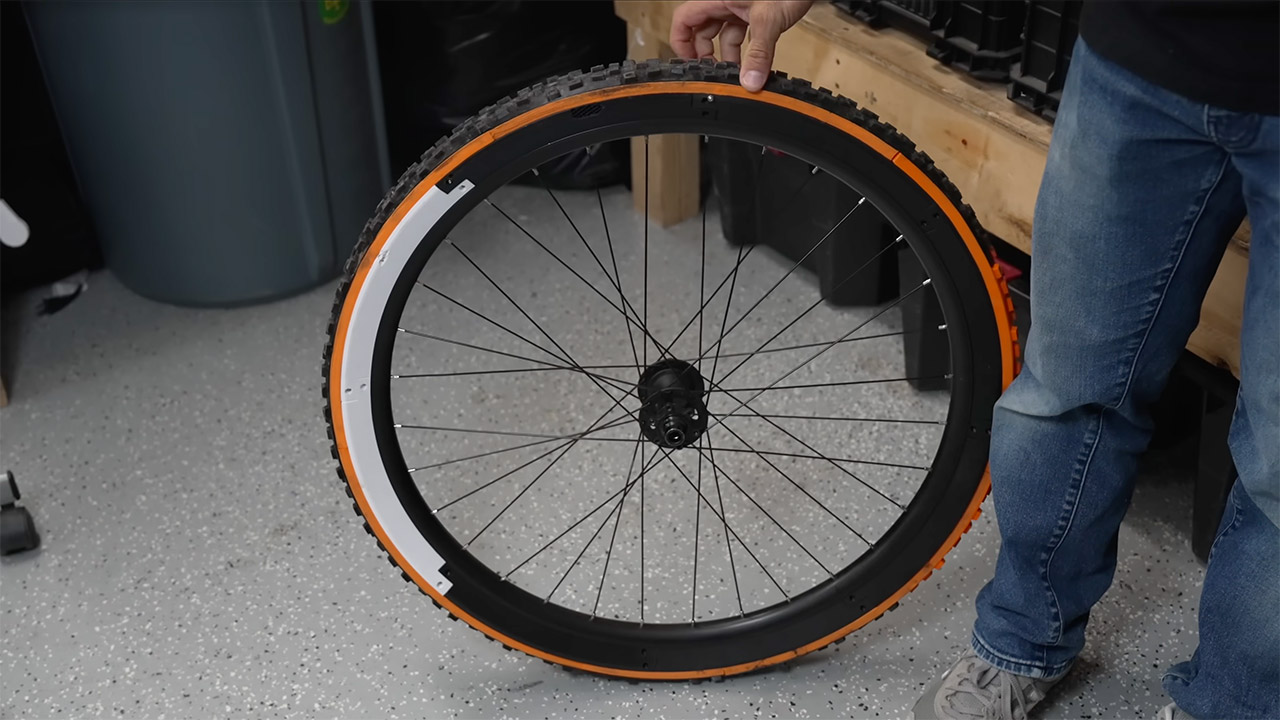
Berm Peak teamed up with Brendan, an engineer who had previously experimented with segmented printed tires. Initially, the thoughts were leaning toward the dramatic open-spoke look seen in concept art for science fiction films, but practical testing swiftly put an end to that. After several rounds of trial printing, the pair decided on a TPU framework with S-shaped flexible bridges connecting the outside tread and inner rim. When loaded, the S-curve compresses and then bounces back, similar to how air compresses in a standard tire.

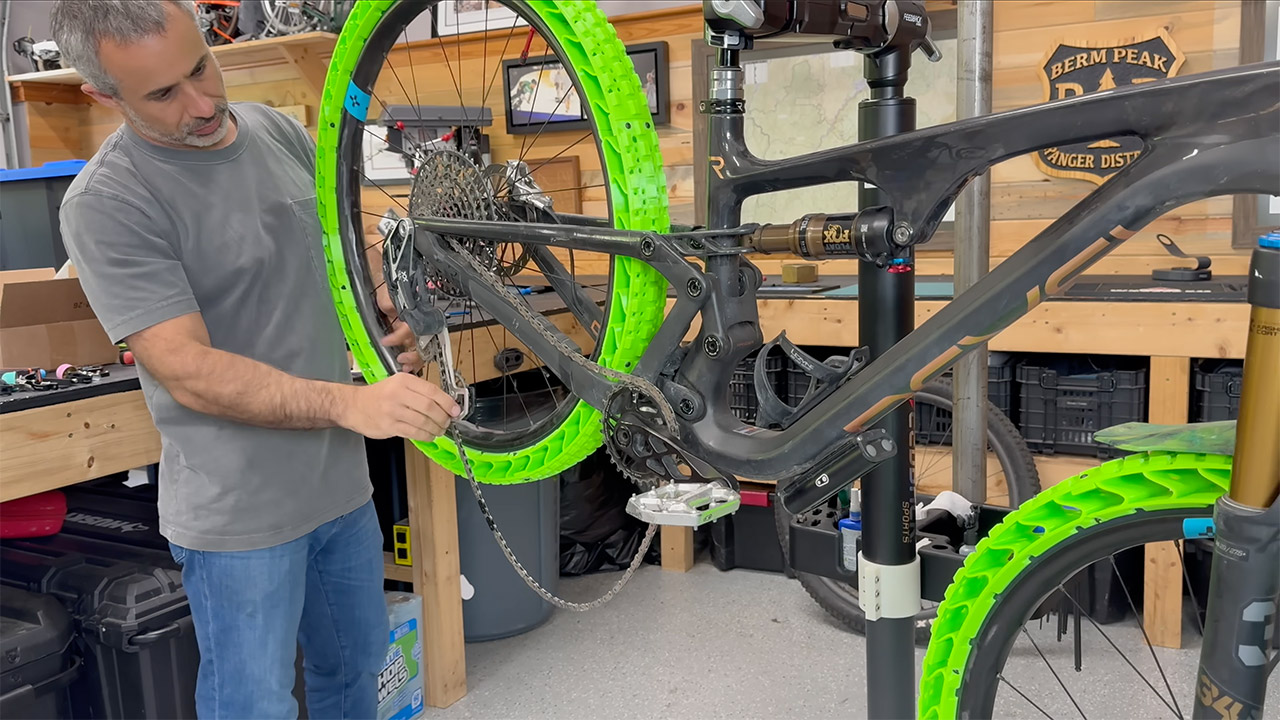
TPU is a flexible filament that functions similarly to skateboard wheel rubber, thus they chose it as their main material. They employed a Bambu Lab H2D, a dual-nozzle machine capable of laying down both soft TPU and detachable support material in the same project. Instead of a single loop, each tyre is built up of many arc-shaped parts. The components connect with small dovetail joints and are held in place by screws that run through printed interfaces and rest against the rim. There is no need to fiddle with stretching or forcing. The final tyre snaps into place piece by piece. The first functional set came in a bright neon green, which truly makes the odd structure stand out along the trail.
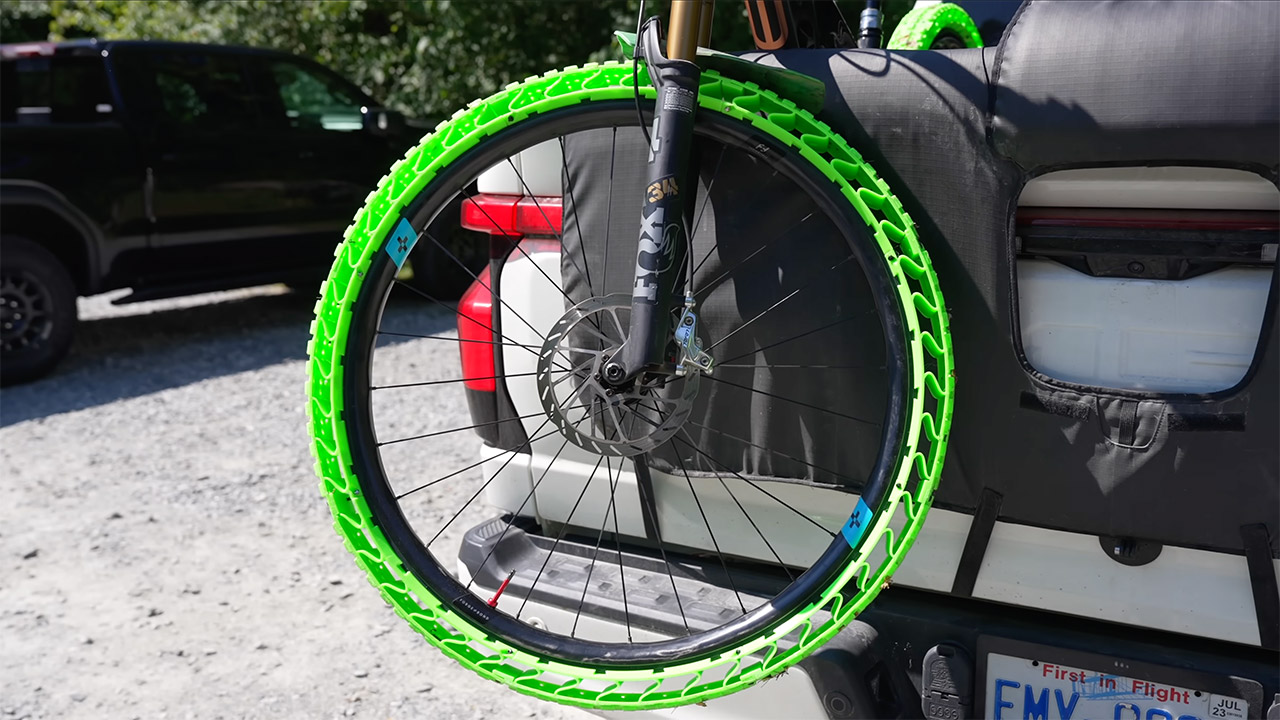
Once completed, Berm Peak took the bike out on the mountain bike trails and rode the same lines he regularly rides on ordinary rubber. The printed tires absorbed little bumps in a wonderfully quiet, almost subdued manner. On soft mud, the grip felt solid. On jagged rocks, however, the contact was slightly less predictable, and the tread, which was made of the same solid TPU as the rest of the structure, lacked the give of commercial rubber. Nonetheless, the bike remained upright despite the harsh bends and impacts that would have popped a standard tube.

Durability was a major concern because the front tire lasted the first big sessions, but the rear tire began to show symptoms of wear soon, failing at the joints where the sections met. Impacts had begun to loosen the screws and cause cracks that spread from one piece to the next, and because the tire is modular, Berm Peak could simply replace out the damaged section without having to remove the wheel from the bike, a very useful feature that commercial tires cannot match. He already has a fresh version in the printer, with smoother transitions at stress spots and softer TPU on the knobs and key regions, thanks to the twin nozzles.
[Source]
You must be logged in to post a comment Login