Tech
How Tall Is Too Tall To Drive A Tank? Here’s What The US Army Says

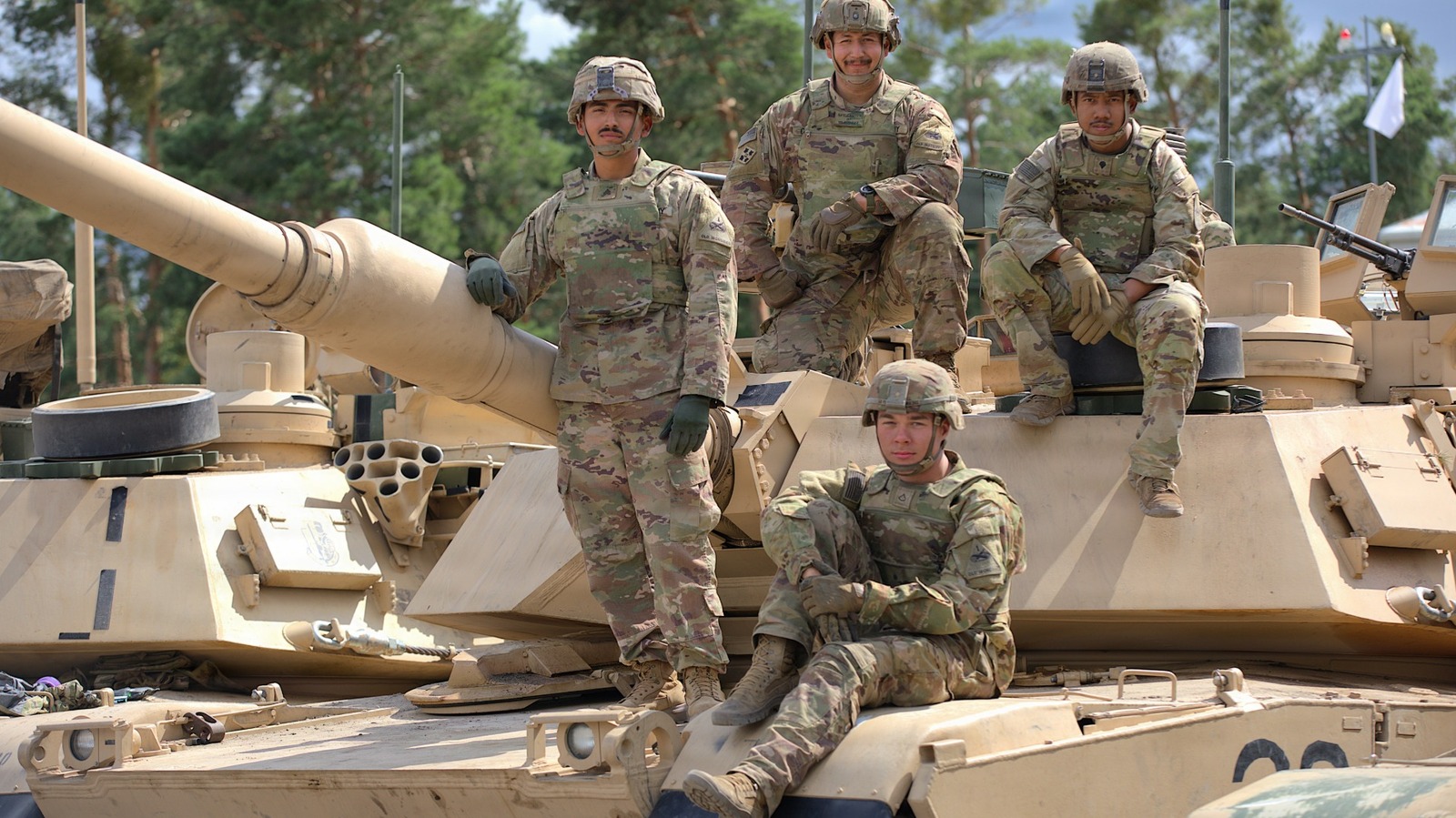

The United States military is filled with all kinds of standards that recruits must meet upon joining and starting training. These include several areas of physical fitness, and unlike most jobs in the U.S., there are height and weight requirements. Believe it or not, you can be either too tall or too short to enlist, with a range of 4 feet, 10 inches to 6 feet, 8 inches for both genders’ minimum and maximum height. These restrictions are meant to ensure that all personnel can safely operate military equipment, though it is possible to get a waiver in some situations.
In addition to the height limits for the general military, certain jobs have more stringent requirements across all of the services. These standards apply to personnel operating on different types of ships, airplanes, and tanks. This makes sense, as submarines, fighter jets, and armored vehicles have limited crew compartments, making it uncomfortable if not impossible for people of a certain height to take those jobs.
To become a tanker, which in the Army is Military Occupational Specialty (MOS) 19K, Armor Crewmember, a person cannot exceed 6 feet, 1 inch in height. Fortunately, that doesn’t limit too many applicants, as the average height of an American woman is 5 feet, 3.5 inches, while men average around 5 feet, 9 inches tall. Because the U.S. military operates the M1 Abrams Main Battle Tank, the height requirements are universal across its variants. Unlike tankers, the height requirement for MOS 19C, Bradley Crewmember, isn’t restrictive for those operating the M2 Bradley Infantry Fighting Vehicle.
The inside of an M1 Abrams MBT is cramped
Tanks have always been cramped, as their design requires a great deal of armor to protect the personnel inside. The vehicle also needs to be able to navigate roads, bridges, and various terrain, so making them wider isn’t typically an option, while making them higher only makes them easier to see and strike. If you look back through the history and evolution of tank design, this remains a constant, as tight quarters are the name of the game.
When looking specifically at the driver’s compartment, it sits center and to the front of the tank with a hatch that allows the driver to peer out (pictured). Just above the hatch is the forward edge of the turret ring. Inside, the driver sits on a seat and has little room for their legs. The steering-throttle control sticks up between the legs with handlebars for operating the tank, while the driver looks at a screen for information about the vehicle. The steering-throttle control is a yoke that controls acceleration and steering.
The compartment is cramped, to say the least, so there’s not a huge margin for anyone exceeding 6 feet, 1 inch in height. Even at that height, it’s not the most comfortable place in the world to work, but many tank drivers do so every day they put on their uniform and step inside their vehicle. The other positions inside the tank don’t offer much more in terms of space, though there’s a bit of room for the tank commander, gunner, and loader, as the driver is isolated from the rest in the forward hull.
You must be logged in to post a comment Login