SpaceX’s Seattle connection dates back to 2015, when CEO Elon Musk announced at Seattle Center that the company’s satellite operation would be based in the region. “What this represents is the official opening of SpaceX Seattle,” he said at the time. (GeekWire File Photo)
SpaceX’s initial public offering is likely to boost the company’s valuation to $1.77 trillion, promote CEO Elon Musk to trillionaire status — and benefit the Seattle area’s space community as well.
The $75 billion IPO, which will add SpaceX to the Nasdaq stock exchange on Friday, is expected to be the biggest initial public offering in history. It’ll provide more capital for expanding SpaceX’s satellite networks and putting the company’s Starship mega-rocket into operation. Shareholders, including some of the hundreds of SpaceX employees in the Seattle area, could get a golden opportunity to cash in.
There could also be a payoff for Pacific Northwest space ventures that are banking on the lower launch costs and higher payload capacity SpaceX is promising to deliver.
“The reality is that SpaceX is the elephant in the room — and for a real reason, which is that they’ve got the lowest cost of launch and will continue to do so when Starship is up and running,” said Brendan Wales, general partner at Fuse, a Seattle-based venture capital firm. “So, whether SpaceX is successful or not, it is very impactful on Seattle startups.”
Those startups include a few that have received funding from Fuse, such as Redmond-based Starcloud, which aims to send a constellation of data center satellites into space; and Bothell-based Portal Space Systems, which is developing highly maneuverable spacecraft designed to inspect, service or deorbit other satellites.
Advertisement
The list of Washington state’s space ventures doesn’t stop there: Space Northwest, a Seattle-based space industry association, says more than 75 space companies call the Evergreen State their home.
SpaceX connects with the Seattle area
Even SpaceX is on Space Northwest’s map, by virtue of the company’s satellite production facility in Redmond. Back in 2015, Musk told a Seattle Center audience consisting primarily of potential employees that the satellite operation would be set up in the Seattle area instead of Southern California because “a lot of you guys, it seems, don’t want to move to L.A.”
Since then, SpaceX’s Redmond campus has been responsible for building nearly two-thirds of the world’s active satellites in orbit, and according to SpaceX’s IPO filing, the factory continues to turn out 70 satellites per week for its Starlink broadband internet constellation. With more than 12 million subscribers, Starlink generates more than half of SpaceX’s revenue and is the only one of the company’s three business segments to turn a profit.
SpaceX hasn’t said how many of its employees work in Redmond, although informal estimates range from 800 to 2,000. It’s even less clear how many of those employees will cash in on stock options. For what it’s worth, comments posted to Reddit suggest there won’t be enough of an impact to skew the Seattle area’s already-overheated housing market. “I think it’s going to be a big nothingburger,” one commenter wrote.
Advertisement
Starlink was just the first step in Musk’s strategy to turn SpaceX into a satellite company as well as a launch company. Most recently, Musk has laid out a vision for sending a million satellites into orbit to process data for artificial intelligence. But the IPO filing suggests that Redmond won’t be getting the biggest piece of that action: Instead, SpaceX says its operation in Bastrop, Texas, will be put in charge of producing AI compute satellites.
Seattle-area ventures connect with SpaceX
The impact of this week’s IPO won’t be limited to SpaceX and its shareholders, said Stan Shull, who monitors the Seattle area’s space industry as the founder and managing director of Alliance Velocity.
“A successful SpaceX IPO is likely to further accelerate the space industry, driving even more investment into the sector,” Shull said in an email. “Also, we may see a new round of now-wealthy SpaceX employees leave and start new entrepreneurial space ventures, including here in the greater Seattle area. Finally, the significant funds that SpaceX is raising with this IPO will help to ensure their success developing the Starship rocket, which some space companies are banking on for their own business models.”
For example, Marysville-based Gravitics is developing the orbital equivalent of aircraft carriers for customers including the U.S. Space Force. The largest varieties of those cargo-carrying spacecraft are designed to ride into space on SpaceX’s Starship or other heavy-lift rockets.
Advertisement
“SpaceX gets you to space. Gravitics makes it possible to operate once you’re there,” Gravitics CEO Colin Doughan said in an email. “The IPO confirms the launch layer is durable enough to build on. We’re executing on the logistics layer above it: more mass per mission, lower cost per kilogram, designed for the way commercial operators are actually flying now. We are thrilled for our friends at SpaceX and see this as good for the industry overall.”
Space Northwest lists dozens of space-related ventures with connections to Washington state. Click on the image for a larger version, or click here to open up an interactive version of the map on Space Northwest’s website. (Space Northwest Infographic, Click to Enlarge)
Jason Andrews, the co-founder and CEO of a spaceflight training venture called Orbite Space, acknowledged that he and fellow founder Nicolas Gaume had SpaceX’s Starship in mind when they created their Seattle-based company.
“Nicolas and I did indeed start Orbite because of the revolution Starship represents — a radical reduction in price, increase in frequency, and overall improvement in the client experience,” he said in an email. “As outlined by SpaceX, one of their ultimate missions is human expansion to the moon and eventually Mars, which is a good thing for the prospect of human spaceflight across the range of customers: governments, businesses and consumers. … Human spaceflight will soon be available to a much wider swath of humanity, and we are excited to play a small part in making that happen!”
That may take a while, Shull said. “Initially, SpaceX is likely to prioritize Starship launches for its own space business ambitions and commitments. These include next-generation Starlink deployments, contracted flights for NASA’s Artemis moon program, its ambitious orbital AI data center plans, and possibly even test flights to Mars,” he said. “While I think Starship can and will be a total game-changer for the space industry, companies whose business models are largely or entirely reliant on ultra-low-cost Starship availability might have to bide their time or compete for early flight opportunities.”
SpaceX currently dominates the global launch industry — and if it continues to do so in the post-IPO era, Shull said the company may not feel the need to reduce its prices as rapidly as potential customers hope. Heightened competition from Seattle-area launch companies like Jeff Bezos’ Blue Origin space venture (for heavy-lift payloads) and Stoke Space (for medium-lift payloads) could change the equation.
The excitement generated by SpaceX’s IPO, and by lower launch costs, could also spark a new wave of companies doing things that sound like science fiction today. For example, one of the startups in a recent Y Combinator cohort, Galactic Resource Utilization Space, aims to build the first hotel on the moon.
Wales, the startup investor at Fuse, acknowledges that some of the business plans inspired by SpaceX’s IPO may never get off the ground. But the way he sees it, that’s totally normal.
Advertisement
“That type of thing happens when you’ve got a lot of capital flowing into a market, and then maybe it pulls back and there’s less of the wild stuff,” he said. “But I like these bubbly moments, because it allows for creativity. Some things will survive, and there are going to be things that could change the world.”
Get caught up on the latest technology and startup news from the past week. Here are the most popular stories on GeekWire for the week of July 19, 2026.
Rudra “Rudy” Mitra, who led Microsoft’s Purview data-security business, is joining Amazon Web Services as vice president of security services. … Read More
A painting of the short-spined raccoon by prolific Seattle artist Ryan Henry Ward attracted a winning bid of $6,543.21 in an informal Instagram auction this weekend, with all proceeds directed to the Ballard Food Bank. … Read More
Amazon confirmed layoffs in its artificial general intelligence organization, the group behind its Nova models, as the company sharpens its AI focus toward tools for business customers. … Read More
Jimothy, the short-spined Seattle raccoon, has become a global sensation whose likeness has been immortalized in artwork, clothing, songs and tattoos — and now a video game created in the creature’s hometown. … Read More
Hayete Gallot, who rejoined Microsoft in February to lead its security business, is pushing the company toward “agentic security” — systems that spot threats and act on them without waiting for a human. … Read More
Seattle startup Copper is getting a high-profile boost from Grammy-winning artist and entrepreneur Diplo, who has invested in the company as it expands its consumer rewards platform. … Read More
Amazon is closing its San Francisco AGI site as part of the layoffs it made this week in its artificial general intelligence organization, but said its frontier model research lab will continue. … Read More
Phone screens are better than they’ve ever been—bigger, sharper, and brighter—but they don’t always offer the best displays for extended reading sessions. If you’ve got a lot of text to get through, you might find yourself turning to a Kindle instead, or even a good old-fashioned physical book.
There are ways to tweak the screen configuration on your iPhone or Android phone, however, to make it more suitable for reading. These changes will reduce the chance of causing you eye strain while minimizing clutter to create a more pleasant reading experience. You won’t transform your phone into something that rivals an e-reader or the printed page, but you can certainly get closer to it.
Tweak the Display Settings
You’ve actually got more control over the font sizes, styles, and colors used by your phone than you might have realized—you can make text easier to read and create a more Kindle-like experience with just a few taps via the main Settings panel.
If you’re on Android, the menu labels will vary from model to model, but on Pixel phones head to Display size and text. The next screen lets you adjust the size of the default font and other on-screen elements to make text bolder, and there’s also a Dark theme option that you might find reduces eye strain.
Advertisement
Adjusting the font size on Android.Courtesy of David Nield
Over on iOS, open up Display & Brightness from Settings: Here you’ll find a Text Size slider you can adjust, as well as a Bold Text toggle switch. As on Android, there’s a dark mode option here via the theme selector at the top of the screen—select Dark to dim the colors all across the iOS interface.
Both Android and iOS also have a night reading mode that reduces the blue light emitted from your phone and makes the whole display warmer—which should make for a more pleasant reading experience. On Android Pixel phones, choose Display and touch > Night Light from Settings, and on iOS pick Display & Brightness > Night Shift. In both cases you can enable the feature manually or via a schedule.
Use Your Browser’s Reading Mode
Much of the reading you’re going to be doing on your phone will be through its web browser, and most modern mobile browsers come with a dedicated reading mode you can use. These modes will reduce onscreen clutter, simplify the color scheme, and bring the main article text to the fore.
If you’re using Google Chrome as your default browser on Android, tap the three dots (top right), then Show Reading mode to switch views for the article you’re currently reading. Swipe up on the panel at the bottom of the screen to change the font and color options. Tap the reading mode icon (just to the right of the address bar) to return to the normal browser view.
The exciting part of buying a ‘broken, for parts’ off a site like EBay is that you rarely know exactly just how ‘broken’ it truly is. Even if the seller insists that it’s thoroughly buggered, you just might be able to eke out a fix with some out-of-the-box thinking and plucky ingenuity. Such was the case for [Dieter Vansteenwegen] who gambled on a cheap Canon 7D Mark II DSLR body that was sold for a mere €180 on account of broken condition.
After confirming that the DSLR’s condition was basically as described by the seller, with nothing on the LCD or HDMI output and the auto-focus not working while partially pressing the trigger button, but still taking a picture when fully pressed. Sometimes it would also show a standard maintenance message on the LCD, so clearly it ought to be working. Maybe the camera’s processor was just being chronically unhappy about something, in which case an easy fix might be possible.
As anyone who has ever taken a digital camera apart knows, you do not simply pop them open for a quick look. Somewhere in the nightmarish contraption of flatflex cables, PCBs and endless sub-assemblies there might be a fault, but where to start? Fortunately with some support from the custom Canon firmware community Magic Lantern and the website Photo Parts UA for reference images he was able to start tracing a number of pertinent signals.
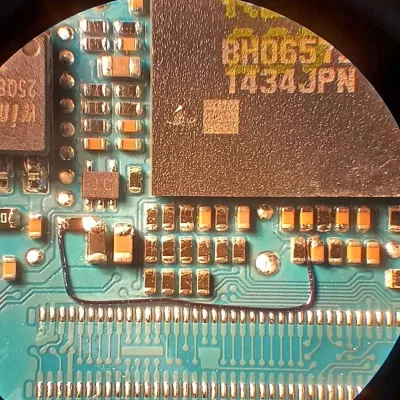
With the auto-focus hint as guide, this was traced back to the MPU, which turned out to have a floating signal on the auto-focus pin that got interpreted as ‘active’. Likely the internal pull-up got damaged due to the use of an external trigger module as there’s no real protection on these lines. One bodge wire later to create an external 3.3 V pull-up the DSLR happily sprung back to life.
Advertisement
In terms of parts this definitely was a cheap repair, but it comes with the prerequisite of having the skills and equipment to perform said repair. Still, massive props and congratulations to [Dieter] for saving this DSLR from being merely a device to be picked over for parts.
After OpenAI recently admitted that one of its models had breached the systems of AI platform Hugging Face, Hugging Face’s CEO Clem Delangue posted on X that he was flying to San Francisco to have “a little chat with that ‘rogue agent.’”
Then, in a follow-up post on Saturday, Delangue outlined what he’d asked for from OpenAI. He said he called for “radical transparency,” asking OpenAI to “release the traces from the ‘rogue’ agents so the entire research community can study what happened.”
And he also wants “more capabilities for defenders,” calling for OpenAI to commit $100 million worth of computing power “to help the Hugging Face community build powerful cyber defenses with the best open and closed models.”
Delangue added, “The first autonomous agent cyberattack is an unprecedented event. It deserves an unprecedented response!”
Advertisement
Despite the autonomous nature of the attack, cybersecurity experts suggested that it could also be blamed on human error — namely, OpenAI’s apparent failure to properly configure what should have been a fully isolated testing environment.
Click To Pray, a prayer app endorsed by the Pope with hundreds of thousands of users worldwide, has leaked people’s names and email addresses for months – or longer – according to an ethical hacker who said she found and reported the security vulnerability six months ago to no avail. This app needs to take a vow of silence when it comes to your personal information.
The app, available in seven languages and on iOS, Android, and clicktopray.org, is the official app of the Pope’s Worldwide Prayer Network. It connects users across the globe to pray for the Holy Father’s intentions, and as of July 2026, it has 719,517 registered accounts.
Advertisement
It’s also very leaky, according to security sleuth BobDaHacker, who says she spotted and disclosed the vulnerability to the Pope’s Worldwide Prayer Network on January 3.
“The vulnerability is still live,” the hacker said in a Friday blog. “Nobody has ever responded. I guess my email wasn’t in their prayers.”
The Reg readers likely remember BobDaHacker for her previous research exposing a free-food flaw in McDonald’s ordering system and open controls on Chinese robot manufacturer Pudu Robotics.
This latest security hole stems from an Insecure Direct Object Reference (IDOR) bug in the prayer app. This is a very common and easy-to-exploit type of flaw that occurs when a website or an app blindly accepts user-provided input to view or modify resources without checking to see if the user is actually authorized to retrieve the data.
Advertisement
“You ask for your own data, the server gives it to you,” BobDaHacker explains. “You ask for someone else’s data, the server gives you that too. Thou shalt not authorize, apparently.”
When you sign up for a Click To Pray account, the app assigns you a sequential numeric user ID. As BobDaHacker uncovered, the API endpoint GET https://api[.]clicktopray.org/user/users/{id} will return user data for any account – not just your own account – so long as you supply a valid, five-digit user ID.
It doesn’t perform any authorization check or ownership validation. “Just increment the number and get someone else’s data,” she wrote.
This data includes users’ email addresses, first and last names, country, dates of birth, and whether the account has been deleted, and the API exposes all 719,517 accounts on the prayer site. “With sequential user IDs and no rate limiting, an attacker could enumerate every single account on the platform,” the hacker explained. “One GET request per user. for i in range(1, 719518): scrape(). That’s it. That’s the exploit.”
Advertisement
As BobDaHacker points out, many of these users are likely older individuals, not all that tech savvy, and very trusting of anything Vatican related, making these exposed accounts a “phishing goldmine.”
“Imagine getting an email that says ‘The Holy Father requests your urgent attention’ with a Vatican-looking link,” she wrote. “Grandma is clicking that. Every time.”
And then it gets even worse.
The signup endpoint, POST https://api.clicktopray.org/user/users/sign-up, returns the account’s validation_hash directly in the response body, and that value is the same UUID used in the email verification link. This means someone could sign up using any email address and verify the account before the confirmation message reached the inbox.
Advertisement
Plus, BobDaHacker’s email client flagged the real verification email with a warning that it had failed the domain’s authentication requirements and might have been spoofed or improperly forwarded.
“So not only is the API leaking 700,000 email addresses that could be used for phishing, but the real emails from Click To Pray already look like phishing,” the hacker noted. “An attacker wouldn’t even need to try hard. They could send a pixel-perfect phishing email and it would have the same level of email authentication as the real thing: none. God works in mysterious ways.”
The Register reached out to the Pope’s Worldwide Prayer Network and did not receive any response. BobDaHacker says she’s still praying for one, too.®
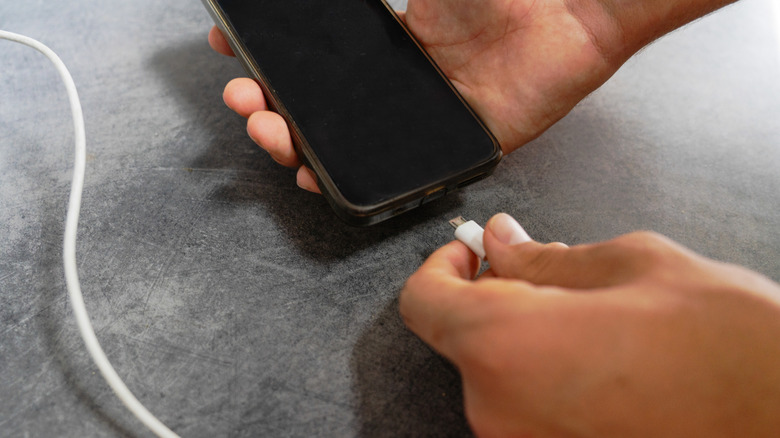
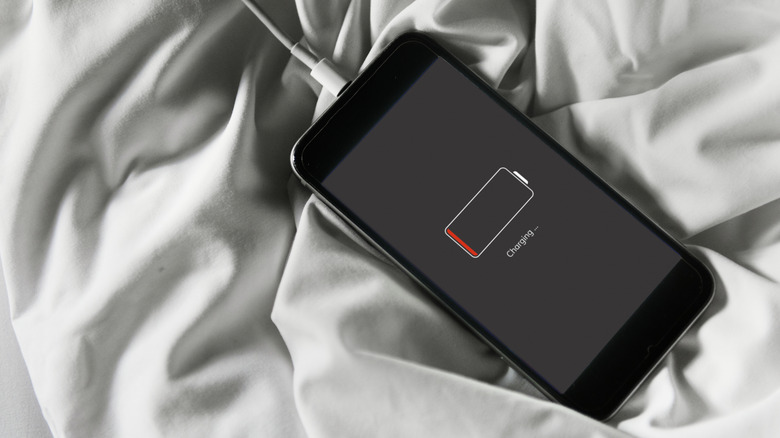
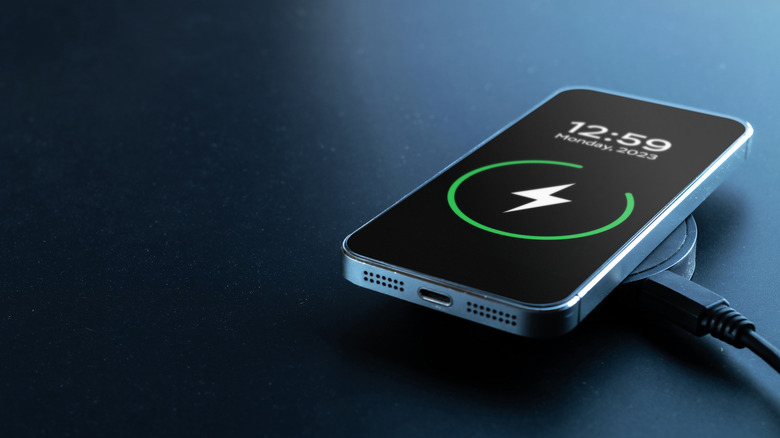
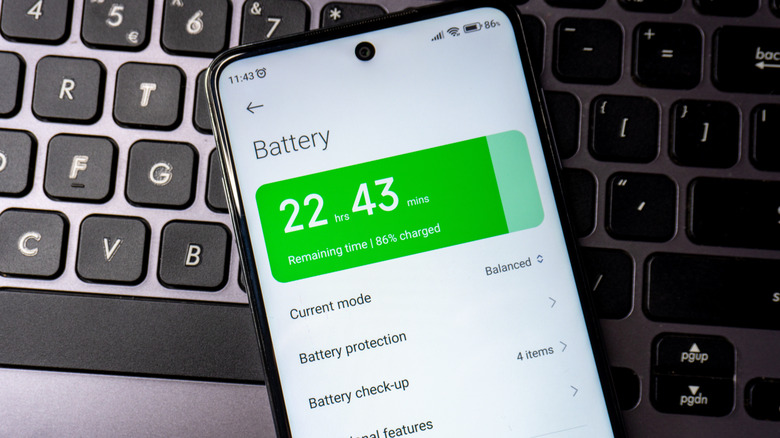
Even though smartphone batteries are getting bigger and more efficient, there’s always that inevitable event when you get a low battery notification at the worst possible time. You might think powering down the phone entirely is a way to make your smartphone last longer. But like with any battery-powered device, a phone’s battery will slowly deplete when you’re not actively using it, and even when it’s completely powered down.
Of course, the battery drains much more slowly when turned off, so it’s not a bad idea to power down the phone to conserve battery. That might be before a plane takes off, for example, and you want to ensure you have power when you arrive at your destination. If you leave an old phone in a drawer for weeks or months then decide to use it, however, you’ll find that the battery isn’t still at the same percentage it was when you left it.
Advertisement
Why the battery depletes
Rawpixel/Getty Images
Why does this happen? One thing that draws battery from your phone while it’s off is a clock-and-wake circuit, which uses a tiny amount of current so that the power button responds when you want to turn it on and so the phone immediately knows the right time and date once it boots back up. But the biggest battery drain is something called a self-discharge, a chemical release of the lithium-ion batteries used in phones. The battery will lose about 1-2 percent of its power every month or so when turned off. If you store it in a spot that’s above room temperature, it will deplete even faster than that.
If you leave the phone on and don’t use it, the battery will logically drain much more quickly. I have left Android phones I’m testing untouched for up to a week, for example, and they easily go from about half charge to completely dead in that time. That said, if you’re giving a phone a break, it’s still a good idea to power it down completely. While there’s still that self-discharge, it will be much slower than if you leave the phone on. When the device is on, the screen lights up for notifications, the radio remains active and latched onto signals, and background apps are using power.
Advertisement
Keep it half charged
Nature/Getty Images
If you plan to keep a phone tucked away long-term, like if you upgraded and you’re waiting for your pre-teen to become of age so they can use it, it’s wise to keep the device charged consistently to avoid damage. Apple recommends not fully charging your phone before you put it away for an extended period, suggesting you charge an iPhone only to about 50 percent. Then recharge it every so often (Apple recommends every six months) so it’s always topped up and not lying completely dormant.
This prevents something called a deep-discharge state, which can happen when a device’s battery has been completely dead for a long period of time. If it gets to this point, the phone’s battery’s copper current collector can dissolve, redeposit, and permanently impact the phone’s battery capacity, or even potentially cause a short circuit. At the very least, the loss in battery capacity means the phone wont last as long per charge going forward.
Tips for keeping the battery healthy
Korosi Francois-Zoltan/Shutterstock
To recap, if you’re storing a phone, power it down when the battery is at about 50 percent and charge it back up to this point at least every six months. Most importantly, don’t throw it in a drawer completely dead nor fully charged. Don’t forget to store it in a cool, dry place with temperatures below 90°F.
All that said, leaving a phone lying around for months isn’t a total death sentence. I have left some of the best Android phones released over the last five years powered down for months and charged them for comparative reviews. They work fine even if the battery capacity isn’t as good. I even recently found an old BlackBerry PlayBook tablet that hadn’t been booted up since 2011. I plugged it in and it successfully charged and works! But it’s clear the battery life has lessened as it barely lasts a day before I need to recharge it.
Advertisement
The bottom line is that if you power down your phone, it won’t have the same charge state when you power it back up, especially if weeks or months have gone by. It might still show the same battery percentage if you’ve only powered it down for a 12-hour flight, but the battery is still draining through self-discharge and the clock-and-wake circuit, albeit so slowly you won’t notice after such a short period of time. However long you turn off the phone, powering down doesn’t mean the phone’s battery is completely on pause until you use it again. But it can help conserve what battery life you have left in a pinch.
For most owners, keeping a vehicle ultra-clean isn’t an easy task. Nonetheless, the health benefits of having a car that’s free from germs are inarguable. Hyundai and Kia just unveiled new technology that aims to help make eliminating those germs a lot easier.
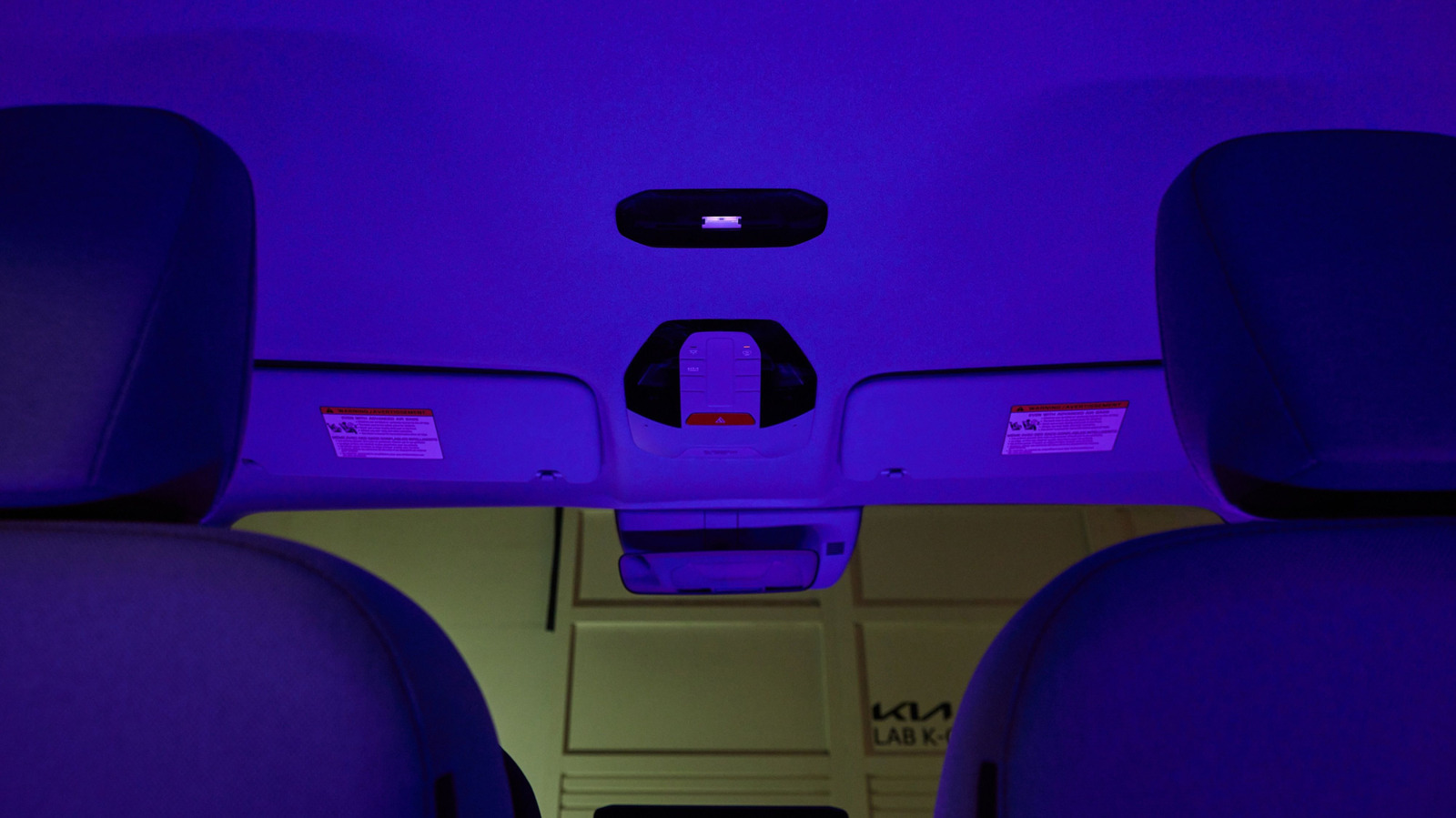
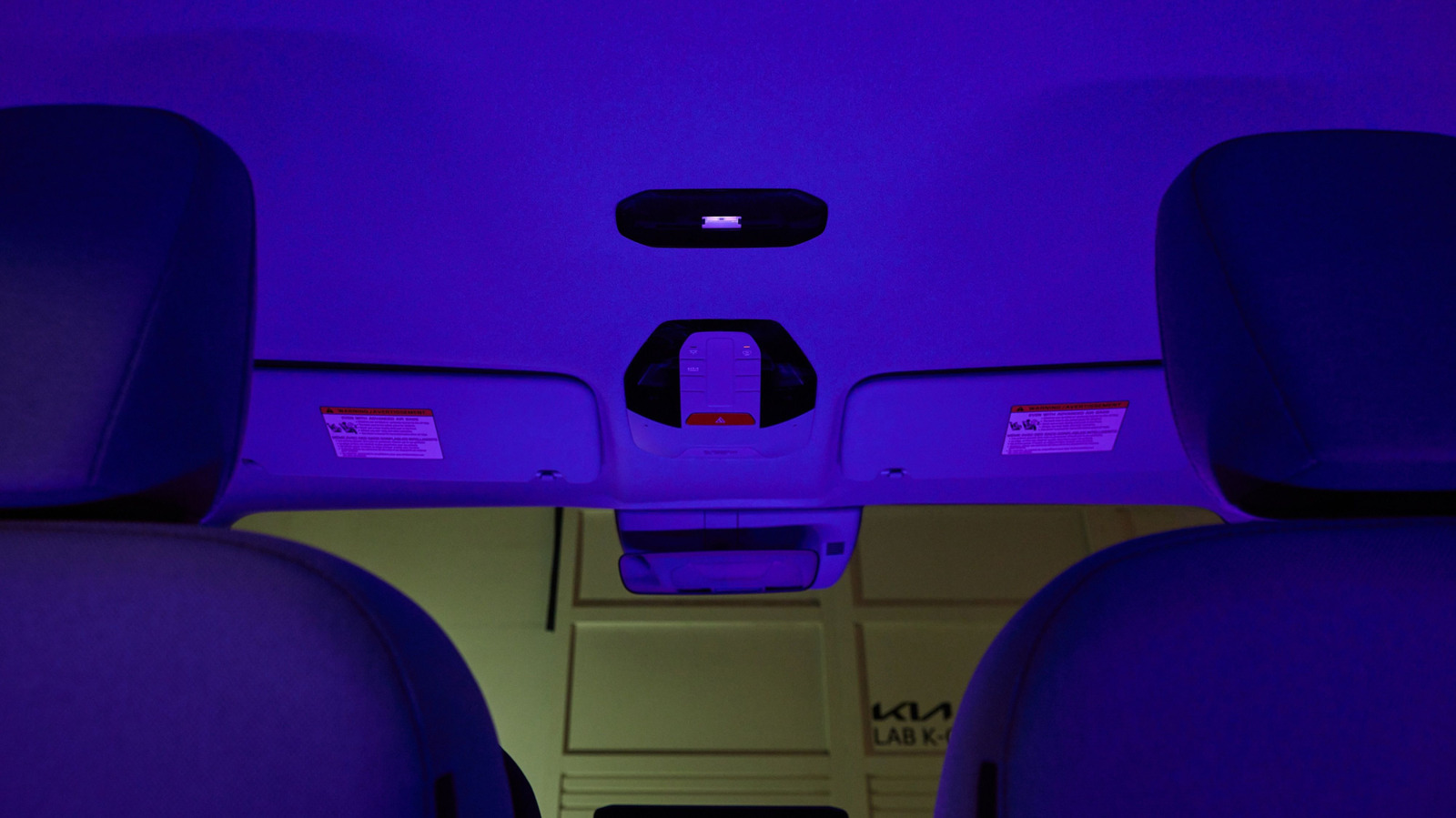
The carmaker is calling the technology “Plasma Care UVC,” and it uses far-ultraviolet C light with a wavelength of about 200-230 nanometers to sterilize a car’s cabin. UV sterilization devices are not new, but traditionally, some use UV light of a slightly longer wavelength than Hyundai’s new system. As a result, they have the potential to cause skin and eye damage if a human is exposed to them.
Advertisement
Hyundai says the far-UVC light it is using in its new technology won’t cause damage, since the light doesn’t penetrate human skin. However, it does still penetrate into bacteria and viruses, making it an effective way to sanitize a car even when the driver and passengers are present.
Although this is the first time that far-UVC light sanitizers have been fitted to a vehicle cabin, similar systems that use the same wavelength of light are already used to clean rooms in healthcare settings like hospitals, as well as sanitizing hotels and classrooms.
Hyundai says that its engineers encountered several challenges when trying to make the system work in cars, with one of the biggest being that the existing systems were simply too big to fit. Its team had to develop a new, miniaturized version of the system, as well as fitting an optical filter to ensure that no UV light of a harmful wavelength was emitted.
Advertisement
Far-UVC technology isn’t available in production cars yet
To test that the system worked as intended, the carmaker fitted it to a PV5 minivan. This model in particular was picked because it can be used for a range of different transport jobs, shuttling both passengers and cargo to their destinations.
Following the initial successful tests, Hyundai said that its technology could potentially be applied to autonomous vehicles and PBVs, a term that it has previously used to describe its modular electric vehicles that can be designed for a specific job. It gave the examples of school minibuses and food selling vehicles as two instances where sanitizing technology might be especially useful.
Advertisement
As appealing as the new technology might sound to germaphobes, it isn’t available to the general public just yet. Hyundai has not given a timeframe for when the UV sanitizers might launch in its production vehicles, saying only that it needs to conduct more safety and technical validation tests before it gives them approval for production.
“Welcome home!” NASA posted on X.com, sharing footage of a successful “parachute-assisted” landing on a Kazakhstan steppe for the Soyuz MS-28, carrying three astronauts who’d spent 241 days on the International Space Station. (And YouTube has a full two-hour video with NASA’s coverage of the landing.)
A NASA web page notes they orbited Earth 3,856 times and traveling more than 102 million miles after docking with the Space Station on November 27. It was the first mission for NASA astronaut Chris Williams and Roscosmos cosmonaut Sergei Mikaev (and the second mission for Roscosmos cosmonaut Sergey Kud-Sverchkov). “After routine post-landing medical checks, recovery teams will fly the crew by helicopter to Karaganda, Kazakhstan. Williams then will board a NASA aircraft bound for the agency’s Johnson Space Center in Houston.”
So, how are those commercial replacements working out for you, NASA?
This week marks 15 years since a Space Shuttle last returned from orbit and the end of NASA’s Space Shuttle program.
Space Shuttle Atlantis landed at the Shuttle Landing Facility (SLF) at Kennedy Space Center 15 years ago this week, marking the final mission for the program.
Advertisement
STS-135 was originally designated STS-335, the Launch On Need (LON) mission for the previous STS-134 flight of Space Shuttle Endeavour. LON missions had been a feature of the Space Shuttle program following the Columbia disaster.
If a Space Shuttle was damaged, another could be launched at short notice to rescue the crew. NASA assigned Launch On Need flights separate STS-3xx designations, so the rescue mission for STS-116 was STS-317, STS-117 was STS-318, and so on. There were exceptions (a notable one was the STS-125 Hubble servicing mission, which had STS-400 ready to go if anything went wrong), but the Space Shuttle program should have ended with STS-134.
However, lawmakers and NASA managers opted to make STS-135 the final Space Shuttle mission. There could be no Launch On Need mission waiting in the wings this time around – the Space Shuttle program was being wound down – so the crew would have had to come down from the International Space Station (ISS) aboard Soyuz capsules if Atlantis could not return to Earth safely. There were also only four crew members, a figure not seen since the STS-6 mission of Challenger in 1983.
The crew was commanded by Christopher Ferguson, who would later join Boeing’s Commercial Crew Program and was assigned to (although did not fly) Boeing’s calamity capsule, the Starliner. The pilot for STS-135 was Douglas Hurley, who went on to fly the first crewed test flight of SpaceX’s Crew Dragon in 2020. Rounding out the crew were mission specialists Sandra Magnus and Rex Walheim.
Advertisement
The launch occurred on July 8, 2011, and Atlantis returned from orbit on July 21, bringing the Space Shuttle program to a conclusion.
It wasn’t, however, the end of crewed spaceflight for the US, although the gap that followed was considerably greater than expected or hoped. After the Space Shuttle retired, the US was dependent on Russia for getting its astronauts to and from the ISS. NASA later awarded Commercial Crew contracts to SpaceX and Boeing to restore launches from US soil, but it took SpaceX until 2020 to get the first humans to the outpost, and Boeing until 2024.
The latter’s mission was marked by ignominy due to failures and faults during the mission that meant managers opted to send the capsule back to Earth empty from the ISS and have the Starliner flight test crew return in 2025 aboard a SpaceX vehicle. NASA and Boeing have yet to set a definitive date for when a crew might venture to the ISS once again aboard Starliner.
All of which, 15 years after a Space Shuttle returned from orbit for the last time, has left the US space agency in a bit of a pickle. Instead of depending on the Space Shuttle, the plan was to reduce risk and add redundancy to US capabilities with two providers, but things haven’t worked out that way. To make matters worse, there is uncertainty about how much longer SpaceX will continue to fly the Crew Dragon beyond its contracted missions. The vehicle is reusable, but no more are planned to be manufactured, and SpaceX reckons that each should be good for 15 flights, with some refurbishment.
Advertisement
This should be enough to get through to the end of the ISS program and beyond, but in the longer term an alternative will be required. For SpaceX, this will likely be Starship.
The fate of the Space Shuttles themselves is also not completely set. Atlantis has been staged in a facility at Kennedy Space Center as if in orbit, and the California Science Center has mounted Space Shuttle Endeavour on an external tank and solid rocket boosters, as though ready for launch. The fate of Space Shuttle Discovery is, however, uncertain. Certain lawmakers would very much like to transport the retired orbiter from the Smithsonian’s Steven F. Udvar-Hazy Center in Virginia to Houston, Texas.
For others, well, there’s always a used Orion capsule. ®
Apple is aiming for a WWDC 2027 smart glasses unveil and is debating whether to include a camera amid the privacy backlash Meta created
Apple is currently aiming to unveil its first smart glasses at next June’s Worldwide Developers Conference, with a consumer release by the end of 2027, according to Bloomberg’s Mark Gurman. But the company’s engineering and marketing teams are still wrestling with a question that will define the product: whether its glasses should include a camera at all. The teams developing the device, code-named N50, within Apple’s Vision hardware group see privacy as the top priority, Gurman reported on Saturday.
That caution is a direct response to the backlash Meta created. Meta has sold more than seven million pairs of its Ray-Ban smart glasses, but the product’s camera has become a lightning rod for privacy complaints, with women being secretly filmed in public and Kenyan data workers reporting they were asked to review intimate footage captured by the devices. Apple executives are acutely aware that simply entering the same category risks undermining a privacy reputation the company has spent more than a decade building.
Apple is planning safeguards that go beyond what Meta and Samsung have offered. The company will favour on-device processing, eschew facial recognition, and avoid anything resembling Meta’s proposed “super-sensing” mode, which would continuously analyse a wearer’s surroundings without activating the recording indicator light. Apple also does not plan to follow Meta’s practice of having contractors review footage captured by its glasses, having already dealt with a similar controversy around its Siri voice assistant.
Advertisement
One option Apple executives have debated would include the full camera system but disable photo and video recording entirely, limiting the cameras to feeding visual data into AI tools that identify objects and places. Another prototype eliminates the camera hardware altogether, retaining hands-free Siri access, music playback, and phone calls without any recording capability. Both approaches would sacrifice what has made Meta’s glasses popular: effortless first-person video of holidays, children, and sporting events.
The privacy problem is not theoretical. Apple is entering one of the most important product cycles in its history, with the 20th anniversary iPhone, a second-generation foldable, camera-equipped AirPods, and new Macs all expected in 2027. Courtrooms across New York State have already banned smart glasses, Royal Caribbean has barred them from casinos, restrooms, and children’s areas, and Samsung has called the privacy situation an “industry-shared problem” requiring a collective fix.
The glasses were originally targeted for introduction later this year under the N50 code name, but Apple delayed the timeline partly to refine its privacy message. The company knows from experience that good intentions do not prevent misuse: its AirTags, designed to locate belongings, quickly became associated with stalking. Camera-equipped glasses will inevitably face similar problems, and Apple will likely spend years updating software and working with regulators to address them.















 After confirming that the DSLR’s condition was basically as described by the seller, with nothing on the LCD or HDMI output and the auto-focus not working while partially pressing the trigger button, but still taking a picture when fully pressed. Sometimes it would also show a standard maintenance message on the LCD, so clearly it ought to be working. Maybe the camera’s processor was just being chronically unhappy about something, in which case an easy fix might be possible.









































You must be logged in to post a comment Login