

The average person works 80,000 hours over the course of their career. Ideally, that time should be fulfilling, well-paid, and spent doing things that make the world a better place.
Tech
How to make the most important choice of your life


Of course that’s much, much easier said than done. In an increasingly fragile job market made still more fraught by AI, there’s no longer such a thing as a safe bet.
According to Benjamin Todd, most people lack a systematic approach to thinking about their career choice. Todd is the co-founder and president of 80,000 Hours, a nonprofit dedicated to helping people move into careers focused on tackling the “world’s most pressing problems” — issues that include AI safety, biosecurity, global health, and animal welfare. 80,000 Hours uses the effective altruism framework of importance, neglectedness (how many resources are devoted to the problem), and tractability (or solvability) to decide which causes to prioritize.
In his new book 80,000 Hours: How to Have a Fulfilling Career That Does Good, which was released this week, Todd pulls together more than a decade of research and advising into a guide for making career decisions. It’s aimed at people just starting out as well as more experienced workers looking to make a switch, providing a framework to make career choices.
I spoke with Todd about careers and skill sets that are more resistant or adaptable to AI job disruptions, why “going with your gut” (usually) isn’t good advice, tips for landing a high-impact job offer, and other topics.
Our conversation below has been lightly edited for length and clarity.
There’s a lot of anxiety around advances in AI and job displacement, how that affects people’s job prospects and how they should think about career choices.
Yeah, I feel like when I talk to people about their careers these days, that’s the main thing that’s on their mind. … I think a lot of the simple answers about which jobs will be best [in the age of AI] are too simple.
How have the last few years — thinking about AI but also other disruptions and changes to the job market — changed your core assumptions about how people should choose their careers?
The main thing that comes to mind is we seem to be getting more and more evidence that far more capable AI will be here soon.
Then I think that just has a lot of implications for which problems are most pressing, and then potentially also which skills are most valuable. If there’s going to be a lot of change and things will be more unpredictable 10 years from now, then it makes sense to focus on shorter-term plans than to spend 10 years training to do something. Starting medical school now seems a lot more risky than it would have been 10 or 20 years ago.
When you say AI is coming and going to change things, are you talking about artificial general intelligence (AGI) specifically?
I mean there’s multiple levels. I think [where the technology is now], if it just froze here, would be kind of similar to the internet and how important it was. But the big-picture thing that seems most important is the idea that you could get to some kind of AI that can do a lot of remote work jobs at roughly a human level. That seems like it could bring the economy and science into a significantly different regime.
I’m probably a bit more skeptical than most technologists of mass near-term unemployment from AI, though I also think that most economists are still underrating how big a deal it could eventually be.
You mention in the book that managing AI agents is a skill less likely to be replaced by AI. Why is that?
I talk about four things that could make skills become more valuable in the future given technology and automation. And the second one is complementarity to AI. So it’s not that AI won’t be able to do that, it’s that it’s a skill where as AI gets better, that skill becomes more valuable. Because if AI is more useful and being used to do more things, and you can make it like 1 percent or 10 percent more efficient, then the value of that additional efficiency increases as AI becomes more useful.
Right now, AI is pretty bad at these messy, nebulous, long-horizon things where you need to coordinate between lots of people and decision-makers. I think in an intermediate future there will be a lot of the more routine work tasks that are being done by AI agents, but then there’s human managers who are needed to stitch them together.
That seems to me like that might be a very lucrative job, but that might not add up to a lot of jobs.
That comes down to how much more stuff can get done in total. And those people would be way more productive than people have been in the past, because everyone is running a team of 10 AIs. So we would want many more people doing that type of thing.
One way to think about it is that a lot of things that in the past would have been too expensive to do would become economically feasible because now you don’t need a team of 30 people to start this new nonprofit. You can do it with a team of three people and a bunch of AI. So then a lot of people could start new projects and you just get a lot more total things being done with [the aid of] AI rather than, “Oh, we have to do the same stuff as before, but with only 10 percent as many people employed.”
I think that’s maybe good for people at a mid- or senior level in their career, but it could make things harder for more entry-level people.
I think that’s a little bit too early to say. So there is some research that finds that skilled human managers are also better at managing AI agents, and there’s a kind of correlation in that skill set. There is research about the most junior software engineers, [that finds] their jobs are down 20 percent. But in some ways young people are just much more adaptable to new technology, and I find a lot of college students seem to be significantly more sophisticated at using AI.
So in some ways, and because it’s changing so fast as well, young people might be better placed to learn how to use these tools faster and adapt as they keep changing. I’m a bit less confident it’s going to be bad for the younger workers.
That’s interesting because I’ve seen quite a lot of headlines and quite a lot of anxiety from younger people around their job prospects.
I think it’s very understandable to be anxious because they’re facing far more change to the job market than any recent generation has had to face. No one really knows exactly how it’s going to shake out. I would say one point for optimism is in theory it will mean that many projects are possible that weren’t possible before. That does also open up a lot of extra opportunities for young people who I think in some ways are better placed to take on these more risky and novel things because they’re less set in their ways.
“I would say one point for optimism is in theory it will mean that many projects are possible that weren’t possible before.”
Because better or worse, AI is a force multiplier.
Totally. We were talking about this skill [at managing AI agents] being lucrative. It would also be applicable to a lot of social problems as well.
What does effective altruism get right about career choice — and wrong?
I think most people just aren’t thinking enough about the impact of their career at all, and they actually have this amazing opportunity to at a minimum save people’s lives and maybe do a lot more by helping prevent the next pandemic or being one of the only people working on AI risks.
When people are thinking about choosing a career, that should really be one of the first things they say: “The world’s facing massive problems. You could do something about them. Wouldn’t that be fulfilling and interesting? Why not do it?”
But people within effective altruism can think too much about their impact. I think people naturally compare themselves to others, but then people who get into effective altruism will tend to compare themselves based on impact. That’s better than comparing it based on how many yachts you have, but there’s still always someone who has more impact than you, and it’s easy for people to have this sense they’re not doing enough. They can potentially go into careers where they think there’s an intellectual case for being really impactful, but it’s not actually a good day-to-day lifestyle for them and they can end up getting pretty demoralized several years down the line. Those are some of the more common pitfalls.
I think you make a very compelling case that when people go with their gut, when they try to make career choices based on intuition, they aren’t always very good at that. You recommend a more systematic approach to thinking this through. Do you think people usually benefit from an outside observer acting as a sounding board?
I do encourage people to work through a systematic approach, especially when it comes to assessing personal fit. A lot of the advice is really about getting out of your head. I think oftentimes the most useful thing people can do is just apply to lots of positions and see what they get.
Often the best way to assess your fit is to speak to someone who has experience hiring in [that] area, they’re the people who’ve done the most assessing of who is going to succeed in a path.
In general, getting an outside perspective is super useful. That’s part of one of the big benefits of the one-on-one advice we offer on the 80,000 Hours website. … You can not consider enough options or factors, so getting an outside perspective is one of the best ways to help broaden your frame and make sure you haven’t missed something.
The key is to have a mixture of a more systematic approach and not do something your gut is actively worried about without understanding the reasons. There’s lots of research that shows that guts are bad at stock picking or predicting which person is going to succeed in some 10-year career path. But your gut is really good at things like, “Do I trust this person?” because that’s what we’ve evolved to be really good at guessing, and it’s something you have had a decent amount of practice about over your life. So if your gut is worried about a path, that might be picking up on something that actually you’re not excited about. The advice I give is don’t go with your gut, but do check with it. So I also wouldn’t say to totally ignore your gut either.
I think some people will chafe at the idea that some career paths are far more impactful than others. What would you say to more skeptical readers? People who would be reluctant or unable to retrain?
In the introduction, I mention this study where people were surveyed on how much they thought different charities more effectively save lives than others. They thought the best charity would be about 50 percent more effective than an average one at saving lives. Our intuitions are very bad at grasping big differences in scale. … When you ask experts in global health, they say there’s a hundred times difference between the most effective charity and the average for saving lives. It seems like no one knows about these differences even though it’s a huge deal. It means you could work for 10 years on a path and then retire and do whatever you most enjoy for the remaining 30 years and still achieve what would have taken hundreds of years working in one of the less effective charities.
I would actually advocate that people keep working rather than retire, but because there’s these huge differences in impact, it actually means it should be possible to find something that is both better for you personally and more impactful for the world.
There is a chapter in the book about what you can do that’s the most impactful thing without changing jobs if you’re already in a career. I talk about donating 10 percent of your income [to effective charities], political advocacy, and even just “slacktivism.” When most people do that they just tweet into their echo chamber … but if you’re talking about something that actually is a huge deal that no one knows about, [it can be effective.]
Another example I use is if you can help someone else find a really impactful job, then that has just as much impact as doing the job yourself. … I talk about being a multiplier.
How can people realistically transition into higher-impact careers, especially if those paths come with greater uncertainty in the age of AI?
It depends a lot where someone is starting from. … There’s more and more fellowships that are designed to help people transition [into higher-impact careers] quickly. You did the Horizon Institute for Public Service fellowship, which I would say is in this genre.
For more experienced people, if you’re an accountant or something like that, lots of organizations need people doing operations and accounting so they might sometimes hire people from outside the field pretty quickly. If that doesn’t work, it’s more of a case of thinking over one or two years, asking, “How can I best position myself to get one of these jobs?”
For that, you could look at the list of skill sets in the guide and think about whether you could learn any of these skills. There’s also a chapter on types of jobs that are really good for gaining skills quickly. One example is working at smaller, rapidly growing organizations, because you can advance faster and those roles tend to be more generalist. That type of generalist skill set is really useful in a lot of social impact organizations, and it means you can do things with AI earlier and get stuff done using those tools. Whereas if you go to a larger organization instead where the work tends to be more routine, that’s closer to something that AI is going to be able to do sooner.
What advice do you have for people with financial constraints that require them to secure a role right away, even if it may not be the highest impact or greatest fit?
I see impact as one important factor, but your own well-being matters too. You might also have dependents as well. Ultimately, you have to make your list of options and then choose the one that’s best given your goals. If money is a priority for you right now, then I think you should focus on that. There’s no shame in it.
I also talk about the idea of having a plan Z, [if your plan A and B don’t work out] that on some level you’re okay with. If you can’t do that, then you should focus on getting yourself into a stronger position first. Maybe you need to focus more on things like building skills or saving money which will mean you can take bigger risks later.
There’s this axiom that the best time to get a job is when you have a job, so you have more leverage or experience. How true do you think that is?
What most helps in getting a job is doing something as close as possible to the actual work. Obviously being in a job already is a very good way to demonstrate that you can do the work. But people who don’t have jobs already can often find ways to do that, like a portfolio project.
I talk about the “pre-interview” project, where you come to the interview with a specific proposal [to the company you’re applying] for how you would help them with some challenge the organization is facing … most jobseekers don’t have that level of understanding of a position. So you’re already standing out just by having thought about it.

Continue Reading
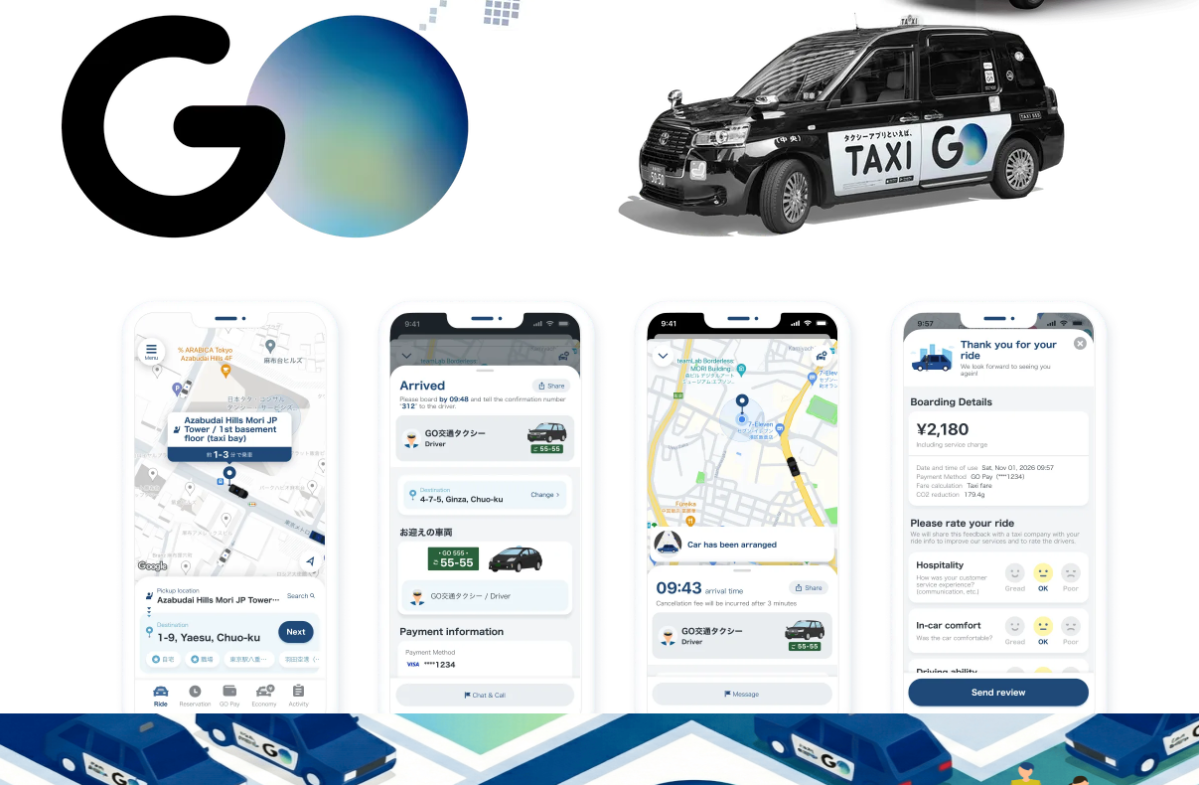
Go’s IPO — Japan’s biggest so far this year — has done more than provide a much-needed boost to the country’s languishing listing season. It has also supplied the taxi-hailing app with the capital required to address an existential issue: Japan’s shortage of drivers.
Go, which went public Tuesday, plans to use the ¥88.6 billion ($553 million) raised in its IPO to expand its robotaxi business and make acquisitions, according to a company spokesperson.
“We intend to use the proceeds from the sale of newly issued shares toward investment in research and development related to robotaxis and investment in business expansions, including strategic mergers and acquisitions in our business inside and outside of the taxi industry,” the spokesperson said.
The Japanese taxi-hailing company’s debut came in one of Japan’s quietest listing seasons, at a time when the government has been telling startups to sell themselves rather than go public. Go drew investments from BlackRock, Wellington Management, and M&G Investment Management in the process, underscoring where global institutional money is willing to go in Japan right now. The stock has since pulled back below its offering price, closing at ¥2,314 on Friday, down about 4% from the IPO price of ¥2,400.
Go’s robotaxi ambitions are rooted in a human problem. Japan’s taxi industry is running out of drivers. The number of taxi drivers has fallen roughly 20% in recent years, according to a report citing Japan’s Ministry of Land, Infrastructure, Transport and Tourism.
An aging population means that figure is unlikely to recover. Ride-share services launched in Japan in 2024, but remain limited to certain areas and require drivers to be employed by a taxi company; restrictions that have done little to address the shortage.
Go was founded in 1977 as a taxi operator and now runs Japan’s largest ride-hailing app with 35 million downloads, 85,000 partner vehicles, and an 80% share of Japan’s taxi app market by usage time, covering 46 of Japan’s 47 prefectures.
Go believes robotaxis will be part of its future — although it’s not clear when that vision will become a reality.
Go has partnered with Waymo, an autonomous driving subsidiary of Alphabet, alongside Nihon Kotsu, one of Japan’s biggest taxi operators. Go is responsible for strategic coordination of the partnership, according to the spokesperson. CEO Hiroshi Nakajima has previously said that Go will not invest in autonomous driving systems itself, according to Nikkei Asia.
Go has not set a timeline for fully driverless operations.
“We plan to begin driving fully autonomously, without a human specialist present, when we validate our technology and receive approval to do so,” the spokesperson said.
In the meantime, Go is looking for ways to give its traditional business a competitive edge. For instance, the company has partnered with Kakao T, Alipay, and WeChat Pay that allows inbound travelers from South Korea, China, and Taiwan to hail Go-affiliated taxis directly from their local apps.
Go is not the only company betting on Tokyo’s robotaxi future.
In March, Uber, Wayve, and Nissan announced plans to pilot robotaxi services in Tokyo by late 2026, marking Uber’s first autonomous vehicle partnership in Japan. The service will use Nissan Leaf electric vehicles powered by Wayve’s AI Driver, and will be bookable through the Uber app.
Uber has also teamed up with S.Ride to let international visitors book rides through the Uber app. Didi Mobility Japan, a joint venture between SoftBank and Didi Chuxing, has a similar arrangement.
When you purchase through links in our articles, we may earn a small commission. This doesn’t affect our editorial independence.

Honor of Kings is increasing its reach in India through the release of HOK Plus 2.0. This update comes with various enhancements, including more rewards, improved gameplay, creator programs, and esports developments. Another feature of this update is a new character named Devara, who draws inspiration from Indian culture.
Honor of Kings is rolling out a ₹10 million reward program for its users in India with the launch of HOK Plus 2.0. Through “Play to Earn”, players will be motivated to play the game, create content, participate in campus activities, and socialize. Players will get the opportunity to participate in the Treasure Hunt game and stand a chance of winning smartphones and Amazon gift cards. Honor of Kings will give even greater rewards to players as part of its celebration on June 27.
Devara Debuts as Honor of Kings’ New India-Inspired Hero
HOK Plus 2.0 will introduce Devara, a hero inspired by India, in the game Honor of Kings. Devara battles at the Clash Lane and uses his lightning abilities when he is battling. He is able to deal massive damage and perform well from the front line. Honor of Kings has been inviting people to suggest Hindi lines for their heroes. Some of these lines have been selected and used in Devara’s voice lines, which were recorded by Sanket Mhatre.
The launch of Devara will be marked by a range of offline events in Delhi, Mumbai, and Bengaluru. These will allow gamers to experience themed activities and engage with other players. The events aim to celebrate the hero’s debut and strengthen the game’s connection with its Indian player community.
HOK Studio Expands Support for Indian Content Creators

HOK Plus 2.0 introduces new opportunities for content creators through HOK Studio. The new creator policy rewards content creators for strong performance and regional rankings. Selected creators can move into the HOK Advanced Creator Program and receive exclusive benefits. The company has also partnered with Live Insaan to support community growth. Players will soon be able to join influencer-led teams in the HOK India Influencer Team Tournament.
Honor of Kings is also bringing new activities to campuses and gaming cafes across India. The campus program will cover 32 colleges in four cities between July and September. Students will have opportunities to compete, create content, and engage with the community. The game will also organize Devara-themed 1v1 challenges at selected gaming cafés. Participants can earn rewards and compete for cash prizes and smartphone giveaways.
Revenant XSpark has qualified to represent India at the 2026 Asian Games Esports Qualifiers. The team claimed its place by winning the NESC 2026 LAN Grand Finals held in Pune. The competition in Kuala Lumpur brings together top teams from across the region. Successful teams will secure spots at the 20th Asian Games in Nagoya, Japan. Their qualification showcases the progress of India’s Honor of Kings esports ecosystem.
New Heroes, Gameplay Modes, and Quality-of-Life Improvements
There are new updates in Honor of Kings to enhance its gameplay through HOK Plus 2.0. The players can get familiar with Annette, Lorion, and Florentino in Arena of Valor. Users can discover Super Flow Brawl 2.0 and apply strategic thinking and gameplay mechanics in this mode. There are even certain events happening during the match to affect its flow.
June 27 marks the date of the Peak Day festival, where players in Honor of Kings will have various opportunities to get rewarded during the event. Participants in the event will be able to engage in specific activities, collaborations, and community events at the festival. There are limited-time vouchers and unique collectibles for the participants. The participants will have access to free heroes and bonuses at the festival.


Collaboration between LEGO and Koenigsegg built a vehicle that turns heads for all the right reasons. The two companies created a full-scale version of the Sadair’s Spear using LEGO Technic pieces, and the finished machine drives under its own power on real roads and courses.
Over 327,906 unique components went into this massive effort, which resulted in an automobile weighing a whopping 1800 kilos, despite the fact that the bricks themselves only accounted for about 400 kg. The long and laborious procedure came to a conclusion after almost 9,400 hours of work, when the team gave their approval and declared it ready for testing.
Sale

LEGO Technic Koenigsegg Jesko Absolut Grey Hypercar, Sports Car Building Set for Boys and Girls, Vehicle…
- A hypercar toy for kids ages 10 and up – This LEGO Technic Koenigsegg Jesko Absolut Grey Hypercar car building toy set for kids features authentic…
- Build the features of this sport car toy – Builders explore lots of engineering concepts as they assemble the articulated V8 engine and the…
- Realistic door design – The model features a dihedral synchro-helix door system, which allows the doors to rotate 90 degrees while moving outwards…
The entire car is built from the ground up on a lightweight body made of LEGO Technic pieces, while a custom-made chassis underneath handles all structural stresses and houses the electric motor and complex mechanisms that bring this cool car to life, and then there’s that one show-stopping feature we can’t get enough of. The car has a working Ghost Mode, a trick that the real hypercar does as well, in which the rear body portion lifts up, the dihedral synchro-helix doors swing out on their own, and the mirrors fold flat.


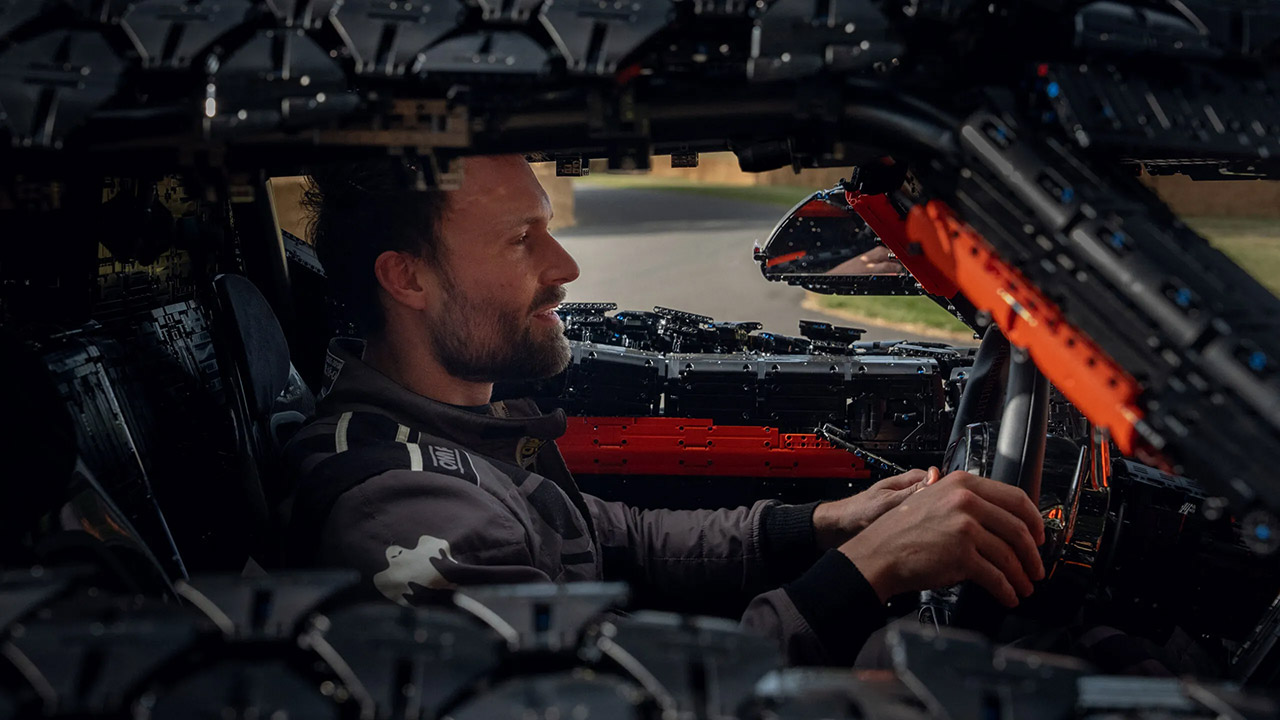
The next challenge came on the Goodwood hillclimb track in the United Kingdom. Markus Lundh, the test driver, drove the brick-built automobile up the famed incline in reverse configuration, reaching a high speed of 111 kilometers per hour, or 69 miles per hour in the United States. This figure more than twice the previous record for the fastest drivable LEGO car manufactured by the LEGO Group.



Markus said he had a great time driving the thing; it reminded him of the time he got the Sadair’s Spear to the top of that hill the year before, but when he took the LEGO version up, he was particularly impressed with the engineering that the Technic team did. The massive life-size creation corresponds with a new official 1:8 scale LEGO Technic model of the same car, which has 4,104 pieces and reproduces many of the same features, but at a scale that allows it to be displayed on a desk or shelf. The smaller counterpart also includes a working Ghost Mode sequence, a detailed V8 engine with moving parts, a 9-speed transmission that moves, and suspension at both ends.

CarPlay is seeing one of its biggest updates in years thanks to the upcoming release of iOS 27. Here are all the new features, including Siri AI and Apple TV apps.
At WWDC 2026, Apple officially unveiled its next version of iOS. The update, iOS 27, will be released in the fall of 2026 and is packed full of useful new features.
CarPlay, Apple’s in-car UI, is powered by iOS, so this new software will bring a bunch of enhancements to your car. This year, at least one major feature will require some serious automaker support.
Siri AI in CarPlay
Apple Intelligence seemed to occupy almost half of Apple’s WWDC keynote. A lot is going on, and a good portion of that is reflected in the car.
On phones that support Apple Intelligence, Siri will become Siri AI. That means Siri will be more capable and get a new look.
When you invoke Siri AI, it now has a dark, glassy orb at the bottom of your car’s display. It mimics the look of the new UI that lives in the Dynamic Island on iPhone.

New Siri AI orb in CarPlay with iOS 27
Siri is more conversational now, going back and forth with you as you ask questions and follow-ups. Apple’s digital assistant has more personal context, too.
While testing it, I could ask more complicated questions with multiple action items. As I left the house, I asked Siri to turn off the lights in the studio, get me directions to my son’s school, and text my wife my ETA.
All of your Siri conversations are saved in the new Siri app. It has the same icon as on iPhone, iPad, and Mac, and allows you to go back to the previous conversation you’ve had.
Those conversations also sync across your platforms via iCloud. So if I start a conversation in the car, I can pick it up on my iPad when I get to where I’m going.

New chat-style interface for apps with iOS 27 CarPlay
Along with the new Siri AI, Apple is allowing any app to offer up a conversation mode. This was previously limited to AI apps like ChatGPT or Perplexity.
The idea is that those apps could possibly tap into Apple Intelligence models and offer you the ability to chat, rather than use physical taps within the app.
If you had a pizza app, you could open it, tell the app what you wanted with your voice, which could build your order, give you a total, and submit it with an estimated pickup time. There’s a new UI element for this that hovers over the app’s contents.
Both first-party and third-party media apps will get upgrades thanks to iOS 27. This includes the Apple Music and Apple Podcasts apps.
Apple Music looks more organized and has a richer layout thanks to added media graphics. The big change, though, is the addition of the mini player.

New mini player in Podcasts and Apple Music apps with iOS 27 CarPlay
The new mini player sits in the top-right corner of the display when you have something playing. It minimizes, showing the album art and a play/pause button.
That way, while something is playing, you can browse the rest of the app while still retaining quick control of the current media.
Before, it would be two taps to get to the media if you weren’t on the “now playing” screen. You would have to tap the play icon in the top-right corner, then hit pause, which isn’t ideal if you’re driving.
A similar refresh comes to the Apple Podcasts app. It has a streamlined UI and a mini player.
That mini player is a new UI element that isn’t going to be exclusive to Apple apps. Apple has made it available to anyone who is creating media apps for CarPlay, and you can expect many of the popular streaming apps to adopt it.
Apple TV and video support for CarPlay
Another major change is video support. This is much more robust than what was previously included in iOS 26.
As part of iOS 26, Apple allowed apps to stream their content on a car’s infotainment system via AirPlay. It was only on supported cars that had to get approved through Apple’s MFi Program.

Grid of apps in the simulator with iOS 27
Now, Apple is allowing full, native video streaming applications as a new app category with iOS 27. AirPlay is still an option, but now you can browse and select content from the car’s interface, too.
I was able to test this out for myself using Apple’s new CarPlay simulator in Xcode. Apple is offering up initial support with the inclusion of the Apple TV app inside of CarPlay.

Apple TV app in CarPlay with iOS 27
There are several asterisks here. Automakers themselves still have to enable this, which means that we most likely will be waiting for that to happen.
When a vehicle does add support, it must be in park for any videos to play. That counts whether the content is started via AirPlay or a native video player.

Playing a video in CarPlay with iOS 27
One neat trick is that if you are watching a video and you move the car from park to drive, your video will automatically fall back to audio-only. That’s great for things like sports when you still want to follow along, even if you can’t watch it.
Other small changes for CarPlay in iOS 27
Aside from the big new features, there are a lot of other changes, tweaks, and optimizations Apple is rolling out to its in-car solution.
Wireless connection is now said to be more stable than before. Hopefully, that reduces the audio lag that can sometimes be present.
Navigation apps are now able to communicate with the car’s system. The idea behind this is that the car can see your route and suggest any changes.
The most obvious use case here is for EVs. If you put in a route, and your car realizes you only have so much battery remaining, it may propose the ideal charging station to add to the trip.
This whole back and forth is permission-based, so you must OK it before the communication happens, and you must OK any changes to the route. Otherwise, no information or route is shared with your car.
There are a few new icons with iOS 27. In Wi-Fi settings, if you use wireless CarPlay, there is a new CarPlay icon on the network to help identify it, and there is an updated battery icon system-wide.

New wallpapers in CarPlay with iOS 27
Finally, there are new wallpapers. Apple added 12 wallpapers for CarPlay in iOS 27, and they all have a similar swirl, like with the iOS 27 ones for iPhone, iPad, and Mac.
By going into the settings app, users can choose one of the new wallpapers that come in various colors.
CarPlay will be updated automatically when iOS 27 is released to the public.

from the ctrl-alt-speech dept
Ctrl-Alt-Speech is a weekly podcast about the latest news in online speech, from Mike Masnick and Everything in Moderation‘s Ben Whitelaw.
Subscribe now on Apple Podcasts, Overcast, Spotify, Pocket Casts, YouTube, or your podcast app of choice — or go straight to the RSS feed. To get extended episodes with additional coverage, support us on Patreon.
In this week’s roundup of the latest news in online speech, content moderation and internet regulation, Ben is joined by Jen Weedon, a T&S veteran of Meta and Niantic. She is currently consulting and teaching at Columbia school of International and Public Affairs. Together, Ben and Jen discuss:
And in the extended episode for Patreon supporters, they cover:
Our fun links this week are the How Alberta eradicated rats (Ben) and Mogwooooo’s Instagram account (Jen).
If you’re already a Patreon supporter, you can get the extended episode on Patreon.
Filed Under: age verification, ai, ai slop, artificial intelligence, content moderation, jen weedon, trust and safety, uk
Companies: anthropic, telegram


Threat actors are exploiting an unauthenticated information disclosure vulnerability in the WordPress plugin Gravity SMTP, active on 100,000 sites.
The flaw is tracked as CVE-2026-4020 and received a medium severity rating. It affects all versions of the plugin from 2.1.4 and older and has been addressed in version 2.1.5, released on March 17.
WordPress security company Defiant is warning that hackers are actively exploiting the vulnerability. The company’s Wordfence firewall has blocked more than 17 million attempts against protected customers.
The issue stems from an exposed REST API endpoint in Gravity SMTP, whose ‘permission_callback’ always returns ‘true,’ allowing unauthenticated GET requests to receive a comprehensive JSON “System Report” generated by the plugin. The exposed information may contain:
- API keys, secrets, and OAuth tokens for configured email integrations
- Credentials for third-party email services, including Amazon SES, Google, Mailjet, Resend, and Zoho
- WordPress configuration details, including installed plugins, themes, and software versions
- Server and PHP environment information
- Database configuration details, including server version and table names
Despite its medium-severity rating, the CVE-2026-4020 vulnerability can be exploited without authentication, and the exposed information can be used to steal email service credentials.
This allows an attacker to impersonate the victim to third parties and also to gain detailed information about the site’s software stack and the potential vulnerabilities present.
“The exposure of live third-party API credentials means an attacker could abuse the site’s connected email services, while the detailed system report significantly lowers the effort required to plan further attacks against the site,” Wordfence researchers warn.
Wordfence says exploitation activity spiked on June 7, with 4 million requests being blocked that day. Similar activity was recorded for several days afterward.

Source: Wordfence
The security firm listed the most prolific source IP addresses for exploit requests, which website administrators should add to their blocklists.
A key indicator of compromise is requests to ‘/wp-json/gravitysmtp/v1/tests/mock-data’ found in web server access logs, particularly those including the ‘?page=gravitysmtp-settings’ query parameter.
Yesterday, the company issued a separate advisory about a critical, unauthenticated, arbitrary file-deletion flaw in the Avada Builder WordPress plugin, used on one million sites.
This vulnerability is identified as CVE-2026-8713 and allows attackers to delete arbitrary files on the server through a path traversal flaw, provided a published Avada form is configured to save submissions to the database.
Deleting critical files, such as wp-config.php, can revert the site to its initial setup state, potentially leading to a full site takeover and remote code execution.
The issue was fixed in version 3.15.4, which is the recommended upgrade target for website administrators. No active exploitation of CVE-2026-8713 has been observed yet, but this is a good candidate, so quick action is advised.

Security teams log 54% of successful attacks and alert on just 14%. The rest move through your environment unseen.
The Picus whitepaper shows how breach and attack simulation tests your SIEM and EDR rules so threats stop slipping by detection.


Large language models have moved out of the research lab and into engineers’ daily workflow. LLMs serve as reasoning engines that can orchestrate complex tasks including identifying vulnerabilities in source code and transforming fragmented project discussions into rigorous technical specifications.
While the general public uses AI tools to write email and plan vacations, technical professionals use LLMs as core architectural elements that are fundamentally changing how digital infrastructures are built and maintained. As the AI models move into mainstream engineering practice, the demand for technical expertise is rising.
The LLM technology market is expected to grow by about 33 percent every year through 2030, according to MarketsandMarkets. The rapid expansion suggests that proficiency in implementing and securing the models is transitioning from a niche into a core requirement for technologists.
To use LLMs effectively, technical professionals must move beyond treating them as conversational robots. At a fundamental level, the AI systems are built on the transformer architecture, a framework that replaced the older method of processing data in a fixed, sequential order. Unlike earlier models that analyzed information one step at a time, transformers use self-attention mechanisms to ingest vast datasets simultaneously.
For technical professionals, LLMs are core architectural elements that are fundamentally changing how digital infrastructures are built and maintained.
Relying on such LLMs without understanding their internal logic creates a significant reliability risk. To build tools that work consistently, developers must understand the core principles that govern how the models process information and generate results. By mastering how a model processes information and how its internal settings influence the result, developers can move away from a trial-and-error approach toward a more precise one to ensure the AI tool handles complex data reliably.
Four ways LLMs are changing jobs
Here are areas that integrate large language models.
Moving past basic prompts. Developers are using application program interfaces (APIs) to connect LLMs directly to their databases and software tools. Employing the APIs allows AI to perform work such as executing code or searching through internal repositories.
Fixing the “hallucination” problem. LLMs are at risk of hallucinations, which are generated facts or code that looks correct but actually is wrong or broken. To fix the problem, retrieval-augmented generation (RAG) forces AI to look up information in a trusted source such as a company’s database.
Prioritizing data security. When using AI with proprietary code, security is a major concern. Engineers must learn how to set up “private” instances of the models to ensure that sensitive company data stays within a secure cloud environment and is not used to train public versions.
The future of collaboration. By automating repetitive coding tasks and summarizing thousands of pages of documentation, LLMs let engineers spend more time on high-level designs and solving important issues.
Online course program helps with mastering the tech
The gap between people who use AI and those who understand how to build with it is growing wider. To help technical professionals stay ahead, IEEE offers a five-course online program, Large Language Models Demystified, available through the IEEE Learning Network.
The program, developed by IEEE Educational Activities in partnership with the IEEE Computer Society, is built for people who want to understand the “how” and the “why” behind the technology. Rather than just teaching basic prompting, the curriculum dives into the engineering behind generative AI, including:
- Evolution, impact, and hands-on exercises: the shift from statistical methods to modern transformers, including hands-on model optimization.
- Understanding transformer architectures: the mathematical core of self-attention and positional encoding, implemented in NumPy and Python.
- Architectural analysis and implementation: advanced LLM design with practical model-building exercises.
- Training and modeling with PyTorch: end-to-end pipelines in PyTorch, leveraging parameter-efficient techniques such as low-rank adaptation and quantization.
- Optimization, alignment, and deployment: performance scaling, reinforcement learning from human feedback (RLHF), group-relative policy optimization, RAG, and agentic AI.
Upon completion of the program, participants earn professional development credits and a digital badge from IEEE to verify their expertise.
Enroll in the course program on the IEEE Learning Network.
Organizations looking to prepare their teams to work on LLMs can connect with an IEEE content specialist to discuss group enrollment and tailored training paths.
From Your Site Articles
Related Articles Around the Web
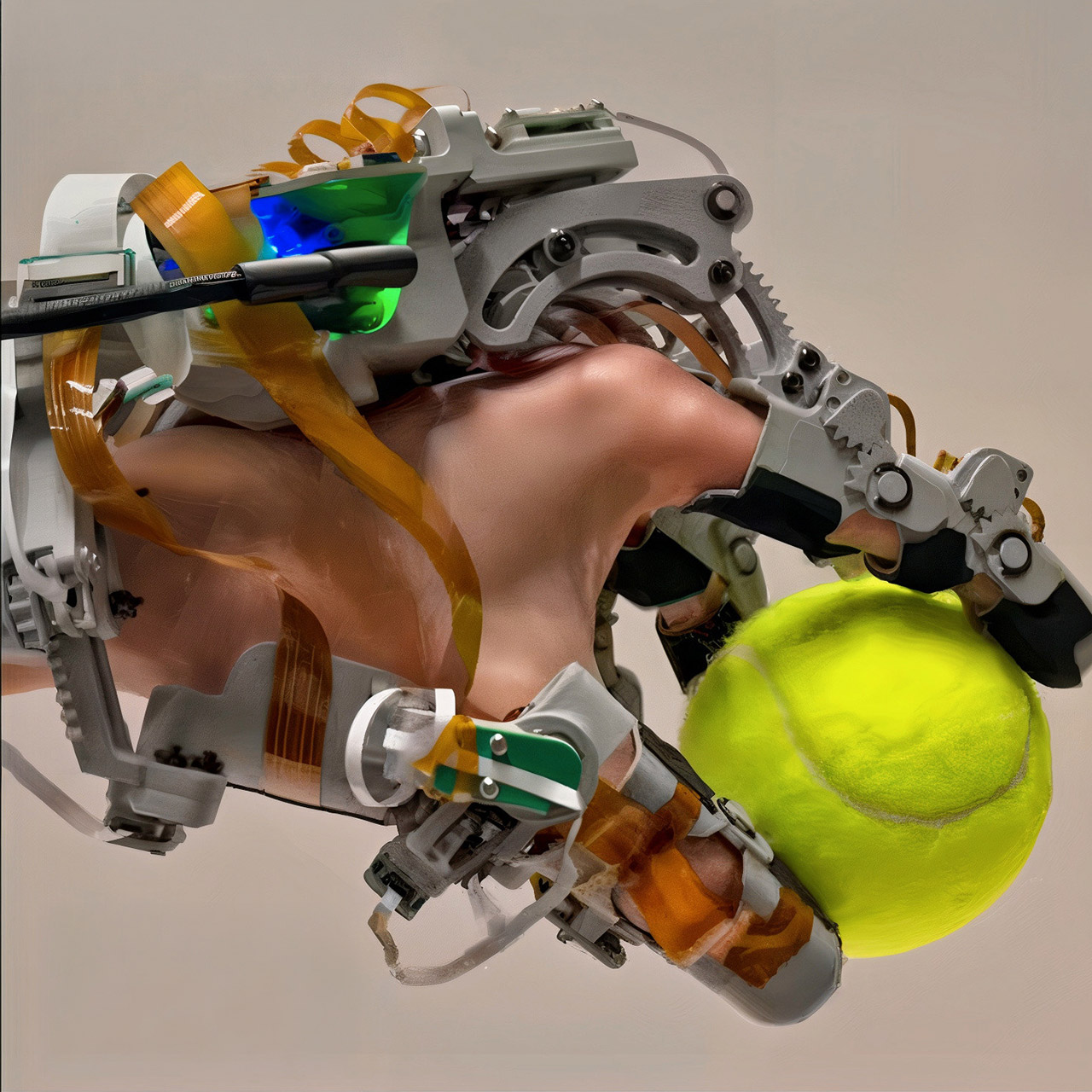
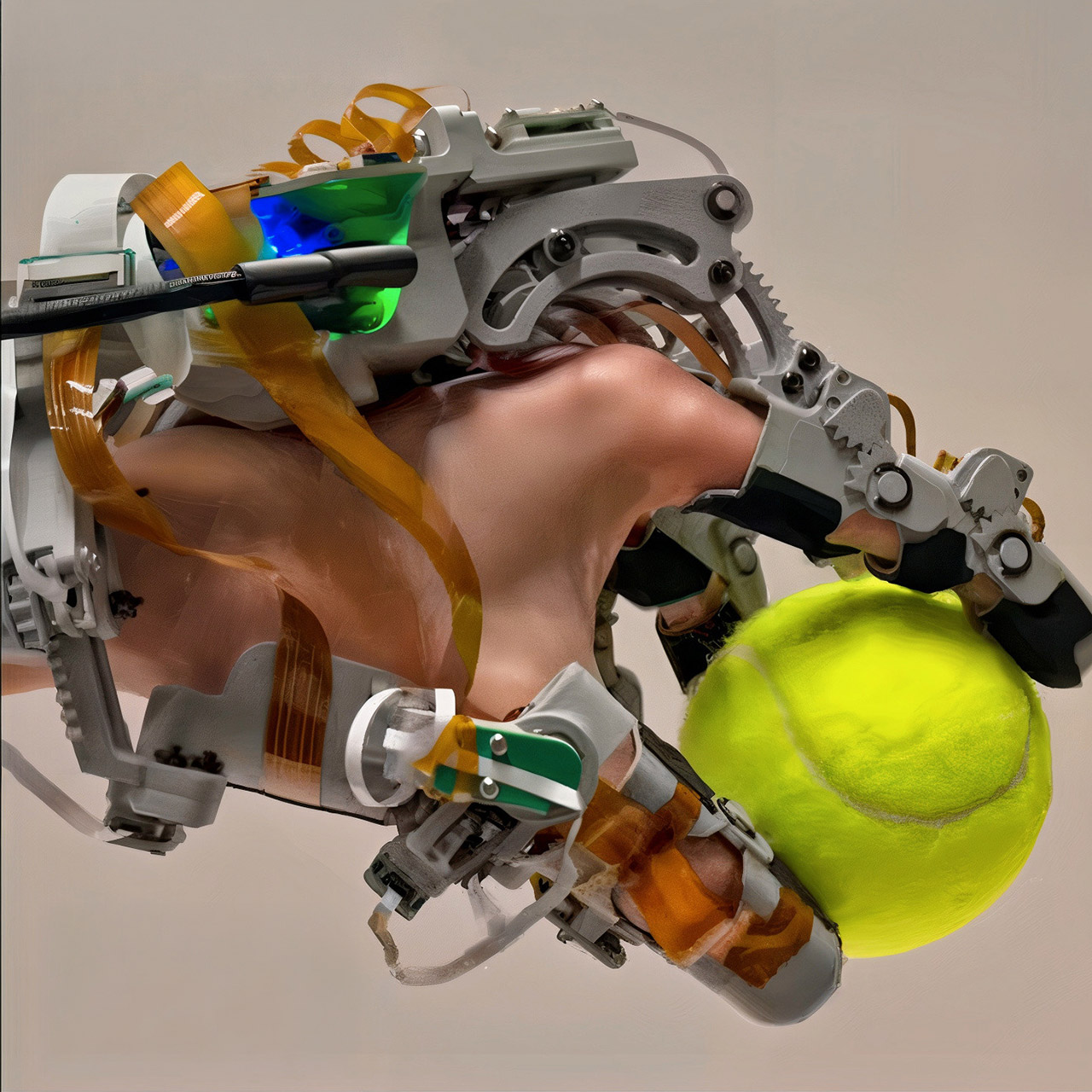
Researchers at Carnegie Mellon University built a wearable system that captures both the exact movements of a human hand and the precise locations and forces where it presses against objects. The device, called ART-Glove, or Articulated Tactile Glove, tackles a long-standing gap in robot training. Robots have grown skilled at seeing their surroundings through cameras, yet they still struggle when tasks require careful contact, variable grip force, or coordinated finger adjustments during everyday actions like turning a key or unscrewing a cap.
The majority of current models for collecting demo data result in an uncomfortable trade-off. Teleoperation setups provide robot-ready orders but frequently exclude the natural sensation of a hand, leaving you feeling like you’re in a robot. Pure video recordings keep your hand free, but contact information remains a mystery, inferred at best with limited reliability. Soft sensing gloves provide some pressure data, but their exact shape varies with each wearer, making it difficult to translate it onto a robot hand.
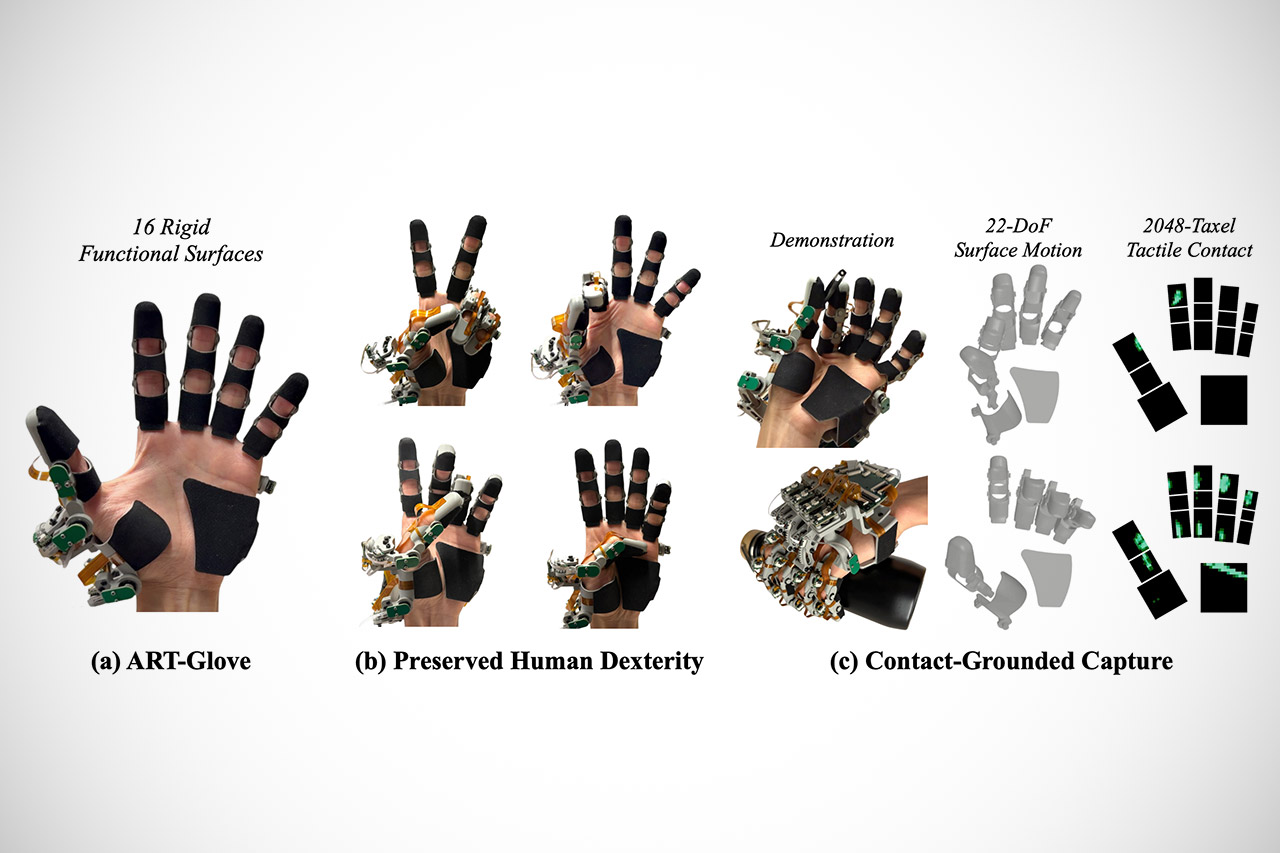
ART-Glove avoids these issues by utilizing a hybrid technique. The primary contact zones on your hand are covered by 16 hard surfaces: three on each finger, three on the thumb, and a broader one across the palm. These pieces provide a recognized geometry on the hand side of things, so any recorded touch contains explicit information about where exactly on the hand the contact occurred and at what angle, among other things. The rigid sections are linked together by 22 joints, all of which are aligned with real human hand anatomy, including multi-axis rotations at the thumb base. They’ve also managed to keep the size down while maintaining natural motion by developing three separate joint systems. Some are rather simple, consisting of shafts and sleeves with gears that transfer to encoders on the back of the hand. Others employ direct bearings or curved slots to provide tighter clearances. All of this is tracked by magnetic rotary encoders, which add no additional friction or wear points.
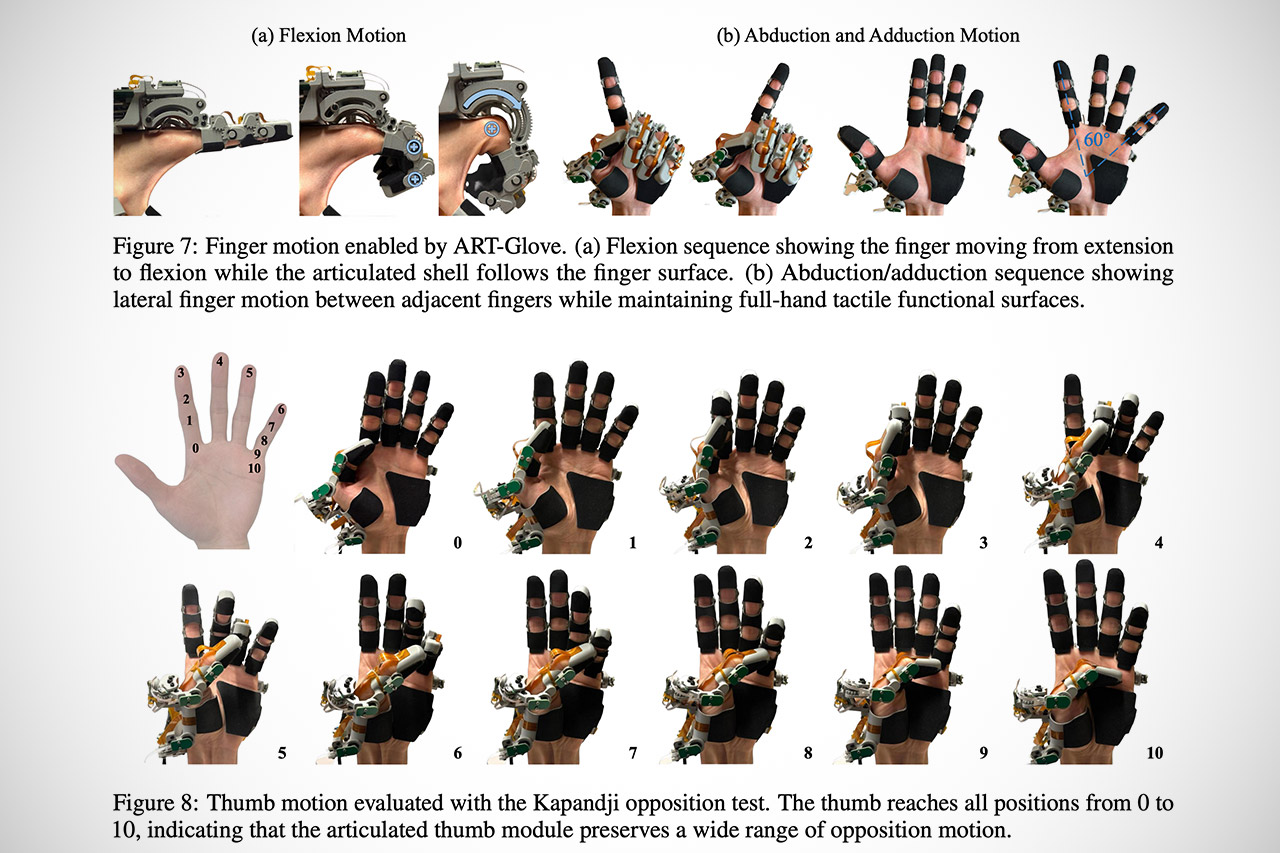
Each hard surface is now covered with a thin piezoresistive layer. Each of these seven flexible circuit modules contains 2048 separate pressure-sensing devices, or taxels, as there is a lot of pressure sensing going on. These sensors monitor real-time force distribution over the hand. On the back of the glove, there’s also a small STM32 microprocessor that reads both the joint encoders and the entire tactile array before synchronizing everything at 120 samples per second. You’ll get a live output stream with 22 degrees of freedom in joint motion, as well as high-resolution pressure maps.
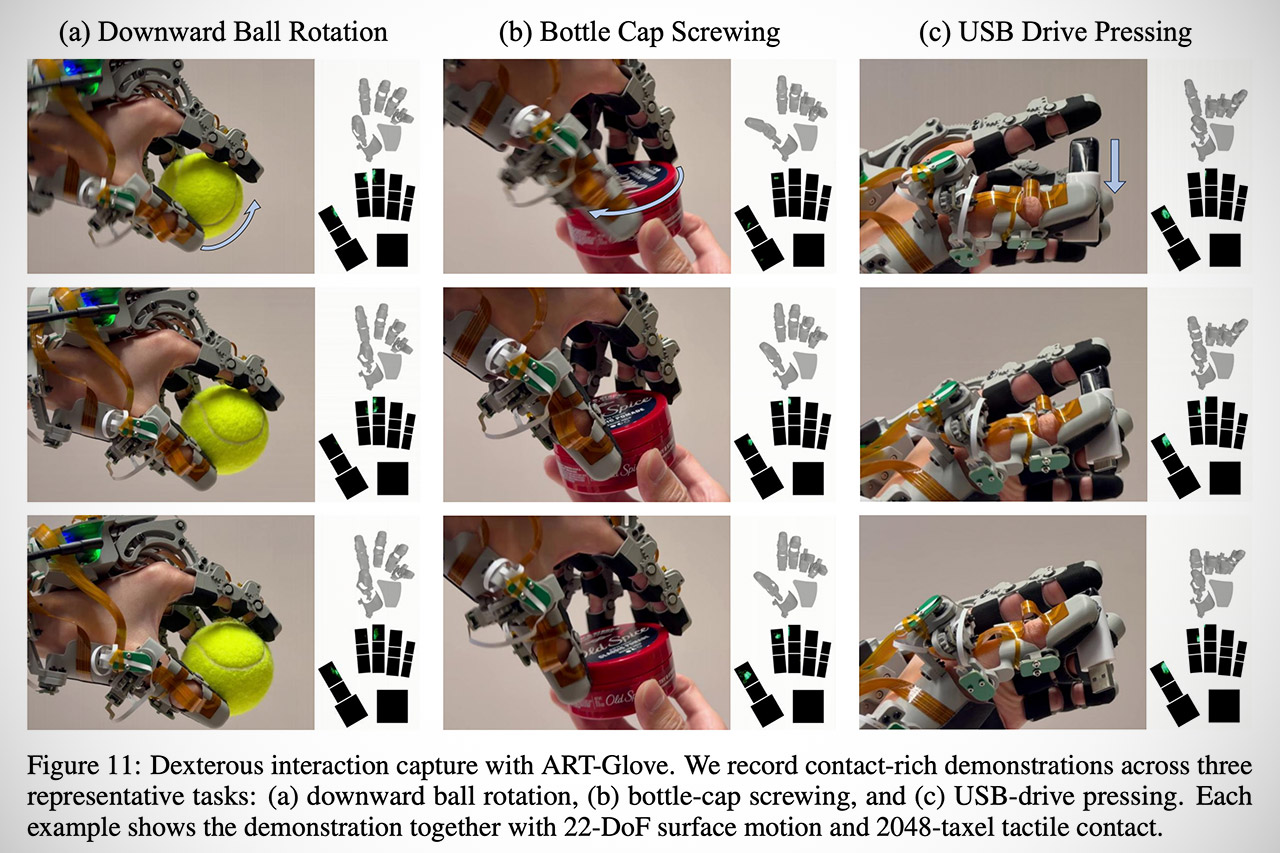
When someone puts on the glove and completes a task, the system records the entire physical story. During a ball rotation exercise, for example, it demonstrates how the contact points vary constantly to keep the force in line with gravity. When someone screws a bottle cap, the pressure patterns begin to move and intensify as the fingers adjust their grip and torque. Pressing a USB drive into a port demonstrates a coordinated multi-finger grab followed by localized pushing force. All of this appears in its own chronology, with a reference to the specific location on the surface where contact occurred.
[Source]

In every CNET TV review, I compare three or more similar TVs side by side in a dedicated, light-controlled test lab. With each review, I employ a rigorous, unbiased evaluation process that has been honed by more than two decades of TV reviews. I test TVs with a combination of scientific measurements and real-world evaluations of TV, movies and gaming content.
To ensure I can evaluate the picture quality of every TV, I connect each one to an AVPro Connect 8×8 4K HDR splitter so each one receives the same signal. I test the TVs using various lighting conditions, playing different media, including 4K HDR movies and console games, across a variety of test categories, from color to video processing to gaming to HDR.
In order to measure each TV, I use specialized equipment to grade them according to light output and color. My hardware includes a Konica Minolta CS-2000 spectroradiometer and a Murideo Six-G 4K HDR signal generator. I use Portrait Displays CalMan Ultimate software to evaluate every TV I review according to its brightness, black levels and color.
The Leo Bodnar Lag Tester samples three regions of the screen for latency, and these are averaged to give each TV’s lag score
I play a variety of games from an Xbox Series X or PlayStation 5, and note the effects of gaming modes and settings as well as the 4K/120Hz and VRR input capabilities. Helpfully, the Xbox includes a 4K/120Hz and HDR compatibility test: Settings>TV and display options>4K TV details. The page will detail the HDR modes it supports (including Dolby Atmos) and whether it will support VRR — if a TV gets ticks in all the boxes it means it has the best compatibility with high-end Xbox games.
Our reviews also account for such things as features, design, smart TV performance, connectivity including HDMI inputs and gaming compatibility.
Measuring input lag (in milliseconds) is an important component of my process for testing gaming TVs.
Check out the page on how CNET tests TVs for more details.
Input lag will often be lower in game mode than in any other mode on your TV. Here are a few more gaming-specific aspects I looked at for each TV.
How to turn on game mode. In most cases, viewing in game mode isn’t automatic, so you’ll have to turn it on manually, and sometimes the gaming monitor setting can be difficult to find. Many use a picture mode called “Game” while some, like Samsung and Vizio, let you apply game mode to any setting.
Game mode makes a difference, but not at all frequencies. As you can see in the table above, many TVs cut lag substantially when you turn on game mode, but plenty don’t. In general, expensive TVs with elaborate video processing get more of a benefit when you engage game mode. Additionally, and as I noted above, the Boost mode on LG OLEDs only works on 60Hz and not 120Hz.
Most TV game modes are good enough for most gamers. No matter how twitchy you are, it’s going to be tough to tell the difference between 10 and 30 milliseconds of input lag. Many gamers won’t even be able to discern between having game mode on and off — it all depends on the game and your sensitivity to lag.
Turning game mode on can hurt image quality (a little). TV-makers’ menus often refer to reduced picture quality. Reduced picture quality is generally the result of turning off that video processing. In my experience, however, the differences in image quality are really subtle with console gaming, and worth the trade-off if you want to minimize lag for a great gaming experience.
4K HDR gaming lag is different from 1080p. The display resolution you play at has an impact, and since new consoles prominently feature 4K HDR output for games, I started testing for 4K HDR lag in 2018. In general, the numbers are similar to the lag with standard 1080p resolution, but as you can see from the chart above, there are exceptions.
Testing is an inexact science. I use Leo Bodnar lag testers. Here’s how they work, and how I use them. I use two of these Bodnar lag testers — one in 1080p and one in 4K HDR — which use onboard optical sensors to measure and report input lag. When plugged into an HDMI port, the Bodnars make the screen flash in three different places and you place the unit’s onboard optical sensor flush onto the screen at these points. They calculate the lag at each position and you average the three readings to get a score. You might see different lag test results from different review outlets, which may use Bodnar or another method.

The cool thing about cyberdecks is that you get to design them to suit your personal tastes. [NickZero] wanted an ultra-minimal build, and set about putting together just that.
The build is based around a Raspberry Pi Zero 2W, which has a lighter power draw than the full-fat models at the trade-off of some processing power. Since it’s a W model, it has the benefit of wireless connectivity baked in from the factory. The Pi is paired with a Gherkin 30% layout keyboard kit, which neatly matches the 7″ Waveshare touch display in width. Power is courtesy of a juicy 4000 mAh lithium-ion cell, which is taken care of by an Adafruit Powerboost 1000 charger module. Everything is then laced up together inside a nifty 3D printed case.
It’s a simple cyberdeck, and one that’s probably quite satisfying to use when you get used to the fact that there are no number or modifier keys on the ultra-cut-down keyboard. It’s also a great example of how a bunch of off-the-shelf gear can nonetheless be assembled into quite a cohesive whole. In much the opposite way, we’ve seen some maximalist cyberdeck builds lately, too.

Crypto World40 seconds ago
The Best Crypto to Invest in Right Now as XRP ETF Draws $5.3M and Cardano Builds Toward August Catalyst

Entertainment2 minutes ago
Anne Hathaway, Adam Shulman’s Relationship Timeline

NewsBeat5 minutes ago
Edinburgh Leith Walk in lockdown with police scrambled to ‘ongoing incident’


![J MONEY - NA NHA NOME [VIDEO OFICIAL]](https://wordupnews.com/wp-content/uploads/2026/05/1777799968_maxresdefault-80x80.jpg)
-

 Business5 days ago
No Jackpot Winner as $257 Million Prize Rolls Over to $269 Million Monday Draw
-
 Crypto World5 days ago
Zimbabwe Requires Crypto Businesses to Register Annually Under New FIU Regulations
-

 Crypto World7 days ago
Bitget enters Argentina’s regulated crypto market through PSAV registration
-

 Tech7 days ago
NanoClaw integrates JFrog registries to secure AI agent downloads
-
 Entertainment5 days ago
Matt Damon’s Viral Sci-Fi Thriller Has Taken Over HBO Max
-

 Business5 days ago
Anthropic staff to meet White House officials next week, Axios reports
-

 Tech5 days ago
As AI companies race to go public, who else is along for the ride?
-
 Crypto World5 days ago
Bitcoin could crash to $48,000, if this historical pattern is triggered
-

 Politics5 days ago
“Israel’s” ban on ICRC visits ruled illegal, but Knesset moves to stop them permanently
-
 NewsBeat5 days ago
Warning of disruption as Cardiff Crossrail works to start
-

 News Videos5 days ago
Financial Accounting | Last Day Revision Strategy and Booster | CMA Inter – June 2026
-
 NewsBeat5 days ago
what doctors are seeing in ebike crashes
-
 NewsBeat5 days ago
Tributes to former deputy head teacher at Cambridge school among death and funeral notices
-

 Entertainment6 days ago
Deion Sanders Shares Powerful Post After Viral Advice To Deiondra
-
 Entertainment5 days ago
Kate Middleton Glare Goes Viral After Kids Booed At Royal Event
-

 Crypto World5 days ago
XRP ETFs Outperform As Bitcoin And Ethereum Funds Extend Outflow Trend
-
 Crypto World5 days ago
Market Preview: SpaceX (SPCX) IPO Record, Federal Reserve Meeting, and Iran Nuclear Agreement
-

 Tech5 days ago
Over 400 Arch Linux packages compromised to push rootkit, infostealer
-

 Business5 days ago
Invesco Quality Income Fund Q1 2026 Commentary
-
 Entertainment7 days ago
44 Years Later, This Is the Greatest Star Trek Quote in Sci-Fi History
You must be logged in to post a comment Login