Forrester’s research measures several countries’ ability to develop, operate and secure critical technologies independently of foreign governments’ influence.
Forrester has published the findings of its new ‘Global Sovereignty Forecast, 2025 to 2030’ report, which takes a look at how AI and technology sovereignty is likely to evolve across 14 major global economies between now and 2030.
The study measured countries’ ability to develop, operate and secure critical technologies independently of foreign governments’ influence.
What was discovered is that despite significant investment in sovereign AI, chip manufacturing, cloud infrastructure and national technology capabilities, it is projected that global tech sovereignty will advance slowly over the next few years, with China and the US maintaining a lead position.
Advertisement
The average tech sovereignty score across all 14 countries assessed – which were Australia, Brazil, Canada, China, France, Germany, India, Italy, Japan, Mexico, South Korea, Spain, the UK and the US – predicts only a minimal rise from 39pc in 2025 to 40pc in 2030.
Each country was analysed across nine dimensions of technology sovereignty: government AI investment; cloud sovereignty; technology workforce availability; AI model development; data centre capacity relative to technology spending; data centre autonomy; semiconductor production; software creation; and rare earths processing.
With China and the US recording the highest overall tech sovereignty scores at 82pc and 79pc respectively, the report suggests that tech sovereignty will remain concentrated among a small number of geopolitical and economic powers. If other regions are serious about closing capability gaps and reducing tech dependencies, they will need to commit to strategic partnerships and alliances.
Key highlights
Perhaps unsurprisingly given the recent worldwide focus, across all technology dimensions, semiconductor manufacturing was found to have the strongest projected improvement. The US’s and South Korea’s chip production scores are set to increase from 45pc in 2025 to 79pc in 2030. Meanwhile, Japan is expected to jump from 36pc to 53pc, China from 40pc to 51pc and India from 0pc to 13pc.
Advertisement
However, the report also noted that even amid the improvements, semiconductors and software will remain among the most significant sovereignty challenges due to concentrated chip supply chains and a handful of dominant software providers.
Sovereignty was also divided in terms of which country in North America you belong to. While the US is forecast to remain a global leader, Canada is expected to improve modestly, going from 33pc to 34pc. Mexico will continue to remain the lowest among the 14 countries assessed at 20pc, highlighting the region’s uneven distribution of technology power.
It was also noted that Europe’s largest economies are likely to remain overly dependent on resources from foreign technology providers. Sovereignty scores in Germany and Spain will only rise by two percentage points from 34pc in 2025 to 36pc in 2030, France will rise from 33pc to 35pc, the UK from 30pc to 32pc and Italy from 27pc to 29pc.
“Despite these improvements, Europe’s lower scores reflect significant dependencies on chips, cloud, software and data centre capacity,” said the report.
Advertisement
Commenting on the report, Dario Maisto, a principal analyst at Forrester said: “Ongoing geopolitical volatility, AI competition and semiconductor supply chain risks have put tech sovereignty firmly in the spotlight.
“Today, tech sovereignty is concentrated in the hands of a few global leaders, creating an uneven competitive advantage for some countries. To compete in the AI era, nations must understand their strategic dependencies and build durable partnerships that safeguard their data, infrastructure and long-term autonomy.”
Don’t miss out on the knowledge you need to succeed. Sign up for the Daily Brief, Silicon Republic’s digest of need-to-know sci-tech news.
Turns out decades-old email tricks still work against some LLM-powered email filters
Notice more spam getting through that corporate email filter lately? Attackers are using a technique known as “text salting,” which hides benign-looking words intended to confuse some AI-powered email filters, says cybersecurity firm Barracuda.
The email security outfit said on Thursday that it had detected more than one million retail-themed phishing attacks using text salting since April. It’s not a new technique by any stretch and has been used to fool traditional secure email gateways for years, but Barracuda says it can also confuse machine-learning and LLM-based security tools.
Advertisement
Text salting involves peppering (sorry) a malicious email with random, harmless-seeming words in order to fool an email scanning system into thinking there’s nothing off about the flavor of a message (sorry again), tricking the system into passing it to its recipient for consumption (I’ll stop with the food jokes here).
Pour a pile of salty text on top of an email and a human reader would probably get suspicious, however, so attackers typically use one or more of three flavor variations (okay, I’m done – promise) to hide the additives from human readers, but not automated scanners, per Barracuda.
Typical techniques include CSS cropping, which sets the visible window small enough that a human won’t see the hidden filler text; text manipulation to move the salty copy outside the visible screen; and zero font techniques which insert misleading words between suspicious phishing copy that’s visible to a machine but not a human.
The end result of each of those techniques is a message that reads less malicious, more gibberish to a machine, leading it to assume the email is fine, and which looks exactly as the attacker intended when viewed by a human.
Advertisement
Modern email security systems have largely adapted to these techniques, with newer tools able to remove hidden text to see what a reader is supposed to see, sounding alarms when a lot of hidden stuff is inserted in an email, and the like. AI, however, hasn’t managed to follow suit, says Barracuda.
“Text salting and related techniques can be used to confuse AI-driven content analysis engines by flooding the email with random terms that encourage the AI system into making an incorrect classification decision,” the company wrote in its report – just like those early 2000s SEGs. What a technological leap we’ve made!
LLMs, Barracuda explained, are typically designed to process email text and source code plainly, with no understanding of whether text is visible or hidden from a user. They can be trained to do so, but that just means most tools probably aren’t doing that by default.
So, what can enterprises do to stop the flow of salty spam to their employees? Barracuda recommends a layered approach to email security rather than relying solely on keyword detection, including checking sender reputation, authentication results, embedded URLs, HTML-rendering techniques, and differences between user-visible and hidden content.
Advertisement
Ditching that AI spam filter might not be a bad idea, either. ®
An anonymous reader quotes a report from Ars Technica: As smoke from hundreds of burning wildfires spread across Canada and the United States, the first three operational satellites in the Google-backed FireSat program successfully launched into orbit. The satellites will begin providing wildfire detection capable of spotting even small fires in the United States, Australia, and Europe before the end of the year. The launch of the microsatellites aboard a SpaceX Falcon 9 rocket from Vandenberg Space Force Base in California on July 7, 2026 marks a transition to “initial operational capability” for the FireSat constellation managed by the nonprofit Earth Fire Alliance. After a three-month testing period, the three satellites will begin actively providing data to fire agencies while covering every fire-prone region on Earth at least twice per day.
FireSat represents the first satellite constellation purpose-built for detecting wildfires, including spotting smaller fires that other satellites may miss. The satellites were designed by California-based satellite manufacturer Muon Space and have received over $15 million from Google to support initial deployment. Other notable financial supporters include the Bezos Earth Fund that committed $26 million. Each satellite is equipped with multispectral imaging that can peer through smoke and clouds and detect fires as small as five by five meters — about 16 by 16 feet. That capability was proven by a FireSat Protoflight satellite that launched in March 2025 and collected more than one million images, while showing it could detect low-intensity blazes invisible to existing satellites.
The “early adopter” organizations that will start using FireSat data this year include fire agencies in California, Colorado, Australia, and Portugal. As more satellites launch, the FireSat program aims to provide the latest imagery anywhere in the world on an hourly basis by 2029. Such imagery would eventually become available every 20 minutes once the full constellation of more than 50 satellites is launched by the early 2030s. Detection of small wildfires before they burn out of control could prove extremely helpful. The Earth Fire Alliance has projected that even an hourly revisit rate by the FireSat constellation could help save more than $1 billion in fire damage costs and prevent nearly 22 million tons of carbon emissions, along with protecting 3,500 homes and 1.3 million acres of land.
To assist with that capability, Google Research plans to use the company’s AI models to compare operational FireSat data with historical images in order to accurately identify very small fires and to inform predictive modeling of wildfires. Google celebrated the launch of the first operational FireSat satellites by describing the event as “another tangible step forward in putting practical AI to work for climate resilience.”
Amazon asks users not to panic as it works to fix the bug
Your AWS billing estimate might look just a little inflated right now. If you woke up to find an email from Amazon Web Services this morning telling you that you’d gone over your billing threshold by a few hundred million dollars, don’t panic: Something’s gone wrong in the AWS Billing Console, the company admitted.
An open issue on the AWS Health Dashboard (archived copy at the time of writing) popped up at 1:33 am Pacific time on Friday informing users that Cost Explorer was “reflecting inaccurate estimated billing data.” As of writing, the issue is still unresolved despite AWS trying several different things to get it fixed.
Advertisement
The company apparently identified the root cause within an hour and a half of beginning its investigation, only describing it as “an issue with unit pricing within the estimated billing computation subsystem.”
AWS followed up by pausing estimated bill updates, saying customers would continue to see the inflated figures already displayed, but that those estimates would not increase further.
“The displayed billing estimates do not reflect actual usage and charges,” AWS explained, noting that customers don’t need to take any action, like, we imagine, flooding the help portal with tickets telling them what they already know, for instance.
“Once the issue has been mitigated, we expect full resolution to take multiple hours as we work through recomputing the estimated billing data,” AWS added.
Advertisement
After we first published this article, Amazon updated the issue page to indicate that it had identified the root cause and mitigated the underlying issue. The company says that it’s begun backfilling data in the Cost Management Console to correct billing numbers, and that all customers should see corrected amounts by Saturday, July 18 at noon pacific time.
We owe HOW much?
Users took to Reddit and Hacker News this morning to report they’d received overage emails for massive amounts – we weren’t exaggerating with that hundreds of millions opening line. If anything, it was an understatement.
Screenshots posted in the Reddit thread showed one user whose AWS charges totaled just $0.19 last month receiving an estimated bill of nearly $2.5 billion. Others in the thread claimed to have received estimated monthly charges ranging from $126,000 to as much as $2.5 trillion. Hacker News users similarly reported estimates in the billions.
Amazon said the figures shown in customers’ accounts were inaccurate estimates rather than actual charges. As for when users might see their billing portal reflect an accurate number, that could take a while.
Advertisement
AWS declined to explain the issue aside from pointing us to the dashboard page linked above. We’ll be keeping an eye on this developing story and update it as we learn more. ®
Updated at 1903 to show that Amazon has updated its issue page with a resolution.
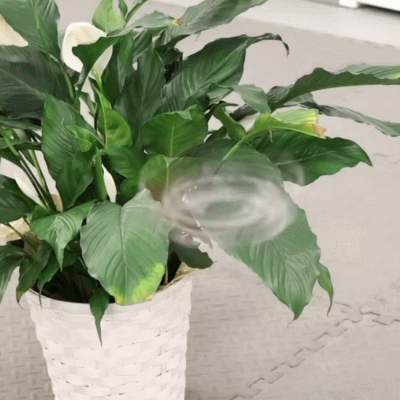
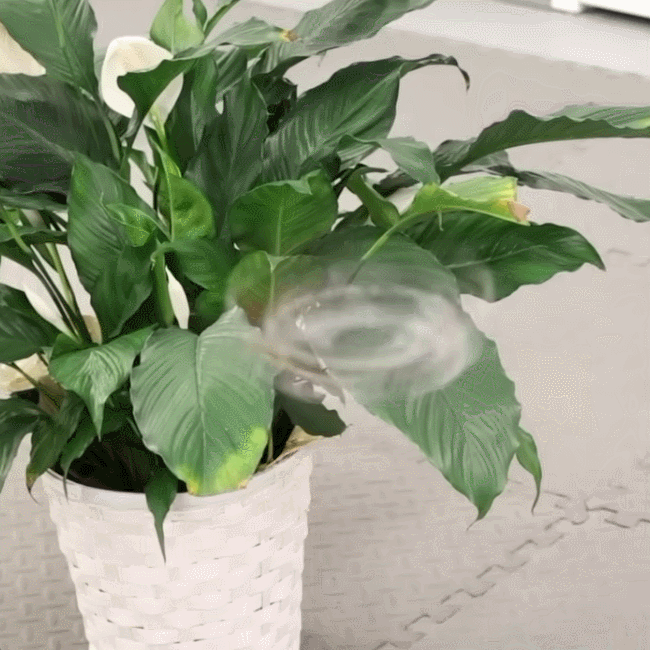
Researchers demonstrate that something interesting happens when a small drone with a spindly airframe spins at a high speed: it very nearly turns invisible. The spidery device is shown mounted in its launcher in the image above. The dark blur at the rightmost side is an outlet on the wall behind the drone, not motion blur from a moving part.
There’s not much to do about the noise, but a high-speed spin becomes nearly invisible.
There’s not a lot of detail about the Phantom Twist’s hardware design but it appears to use a downward-angled motor for lift, relying on a high-speed control system to maneuver and maintain altitude.
This does away with the need for a wing, at the cost of only being stable while rotating at a high speed. We imagine it is also a touchy design that depends greatly on being balanced just so.
Advertisement
A hand launcher spins the device up before releasing it for flight. The visual effect once it is up and running is pretty striking; see for yourself in the short video, embedded just below.
Apple stock ended trading on Friday as the world’s most valuable publicly traded company, overtaking Nvidia for the first time since April 2025 after a sustained recovery for the iPhone maker met a sharp selloff in chip stocks.
Apple shares closed at $333.74, leaving the company with a market capitalization of approximately $4.88 CAP trillion. Nvidia ended down about 3.5% on the day, with a value of about $4.86 trillion.
The distinction is largely symbolic, and a lead this narrow could disappear during the next trading session, if not in after-hours trading over the weekend. Still, Apple’s return to the top caps a striking reversal from the tariff, China, and artificial intelligence concerns that weighed on its shares the last time it held the position.
Apple took a difficult route back to the top
Apple entered the spring of 2025 facing doubts about whether its first Apple Intelligence rollout could drive meaningful upgrades. The company confirmed on March 7 that its more personalized Siri features were taking longer than expected.
Advertisement
Tariff fears added a more immediate financial threat. Apple shares lost about 15% during the first half of 2025 as investors considered the company’s reliance on Asian manufacturing.
At the time, Tim Cook warned that tariffs could add about $900 million in costs during the June quarter. It ultimately paid $800 million, but has filed for a refund of those, which Apple says will be used to expand US manufacturing.
Nvidia moved in the opposite direction. Surging demand for AI processors carried the chipmaker back to the top of the market in June 2025, past $4 trillion the following month, and briefly beyond $5 trillion in October.
Apple’s underlying business nevertheless began producing results that were difficult for Wall Street to dismiss. Revenue rose 10% to $94 billion during the June 2025 quarter, followed by an 8% increase to $102.5 billion during the September quarter.
Advertisement
Strong early demand for the iPhone 17 helped Apple reach a $4 trillion valuation in October. Services continued producing record revenue and substantially higher margins than the company’s hardware divisions.
Apple shares lost about 15% during the first half of 2025
Momentum accelerated during fiscal 2026. Apple reported an all-time record of $143.8 billion for the holiday period, up 16%, followed by a March-quarter record of $111.2 billion, up 17%.
The March quarter set records for total revenue, iPhone revenue, earnings per share, and Services. Greater China returned to strong growth despite earlier concerns over local competition and delayed Apple Intelligence features.
Wall Street changed how it views Apple’s AI strategy
Apple previewed Siri AI at WWDC in June, demonstrating the personal context, onscreen awareness, app control, and conversational features promised in 2024. The technology is due with the fall operating-system updates and is already available to beta testers.
The launch reinforced Apple’s strategy of adding AI to products and services without matching the massive infrastructure spending of Microsoft, Alphabet, Amazon, and Meta. As investors question those returns, Apple can leave much of the model and data-center expense to partners while distributing AI features across more than two billion active devices.
Advertisement
The March quarter set records for total revenue, iPhone revenue, earnings per share, and Services
Apple is also nearing its first CEO transition since 2011. Tim Cook will become executive chairman on September 1, with hardware engineering chief John Ternus succeeding him, but the planned handoff has done little to slow the stock’s rise.
Nvidia’s decline helped Apple finish the job
Apple didn’t retake the top position because of a single announcement or earnings report. Its valuation recovered over more than a year, while Nvidia’s decline on Friday erased enough market value to allow Apple to move ahead.
Nvidia’s role in the AI industry hasn’t diminished. Its processors remain central to the data-center expansion that pushed the company past Apple, and even a modest rebound could reverse their positions again.
Apple’s return instead suggests Wall Street no longer sees massive AI spending as the only credible path to growth.
After spending much of 2025 as the industry’s most conspicuous AI laggard, record iPhone sales, Services growth, a China recovery, and a tangible Siri roadmap have made Apple’s restraint look more like strategy than failure.
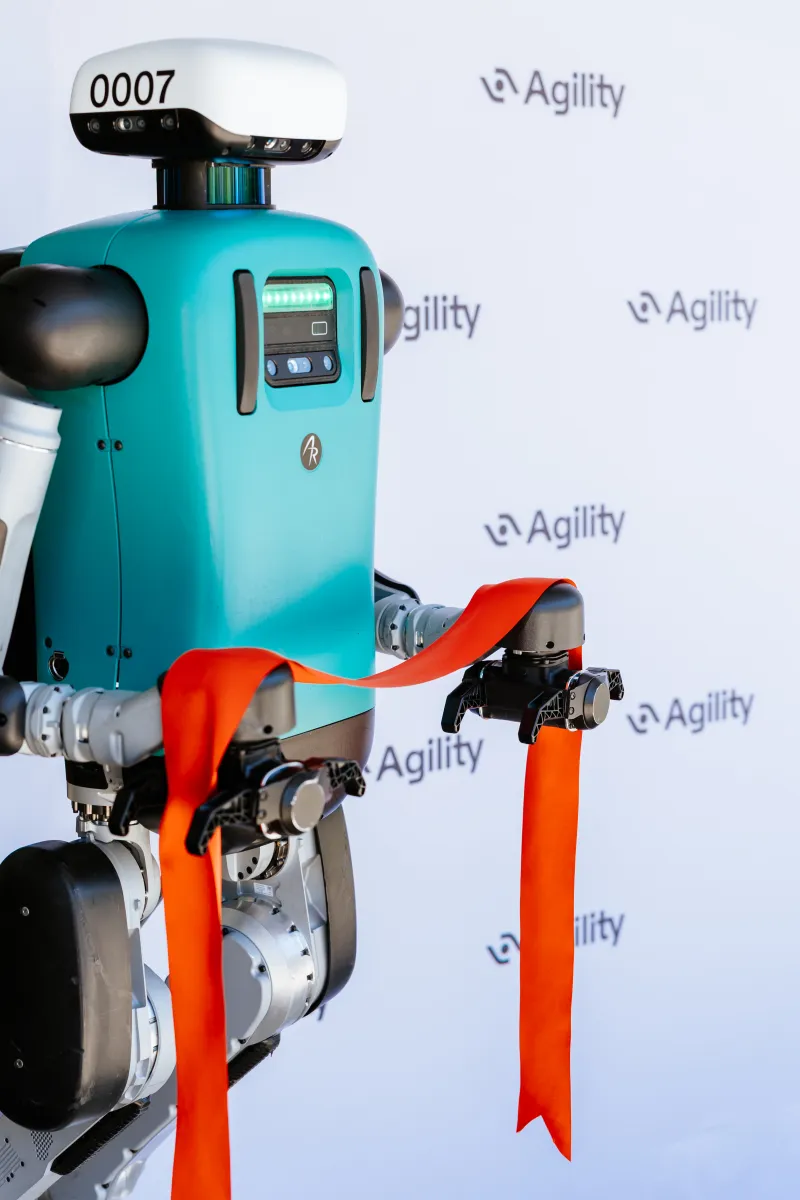
Agility Robotics is opening a 60,000-square-foot facility to train its humanoid robots in Fremont, California, just up the highway from the factory where Tesla is expected to start manufacturing its Optimus robots this year.
Tesla has increasingly bet on Optimus. Elon Musk recently said he expects it to be “the biggest product ever” once it’s “useful outside of Tesla sometime next year.”
While Agility doesn’t have Tesla’s capital, it does have a robot, Digit, that is already useful in the real world. The robot is already generating revenue, carrying totes and bins in manufacturing and warehouse settings for customers like Amazon, GXO, Schaeffler, and Toyota Motor Manufacturing Canada. The company says it has secured $300 million in contract orders for its robots.
“It’s great to have [Tesla] in the same area as us, because really, for a long time Agility was out there alone, and it’s good to have others in the humanoid space,” CEO Peggy Johnson told TechCrunch. “We have commercialized. We now know what it takes to walk into these facilities and meet their safety bars, their regulatory bars, compliance, plug into their IT infrastructure, plug into their warehouse management system.”
Advertisement
Agility hasn’t disclosed how many Digits that it has built or deployed, but outside observers estimate that dozens have worked in pilot or revenue-generating deployments. The company has said, for example, that Digits have moved 100,000 totes at a GXO logistics facility.
Johnson is currently leading Agility through a reverse-merger that is expected to make it the first pure-play humanoid robot company on the public markets later this year. Founded in 2015 by a group of researchers who developed new techniques that allow robots to safely walk on two legs, Agility is trying to capitalize on its lead over a newer generation of AI-inspired robotic startups like Figure, 1X, the Bot Company, or Sunday Robotics.
While the arrival of transformer-based neural networks that helped give rise to LLMs also promises major advancements in robotic behavior, Agility is taking a practical approach to autonomy.
“When you think about self-driving cars, you know, as a non-humanoid example, you really don’t want the anti-lock brake controller under AI control,” Agility co-founder and chairman Damion Shelton told TechCrunch. “The analog with humanoids is all the safety stuff needs to go through a path that’s not generative AI, right? You don’t want to get creative with your safety stack.”
Advertisement
What AI does do, however, is deliver on the promise of scale.
“One of the first times [Bruce Leak, the Quicktime inventor who serves on Agility’s board] asked us how we were going to go about coding applications for the robot, we didn’t really have a good answer,” Shelton said. “The number of things you can imagine a robot doing is far larger than the number of engineers who can program robots. And generative AI answers that question definitively.”
The new facility is designed to accelerate the company’s robotic deployments. Johnson says more than 30 customers are in talks with the company about deploying Digit, and the new facility will be where the six-foot-tall robot learns new skills in environments similar to those it will experience in the field.
Unlike many of the newer entrants to the humanoid space, Agility isn’t planning to offer in-home humanoid robots anytime soon. It’s a view that jibes with that of most independent robotics experts, who believe today’s most powerful robots aren’t safe enough for consumer use. Digit operates in a human-free space right now, but the version 5, expected to be unveiled this fall, will have the ability to sense humans and won’t need to be kept in a robot-only zone.
Advertisement
Co-founder and chief robot officer Jonathan Hurst said there is plenty of work to keep Agility busy in manufacturing and logistics alone.
“Let’s start with the bins and the totes, and then let’s do the picking and the kitting,” Hurst told TechCrunch. “And then let’s like start working on cardboard, which is really hard, and loading and unloading tractor trailers and things like that. Okay, now we’re at 100 million robots, you know? A trillion-dollar company.”
When you purchase through links in our articles, we may earn a small commission. This doesn’t affect our editorial independence.
Microsoft will end OneDrive synchronization support next month for older versions of Windows 10, leaving users without client updates, fixes, or technical assistance.
According to a post on the company’s Message Center, OneDrive sync app updates will continue on Windows 10 22H2 until October 10, 2028, but will stop for earlier versions from August 15, 2026.
Advertisement
No support means no more updates, fixes, or security patches, although the service itself won’t suddenly stop working. However, users running into problems cannot expect Microsoft to fix them.
The move should not come as a surprise. Support for Windows 10 21H2, the last official release before the final 22H2, ended on June 13, 2023. The message mentions Windows 10 22H1, although this was never officially released by Microsoft – the company switched to an annual release cadence after 21H2.
According to Microsoft, “this change aligns OneDrive support with the Windows lifecycle policy and helps Microsoft focus ongoing investments on supported operating systems.”
Microsoft 365 file synchronization services will also be affected, although, again, nothing will necessarily stop working immediately. Microsoft stated: “Existing installations may continue to function, but future functionality is not guaranteed.”
Advertisement
Users still clinging to Windows 10 versions before 22H2 will have to use the web interface to access OneDrive, which is a good deal less convenient than desktop synchronization. Alternatively, there’s always the upgrade to Windows 11 that Microsoft would dearly like users to make, although OneDrive synchronization on Windows 10 22H2 should be fine until 2028.
There are plenty of alternatives for cloud synchronization. For organizations looking for something a little more sovereign, there are always options like Nextcloud, which told The Register that its synchronization software would work on Windows 10 1809 or later. As with Microsoft, Windows 11 is the recommendation. However, unlike Microsoft, Linux is also an option. ®
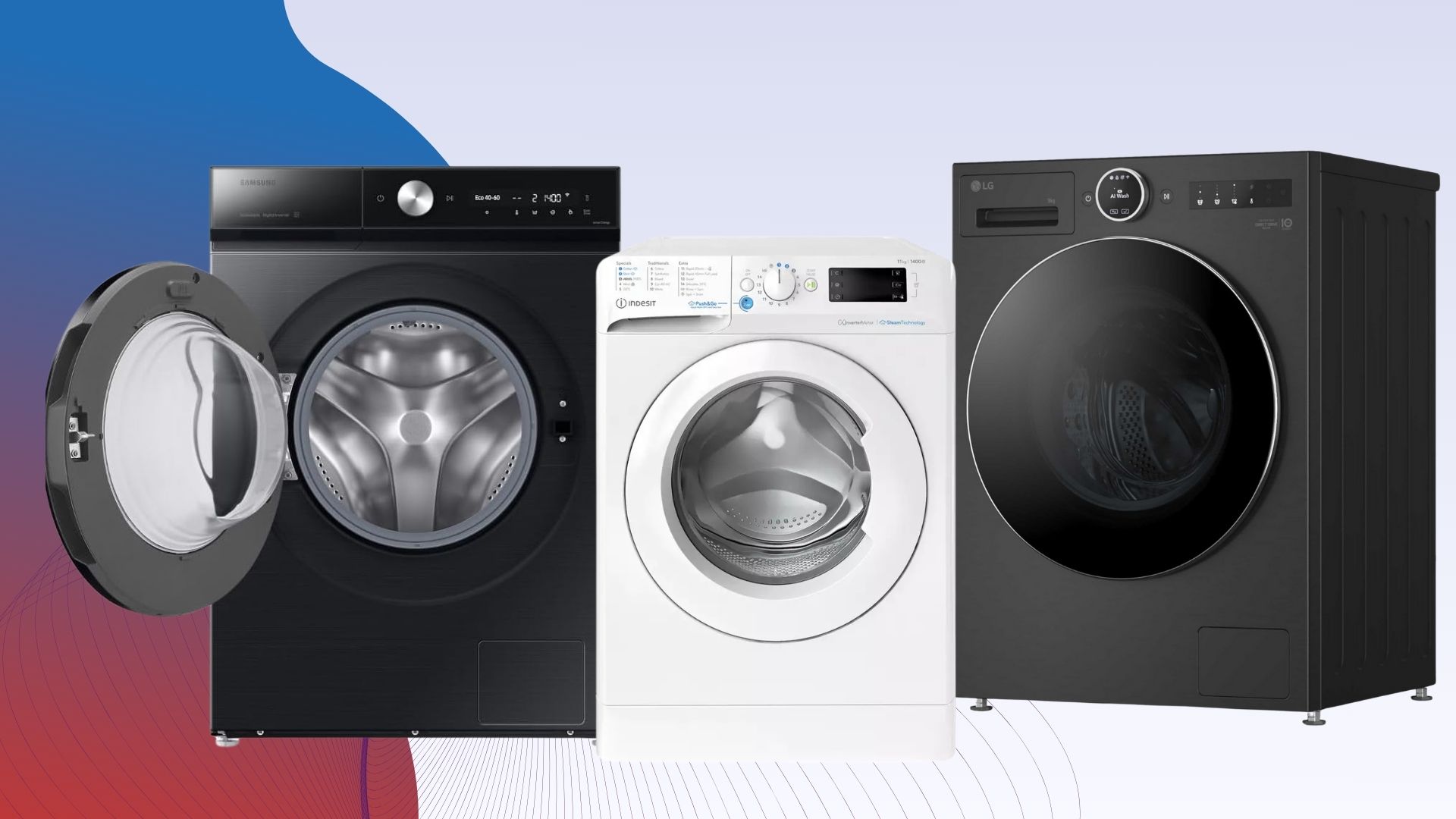
With a mammoth 11kg drum, low running costs and impressive performance, the Indesit BWE 111496X WV UK is a great choice for larger households.
The machine is controlled via the dial on its front, with all its available cycles listed on the front drawer too. Alongside standard cycles, such as Eco 40-60 and Cottons, you’ll find Indesit’s special modes for duvets, fast washes and steam modes.
There’s also the Push and Go button, which can be found on other Indesit appliances, and allows you to start a 30°C cycle by pressing and holding it down. Whether this is really useful is debatable, as we’d argue it’s easier to just select your own cycle.
For each wash you have the option to adjust the temperature and spin speeds, plus there’s a button that allows you to select a stain type, upon which the cycle will then adjust to specifically target that kind of mess.
Advertisement
Although this sounds like a clever idea in theory, this stain setting is only compatible with the White cycle, yet the only way to know that is through process of elimination as the manual doesn’t mention this.
Aside from these quirks, the Indesit BWE 111496X WV UK is otherwise easy and intuitive to use.
To begin our tests, we ran the Eco 40-60 cycle which costs an inexpensive 29p to run. Here we found washing performance to be good, although tough stains did struggle to come out. However when we moved to the 20°C wash, not only did running costs drop to just 14p but stain removal was excellent too.
Although the aforementioned White wash at 60°C, with the stain setting enabled, cost a pricier 59p, it’s worth noting that we found it excellent for removing deep, engrained stains with ease.
Advertisement
There’s even a dedicated Ariel Pod setting, which runs at 30°C and costs 35p. Although using pods is convenient, we found stain removal to be a mixed bag, so we wouldn’t recommend opting for this cycle.
Although slightly fiddly to use at first, if you need a large washing machine that performs well and doesn’t have high running costs then the Indesit BWE 111496X WV UK is a fantastic choice for most households.
The Acer Swift Go 14 AI (2026) is a fantastic Windows laptop with brilliant battery life, a charming and stylish look, a fantastic port selection and solid Panther Lake power. It’s also more affordable than some of its key rivals, although it makes some small sacrifices on its OLED screen.
The Swift Go 14 AI (2026) features a mid-range Intel chip inside that balances performance and endurance rather well.
14-inch 1920×1200 60Hz OLED screen
Advertisement
It also has a serviceable OLED screen for productivity workloads with reasonable resolution and responsiveness.
65Whr battery
Advertisement
The Swift Go 14 AI (2026) also has surprisingly lengthy endurance from a more modest-sized battery inside.
More stylish than its predecessor
Fantastic port selection
Excellent endurance
Squirrel Widget
Introduction
The Acer Swift Go 14 AI (2026) might just be one of the most compelling laptops I’ve seen so far in 2026.
Advertisement
Against last year’s Acer Swift Go 14 AI, it’s been redesigned with a different chassis, includes one of Intel’s new Panther Lake processors, a 14-inch OLED screen and excellent battery life. For £1299/$1299 for the model I have with a Core Ultra 7 355 chip inside, that isn’t too bad in price considering today’s market.
Advertisement
At this kind of money, though, the Swift Go 14 AI (2026) is hardly alone in its endeavours. Key rivals include the Asus Zenbook A14 (2026), the Dell XPS 14 (2026) base model, and the Lenovo Yoga Slim 7x Gen 11, which are all vying for your hard-earned money if you’re in the market for a capable compact laptop in 2026.
I’ve been putting the Swift Go 14 AI (2026) through its paces for the last couple of weeks to see if it can come out on top as one of the best laptops we’ve tested.
Advertisement
Design and Keyboard
Much more stylish than last year’s model
Far-reaching port selection
Excellent keyboard and trackpad
Acer has given the Swift Go 14 AI (2026) quite the spruce-up against last year’s model, ditching its rather nondescript grey chassis for a pleasant blue colour with silver accents across the lid. It gives this more affordable laptop a bit more style and class that puts it up there into a more premium price bracket in terms of looks.
It’s primarily constructed of anodised aluminium, which gives it some strength and keeps the weight to a reasonably light 1.24kg. That makes this an easily portable laptop, given the compact stature, although it isn’t quite as light as either the Zenbook A14 (2026) or even Acer’s own Swift Edge 14 AI.
Advertisement
Image Credit (Trusted Reviews)
Port-wise, we’ve got a pair of USB4-capable Type-C ports on the left with power delivery and display powers, plus a USB-A and full-size HDMI port on the left. The right side houses a further USB-A port, a 3.5mm headphone jack and a microSD reader. That’s fantastic for such a thin laptop, and puts dearer choices to shame.
So too does the keyboard and trackpad arrangement. The Swift Go 14 AI (2026) features a tactile and short travel on its 65 percent layout keyboard that’s a joy to type on for extended periods, while it’s also white backlit for added vividity for after-dark working.
Image Credit (Trusted Reviews)
The trackpad is made of a material Acer calls OceanGlass, which is recycled ocean-bound plastic. It’s a smooth and slick trackpad with that surface, and has a good amount of real estate for your fingers. If you have videos or music playing, it can also open a contextual menu on the trackpad for media playback, which is neat.
In terms of sustainability, Acer incorporates 21% post-consumer recycled (PCR) plastic throughout the device, including the aforementioned OceanGlass trackpad. They also utilise 100% recyclable paper packaging, which boosts their credentials.
Advertisement
Advertisement
Display and Sound
Solid detail, although 60Hz refresh rate is a shame
Excellent brightness, contrast and black level
Middling speakers
Acer has bundled the Swift Go 14 AI (2026) with a serviceable OLED screen – it’s a compact 14-inch 1920×1200 resolution choice that’s okay for a more affordable laptop. The 60Hz refresh rate is fine, too, although it is a shame it isn’t higher to aid general zippiness.
That being said, this is a capable screen with deep blacks and lovely contrast, as measured by my colorimeter. Here, I measured a 0.03 black level and 13610:1 contrast ratio. A 6700K colour temperature is also right where it should be.
Image Credit (Trusted Reviews)
A peak SDR brightness of 382.3 nits makes this panel suitable for indoor and outdoor work, although it isn’t quite as vibrant as some of the competition. There is HDR support for added vibrancy in supported content, with DisplayHDR True Black 500, too.
The Swift Go 14 AI (2026)’s panel also impresses with its excellent colours. I saw perfect 100% coverage of the sRGB colour space and 99% DCI-P3 coverage, plus an excellent 95% coverage of the trickier Adobe RGB gamut. This makes this screen suitable for productivity and more colour-sensitive workloads alike.
Advertisement
Advertisement
Image Credit (Trusted Reviews)
As for the speakers, this laptop comes with downwards-firing units that are just fine for casual listening with some okay volume, although they lack the crispness and body of stronger options.
Performance
New Panther Lake chip inside
Meagre graphical performance
Fast SSD, although meagre capacity
The Swift Go 14 AI (2026) has seen a move to a run of new processor options, with my sample shipping with a mid-range Panther Lake choice from Intel – the Core Ultra 7 355.
It is technically a current-gen Intel chip, but doesn’t look to move the needle too much from last year’s Core Ultra 7 255. As with other non-X-prefixed Panther Lake chips I’ve tried in other laptops, performance has only moved a handful of percentage points in the Geekbench 6 and Cinebench R23 tests, although it remains decently strong in single- and multi-threaded workloads.
Image Credit (Trusted Reviews)
Advertisement
3D performance is reasonable, although without the beefed-up Arc B390 integrated graphics you’ll find with higher-end Panther Lake chips, you are left lacking if you want to use the Swift Go 14 AI (2026) for any prolonged creative tasks or gaming tasks.
This model comes with 16GB of RAM, providing enough headroom for multitasking and some intensive loads, plus a 512GB SSD which feels a little stingy in my book. It’s nonetheless a brisk PCIe Gen 4 drive, with measured reads and writes of 7087.70 MB/s and 5666.23 MB/s.
Software
Windows 11 installed
Lots of Acer-specific apps
Copilot+ PC functionality is also here
The Swift Go 14 AI (2026) comes running proper Windows 11, although it comes with some unnecessary apps or shortcuts, such as a taskbar one for Booking.com, oddly.
There are more Acer-specific apps than anything else, such as Acer Jumpstart, which provides a link to the brand’s website, and AcerSense, which gives you access to check your system’s vitals and change settings around, such as power modes and such.
Advertisement
Image Credit (Trusted Reviews)
Advertisement
Elsewhere, this is also a Copilot+ PC and has enough AI power to warrant the inclusion of Microsoft’s tools. Chief among these is the addition of the Copilot assistant, which you can ask questions and to undertake tasks, if you so wish.
In addition, there is also generative AI functionality baked into the Photos and Paint apps, if you want it. The most useful set of AI tools with the Swift Go 14 AI (2026) is the Windows Studio effects for the webcam, which provides convenient means of auto framing, background blur and even making sure you maintain eye contact.
Battery Life
Lasted for 20 hours 51 minutes in the battery test
Capable of lasting for two to three working days
Acer bundled a modest 65Whr capacity cell inside the Swift Go 14 AI (2026), which is actually smaller than the 75Whr battery found in last year’s model. Nonetheless, with Intel’s efficient processor inside, I had high hopes for this laptop’s endurance, not least because of how strong the last model was. Acer quotes it to last for up to 22 hours on a charge, for reference.
In the PCMark 10 video loop battery test at the requisite 150 nits of brightness, this latest variant lasted for 20 hours and 51 minutes. That’s easily enough to get through two to three working days before it’ll need recharging, and is up there with some of the best laptops we’ve tested in terms of battery life.
When it comes to recharging, the Swift Go 14 AI (2026)’s compact 65W charger was quite fast in getting go-juice back into the laptop, taking 35 minutes to get it back to 50%, while a full charge took 75 minutes.
The Swift Go 14 AI (2026) excels on numerous fronts, with solid grunt, a fantastic port selection and brilliant battery life.
Advertisement
You want a stronger screen
The OLED screen here is generally strong, but it lacks in resolution and refresh rate against some of the competition.
Advertisement
Final Thoughts
The Acer Swift Go 14 AI (2026) is a fantastic Windows laptop with brilliant battery life, a charming and stylish look, a fantastic port selection and solid Panther Lake power. It’s also more affordable than some of its key rivals, although it makes some small sacrifices on its OLED screen.
This is because it’s only 60Hz and 1920×1200 resolution, although I levelled the same criticism at the Asus Zenbook A14 (2026), which costs more than Acer’s choice. Even then, the Dell XPS 14 (2026) base model doesn’t come with an OLED panel nor as beefy performance from a Core Ultra 5 processor inside.
The Lenovo Yoga Slim 7x Gen 11 is beefier with its Snapdragon X2 Elite inside, and it comes with a higher-res OLED screen, is a touch lighter and offers very similar endurance. However, it’s also a lot more expensive than the Swift Go 14 AI (2026), and Acer’s choice has a better port selection for what it’s worth.
Advertisement
It seems that every time I try to level some form of criticism at the Swift Go 14 AI (2026), it throws it back in my face by being the most well-rounded choice in its price class. That’s hard to argue with, especially with the competition in mind. For more choices, check out our list of the best laptops we’ve tested.
How We Test
This Acer laptop has been put through a series of uniform checks designed to gauge key factors, including build quality, performance, screen quality and battery life. These include formal synthetic benchmarks and scripted tests, plus a series of real-world checks, such as how well it runs popular apps and extensive gaming testing.
FAQs
What processor does the Acer Swift Go 14 AI (2026) use?
The Acer Swift Go 14 AI (2026) we were sent uses an Intel Core Ultra 7 355, one of Intel’s new Panther Lake chips.
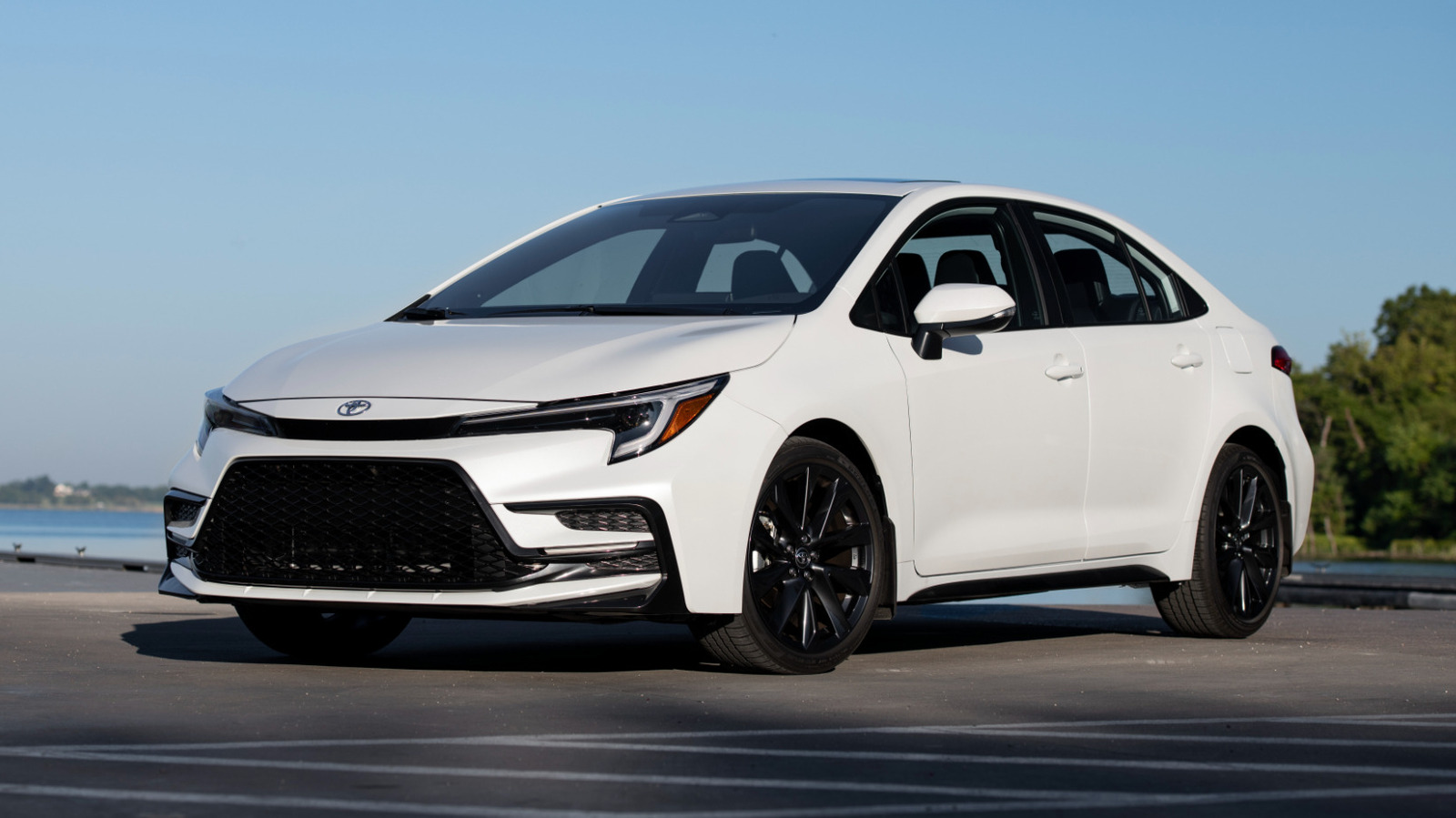
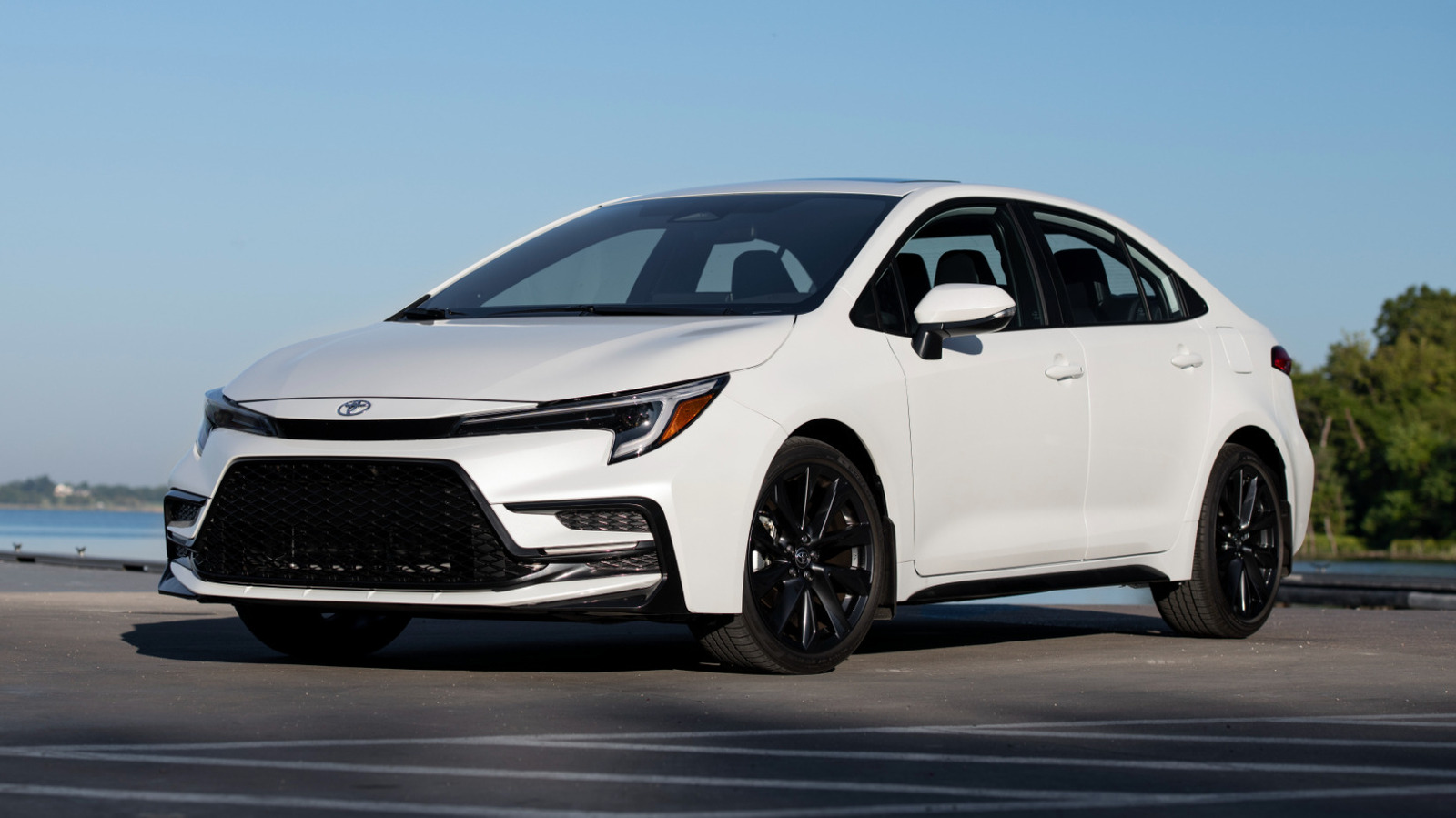
It’s no surprise that people love the Toyota Corolla. Toyota has produced this compact car since the 1960s, and it has sold over 50 million units in that time. As of this writing, Car and Driver lists it as the twelfth best-selling vehicle in the United States in 2026, and in a market dominated by SUVs and pickup trucks, it’s the only one of two compact cars to crack that top dozen. When you combine the fact that Toyota is renowned for its consistent production of incredibly reliable vehicles with the Corolla’s very reasonable starting price of $23,125 (plus a $1,295 delivery, processing, and handling fee), there’s very little reason as to why it shouldn’t be as popular as it is.
Looking at the ratings from experts and customers alike compiled by the likes of Consumer Reports and J.D. Power, they typically concur with these positive opinions. However, the Toyota Corolla isn’t the compact car on the market that gets the absolute highest of marks. We’re going to look at four different compact car models from different companies that receive better ratings than the Corolla. Sometimes, the overall scores will be higher, but in others where the overall scores are quite similar, there are models that outpace the Toyota in areas like reliability or performance. So, if you’re considering getting yourself a Toyota Corolla for your compact car needs, there’s a chance these other options better fit your particular needs.
Advertisement
Honda Civic Hybrid
The one compact car that the Toyota Corolla slightly trails in 2026 sales is the Honda Civic. Only about 1,000 units sold separate the two, and fun fact, their spots in that ranking flipped in the midst of this article being written. Effectively, the two models are neck-and-neck. That equivalency is apparent in their ratings too. According to Consumer Reports, the 2026 Corolla and Civic have the exact same overall score. The Corolla slightly outpaces the Civic in reliability, while the Civic has the edge in owner satisfaction. When you get to the hybrid version of the Honda Civic though, it’s a different story.
Advertisement
Out of every compact car rated by the publication, the 2026 Honda Civic Hybrid has the overall highest rating by Consumer Reports. That comes with an excellent road test score from its in-house experts and quite high owners’ satisfaction score from actual customers. The ratings determined by J.D. Power are a little trickier to parse, as it doesn’t distinguish between the traditional and hybrid models of the Civic, but it ties for first amongst compact cars, sharing an 85 out of 100 overall average with the 2026 Nissan Sentra. If the ratings correlate between the two publications, the Civic Hybrid is even higher than that 85 on its own. If not, it still gets to be number one regardless.
The starting price for a 2026 Civic Hybrid is $29,395 (plus a $1,195 destination and handling fee). That’s a bit more than your standard 2026 Corolla or one with a hybrid powertrain (starting at $24,975 plus a $1,295 delivery, processing, and handling fee), but you’re getting something people generally prefer slightly more.
Advertisement
Subaru Impreza
To stay with the Japanese automakers, another compact car you see getting better scores from experts and owners than the Toyota Corolla is the 2026 Subaru Impreza. This hatchback may not be nearly as popular as the previous two mentioned vehicles, as it doesn’t even crack Car and Driver’s top 25 best-selling vehicles in 2026 so far, but that doesn’t mean people don’t like it any less.
Based on J.D. Power’s ratings, the Impreza earned an 84 out of 100 overall score, just one point behind the top-rated Honda Civic. While drivers surveyed by the publication found their driving experience on the high end of average, they did determine that the car’s quality, reliability, and resale value were all excellent. The dealership experience even managed to get a 91 rating, 15 points higher than the Corolla.
On the Consumer Reports side, the 2026 Impreza doesn’t quite reach the overall heights of the Honda Civic Hybrid among small cars, but it does outperform the Toyota Corolla on the whole. Owner satisfaction is what the publication has calculated as the Impreza’s greatest strength over the Corolla, but it also has higher ratings for its road testing and reliability as well.
Advertisement
A 2026 Subaru Impreza starts at $26,595 (plus a destination and delivery fee of $1,195). That may be a few thousand dollars more than the starting price of a Toyota Corolla, but if the owners and experts are to be believed, you are not sacrificing any semblance of quality with that moderately higher price. Unlike the Corolla or the Civic, the Subaru Impreza doesn’t have a hybrid powertrain option.
Advertisement
Hyundai Elantra
Moving from Japanese automakers to those from South Korea, we arrive at the 2026 Hyundai Elantra. While not quite as popular as the Toyota Corolla — only just cracking Car and Driver’s top 25 best-selling vehicles in the United States in 2026 so far at spot 24 — the overall reception to this compact car alternative exceeds it, whether we are talking about the standard gas-powered model or one with a hybrid powertrain.
The Hyundai Elantra Hybrid actually ties the top overall score of the Honda Civic Hybrid awarded by Consumer Reports among compact cars. The standard Hybrid doesn’t quite reach the top of the mountain there, but it still outpaces the Corolla, though the Toyota does have a better reliability rating from the publication. On the J.D. Power side of things, the 2026 Elantra finishes third overall among compact cars with a score of 83 out of 100, situating nicely between the Subaru Impreza and Toyota Corolla, with those surveyed labeling its quality and reliability, their driving experience, and its resale value all as great on average.
Another appealing factor with the Hyundai Elantra is that it’s actually one of the less expensive alternatives to the Corolla. With a starting price of $22,625 (plus a $1,245 freight fee) for the base SE trim, you’d be saving about $550 compared to the base Corolla. That may not seem like much in the grand scheme of car buying, but saving any money on something that is generally liked more is rarely a negative. However, the Elantra Hybrid starts at $25,450 (plus a $1,245 freight fee), which is $425 more than the base Corolla Hybrid, so savings aren’t necessarily guaranteed.
Advertisement
Kia K4
For the final compact car on the list, we move over to another South Korean brand. That would be the 2026 Kia K4. This is only the second model year for this car, but it’s already established itself as something owners and experts are enjoying quite a lot, making SlashGear’s list of the best debut vehicles for its first model year. When compared to the Toyota Corolla, the gap in appreciation isn’t quite as noticeable as it is with the other vehicles on this list, but there are certainly areas where the K4 pulls ahead.
According to those surveyed by J.D. Power, the K4 ties the Subaru Impreza with an overall average score of 84 out of 100 for the second-best compact car on the market. It received great scores in every category except for dealership experience, which was determined to be fairly average. When you move over to Consumer Reports, the Kia K4 and Toyota Corolla actually earned the exact same overall score. When you look into the details though, there are important differences. Yes, the Corolla does earn a higher reliability score, but the K4 earned higher expert road test and owner satisfaction scores than the Toyota. Depending on what you value in a vehicle, you could certainly perceive the K4 as the better liked model.
Advertisement
The 2026 Kia K4 is also a cheaper model than a new Corolla. It has a starting price of $22,290 (plus a $1,245 destination fee), making it the least expensive model on this list. At worst, it’s comparable to the Corolla. At best, it’s the better reviewed of the two. Either way, you’re saving money on quality.
Advertisement
Methodology
Determining how a fellow compact car was better rated than the Toyota Corolla came down to a couple of different factors. Firstly, we’re looking specifically at compact cars. There are other small vehicles, such as sports cars, but these are really their own class of vehicle. Comparing them would be apples and oranges. Secondly, these are the ratings of the latest 2026 models of these vehicles.
Consumer Reports and J.D. Power are the two best sources for these kinds of ratings. With both, you get consensus opinions on these vehicles from thousands of verified owners who are honestly reflecting on their actual experiences with these cars. Consumer Reports has the added benefit of having its own in-house experts perform their own tests with these vehicles as well. While overall average scores were the most important determining factor for how a car could make this list, a car having higher ratings in specific areas — such as reliability or owner satisfaction — would also be considered if the overall scores were very close together or the same. After all of that, these four compact cars could be selected.
























































You must be logged in to post a comment Login