Tech
Hydrogen-powered 1,600-hp car takes aim at multiple land-speed records on Bonneville Salt Flats this morning

In a nutshell: Andy Green will return to Utah’s Bonneville Salt Flats on Tuesday in a new kind of record car: one powered by hydrogen-burning engines. The British driver, who holds the land-speed record for a diesel car, will drive JCB’s Hydromax in an official attempt overseen by the Fédération Internationale de l’Automobile. The company is using the run to demonstrate its hydrogen internal-combustion technology under extreme conditions.
The Hydromax is a 32-foot vehicle powered by two hydrogen engines adapted from JCB construction machinery. Together, they produce 1,600 horsepower. Rather than using hydrogen in a fuel cell to make electricity, the engines mix pressurized hydrogen gas with air and ignite it.
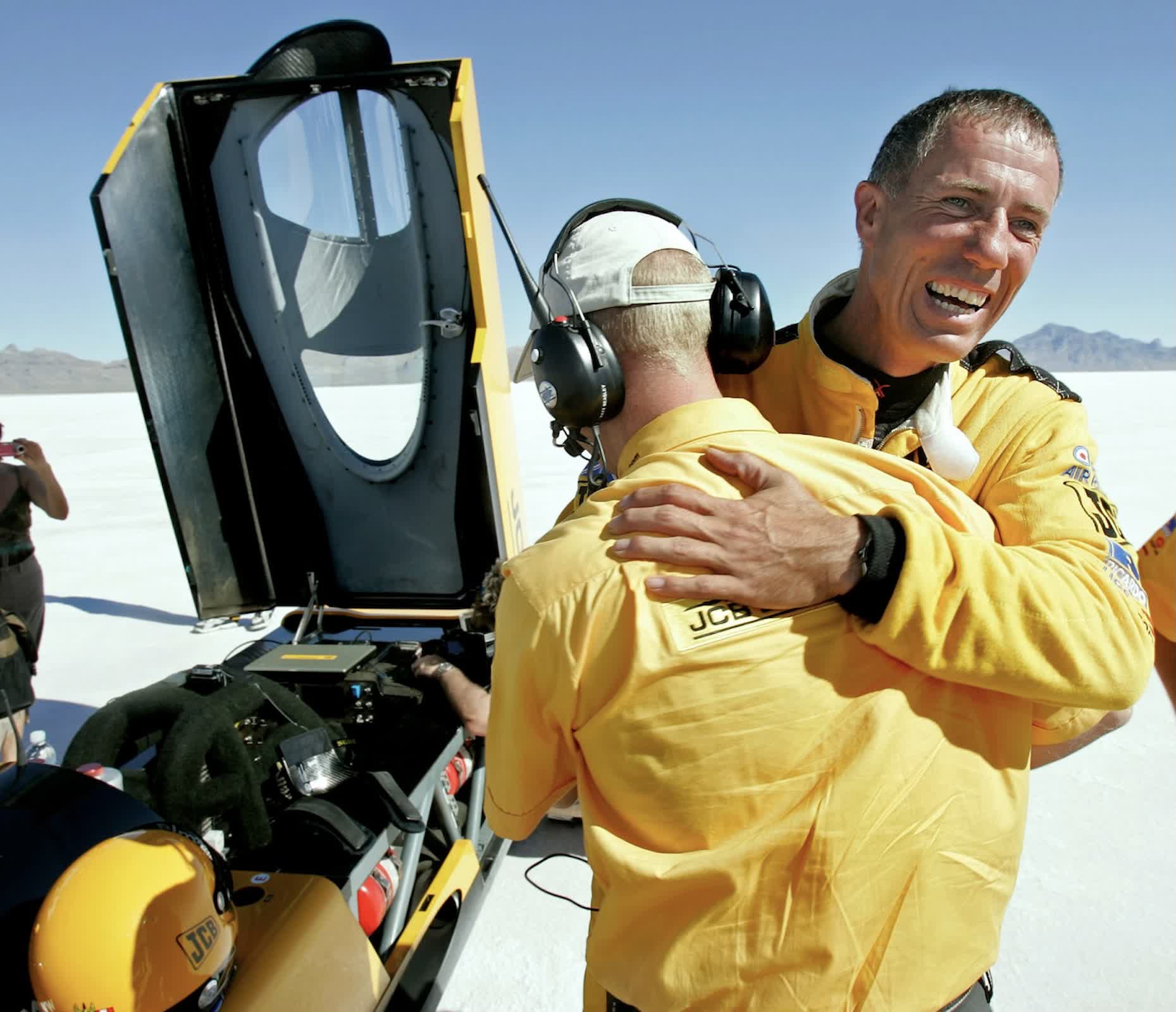
Green reached 368.347 mph during practice last week. If he can repeat that performance in the official attempt, he would beat the 350.092 mph diesel record he set at Bonneville 20 years ago. He could also pass the current hydrogen internal-combustion record of 185.5 mph and the electric-vehicle record of 341.3 mph.
“What the peak speed is, I can’t say. We just don’t know,” Green told The AP. “Part of the adventure here is we’re going to find out.”
The run will be a test of whether hydrogen combustion can work at a level far beyond its usual industrial use. JCB has spent more than $134 million developing hydrogen engines. The company says they produce no carbon dioxide from the tailpipe and could have a role in heavy-duty equipment, where batteries can be difficult to use because of weight, charging needs, and operating demands.
“If you’re serious about emissions, you have to be serious about hydrogen, and a land-speed project is the perfect way to prove it,” JCB Chair Anthony Bamford said at the car’s unveiling in May.
Hydrogen’s environmental case is more complicated than tailpipe emissions alone. Most of the world’s hydrogen is made from fossil fuels. JCB has signed a deal to buy green hydrogen, which is produced using renewable energy, though that form of hydrogen remains a small part of the global supply.
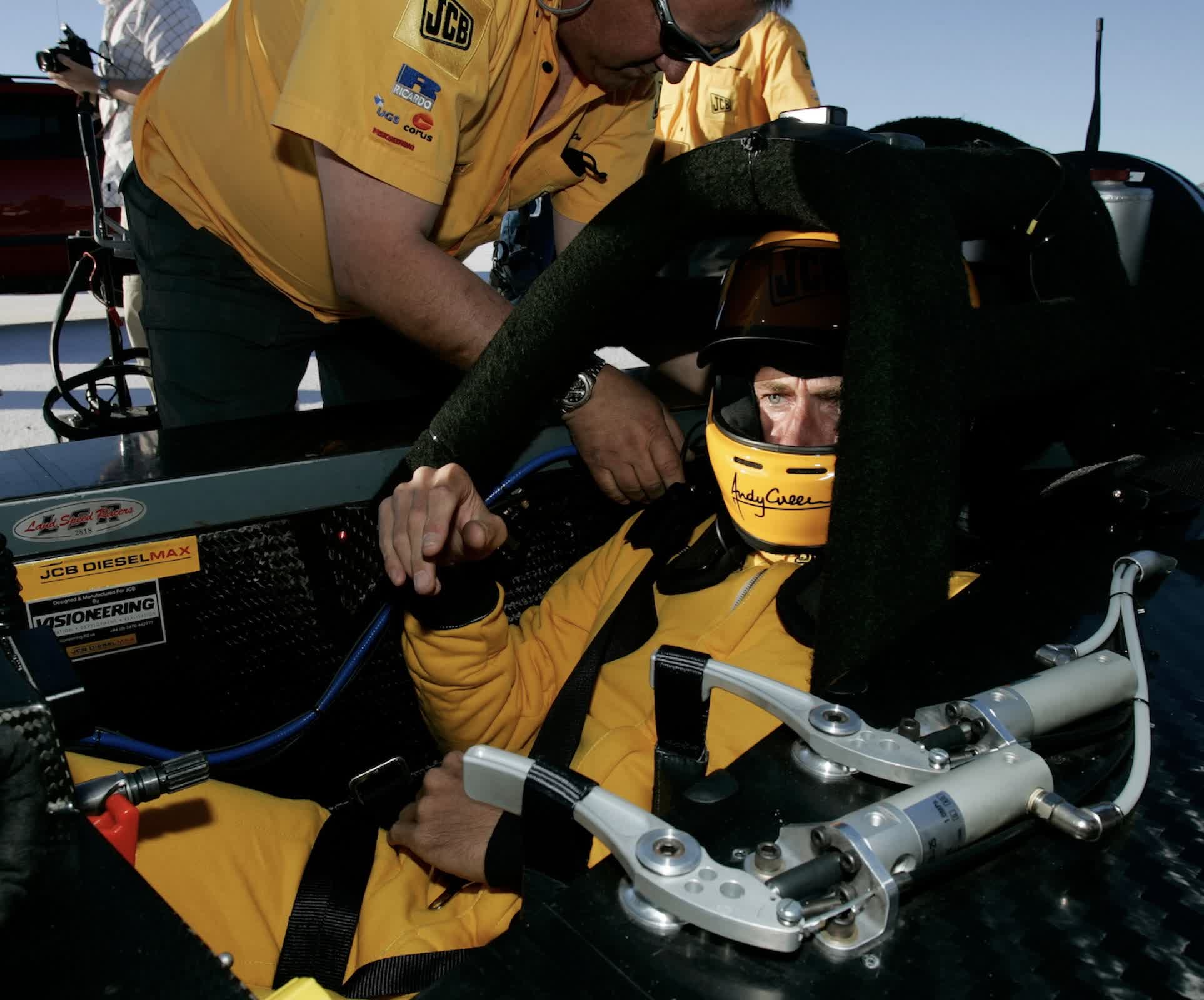
There are also safety issues. Hydrogen is stored under pressure and is highly flammable. Green said the team put the car through extensive testing before bringing it to Bonneville. He has spent months learning how the engines work together and how the car behaves on the salt surface.
“We’re managing the risks very carefully,” Green said.
The conditions at Bonneville add another layer of difficulty. The salt flats offer a long, open course, but the surface has limited grip. Green will use a parachute to slow the car after the run. The attempt is planned for shortly after sunrise, before the desert heat builds.
Bonneville has been used for speed attempts since 1914. The flat, white expanse sits about 100 miles west of Salt Lake City on the Utah-Nevada border. Its straightaway runs for about 10 miles, and spectators watch from roughly a quarter-mile away.

Green understands the place land-speed racing holds in the public imagination. In 1997, he became the first and only person to drive a car faster than sound. His jet-powered Thrust SSC reached 763.035 mph in Nevada’s Black Rock Desert, producing sonic booms that shook the nearby town of Gerlach.
Now 64, Green said he had expected to be finished with racing before JCB asked him to take on the Hydromax project. The car will not challenge his supersonic record. Its purpose is more practical: to show what a hydrogen combustion engine can do when pushed to its limits.
Image credit: The AP
You must be logged in to post a comment Login