Tech
Hyundai & Kia’s New UV Sanitizing Tech Is A Germaphobe Driver’s Dream

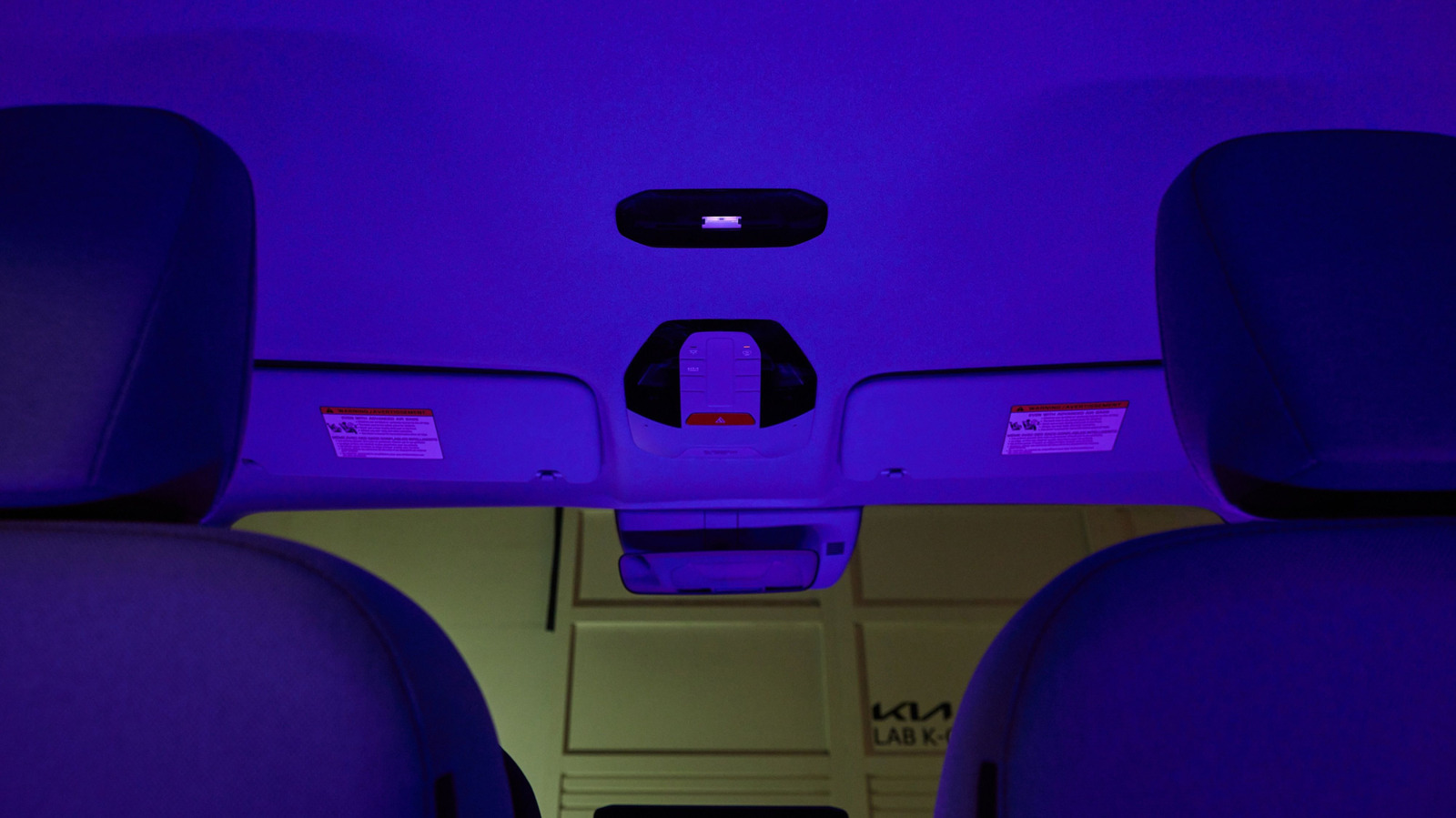

For most owners, keeping a vehicle ultra-clean isn’t an easy task. Nonetheless, the health benefits of having a car that’s free from germs are inarguable. Hyundai and Kia just unveiled new technology that aims to help make eliminating those germs a lot easier.
The carmaker is calling the technology “Plasma Care UVC,” and it uses far-ultraviolet C light with a wavelength of about 200-230 nanometers to sterilize a car’s cabin. UV sterilization devices are not new, but traditionally, some use UV light of a slightly longer wavelength than Hyundai’s new system. As a result, they have the potential to cause skin and eye damage if a human is exposed to them.
Hyundai says the far-UVC light it is using in its new technology won’t cause damage, since the light doesn’t penetrate human skin. However, it does still penetrate into bacteria and viruses, making it an effective way to sanitize a car even when the driver and passengers are present.
Although this is the first time that far-UVC light sanitizers have been fitted to a vehicle cabin, similar systems that use the same wavelength of light are already used to clean rooms in healthcare settings like hospitals, as well as sanitizing hotels and classrooms.
Hyundai says that its engineers encountered several challenges when trying to make the system work in cars, with one of the biggest being that the existing systems were simply too big to fit. Its team had to develop a new, miniaturized version of the system, as well as fitting an optical filter to ensure that no UV light of a harmful wavelength was emitted.
Far-UVC technology isn’t available in production cars yet
To test that the system worked as intended, the carmaker fitted it to a PV5 minivan. This model in particular was picked because it can be used for a range of different transport jobs, shuttling both passengers and cargo to their destinations.
Following the initial successful tests, Hyundai said that its technology could potentially be applied to autonomous vehicles and PBVs, a term that it has previously used to describe its modular electric vehicles that can be designed for a specific job. It gave the examples of school minibuses and food selling vehicles as two instances where sanitizing technology might be especially useful.
As appealing as the new technology might sound to germaphobes, it isn’t available to the general public just yet. Hyundai has not given a timeframe for when the UV sanitizers might launch in its production vehicles, saying only that it needs to conduct more safety and technical validation tests before it gives them approval for production.
You must be logged in to post a comment Login