Tech
I feel like the Galaxy Z Fold 8 is the right kind of passport foldable

Passport-style foldables are returning, but in a foldable format. Samsung completely changed direction with the Galaxy Z Fold 8, Xiaomi followed with the 18 Fold, and Apple has now entered the category with the iPhone Duo. Even though the original Google Pixel Fold explored the same short-and-wide idea years ago, this is looking like the new smartphone trend in 2026.
After spending years with book-style foldables, I am warming up to this decision. I prefer the idea of keeping the phone compact when closed and opening it only when I need more room.
Someone recently told me they thought the iPhone Duo looked beautiful. Their only complaint was that they wished it ran Android. Don’t get me wrong, I like what Apple has done with the Duo in plenty of places. The software transitions are gorgeous. Still, the iPhone Duo is incredibly squat when closed. The outer display does match the inner one in terms of aspect ratio, but I can’t help but feel like the design lags behind.
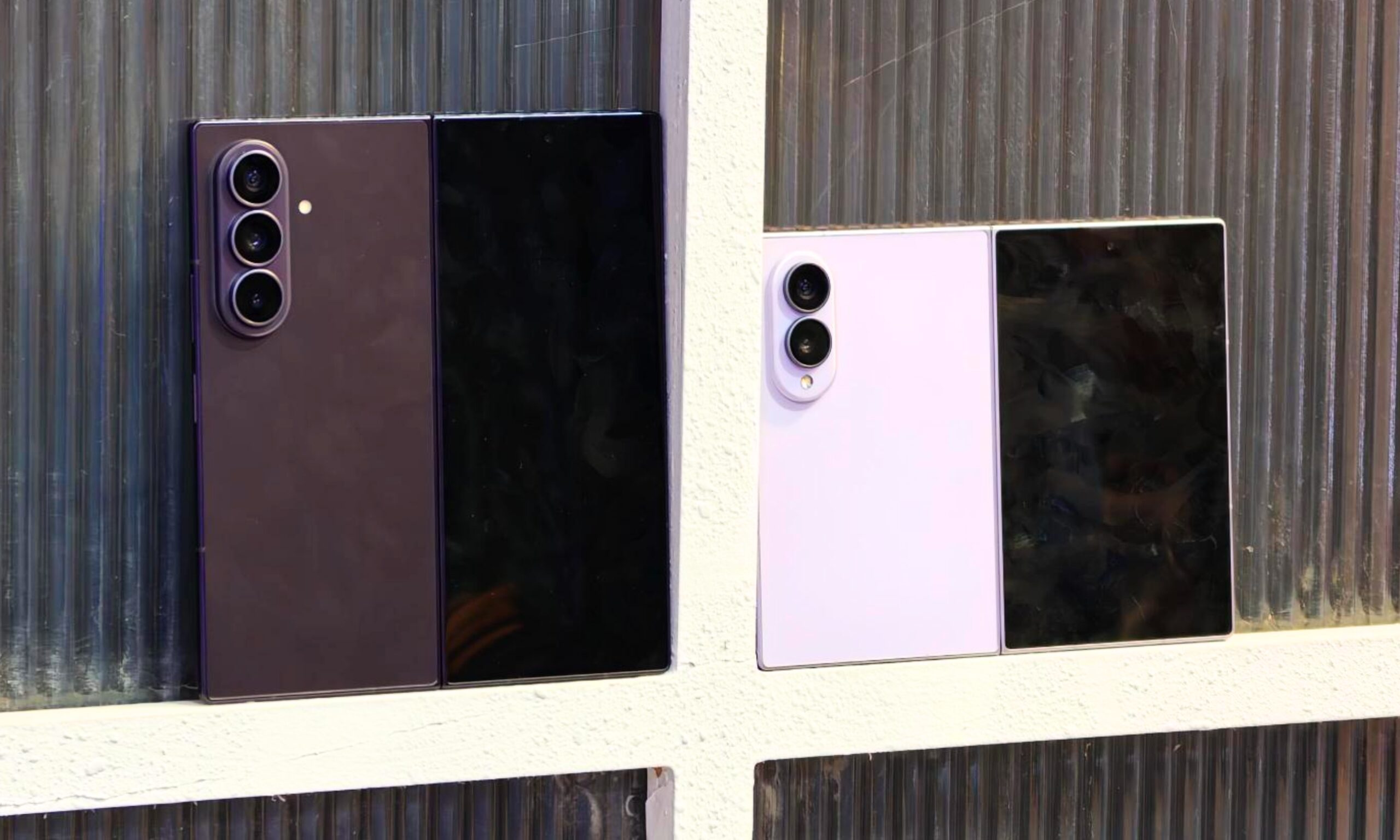

Passport foldables aren’t all the same
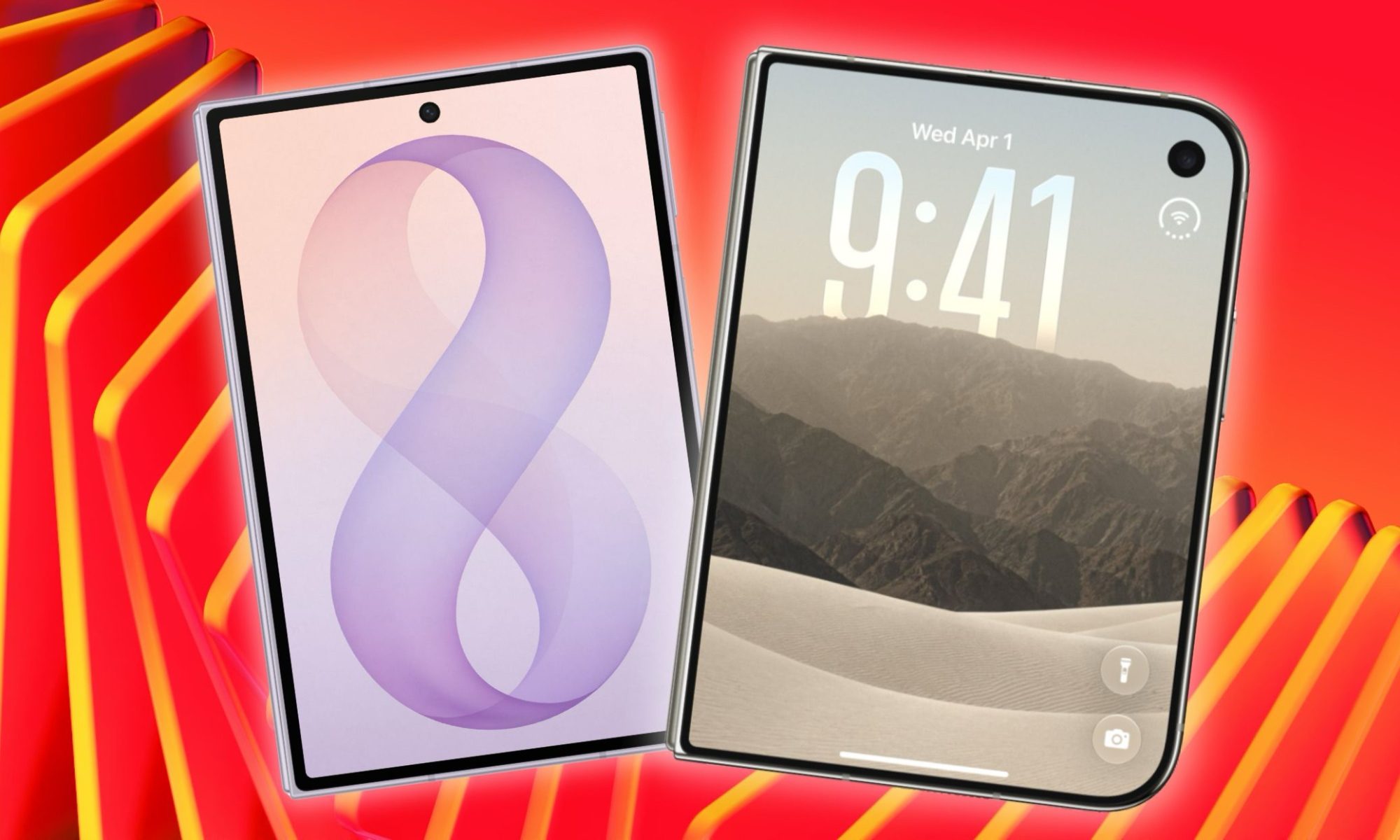
Put the two phones next to each other, and they initially look like variations on the same concept. The Galaxy Z Fold 8 has a 5.5-inch 10:16 cover display and opens into a 7.6-inch 4:3 canvas. Samsung designed the outer screen for quick scrolling and messaging, then lets the inner display handle tasks that need more immersion.
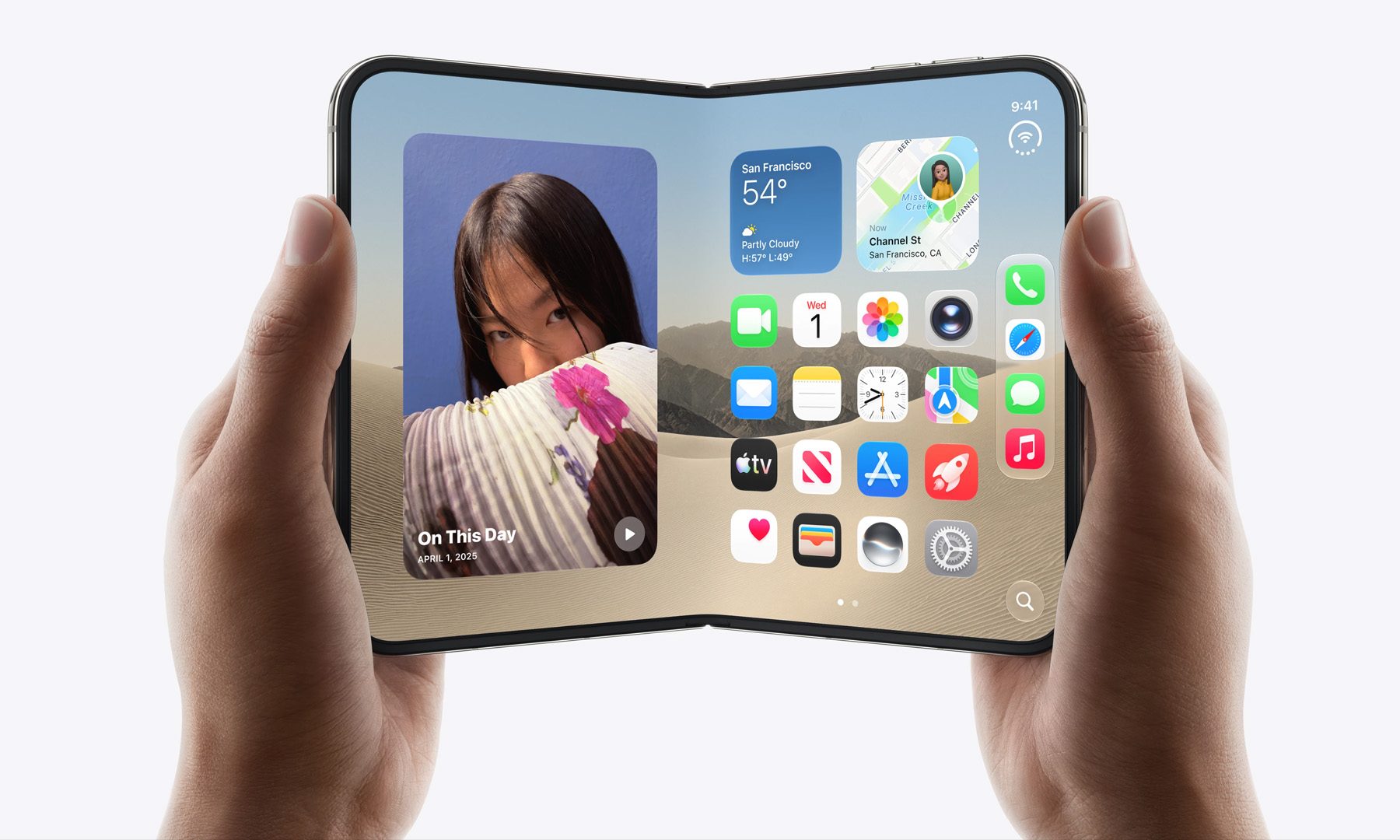
Apple does essentially the same thing with the Duo: a 5.4-inch outer display opens into a 7.6-inch inner screen. Apple even claims that the outer display is compact enough for one-handed use while the inner screen handles multitasking and entertainment.

| Features | Galaxy Z Fold 8 | iPhone Duo |
|---|---|---|
| Closed dimensions | 123.9 x 81.9 x 9.7mm | 117.8 x 84.1 x 11.3mm |
| Outer display | 5.5 inches, 10:16 | 5.4 inches, 14:10 (roughly) |
| Inner display | 7.6 inches, 4:3 | 7.6 inches, 14:10 (roughly) |
| Weight | 201g | 254g |
Overall, the Duo is a little shorter and heftier, not to mention wider too. Those numbers explain quite a lot about how differently the two devices come across in the hand. Samsung’s Fold 8 is wide enough to feel distinct from a conventional slab without tipping too far into miniature-square territory. The Duo goes farther, and that extra width combined with the weight makes the whole thing look and feel more substantial when you’re simply trying to use the outer screen.
The UI debate
Apple knows the Duo’s proportions create a software challenge. Its own developer guidance explains that the Duo’s wider aspect ratio creates more horizontal space but reduces the amount of useful vertical room. Apple therefore moves controls that normally sit at the top and bottom of an iPhone onto the side of the interface, where they preserve vertical space and become easier to reach.
It also reinforces why I’m not entirely sold on the hardware shape. On a normal iPhone, developers have spent years assuming a tall display. We’re all familiar with how navigation bars go along the top, while tab bars sit at the bottom, and your thumb moves through an interface built around those proportions. Apple deserves credit for actually changing up this formula.
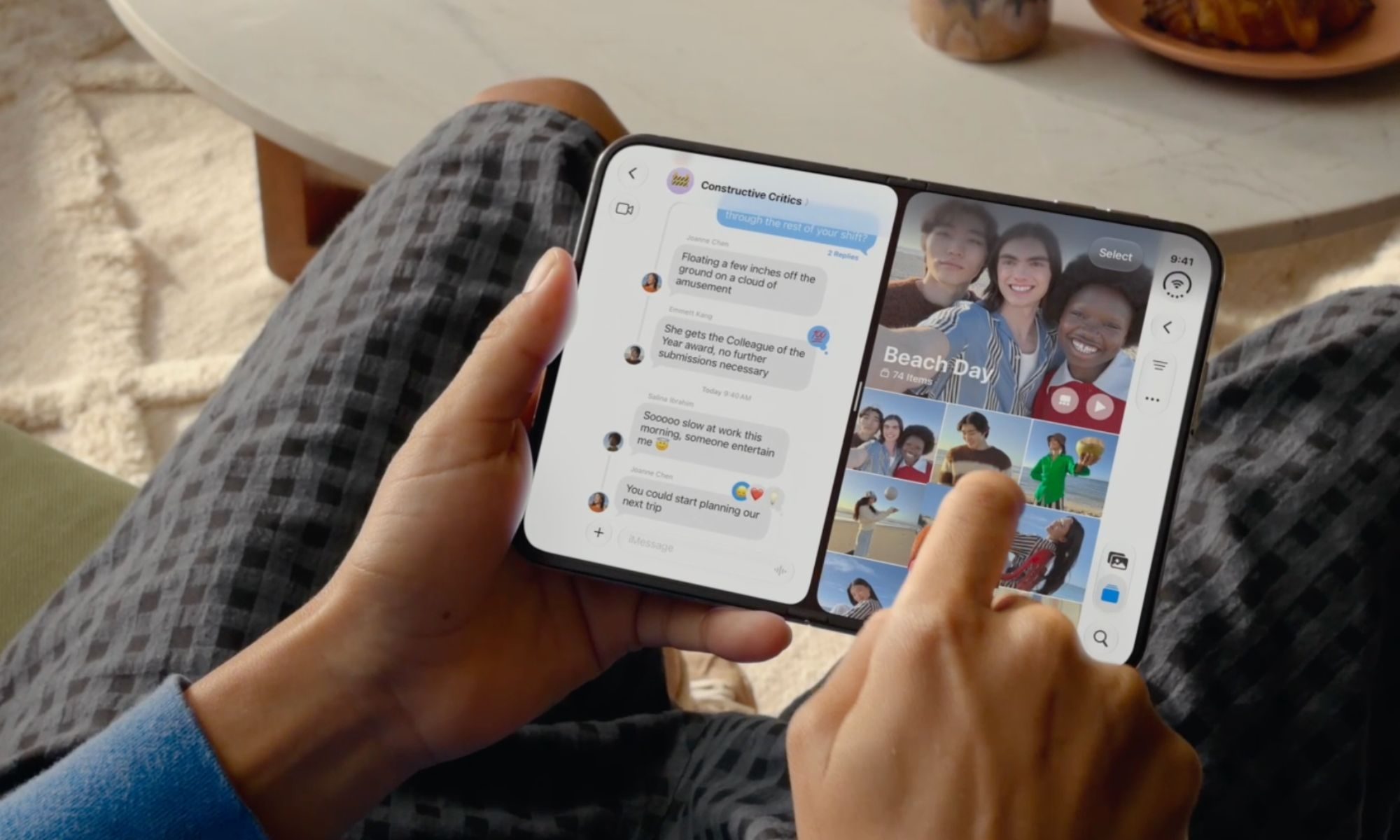

I already like how iOS 27 adapts across the Duo, and the software is one of the device’s biggest strengths. But Samsung’s Fold 8 has a simpler advantage with its 10:16 cover display that is still tall enough.
Samsung’s Galaxy Z Fold 8 is meant to be your main device
The ergonomics are another part of this conversation that gets lost when we obsess over diagonal screen sizes. The difference between 81.9mm on the Fold 8 and 84.1mm on the Duo looks tiny on a spec sheet. Once you combine it with the Duo’s shorter shape, 11.3mm folded thickness, and 254g weight, the device becomes a much chunkier object to move around in your palm.
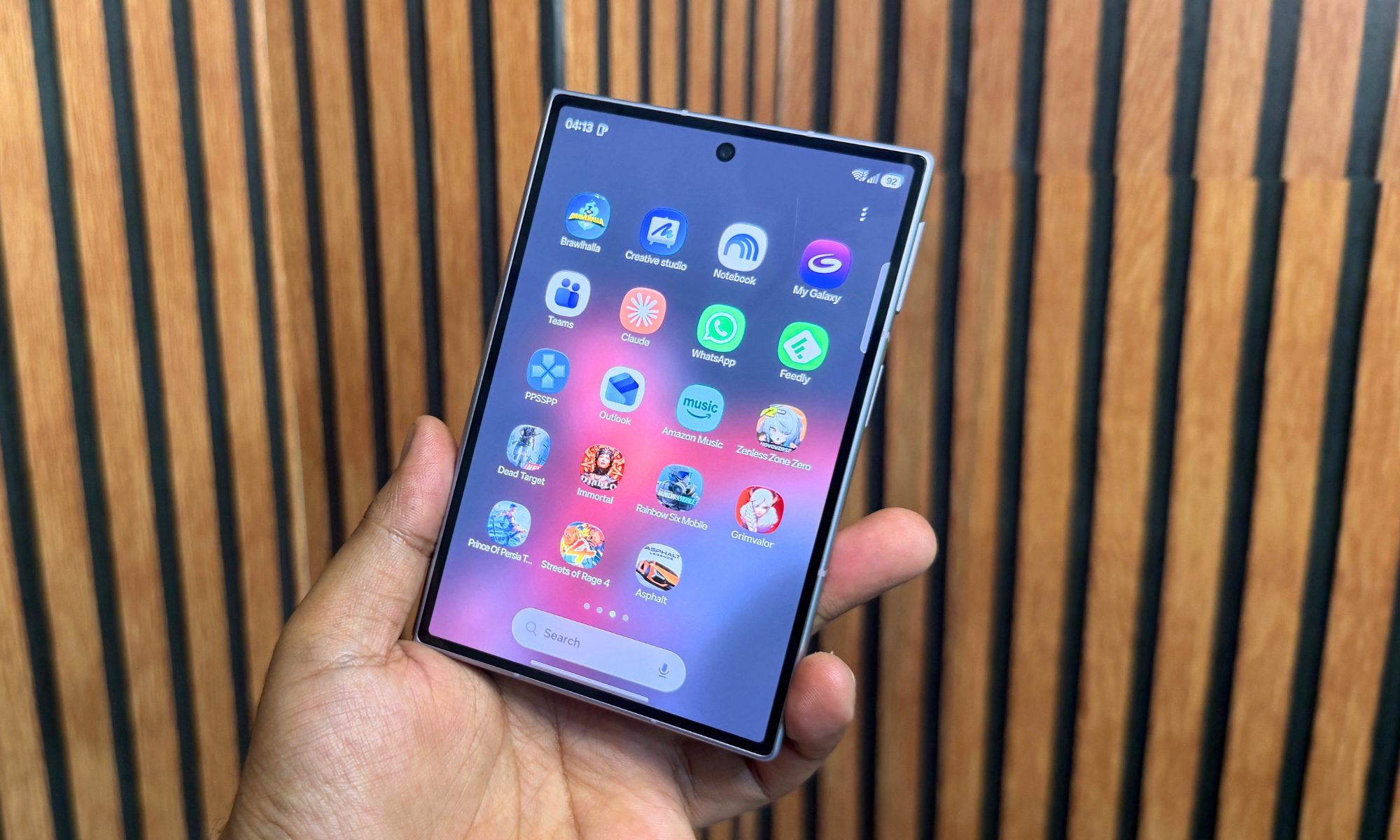
Something that really impressed me was just how much Samsung’s phone weighs. At just 201 grams, it is surprisingly light for a book-style foldable. I’d argue that this is what the pinnacle of foldables should look like. All the specs and features aside, having a phone that feels handy is much better than a phone that is a chore to hold after a while.
Samsung can give me the unusual passport proportions without making every quick interaction remind me that I’m holding two halves of a folding phone. Not saying it’s as light as the truly compact phones like the Galaxy S26 and Pixel 11 Pro, but it gets realistic enough.
I’d pick the Z Fold 8 any day
I’ve already argued that compact, wide foldables could solve one of the biggest problems with small phones. You get something manageable for calls, notifications, and quick interactions, then unfold it whenever you need more room for gaming, email, reading, or multitasking.
The question is how compact you make that outer experience. The Duo embraces a much squatter display and then uses thoughtful software to make that unfamiliar canvas work. Samsung’s Fold 8 feels a little closer to a conventional phone without losing the passport design. Its best part is still that it’s lighter and thinner, which makes the shape easier to drive daily.
I might change my mind once I try out the Duo… maybe. Even so, the Galaxy Z Fold 8 is much closer to what I want from a passport foldable.
You must be logged in to post a comment Login