Tech
I Rewatched My Blu-ray 3D Collection on a Projector at Home, and It Has Never Looked Better

Do you remember 3D TVs? They had a roughly six-year run from 2010 to 2016, a timespan that witnessed the demise of plasma TVs and the ascent of OLED TV technology. At that same time, there was a 3D movie boom in theaters, with nearly every major release getting a 3D-format screening, whether the content benefited from the addition of a third dimension or not.
Booms are usually followed by a bust, and these days most folks don’t even give a second thought to 3D movies. In an ironic twist, however, recent advances in display tech have created fertile ground for 3D viewing, particularly for watching 3D movies at home.
To 3D or not to 3D

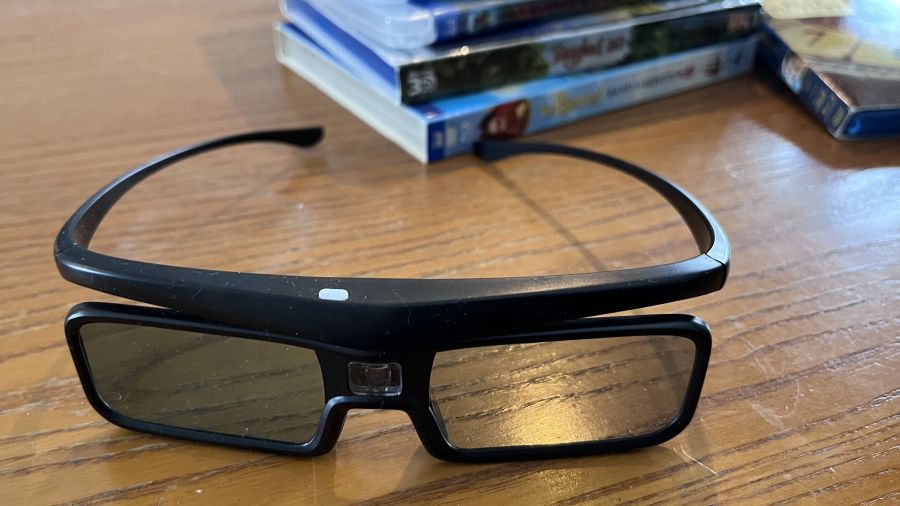
I’ll admit to having geeked out on 3D during the last boom period, partly because I was regularly reviewing TVs at the time, and also because I had young kids who wanted to see the new animated movie releases, most of which were shown in 3D. Consequently, I spent many a weekend wearing 3D glasses in theaters, and also amassed a decent-sized Blu-ray 3D disc library for home viewing.
Looking back at that time, my recollection is that the 3D kinda sucked, both at the theater and at home. In theaters, it was the pre-laser projector era, when the brightness of a typical digital cinema projector was significantly lower than what you get in today’s venues. Put on 3D glasses, and the picture put out by that already brightness-challenged projector could look almost unacceptably dim.
Along with being dim, many movies shown in 3D weren’t actually shot using 3D cameras but instead converted to 3D. Not surprisingly, any 3D effect in these titles was minimal, or even accidental.

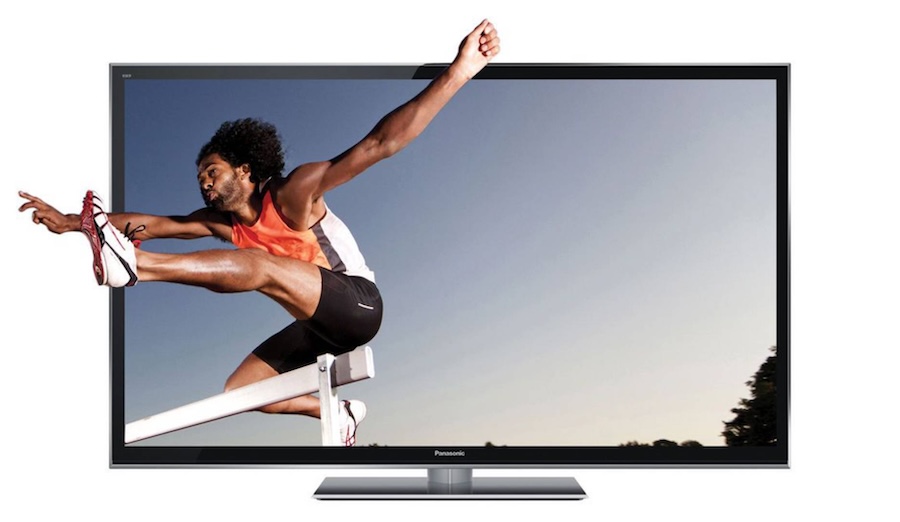
On the home front, the 3D TVs of the time had smaller screen sizes and were significantly less bright than today’s models. Today, a typical lineup from any TV brand ranges from 55 inches up to 98 inches, and peak brightness for higher-end models is in the 2,000-3,000 nits range. Back in 2015, screens generally maxed out at 65 inches, with 55 inches being a more common size. As for brightness, one of the last 3D TVs I measured, a Panasonic LCD model, topped out at a mere 132 nits.
(Looking back at that 2015 review, I was reminded that Netflix at one time streamed 3D content, and that I had actually watched a Wim Wenders 3D movie on the Panasonic. Crazy.)
Most home projectors in that earlier era also supported 3D, which let you watch 3D movies on 100-inch-plus-size screens. But while a bigger screen provided a better and more immersive experience, the brightness of pre-laser, lamp-based home projectors was much less than what you can expect today. To cite one example, the Sony VPL-VW350ES, a 4K SXRD projector that cost $10,000 when I tested it in 2015, had a specified 1,500 lumens brightness. Today, the Sony Bravia Projector 7, the company’s entry-level 4K laser model, lists for the same price and has a specified 2,200 lumens brightness, a near 50% increase.
Surveying the 3D landscape
Today, there are still some 3D theatrical releases, though most are kids-oriented animated movies like the recent Pixar hit Hopper and The Super Mario Galaxy Movie. New Blu-ray 3D discs also continue to trickle out, with the latest entry in the Avatar franchise, Avatar: Fire and Ash, which is scheduled to ship in May 2026, being one notable release.
Anyone who owns a 3D-capable Blu-ray player and picks up Avatar: Fire and Ash on disc will find the 3D at home landscape much improved compared to the 3D boom years, and that comes down to one product category: projectors.
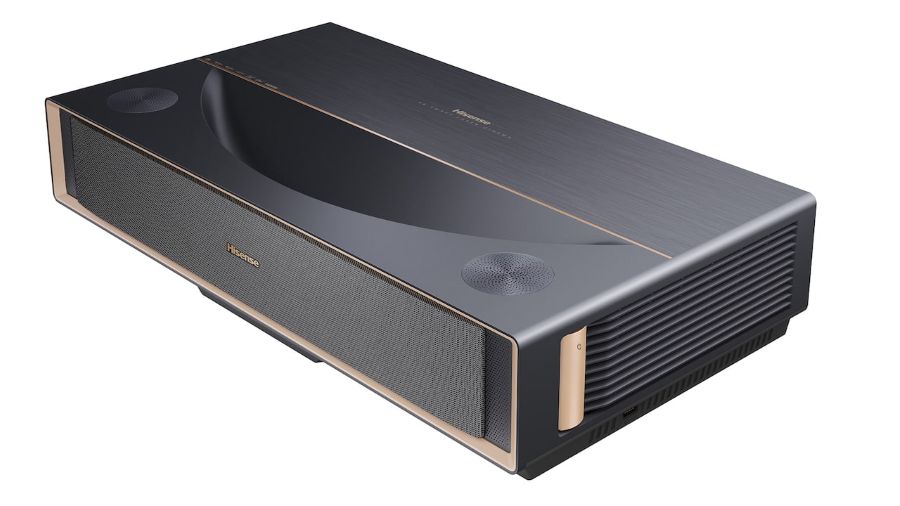
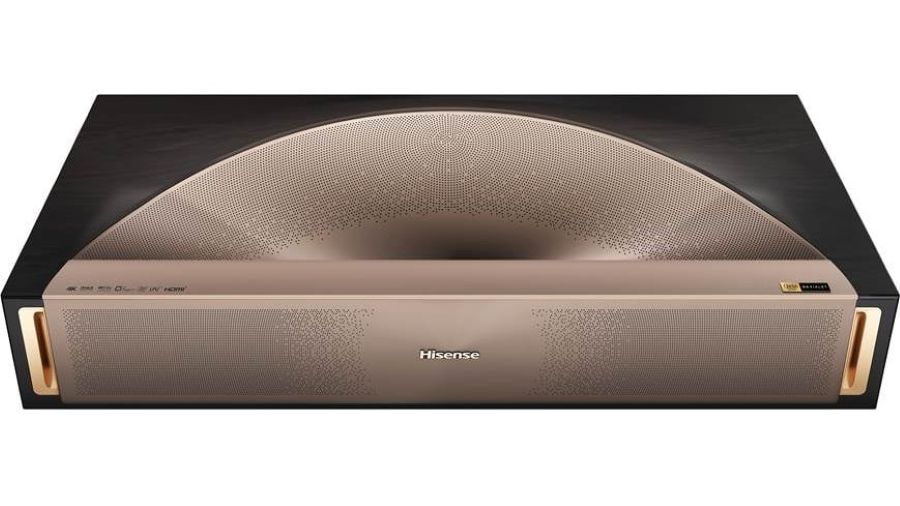
I recently got my hands on the Hisense PT1, a 3D-capable projector. The PT1 is an ultra short throw (UST) model designed for close placement to a screen and it supports screen sizes up to 150 inches. At $2,500, it’s affordably priced for a 4K UST projector, and its 2,500 lumens specified brightness exceeds that of considerably more expensive long throw projectors such as the Bravia Projector 7, a model that, despite its relatively high price, doesn’t offer 3D support.
Having the Hisense PT1 in-house gave me an opportunity to do something I’ve long been wanting to do: revisit my Blu-ray 3D disc collection to see how the experience holds up on a bigger, better, and brighter display than what I was used to in the old days. For my viewing, I paired the Hisense with a 100-inch Elite Pro AV Floor Riser Pro DarkUST 3 projection screen using an Oppo UDP-203 4K Blu-ray player as a source. Active 3D glasses were AWOL Vision DLP Link.
3D Revisited
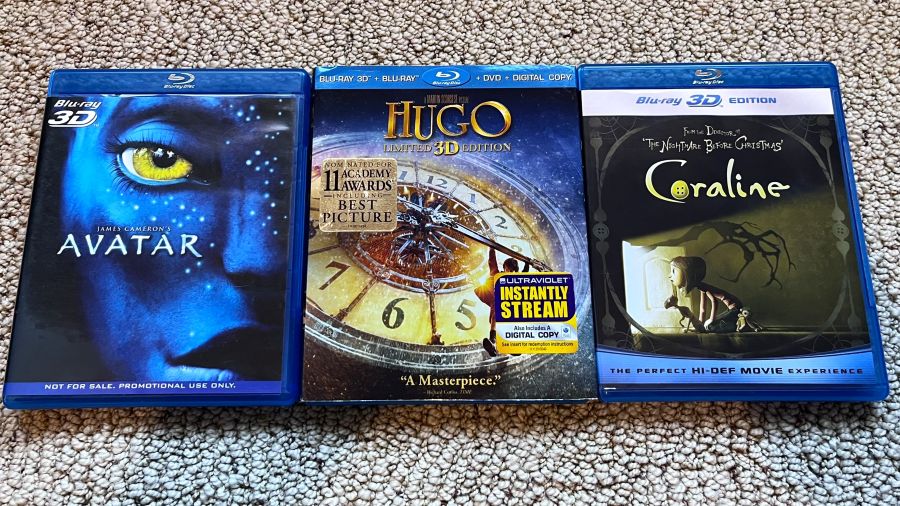
To get the 3D TV party started, I selected three movies that I know were actually shot using a stereoscopic process and not upconverted to 3D: Avatar, Hugo, and Coraline. It didn’t hurt that these are all good movies – very good in the case of Coraline – and that I remembered them as having a pronounced 3D effect when I first watched them, both in the theater and at home.
Avatar is the king of modern 3D spectacles, and it was the disc I was most eager to check out on the Hisense projector. (The next chapter in the series, Avatar: The Way of Water, was also a 3D banger when I watched it at my local IMAX theater, and it looked great on an Apple Vision Pro headset that I briefly had on loan.)
To quickly sum things up, Avatar looked great on the system. The picture had strong contrast and bold color, especially in the luminescent forest scenes early on, and the 3D effects were even more pronounced than I remembered. There really was a sense of being there in the forest with those blue aliens. I found that brightness could have been better – I guess I got spoiled by watching Avatar: The Way of Water in optimal 3D viewing conditions – but the picture wasn’t so dim as to prevent me from enjoying it.

Hugo on the Hisense was another case where the 3D effects were more pronounced than I remembered – the picture was almost too three-dimensional. Unlike Avatar, Hugo is a good enough movie (it was directed by Martin Scorcese) that you don’t need 3D to fully enjoy it, so this is one case where I’d forego the third dimension to get the added picture brightness in 2D.
Coraline (2009) was the first stop-motion animated feature to be shot in 3D, and it received a 4K restoration and 3D theatrical re-release in 2024. Unfortunately, the remastered version didn’t make it to Blu-ray 3D, though a 4K disc version is available.
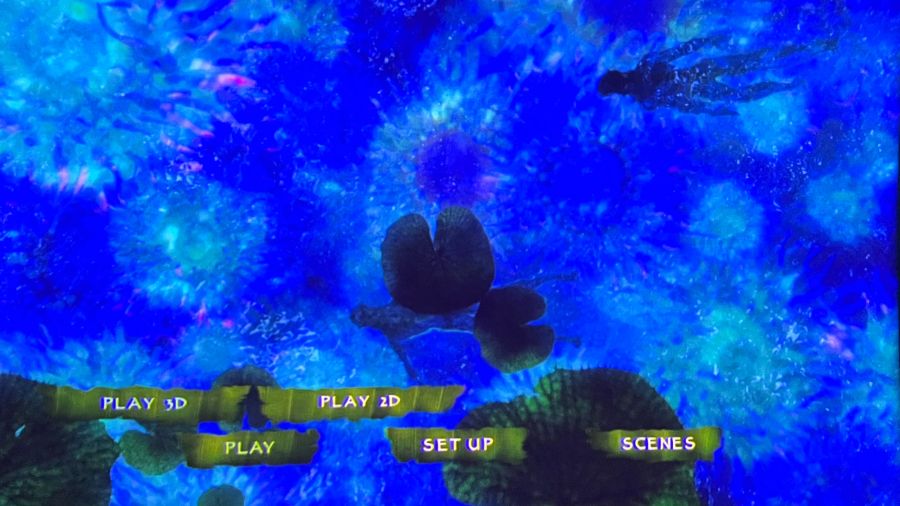
Watched on the Hisense UST projector, my original Coraline disc lacked the 3D depth swagger of Avatar and Hugo, though there were some scenes that strongly benefited from the extra dimension, particularly the ones where Coraline crawls through the passage to and from the Other World. I had caught the remastered 2D version in theaters back in 2024, but watching it in 3D on a 100-inch screen at home was a compelling enough experience that I found myself sitting again through the entire movie.
Plowing through select scenes from the rest of my collection, I was surprised to see how good some of those discs, which I previously hadn’t been impressed by, looked on the big screen. Disney’s Tangled (which even has previews in 3D) and How to Train a Dragon both had subtle, yet impressive depth effects, and the IMAX documentary Deep Sea 3D was a visual delight, particularly the jellyfish segment. The Tsui Hark historical martial arts drama Flying Swords of Dragon Gate, in contrast, was almost too much in 3D given its non-stop over the top, gravity defying action scenes. And the same could be said for Pacific Rim, which had a near-wobbly look due to the shifting spatial perspectives.
Some things are better left in two dimensions.
A 3D TV revival?
The popularity of 3D movies may come and go, but the format will never completely disappear – it’s got way too much sticking power. What I don’t expect to see revived at any time in the near future is 3D TVs. Set manufacturers, and the viewing public, seem pretty much done with that concept.
Fortunately for 3D movie fans, 3D lives on in projectors. That’s not to say that all new projectors support 3D. In fact, Epson, Sony, and JVC have all dropped 3D support in their latest models. But other projector brands such as Hisense, Optoma, AWOL Vision/Valerion, and XGIMI are bullish on 3D, providing broad support for the format across their respective product ranges.
Looking back on my 3D experiment/nostalgia trip, the one thing I would have changed was to use a brighter projector. With a rated 2,500 lumens, the Hisense PT1 has good brightness for the price, and is a great value for an RGB laser projector. But the company’s flagship UST model, the Hisense L9Q, which is rated at 5,000 lumens, twice the brightness, would have been a better choice. The L9Q costs $6,000, and while that price might be high, it is apparently the cost of doing proper 3D business.
You must be logged in to post a comment Login