Tech
I tried Alienware’s 560Hz OLED monitor, and this feels like an esports cheat code

OLED has already conquered the premium gaming-monitor market. Now Alienware wants to take it somewhere it has historically struggled to crack: competitive esports. I got hands-on with the new Alienware AW2527HX at IFA 2026, and with a 560Hz fifth-generation Penta Tandem QD-OLED panel, a design shaped around professional players, and some wonderfully obsessive esports-focused features, Dell is making a pretty convincing case that OLED’s next battlefield is competitive gaming.
This is an esports monitor first, OLED monitor second
The timing couldn’t be more interesting. ASUS has just made its ROG Swift OLED PG259QWS Ace the official monitor for the upcoming PGL CS2 Major Singapore 2026. That monitor pushes 1080p OLED all the way to 720Hz on a glossy Tandem WOLED panel. Alienware, meanwhile, is taking a slightly different route with 560Hz QD-OLED. Either way, the message is pretty clear: OLED is starting to knock on the door of professional esports.
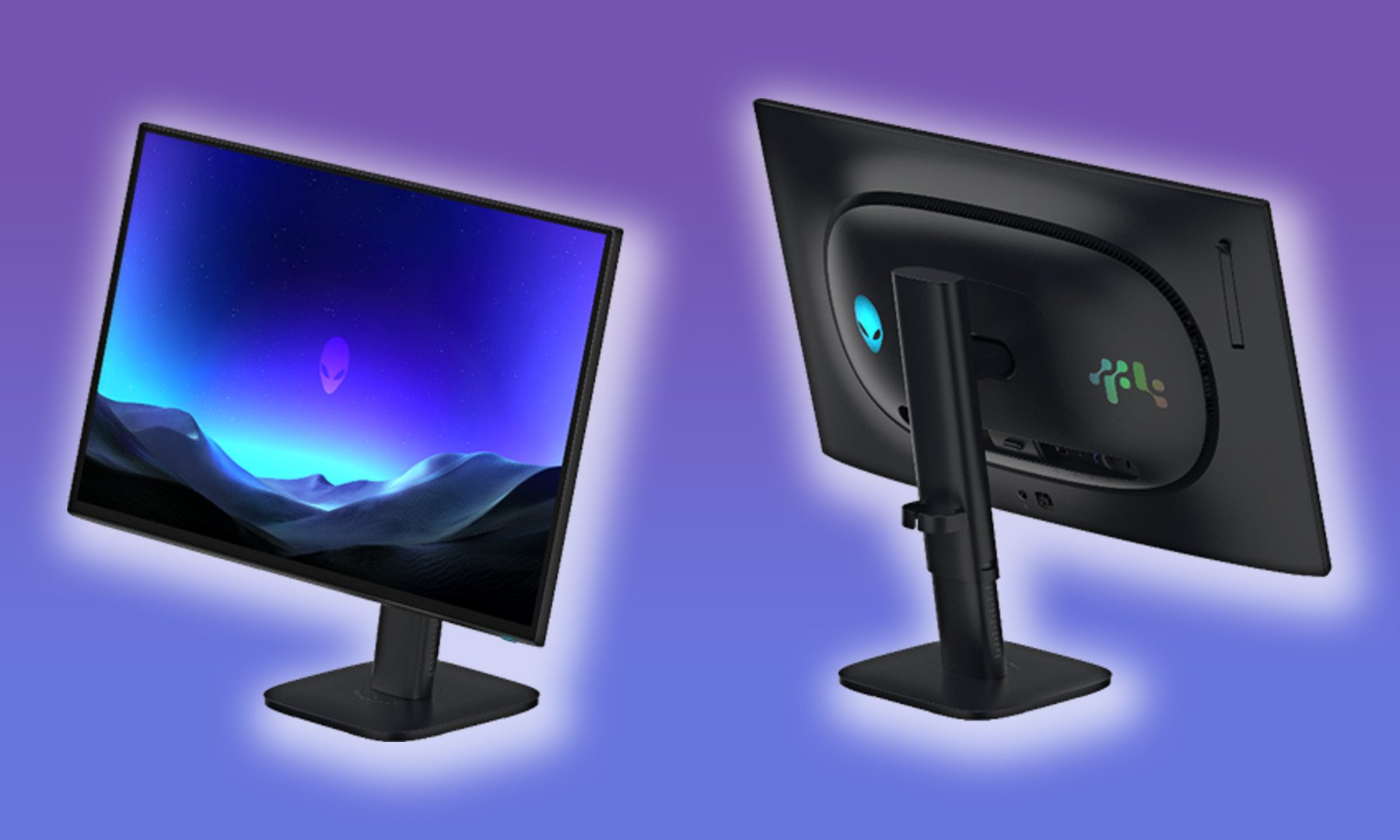

And this isn’t some budget 1080p monitor that happens to have OLED slapped onto it. Alienware is targeting serious competitive gamers, whether they’re already professionals or aspiring to become them. The AW2527HX is a 24.5-inch Full HD panel running at 560Hz, with a claimed 0.03ms gray-to-gray response time. Underneath that is a Penta Tandem QD-OLED panel with an RGB-stripe layout, bringing OLED’s infinite contrast and true blacks to a category that has traditionally been dominated by TN displays. Alienware also claims up to 1,500 nits of peak brightness, while the matte anti-glare low-reflectance (AGLR) coating is designed to keep the image clear even under bright tournament lighting.
At 25 inches, Full HD is still surprisingly crisp, too. And once you actually start playing, that 560Hz refresh rate makes everything feel ridiculously smooth. I tested PUBG: Battlegrounds during my demo and, despite being more of a Valorant player myself, I came away pretty impressed. OLED has long deserved a place in competitive gaming, and this monitor is one of the better arguments I’ve seen for it.
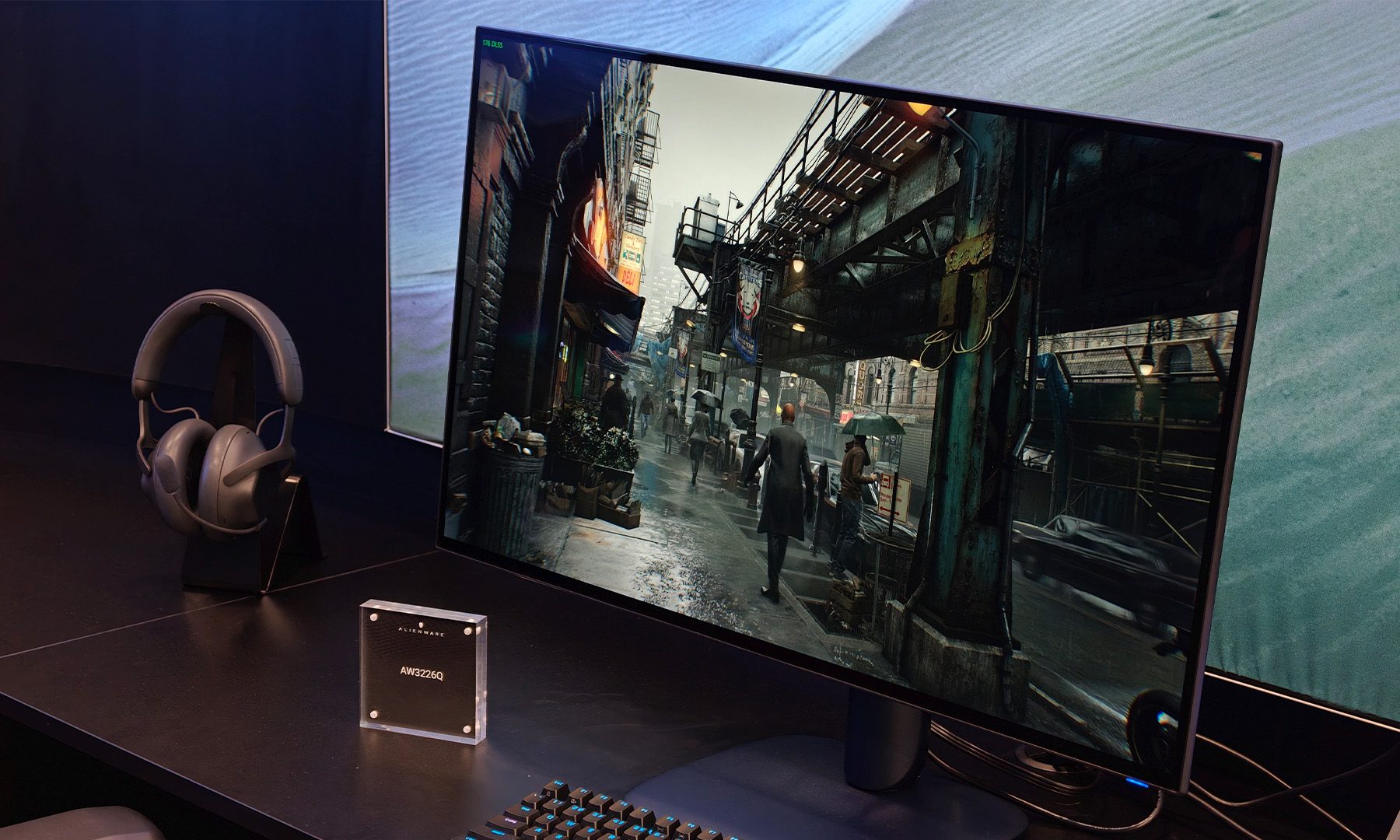
The only catch? Don’t expect it to be cheap just because it says 1080p on the box. I was told to expect pricing similar to its 32-inch OLED monitors, which puts it firmly into premium-monitor territory. Dell hasn’t officially announced the final MSRP yet, but that price alone tells you who this monitor is really for.
The stand gets weirdly serious
Alienware has made some very thoughtful decisions around the physical design, too. The base rotates smoothly and includes markings showing exactly what angle you’re using. That’s a tiny detail, but when your entire gaming setup is built around replicating a very specific competitive posture, tiny details suddenly matter a lot.
The arm itself is even more interesting. It’s essentially an inclined telescopic stand, allowing you to push the monitor all the way down and then tilt it backwards into that aggressively angled position many esports players prefer. Think of it like a tablet lying almost flat on your desk, except tilted upwards towards your face. That leaves plenty of space underneath for your keyboard and mouse.
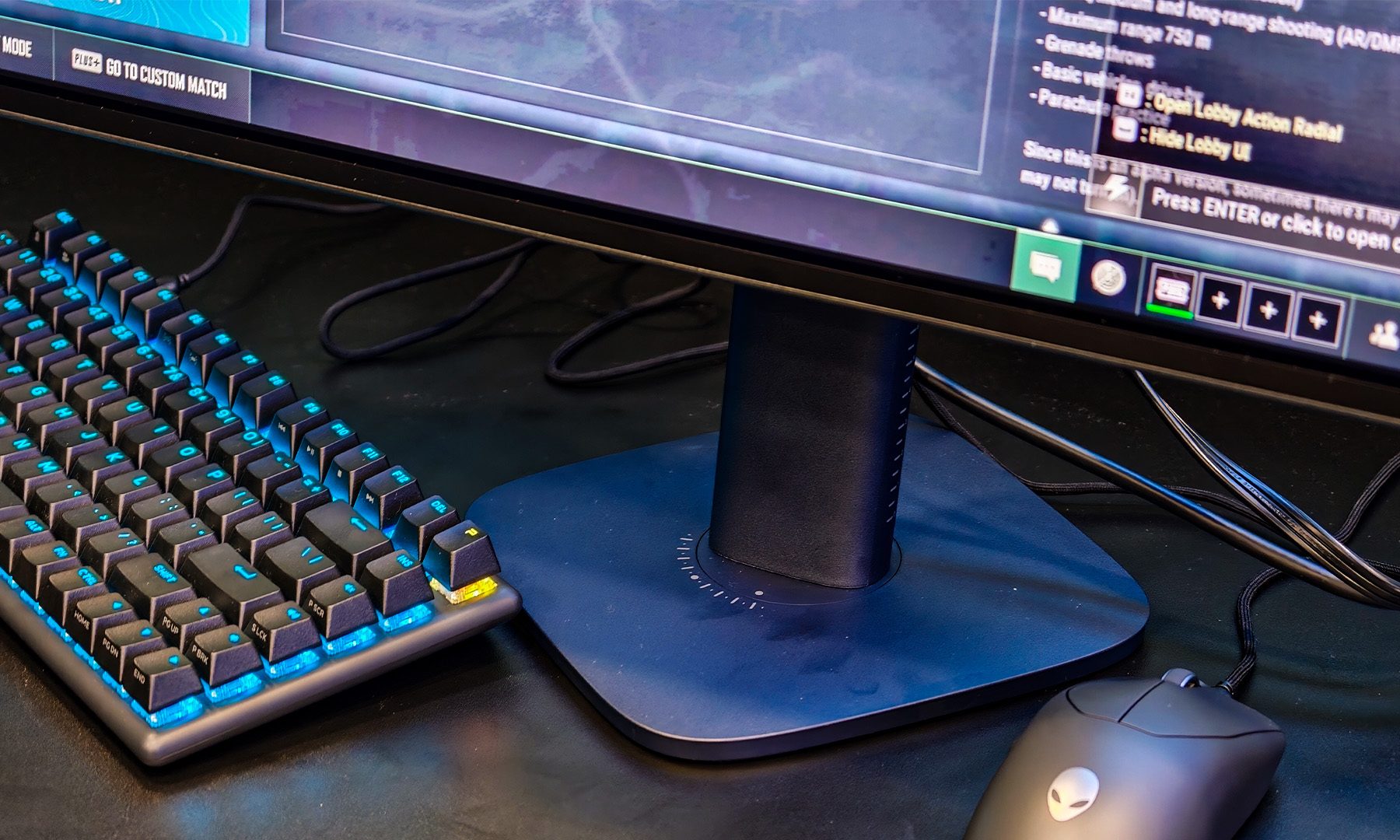
You can obviously achieve something similar with other monitors, but usually that means buying a separate monitor arm and fiddling around with your setup. Alienware has simply built the functionality into the bundled stand. The monitor also gets a 155mm height adjustment range and up to 45 degrees of backward tilt.
And then there’s the front. Or rather, the complete lack of anything on it. There’s no giant Alienware logo staring back at you, no distracting gamer aesthetic, and no unnecessary visual nonsense. Dell told us that its work with Team Liquid directly influenced this decision: professional players didn’t want branding or anything else distracting them from the game. So all you really see is the screen.
True Stretch feels almost like cheating
My favourite feature, however, might be the one that sounds the least impressive on a spec sheet. There’s a dedicated eSports button on the back that lets you instantly switch to the monitor’s True Stretch resolution. During my demo, that meant jumping straight to 1280 x 960 without having to dive into Windows settings, GPU control panels, or configuration files.
On the Alienware, you just press a button, and you’re there!
If you’re into competitive shooters, you’ll know why that’s useful. Stretched resolution doesn’t actually change hitboxes, but it does make player models, and especially heads, appear wider on screen, which can make targets feel easier to track and hit. That’s a big reason why so many competitive players swear by 4:3 or 3:2 stretched setups. On the Alienware, you just press a button, and you’re there. It almost feels like cheating. And honestly, the fact that the whole thing worked flawlessly during my demo might be my favourite part.
Why does my OLED suddenly look like a TN?
Alienware also throws in dedicated presets for Counter-Strike, Valorant, and Apex Legends, with more customization available through the Alienware Command Center. But then there’s TN Mode, which had me doing a double take. Why on Earth would I buy an OLED monitor and then make it look like a TN panel?
The TN mode looks pretty shitty. But that’s precisely the point!
The answer, surprisingly, makes sense. Turn TN Mode on, and the colours become noticeably duller. You see, competitive players have spent years using TN displays because of their speed, and jumping straight from that familiar, washed-out look to OLED can be a bigger adjustment than you’d expect. TN Mode essentially acts as a bridge. You can get comfortable with the new monitor, keep the visual character you’re used to, and gradually make the leap to proper OLED. It’s a weird feature, but one that shows Alienware has actually thought about the people it’s trying to win over.
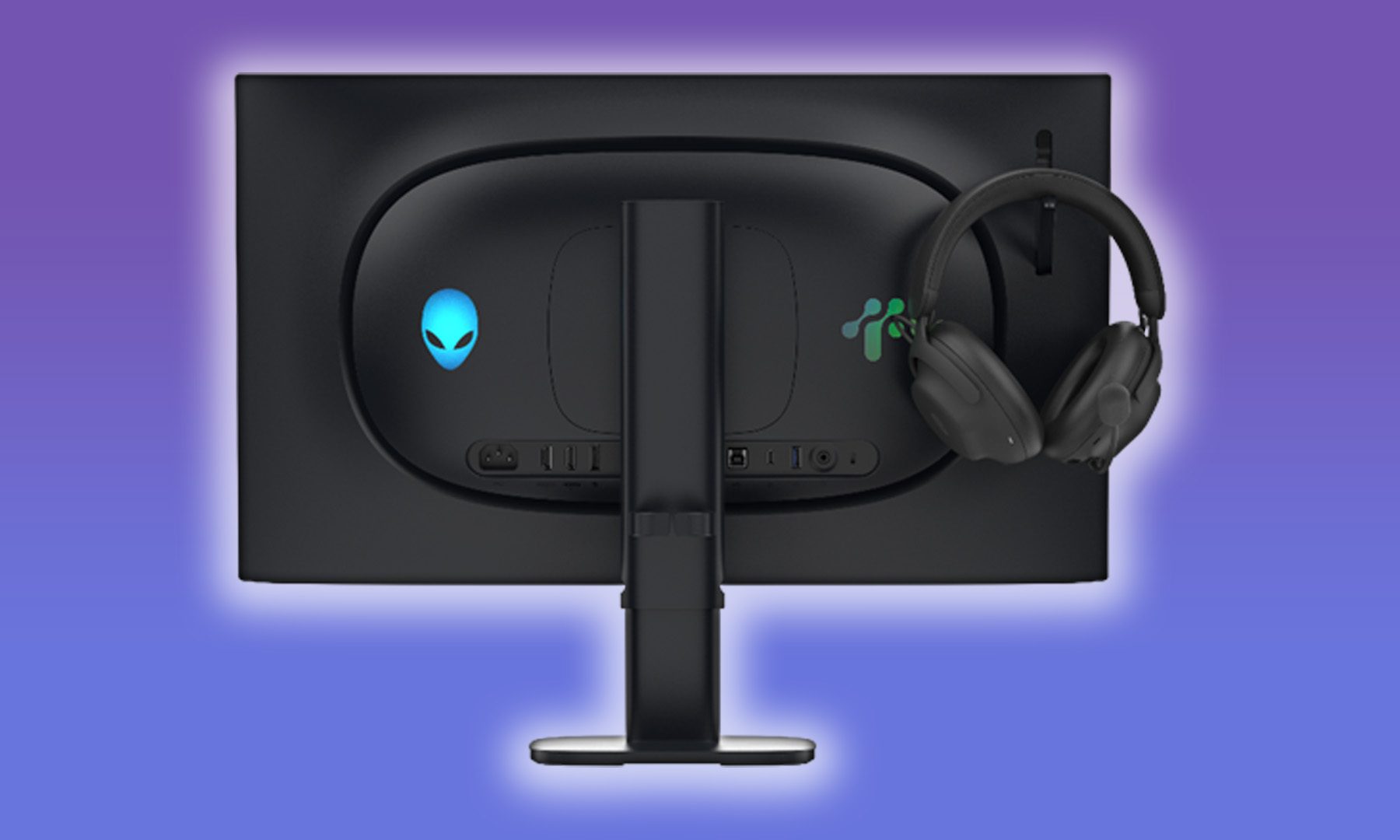
There’s also DisplayPort 2.1 UHBR13.5, which provides enough bandwidth to run the AW2527HX at its native 1080p and 560Hz without Display Stream Compression. For most people, that’s just another acronym to scroll past. For the sort of competitive gamer who counts every millisecond and probably has opinions about which direction their Ethernet cable should face, it’s exactly the kind of detail that matters.
OLED has entered the arena
That’s what ultimately impressed me about the AW2527HX. Alienware isn’t just throwing a 560Hz refresh rate at an OLED panel and calling it a day; it’s clearly built around how competitive players actually play, right down to the ridiculous stand and that wonderfully convenient True Stretch button. It’s specific, obsessive, and very much unapologetic about who it’s for.
And after my first hands-on, I’m starting to think Alienware might be onto something. OLED has finally earned a seat at the esports table, and the AW2527HX makes a surprisingly strong case for it. Now I just want to see what happens when I get to really put those 560Hz pixels through their paces.
You must be logged in to post a comment Login