Tech
Ice Dart Claws Onto Glacier Walls No Other Drone Can Touch

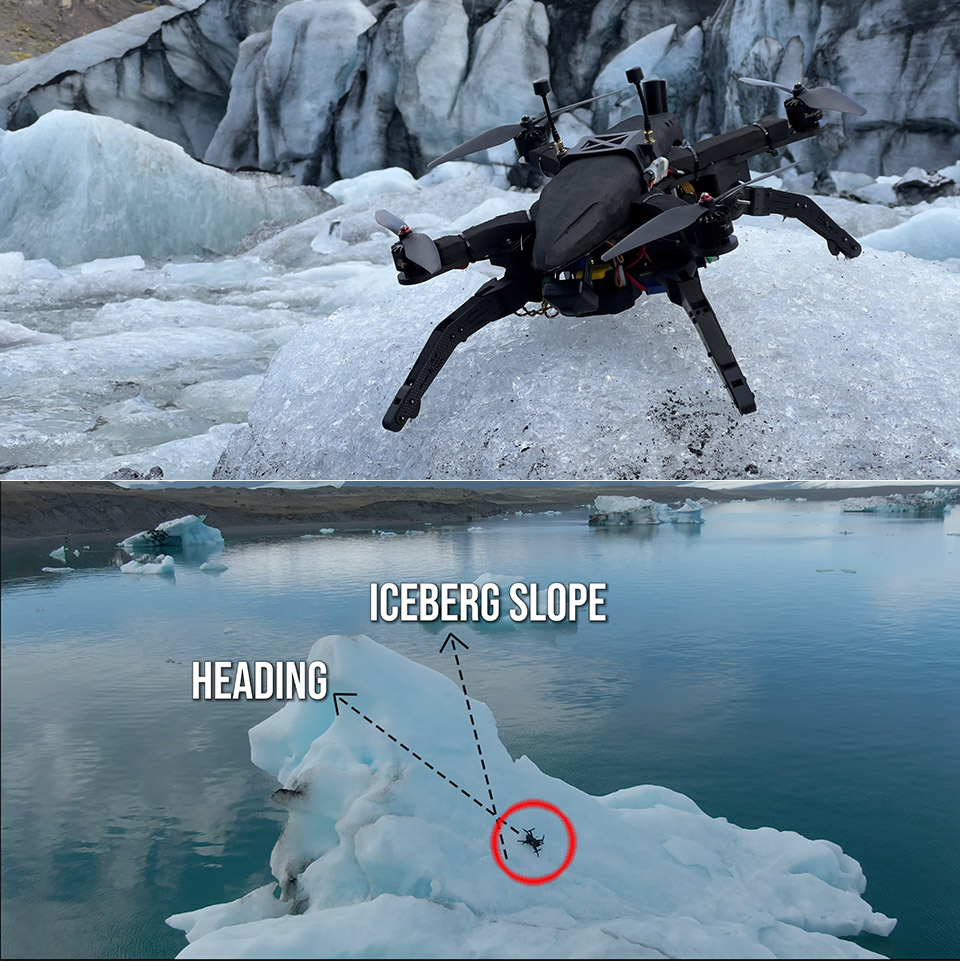
Standard drones start sliding on ice after a slope of only nine degrees. Gravity presses less of the aircraft into the surface as the angle rises, so a 60-degree wall leaves just half the usual downward force. Ice Dart, a 2.65-kilogram carbon-fiber quadrotor from Université de Sherbrooke in Quebec, now perches on ice that steep and stays put.


Isaac Tunney, John Bass, and Alexis Lussier Desbiens worked on the design at Createk Engineering Lab, where they created something truly remarkable: a drone capable of landing and perching on ice with steep inclines. They submitted their work in IEEE Transactions on Field Robotics, describing it as the world’s first drone capable of such tasks. Their aircraft is quite smart, with four legs arranged in an X form that attach via pivot joints. These joints are unique because they allow each leg to follow the precise angle of the ice as it comes into contact with the drone.
Sale


DJI Neo, Mini Drone with 4K UHD Camera for Adults, 135g Self Flying Drone that Follows You, Palm Takeoff…
- Due to platform compatibility issue, the DJI Fly app has been removed from Google Play. DJI Neo must be activated in the DJI Fly App, to ensure a…
- Lightweight and Regulation Friendly – At just 135g, this drone with camera for adults 4K may be even lighter than your phone and does not require FAA…
- Palm Takeoff & Landing, Go Controller-Free [1] – Neo takes off from your hand with just a push of a button. The safe and easy operation of this drone…
Each of those four legs has two spines that come out when the drone touches down: one large spine that handles the downhill weight and digs in to keep the drone from slipping into a crevasse, and a smaller spine on the uphill side that grips even when there isn’t much weight on it. These spines return back into their housings until the landing gear compresses, at which moment they emerge to grab a grip on the ice, much like a cat about to pounce. The goal was to create a system that would work regardless of the direction the drone landed or how uneven the ice appeared.
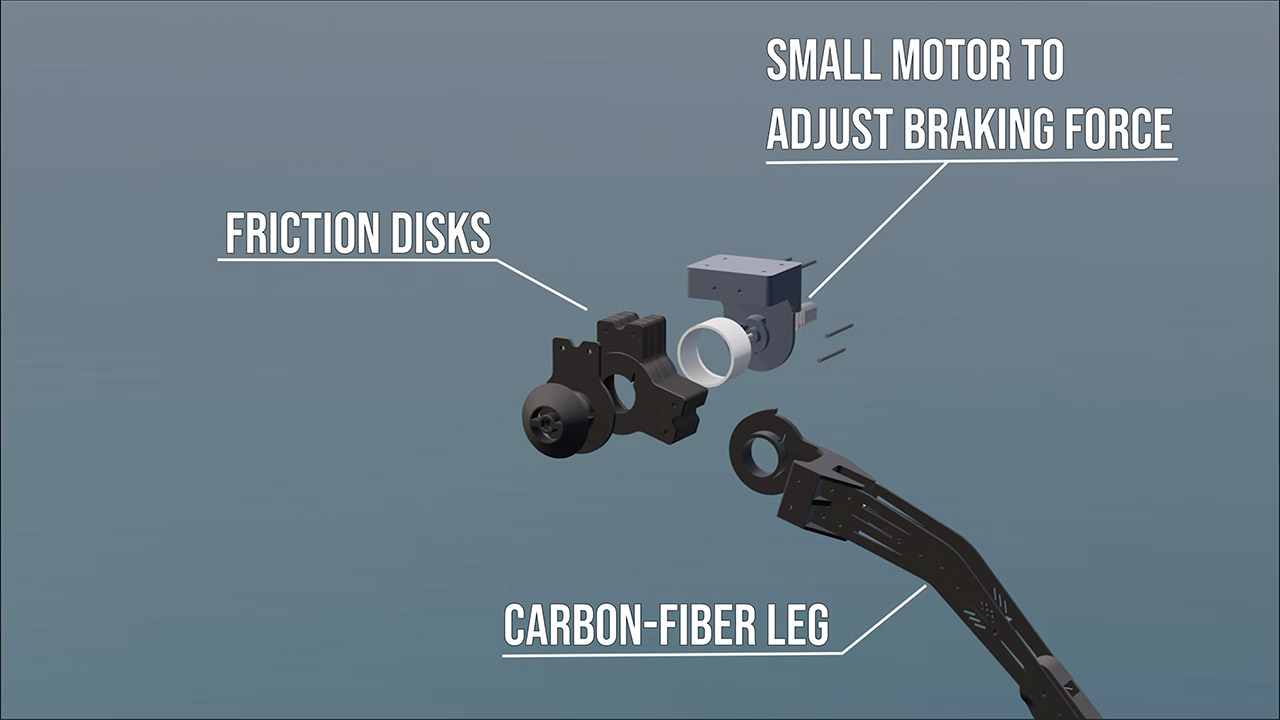
The legs also contain 38 friction disks, which absorb the impact as the drone lands, preventing the remainder of the airframe from bouncing about. Bouncing would allow the spines to pull free, which would be unacceptable. On impact, the motors discharge a short burst of reverse force, sending the drone sharply into the ice, which helps the spines dig in even harder. To be safe, the drone has an EVA foam casing around it that allows it to float if it ever gets into water.

The Createk team conducted lab drop tests at speeds of 1-3 meters per second on 60-degree ice slopes, and in the field, flew the drone in Iceland’s Fjallsjökull glacier and lagoon, making clean landings on slopes of up to 58 degrees, as well as landing off-center and into 30 km/h winds. It landed cleanly 24 times, with a 100% success record in temperatures ranging from 0 to 10°C.
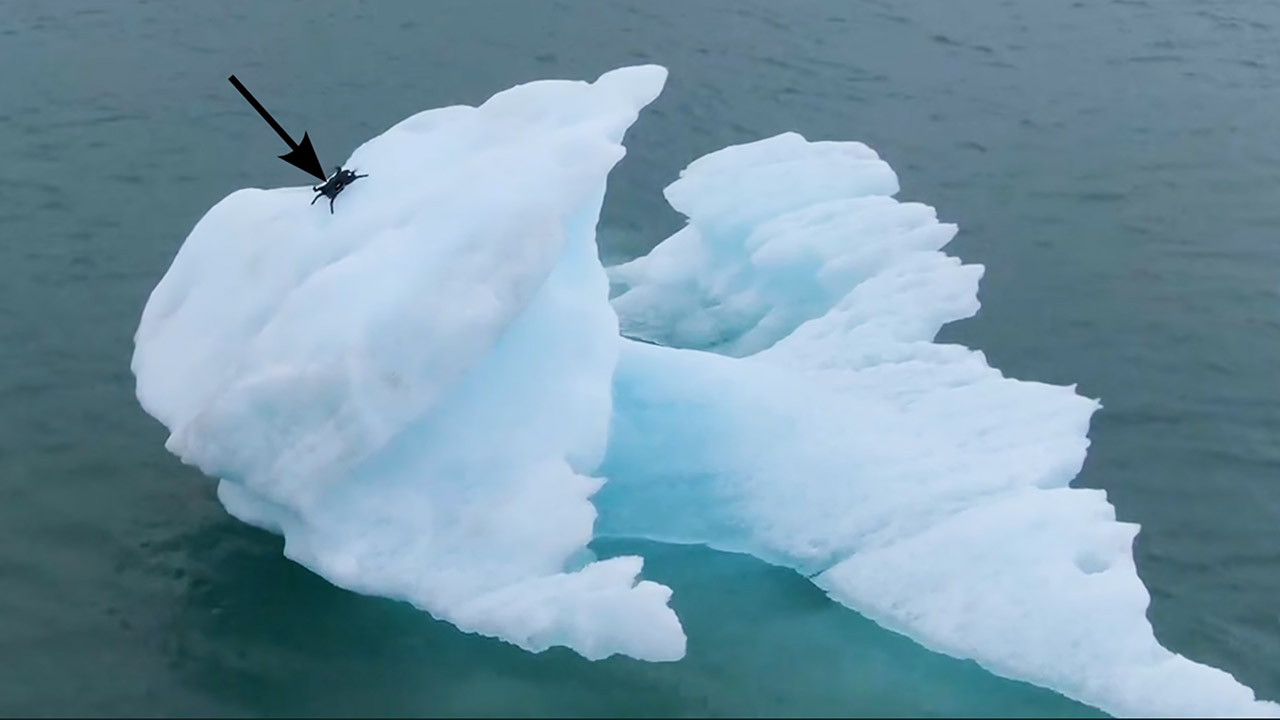
You’re probably aware that a hovering drone quickly runs through its battery, but once Ice Dart is perched, it can basically turn off all of its systems and sit there silently for hours or even days, which is extremely useful for iceberg tracking, maritime safety, as well as Arctic research. Because drifting icebergs are a huge hazard for shipping routes and offshore rigs, the only choices until recently were a helicopter drop or hope a small tracker drone landed in the exact area, which is not ideal. Desbiens observes that after the drone is landed, its energy consumption decreases drastically, and it can even diminish its own thermal and radio signatures, making it far less detectable.
The test flights in Iceland still included a human pilot and another drone for visual checks. The next step is to test a drone on a freely drifting iceberg in open ocean, as there is where this design really shines. They also intend to work on autonomous site selection and program the drone to take off in an emergency if the berg begins to divide or roll. They’re already planning a journey to the Canadian Arctic, and while the same crew has previously successfully landed drones on moving trucks, boats, and even steep rooftops, this is a first for glaciers and icebergs.
[Source]
You must be logged in to post a comment Login