Connect with us
DAPA Banner
DAPA Coin
DAPA
COIN PAYMENT ASSET
PRIVACY · BLOCKDAG · HOMOMORPHIC ENCRYPTION · RUST
ElGamal Encrypted MINE DAPA
🚫 GENESIS SOLD OUT
DAPAPAY COMING

Tech

IEEE Program Helps Girls In India See a Future In STEM

Published

on

Roughly half the world’s population is female, but the STEM fields don’t reflect that. The 2024 U.N. Global Education Monitoring Report on gender found that about 35 percent of STEM college graduates were women. The proportion hasn’t increased much in more than a decade.

When it comes to STEM careers, the percentage is even lower. Women made up about 28 percent of the global STEM workforce in 2024, according to the World Economic Forum.

There are myriad factors for the discrepancy, including a lack of family support, some teachers encouraging only boys to pursue STEM subjects, and a shortage of female role models.

But one force is at play long before college majors are ever considered: limited access to STEM-focused educational resources for preuniversity students. Especially for students in rural communities, the limited access curtails curiosity in STEM subjects before interest can take root. Although the lack of opportunity impacts boys and girls alike, when combined with other factors it can have an outsized effect on girls in some rural regions.

Advertisement

Portrait of an Indian man wearing a dress shirt, tie and glasses.IEEE Fellow Rajiv Joshi is one of the creators of the Women in Science, Engineering project. He is a principal scientist and master inventor at the IBM Watson Research Center, in Yorktown Heights, N.Y.Rajiv Joshi

One such place is rural India. The challenges of pursuing a STEM education—or any education at all—increase sharply as rural Indian girls move into their teen years. Social barriers including early marriage, traditional gender roles, and familial expectations for financial support contribute to girls’ dropping out of school, according to the Mahadev Maitri Foundation, a nongovernment organization focused on childhood education in underdeveloped areas. Dropout rates for girls spike between the ages of 11 to 14, according to the foundation.

The trend is something IEEE Fellow Rajiv Joshi and IEEE Senior Member Rajesh Zele want to change. A shared passion to keep rural Indian girls from dropping out of school and on paths to STEM careers led them to launch the Women in Science, Engineering (WiSE) project.

“Talent is universal, but opportunity is not,” Joshi says. “WiSE is one way to expand opportunities.”

Bringing the WiSE vision to life

Joshi, vice president of industry for the IEEE Circuits and Systems Society (CASS), is a principal scientist and master inventor at the IBM Watson Research Center, in Yorktown Heights, N.Y. Zele is a professor of electrical engineering at the Indian Institute of Technology Bombay (IIT-B), in suburban Mumbai.

Advertisement

They presented their proposal for the three-year initiative to the society’s board of governors in 2022 and received a grant of US $80,000.

The framework

WiSE was a five-day, hands-on learning program held on the IIT-B campus. Starting in 2023, it ran for three years and was held during the last week of March. A new cohort of 160 to 200 girls from rural and tribal areas in the states of Maharashtra and Karnataka attended each year.

The event was divided into two parts: hands-on learning through Break-Make-Program (BMP) experiences and presentations by influential female Indian role models.

Zele, project manager Arti Auti, several IIT-B faculty members, and about 70 student volunteers from the institute oversaw the program.

Advertisement

Selecting the first cohort

With funding secured, Zele and his team on the ground in India got busy selecting attendees for the inaugural 2023 class. They reached out to administrators at 68 schools in Maharashtra and Karnataka. Although the two states are among the most urbanized in the country, each has vast rural areas where educating teen girls competes with early marriage and familial support pressure.

Teachers identified girls with high scores in mathematics and science, and community leaders recommended students who could benefit from the program.

Then outreach to their parents began. The adults were required to commit their own time, not just grant permission for their daughters to attend. They participated in quarterly online meetings that included the girls’ teachers, IIT-B student mentors, and other program volunteers after the week concluded. The check-ins held parents accountable for supporting their daughters’ continuing school attendance. The commitment to join the meetings was to last for at least four years after their daughter’s program participation ended.

Hands-on learning is key

Participants stayed in one of the institute’s dormitories for the week and attended sessions held Monday through Friday.

Advertisement

They worked together in small teams to build things rooted in STEM concepts. The teams were supervised by Arti, IIT-B faculty, and student volunteers.

“The idea behind BMP,” Joshi says, “was to give the girls an opportunity to take a gadget apart, then rebuild it, perfect it, or come up with a totally new idea.”

The sessions included working with bioluminescence and bacteria (introducing participants to biology and microbiology), learning about autonomous underwater vehicles, and building a remote-controlled robot. The robot construction was the capstone event, allowing the girls to combine the mechanical and electronics engineering skills they’d practiced throughout the week.

The build kits were created by students in Zele’s Advanced Integrated Circuits and Systems Lab. The girls and teachers were allowed to take the kits home to keep the learning going and spread STEM awareness.

Advertisement

“Many girls used those kits at different events to demonstrate their STEM skills to others,” Joshi says. One was Sushi Pawar, who built a drone during WiSE, then went on to demonstrate it to a national audience.

“I presented the drone project in 2024 to Prime Minister Narendra Modi during the Pariksha Pe Charcha,” Pawar says. That initiative is an annual event open for students in classes 6 to 12, their teachers, and parents. The focus is on helping students manage stress during exam time through fun and celebratory activities. The event is supported by the Indian Ministry of Education and hosted by the prime minister.

Each year, millions of students complete an online multiple-choice test to qualify to attend in person and meet the prime minister. In 2024 nearly 4,000 participants attended.

Inspiration as the foundation

WiSE was about more than hands-on learning. It also included daily presentations from “Winspirers”: Indian women who achieved success in their lives or had STEM careers. They included scientists, doctors, military officers, professors, and other women who overcame obstacles.

Advertisement

The first such speaker was Savita Dakle, a farmer from Maharashtra who dropped out of school after 10th grade, got married, and had two children.

Despite limited farming knowledge, she learned quickly and built a coalition of 400 female farmers from her village. She taught them how to use mobile phones and social media to share information and resources.

Today, that coalition has more than 1 million members in two online communities. They share tips on market pricing, growing crops, and more.

Zele says he views Dakle as the ideal Winspirer: someone who built a thriving business with few resources and no academic or professional credentials.

Advertisement

Dakle mirrors the challenges faced by many program participants, he says, noting that many girls face pressure to leave school early to marry or financially support their family. She is living proof, he says, that no girl’s circumstances define her possibilities.

The practical impact of WiSE

No empirical data yet exists to measure the project’s success, but feedback from participants shows the program has made a difference. Many from the 2023 cohort remained in school and are now pursuing higher education.

Participant Tejswini Manoj Patil credits the initiative with boosting her confidence in science and math.

“Before WiSE,” she says, “I was interested in STEM but felt intimidated by the complexity of the subjects. After participating, my interest shifted from passive curiosity to active confidence. The hands-on projects showed me that I am capable of solving real-world problems.”

Advertisement

Meeting female role models was important, attendee Ritu Ravindra Patil says, adding: “WiSE completely changed my perspective, and meeting the Winspirers inspired me to aim for higher education.”

The project opened career perspectives for some.

“Before WiSE, I wanted to be a doctor,” Pallavi Bharti says. “I believed engineering was very stressful and boring. When I joined the program and explored IIT-B, I was amazed. Everyone was so friendly and supportive, and the passion in students for their work motivated me. All those experiences gave me confidence to take math classes and become an engineer.”

What’s next?

The initiative ended last year, but the framework it built lives on. Groups with similar goals have adopted parts of the concept, Joshi says.

Advertisement

The IEEE CASS chapters in Bangalore and Kerala are likely to be among the first to advance the initiative’s ideas, he says.

Alex James, an IEEE senior member and founding chair of the IEEE CASS Kerala chapter, has adapted the framework for use in his region, Joshi says. James is a professor of AI hardware and a dean at Digital University Kerala in Thiruvananthapuram.

Joshi guided James as WiSE concepts were implemented.

IEEE Senior Members Jayesh Tanwani and Suman Dwivedi from the IEEE CASS Bangalore chapter are likely to bring program concepts into their work, Joshi says.

Advertisement

Tanwani, chair of the Bangalore chapter, is a system-on-a-chip design engineering manager at Intel in Bengaluru. Dwivedi is a senior manager at Synopsys in Bengaluru. They are bringing STEM outreach to remote schools in Karnataka.

Joshi and Zele say they hope to see the concept expand beyond India.

“We want to spread this across other continents and see how we can integrate WiSE into new or existing initiatives in those places,” Joshi says. He says he has received requests from countries in Asia, Africa, and Europe for information on WiSE.

Both say awareness and outreach are key things that IEEE CASS chapters around the world are well positioned to support.

Advertisement

“We want to make a difference in young women’s lives,” Zele says. “It’s all about giving attendees the skills to stand on their own feet and have the information to make good decisions.”

From Your Site Articles

Related Articles Around the Web

Source link

Advertisement
Continue Reading
Click to comment

You must be logged in to post a comment Login

Leave a Reply

Tech

Google Photos adds a quick toggle between AI and classic search

Published

on

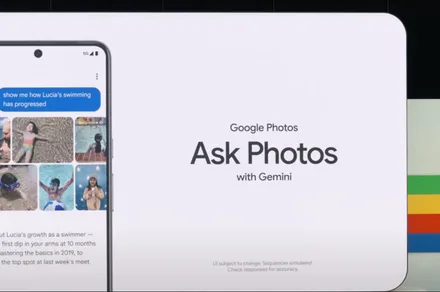
Google Photos is giving users an easier way to leave its Gemini-powered search when a simple keyword would do. A new toggle now sits at the top of the results page, letting users switch between Ask Photos and classic search without digging through settings.

The change appears to address feedback from people who opted into Ask Photos but wanted a quicker way to return to classic search when Gemini was slower or less useful for a straightforward query.

Why did Google add the toggle?

Ask Photos is built for complicated requests. It can understand natural-language questions and search for details inside images, including prompts such as “What’s my license plate?” Classic search is quicker when you only need to find a person, place, object, date, or keyword.

Reddit users complained about irrelevant results, missing keyword matches, and the disappearance of an obvious route back to classic search. Some found that the most reliable workaround was disabling Ask Photos through the Gemini settings entirely.

Advertisement

Google had already acknowledged the problems. It paused the rollout in June 2025 over latency, quality, and user-experience concerns before bringing Ask Photos back with faster handling for simple searches.

What the new toggle actually does

Users who have enabled Ask Photos will see classic search on the left and Ask Photos on the right. Google still chooses which system it believes suits the query, but either view is only a tap away. Classic search can remain selected across several basic searches. A more complicated question may switch the app back to Ask Photos, where it stays until changed manually.

People who have not opted in can continue using regular search. Google may still show them the toggle, but selecting the AI side opens the onboarding process first. Gemini still gets a prominent place in Google Photos. At least users no longer have to hunt through settings whenever classic search would work better.

Advertisement

Source link

Continue Reading

Tech

Quordle hints and answers for Tuesday, July 21 (game #1639)

Published

on

Looking for a different day?

A new Quordle puzzle appears at midnight each day for your time zone – which means that some people are always playing ‘today’s game’ while others are playing ‘yesterday’s’. If you’re looking for Monday’s puzzle instead then click here: Quordle hints and answers for Monday, July 20 (game #1638).

Quordle was one of the original Wordle alternatives and is still going strong now more than 1,500 games later. It offers a genuine challenge, though, so read on if you need some Quordle hints today — or scroll down further for the answers.

Enjoy playing word games? You can also check out my NYT Connections today and NYT Strands today pages for hints and answers for those puzzles, while Marc’s Wordle today column covers the original viral word game.

Advertisement

Source link

Continue Reading

Tech

Britain’s sewage pumps are getting smart batteries as one start-up tries to stop pollution before the next blackout strikes

Published

on


  • Rheya combines emergency battery power with software designed to predict sewage spills
  • Power failures at pumping stations can turn routine blackouts into environmental pollution
  • Rheya battery will predict the underlying causes of spills before they occur

UK startup Rheya Labs has developed backup batteries designed specifically to keep sewage pumping stations running during power failures across Britain.

The company was named one of 20 finalists in Ofwat’s £7.5 million Water Discovery Challenge, run by the Water Innovation Fund.

Source link

Continue Reading

Tech

Jimothy keeps on giving: Amazon and others match winning bid for raccoon art, to benefit food bank

Published

on

A painting of Jimothy, the viral raccoon, by Seattle artist Ryan Henry Ward. (@henry_beyond_museums via Instagram)

Jimothy isn’t just a viral internet sensation — he’s a cause for good.

A painting of the beloved raccoon by Seattle artist Ryan Henry Ward attracted a winning bid of $6,543.21 in an informal Instagram auction this weekend, with all proceeds directed to the Ballard Food Bank.

The winning bidder for the 24-by-24-inch painting was identified by Ward as Angela Galdabini, who posted a picture of the painting hanging on her wall.

Now the auction gift is going viral in its own way, attracting a matching donation from Amazon, which encouraged other Seattle-area companies to follow suit. According to the tech giant on Monday, T-Mobile, Alaska Air and Brooks have all gotten on board.

Advertisement

@media (max-width: 600px) {
aside.callout { float:none !important; max-width:100% !important; margin-left:0 !important; margin-right:0 !important; }
aside.callout .callout-img { display:none !important; }
}

“When we saw a local artist giving back to the Ballard Food Bank, inspired by a little raccoon that’s brought so much joy, we wanted to help,” Kara Hurst, Amazon’s chief sustainability officer, said in a statement. “Amazon is proud to match the winning bid, and we’re calling on other Seattle-based companies to join us.”

Jimothy seemed destined to be captured by Ward, a prolific muralist whose colorful, whimsical work is seen across the Seattle region on buildings, fences, garage doors and elsewhere. His art frequently features a variety of animals and other characters, including Sasquatch.

Ward called Jimothy “the hero we needed” in his Instagram post on Saturday, and said he was giving to Ballard Food Bank because the organization helped him through some of his hardest times.

The viral Jimothy sensation took off last week when the raccoon was spotted in Ballard and a video attracted millions of views on Instagram. The craze spread around the world and other videos have emerged online, sparking immense curiosity and adoration, and a flood of memes, artwork, food, crafts, poetry, songs and more. 

Advertisement

Source link

Continue Reading

Tech

Halo’s Ringworld Showcased in New Campaign Evolved Versus the 2001 Original Graphics Comparison

Published

on

Halo Campaign Evolved vs Original Graphics Comparison
In 2001 a green-armored soldier woke up on a mysterious ring and changed everything for console shooters. Twenty-five years later Halo Studios has torn that entire campaign down to the studs and rebuilt it in Unreal Engine 5. Campaign Evolved is not a simple polish pass. Every corridor, every beach, every Forerunner structure has been constructed again from scratch. Side-by-side footage now circulating makes the gap impossible to ignore.


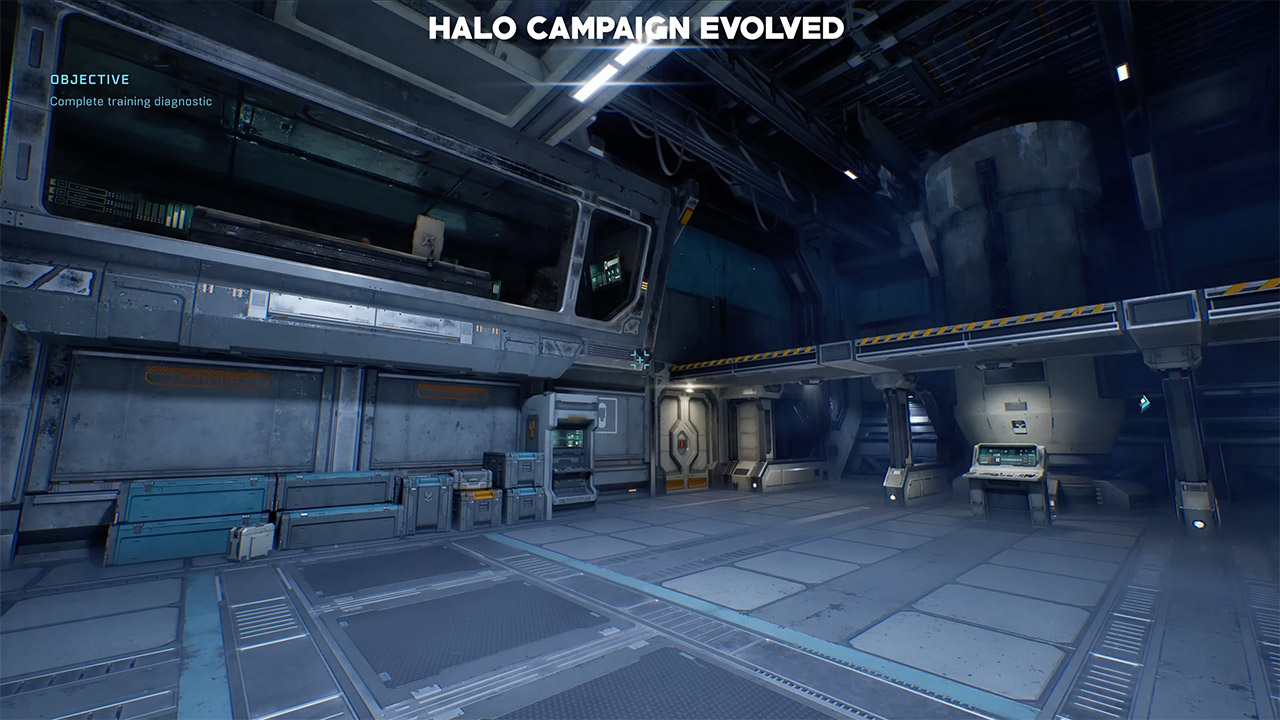
When you walk into the Cryo Bay of the Pillar of Autumn, the first thing you notice is the difference. The earliest chambers were basic boxes with flat panels and a gentle, even glow. In the new version, the same space is turned into a thick tangle of machinery, cables that appear to be hanging free, frost clinging to every surface, and crew members bustling about with purpose, and the light no longer simply sorta… fills the room like it used to. No, it bounces off polished metal, catches on frost, and creates these lovely soft shadows that appear to change and move every time you turn a corner.

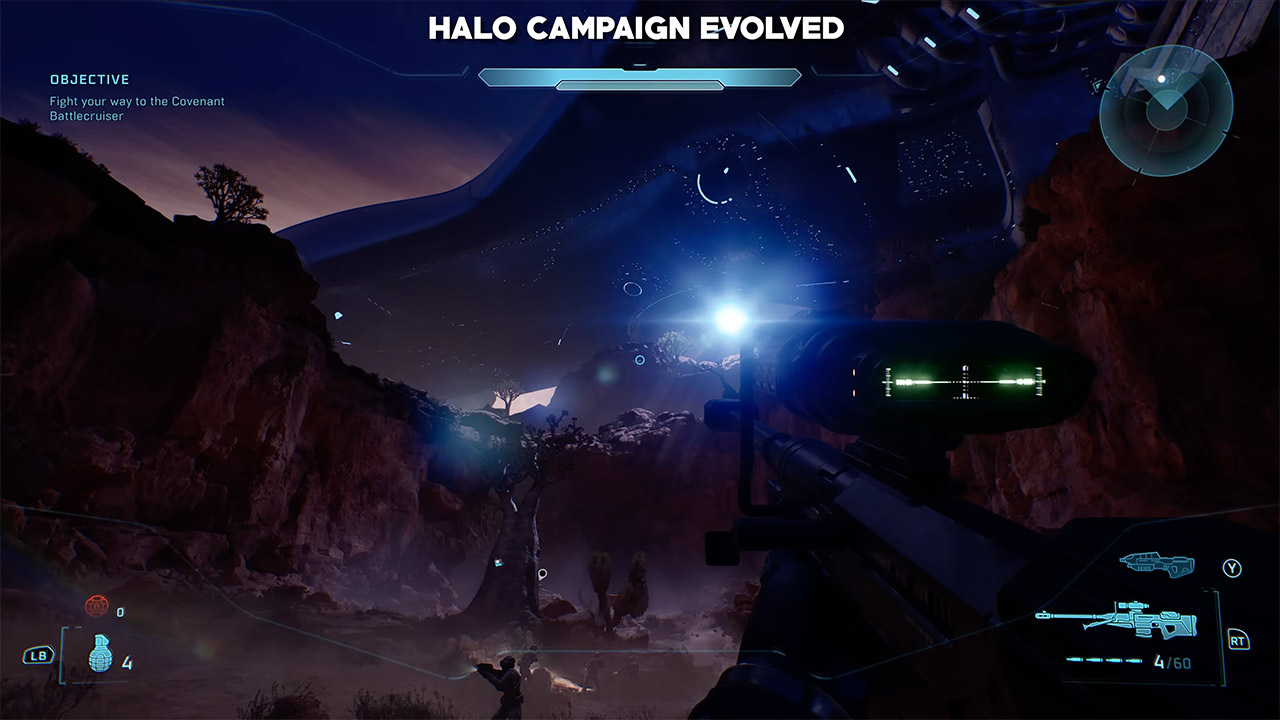
As players step outside onto the Silent Cartographer beach, the difference becomes even more apparent. The original shoreline was a rather uninteresting expanse of sand and rock, with a limited outlook. However, Campaign Evolved takes the same shoreline and transforms it into an actual place. The waves are now smashing in with considerable volume, and rather than being flat smooth sheets of grass and scrub, they are pushing up through the sand in small groups. And way out in the horizon, you can see the distant rocks with their evident fissures and weathering. The ring continues to curve overhead, but the sky and atmosphere now adjust to time of day and weather in ways that the 2001 engine could never have predicted.

Halo Campaign Evolved vs Original Graphics Comparison
The most significant transition in materials can be seen in forerunner architecture. Early Halo structures were basically large slabs of concrete with simple geometric designs on them. The new buildings have the same immense scale and harsh shape, but each surface has fine grooves, slight discoloration, and reflective edges that catch the light in a completely different way depending on whatever angle you look at them from. Because the team has been able to push the level of detail without sacrificing performance, distant walls remain sharp rather than blurring, and the lumen lighting inside those same halls is a game changer, filling the space with soft bounced light and proper reflections that move with you as you move.

Halo Campaign Evolved vs Original Graphics Comparison
Character models and vehicles are making the same transition. Elites used to move around with these rigid, limited joints and basic armor plates. Every plate now has a genuine thickness, every joint has adequate articulation, and the energy shields respond with clearer visual input. The Warthog has gained some weight and is now more stable on the ground. The tires leave actual tracks, and as it goes, it creates actual heavy clouds of sand and dust that linger in the air for a while. Even little items like ammo crates and computer terminals now have readable lettering on them, and you can see all these wear marks that are worth looking closely at.

Halo Campaign Evolved vs Original Graphics Comparison
Campaign Evolved will be released on July 28 for the Xbox Series X|S, PlayStation 5, and PC. Early footage shows that the technological leap is enormous, since the geometry is denser, the materials respond to light properly, and the surroundings can bear careful examination. The original game was groundbreaking for its time, but this upgraded edition simply brings the same plot and locations to life in a way that modern hardware can now handle.
[Source]

Source link

Advertisement
Continue Reading

Tech

Detection Of A Four-Carbon Sugar In Interstellar Space

Published

on

Although life tends to find a way, something first has to kickstart said lifeforms. Exactly how the first biological cells formed on Earth – and potentially on other worlds – remains an enduring mystery. Some theories point to the early Earth’s surface conditions as a viable laboratory for the self-assembly of the first viable membranes, RNA, DNA and associated molecular machinery, while seeding of the Earth’s primitive atmosphere by sugars and other precursors from asteroids and kin is required in other theories.

Recently [Izaskun Jiménez-Serra] et al. added to this debate with the reported detection of four-carbon sugars in the form of erythrulose in the interstellar medium. Using the 40 meter radio telescope at Yebes and the 30 meter radio telescope at Granada the signatures of this sugar was detected in a molecular cloud near the center of the Milky Way.

These sugars likely form on these interstellar dust grains from more basic two-carbon aldehydes and alcohols, with them providing conceivably a source of energy for early metabolic processes of developing lifeforms. This specific type of sugar is highly prevalent in Earth’s fruits, and thus its prevalence in interstellar space is at the very least an interesting coincidence, if not another puzzle piece in the overarching question of abiogenesis.

Advertisement

Source link

Advertisement
Continue Reading

Tech

Hackers Are Exploiting Recently Patched WordPress Bugs, Putting Millions of Websites at Risk

Published

on

An anonymous reader quotes a report from TechCrunch: Hackers are breaking into websites that run vulnerable versions of the popular blogging software WordPress, according to several cybersecurity firms. One estimate puts the number of vulnerable WordPress websites at tens of millions as of Monday. Last week, WordPress patched two critical security flaws, urging people who run its software on their websites to update it “immediately.” The vulnerabilities are so severe that WordPress enabled forced updates where possible. Since then, cybersecurity companies Patchstack, Hexastrike, and WatchTowr have all warned that hackers are exploiting the vulnerabilities in the wild, meaning they are taking over websites that are still running susceptible versions of WordPress.

It’s unclear how many WordPress-powered websites on the internet are at risk, but it’s possible to make some educated guesses. The vulnerable versions of WordPress are 6.9.0 through 6.9.4, and 7.0.0 to 7.0.1. According to WordPress’ official stats, there are more than 400 million websites that run those flawed versions, although these statistics likely don’t reflect websites that have recently been patched. Cybersecurity consultant Daniel Card, who told TechCrunch that he looked at a sample of around 3,500 WordPress websites, estimates that less than 15% are vulnerable. Applying Card’s projection across the total population of WordPress websites on the internet, the total figure would still be around 90 million. […] One of the critical WordPress bugs was found and reported by Adam Kues of cybersecurity firm Searchlight Cyber, which dubbed it WP2Shell. Paired with the other bug, hackers can take full remote control of vulnerable websites.

Source link

Continue Reading

Tech

Amazon’s Adaptive Display For Fire TVs Is Officially Rolling Out Today

Published

on

The accessibility feature was teased back in April.

Adaptive Display is rolling out to the Fire TV Stick HD today. Amazon alerted us that this accessibility feature, which it mentioned during its April preview event, is now available for the latest model of its streaming dongle.

The Adaptive Display setting resizes both text and UI elements on screen for optimal readability, while keeping any images or key art proportionally scaled. Multiple sizing options are available so a user can get the best experience for their eyes and brain. Adaptive Display seemed like one of the more notable improvements for this latest Fire TV model, which also boasts a more streamlined form factor and some additional Alexa+ integrations. 

Amazon showed off its overhaul of the entire Fire TV UI during CES 206, followed soon after by a rollout in February. Adaptive Display should be able to help more viewers take full advantage of that revamped experience. 

Advertisement

Source link

Advertisement
Continue Reading

Tech

Volvo is rolling out Apple Music to over 2 million cars with a simple OTA update

Published

on

The line between your smartphone and your car continues to blur. Volvo has announced that it is rolling out an over-the-air software update that brings Apple Music directly to the infotainment systems of more than 2 million vehicles worldwide. Instead of relying on Apple CarPlay or plugging in an iPhone, eligible drivers will be able to stream music natively from their car’s built-in system, making Apple Music another integrated feature of Volvo’s software experience.

The update is arriving for a wide range of Volvo models, including the EX90, ES90, XC90, S90, V90, XC60, S60, V60, XC40, EX40 and EC40, covering model year 2020 onwards. Availability, however, may vary depending on the vehicle.

At first glance, adding another music streaming app may not sound particularly significant. But it highlights how modern cars are increasingly being treated like connected computing platforms, where new features arrive through software updates rather than requiring new hardware.

Apple Music becomes a built-in part of the driving experience

The biggest advantage of native Apple Music support is convenience. Drivers no longer need to connect an iPhone through Apple CarPlay or Bluetooth just to access their playlists. Once signed in, they can browse Apple’s catalogue of more than 100 million songs directly from the vehicle’s infotainment display, creating a more seamless experience during everyday commutes and long road trips.

Advertisement

To celebrate the rollout, Volvo is also offering promotional access to Apple’s streaming service. Customers who are new to Apple Music can receive up to three months free, while eligible returning subscribers who have been away from the service for at least one month can claim two months free. The offer remains available until July 6, 2027.

Some of Volvo’s premium electric vehicles also receive an audio upgrade. The EX60, EX90 and ES90 will support Spatial Audio with Dolby Atmos when equipped with the optional Bowers & Wilkins sound system, allowing compatible Apple Music tracks to be played in immersive surround sound. Volvo also says the newly launched EX60 will ship with Apple Music pre-installed when deliveries begin later this year.

Cars are becoming software platforms, not just vehicles

This announcement is about far more than music streaming. Over-the-air updates have fundamentally changed how automakers deliver new features. What once required a dealership visit can now arrive overnight through a software download. Tesla popularized this approach years ago, and traditional manufacturers have steadily followed by treating vehicles more like smartphones that continue evolving after purchase.

For Apple, the partnership extends the reach of its services business beyond phones, tablets and computers. For Volvo, it strengthens its growing reputation as a software-first automaker, particularly as it continues building vehicles around Google’s Android Automotive platform.

Consumers also stand to benefit. Native apps reduce dependence on smartphones, simplify the driving experience, and make infotainment systems feel less like accessories and more like an integrated part of the vehicle.

As software becomes one of the biggest differentiators in the automotive industry, partnerships like this are likely to become increasingly common. The next major upgrade to your car may not involve a more powerful engine or a larger battery. It may simply arrive while your car is parked overnight.

Advertisement

Source link

Continue Reading

Tech

Turtle Beach Command Series KB7 review: a nifty screen-equipped gaming keyboard

Published

on

Why you can trust TechRadar


We spend hours testing every product or service we review, so you can be sure you’re buying the best. Find out more about how we test.

Turtle Beach Command Series KB7: one-minute review

Want a high-performing gaming keyboard with an integrated touchscreen for streaming and seamless customization? Then the Turtle Beach Command Series KB7 could be exactly what you’re looking for.

I replaced my usual mechanical keyboard with this TKL model for a few days, and instantly found it to be a joy to use. The low-profile Hall effect switches supply precise, responsive, and buttery smooth typing, with a muted sound that’s great for focusing in-game or for general day-to-day productivity. It’s less ‘clicky’ and snappy than some may like, but the lowkey sound and feel was ideal for me.

Advertisement

Source link

Continue Reading

Trending

Copyright © 2025