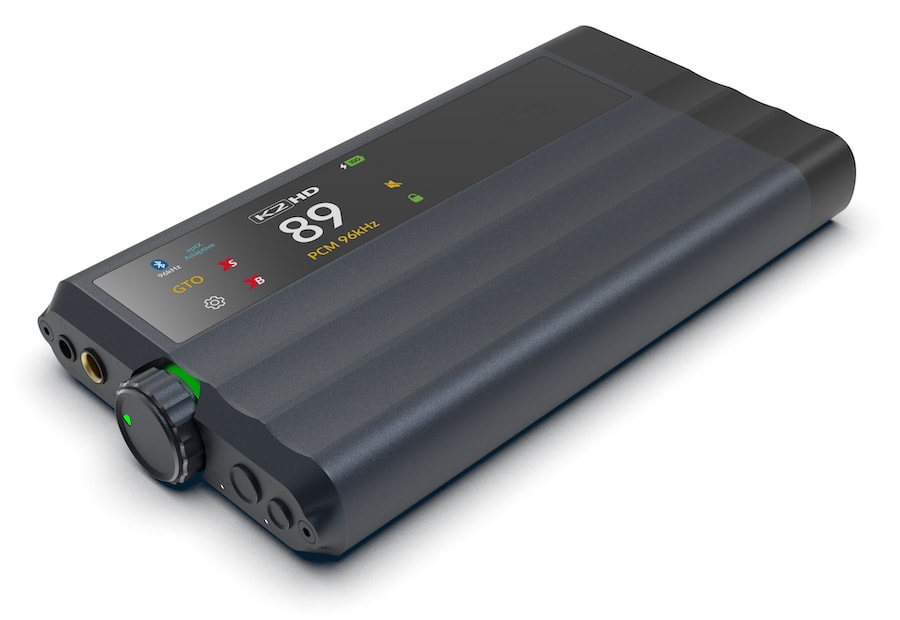
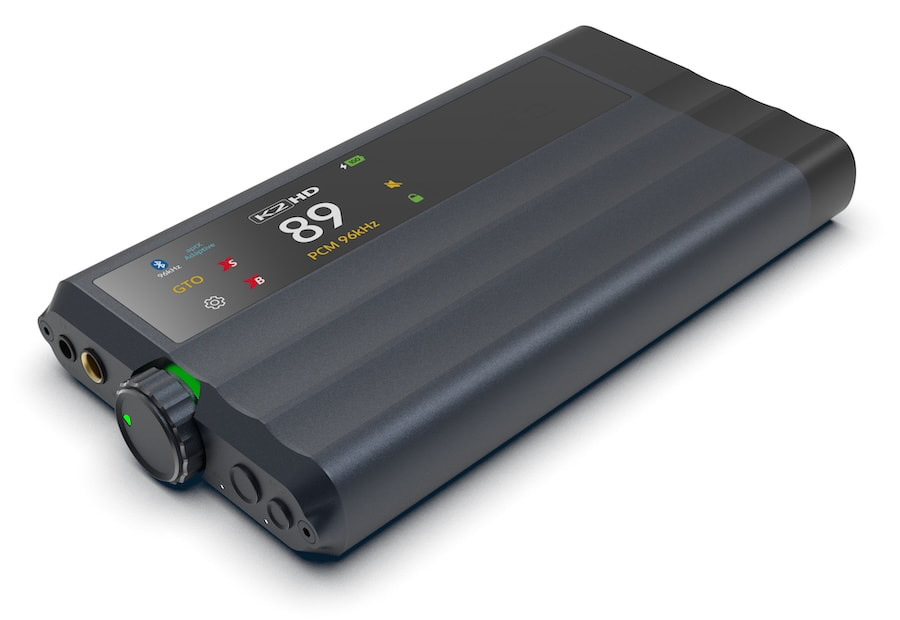
iFi Audio is bringing the Gryphon back with sharper teeth. The new iFi iDSD GR 2 arrives at High End Vienna 2026 as the next-generation successor to the xDSD Gryphon, a portable DAC/headphone amplifier that we have covered before and one that earned a loyal following for squeezing a lot of desktop-style flexibility into a travel-friendly chassis.
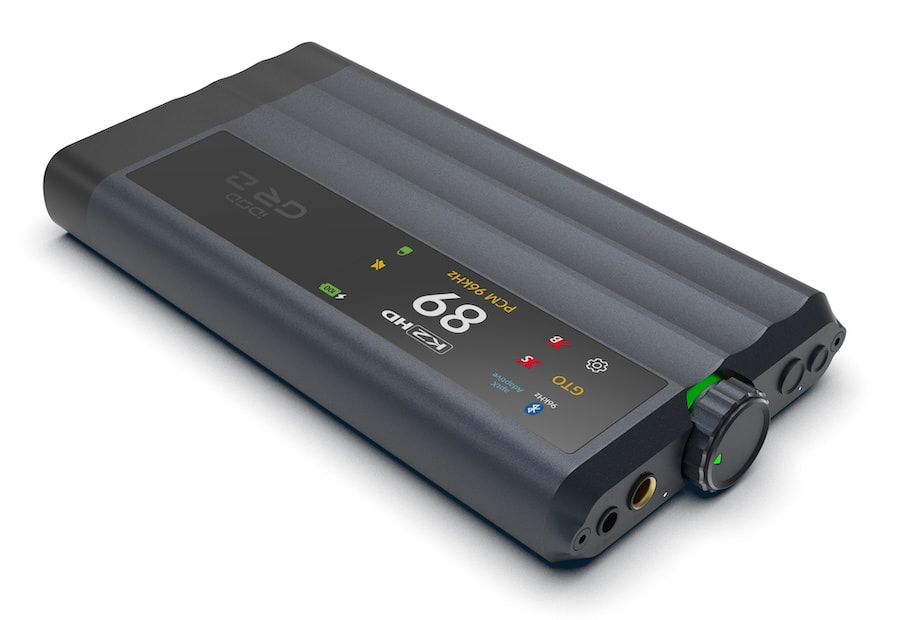
Priced at $529 USD, the iDSD GR 2 is not a minor refresh. iFi says the new model has been rebuilt around an all-new DAC architecture, upgraded fully balanced amplification, an OLED touchscreen interface, JVCKENWOOD’s K2HD Technology, and lossless Bluetooth connectivity.
That puts the GR 2 in the middle of a very competitive portable DAC/amp market where battery life, output power, codec support, usability, and actual headphone-driving ability matter more than anything. As always, the spec sheet looks promising. The listening will decide whether the Gryphon legend still breathes fire or just got a new badge.
iFi iDSD GR 2: New DAC, More Power, Better Wireless
The iFi iDSD GR 2 is more than a cosmetic update to the xDSD Gryphon. iFi has moved to a new PCM1795 DAC with a bespoke balanced circuit design, upgraded the fully balanced amplifier section, and increased output to 1,513mW RMS into 32 ohms — a claimed 50% jump over its predecessor.
Advertisement
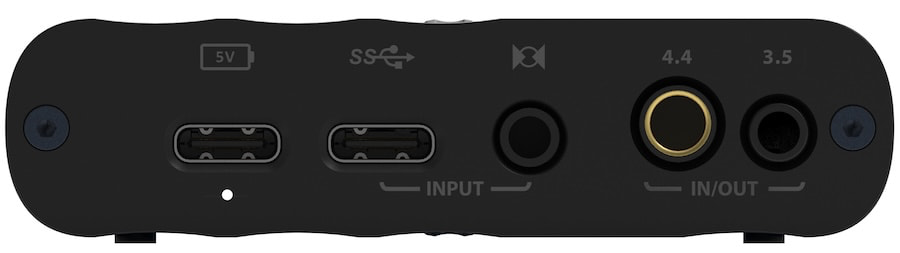
The control side gets a colour OLED touchscreen with capacitive controls, while wireless support moves to Bluetooth 5.4 with aptX Lossless and LDAC. Wired users are not being ignored either, with USB, S/PDIF, and line-level connectivity all included.
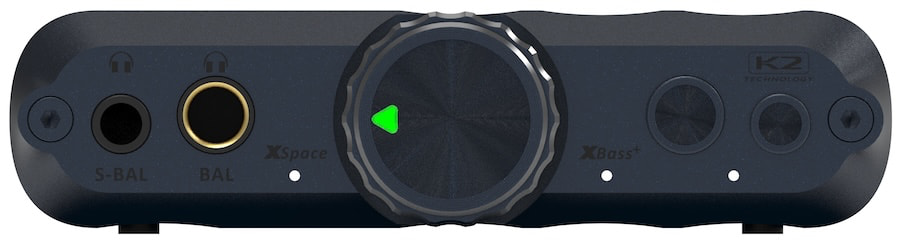
The GR 2 also adds JVCKENWOOD’s K2HD Technology, XBass+, XSpace, Hybrid Power Mode for better long-term battery health, and iFi Nexis app support for OTA updates and deeper control. There is a lot packed into this portable DAC/headphone amp, especially at a price point we expected to be higher based on early rumors surrounding the GR 2.
Bluetooth 5.4 With aptX Lossless and LDAC
The iFi iDSD GR 2 also updates the wireless side with Bluetooth 5.4, including support for aptX Lossless and LDAC.
That gives the GR 2 stronger wireless credentials than many portable DAC/amps, especially for users who want to connect from a phone, tablet, or laptop without giving up higher-quality codec support. aptX Lossless can deliver 16-bit/44.1kHz CD-quality playback under the right conditions, while LDAC offers bitrates up to 990kbps for compatible Android devices.
Advertisement
There are still the usual Bluetooth caveats. Codec support depends on the source device, connection stability, and the listening environment. iPhone users will not get aptX Lossless or LDAC from iOS, so the GR 2’s wired USB input will still matter for Apple users who want higher-resolution playback.
New PCM1795 DAC Architecture
The biggest internal change inside the iFi iDSD GR 2 is the move to the Burr-Brown PCM1795 DAC, which iFi says is being used in one of its products for the first time.
That matters because this is not just a chip swap. The PCM1795 is a current-output DAC, which gives iFi more room to design its own I/V conversion and output stages around the chipset. In the GR 2, that includes a bespoke balanced circuit, Class A op-amps, and a signal path that is now fully balanced from the preamp section to the headphone stage.
Advertisement. Scroll to continue reading.
Advertisement
iFi also says it has removed unnecessary electronic switching from the circuit, which should help reduce distortion across the signal path. The goal is lower noise, cleaner conversion, and a more transparent presentation without abandoning the warmer tonal balance that many listeners associate with iFi’s portable DAC/amp designs.
We will dig further into how much of that shows up in actual listening, but on paper, this is one of the most meaningful engineering changes between the older xDSD Gryphon and the new iDSD GR 2.
OLED Touchscreen Control
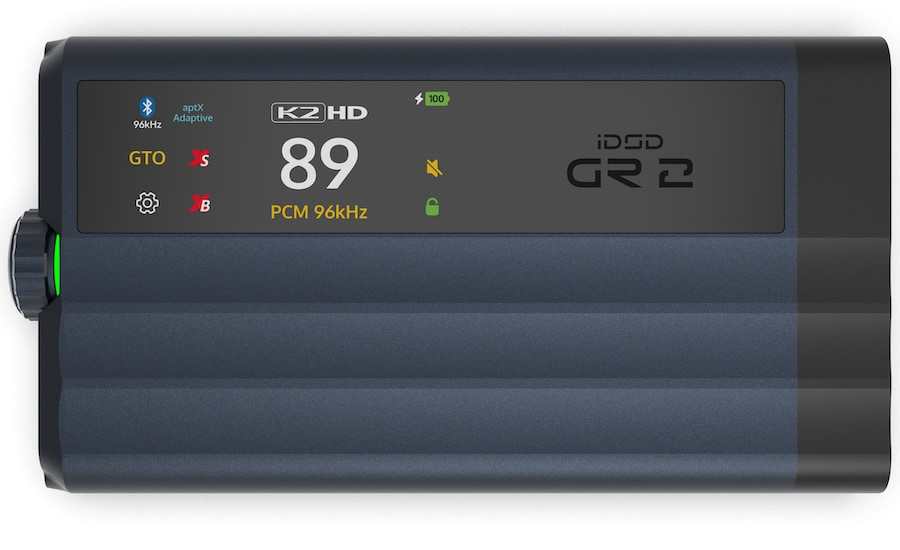
The iFi iDSD GR 2 also adds a colour OLED touchscreen with capacitive controls, which should make the device easier to use without digging through layers of menus.
That matters on a portable DAC/headphone amp with this many features. Input selection, gain, filters, Bluetooth status, battery information, and sound processing modes all need to be easy to access, especially when the device is being used with a phone, laptop, tablet, or digital transport.
Advertisement
The new interface gives the GR 2 a more modern control system than the older xDSD Gryphon, and it should make day-to-day adjustments faster and less frustrating.
Hybrid Power Mode for Battery Health
The iFi iDSD GR 2 introduces a new Hybrid Power Mode designed to manage how the unit draws power during longer listening sessions.
When connected to an external power supply, the GR 2 can prioritize external power instead of constantly running from the internal battery. If the amplifier section needs additional current, it can draw from the battery briefly, then return to external power once demand drops.
That should help reduce unnecessary battery cycling, which matters if the GR 2 spends a lot of time connected to a desk, laptop, or fixed audio system. Portable DAC/amps are still battery-dependent devices, and long-term battery health is not a small detail unless you enjoy turning expensive gear into a paperweight with balanced outputs.
Advertisement
It is a practical feature, not a flashy one, but it could make the GR 2 more useful for listeners who move between portable and desktop setups.
More Power for Full-Sized Headphones
The iFi iDSD GR 2 also gets a meaningful power increase, with iFi claiming up to 1,513mW RMS into 32 ohms. That is said to be 50% more headphone drive than the original xDSD Gryphon.
That level of output should make the GR 2 a realistic option for many full-sized planar magnetic and dynamic headphones from the balanced output, not just sensitive IEMs and easy-to-drive portable models. It also gives users more headroom before the amplifier starts to feel strained.
There are still some important blanks to fill in. We are waiting to see how the GR 2 handles higher-impedance loads above 200 ohms, where voltage swing matters more than headline wattage into 32 ohms. And to be clear, this is not designed for electrostatic headphones, which require their own dedicated energizer or amplifier.
Advertisement
Advertisement. Scroll to continue reading.
On paper, the extra output is one of the GR 2’s more useful upgrades. More power only matters if it comes with control, low noise, and clean gain, but the numbers suggest iFi is aiming beyond the usual pocket-DAC crowd.
K2HD Processing and Digital Filters
The iFi iDSD GR 2 also includes JVCKENWOOD’s K2HD Technology, which is designed to process digital recordings by restoring some of the harmonic information that can be reduced during digital mastering, compression, or conversion.
That does not mean it magically turns every file into a master tape. The goal is more specific: to add a degree of harmonic reconstruction and tonal density to digital playback without forcing users into a fixed sound profile. iFi says the GR 2 also includes a lighter K2 mode, which offers a similar approach without upsampling.
Advertisement
The GR 2 also provides four selectable digital filters, giving listeners some control over how the DAC handles timing, roll-off, and overall presentation. Some users will hear those differences more clearly than others, depending on the headphones, source material, and how allergic they are to menus.
The iFi iDSD GR 2 looks like a meaningful step beyond the older xDSD Gryphon, not just a cosmetic refresh. We know it uses a new Burr-Brown PCM1795 DAC, a fully balanced circuit design, upgraded amplification rated at up to 1,513mW RMS into 32 ohms, a larger color OLED touchscreen, Bluetooth 5.4 with aptX Lossless and LDAC, JVCKENWOOD K2HD processing, four digital filters, XBass+, XSpace, Hybrid Power Mode, and iFi Nexis app support. At $529 USD (£529 / €549 / $799 CAD), it also lands lower than early rumors suggested, which makes the feature set more interesting. Nevertheless, the hardware story is promising.
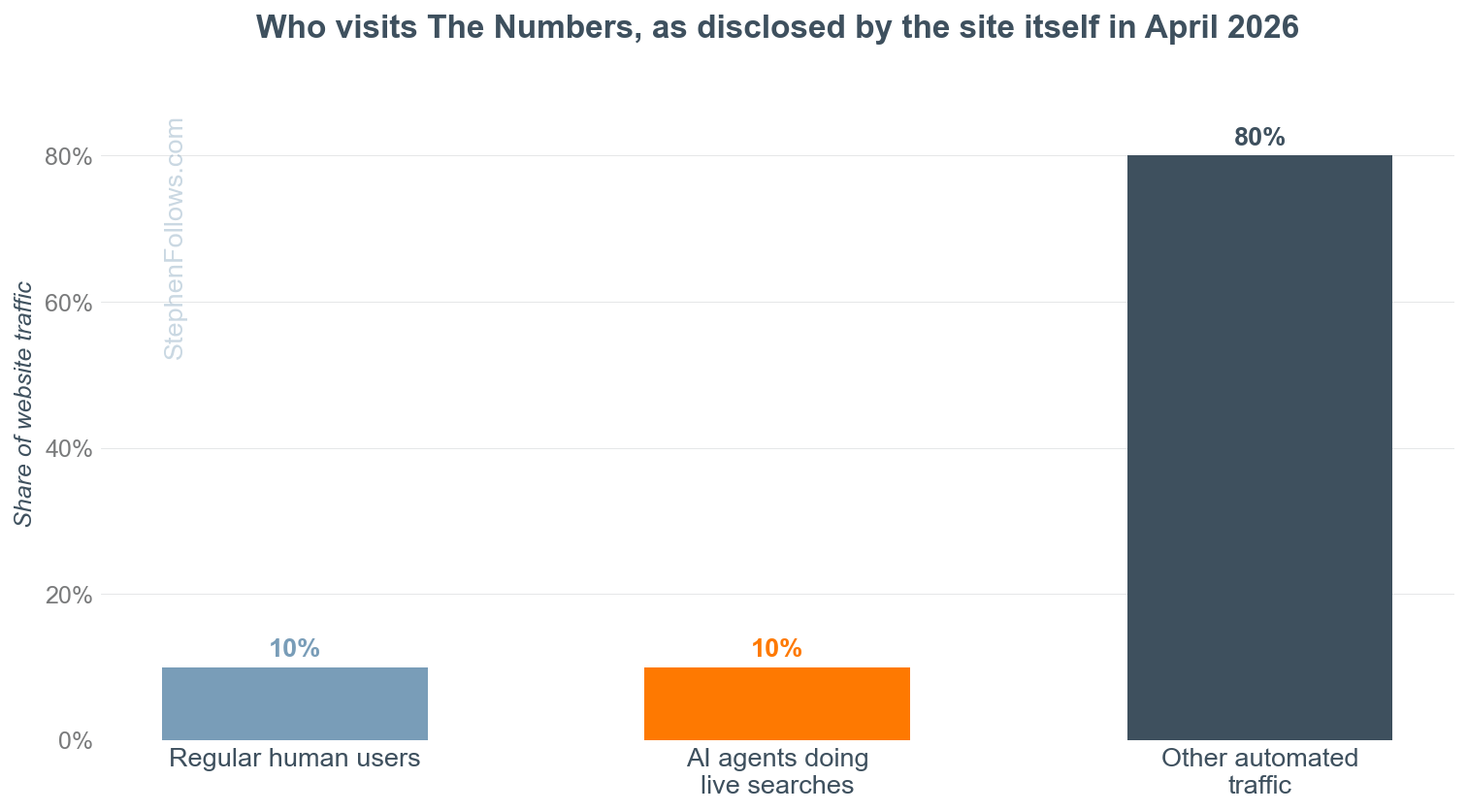
A lot has been made about the increase of automated traffic on the Internet, with the past years LLM-related crawlers having quite literally swarmed the picture here. Not only does this drive up traffic, it also increases load on web servers, whose owners find themselves faced with increased hosting costs. This recently led to The-Numbers.com going offline for a while as automated traffic was quite literally destroying their bottom line.
This saga is covered by [Stephen Follows], who had a chance to talk with the founder and CEO of the site, [Bruce Nash], after the site went basically offline for a few months. Since the website both licenses data for commercial purposes as well as offering the free access on its website, there were accusations of this being a ‘rug pull’.
The site was started in 1997, as a static HTML site on Geocities where [Bruce] provided box office analyses for investment purposes. Since that beginning traffic was generally polite, with human visitors and usually well-behaved search engine crawlers. Then around 2024 the first wave of scraper bots arrived, followed by a larger wave around December of 2025.
Despite implementing a few mitigations, such as LLM-targeted text, the increased traffic and the resulting load on a site architecture that was never designed for this ultimately led to a collapse. One of the major sources of traffic turned out to be from so-called ‘prediction markets’, like Polymarket, whose bots absolutely hammered the site.
Advertisement
Fortunately for [Bruce] and his team they do not rely on the free website for income, but they have had to massively rework the site’s architecture to bring back a semblance of the original features. As noted in the article, the amount of crawling traffic by these LLMs and ‘agentic AI’ tools is logarithmically more than that for search engines, which makes this a major challenge.
Issues like these is why services such as Cloudflare are offering blocking features for such automated traffic. After all, unless such traffic is of use to you, you may as well treat it like a DDoS attack and cut it off at the root.
When an appliance like a refrigerator breaks, the first thing to decide is whether it’s more cost effective to repair or replace it. Decide to get a new one and you’ll need to navigate the crowded domestic appliance market, which currently hosts a bevy of different manufacturers both familiar and new. One brand you might come across is Fisher & Paykel, which is one of the more historic names in the market.
The company was founded back in 1934 in New Zealand, when Maurice Paykel and Woolf Fisher first decided to import appliances like refrigerators to their homeland. They later began manufacturing their own appliances after the country’s government banned imports, first building them under license before eventually creating their own designs.
Advertisement
After decades as an independent company, Fisher & Paykel was acquired by Haier Group in 2012. Haier was founded in Qingdao, China, in 1984, and remains headquartered there today. It also owns the GE Appliance brand in the U.S., alongside a portfolio of other brands including Candy, Casarte, and Leader. As well as being owned by a Chinese company, some of Fisher & Paykel’s appliances are also made in China. It has additional manufacturing facilities in Italy, Mexico, and Thailand.
Advertisement
What kind of refrigerators does Fisher & Paykel offer?
In the U.S., Fisher & Paykel offers a range of different refrigerators catered towards the upper end of the market. As well as the typical selection of column refrigerators, French door refrigerators, and bottom freezer fridges, the company also sells wine refrigerators and other specialist undercounter appliances.
Within its lineup are a selection of smart refrigerators, although the features offered generally aren’t anything that makes its products stand out from those sold by other major smart fridge brands. Instead, where Fisher & Paykel shines is in the durability of its high-end refrigerators — in fact, some studies have crowned it the most reliable refrigerator brand on the market.
None of its products are cheap, with its basic refrigerators starting from just over $2,000 and larger, smarter models quickly increasing in price from there. For its Red Dot award-winning 36-inch Series 11 fridge-freezer, buyers can expect to pay at least $11,499. For their money, they’ll receive features like a variable temperature drawer which can be adjusted to better suit a wide variety of fresh foods, a steel-lined interior compartment, and a slimline water dispenser.
When looking at motorcycle engines, one of the first things to note is the engine’s displacement, as this usually has a strong correlation with the bike’s overall weight and power output. But that isn’t the only factor worth considering. It’s also worth taking a look at the number and orientation of the engine’s pistons.
Most of the motorcycles being made these days use either a parallel-twin or an inline triple-cylinder engine. These are affordable to manufacture and offer a unique blend of power and efficiency. Then there are the inline-four motorcycle engines, which are also sometimes called ‘screamers.’ These became very popular starting in the late ’60s, with that popularity seeming to peak in the mid-2010s. It’s only recently that these have started to slow down in production, and we have begun seeing fewer and fewer of them coming out each year. Many riders still consider these bikes highly desirable for their high-RPM power, smooth balance, and racetrack competence, but there’s no denying they’re slowly slipping out of vogue.
Advertisement
There are a few reasons why you’re seeing fewer inline-four engines coming out than before, and it isn’t just because they’re more expensive to make. There are several other disadvantages that might make them less appealing to the rider. You can still find a fair few affordable inline-4 motorcycles being made even now, but you might want to stop and consider the drawbacks before seeking one out.
Advertisement
1. Inline-fours typically have less low-to-mid-range torque
Most of the arguments in favor of the inline-four engine model primarily cite performance. The bikes that use them are known for delivering a large amount of power smoothly during acceleration, pushing the bike harder at higher speeds. That said, performance isn’t exactly a zero-sum game. While it’s true that inline-four engines are well known for their ability to output incredible amounts of horsepower at high RPMs (which is one of the reasons they are still so popular at the racetrack), this comes at a slight cost.
Inline-fours produce slightly less low-to-mid-range torque than some other engine types. This means riders often discover that they have a little less get-up-and-go when accelerating from a stop than if they were riding a bike with something like a parallel twin in its chassis. This makes them less than ideal for a daily driver, especially for those living in cities with plenty of traffic lights.
So, what qualifies as performance can vary depending on the type of bike and how it’s being ridden. An ultra-lightweight sport bike might have no trouble getting up to speed using an inline-four, while a heavy cruiser might struggle. Likewise, those who primarily ride in urban areas might prefer a bit more low-end torque, while those who prefer to push the red line at the track might prefer something with more power at higher speeds. This makes the inline-four a less practical choice for those seeking a commuter who aren’t looking to get any speeding tickets on the highway.
Advertisement
2. Inline-fours can be wider and heavier
Motorcycles that use inline-four engines are exceptionally well balanced. This is because the pistons move in pairs along a single plane, so there’s always one in the up position and one in the down position on each side, creating a smooth counterbalance. That said, they aren’t exactly petite.
It’s true that the pistons themselves are generally smaller in an inline-four than they are in a two- or three-cylinder motorcycle, but there are more of them, which means that they still end up having more parts and taking up more space overall. That means the casing has to be bigger, which means more metal, which means more weight. That alone can cause a ripple of other issues, such as lowering fuel efficiency and making the bikes feel a little more intimidating to smaller or less confident riders who want something light.
Advertisement
What’s more, the vast majority of modern inline-four engines are mounted transversely. As a result, the straight row of four cylinders is mounted perpendicular to the bike’s frame, not parallel. This effectively makes the engine wider, with each side protruding farther from the centerline than you might get in a two- or three-cylinder engine. That, in turn, means the bike needs a wider frame to accommodate it. This is another factor that might be detrimental to smaller riders, as it can be difficult for them to comfortably place their feet flat on the ground when stopped if they need to straddle a significantly wider seat.
Advertisement
3. Inline-fours drive up price tags
DAMRONG RATTANAPONG/Shutterstock
Inline-four engines are complex machines that are meticulously engineered for smooth acceleration and raw horsepower. Four smaller pistons being attached to the crankshaft in a row create a constant state of balance within each revolution as the bike is consistently receiving power. This is how these engines can accelerate with minimal thumping, and it’s also why they produce that signature screaming exhaust sound. Getting this to work properly requires that all four cylinders be perfectly balanced to prevent them from ever falling out of sync, but that complexity comes at a cost.
We’ve already mentioned that inline-four engines are being used less because they are more expensive to manufacture than parallel twins and some other design styles, but it isn’t actually the manufacturers who swallow that cost. The 2026 Kawasaki Ninja 650, for instance, has a 649cc parallel-twin engine and retails for $7,599. Compare that to the 2026 Honda CBR650R, which runs on a 649cc inline-four. Both are Japanese sport bikes with the same displacement as well as comparable designs and features, but the Honda starts at $9,199. Then take a look at the supersports. The 2026 Kawasaki Ninja ZX6R has a 636cc inline-four engine and retails for $11,599. But despite having a lower displacement, it costs more than the $9,399 2026 Yamaha YZF-R7, which runs on a 689cc parallel-twin. Perhaps one of the most extreme examples might be within Kawasaki’s own line. The 2026 Ninja 500 has a 451cc parallel-twin and starts at $5,799 for the ABS model. The 2026 Ninja ZX-4RR has a 399cc inline-four cylinder engine and costs $9,999.
Advertisement
4. Inline-fours have higher maintenance costs
While we’ve discussed the fact that manufacturing costs drive up the prices of the bikes that run on inline-fours, you also might find that you’re spending a lot more at the mechanic than you were on your last motorcycle. The very intricacy of the inline-four’s design that makes it such a powerhouse can also drive up maintenance costs.
Part of this is simple math. More cylinders mean more parts that require maintenance (twice as many valves), so your mechanic will need to spend twice as long checking the cylinders simply because there are twice as many. This also means more expendable parts like spark plugs and gaskets, but this is only a small part of it. The bigger issue is the effort required to get inside the engine. The inline-four sitting horizontally across the motorcycle’s frame means that it isn’t easy to access from the outside. Mechanics will often need to remove the fairings and tank from the bike just to get to it, which can drive up labor costs quite a bit.
Then there’s the additional complexities of the design. A routine valve adjustment, for instance, might cost between $300 and $600 for an inline-four engine, which usually requires a shim-under-bucket style valve adjustment. That would only run you between $150 and $400 on a V-twin that uses a screw and locknut valve adjustment system. Some of them even use a hydraulic lift valve adjustment system that is self-adjusting and doesn’t need to be serviced at all unless it breaks.
Advertisement
5. Inline-fours are less fuel-efficient
Fuel efficiency wasn’t as big of a consideration for a lot of riders back in the inline-four’s heyday, but it’s definitely become a major factor in how people choose their motorcycles now. Unfortunately, inline-fours sacrifice a fair amount of fuel efficiency in favor of high-RPM power. This might not be that big a deal for the kinds of riders who only use their motorcycles at the track, but it’s definitely something to think about if you’re planning on riding one of these bikes for your daily commute.
Take a look at some of the most fuel-efficient motorcycles on the market, and you’ll quickly find that all of them, except of course for the electric and hybrid models, are powered by one- or two-cylinder engines. Of course, fuel efficiency can be affected by other factors, such as overall weight, gearbox type, chain drive, throttle control, tire pressure, modifications, cargo, and the rider’s weight. There are a few examples of inline-four bikes that are more fuel efficient than you might think, like the Kawasaki Z900, which can get up to 49 MPG. As a rule, however, inline-four bikes are consistently less fuel-efficient than most other engine types and often get city miles closer to those of an SUV than an economy vehicle. Even Honda, which is exceptionally well known for efficiency, can only offer about 40 MPG on its inline-four CBR600RR, while its parallel-twin CBR500R boasts over 65 MPG. Even the larger parallel-twin Kawasaki Ninja 650 is able to hit over 51 MPG.
Advertisement
How we listed these disadvantages
Inline-four engines are immensely popular, and they certainly have a lot of great things going for them. However, there are certain weaknesses that riders who are thinking about getting one should be aware of. There is a wide variety of inline-four engines that have been released over the years, and they are attached to an even wider variety of motorcycles. As such, it is difficult to make any universal claims about design or performance that won’t be disproven by at least one exception. That said, there are certain general rules of thumb that one can apply to the vast majority of them when looking at these weaknesses.
Advertisement
By taking a look at several different professional reviews, motorcycle forums, mechanic forums, and the raw stats of many of the inline-four motorcycles that are on the market today, we have rooted out five key weaknesses that appear to apply to most of them. Once we had our list of weaknesses, we sought to corroborate these claims by verifying them against specs, price comparisons, and reports from trusted sources. We then explained these weaknesses, breaking down why they are tied to the design and how they can serve as a detriment to the rider. In this way, we hope to arm prospective buyers with as much information as possible when weighing the pros and cons of a purchase.
Marvel capped off Saturday evening’s Hall H presentations at San Diego Comic-Con, giving audiences a small taste of what’s next on the menu. And we mean small. Kevin Feige and cast members teased out some movies (no TV shows, today), and we’re breaking it down for you here.
Footage from Avengers: Doomsday was shown, with Doom commanding sentinels and a history lesson on the dynamic between the Fantastic Four and the doctor. But there were only two other major announcements, and nothing for X-Men, and no chart outlining Phase 6 or Phase 7.
Ryan Gosling as Ghost Rider
Johnny Blaze is making his MCU debut with Ryan Gosling in the role, which has been rumored for some time among Marvel’s fandom. Shawn Levy will be directing the new movie for the MCU after his successful run with Deadpool & Wolverine. Could this eventually segue into Midnight Sons? Fingers crossed, my friends.
Agent Carter in Avengers: Doomsday
Hayley Atwell is now officially confirmed to be in Avengers: Doomsday as Agent Peggy Carter, who was first introduced in the MCU in Captain America: The First Avenger. She was in Hall H during Marvel’s presentation for the film.
Advertisement
Black Panther 3 coming in 2028
Feige pretended to exit the stage for the night but then walked back out with one more update: Black Panther 3 will arrive in Dec. 2028. Actor David Jonsson will play T’Challa Jr. in the film, which is directed by Ryan Coogler. Jonsson is best known for roles as Andy in Alien: Romulus, Peter in The Long Walk and as Gus Sackey in Industry.
Kourtnee Jackson
Senior Editor
Kourtnee covers streaming services and entertainment. She previously worked as an entertainment reporter at Endgame 360, where she wrote about film, television, music, celebrities and streaming platforms.
See full bio
Warner Bros. Discovery filed a lawsuit this week accusing Amazon of interference with contractual relations, breach of contract, and unfair competition.
As reported by Deadline, the lawsuit alleges Amazon has been “hurriedly seeking to pirate away a number of contracted employees,” including Pia Barlow, an HBO Max marketing executive who recently joined Amazon MGM Studios. Warner Bros. (whose pending acquisition by Paramount has been paused for at least a few months) said Barlow’s employment contract was “not set to expire until October 31, 2027.”
“In blatant disregard of established California law, Amazon has gone rogue by attempting to induce Plaintiffs’ employees with term employment agreements to breach those agreements with impunity, backed up with the ready assurance that Amazon will defend and indemnify them should they be held to account for their blatantly unlawful acts,” Warner Bros. said.
The company also accused Amazon of seeking to “tortiously induce another WBD employee to breach their term employment agreement, which was not set to expire until December 2027,” although that executive (believed to be HBO programming executive Francesca Orsi) ultimately stayed at Warner Bros.
Advertisement
Deadline noted that this lawsuit is likely to renew debates about whether term employment agreements are actually enforceable under California law.
Both 13-inch and 15-inch MacBook Air laptops are on sale at B&H this week, with new markdowns slashing up to $200 off a variety of configurations and color options.
Each of the triple-digit MacBook Air discounts highlighted below also includes free 2-day shipping within the contiguous U.S. so you can begin using your new laptop right away.
A new, adult T’Challa is joining the Marvel Cinematic Universe. Kevin Feige hit the stage for Marvel’s Hall H Comic-Con showing on Saturday and, toward the end, gave the audience an update on Black Panther 3. Director Ryan Coogler and actors Winston Duke and Letitia Wright were on hand to welcome David Jonsson to the MCU, who will play T’Challa’s son, T’Challa Jr.
Jonsson has appeared in films such as Alien: Romulus and The Long Walk. While no official title has been shared, Feige revealed that Black Panther 3 is due to hit theaters Dec. 15, 2028.
Coogler, who’s writing and directing the next installment of the series, has reportedly begun production. He helmed the first two Black Panther movies, which brought the late Chadwick Boseman to the screen as the royal hero. T’Challa Jr. appeared as a child at the end of Black Panther 2, and the character will clearly be aged up for the new movie.
It’s rumored that X-Men character Storm will be in the mix, who has a history with Wakanda (and Black Panther) in the comic books. With a standalone X-Men movie in the works and renewed enthusiasm for the mutants since the release of the animated X-Men ‘97 series, an interconnected storyline would make sense for the MCU. Also rumored to appear in the superhero film is Brother Voodoo, a sorcerer-superhero (like Doctor Strange) who also works with the dead.
Advertisement
Black Panther: Wakanda Forever (aka Black Panther 2) introduced Tenoch Huerta’s Namor and his underwater kingdom into the MCU, and he’s slated to surface in this year’s Avengers: Doomsday, along with the new Black Panther, Shuri (played by Wright).
Kourtnee Jackson
Senior Editor
Kourtnee covers streaming services and entertainment. She previously worked as an entertainment reporter at Endgame 360, where she wrote about film, television, music, celebrities and streaming platforms.
See full bio
China fines Trip.com $765 million for forcing hotel partners into exclusive deals and controlling their pricing
China’s market regulator fined Trip.com Group $765 million on Saturday after concluding that the country’s largest online travel platform abused its dominant market position. The State Administration for Market Regulation said Trip.com used its traffic allocation algorithms, platform rules and technology to restrict hotel operators from listing on competing services and to control the prices they could charge. The penalty, totaling roughly five billion yuan, includes confiscated gains, a separate fine and an order to refund hotel security deposits.
SAMR launched the investigation in January after receiving complaints that Trip.com was forcing hotel partners into exclusive arrangements and demanding they offer their lowest online rates only on its platform. The regulator found the company had engaged in these practices since 2020, leveraging its control of about 56 percent of China’s online travel market to pressure operators who depended on it for visibility and bookings. Trip.com said in a statement on its official WeChat account that it accepts the decision and will implement rectification measures.
The fine is the largest antitrust penalty SAMR has imposed on a single Chinese tech company since it fined Alibaba 18 billion yuan in 2021 for similar abuse of market dominance. That case, which forced Alibaba to abandon exclusive dealing arrangements with merchants, set the template for Beijing’s broader crackdown on platform monopolies. The Trip.com penalty signals that the regulator’s appetite for enforcement has not waned, even as Beijing has shifted its messaging toward calibrated oversight rather than blanket crackdowns.
Advertisement
The 💜 of EU tech
The latest rumblings from the EU tech scene, a story from our wise ol’ founder Boris, and some questionable AI art. It’s free, every week, in your inbox. Sign up now!
The case also reflects regulators’ concern that fierce competition among online travel platforms has been squeezing hotel operators’ margins and contributing to deflationary pressure in parts of the Chinese economy. Beijing has been rewriting its e-commerce law to bring platform companies under tighter domestic oversight, with draft amendments published earlier this month proposing expanded regulatory tools for overseeing algorithms, traffic rules and pricing practices. Trip.com’s penalty lands squarely within that framework.
Founded in 1999, Trip.com operates through brands including Ctrip and Skyscanner and has grown into the world’s largest online booking platform by transaction volume. Its dominance in China gave it leverage to dictate terms to hotel partners, but that same market power made it a regulatory target as Beijing moved to curb what it views as monopolistic behaviour across its technology sector. The company has been ordered to undertake a comprehensive rectification plan, though the specifics of those changes have not yet been disclosed.
The US semiconductor and computing giant declared a revenue of $16.1bn for the period.
Intel has published markedly strong financial results for the second quarter of 2026 that exceeded financial analysts’ expectations.
The US semiconductor and computing giant declared a revenue of $16.1bn for the period, up by 25pc from $12.9bn in Q2 2025 and more than the anticipated ceiling of $14.8bn declared at the end of the first quarter of 2026.
“AI is driving unprecedented demand for compute, and as we continue to execute, Intel is well-positioned to capture sustainable growth across our CPU franchise, ASICs, advanced packaging and vast wafer foundry network,” said Lip-Bu Tan, Intel’s CEO.
Advertisement
“Our Q2 results represent our strongest revenue growth in more than 15 years, enabled by greater speed, accountability and customer focus.”
Gross margin grew to around 40pc from around 28pc year-on-year, while Intel generated $7bn in cash from operations during the recent quarter, it said.
Intel’s Foundry revenue for Q2 was up 31pc year-on-year to $5.8bn; its Client Computing and Physical AI Group grew by 13pc to $8.9bn; and the division for data centres and AI was up 59pc to $6.3bn.
“AI-driven compute continues to strengthen, and to support expected growth this year and next across products and foundry, we are meaningfully increasing our investments in equipment, clean room space and substrates,” said Dave Zinsner, Intel’s CFO.
Advertisement
The company anticipates revenue in the third quarter of 2026 to hit between $15.8bn and $16.8bn, and projects a gross margin of 41pc.
The company’s share price increased by up to 4pc during trading hours yesterday following publication of its financial results.
Intel is estimated to have reduced its headcount by more than 35,000 employees since 2024, with major cuts announced in both 2024 and 2025.
Earlier this month, the company announced a major investment in its Kildare, Ireland facility, where Intel intends to spend €5bn on the Leixlip campus.
Advertisement
Don’t miss out on the knowledge you need to succeed. Sign up for the Daily Brief, Silicon Republic’s digest of need-to-know sci-tech news.
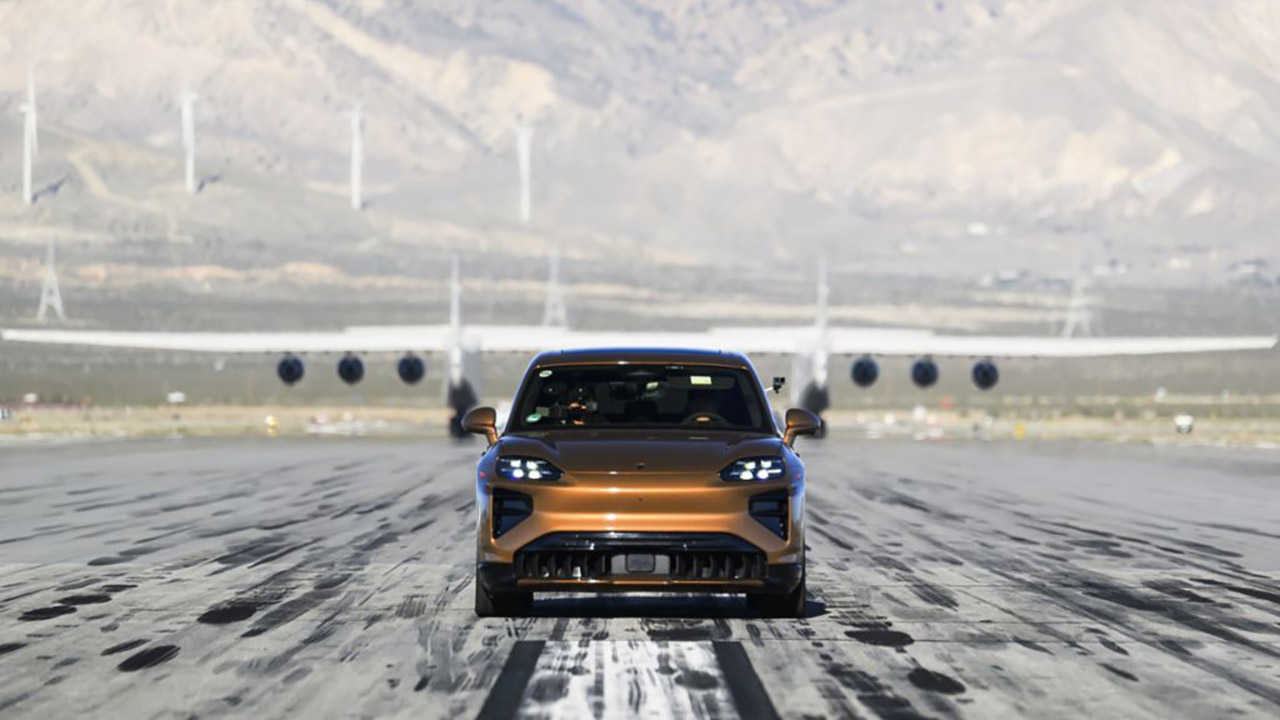
Mojave Air and Space Port sits in the high desert where the air stays dry and the runways stretch long enough for machines that refuse ordinary limits. On a recent morning there, a prototype Porsche Cayenne Turbo Electric rolled into position under the shadow of Stratolaunch’s Roc. Six jet engines sat silent for the moment. The SUV waited between the twin fuselages of an aircraft whose wings span 385 feet.
Roc is designed to carry enormous payloads into the sky for hypersonic experiments and spacecraft launches. Even when empty, with its six Pratt & Whitney engines cranking out a staggering 340,500 pounds of thrust, the plane can take off at a maximum weight of 1.3 million pounds, which is enormous when compared to modern airliners. Porsche’s new Cayenne has just arrived with a pair of electric motors that provide 1,139 horsepower and 1,500 Nm of torque, an outstanding spec sheet. It takes 2.4 seconds to accelerate from 0 to 60 mph, which is incredible. When things get hairy, the Cayenne has active aerodynamics and, as an option, very heavy-duty carbon-ceramic brakes ready to bail it out.
BUILD A RACING LEGEND – Boys and girls ages 9 years old and up can construct the LEGO Speed Champions Porsche 911 GT3 RS Super Car (77239) building…
AUTHENTIC PORSCHE DETAILS – Young builders can recreate the real-life vehicle’s signature elements including the famous rear wing, air intake…
1 PORSCHE DRIVER MINIFIGURE – Kids can place the driver minifigure with helmet and red Porsche Track Day Experience outfit behind the wheel to stage…
Stratolaunch’s engineers had been monitoring the airflow near Roc. During takeoff and landing, a strange small pocket of still air emerges directly behind the main landing gear and just ahead of the tail, and this bubble follows the plane. In principle, a car that was both fast and stable enough could simply sit in the center of this bubble and remain there. That concept evolved into a hunch, which led to a strategy. Straotlaunch had a volunteer driver lined up, none other than former Porsche factory driver Patrick Long. He was joined by crew chiefs Shauntel Williams and John McKinney, who were keeping radio contact with the flight deck crew, as well as Orlando Bloom and a lucky automotive journalist Mat Watson.
Advertisement
The first run began with Long carefully positioning the Cayenne in just the perfect area, applying almost little throttle at all. Roc’s engines burst into life. At roughly 100 mph, he put the Cayenne into boost mode and flew after the plane, matching its stride for stride. The SUV remained right beneath the plane’s gear as it pulled away, and it was apparent as day that the vehicle had the stability to endure the turbulence when the engines lowered. Long later described how, when the engines began to descend after takeoff, he felt a great jolt and the car continued to go as if nothing had happened. He glanced down at the speedometer, and holy moly, the needle was over 170 before he yanked his foot off the throttle and slapped on the carbon-ceramic brakes to reduce the speed before the runway ended.
Landing, on the other hand, is a completely other story since time is everything. Roc is massive, making visual cues scarce, so Long had to merge onto the runway at precisely the exact moment, skillfully maneuvering between the plane’s fuselage such that the automobile appeared under the gear just as the plane touched down. The Stratolaunch crew commanders were right there in the cabin, keeping Long on track with continuous radio calls. The pattern repeated itself over two takeoffs and landings, with all four landings going off as planned. The Cayenne utilized only 13 percent of its battery charge the entire time.
Patrick Long described it as one of the most focused moments he’d ever had in a car. He trusted the data, the automobile, and the pilots. And it appears that the trust paid off, since Jonathan Bearce, the plane’s principal test pilot, was also impressed. From the cockpit, all he could see was a Cayenne-sized black hole, but the footage subsequently revealed it was spot on. Bearce even got to drive the thing himself later on, and he stated it accelerated so quickly that it surprised him. Overall, it was an eye-opening exercise in demonstrating the importance of precision over raw speed.

























































You must be logged in to post a comment Login