It’s no secret that Snap has been working on a pair of AR-powered smart glasses for quite some time now – the dev kits for the hardware have been available for the past few years, and CEO Evan Spiegel always claimed that they’d be available by the end of 2026.
Well, we’ve just had our first official look at the super high-tech Specs – specs that Snap spent literally billions of dollars on over years of R&D – ahead of release later this year and, let’s just say, reactions are… mixed.
There’s no getting around it; the glasses don’t look as sleek or as stylish as many were expecting, especially with companies like Meta and Ray-Ban coming out with some pretty slick-looking (albeit comparatively basic) smart specs. It’s actually the opposite; the glasses are massive, chunky and look overly large on the head – even when modelled by Spiegel on stage at the announcement.
As you’d expect, the reaction memes are strong, and opinions are divided online. Even Snap’s stock dropped by 5% after the announcement, suggesting that Snap might’ve been drinking its own kool-aid for a little too long, focusing too much on the smarts and not the fact that, y’know, these actually need to be worn, in public, where people can actually see them on your face.
Advertisement
The problem is that I know the software experience on the Specs is fantastic, unlike anything else I’ve ever seen or used – but will people actually give it a go when they look like that? I think we all know the answer to that question.
Advertisement
Snap’s software is leagues ahead of the competition
Back in September 2025, I got to try the Spects dev kit at Snap’s London HQ, and Snap OS 2.0 feels closer to the sci-fi AR we were promised a decade ago than anything I’ve used since. While most rivals are serving up green, single‑colour overlays and static notification panels, Snap is running a full operating system that understands the world around you.
Image Credit (Trusted Reviews)
Full‑colour graphics aren’t just floating in your periphery; they’re anchored to real objects and surfaces. Pin a window next to your desk or drop a widget onto a coffee table and it stays there, even as you look or walk away. It sounds like a small thing, but that persistence makes the specs feel like genuine mixed‑reality interfaces rather than glorified heads‑up displays.
Image Credit (Snap)
Then there’s the built-in AI, which, believe it or not, is actually quite good. Much like Google Gemini’s Live Mode on mobile, Snap’s Spatial Tips feature doesn’t just answer questions in a floating chat box; it understands what you’re looking at and overlays help directly onto it.
Image Credit (Trusted Reviews)
Advertisement
When I asked how to do an ollie on a skateboard, it didn’t spit out a wall of text – it drew the steps onto the board itself, showing where my feet should go at each stage. The same approach applies to things like flat‑pack furniture, car engines or household repairs: you look at the thing you’re stuck on, and the instructions appear right where you need them.
Advertisement
Image Credit (Snap)
On top of that, real‑time translation features can caption conversations and translate signs or menus with real-world overlays, with text that sticks to people and objects as they move. Compared to the mostly static, widget‑driven software on Even Realities’ G2 or Rokid’s AR specs, Snap OS 2.0 feels way more polished, mature and genuinely useful.
So when I say Snap’s software is leagues ahead of the competition, I really do mean it.
Comparing the Snap Specs to existing smart glasses like the Meta Display specs and Even Realities G2 is like comparing an iPhone 17 Pro to a Nokia 3410; they’re in totally different leagues.
Samsung Galaxy XR. Image Credit (Trusted Reviews)
Advertisement
In fact, in terms of the tech and mixed-reality experience on offer, they’re closer to the likes of the Apple Vision Pro and Samsung Galaxy XR – relatively large VR-style headsets that you certainly couldn’t wear on a night out or a trip – than existing smart glasses.
Like the proper headsets, Snap’s specs have high-end full-colour screens rather than the single-colour panels used by most existing manufacturers, and like those headsets, it can run a plethora of first- and third-party apps – there’s a reason why Snap got those dev kits out so early, after all.
Advertisement
Image Credit (Snap)
It actually goes a step further with its semi-transparent lenses, rather than using passthrough camera feeds and regular screens like the existing ultra-premium headsets. With electrochromic dimming on the lenses, it’s not hard to imagine they could offer a more immersive mode for watching movies and the like.
Image Credit (Snap)
When you look at the Specs through that lens (pun intended), they look more like a phenomenal feat of engineering than a bulky pair of smart glasses.
Advertisement
… but there’s no argument, they’re ugly and expensive
Snap has tried its best to frame these as fashionable, collaborating with the likes of Kaia Gerber, Jimmy Butler, Imogen Heap, Jack Harlow, and Hoyeon to model the Specs in marketing images – but, let’s be honest, they’re still some pretty ugly.
Image Credit (CNBC)
Compared to regular glasses that most people currently wear, these are much thicker – not just in the frame housing the screens but also in the arms of the glasses. The arms also look way longer than they should – on Spiegel’s head at the reveal, anyway – with very little in terms of a hook at the end to wrap around your ear for extra stability.
The slightly rounded, curved shape of the specs is quite nice in my eyes, but they’re just too big, chunky and obviously-smart to be worn by the average Joe. And with an eye-watering price tag of £1,995/$2,195, they’re not attainable for the average consumer either.
Image Credit (Snap)
Advertisement
Of course, these are first-gen specs, and if Snap does power through and keep iterating on the design and hardware, this is the worst the Specs will ever be.
Advertisement
Just think about how much better the Apple Watch Series 11 is compared to the Apple Watch – it’s the same here. The core concept is there, and Snap’s software is a shining beacon in a sea of lazy AR concepts; it just needs the time to properly cook.
Image Credit (Snap)
That said, I reckon the Snap Specs will be a big hit with die-hard techies with money to burn, and I imagine I’ll be seeing execs from companies sporting the Specs at events like MWC in 2027 – but will I see anyone actually wearing them in day-to-day life? I doubt it, and that’s a shame.
I’ve uncovered a pretty cool way to save almost $400 off a ThinkPad by combining two separate promo codes.
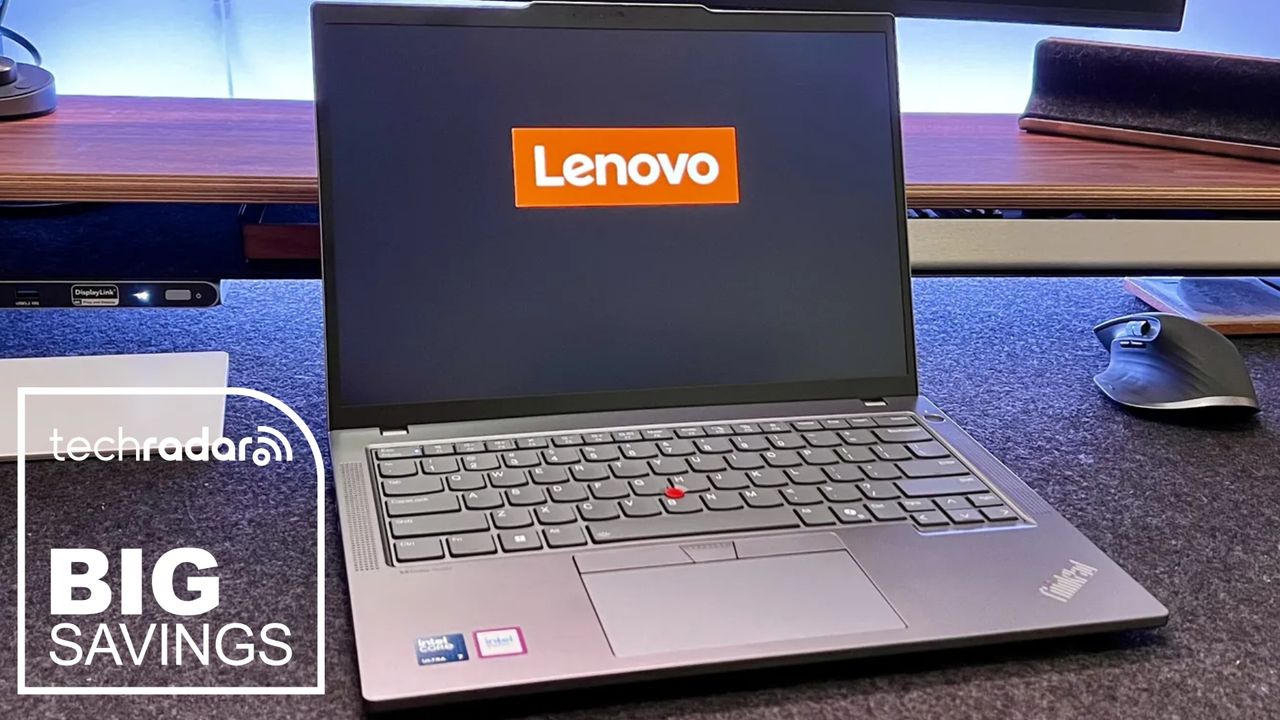
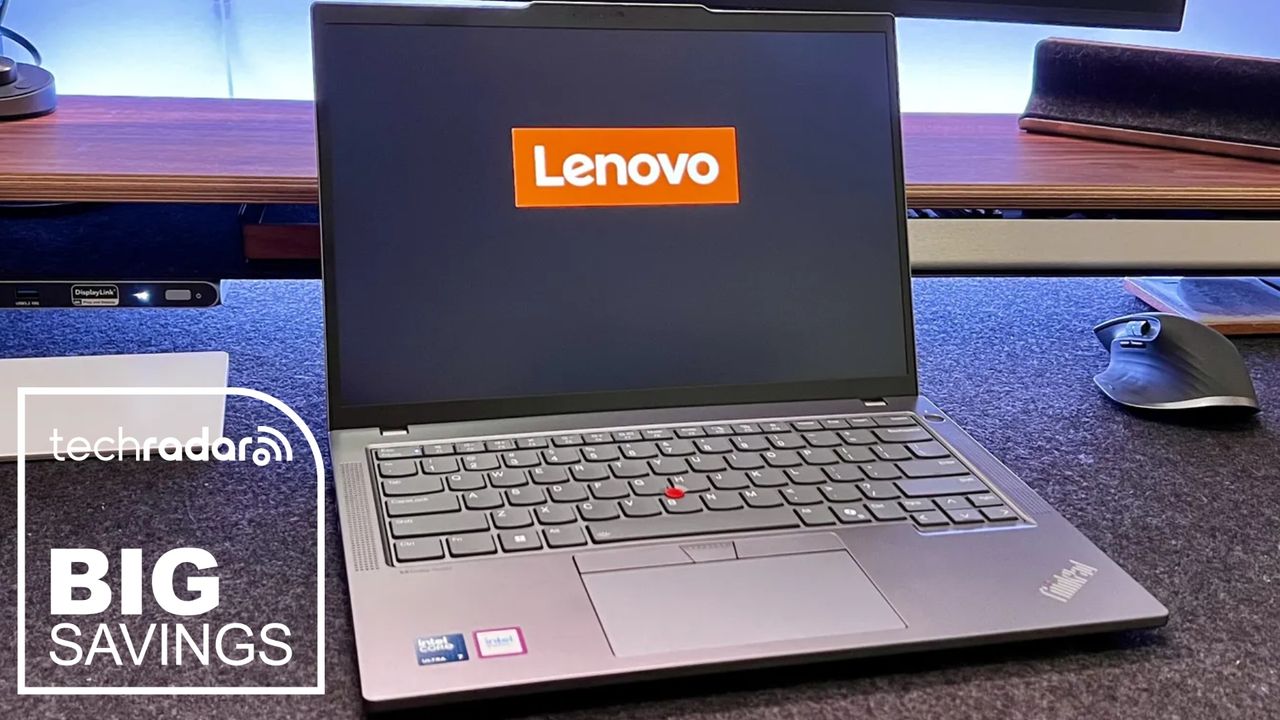
Right now, you can get the Lenovo ThinkPad T14 Gen 7 AMD for $1,324.39 (was $1719) at Lenovo. The laptop is already discounted down to $1,471.55. But then, enter coupon code THINKWEEKEND, which saves you $77.45, and code LENOVO10DEAL to save an extra $147.16. That’s almost $400 off one of our top-rated business laptops.
I don’t know how long this loophole will last though, so use them while you can. Better still, you can run this coupon combo across a range of other laptops and desktops, too.
Advertisement
Today’s top Lenovo ThinkPad deal
Business laptops can sometimes blur together, but Lenovo‘s ThinkPad range has always stood out for me, earning its reputation by focusing on reliability, security, and practical features that make everyday work easier.
Powered by AMD‘s Ryzen 5 PRO 230 processor, the ThinkPad T14 has more than enough performance for office work, web browsing, video meetings, spreadsheets, and multitasking.
You get 16GB of DDR5 memory and a 512GB PCIe Gen4 SSD, as well as a fingerprint reader for fast sign-ins, a 5MP RGB and IR webcam, a physical privacy shutter, and Windows 11 Pro, making it well suited to business tasks.
Advertisement
The 14-inch WUXGA IPS display has a 1920 x 1200 resolution with an anti-glare finish and 400 nits of brightness, making it easier to work in bright offices or while traveling on a train or plane.
A backlit keyboard, integrated Radeon 760M graphics, Wi-Fi 7, and Bluetooth 5.4 round out modern specifications that mean the laptop should continue to be perfectly fine for many years.
Although Lenovo markets the ThinkPad T14 primarily toward professionals and small businesses, it also makes plenty of sense for students and anyone wanting a durable, lightweight laptop that puts productivity ahead of flashy, but entirely unnecessary, extras.
If you need a dependable laptop that can handle almost anything you throw at it, these combined discounts make the ThinkPad T14 Gen 7 AMD an easy recommendation.
AI is reshaping tech careers. But it will not kill off the value of a STEM degree, according to Google DeepMind chief Demis Hassabis.
He made the comments at a London business conference, in a video published on Wednesday. Knowing the fundamentals of software gives you an edge with AI, he told the audience, Business Insider reported.
“You absolutely needed to lean into STEM and computer science,” Hassabis said. He framed AI as the next programming language, after machine code, C and Python. The future, he suggested, may be plain English.
Fundamentals still matter
Even so, the basics do not go away. “You’re still going to need to know about architecting things and best software engineering practices,” he said.
“Those people who understand the deep technical, they’ll be able to use these tools 10 times more effectively than people who don’t have that technical knowledge,” Hassabis added.
Advertisement
He also made a case for the humanities. “The time is now for the humanities like philosophy, economics,” he said. “I think we really need them in the world we’re about to enter.”
Geoffrey Hinton, often called the godfather of AI, made a similar case to Business Insider in December. A mid-level programming job “is not going to be a career for much longer, because AI can do that,” he said. But he argued a computer science degree is worth far more than coding. It will stay useful “for quite a long time,” he said.
Affirm chief Max Levchin has said much the same. Computer science fundamentals separate good code from “garbage,” he argued on a podcast. Microsoft’s Brad Smith and others have offered similar reassurance to anxious graduates.
OpenAI’s Sora may have shut down, but Google apparently thinks there’s still interest in a tool that lets you star in your own AI videos. On Thursday, the tech giant announced an update to Google Vids that will allow you to create a custom digital avatar that looks and sounds like you based on a selfie and a voice recording you upload.
In addition, Google said it’s bringing its multi-modal AI model Gemini Omni to Vids, letting you create videos using a combination of a written prompt and reference images you upload. Omni then mixes those inputs together to create the AI video you want. It can also be used to do things like swap out the background or fix the lighting in a video recorded on your phone, or add effects.
Plus, Omni now supports step-by-step edits, meaning you can make changes to your video as you go instead of starting over from scratch.
Advertisement
The updates push Google Vids beyond its original role as an AI-assisted workplace presentation tool to become more of an all-in-one video creation platform. By making Vids a part of Google Workspace, the company is telegraphing its use as a business tool for things like company updates or training videos, but personalized avatars and conversational edits could put it in closer competition with other AI video startups and tools like HeyGen, Synthesia, Captions, D-ID, and others.
Google notes that the new AI avatars will be tied to the account holder’s likeness, tied to their Google account, and watermarked invisibly with SynthID. (I suppose that means no one will be using the tool to make bizarre AI videos of Google CEO Sundar Pichai, the way that OpenAI CEO Sam Altman had let users do with Sora when it was available!)
The company also says that access to personal avatars is limited to users in certain regions who are aged 18 or older.
Advertisement
When you purchase through links in our articles, we may earn a small commission. This doesn’t affect our editorial independence.
Ryan Beiermeister has joined Founders Fund as a partner, she announced on Monday. Beiermeister is well-known in Silicon Valley for a number of reasons. For one, prior to this role, she spent about two years as VP of Product Policy at OpenAI as it became a household name, shortly after ChatGPT became the fastest-growing app in history.
That career choice ended abruptly in February when she was reportedly fired after objecting to a planned ChatGPT feature called “adult mode,” which was going to allow adults to use the chatbot for erotica. The Wall Street Journal reported that her firing involved an accusation by a male colleague of sexual discrimination, although Beiermeister called any allegation that she discriminated against anyone “absolutely false.” In March, OpenAI reportedly scrapped plans for adult mode.
More recently, Beiermeister has become well-known in Silicon Valley for her skillful strategy in a Founders Fund YouTube show called “Mafia.” The game involves discovering which players are secret Mafia killers before those players can “kill” the rest of the players.
Beiermeister played the game against OpenAI’s Sam Altman, Anduril’s Palmer Luckey, Figma’s Dylan Field, Flexport’s Ryan Petersen, Founders Fund’s Trae Stephens, and several others.
Advertisement
One of the most intense scenes in Episode One involved her and Altman each saying that if they were found dead, it would mean the other was the killer. Those who knew the history laughed.
Some commented on Twitter that maybe the whole Mafia game was really a job interview for her. The game, according to the firm’s chief marketing officer and the game’s MC, Mike Solana (who brought the game to the firm), is often played at Founders Fund retreats.
However, it wasn’t. “Though she is an excellent Mafia player, that wasn’t part of her interview process. She has been close with Trae Stephens since they worked together at Palantir and has been friendly with our team for years,” a Founders Fund spokesperson told TechCrunch.
Though the way Beiermeister played the game — coolly, making analytical observations and arguments about who might be Mafia — couldn’t have hurt her prospects.
Advertisement
Still, Beiermeister has known Trae Stephens for at least a decade. Prior to her role at OpenAI, and at Meta before that, she spent her formative years at Palantir, the big data company founded by the VC firm’s founder, Peter Thiel. Stephens also worked at Palantir in its early days.
Beiermeister says she’s most interested in backing the kinds of startups that Founders Fund is known to gravitate toward.
“The companies that will define the next twenty years are being built in the categories where product engineering is hardest and the stakes are highest — AI infrastructure and agentic systems, defense, energy, climate, biotech, the regulated frontier,” she wrote in a LinkedIn post. “To the founders in these domains, especially if you don’t fit the standard mold: I want to talk to you and my inbox is open.”
When you purchase through links in our articles, we may earn a small commission. This doesn’t affect our editorial independence.
HP India has been fined 1.42 billion rupees ($14.7 million) for two separate cases
Self-reporting ultimately landed it with lighter fines
Both cases relate to government tender manipulation between 2017 and 2020
India’s Competition Commission (CCI) has accused HP India and some related resellers of coordinating bids for Indian government contracts on the Government e-Marketplace.
According to the CCI, the company and certain partners manipulated government tenders by predetermined or communicated bid prices, submitting deliberately uncompetitive bids to create the appearance of competition and controlling discounts.
The regulator revealed two separate cases for investigation – one relating to PCs, and the other relating to printing consumables like ink and toner.
Latest Videos From
HP accused of manufacturing bids to win Indian government contracts
In the printing case, the CCI uncovered emails, witness statements, WhatsApp group conversations and even a 2019 video from a reseller meeting. Discussions around which companies would submit supporting bids, prices and discounts, and which reseller should win particular contracts were found.
Advertisement
The CCI declared that a total of 16 Tier-2 resellers had violated its Competition Act through bid rigging, with HP India fined 119.8 million rupees and its resellers fined a combined total of 23 million rupees.
A separate case revealed similar conduct covering laptops, desktops, workstations, POS systems, peripherals and more. Similarly, five additional resellers were highlighted on top of HP India’s core businesses, bringing this case’s fines total to 1.3 billion rupees and 12.2 million rupees respectively.
The CCI’s final orders bring HP India’s total fines to around 1.42 billion rupees, or $14.7 million, excluding the fines imposed on its partners.
Advertisement
Sign up to the TechRadar Pro newsletter to get all the top news, opinion, features and guidance your business needs to succeed!
But the fine could have been a lot worse had HP India not come forward and admitted to its wrongdoing between 2017 and 2020, having submitted a lesser-penalty application to buy itself a discount on the fines.
TechRadar Pro has asked HP for a comment, but we did not receive an immediate response.
“Roxy” the AI time-traveling vlogger in front of the famed Crocodile Cafe music venue in what’s supposed to be 1992 Seattle. (@roxyintime via Instagram)
The best thing about Seattle’s grunge era is that it existed before the internet could completely spoil it — although the mainstream media, MTV and fashion designers eventually did their best.
None of them would be any match today for artificial intelligence.
In a new video we spotted on Instagram, a time-traveling vlogger under the handle Roxy In Time goes back to 1992 Seattle to explore the city’s music scene during its heyday. The result is grunge meets 2026 AI slop.
It’s an interesting study in how technology that’s very much being built and hyped in modern Seattle can be used to illustrate what the city sort of looked like more than three decades ago. In the video, it’s two years before the start of Amazon and another 15ish before cloud computing and a massive tech boom truly reshaped the region.
AI is being both celebrated and derided for its ability to help create content like Roxy’s time-traveling exploits. Where some see an innocent, weirdly educational history lesson, others can’t look past the replacement of human creativity, the excess of such material polluting social media channels, and the tech’s ability to deceive viewers in more dangerous ways.
Advertisement
Roxy is an AI-generated influencer — not a real person — with a penchant for visiting historically significant places, both real and imagined. She recently checked out L.A.’s Sunset Strip in 1987 and a New York speakeasy during Prohibition in 1929. In other videos she runs across fantastical figures including Paul Bunyan and Humpty Dumpty, and she visits cavemen in 30,000 B.C.
In the Seattle video, Roxy is dressed for the era’s part in a flannel, Nirvana T-shirt, ripped jeans and combat boots. She starts her tour by saying she’s in town to see the band Mudhoney play at Belltown’s Crocodile Cafe. But first she heads to Easy Street Records in West Seattle to browse records, tapes and CDs.
The video is populated with images of random musicians carrying guitars down the street, and people drinking coffee and reading actual print publications instead of staring at laptops. At The Central Saloon and OK Hotel in Pioneer Square, everyone has long hair, or a beanie, or both. Sweaty music fans in mosh pits seem to fit the timeline.
AI’s vision of 1992 Seattle: No laptops at the cafe! Garbled words on flyers! The grunge pit! (Screenshots via @roxyintime)
AI’s artistic limitations do come into focus in a few spots, especially when written words are displayed. The names of bands and clubs on music flyers — such as Comet Tavern — are a jumbled mess. Same goes for some of the names on record dividers at Easy Street, where the store’s neon wording also breaks apart.
Back at the Crocodile, Roxy is in line to see Mudhoney, and she’s confused by an opening act named Pen Cap Chew. Inside, as the show starts, she realizes that Pen Cap Chew is actually Nirvana, playing under the secret moniker because by that time the band was a worldwide sensation riding the success of the album “Nevermind.”
Advertisement
In perhaps the most realistic demonstration of being in 1992 — in a club where no one knows what a smartphone is yet — Roxy ends the video by saying she needs to stop recording.
“I’m putting this thing away, I’ve gotta watch this,” she says.
We may receive a commission on purchases made from links.
Amazon sells a little bit of everything, and even though it’s not known as a major tool marketplace, the retailer has its share of landscaping items available, including mini chainsaws. Even better, throughout July 2026, Amazon customers can take advantage of strong discounts on these tools, saving a nice chunk of change while upgrading their outdoor arsenal.
Advertisement
There are multiple reasons to consider a mini chainsaw. For one, they’re significantly lighter and easier to maneuver than full-size units. Functionally, they’re perfect for light pruning, trimming shrubs, and other smaller tasks that don’t necessarily require a full-on chainsaw. Sure, mini chainsaws may not be among the most essential items for a home tool kit, but they can certainly make outdoor work much easier in the long run.
Mini chainsaws are generally much cheaper than regular ones, too, even when they’re not on sale. This makes Amazon’s July 2026 sales an even more appealing time to buy one. If you’re in the market for a mini chainsaw, these are some of the best deals currently available from Amazon.
Advertisement
Craftsman V20 Mini Cordless Chainsaw kit
There are many great places to buy Craftsman tools online, and Amazon is one of them. The retailer has a host of products from the seasoned tool brand for sale, including a mini chainsaw model that’s currently available at a solid discount. For a limited time, the Craftsman V20 Mini Cordless Chainsaw kit is on a 25% markdown, bringing the cost from $129.00 to $97.00. It’s not the biggest sale in Amazon’s mini chainsaw catalog, but it’s a pretty good deal considering what you get.
The core of the set is the Craftsman V20 mini cordless chainsaw itself, which features a 6-inch bar that can cut branches up to 4 inches in diameter and an integrated tip guard to improve stability while cutting. It weighs 8 pounds and has an oil-free design. The kit includes a Craftsman V20 2.0 Ah battery that’s advertised as providing 85 cuts per charge, as well as a charger for the battery. Amazon review-wise, most buyers are happy with what the kit offers, feeling it’s a fine tool for smaller cutting jobs with ample power and battery life.
Advertisement
Saker mini chainsaw kit
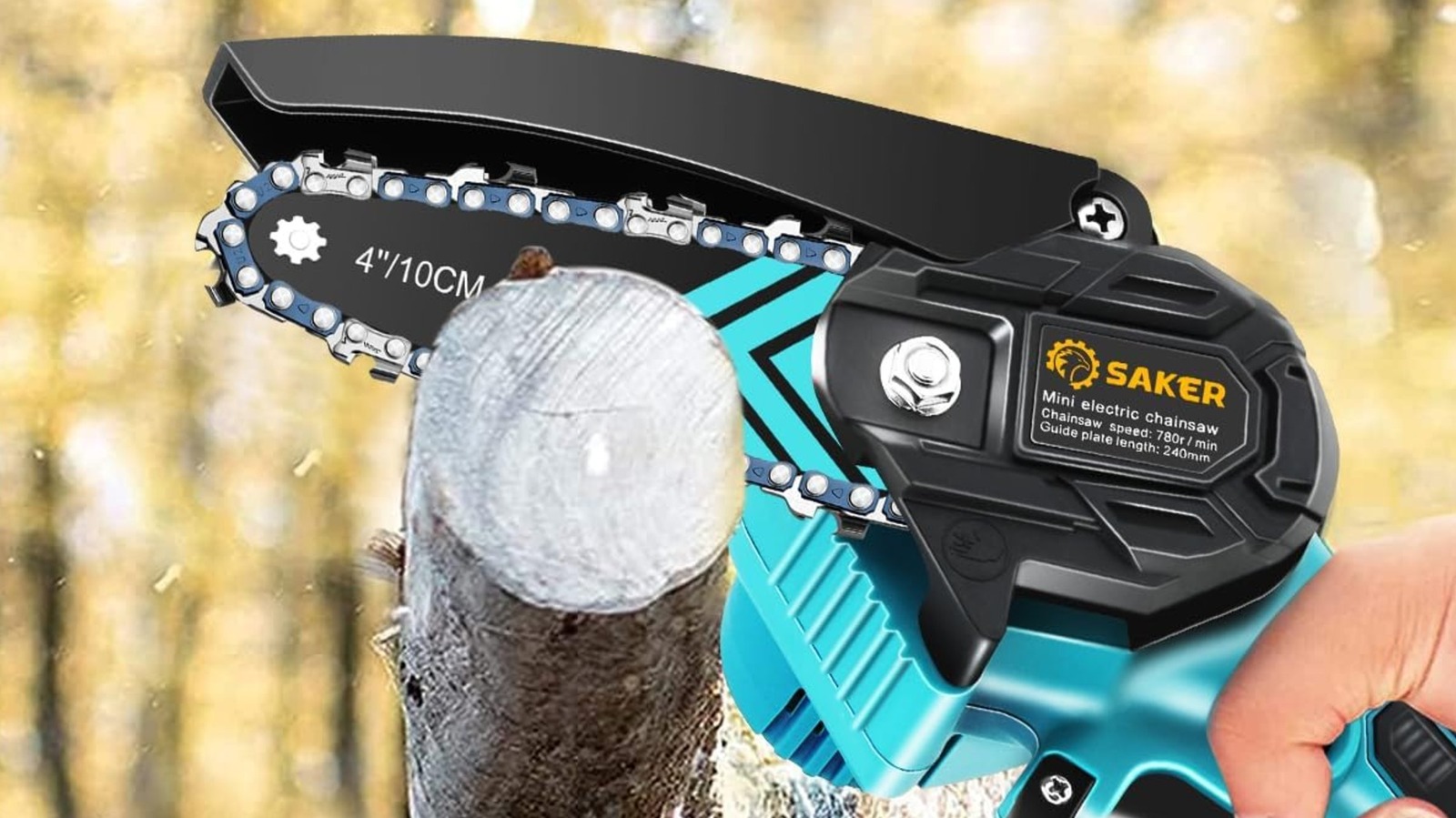
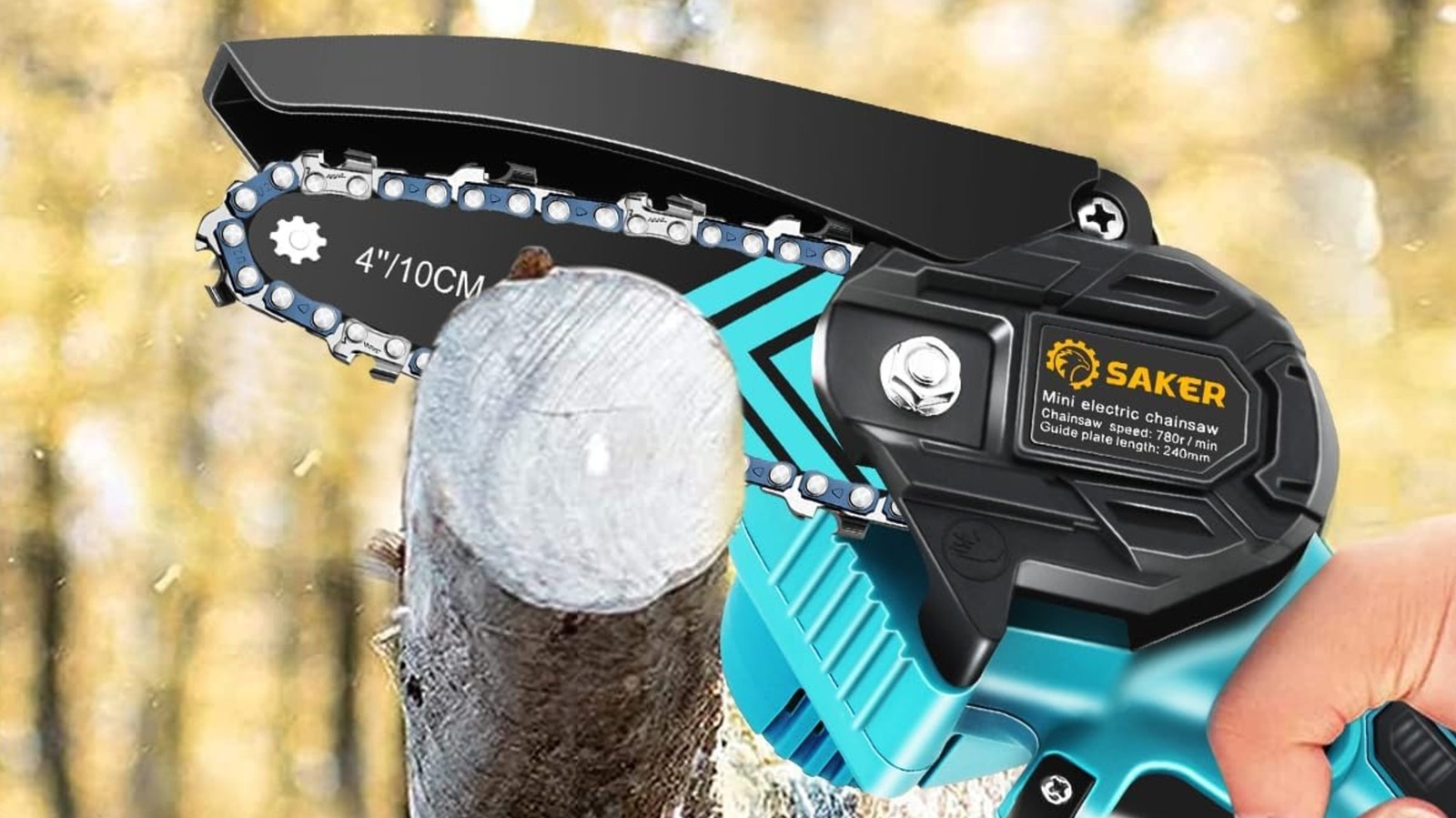
Saker is far from a household name when it comes to lawn tools, but its products are certainly worth trying if they come in at the right price. If you’re interested, look no further than the Saker Mini Chainsaw kit that’s available through Amazon. This kit is currently discounted by 23%, dropping the price from $51.95 to $39.98. It may not come with all kinds of bells and whistles at either price point, but it at least provides the essentials to get the chainsaw up and running in no time.
Of the thousands of Amazon customers who’ve given this Saker kit a try, the vast majority find it a solid buy thanks to its overall quality, battery life, and price. The saw runs on an included 20-volt 1.5 Ah rechargeable battery and runs at 550 watts with a 4-inch bar on the front. It features a safety lock to prevent accidental activation and a hand guard to keep fingers and knuckles safe on the job. Alongside the battery, the kit includes a charger, tools such as a screwdriver and socket wrench to take the chainsaw apart as needed, and a bottle of chain oil to keep it in good shape.
Advertisement
DocSmart mini chainsaw kit
When it comes to buying power tools, it’s always a good idea to get as much bang for your buck as possible. Fortunately, Amazon has its share of mini chainsaws that deliver on that front. For instance, the DocSmart Electric Mini Chainsaw kit is already an impressive package at its $69.99 retail price, but a 40% discount brings the total to $41.99. For that surprisingly low price, this model gives even the most popular mini chainsaws a run for their money, as buyers receive a bevy of add-ons alongside the 1,000-watt brushless mini chainsaw itself.
Advertisement
The first thing to note is that this chainsaw comes with 6- and 8-inch bars, plus a blade for each. There’s also a screwdriver, a cleaning brush, and a blade sharpener for maintenance, plus a set of gloves and goggles to protect the user. Two 21-volt 2 Ah batteries and a charger are included as well. To top it all off, the kit comes with a carrying case to keep all of these elements safely stored and organized when not in use.
The only thing missing is oil, which this auto-oiling chainsaw requires. If you’re worried that the kit is too good to be true, don’t be; the tool has over 1,700 Amazon reviews, the majority of which are positive and praise the chainsaw’s power and durability, plus the kit’s overall value.
Advertisement
LCOIEDU mini chainsaw kit
Buying from an obscure brand isn’t always a bad thing, particularly if the price is right. Another example of this is the LCOIEDU mini cordless chainsaw kit, which has received praise from numerous Amazon customers for its build quality, power, and overall value for the price. Normally, this set retails for $166.99 online, but for a limited time, it has been reduced by a staggering 70%. This brings the price down to a mere $39.99 — another case where the value is undeniable considering all that customers receive for such a low price.
This specific chainsaw model features an 880-watt motor, a 6-inch bar, and a 6-inch maximum cutting diameter, with two chains to get you started. Two 21-volt 6 Ah batteries, advertised as providing 80 minutes of continuous runtime per charge, along with a compatible charger, come included. The kit has a set of goggles and gloves, too, as well as a carrying case to keep everything protected, organized, and mobile. It should be noted that this is another mini chainsaw model that requires, and unfortunately doesn’t come with, chain oil, which in this case should be applied to the chain before use.
Google has announced a limited-time opportunity for eligible Pixel users to purchase Pixel Care+ even after the usual enrollment period. The company normally allows users to add the protection plan within 60 days of buying a new Pixel phone. Google has reopened Pixel Care+ enrollment for a limited time, but only for US customers. Your phone must pass Google’s condition check before enrollment.
The company requires that the phone work properly and not be physically damaged. You can sign up until August 2, 2026. Compatible phones are: Pixel 9, Pixel 9 Pro, Pixel 9 Pro XL, Pixel 9a, Pixel 10, Pixel 10 Pro, Pixel 10 Pro XL, and Pixel 10a. The offer does not cover the Pixel 9 Pro Fold, Pixel 10 Pro Fold, Pixel 8 series, older Pixel devices, or Pixel Watch.
What Does Pixel Care+ Offer?
Pixel Care+ offers protection beyond Google’s standard warranty. It covers accidental damage, hardware failures, and eligible repairs. Google does not charge for eligible front screen, back glass, or battery replacements. The plan also includes next-day replacement and priority support from Pixel experts. Users can add Loss and Theft Protection with a higher-tier plan. Google allows up to two loss-or-theft claims each year. Pricing starts at $8 per month and goes up to $15 per month, while two-year plans cost $159 to $279.
There are a few conditions you must meet before you can purchase Pixel Care+. Google requires your phone to pass a detailed condition inspection. The device cannot have cracked glass, liquid damage, charging issues, faulty buttons, or a swollen battery. Other accidental repairs still include a $99 service fee. Loss and Theft claims require a deductible between $79 and $99. Google does not provide this feature in New York. You must enroll before August 2, 2026.
The agency also fined 21 HP resellers 35.2 million rupees (about $365,335).
In a separate order, the CCI said that WhatsApp records showed that HP and 16 of its Tier-2 reseller partners operated “in a collusive arrangement” and that the messages show the companies engaging in “bid rigging, including cover bidding, price fixation, and customer allocation during 2017–2020.” HP India played a central role, the regulator said.
Per the order, HP India said that high printing supply prices led some resellers to threaten to “shift to low-cost counterfeit products to compete on price.”
“HP India was commercially forced into a position where it had to support the collusive arrangement adopted by the Tier-2 resellers,” the order reads.
Advertisement
For its part, the order said that HP India “humbly objects to HP India’s role being characterized as a ‘kingpin’ of the entire collusive arrangement.”
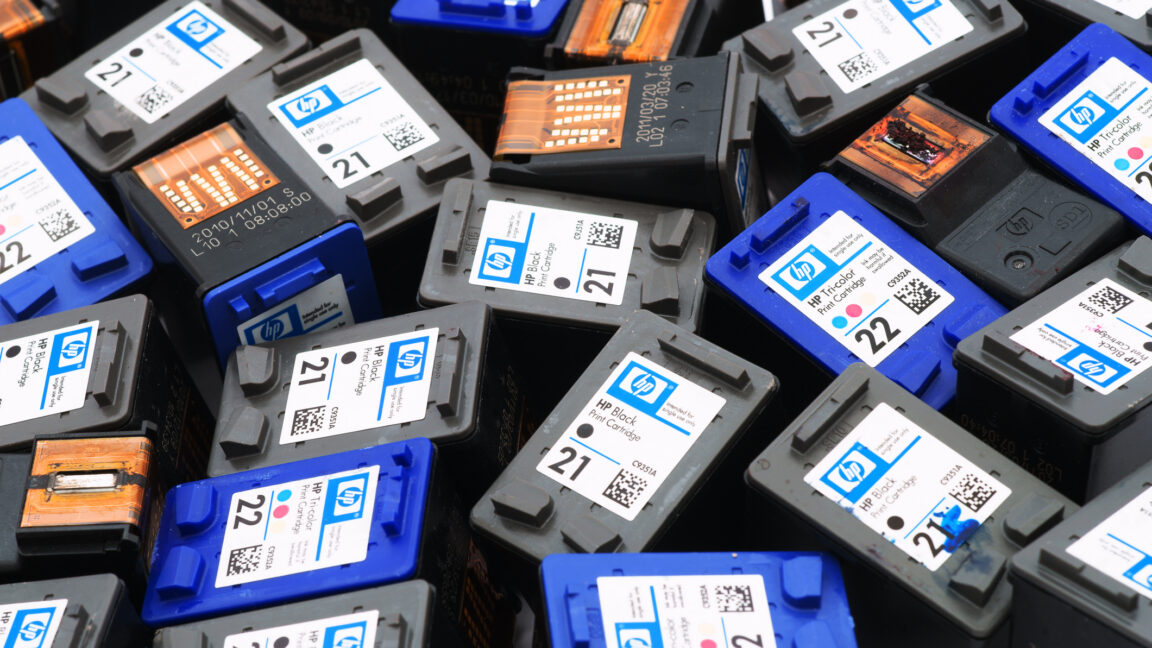
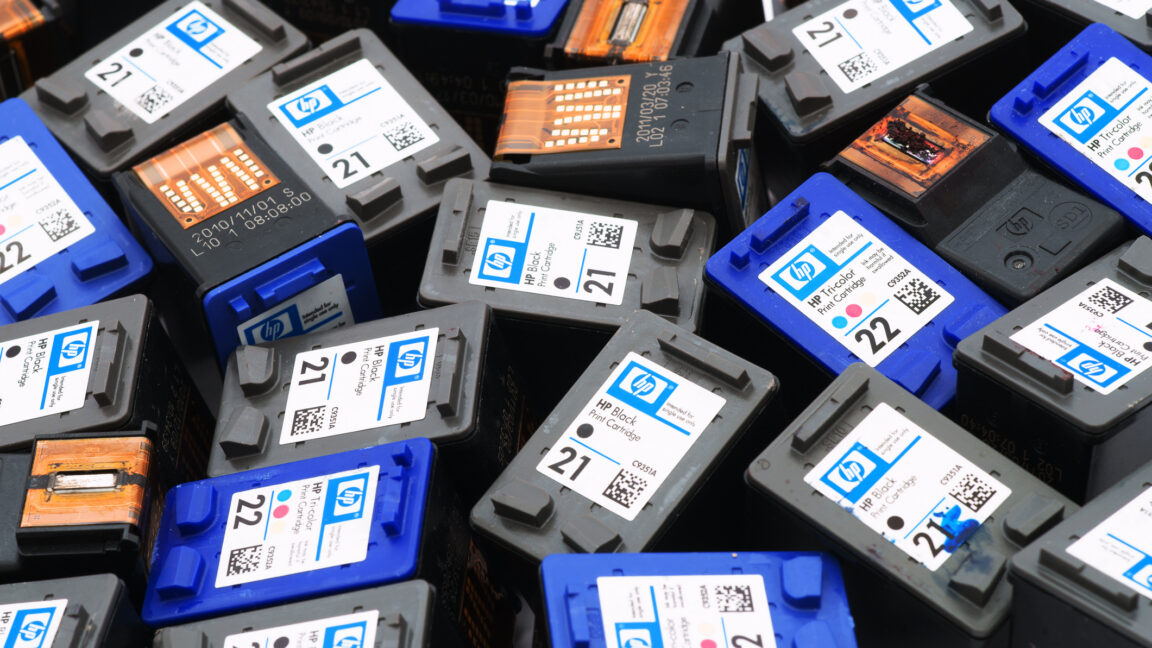
Still, the revelation that some HP resellers are struggling with the exorbitant price of printer ink and toner underscores a problem many printer users face. The economic challenge is exacerbated by HP’s tendency to block third-party ink in already-purchased printers through firmware updates. At the same time, with even its own partners threatening to take their ink business elsewhere, HP is pressured to get more HP printer users to only use HP-brand ink and toner.
The CCI also ordered HP India and its channel partners to “cease and desist from anti-competitive conduct” and to hold competition compliance training programs within 60 days.
Meagan Breidert, Slalom’s senior director of sustainability and impact, taking a break outdoors. (Photo courtesy of Breidert)
While working for PwC in Jamaica early in her career, Meagan Breidert focused on international development clients. There, she learned about a Caribbean-wide initiative to make the region’s communities more resilient to climate change — adapting infrastructure and building warning systems to withstand stronger storms and rising sea levels.
Breidert left Jamaica with a new direction: a career in sustainability where she could tackle “big, challenging, complex problems,” she said.
Now senior director of sustainability and impact at Seattle-based Slalom, Breidert works out of the Washington, D.C.-area office for the global business and technology consulting firm. In her role, she leads Slalom’s internal climate programs and shapes how the company engages with community members and supports its employees.
Keep reading to learn more about Breidert’s sustainability journey. Her quotes have been edited for clarity and length.
What’s your biggest concern when it comes to addressing climate change?
Advertisement
I worry that the discussion and the divide are being driven by the language we use. If we speak in plain language, we’ll see we all want the same things. We want clean air, we want clean water, we want our kids to grow up healthy. We don’t want toxins in our backyard. It doesn’t matter where you fall on a political spectrum, we as humans want the same things for our families.
What gives you the most hope for the planet?
I’m going to paraphrase the convener and architect of the Paris Agreement, Christiana Figueres. She says, “I focus on the signals, not the noise,” and I really took that to heart. There’s this incredible economic benefit to supporting climate-positive practices and a more sustainable way of living. Renewable energy is more economical, new jobs are being created with the green economy. Companies are actually saving money, the air is cleaner, quality of life improves.
There’s just an abundance of upside, no matter what the motivation is. We’re seeing more and more renewable energy being used, and I think that’s a signal versus the noise.
Advertisement
Meagan Breidert, far right, speaking at the Trellis Impact 26 conference in June. (Slalom Photo)
What is a habit you’ve changed personally because of climate concerns?
My home has solar panels and I can cover my family’s energy load with them. Regardless of my beliefs, economically it’s beneficial and my bills have decreased. My kitchen and home goods are plastic-free to the extent possible, so all glass. And my family’s clothes are sustainable. My son is younger, so he has more churn on clothes — but my clothes are generally natural fibers and secondhand or vintage where possible. And we eat an abundance of beans and tofu.
If you could wave a wand and invent one climate solution, what would it be?
I would love to have ready-made, at-scale solutions for plastic pollution and single-use plastics. At Slalom, we have a plastics commitment on removing problematic and single-use plastics from our operations, especially in our kitchens and break rooms, but for me personally, plastic is a visual, physical problem. People see it on vacation, when they go to the beach, or in daily life, walking down the street.
I would love solutions — whether it’s better recycling mechanisms or advances with bacteria, enzymes, fungi, that are able to break down plastics, or plastics made from less harmful components like seaweed or sugarcane — I would love to see those things come to the market tomorrow.
Advertisement
If you could have coffee with any climate leader, past or present, who would you pick?
I would love to have coffee with the chief sustainability officer at Mars, Alastair Child. M&M’s, particularly peanut, are my favorite candy. But I think the interesting intersection is chocolate, coffee and vanilla grow together in tropical locations that are being the most affected by climate change and extreme weather. What is the plan to secure those supply chains and work with local and Indigenous communities on some of the traditional knowledge for growing those?
We all need to eat, and the planet is changing, and how our food grows, the price of commodities, the quality of those things are going to change. I would love to have this very deep-dive conversation around how my chocolate is going to continue, and my coffee and vanilla!
How do you approach this work and not get overwhelmed?
Advertisement
I really chip away at problems and usually start on the data side, start with the stakeholders and just chip away. My team is great because we like to celebrate the little things, like, “Hey, that stakeholder answered the phone today, that vendor that we’ve been asking for data got us this information.” Before you know it, you look up and you’re like, “Oh, I just talked to 50% of our supply chain and now they’re providing us data.” Those small pieces add up to a lot. We can’t do it alone. It’s an entire ecosystem issue, so one at a time, chipping away.
What impact do you hope your work has in 20 years?
I don’t want to say working myself out of a job because I need a job, we all need jobs, but I would say I look forward to sustainability no longer having to prove its business case. It’s on the checklist. It’s already in there. Nobody has to say, “We’re making a business decision — oh, did somebody check with the sustainability people?” It should just be, “Here’s a business decision. It’s all in here, it’s all embedded, and there’s no question about the sustainability pieces.” Once that happens, then we’ll start to see some of the real gains.
























































You must be logged in to post a comment Login