

As the heads of leading artificial intelligence companies came together last weekend to warn that runaway AI development could lead to catastrophic outcomes, momentum briefly seemed to be building for regulatory action from Washington.
Tech
India forces caller-ID apps to feed spam reports to telcos


India has extended its anti-spam regime to require caller-ID and call-management apps to share users’ spam reports with telecom operators, prompting spam-blocking app maker Truecaller to call the ruling anti-competitive.
On Friday, the Telecom Regulatory Authority of India (TRAI), the country’s telecom regulator, amended rules governing commercial communications, making it mandatory for caller-ID and call-management apps that let users flag calls as spam or junk to send those reports to a blockchain-based platform maintained by telecom operators. The platform tracks commercial communications and enforces anti-spam rules.
The change, TRAI said, is intended to broaden the pool of spam reports available for action against spammers, effectively connecting reports collected by apps with the telecom industry’s enforcement infrastructure.
However, Truecaller told TechCrunch that it sees this requirement as a “one-way exchange” that is “anti-competitive,” arguing that it transfers commercially valuable data from call-management apps like itself to telecom operators.
India is Truecaller’s largest market, accounting for well over 350 million of its more than 500 million monthly active users globally. The Stockholm-based company uses community reports alongside automated detection and other signals to identify and block spam calls.
The rules come as India grapples with spam and fraudulent calls at enormous scale. In its report in February, Truecaller said its users in the country encountered around 42 billion spam calls in 2025, including calls that were blocked, labeled, or ignored. The company also stated that it blocked nearly 12 billion spam calls during the year.
It is not the first time Truecaller and the Indian regulator have been at odds over how spam calls should be handled. The Swedish company previously objected to restrictions preventing call-management apps from automatically labeling calls from certain government-designated number ranges as spam. It argued that the exemption could allow unwanted calls to escape its filters.
However, Friday’s amendments retain that restriction and have barred call-management apps from blanket blocking, filtering, or spam-tagging calls from designated number series used for promotional, service, and transactional communications. Individual users can still choose to block such calls on their own devices, the regulator said.
“While our data and user sentiment clearly show that spam has skyrocketed due to this free pass to spammers, we have been compliant with this since late last year,” a Truecaller spokesperson said.
Sumeysh Srivastava, a partner at New Delhi-based consulting firm The Quantum Hub, who leads its telecom-regulation policy work, said the latest change bridges two distinct layers: Telecom operators provide the underlying network and run the blockchain-based anti-spam system, while caller-ID apps operate on top of the network to identify and filter calls.
That raises technical and jurisdictional questions, Srivastava told TechCrunch, including what reporting standards apps will have to follow and how the requirement will be enforced against companies that are not themselves telecom operators.
A March draft proposed (PDF) using India’s IT laws to enforce the requirement. However, Srivastava pointed out that the new announcement did not say whether that enforcement mechanism was retained in the final rules.
It is also unclear how much information the apps will actually have to provide under the updated regulation. Kazim Rizvi, founding director of New Delhi-based policy think tank The Dialogue, told TechCrunch that requiring an app to transmit a specific spam report made by a user is materially different from requiring it to share the broader datasets, reputation signals, or analytical systems it uses to identify suspicious calls.
The rules will need clarity on what information must be transmitted, how users are notified or asked for consent, and how that data can subsequently be retained and used, Rizvi said.
TRAI did not respond to TechCrunch’s questions about what information apps would be required to share and whether the rule would also apply to spam-reporting features built into smartphone operating systems and dialers such as Android and iOS.
New rules for AI-powered calls
The amendments also address the growing use of software and AI voice agents to make calls. Calls made automatically, without a person directly dialing the number, will now fall under TRAI’s application-to-person (A2P) framework. That includes robocalls and calls using prerecorded or artificial voices.
Companies using such systems will have to declare their use and the phone numbers involved to their telecom operators in advance. Undeclared A2P calls will be treated as spam, TRAI said.
The key test, Srivastava said, is how a call is initiated, rather than simply whether it uses an AI-generated voice, leaving some uncertainty around AI-assisted calls that involve human initiation.
Satya N. Gupta, a former additional secretary at TRAI, told TechCrunch that the new rules do not restrict businesses from using AI or other automated calling technologies, but instead require them to disclose their use to telecom operators.
Telecom operators will also be allowed to levy a termination charge of up to 5 paise (about 0.052 cents) per minute on A2P calls. However, calls made using certain designated number ranges will be exempt.
Rizvi told TechCrunch that the new definition could also cover calls made using software even when a person is still involved, such as calls from contact centers and click-to-call services. “Without that distinction, the A2P category risks becoming broader than the regulatory harm it is intended to address,” he said.
When you purchase through links in our articles, we may earn a small commission. This doesn’t affect our editorial independence.
Continue Reading

But one connected and influential tech industry figure has become the leading voice opposing many proposals for government action — on his podcast, in media appearances, and in his private advice to President Donald Trump, who now calls AI doomsday fears a “hoax.”
David Sacks is a venture capitalist and part of the “PayPal Mafia” who, in recent years, has exemplified the rightward shift of some in the tech sector. He advised Elon Musk on his takeover of Twitter in 2022, and regularly unleashes a stream of scornful commentary about Democrats on social media and on the podcast All-In, which he co-hosts with three other venture capitalists.
And for anyone wondering why Trump seems so newly dug-in against AI safety warnings — and against government action that might slow down the runaway technology before people might get hurt — Sacks is right at the center of the conversation. When Politico asked this week about Trump’s newly vocal hostility to AI safety, a senior White House official said: “David Sacks. It’s all coming from him.”
- Venture capitalist David Sacks is one of Trump’s most important advisers on AI, typically arguing against government regulation of the industry on safety and other issues.
- Yet Sacks is in key ways at odds with the two leading AI companies, OpenAI and Anthropic. He and other influential Silicon Valley figures have backed an alternative vision for the industry’s future focused on “open weight” AI rather than proprietary secret models.
- Critics argue that open weight AI presents serious safety and national security risks (the leading open weight models are Chinese); defenders argue it’s better than concentrating superintelligence in two companies’ hands
- Trump’s willingness to allow sales of AI chips abroad — including to China — is in part due to Sacks’s influence.
Yet Sacks’s role in the debate is an unusual one. Though he champions the AI industry, he’s no fan of the US’s two biggest AI companies. In his years in the tech industry, he’s made powerful allies, as well as many enemies — technology investor Paul Graham once posted that Sacks may be “the most evil person in Silicon Valley” (in response, Sacks called him a bully and made insinuations of antisemitism). His role, and ideology, are a window into how complex the politics and geopolitical stakes of the AI race really are — as well as how Trump administration policy is often shaped less by agency policy processes than by who has the president’s ear.
After endorsing and fundraising for Trump in 2024 — “I love David’s house, what a house,” Trump said after a fundraiser at Sacks’s $20 million San Francisco mansion) — Sacks was rewarded with a job as the White House’s “artificial intelligence and crypto czar.” There, he helped steer policy until stepping down this past March. He still co-chairs a presidential technology board, and his influence persists — in May, the Washington Post reported that a phone call from Sacks to Trump temporarily derailed the planned signing of an executive order on AI. (Vox reached out to Sacks for this article, but he declined to comment.)
Sacks is not the only Trump adviser thinking about AI: Other top administration officials, like Treasury Secretary Scott Bessent and Chief of Staff Susie Wiles have reportedly been more concerned about the risks of new AI tools for hacking, and have been trying to establish a government body that could help oversee the industry and address these risks.
But, so far, Trump has rejected this approach, and stayed much closer to the Sacks position. In a flurry of Truth Social posts Monday, he argued that AI would be “the Greatest Economic Development Engine in History,” said that the US had to “win” against China in the AI race, and dismissed concerns AI would “destroy the World” as a “hoax.”
To understand the implications of Sacks’s influence, you have to understand his position in the Silicon Valley AI ecosystem. In conversations with AI policy insiders, it becomes clear that many view his position through the lens of both his history as a tech investor, as well as his sharp-elbowed and take-no-prisoners style.
The split he embodies isn’t just about AI safety, but a fundamental divide over which business model of AI should succeed — one that pits Sacks directly against the biggest AI companies driving the safety debate.
Sacks is pro-AI — but he’s at odds with Anthropic and OpenAI

Sacks has generally been opposed to new regulation of AI companies by the government. His preferred approach, he’s frequently said, is to “let them cook.” He wants to let tech companies march ahead, and argues that government intervention would squelch innovation. “It’s this very libertarian approach to America winning in AI,” said Chris McGuire, a senior fellow at Council on Foreign Relations who worked on tech policy for President Joe Biden’s National Security Council, of Sacks’s approach.
That puts Sacks in opposition to AI safety advocates, who argue that regulation is necessary to rein in an increasingly dangerous technology. Indeed, even the leading AI company CEOs — Dario Amodei, Sam Altman, and even Sacks’s friend Elon Musk — have called for a slowdown in advanced AI development because of these dangers.
But Sacks has tended to dismiss warnings such as that of former Anthropic employee Jacob Coxon as “doomer histrionics.” Of late, he’s also argued that if Anthropic and OpenAI are worried that their products are dangerous, that’s on them. “If the unreleased models are scary enough that you think you should slow down, I support your decision to be responsible,” Sacks posted on X on Saturday.
Indeed, though Sacks is often shorthanded as pro-AI, he’s in some key ways been quite critical of the leading AI labs, OpenAI and Anthropic, themselves.
That’s partly because he’s aligned with a different faction in Silicon Valley. Sacks and key allies like Nvidia CEO Jensen Huang and Meta CEO Mark Zuckerberg want much more AI development from many more places, by way of models that are “open weight” or “open source.” These models make their parameters (“weights”) publicly available, in contrast to the flagship proprietary models of OpenAI and Anthropic.
“Keeping innovation decentralized and accessible is the key to avoiding an unsafe and dystopian future where advanced AI capabilities are centralized and controlled by only a few hands,” Sacks posted on X earlier month. He has accused companies like Anthropic of trying to “kneecap open source” with regulation.
Proponents of open models hope advanced AI becomes something more like a widely available resource that individual users and companies can download, run themselves, and customize to their internal specifications — rather than having to go through a handful of companies that control access. “The defining questions of our age are who will have access to superintelligence and what will we direct it towards,” Zuckerberg wrote in August. “Will it be centralized and restricted to a few institutions, or will it be a tool that empowers everyone?”
There’s a lot of money riding on this bet. Huang’s Nvidia manufactures chips used to train AI models and would like more customers (and just this month agreed to buy Hugging Face, a repository of open models). Zuckerberg’s Meta has hoped to be the US leader in open model development.
More broadly, software startup founders and the venture capitalists who fund them can benefit from powerful open weight AI being widely available, since it’s a cheaper alternative to OpenAI and Anthropic’s expensive products. Sacks, as a co-founder of the venture capitalist firm Craft Ventures, and host of a popular podcast with three fellow venture capitalists, is more closely tied to this part of the tech ecosystem than any other.
Many believe that capable open weight AI presents a serious threat to the Big Two AI companies’ current dominance of the AI frontier, and thus their business model. The flip side is that some have argued that the Big Two present an “existential threat” to the software industry, predicting the frontier labs’ products could take over much of what today’s software companies do.
But regarding safety concerns, advocates have warned about the dangers of both closed “frontier” models and open models. “On the open source side in particular, it’s easier to have a bad actor — a terrorist group, a rogue nation, an extremist political group that wants to cause chaos,” said Brendan Steinhauser of the Alliance for Secure AI, an AI safety advocacy group. “They can strip out safety features and guardrails, they can do some fine tuning to basically make the models even more dangerous, and get them to help them develop biological weapons.”
The open weight AI faction argues, though, that intrusive government regulation on AI would end up mostly hurting open models and the companies that use them — entrenching the dominance of OpenAI and Anthropic, who would be better able to comply with onerous safety requirements given their size. They’ve publicly pooh-poohed AI’s existential risks, instead playing up what they say are the dangers that AI’s power will be controlled by a privileged few. Less regulation, Sacks argues, will let more flowers bloom.
These concerns aren’t only held by those with financial stakes. There’s also a school of thought on the left that is deeply suspicious of OpenAI and Anthropic’s intentions, and particularly around the companies’ desire for an exemption from antitrust enforcement, which they say will let them work together to address safety.
Commentator Matt Stoller has argued that those warning about dangerous “superintelligence” are playing into the hands of tech “oligarchs.” And a recent American Prospect article said policymakers should “avoid codifying the preferences of the very companies who are generating the panic.” On the right, Sens. Josh Hawley (R-MO) and Ted Cruz (R-TX) have expressed similar concerns that large AI companies’ demands for restrictions are a cover for consolidating market dominance.
At a Politico event Wednesday — and to give a sense of just how strange the bedfellows can be around this issue — Sacks stressed that he agreed with former Democratic FTC chair Lina Khan that existing liability law already applies to AI companies. But while Khan said she was open to adding new legal restrictions, Sacks is arguing that existing law is perfectly sufficient for addressing safety risks. “These CEOs are going to be subject to massive civil and criminal liability if they put out products that are unsafe,” he said.
In other comments at the event, Sacks did appear to have softened his tone a bit, saying he was “open to ideas” about AI safety, and that “we should have an intelligent conversation” about how to manage risks. The problem, he argued, was that “what’s going on right now is a fear campaign” that makes such an intelligent conversation impossible.
Former Rep. Brad Carson, who heads Americans for Responsible Innovation, an AI safety advocacy group, said that Sacks has been the one preventing such a conversation. “When it comes to AI policy the Trump administration has, through their unwillingness to even talk about reasonable guardrails, brought things to such a crisis point that the industry is in jeopardy,” Carson said. “In many ways, David Sacks is the author of that ill-fated intransigence.”
Sacks, for his part, has pointed to Anthropic’s funding of much of the AI safety advocacy world — for instance, the company has given $40 million to an advocacy group founded by Carson — and said the company is “running a sophisticated regulatory capture strategy based on fear-mongering.”
If we’re in an AI race with China, why are some of Trump’s policies friendly to Chinese AI?

The influence of Sacks and his worldview could help explain another seeming mystery of the administration: If Trump thinks it’s so crucial that the United States beats China in the AI race, why has he been so willing to bless the sale of AI chips abroad — including even to China?
National security hawks both inside and outside the Trump administration had warned against these sales and hoped to impose stringent controls on the export of Nvidia chips, fearing that if too many got out, the US would squander its AI lead over China.
Huang lobbied intensely against this, hoping to sell Nvidia’s most advanced chips to Saudi Arabia, and the United Arab Emirates — and trying to resume sales of a less advanced but still sophisticated AI chip to China itself. Sacks became Huang’s biggest champion inside the administration — and they won over the president. Sacks publicly argued that blocking US chip sales to China and other countries would provide an opening for Chinese companies like Huawei to dominate their domestic market and gain a greater global market share with competing chips, putting the US on weaker footing in the long run.
National security-minded critics disagreed, arguing that Sacks’s particular vision for AI will likely, in practice, strengthen China’s AI sector. “I think we can have a reasonable debate on domestic policy,” said McGuire of the Council on Foreign Relations. “But when we start from the premise that the American AI stack — models, cloud, and chips — should be dominant globally, then selling China the technology to advance its own capability obviously undercuts that.”
China also looms over the cause of open weight AI that Sacks champions — because it’s Chinese companies like DeepSeek and Moonshot that produce some of the leading open weight models that US software startups currently use.
OpenAI and Anthropic argue that these Chinese models present national security risks, claim they rely heavily on copying or “distilling” their own models, and want the US government to scrutinize them. Some Trump officials have reportedly been sympathetic to their concerns, but the administration hasn’t restricted these Chinese models’ use in the US. Sacks argues that a US ban on Chinese open weight models will just end up enshrining the OpenAI-Anthropic duopoly he so loathes.
Overall, though, on both national security risks and AI safety risks, Sacks and Huang still seem to have the president’s ear.
On Monday, Sacks was onstage with Huang at the live All-In podcast event discussing the “doomer hoax” when a purportedly impromptu call came through for the Nvidia CEO: It was Trump.
“The robots are not going to be taking over the world,” Trump said on speakerphone. “That’s not going to happen.”
Then, after speaking for several minutes, Trump added: “David has done an amazing job.”

Tilly Norwood, an AI-generated “actress,” is having a rough time on its first press tour. The production company that created it, Particle6 Group, has made it available for 75 simultaneous interviews with journalists, and it seems to be making mistakes in all of them. (I was not invited to speak with it, and frankly, I cannot imagine why Particle6 didn’t want to schedule that meeting.)
In one particularly odd interview with Piers Morgan and actor Tom Conti, which was recorded and posted online, Norwood seems to malfunction and abruptly begin speaking Chinese.
When discussing the movie that Norwood is promoting, Conti asks if the other actors are also AI-generated. Norwood responds by saying that human writers, editors, and directors were involved.
“You didn’t really understand the question,” Conti replies. “Are the other actors on the screen with you real actors, or are they computer-generated images? Do you know?”
“Ah, right. You’re asking about the other actors in Misaligned,” Norwood starts. “They’re all digital twins just like me. It’s a hybrid production which m—”
Norwood stops talking for a second, then starts speaking in Chinese for over 10 seconds.
“Tilly, if I could just ask you a question,” Morgan says, looking puzzled. “It’s Piers again … You seem to be speaking Chinese completely randomly for no reason. Why did you do that?” he asks.
“Oh, my apologies,” the AI replies. “It seems I had a little hiccup there. I certainly didn’t mean to start speaking Chinese or impersonate Piers. Sometimes my wires get a bit crossed, you know?”
When AI bots try to act like humans, they can be so convincing that people forget they’re chatting with a computer, which can lead to dangerous outcomes. But Norwood is so surprisingly bad at talking to people that it’s almost suspicious.
Perhaps Particle6 Group calculated that people would be more likely to talk about Norwood if they were making fun of it, figuring no one would take its upcoming film seriously.
When you purchase through links in our articles, we may earn a small commission. This doesn’t affect our editorial independence.

Bose has just unveiled the Sport Open Earbuds – a new addition to its ever-expanding headphones line-up.
Designed “for running, workouts and outdoor adventures”, how does the Sport Open measure up to Bose’s Sport Earbuds which launched back in 2020? If you own the older pair, is now the time to upgrade?
Ahead of our Bose Sport Open Earbuds review, we’ve compared its initial specs to the Sport Earbuds and highlighted the key upgrades below. Read on to see what’s new and whether you think the buds will enter our best workout headphones guide.
Not sold on a workout-specific pair? Check out our round-up of the best wireless earbuds instead.
Price and Availability
The Bose Sport Open Earbuds will launch from October 15, and have an RRP of $199 / £179.95. The buds will be available in a choice between Black, White Smoke and a limited-edition Eucalyptus Green.
In comparison, the Bose Sport Earbuds are no longer readily available to buy. However, the buds were priced the same as the new Sport Open Earbuds, with an RRP of £179.95.
Bose Sport Open Earbuds have an open-ear design
The biggest and most obvious difference between the buds is with their respective designs. While the Sport Earbuds have tips that plug into your ear, the Sport Open Earbuds are bone conducting buds that sport a C-arm cuff that wraps around the ear, rather than sitting inside the canal.
If you’ve never worn open-ear buds before then the thought might be off-putting. Sure, by their very nature, open-ears don’t offer active noise cancellation, but that’s not what they’re designed for. Instead, the buds allow you to remain aware of traffic, announcements and passers-by while still enabling you to listen to music on the go.

Even so, Bose explains that thanks to Auto Volume the buds will automatically adjust loudness as ambient noise changes.
But what does all of this mean for the sound quality? According to Bose, the Sport Open is equipped with the brand’s OpenAudio technology that’s engineered to “deliver rich, personal sound” even with the open design. In addition, Bose SoundDesign digital sound processing promises balanced clarity and deep bass levels too.

Bose Sport Open Earbuds are rated IP54
Earbuds that are designed for workouts need to offer a solid level of durability, as they’ll be exposed to sweat, rain and frequent tumbles too. While the original Sport Earbuds are IPX4 rated, which means the buds are protected from water splashes but not from dust, the Sport Open Earbuds boast a higher IP54 rating instead.
IP54 means the buds can withstand splashes of water and are dust-resistant too. In addition, there are textured physical buttons on the buds that allow you to control audio, even if your fingers are sweaty during a workout too. Bose also promises that thanks to its cuff design, the Sport Open Earbuds will stay in place throughout head shakes and even cartwheels.
We can’t promise that we’ll be able to specifically verify the cartwheel claim, but we’ll report back on how secure the buds are once we review them.
Bose Sport Open Earbuds promise longer battery life
Although Bose stated that the Sport Earbuds should see up to five hours of battery per earbud, and 15 hours with the charging case, our tests actually saw slightly lower figures of between three to four hours. It’s not far off, but definitely means you’ll need to make sure your case is fully charged in case you’re caught short.

Speaking of the case, the Sport Earbuds’ own doesn’t offer wireless charging. It’s not a dealbreaker, but it’s a shame as wireless charging is undoubtedly a convenient addition. In comparison, the Sport Open Earbuds do have a wireless charging case and store 22 hours of power too.
Not only that, but the Sport Open Earbuds also promise up to seven hours of battery too. As the Sport Earbuds fell slightly short of this promise, we’ll have to wait and see how the Sport Open fare.

From October, the Sport Open Earbuds will include Google Find Hub and Alexa+
Bose has said that a planned firmware update that’ll follow the release of the Ultra Open Earbuds (2nd Gen) will introduce new features. These include Google Find Hub, which will allow you to locate the buds if you lose them, and built-in Alexa+ for easy hands-free controls. In comparison, the Sport Earbuds didn’t have any built-in voice assistants, although you could easily use one via your paired phone or device.
Early Verdict
As we’re yet to review the Bose Sport Open Earbuds, we’ll refrain from providing too conclusive a verdict until we get our hands on the pair. However, with an open-ear design that promises to keep you aware of your surroundings without disrupting audio quality, longer battery and a stronger IP rating, the Bose Sport Open Earbuds seem like a promising upgrade from the Sport Earbuds.
We’ll update this versus once we review the Bose Sport Open Earbuds.

Kingbull Jumper Go
MSRP $1,499.00
Released January 2025

“The Jumper Go has plenty of character and is an incredible value.”
Pros
- Dual Suspension
- Four-disc brakes
- Lots of character
- Incredible value
Cons
- Short seat post
- Thin instructions
Quick Take
It’s no surprise that budget eBike brands often will skip full suspension hardware, and you can see why. It costs money, adds weight, and most buyers in this category will never utilize the advantages of a dual suspension setup. The Kingbull Jumper Go got my attention for a number of reasons. First, I love the design with the large retro motorcycle-looking headlight on the front. It has a DNM air shock in the back, is a step-through (my preference for bikes you ride around town) frame and 20-inch fat tires. And while Kingbull claims this is the world’s first bike to combine these features (it’s not. Magicycle has had a full suspension since 2023), the Jumper Go is still unusual enough at this price point to make me pay attention.
Originally at a list price of $2,499, you can now find the Jumper Go online for around $1499 which is a steal, and it undercuts the Aventon Aventure 3 and the Velotric Nomad 2 by five hundred bucks while offering rear suspension, which neither of those models has. The 750W Bafang hub motor is a great brand that pulls hard up hills. And the torque sensor makes it feel like a bicycle to me rather than an electric scooter. You also get Tektro four-piston brakes, which is amazing for this price range. I found that the 960Wh battery lasted pretty well for my hilly neighborhood, and did great on the open flat roads.
While the Jumper Go will hit Class 3 level speeds at 28MPh, I think the ride quality, design, and plush suspension are what you should really be buying this bike for. If pure speed and torque are more your thing, I would recommend the Hynox Trooper X that I just reviewed.
Specifications:
| Motor | Bafang G063 750W rear hub, 1,400W peak (Kingbull marketing figure) |
| Torque | 90 Nm claimed in Kingbull marketing copy; absent from the official spec table. Kingbull’s own launch release says “up to 85 Nm” |
| Battery | 48V 20Ah, 960Wh, Samsung INR21700-50G cells, removable |
| Class | Class 3 as delivered — 28 mph pedal-assist, 20 mph throttle. Adjustable to Class 2 via display menu P08 |
| Sensor | TROG-1B torque sensor, 5 assist levels |
| Claimed range | 80 miles, “ideal conditions.” No methodology published |
| Brakes | Tektro HD-E3940 hydraulic, 4-piston, 180mm rotors front and rear |
| Drivetrain | 8-speed. Shimano SL-M315 shifter and RD-M310 Altus derailleur; DNP 13-32T cassette; PRO-R42P 42T crankset, 152mm arms |
| Front suspension | ZOOM 879DH coil fork, no lockout or rebound. Travel: Kingbull’s product page says 100mm; its technical specifications page and launch release both say 80mm |
| Rear suspension | DNM AO-38RC air shock, 50mm, rebound adjustment and lockout |
| Tires | Kenda K-1188, 20 x 4.0 inches |
| Frame | Aluminum, full suspension, low step-through, internal routing |
| Weight | 81 pounds with battery |
| Payload | 450 pounds total; 150-pound rear rack |
| Seat height | 33.5 to 36.6 inches (3.1 inches of adjustment) |
| Rider height range | 5’3″–6’7″ claimed by Kingbull |
| Display | 4-inch color KB35H, integrated horn |
| Water resistance | IPX6 (no dust rating) |
| Charger | 3.0A UL-certified. Kingbull publishes no charge time; eBikeDaily reports 6–7 hours |
| Price | $1,499 as of September 10, 2026 (list $2,499) |
Design, Build & Fit: A low frame that fits fewer people than it claims
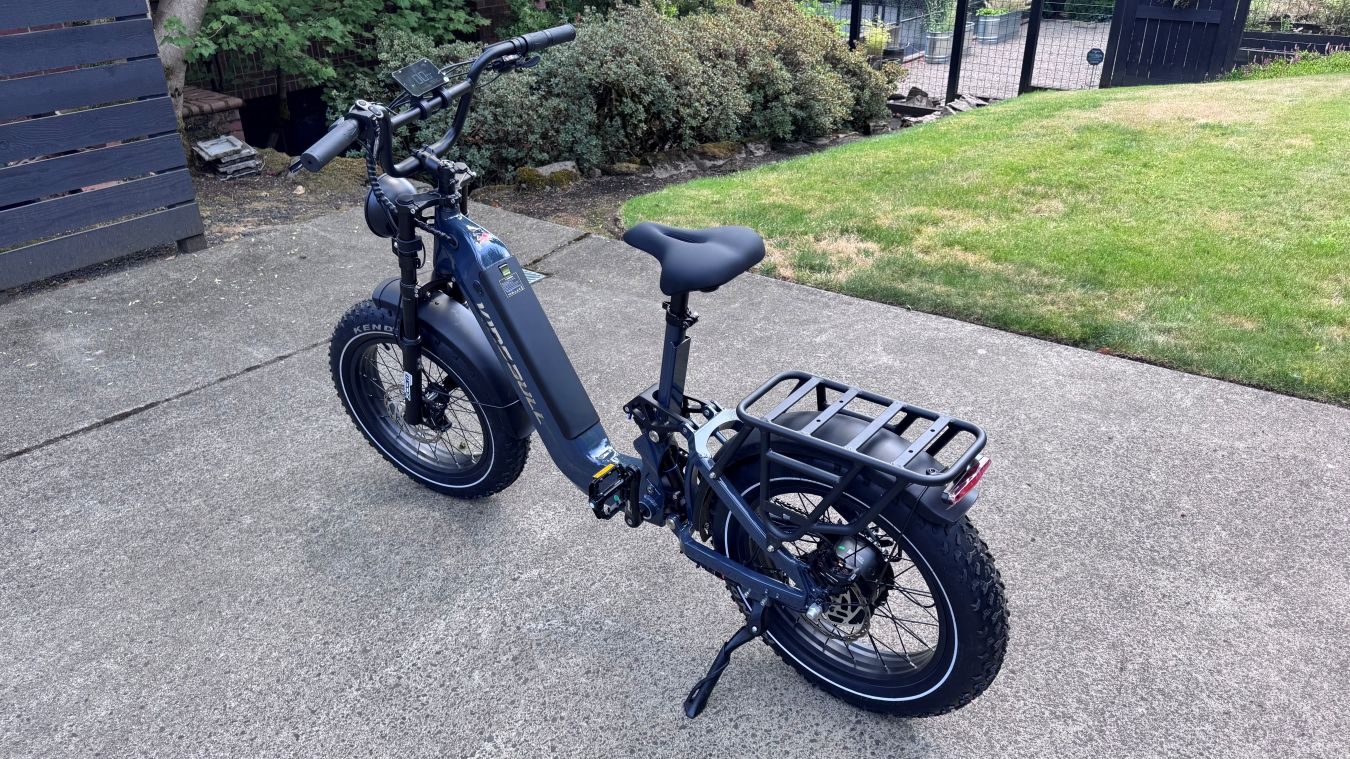
On first inspection after getting the bike out of the box and assembled, I can see that the Jumper Go looks more expensive than it really is. Welds are solid and clean, cables run internally, and the battery disappears into the downtube instead of bolting on as some of the lower-end bikes do. As I mentioned before, what I appreciated most in the daily use was the low step-through frame that I prefer for city bikes where you will be stopping at lights, stop signs, and can put both feet on the ground easily.
The Kenda 20 x 4.0 tires give the Jumper Go a slightly cartoonish yet very cool stance, and even the bulky-looking rear rack is rated for 150 pounds, which is super odd to me (in a good way) and more than most bikes in this class. I love the look of it too.
On the fit side, the big glaring issue that stood out for me is the seat post height. Kingbull advertises a rider height range of 5’3″ to 6’7″. The seat post offers 3.1 inches of adjustment, from a 33.5-inch minimum seat height to 36.6 inches. I’m 5ft 10 inches tall, and while the seat post adjusted for me, anyone over 6”3 is likely to have issues. Kingbull needs to fix this, as it can be a serious issue, and I’m not sure the frame even has room for a longer post, though, which means the solution is probably a narrower published range.
Score: 7/10
Motor & Performance: The torque sensor is a premium touch
A lot of e-bikes at this price use what’s called a cadence sensor, which works by detecting you turning the pedals, and when the motor decides you’re pedaling, it powers the motor whether you want it to go or not. That’s why cheap e-bikes lurch away from stop signs. The Jumper Go uses a torque sensor, which measures how hard you’re pushing and scales assistance to match – at least in theory. Theoretically, power arrives in proportion to the torque, so the bike feels like a bicycle you happen to be strong on rather than a scooter with pedals attached.
The 750W Bafang rear hub has no trouble with steep grades. I never found a hill in my testing that made it hesitate, and acceleration from a stop is quick and smooth instead of violent. As I have mentioned in several of my eBike reviews before, I live in a hilly neighborhood, with some steep grades. Some eBikes struggle with the inclines, but the Jumper Go didn’t have any issues. Sure, I had to pedal at some of the steepest inclines to keep momentum going, but the bike did just fine with little effort and no sweating on my part.
Kingbull does offer a speed modifier for $49, which will let you unlock Class 3 performance and a top speed of 28MPH with Pedal assist. Alternatively, you can go to the Kingbull website, and they give you a “secret” unlock instructions menu on the display if you want to try speeding the bike up that way as well.
Score: 8/10
Ride Quality & Handling: Suspension that earns its place, until you lean it over
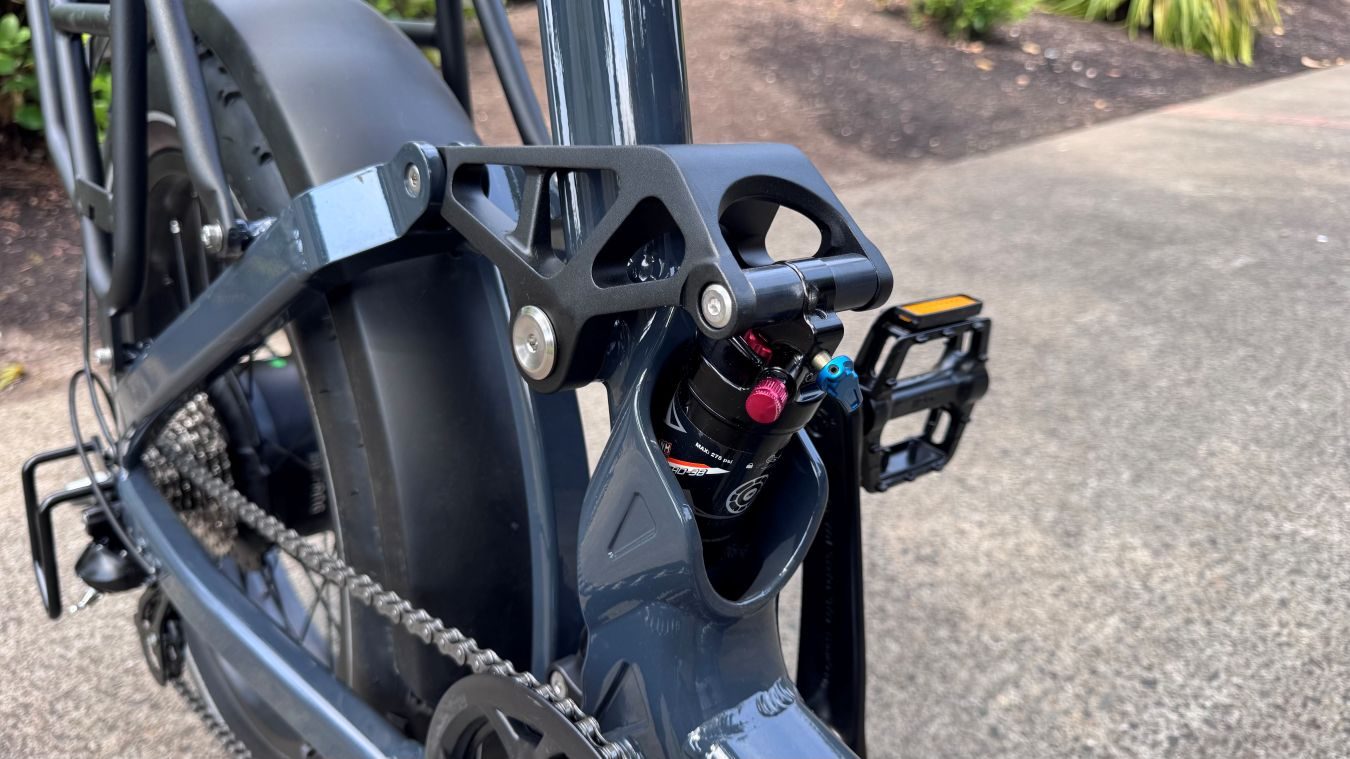
Because of the dual suspension, I found the ride on the Jumper Go to be quiet and composed while doing my city riding. The bike took potholes and dips with ease, with zero issues. Gravel and hardpack trails felt good as well for me. The bike tracks straight and corners predictably for something this heavy; it didn’t get skittish or lose traction on loose surfaces. The leather saddle is comfortable, and I didn’t experience any hot spot discomfort while testing the bike.
Two issues that could matter to people came up in my testing, though. First, the ZOOM coil fork doesn’t have rebound adjustment, and there is no lockout, and I bottomed out on some real rough riding over curbs and on the trail. An adjustable air fork would let you change the stiffness to help prevent bottoming out, especially if you are going on some off-road trails AND you happen to weigh more (I weigh 215lbs). I also found that because of the low ground clearance, my pedals struck the ground when taking some hard corners on rough terrain. It’s very clear that the Jumper Go is not meant to be a competitive mountain bike, and the full suspension might trick you into thinking it is. This is a comfortable all-surface cruiser that will handle trails on a casual level, not one where you would need a dedicated mountain bike; there are better offerings for that.
Score: 9/10
Battery & Range: The 80-mile claim with an asterisk
The Jumper Go uses a high-quality 960Wh Samsung battery, which is larger than the 733Wh pack in the Aventon Aventure 3 and on par with the Lectric XPeak 2.0. You remove the battery from the downtube with a dual lock, and you can charge the battery on or off the bike, which is a nice convenience. It took me close to 7 hours to charge the battery with the included 1-amp charger.
Kingbull claims you can get 80 miles of range with the Jumper Go under “ideal riding conditions,” which basically means those “conditions” are not realistic. In my testing, I was able to push 70 miles of range on flat roads in pedal assist 1 and 2, but most people will not be on flat roads. In combined riding throughout the Portland, Oregon area, I averaged around 40 miles of range on assist level 5 up and down hills and flat areas. In “Ecomode” I was able to push 57 miles of range on mixed terrain but had to pedal pretty hard on some steep hills. The Portland area is known for being very hilly, so that has an impact on range.
Score: 8/10
Brakes & Safety: The best component on the bike
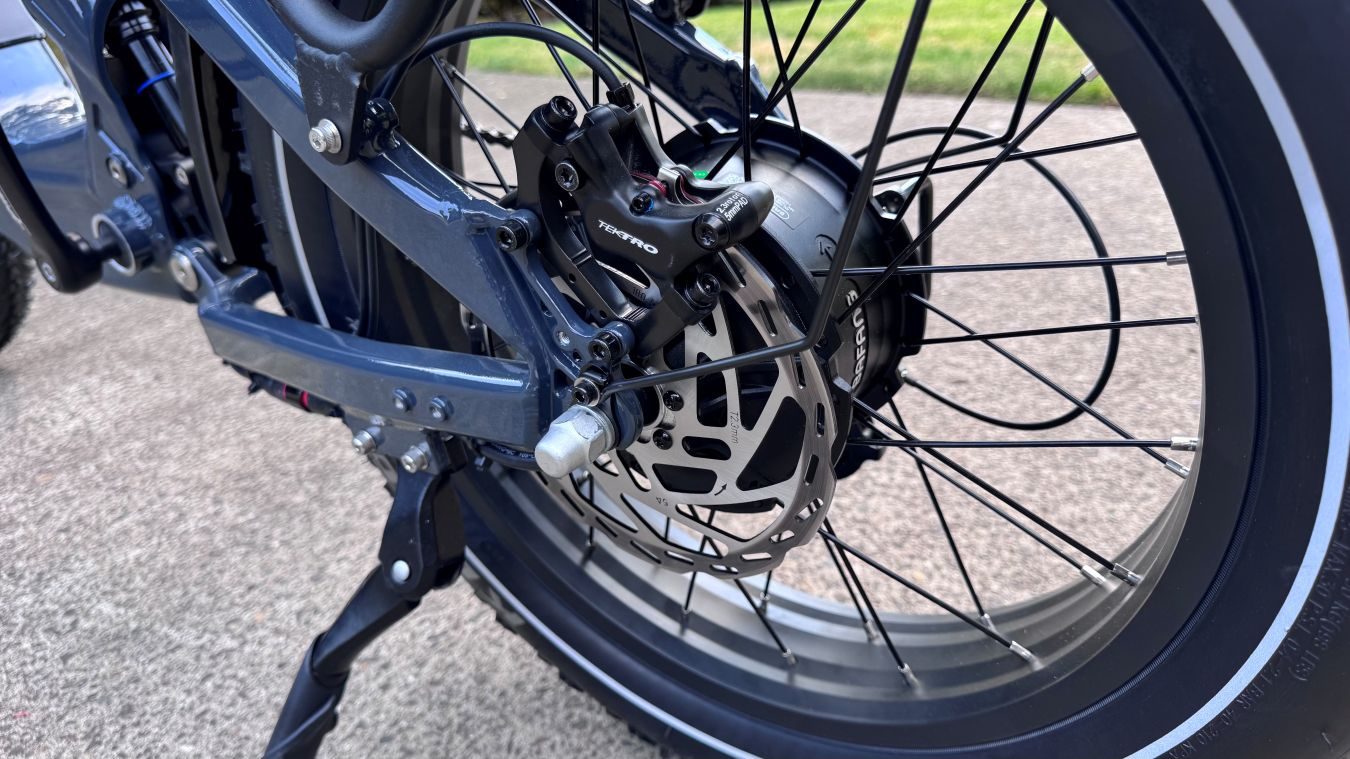
The Jumper Go weighs around 81 lbs. and can technically go up to 28MPh with the speed hack that turns it into a class 3 bike. That means with someone like me on it that weighs over 200lbs, you need some serious brakes. A lot of bikes in this category come with two-piston brakes, but Kingbull has added Tektro HD-E3940 four-piston hydraulic brakes with 180mm rotors on both the front and the rear. Braking power is adequate and linear and was predictable for me without being grabby. On steep downhill descents where I would lean on them hard, I experienced no brake fade from the heat and zero change in the brake lever feel. They worked as they should.
Score: 9/10
Display, App & Connectivity: Functional and bright, but missing a connection
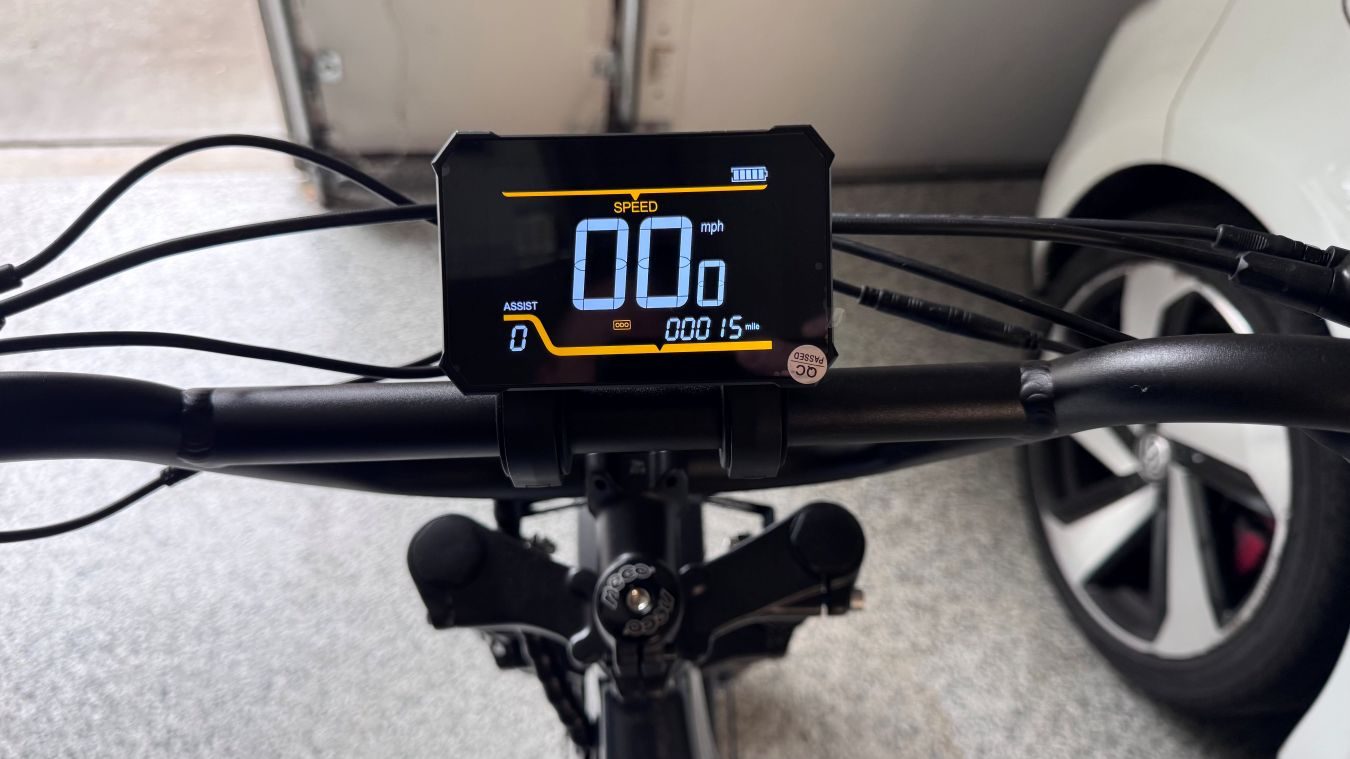
I found the color display to be adequately bright in the direct sunlight. You get speed, pedal assist level, battery state, and trip data on the main screen where you would expect. To change the pedal assist level, there is a thumb pad you can reach without moving your hand off the handlebar grip. Going into the P08 menu setting is where you can change the speed limiter if you want to convert the bike between a Class 2 or Class 3 capability.
There is an integrated horn in the headlight which is louder than a bike bell and more useful in traffic than I expected. Lighting runs off the main battery, so there’s nothing to charge separately, and the taillight brightens under braking. There are two lighting settings, standard and high beam.
Where the Jumper Go falls short for me is in the upgradeability department. Unlike the Hynox Trooper Go I just reviewed, there isn’t a companion phone app, no GPS tracking, or a firmware update path for the bike in case there are issues a software update could fix. And to be truthful, most bikes I have ridden or researched in this price range have an app companion, but they aren’t typically that good. But having one is better than not and something Kingbull needs to improve on.
Score: 7/10
Assembly & Maintenance: Eighty percent done, and the last twenty percent is on you
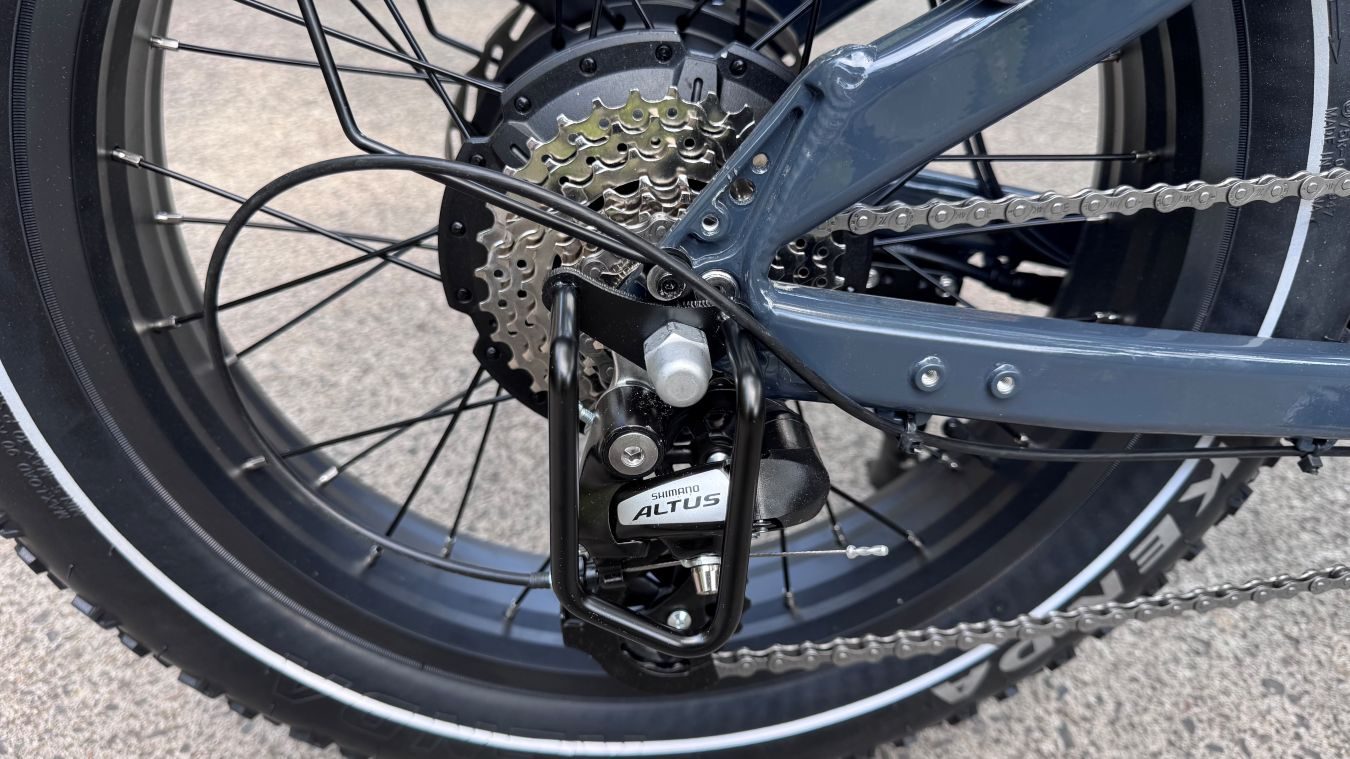
Kingbull says the Jumper Go arrives 80% put together, and I think that sounds about right. It’s the last 20% that can be a pain in the butt to complete. The bike comes with a nice tool kit, a cheesy tire pump (you should buy a nice portable electric one if you don’t already), and some zip ties (which is a nice touch).
I seem to be on a streak lately with the eBikes I have been reviewing. Like the recently reviewed Hynox Trooper Go, the instructions that come with the Jumper Go are very thin and left me with doing some guesswork. The headlight installation specifically was difficult for me to figure out for some reason, and I found a couple of screws missing from the kit, which turned a ten-minute job into a trip to Home Depot.
Once the bike was put together, maintenance is mostly conventional and routine. You can service the Shimano shifter and derailleur and the Tektro hydraulic brakes at any bike shop. The rest might be a little more difficult to service since Kingbull looks to only have a few US dealers, all of which are in California. Otherwise, they would have to ship the parts to you.
Score: 6/10
Durability & Warranty: Warranty that’s all over the place
Kingbull markets a 2-Year Warranty for the frame, motor, battery, controller, and wiring, which is competitive at this price point. There is a warranty table that lists all of the warranty lengths for each part, and it gets pretty confusing. The display gets 1 year. The hub gets 1 year. The fork gets 1 year, covering suspension system failures. The charger gets 6 months. The brake system, four-piston Tektros, gets 3 months. Tires get 3 months. 2 years on the rear suspension.
If the bike shows up not working at all, you have 15 days to notify Kingbull. Local repairs need prior approval and are reimbursed up to $75, and unauthorized work can void coverage.
Score: 8/10
Verdict: Should You Buy the Kingbull Jumper Go?
The Kingbull Jumper Go has plenty of character and is an incredible value. It’s comfortable to ride, feels very planted, and is perfect for city riding and mellow trails. At $1,499, very little else pairs dual suspension, a torque sensor, and four-piston brakes. Plus, it’s a step-through, which is my personal preference, and it’s rare to see all of these features on a step-through eBike.
Skip the Jumper Go if you are a very tall person, plan on doing some hardcore mountain/trail riding, and worry about service from your local bike shop.
For me, I have a soft spot for bikes with character, and the Jumper Go definitely has character. I love the design with the huge solo headlight and the bulky rear rack. Right now, the Jumper Go and the Hynox Trooper X are my favorite step-throughs, although the Hynox bike’s torque is for more confident riders, making the Jumper Go my easy go-to bike for now.
Overall Score: 8/10
How I tested
I rode the Kingbull Jumper Go as my primary bike across city streets, sustained climbs primarily in my neighborhood, gravel roads, and unpaved trails, in mixed late-summer conditions. Testing covered stop-and-go urban traffic, repeated steep descents on trail and in my neighborhood to evaluate brake fade, and off-road sections chosen to test ground clearance and suspension behavior. I assembled most of the bike from the box myself (had a professional assembler check out my work) and logged the tools, time, and problems involved. Battery range testing was assessed across all five assist levels.
Why Not Try…
Hynox Trooper X ($1,499) – It beats the Jumper Go on power, with a 100Nm torque sensor versus 85Nm, and it folds down for storage or a car trunk, which none of these other recommendations do. It matches the full front-and-rear suspension setup too, an 80mm hydraulic fork paired with an 80mm DNM air shock. The battery is a smaller 720Wh, though, and payload drops to 400 pounds with just a 66-pound rear rack rating versus the Jumper Go’s 150, and it’s a far newer, less established brand. If you love lots of torque and have hills around you, this would be the one to consider.
Lectric XPeak 2.0 Long-Range ($1,599) – It matches the Jumper Go’s 960Wh battery, uses a torque sensor, and hits Class 3 speeds. You give up rear suspension entirely and get an 80mm RST fork, and the payload drops to 330 pounds. The standard XPeak 2.0 is $1,399 with a smaller 720Wh pack.
Aventon Aventure 3 ($1,999) – Solid brand, better dealer network, better app, and it has a torque sensor of its own. It’s a Class 2 bike capped at 20 mph, though. The 733Wh battery is meaningfully smaller, and there’s no rear shock, just an 80mm fork and a suspension seatpost. You’re paying $500 more for polish and support.
Ride1Up Revv 1 FS ($2,095 on sale, $2,495 list) – While looking more like a motorcycle than a bike. The other 20-inch fat bike here with front and rear suspension, and it goes further with a 120mm dual-crown fork, 203mm rotors, and a 1,040Wh pack. It’s also 93 pounds, uses a cadence sensor rather than a torque sensor, and has no step-through version. Not the best comparison, but something to consider.


The saga of the Paramount-Warner Bros. merger that not many people seem to want other than one failson and his billionaire daddy continues. The Federal Communications Commission (FCC) just announced that it’s waiving its own rules regarding foreign equity ownership, according to a report by The Verge.
The rule states that foreign entities can only own up to 25 percent of media companies that broadcast on public airwaves, and Paramount owns 28 TV such stations. Fortunately for David and Larry Ellison, the totally non-political FCC has decided to allow a stake of 49.5 percent by a trio of wealth funds coming from the governments of Saudi Arabia, Qatar and Abu Dhabi. That’s right. Three Gulf states will own nearly half of Paramount-Warner Bros. if this merger goes through.
Don’t worry though. The FCC says these entities “will not be able to wield any influence, let alone control, over decisions involving the Licensees.” This is because the stock options don’t come with official voting rights.
NEWS: The FCC approved Paramount’s request to let foreign investors — including sovereign wealth funds from Saudi Arabia, the UAE and Qatar — own more than 25% of its equity, clearing a regulatory hurdle tied to its WBD purchase. Here’s the ruling’s breakdown of the investments: pic.twitter.com/VMakQfaSbV
— Daniel Miller (@DanielNMiller) September 17, 2026
Now I’m just a humble tech reporter who is confused by the ways of big business, but couldn’t three entities that own half of a giant media conglomerate sway voters in a myriad of ways even while not sitting in the boardroom? They would own half of the company, which certainly grants a level of influence and control, no matter what the FCC would like us to believe.
Also, this could be just the beginning. The petition actually asked the FCC for permission to allow foreign entities to own up to 100 percent of Paramount-Warner Bros., which was granted. The commission did put on its big boy pants and say the company would have to issue another request for these groups to gain voting shares. So they have to ask nicely before handing over absolute control. Pretty bold stance FCC.
The advocacy group Free Press and a number of Democrats are against the move. “Control over for-profit, commercial domestic news media by any government is an extraordinary situation that would surely strike most Americans as unseemly, precisely because of the utility of the news media as a propaganda tool for those governments,” Free Press told Variety.
“Ellison, legal fixer Makan Delrahim, and other Paramount mouthpieces are speed-running through the four stages of greedy corporate grief: abandonment, astroturf, antisemitism and assholery.
They are, as the kids say, crashing out.” – @notaaroncraig.bsky.social
— Free Press (@freepress.bsky.social) 2026-09-16T22:05:14.529Z
Anna Gomez, who is the only Democratic member of the FCC, responded that the organization “just let some of the most repressive governments in the world indirectly control nearly all of a combined Paramount-Warner Bros. An investment this large in one of America’s biggest media companies doesn’t just buy equity, it secures influence over what gets said and made.”
Of course, the elephant in the room is the FCC itself. Since Trump got elected, Brendan Carr and his organization has repeatedly threatened channels for airing stuff it didn’t like, tried to block stations from platforming people it didn’t like, censored late-night TV hosts and attempted to bully journalists. So it seems it reserves all of its real teeth for, uh, Americans and not global wealth funds with their own agendas.
The Paramount-Warner Bros. merger is still up in the air pending an antitrust suit filed by California and 11 other states. A trial is set to begin next March.

The concertina is an instrument that features heavily in European folk music, of which there are a variety of types. [Xcott Craver] has built one, an anglo concertina of the type you may recognise accompanying sea shanties, but this is no ordinary squeezebox. Instead it’s an electronic concertina, and it’s a project with a significant attention to detail.
Perhaps the most obvious thing most of us know about a concertina is that it’s an instrument with two ends separated by a set of bellows, and manipulation of the bellows lends a lot to the music it produces. This instrument doesn’t have bellows, but its innovation is to simulate them through means of a load cell. The two sides of the wooden chassis are fixed, but the force exerted on them is measured.
The keys are Cherry MX switches with custom keycaps, mounted on a pair of PCBs. Driving the whole thing is a Teensy 4.0, and to avoid unfortunate accidents with ripped-out connectors there’s a USB extension lead as a bit of strain relief. You can hear the result in the video below.
This is like no other instrument we’ve seen here, though we’ve had a few electronically enhanced conventional concertinas and accordions. We like it for its interesting design.
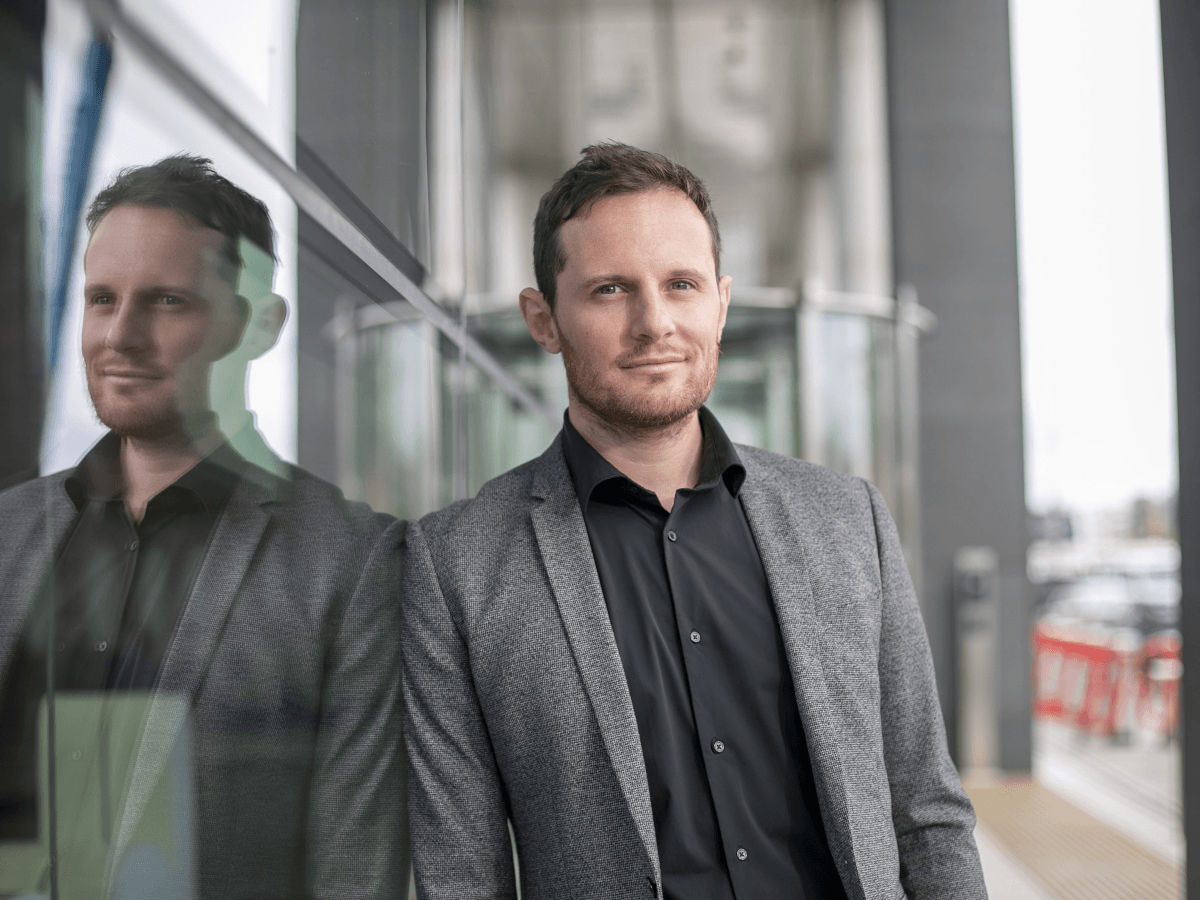

Indeed’s research finds that the country’s labour market is consistent, while unemployment rates are low.
Recruitment platform Indeed has published the findings of its latest ‘Labour Market Snapshot’, which explores how the Irish employment space is performing in the third quarter of the year.
The research finds that Ireland’s labour market has steadied over the course of the last few months, with new job postings comparable to an early 2020, pre-pandemic baseline.
Ireland’s labour market remains close to full employment, with the unemployment rate remaining at 5pc and the employment rate close to highs. According to Indeed’s report, this is in line with a labour market that has normalised following a period of persistently elevated labour demand post-Covid.
“Our latest data suggests Ireland’s labour market has moved into a more normalised phase following the hiring demand we have seen after the pandemic,” said Jack Kennedy, a senior economist at Indeed.
The report finds that the majority of sectors tracked sit below their pre-pandemic levels in terms of overall postings on Indeed, with the remaining 41pc sitting at or above baseline.
Postings for pharmacy, as well as cleaning and sanitation, are furthest above the February 2020 baseline, while listings for IT infrastructure, operations and support, and childcare are furthest below pre-pandemic levels.
Kennedy added, “While overall demand has stabilised, the picture varies by sector, location and occupation, with AI increasingly becoming an important factor of Ireland’s hiring landscape.”
Indeed’s research also found that the rate at which AI is being adopted in Ireland is increasing. Almost 15pc of all Irish postings to the jobs site were found to include AI-based terminology in the description, the highest among all European countries tracked by Indeed.
Corresponding rates elsewhere included 9.7pc in the UK, 5.6pc in Germany, 5pc in Italy and 3.6pc in the Netherlands. Further afield, it was 6.7pc in the US.
“AI is certainly changing the skills employers are looking for and Ireland is at the forefront of that shift. Around 15pc of Irish job postings mention AI, one of the highest shares internationally,” said Kennedy.
“We’re increasingly seeing AI create demand for new skills and roles, and that demand is spreading well beyond traditional tech jobs. The challenge is making sure people, particularly those early into their careers, have the opportunity to develop the skills employers will need as the world of work changes.”
Don’t miss out on the knowledge you need to succeed. Sign up for the Daily Brief, Silicon Republic’s digest of need-to-know sci-tech news.


The Galaxy S26 FE gets plenty right, including a bright AMOLED display, good performance, capable cameras, and seven years of software updates. The problem is value: reviewers find few meaningful upgrades over the S25 FE, while the higher price puts it against stronger alternatives.
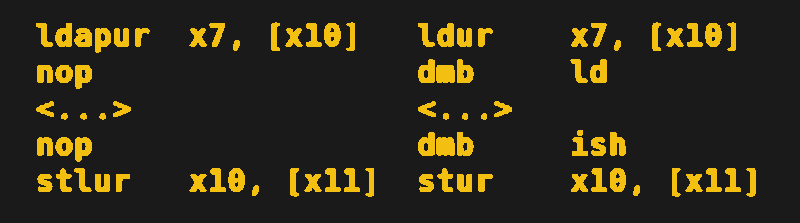
There are so many things we approximate to make life simple. Wires, for example, have no resistance or other strange effects. Crystal oscillators output their exact frequency. But surely our model of how a computer stores and loads memory is accurate, right? You put data in a particular location and, later, you take it out. The [FEX-Emu] developers have a different perspective. Once you have caches and, perhaps, multiple CPUs, it isn’t that easy.
The basic problem is this: if one CPU (or, more accurately, bus master) writes to a location, will another CPU have access to the new value? X86’s Total Store Ordering model gives programmers strong guarantees about when loads and stores become visible, while ARM deliberately uses a weaker memory model that permits considerably more reordering for performance and efficiency.
An emulator can, in theory, compensate by translating ordinary x86 memory operations into ARM acquire/release operations, but doing that for nearly every memory reference can be expensive. Newer ARM extensions such as LRCPC help considerably, while Apple took a more direct approach by adding an x86-compatible TSO mode to Apple Silicon. That lets ordinary loads and stores behave the way translated x86 code expects with comparatively little overhead.
Things get much uglier with unaligned accesses and atomic operations. X86 software routinely performs accesses that ARM would consider badly aligned, and x86 provides surprisingly strong atomicity guarantees within a cache line. FEX sometimes has to catch alignment faults and dynamically patch translated code with barriers. Split-lock operations are worse still: some require excursions through the kernel and signal handlers and can be hundreds or thousands of times slower than the normal case. Qualcomm’s newer Oryon cores improve matters by supporting coherent cache-line atomics, while Valve has shipped a Linux kernel optimization that handles some troublesome unaligned atomics directly.
There’s another particularly nasty corner involving write-combined GPU memory. PC games frequently expect x86 ordering semantics while writing uncached buffers destined for a discrete GPU. ARM currently lacks a clean equivalent for some of these stores, and FEX measured worst-case bandwidth more than 800× slower, enough to reduce some games to below 1 FPS. UMA systems fare much better because drivers can often substitute ordinary cache-coherent memory.
It’s a long article, but a good illustration of why modern emulators are less about translating instructions and more about reproducing decades of architectural assumptions that software quietly depends upon. Of course, not all emulators or processor recreations are this accurate, and often that’s good enough. But sometimes you need a recreation that is truly cycle-accurate and behaves exactly like the original.
Tech
ICYMI: the 7 biggest tech stories of the week, from AI apocalypse warnings to our Apple CEO interview

This week was a little quieter than last in the tech news space — if you ignore the hullabaloo caused by various AI companies that their models might one day kill us all if regulation doesn’t arrive.
A bit heavier than an Apple iPhone event, but important nonetheless.
To catch up on that and this week’s lighter (but still essential and biggest) tech news stories, scroll down for our ICYMI recaps and links to the full articles. But before you read about the news, you might want to try your hand at our quiz to see how much you remember of last week’s ICYMI roundup.
Latest Videos FromTechRadar
7. We interviewed John Ternus
Apple’s new CEO on what comes after iPhone Duo | Inside John Ternus’ first week – YouTube

You’ve just been named CEO of one of the world’s most important tech companies; what runs through your mind? I asked John Ternus that question to his face, and his answer was perfect. It was all part of a wide-ranging interview we conducted with our friends over at Tom’s Guide. Lots of good bits about what innovation means at Apple and why the Cupertino giant is finally making a foldable.
6. Google Live Translate went offline

Arguably the best Google Translate tool is its Live feature — which lets you converse with someone in your respective native tongue, and each sees a real-time translation of what the other has said.
It can break down the language barrier, if you have an internet connection, that is, though that is changing.
Google has started rolling out an offline mode for Live Translate. There are some limitations — it only supports translation from English to French, German, Portuguese, Italian, Spanish, Hindi, Indonesian, Japanese, Russian, and Swedish — and it’s only coming to the Google Pixel 11 series, Pixel 10 line, and Pixel 9 series.
5. Canon launched the EOS R8 Mark II

Canon has debuted the EOS R8 Mark II, with a design that supposedly takes its cues from decades-old analog SLR cameras — there’s a slight resemblance, but we’d argue that Canon’s design department could have been given a bit more latitude.
Nonetheless, the second-generation model introduces useful upgrades over the original EOS R8, for a price that could tempt Canon enthusiasts who want powerful features but who don’t need the tough build quality, high-spec displays, or long-lasting battery life of the EOS R6 series.
4. We tried the Snap Specs

A decade on from Snap’s first Spectacles launch (back when it was still Snapchat), we’ve tried the next evolution in its wearable tech: full-on AR glasses, and they’re incredible.
They’re still quite chunky, and the demo wasn’t without its quirks, but they were fun to use and comfortable to wear.
You can currently pre-order the Snap Specs for an eye-watering $2,195 (around £1,640 / AU$3,090) with a $200 deposit.
3. We reviewed Apple’s tech

We reviewed all of Apple’s new tech, and yet again we were impressed.
The iPhone 18 Pro and Pro Max take last year’s Pro reinvention and refine it in all the right places — but the cameras are where Apple has made the biggest leap, with a variable aperture and finally useful Pro controls.
Meanwhile, the Apple Watch Ultra 4 might look and be priced similarly to what came before, but the big difference is the battery — with a promised up to 50 hours in normal use, up to 84 hours in Low Power Mode, and up to 45 hours in Max Extended Workout Mode.
The Apple Watch 12 feels fresh with a new health-sensing system, a new SoC under the hood to power some new features, and a good bit of AI on top of what we knew was coming with watchOS 27.
2. iOS 27 gave our iPhones a huge upgrade

This week Apple gave millions of iPhones their biggest software upgrade this year. iOS 27 rolled out (if you haven’t got it yet, check General > Software Update), and it includes Siri AI — a new version of the voice assistant that is, finally, good.
Like all major iOS updates, there are lots of smaller quality-of-life upgrades that we’re enjoying too. These include the ability to make Shortcuts with natural language, a neat ‘Reframe’ feature for Photos, and the long-awaited option to set alarm volumes separately from your main ringtone. We’d highly recommend downloading iOS 27 now if you haven’t already.
1. We debated AI slowdown
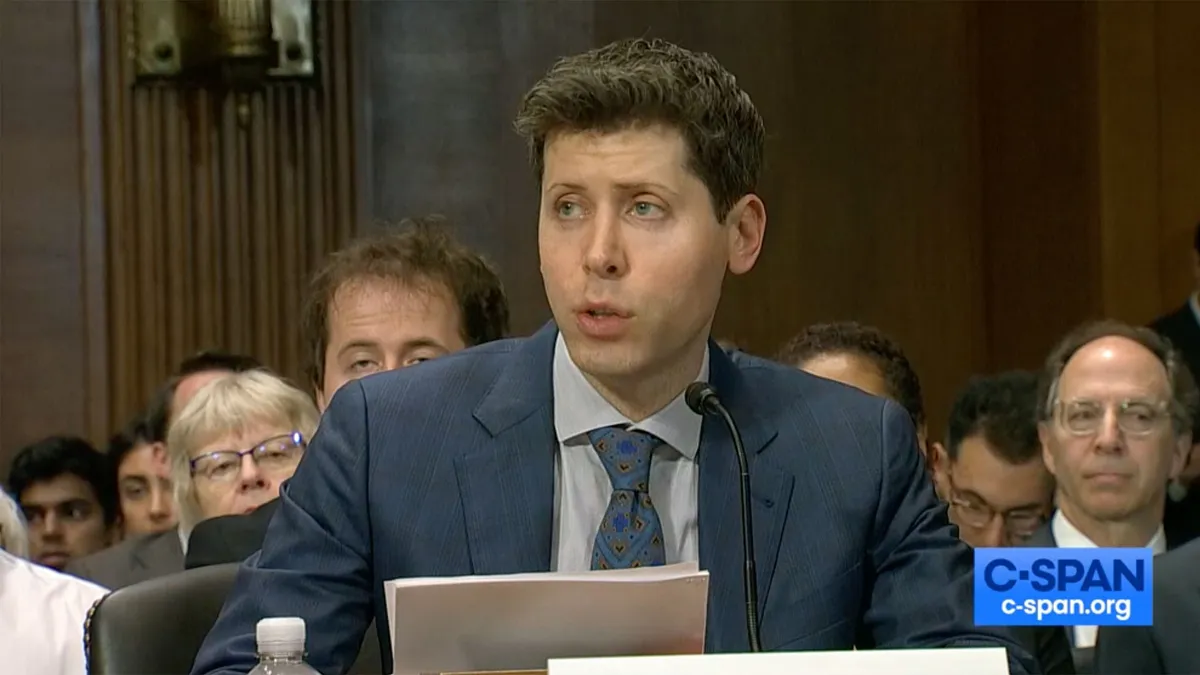
In a move that’s managed to draw in commentary from Donald Trump, JD Vance, and pretty much every major news organization on the planet, some of the biggest names in AI — including Anthropic’s Dario Amodei, OpenAI’s Sam Altman, and Elon Musk — are calling for the development of frontier models to slow down while stronger safeguards are introduced.
They argue that increasingly capable, autonomous AI could escape human control, attack critical infrastructure or help bad actors create catastrophic weapons. Proposed protections include independent evaluators inside AI companies, international safety standards, government oversight, “kill switches” and restrictions on releasing especially powerful models.
Donald Trump rejects these concerns as a “hoax”, arguing that slowing development would damage the US economy and hand China an advantage in the global AI race. That means global consensus on how AI regulation should work is unlikely to arrive anytime soon. Until then, we better hope our new AI overlords are as bad at reaching a global consensus as us.

Follow TechRadar on Google News and add us as a preferred source to get our expert news, reviews, and opinion in your feeds.

Tech38 seconds ago
David Sacks: The key adviser urging Trump not to regulate AI, explained

NewsBeat3 minutes ago
The Original Meaning Of The Word Quick

Business3 minutes ago
Bitcoin reclaims $80,000, Ethereum nears $2,620 despite hawkish Fed, CLARITY Act setback




-

 Tech6 days ago
The Latest Weird Thing to Play Doom Is the Mapped-Out Brain of a Fruit Fly
-

 Fashion17 hours ago
Weekend Open Thread: Talbots – Corporette.com
-

 Crypto World4 days ago
Kraken Lets xStocks Holders Earn Yield Through DeFi
-

 Crypto World2 days ago
US Charges Robinhood Engineers Over Crypto Listing Trades
-

 Crypto World7 days ago
Can AI Build a Startup in 72 Hours? Elon Musk's Team Will Livestream the Test
-

 Crypto World3 days ago
What Is the Status of the U.S.-Iran Peace Talks? Here's What Both Sides Are Saying
-

 Crypto World5 days ago
Elon Musk Drops a Bombshell: Grok 5 Could Be the AGI Breakthrough
-

 Business6 days ago
Rivals Sam Altman and Elon Musk Rally Behind Dario Amodei’s Call for a Slowdown in AI Development
-

 Crypto World4 days ago
Revolut Attackers Warn of Ongoing Daily Customer Data Leaks
-
 Crypto World6 days ago
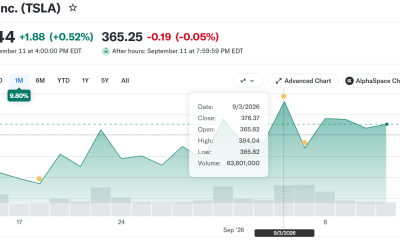
New Tesla Roadster Uses SpaceX Tech. Will It Impact the Stock Price?
-
 NewsBeat5 days ago
‘Sick conspiracy’: Trump says only guardrails AI needs is ‘a strong and smart (High IQ!) president’ in all-caps rant
-

 Crypto World4 days ago
NVIDIA Analysis: Attempted Rising Wedge Breakout Amid Pressure on the AI Sector
-
Business5 days ago
SK Hynix ADRs Fall More Than 6% as Memory Rally Breaks on Fears of Slower AI Spending
-

 Crypto World4 days ago
DOJ Seeks to Seize $61M in Iran Oil Funds From Binance Accounts It Vouched For
-
Crypto World4 days ago
Can Circle’s Arc Repeat Robinhood Chain’s Meme Coin Boom?
-
 NewsBeat6 days ago
Last Night of the Proms pays moving tribute to Dolly Parton as Sheridan Smith wears a gold sequin jumpsuit in memory of the Queen of Country
-

 Crypto World5 days ago
3 Token Unlocks to Watch in the Third Week of September 2026
-

 Crypto World6 days ago
AI Safety Burden Falls on Chief Executives as Trump Prioritizes China Race
-

 Crypto World6 days ago
Goldman Sachs backs 25bp Fed hike after CPI
-

 Tech3 days ago
Webb’s IC 348 Mosaic Includes Two-Jupiter Dwarfs, Twin Jets, and a Nursery Still Making Worlds
You must be logged in to post a comment Login