Tech
Innovative WorMa Robot Pumps Water From Head to Tail to Cross Land, Steps, and Water

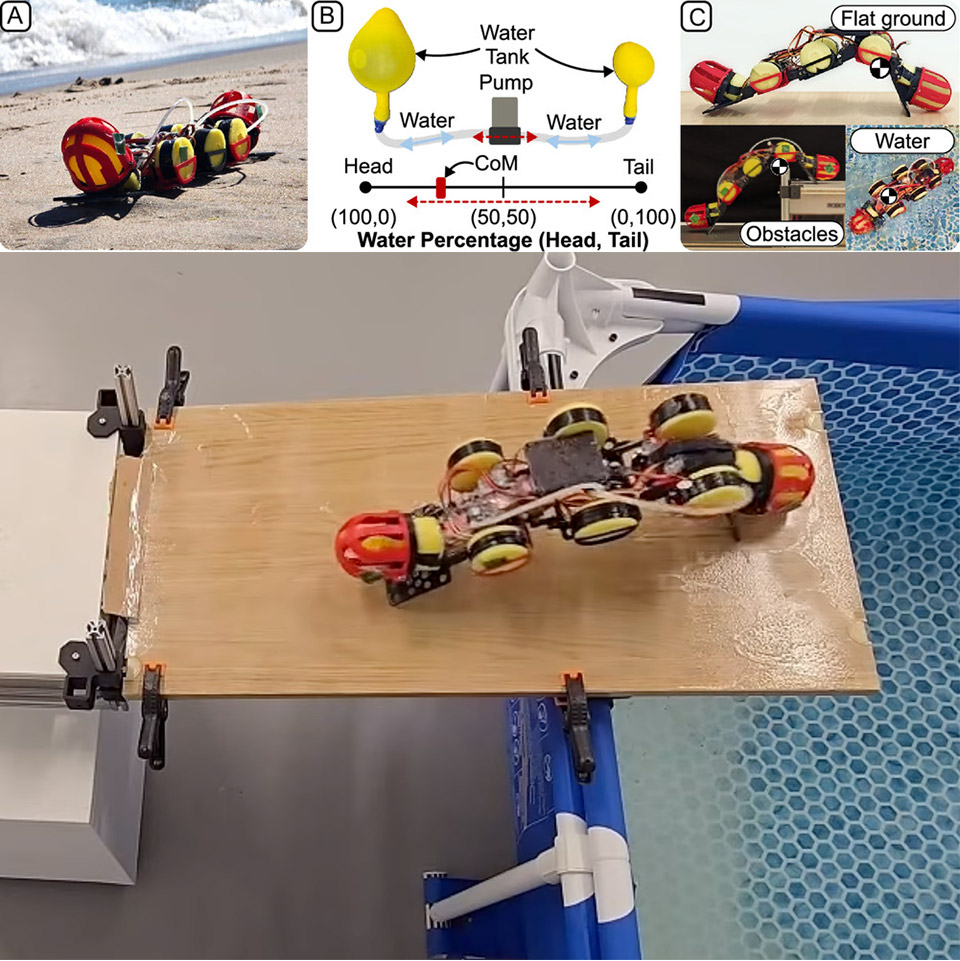
NYU Tandon assistant professor Nana Obayashi and Ph.D. student Daniil Filimonov built WorMa so one undulating machine could inspect a coastline, a flooded street, or a wetland without extra limbs or a second gait. WorMa blends “worm” and “mass,” and that mash-up is the entire plan. Five 3D-printed segments form a body about 50 centimeters long and a little over one kilogram. Four servos at the joints send a traveling wave down the length. Silicone pads under the belly give directional grip on dirt or pavement. Foam disks along the sides keep the robot from sinking once it enters water. An ESP32 runs the servos and the pump.


Nearly 350 grams of water, or 28% of the robot’s total weight, are suspended in two latex balloon reservoirs located inside the robot’s head and tail. They are linked by a piece of silicone tubing, allowing the water to be transferred back and forth. In the robot’s center, a 12-volt peristaltic pump stirs the water, slowly transporting it from one end to another. It takes little under 110 seconds for the pump to completely drain one reservoir and refill another. By shifting the water around, the robot can change where its weight is, on the ground or in the water, while still maintaining its wavelike movement. The water in the head reservoir adds weight to the robot’s front end, strengthening its grip on the ground. The water at the tail end lessens the weight at the front, causing the robot to move differently on the surface.
Sale


ELEGOO UNO R3 Smart Robot Car Kit V4 with Camera, Compatible with Arduino
- BUILD, CODE & DRIVE YOUR OWN ROBOT CAR: Turn coding, electronics and engineering into a working programmable robot car you can assemble, program and…
- EXPLORE FPV, LINE TRACKING & OBSTACLE AVOIDANCE: Control the robot with the ELEGOO app or IR remote, view live FPV video through the onboard camera…
- BEGINNER-FRIENDLY BUILD WITH GUIDED WIRING: Keyed XH2.54 connectors help reduce wiring mistakes, while the illustrated tutorial and example programs…
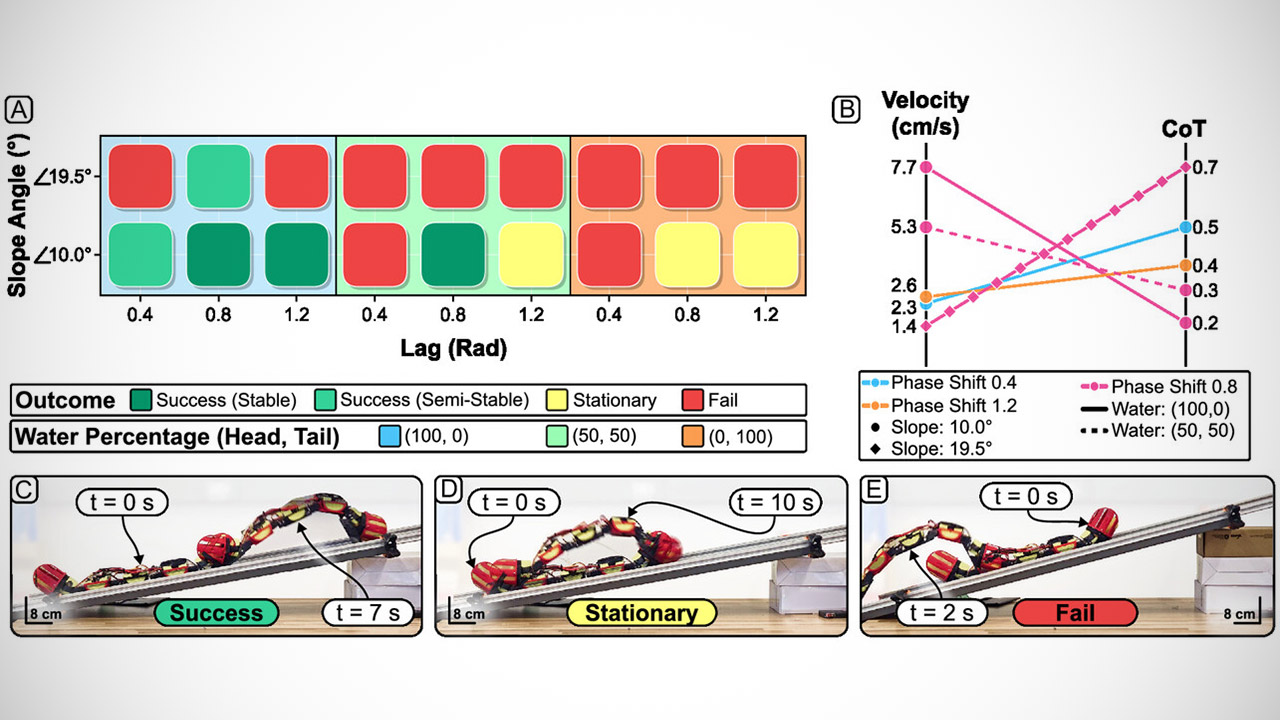
When you take the robot up a 19.5-degree incline, the only setup that can gain enough grip at the front to haul the entire thing up is the head-heavy one. That front weight also reduced transportation costs by more than a third as compared to other weight placements, but other layouts simply couldn’t obtain enough bite at the nose to climb over the slope’s lip. Jumping a 15cm step is simple and only requires a quick pumping sequence. When WorMa approaches a step with water at the front, the front end grabs it and pulls it up; the water then flows to the back, allowing the lightened front to rise up and grab the edge. Water returns to the head so the robot can haul the rest of its body over. A fixed mass distribution failed even a four-centimeter step.
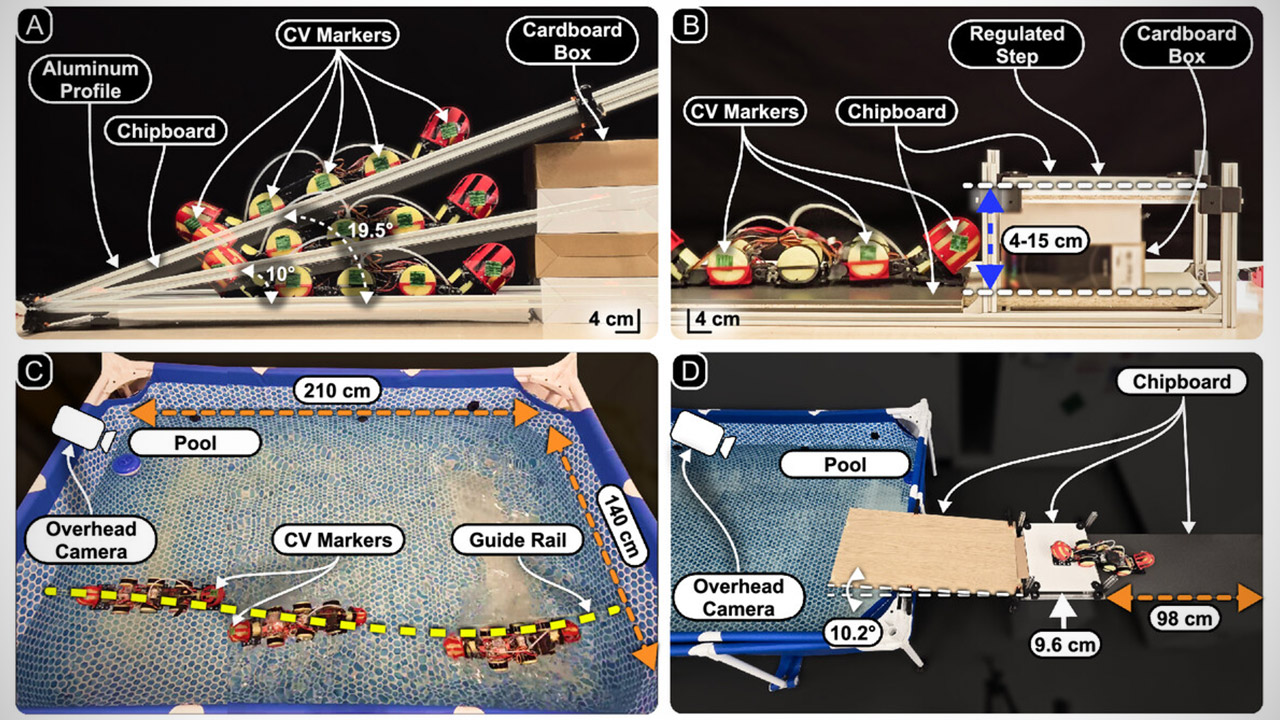
Things flip on their head in the pool. WorMa swims 26% faster and 52% more efficiently with water in its tail. It is moving at 9.6 cms per second at one point, yet returning to dry land requires the exact opposite movement. The water must shift back to the front, allowing the leading pads to grab and lift the robot out of the water. If you do this with a hefty tail or an even weight split, it will remain stuck at the waterline.

Tying all of this together, the robot can move on flat ground, navigate a step, climb a slope, and swim in water, all while moving 300 grams of water at each stage. An operator can still determine when to move the water. If this type of robot is ever going to roam a real shoreline on its own, upgrading to quicker pumps and an inbuilt system that allows it to rebalance in real time seems like a logical next step.
[Source]
You must be logged in to post a comment Login