Tech
Innovative Y-Zipper With Three Sides Just Solved a Decades-Old Puzzle in Robotics

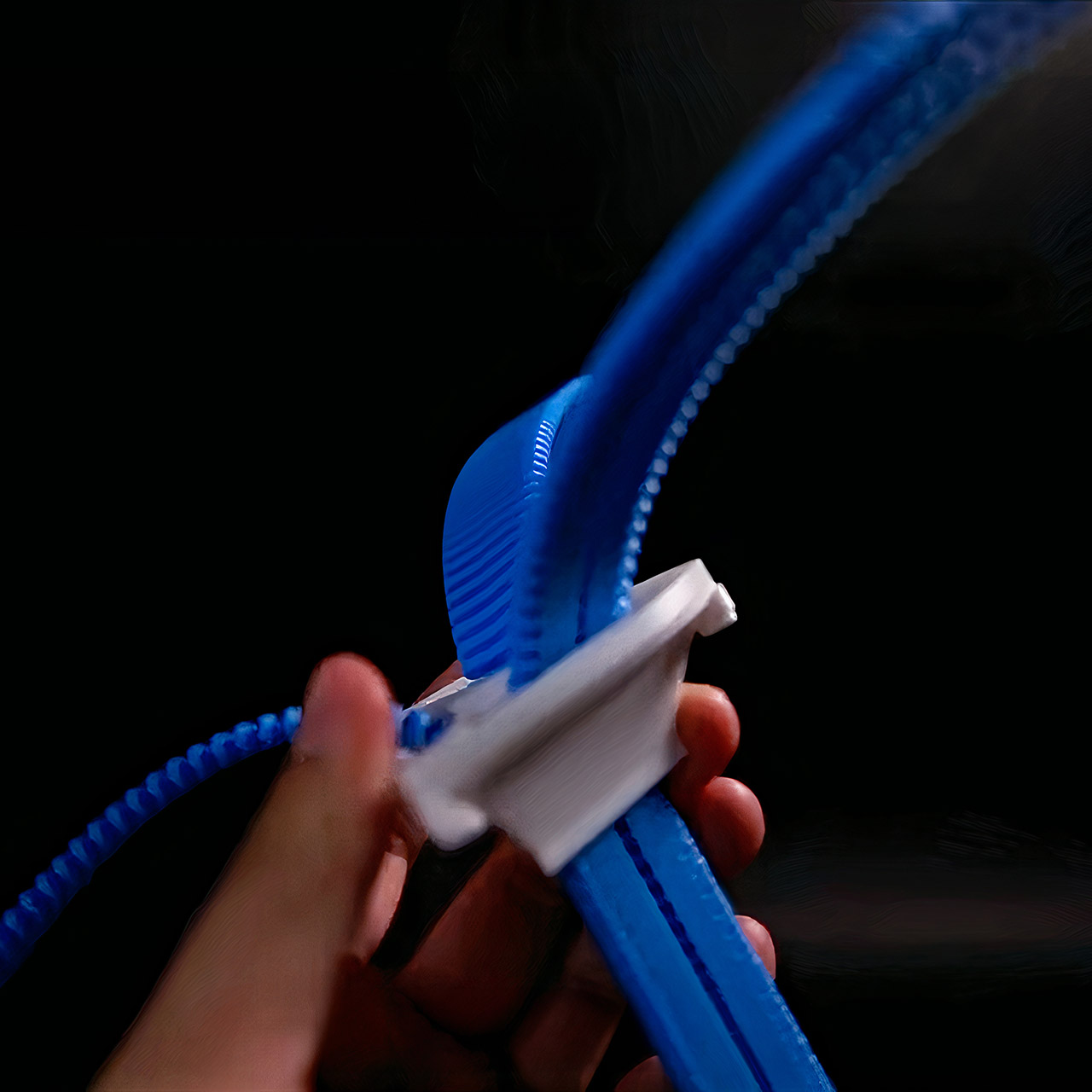
Researchers at MIT reached back to 1985 and pulled an old design out of storage. What they built with 3D printers now turns three floppy plastic strips into a solid beam in seconds. The device carries a simple name: the Y-zipper. Its triangular profile locks parts together so tightly that soft tentacles become load-bearing supports. Engineers can print the whole assembly in ordinary plastic and watch it switch states on command.

Bill Freeman came up with his initial fastener design while working as an electrical engineer at Polaroid. His goal was to develop a fastening mechanism that would allow chairs, tents, or bags to effortlessly transition between loose and taut forms without the need for additional hardware. Back then, however, companies lacked the ability to produce the three matching strips or the slider that looped around all three corners. Freeman submitted the patent but kept the drawings in a drawer. It wasn’t until 40 years later that the CSAIL team decided it was time to put it into production.


Bambu Lab A1 3D Printer, Support Multi-Color 3D Printing, High Speed & Precision, Full-Auto Calibration…
- High-Speed Precision: Experience unparalleled speed and precision with the Bambu Lab A1 3D Printer. With an impressive acceleration of 10,000 mm/s…
- Multi-Color Printing with AMS lite: Unlock your creativity with vibrant and multi-colored 3D prints. The Bambu Lab A1 3D printers make multi-color…
- Full-Auto Calibration: Say goodbye to manual calibration hassles. The A1 3D printer takes care of all the calibration processes automatically…
At its core, the system is made up of three separate bands, each with a row of interlocking teeth along two of its long edges. And on top of those bands is a single slider that pulls them all firmly into a triangle shape as it moves. Once the slider is tight, the shape will not bend or twist because triangles distribute stresses evenly. Slide the slider back, and the bands simply pull apart, leaving behind three wonderfully flexible (and independent) ribbons that can bend in almost any way you desire. No tools are required, and the whole operation reverses in no time.
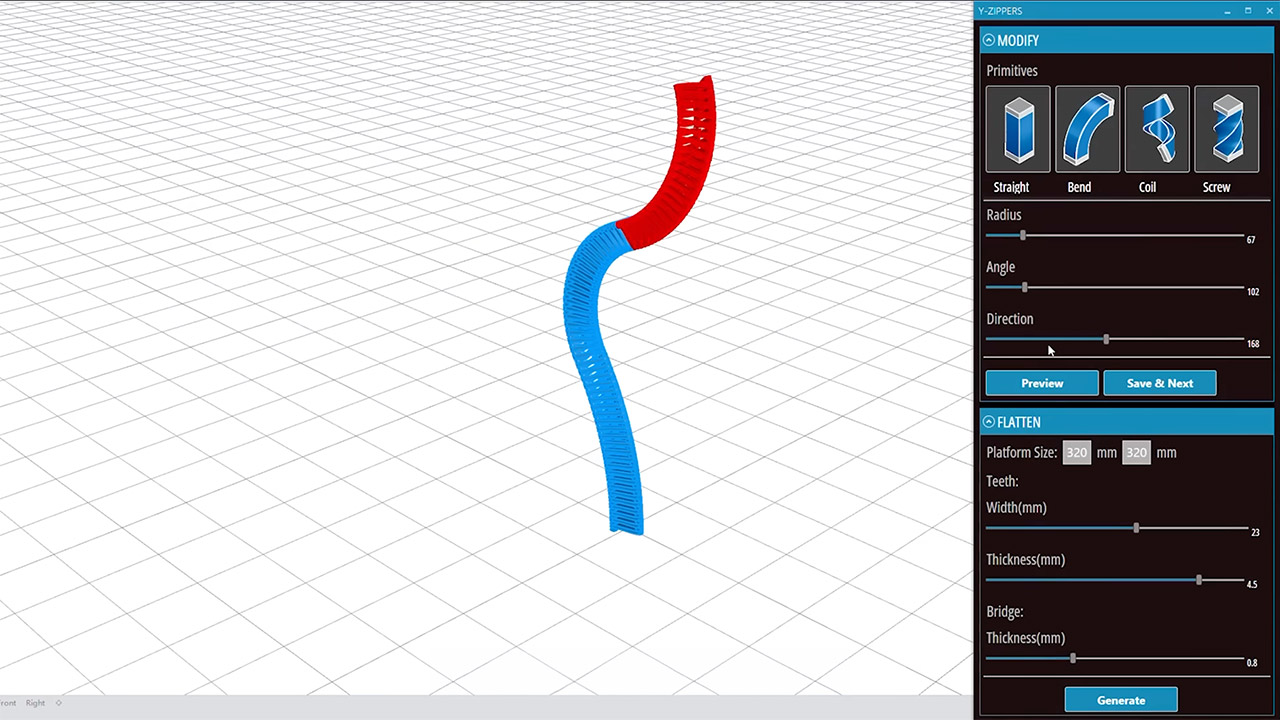
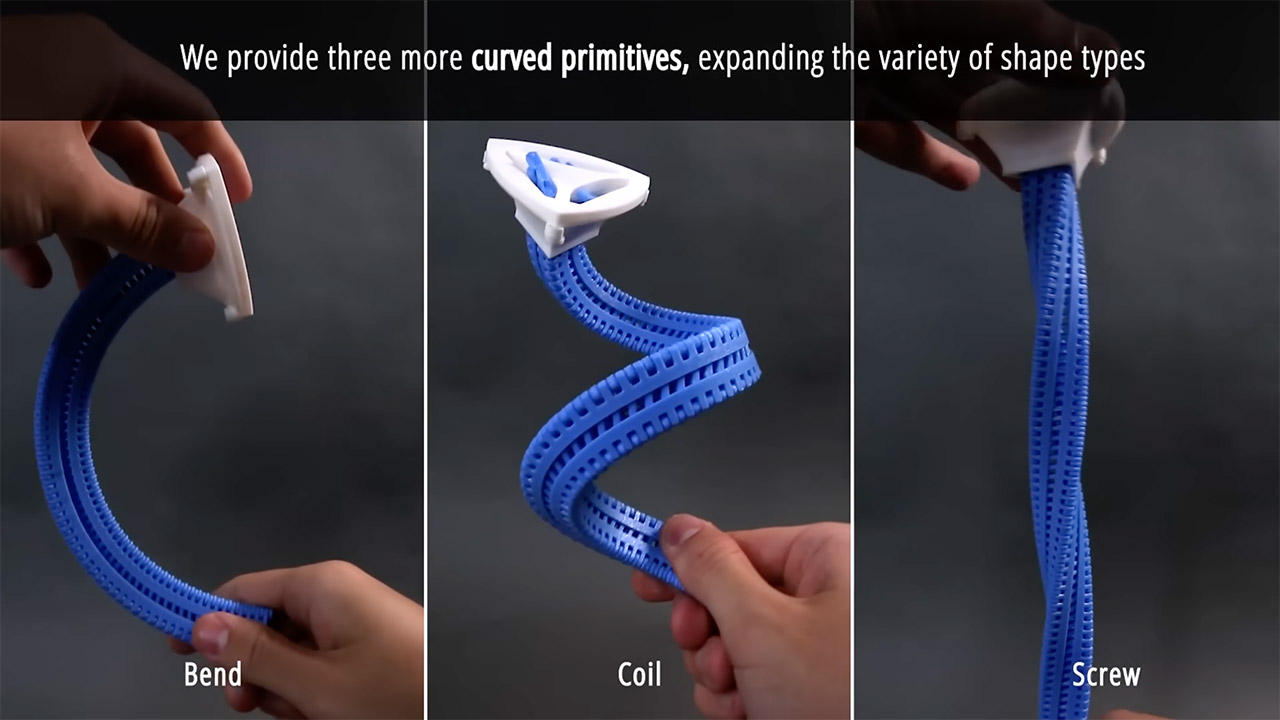
To make it all work, you simply need some software. You give the computer the size of each band, the direction it should curve, and the overall shape you desire (straight line, mild curve, tight spiral, or smooth twist). The software then generates a printable file, and the printer prints the bands made of either stiff (polylactic acid for heavy loads) or flexible (thermoplastic polyurethane for a bit of give). The layers glue together so well that those teeth fit together properly on the first try, with no handfitting required.

Tests have demonstrated how sturdy this assembly is. One system they tested went through 18,000 full open-and-close cycles without displaying even the least indication of wear on a single tooth, and the material flexes just enough to spread out any pressure and prevent snapping. They’ve also conducted load simulations and discovered that the zipped up triangle shape can support far more weight than a flat strip ever could.
Robots are already showing how advantageous this fastening system can be. They are employing a four-legged prototype with a zipper inside each limb. The motors then simply slide the fasteners up and down as needed. When the zippers are tightened, the legs become higher and stiffer, allowing the robot to stroll over rough terrain with ease. When the zippers loosen, the identical limbs drop down low and become much softer, allowing the robot to glide through tiny gaps, and the entire process happens in less than a blink.
Tents are pitched with the same simple hardware that has always been used. Three printed arms emerge and hook onto the cloth panels, and a short burst of power closes the zippers and the entire thing leaps into place in less than a minute and twenty seconds. No more wrestling poles for hours on end; setup is now a breeze. The tent still packs up neatly because when the zippers are closed, the printed arms fold flat.
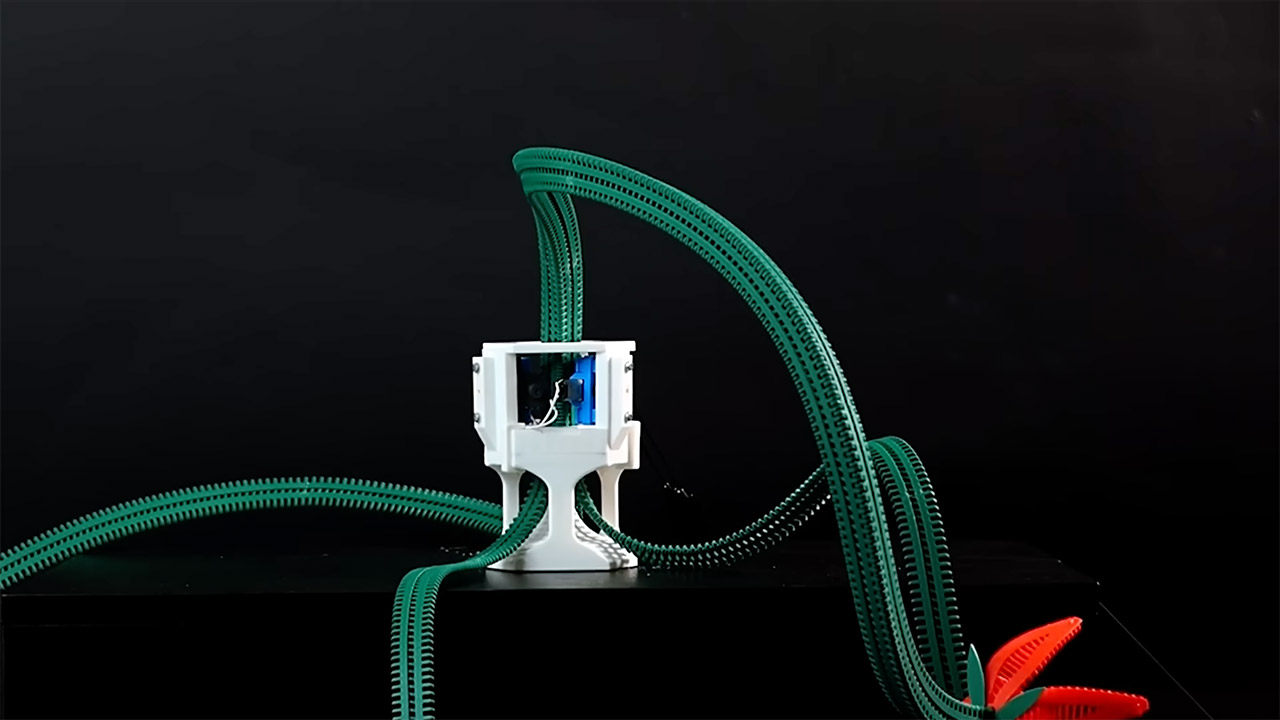
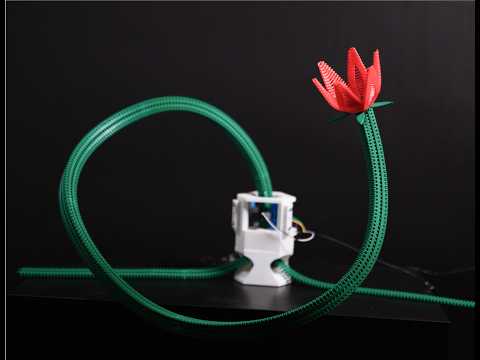
Medical casts have also become much more comfortable, with one version that wraps over your wrist like a luxury wristband and can be left open during the day to allow your patient to walk about freely. However, as night falls, the slider clicks shut and the support begins to firm up to protect the healing bones. The patient gets to choose when to make the change by flipping a small switch. Artists have even come up with inventive uses for this technology, such as a mechanical flower sitting on a table.
[Source]
You must be logged in to post a comment Login