[James]’ Mechanical Organ of Dutch origin has been around longer than he has, but thanks to being rebuilt over the years and lovingly cared for, it delivers its unique performances just as well as it did back in the day. Even better, we’re treated to a good look at how it works.
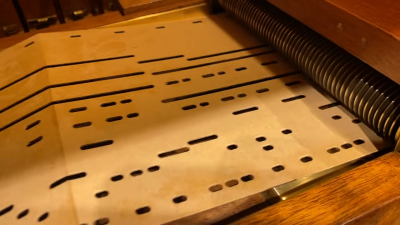
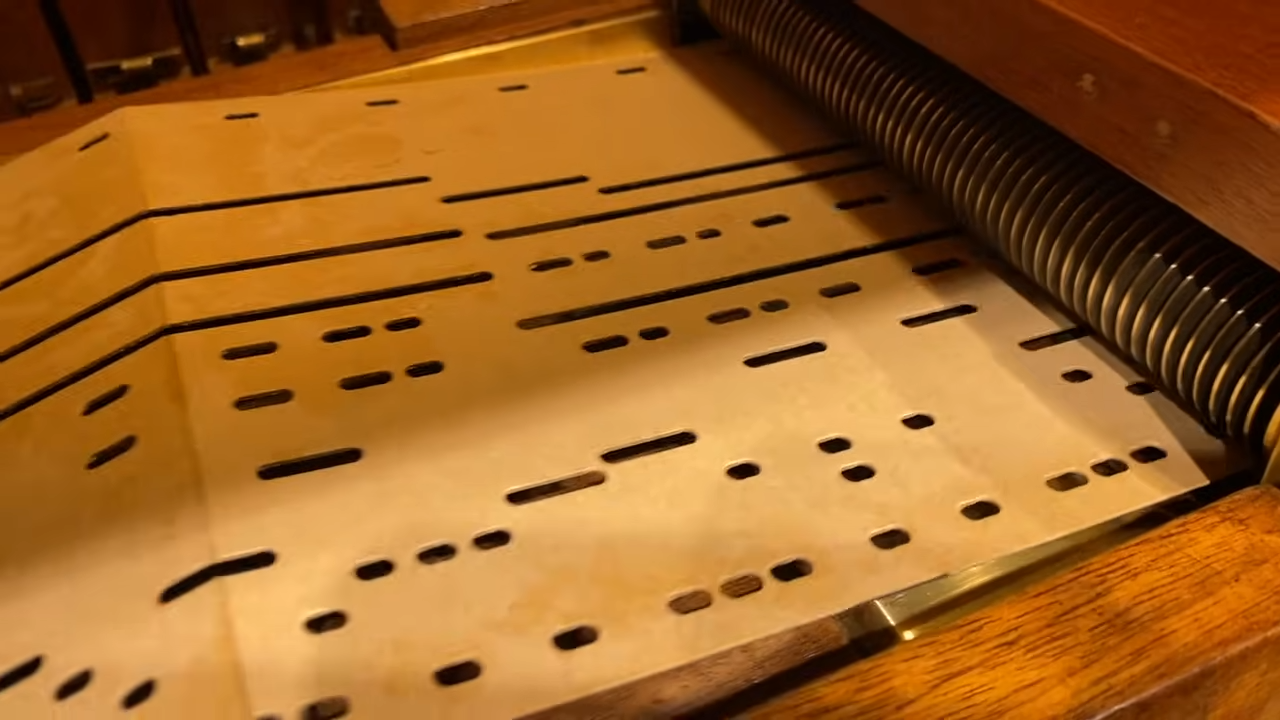
The organ produces music by playing notes on embedded instruments, which are themselves operated by air pressure, with note arrangements read off what amounts to a very long punch card. [James] gives a great tour of this fantastic machine, so check it out in the video embedded below along with a couple of its performances.
The machine is mobile and entirely self-contained. It would be wheeled out to a venue, where it would play music as long as one could keep cranking the main wheel and the perforated cardboard book containing the chosen musical arrangement hasn’t reached its end. As perforations in the card scroll by inside the machine, each hole triggers valves that operate pipes, percussion hits, and even operate animatronic figures.
Folded stacks of perforated cardboard make up the musical arrangement.
The air pressure needed to do all this comes from a reservoir fed by two bellows operated by continuous rotation of a large wheel, a job that requires a fair bit of effort. Turning that crank would likely have been the responsibility of the lowest-ranking person within reach. Today, the preferred method is a belt drive and electric motor.
The perforated cardboard arrangements mean that the machine is just as programmable today as it ever was, and happily plays classics as easily as Lady Gaga, Daft Punk, and Queen. [James] has an enormous library of music, so take a moment to listen to it play “Night Fever” by the Bee Gees and Daft Punk’s “Get Lucky”.
Advertisement
One interesting tidbit [James] shares is that there is a bit of artistry and skill involved in arranging music for the machine. Some instruments play immediately when triggered (such as the pipes) while others trigger after a delay (like percussion), so one needs to take all this into account when punching the cardboard. There’s a bit more info on [James]’ website about his machine and its history.
In addition to being a fascinating piece of musical and mechanical history, it is another example of just how effective of a technology punched card was. Many of us might think of early computing or even music when we think of punched cards, but the original use was in running looms and knitting machines.
Through a series of pivots, The Plattering Co. navigated challenges & scaled successfully
For years, catering in Singapore had largely remained functional, focused on trays of food and stainless steel warmers rather than presentation or experience.
Then came The Plattering Co., which bills itself as the city-state’s first artisanal bespoke caterer. Founded by long-time friends Yasmin Sim, Pearl Chan, and Jessica Lim, the trio crafts grazing tables, floral arrangements, and immersive food displays that prioritise presentation as much as taste.
Ironically, catering wasn’t even their original focus—a pivot from their other business led the trio here, and the gamble seems to have paid off: today, they serve over 100,000 people a year.
We spoke to Yasmin and Jessica of The Plattering Co. about how the business came about and how it’s reshaped Singapore’s catering scene.
Advertisement
An unexpected start
The journey to becoming a premium catering brand serving over a hundred thousand people a year began with something far simpler: a home juicer.
In 2014, at the height of the juice cleanse trend, Yasmin and Pearl started experimenting with cold-pressed juices. They first shared them with family and friends, but orders soon started to pick up. Jessica later joined the duo to help manage operations.
Image Credit: The Plattering Co.
As demand grew, they formally established their cold-pressed juice business as Juix Up, quickly outgrowing their home setup and moving into an office space. Within a year, they had outgrown that too, expanding operations from a small unit in Marine Parade to a factory in Mandai.
Beyond direct-to-consumer sales, the trio even secured B2B deals, including a retail stocking at an airport chain.
However, the speed of growth outpaced their financial planning. Overheads ballooned while utilities climbed, and big recurring orders didn’t come in as consistently as they had hoped.
Advertisement
“We didn’t do our numbers properly,” Yasmin admitted, noting they were mentally prepared to cut losses if things didn’t improve.
But a turning point soon came in 2018, when a regular customer asked if they could provide food—specifically, banana walnut muffins—to go along with their breakfast juices. Pearl, who loved experimenting in the kitchen despite having no formal F&B training, said yes.
Image Credit: The Plattering Co.
She carefully plated the muffins and drinks in a crate, paired them with a chalkboard display and sent them along with the juices. “Unexpectedly, the client immediately fell in love with the muffins and the whole presentation,” Yasmin recalled.
The same client soon began requesting more elaborate offerings—salmon platters, cheese boards, and styled grazing spreads. At a time when such curated platters were still relatively novel in Singapore’s catering scene, according to the trio, Yasmin agreed to give it a try.
(Left): One of The Plattering Co.’s charcuterie boards; (Right): The Plattering Co.’s oven-baked salmon platter with miso sauce./ Image Credit: The Plattering Co.
I’m a person who never gives up on a request. If someone asks for something I will never say no, I will just say, ‘okay, let me let me let me try to do it for you.’
Yasmin Sim, co-founder of The Plattering Co.
Advertisement
There was no business plan, no pitch deck, no formal strategy. The founders simply responded to demand, refining their offerings as they went. In Mar 2018, that approach led to the launch of The Plattering Co.
They grew fast, but everything came to a halt almost overnight
For The Plattering Co., Pearl’s eye for aesthetics quickly became the brand’s signature. Wooden boards replaced stainless steel trays, fresh florals softened tablescapes, and colours were intentionally curated—food wasn’t just served, it was styled.
Some of the brand’s now-iconic concepts began in personal moments, like the doughnut wall, inspired by Pearl’s wedding. During the event, she displayed doughnuts on pegs, turning them into both a decorative feature and an interactive treat for guests.
The team has since adapted similar concepts for clients, including the Pretzel Pipe Wall, nasi lemak bar, and taco bar, bringing creativity and interactivity to every event.
Advertisement
(Left): Pearl tending a juice cart for an event; (Right): The Plattering Co.’s Pretzel Pipe Wall, inspired by Pearl’s doughnut wall at her wedding./ Image credit: The Plattering Co.
Meanwhile, Yasmin and Jessica focused on operations and finances. By 2019, the growing brand had moved into a 1,000 sq ft shophouse at Cavan Road, carving out a niche in artisanal catering. They also began gradually building a team to support day-to-day operations.
But everything came to a halt just a year later, when COVID-19 wiped out corporate buffet catering overnight, with orders cancelled en masse. The revenue stream that sustained them vanished almost instantly.
Yasmin even floated the idea of selling toilet paper—anything, just to generate cash flow. The stress was immense, and another glance into the possibility of closing down hit the trio.
Nonetheless, the team decided to push forward for the sake of their employees’ rice bowls. Ideas were thrown around, and the team came together to brainstorm for ideas.
(Left): The Plattering Co’s premium breakfast boxes included Pearl’s house-baked banana walnut bread loaf; (Right): The Plattering Co’s bento box./ Image Credit: The Plattering Co
They pivoted quickly. Some of the new offerings they introduced included premium decorated breakfast boxes and bento boxes. Each came with heartfelt greeting cards to clients as a show of support in the midst of the pandemic.
When dining restrictions capped gatherings at four to five people, they also redesigned menus into smaller six-to-eight-person platters, leaning into B2C aggressively.
Advertisement
In 2021, the trio also launched creatively styled gift hampers under a new brand, Sage and Gifts. Rather than conventional festive baskets, these were curated food experiences packaged with the same bespoke aesthetic as The Plattering Co. “For a period, we became a bespoke gifting business,” Yasmin recalled.
Sage and Gifts’ hampers./ Image Credit: The Plattering Co
The pivots helped the business not just survive but thrive. By 2022, annual revenue had nearly quadrupled compared with pre-COVID levels. That same year, the founders sold off Juix Up and moved into a 2,000 sq ft central kitchen in Bedok to meet growing demand for their catering and gifting businesses.
Since then, The Plattering Co. has served more than 100,000 people annually across catering setups and drop-off orders. The pandemic, which nearly shut them down for a second time, ultimately forced the reinvention that accelerated their growth.
In 2024, the founders made another strategic decision: they divested the hamper brand as well, consolidating resources to focus squarely on their core catering identity.
Scaling the business vertically & building complementary arms
Image Credit: The Plattering Co.
The same year, the founders recognised that they had reached a pivotal stage in their growth journey.
Aware that scaling the business would require deeper operational expertise and structured leadership, they made the strategic decision to bring on board a Managing Director with 13 years of extensive experience in food systems and enterprise-scale business transformation to drive the next phase of expansion.
Advertisement
Today, The Plattering Co. operates across roughly 11,000 sq ft, including halal and non-halal central kitchens, floral operations, and warehouse facilities. The team numbers 35 to 36 people, with around 30% in the kitchen, and their customer base is split roughly three-fifths B2B and two-fifths B2C.
Acknowledging that The Plattering Co. occupies a premium segment, often catering to big occasions, the founders have expanded the business into multiple arms to reach a wider demographic.
Caterwow is a halal catering brand that offers bento boxes and buffets in a similar aesthetic to The Plattering Co. /Image Credit: Caterwow
They launched sister brand Caterwowto serve the halal and the mass market in 2024, alongside Singapore Food Services to provide white-label and OEM food services.
Another arm, Wildflower ArtCo., manages floral styling for weddings and events, while Kaizen Supply Chain oversees the operations of the company’s brands and offers supply chain logistics services to industry peers.
However, scaling a visually driven brand also presents its own challenges. Maintaining consistency in execution, especially replicating Pearl’s intricate handmade setups, grows increasingly difficult with large volumes of orders.
Advertisement
As such, the team has implemented thorough training sessions for staff to make sure that set-ups are in line with The Plattering Co.’s standards, while automating internal operations helps to streamline order flows and delivery planning.
They are also exploring AI-assisted processes to ensure structure and standardisation even when founders are not physically present.
All these free up time for their team to work on set-ups instead.
Image Credit: The Plattering Co.
Every setup involves meticulous planning—from the type of flowers selected to the size of platters and colour of tablecloths.
Catering, Jessica pointed out, is often under-appreciated in its operational intensity. It requires packing cutlery, holders, tables, plants; coordinating delivery; full setup; tear-down; washing—all within tight timelines. The premium pricing reflects not just the food, but the labour choreography behind it.
Advertisement
“The greatest sense of achievement after each setup comes when guests stop to take photos before they eat,” Jessica said.
Operationally, manpower remains one of the biggest challenges. Hiring the right fit and aligning kitchen, logistics, and office teams around shared values is always a work in progress.
Yasmin emphasised that even washers and drivers must understand their importance in delivering the final experience to clients. In this regard, the trio ensures that they maintain a strong work ethic amongst their team members while maintaining a strong sense of meaning in the workplace.
What’s next for The Plattering Co.
The Plattering Co aesthetic./Image Credit: The Plattering Co
Despite suffering losses in 2020, The Plattering Co. had built enough reserves to weather the storm.
Looking back, Yasmin attributes their survival not to perfection but to adaptability and to clarity of the brand’s direction.
Advertisement
The co-founder stressed the importance of humility regardless of success. She believes in continuous growth, emphasising that “If you’re not growing, you’re actually dying.”
That philosophy drove them to expand kitchens even when sales were stable. It also drove difficult decisions—like selling off both the juice and hamper businesses—rather than being sentimental about ventures that no longer aligned.
Above all, she advocates staying authentic. “Trust your beliefs. Trust your values. When you allow external influence to override your conviction, you lose clarity and direction.”
The Plattering Co nearly closed twice. Instead, it evolved from a home juicer in 2014 to a premium artisanal catering brand serving over 100,000 people annually.
Advertisement
Looking ahead, the trio plans to continue being a “trendsetter” and being at the forefront of their craft. They would also be open to expanding to overseas markets if the opportunity arises.
Berkshire Hathaway reduced its Apple stake by 4% in the fourth quarter of 2025, but Apple remains the conglomerate’s largest equity holding by a wide margin.
Berkshire Hathaway trims its Apple investment
A February 17 regulatory filing with the U.S. Securities and Exchange Commission shows Berkshire trimmed its Apple position during the quarter ended December 31, 2025. Apple was still valued at roughly $62 billion within Berkshire’s portfolio at year’s end. The filing also shows Berkshire sold 77% of its Amazon stake in the same quarter, a far more substantial reduction than the modest adjustment to Apple. The latest stock cut by Berkshire isn’t a harbinger of doom but rather a routine portfolio adjustment. Continue Reading on AppleInsider | Discuss on our Forums
When FOMO ( fear of missing out) first entered popular language, it was about teenagers scrolling through friends’ social feeds and worrying they weren’t having as much fun. But today, that word has taken on a different meaning in the era of artificial intelligence.
The fear now isn’t about beach photos or party snapshots. It’s about being left behind in a technological revolution that promises dramatic changes in work, creativity, and competition. It’s about the feeling that your own intelligence is not enough anymore, and you can’t compete with the artificial one.
You might call it AI FOMO, the worry, for individuals and companies alike, that others are moving ahead with AI while you stand still. And this feeling is real enough that researchers are trying to understand it scientifically.
They’ve developed tools to measure how much people fear falling behind in AI skills or access. A recent study showing how this fear plays out found that more than one in nine adults report elevated levels of anxiety about not keeping up with AI, especially younger people and women. Importantly, those with better AI literacy reported less fear, suggesting that understanding the technology reduces anxiety.
Advertisement
This isn’t abstract psychological jargon. It is a psychological undercurrent that feels entirely modern: tied to the ubiquity of AI in press, policy, and venture capital. The sense that everyone must adopt intelligent technology or risk irrelevance. But like most anxieties, its influence extends far beyond individual nervousness.
I think we reached the point where AI FOMO is shaping business decisions, corporate strategy, and even public policy.
When fear and strategy collide
The ripples from AI FOMO extend far beyond individual stress. They reach into boardrooms and strategic plans where companies, whether big or small, are deciding how hard to pursue AI.
I will give credit. That fear can feel logical. After all, AI promises efficiency, insight, and new capabilities, even for thought less capable.
But when fear becomes the main reason for action, it warps strategy. Rather than asking “What problem are we solving with AI?”, decision-makers ask “Can we afford not to use AI?” This change from thoughtful problem-solving to panic-driven adoption creates an illusion of purpose where there may be none.
And the results can be underwhelming. Recent business surveys show that many companies are still struggling to see real returns from their AI investments. Some executives report that less than half of their AI projects deliver measurable impact, or struggle to even quantify it. That’s a sign that widespread adoption does not automatically translate into value, especially when the impetus to buy in comes from anxiety rather than strategy.
The human side
AI FOMO isn’t just a corporate phenomenon. It affects workers too. Research focused on attitudes in the workplace shows that employees who believe AI will reduce their autonomy or make their skills obsolete tend to experience fear of missing out on AI adoption alongside heightened job anxiety. This connects with broader concerns about technology and wellbeing at work: many people worry that AI might replace tasks or change job expectations without clarity.
Advertisement
That fear can influence behaviour, too. Anecdotal reports, such as research showing a significant share of workers using AI tools secretly to keep up with perceived expectations, reflect this sense of needing to keep pace, even in silence. It’s not just about skills; it’s about identity, worth, and belonging in a professional world that is moving so fast.
The result is a kind of feedback loop. Investment without strategy, momentum without direction. In the pursuit of not falling behind, many risk falling into the very inefficiency they hoped to avoid.
Beyond anxiety; toward intentional AI
To navigate this moment with equanimity requires resisting the gravitational pull of fear. This is not a rejection of AI’s transformative potential. A large majority of business leaders still view AI as an opportunity, even as concerns about risk and readiness grow.
But recognising AI FOMO as a real force, not just a catchphrase, allows companies, governments, and individuals to ask better questions:
Advertisement
What are we truly trying to accomplish with this technology?
How does it serve core strategic goals?
Who benefits from this adoption, and who might it harm?
The answer, ultimately, is not to replace fear with oblivious optimism, but to replace reflexive action with intentional adoption.
In the end, AI FOMO tells us something deeper about ourselves than any quarterly earnings report or headline about the next breakthrough. It reveals how closely we have tied our hopes, and our anxieties, to a technology that is, for many of us, still only partly understood.
We see AI everywhere: pitched as productivity’s savior one moment, feared as a job-eating force the next. Across workplaces and dinner-table conversations alike, even on dating apps, the underlying emotion often isn’t excitement or dread alone, but something that feels curiously familiar and deeply human: the fear of falling behind, of being outpaced by peers, competitors, or even young strangers we’ve never met.
This feeling is more than a distraction or a fancy word. It is linked to genuine stress, anxiety, and reduced well-being for some, and it shapes behaviour in subtle but far-reaching ways. People tweak their resumes, accept rushed technology rollouts, or hunch over training modules long into the night; not because they are certain of the value, but because they fear the alternative.
This moment, then, feels like more than a fad. It is a crossroads between reaction and reflection. We can choose to let fear drive our choices, or we can treat that fear as a signal to slow down, learn, and make room for real understanding.
Advertisement
If I’ve learned anything in the years since AI leapt into the popular imagination, it’s this: technology changes fastest when we pair curiosity with clarity, and adapts most successfully when we meet it with empathy rather than anxiety.
So as the next wave of models arrives, as companies wordsmith their AI strategies, and as employees juggle training modules alongside tools and dashboards, here’s one gentle reminder worth holding onto: technology doesn’t define us. Our reactions to it do. We are the ones who imagine, experiment, hesitate, question, and decide.
If you’re an avid Makita user, you’re probably already aware that the tools manufacturer offers loads of must-have accessories and attachments to fit your every need. Tool accessories can include all kinds of things, from power tool attachments or components to mini organizers, and even some smaller hand tools. They can be as simple as something you need to make using your tools easier, or in some cases, something that totally overhauls what your device usually does.
What you might not know, though, is that you can make a substantial number of them yourself with just some filament and access to a 3D printer. Whether you have a set-up ready at home to dive into your own printer projects, or regularly hang around your local makerspace, you might be surprised by just how much you can pad out your collection with a few simple projects. And, with online 3D printing communities like Thingiverse or Printables, you don’t have to worry about designing your own gear from scratch — unless you really want to, that is.
Some accessories users have come up with and shared the blueprints to show some real ingenuity. They do this by offering nifty storage solutions that help you make the most of your space, practical hacks for keeping easy-to-lose tool attachments nearby while you’re working, and sometimes, by even overhauling what you use your Makita product for. In some cases, you’ll need a few extra pieces to finish off your project, like screws, nuts, or bolts, but for the most part, you can let your 3D printer do the magic.
Advertisement
Makita MakPac trolley attachment
Moving around a Makita MakPac is no small feat once it’s full of heavy tools or equipment. Why not make your life a little easier by putting it on wheels? StainlessMike’s neat 3D printer project makes it possible for you to do just that by giving you the components to build your own wagon. You can use the Printables project to manufacture four sections, which make up each corner of the wagon. Then, once they’re printed out, you can fit them together and finish them off with a few extra components.
Advertisement
Besides the 3D printed base, you’ll also need a few other things. That includes a few screws and nuts for fixing your printed creation together securely, alongside some wheels, washer plates, and any fixings you need for your wheels of choice. Once you’ve grabbed those, you’ll want a 3D MakPac Clip to help keep your trolley secure as you wheel it around.
Another thing you’ll want to keep in mind when building your trolley is what kind of filament to print with. According to the project page on Printables, you’re going to need to keep in mind where you primarily plan on using your trolley when you choose what kind of material to use. If you want to use your trolley mostly indoors, like in your garage or home studio, then you’d probably be best off using a polyactide (PLA) filament, as it can be easier to use for this project. However, if you need a sturdy build for regular use on rough or uneven surfaces, then a PETG material is recommended instead.
Advertisement
Makita magnetic bit holder
It’s easy to lose track of just the drill bit you need, especially when it’s right when you need it. And, it’s frustrating when your drill bit is just out of reach during a tricky or fiddly project. A 3D printed drill bit holder could be just the fix you need to keep everything you need close by.
Printables user Jonathan_29983 shared a simple but effective solution for keeping ahold of all your Makita drill bits at once with the power of a couple of magnets. The holder fits onto the left side of the base of your cordless Makita drill to make room for five different drill bits all at once. Perhaps the smartest part of the project is that the drill bits are then magnetically held in place, meaning you don’t have to worry about dropping them as you do your DIY.
After you’ve finished 3D printing the holder itself, you’ll need a few other components. But, thankfully, they’re all easy enough to get a hold of, and should be easy to add. You’ll need to grab a couple of M4 14-millimeter screws to help secure your holder, and a couple of 6-by-3-millimeter magnets. All you have to do to finish it off is assemble it correctly, and you have a cheap and easy drill bit holder to attach directly to your drill.
Advertisement
Pegboard holder for Makita 18V battery
There are all kinds of easy DIY storage options for organizing your tools, and one versatile, cheap, and fairly stylish option is a pegboard. You can hang it on your wall to display your tools, so you always know what you have and where you last put it. One challenge you might face using the pegboard organization method is figuring out exactly how to attach your tools to it — especially in the case of any larger, heavier, or more cumbersome items, like a battery charger.
Advertisement
BioGuyGone3D’s homebrew Makita accessory offers a pegboard mount designed to support Makita 18 volt battery chargers. Both the DC18RC and DC18RA models are compatible with the project. It’s a straightforward build that only needs a couple of extra parts — a couple of M3 10-millimeter or 12-millimeter screws — to bolt it together. It also comes in two different designs, one rounded and one rectangular, for you to choose from. If you’re an especially deft builder, you can also remix the design to make small tweaks so it fits exactly what you’re looking for.
The size and weight of battery chargers make it more difficult to know how to store them, since they won’t easily hang without the right accessories or tools. However, that’s also the same reason why it’s so useful to have options to hang it securely out of the way. After all, it can easily take up a lot of space in a drawer or on a workbench when you aren’t even using it. As a result, accessories like this one are especially handy.
Advertisement
Gridfinity base plate for Makita Makpac
If you’ve been on your 3D printing journey for long, then you might have already heard of Gridfinity. In case you haven’t, Gridfinity is a 3D printed storage system with a slight twist: it’s completely open source and modular, meaning you can design your own storage system to fit your exact needs. Sites like Thingiverse and Printables have tons of users making their own Gridfinity-compatible builds, and perhaps unsurprisingly, many of them are designed to help keep your toolboxes organized to a T.
Makita is no exception to the trend, with a decent number of Gridfinity projects designed for use with Makita products kicking around sites like Printables. Guto’s Makpac base plate is a particularly clever accessory, as it allows you to transform your case into an organizer that you can fit any other Gridfinity projects directly into. The baseplate effectively works as a liner that helps to keep other 3D printed items in place, which you can then use to organize anything you want.
The base plate isn’t the only Makita accessory designed for use with the Gridfinity system, either. Other users have also designed components for the modular organizer that could be slotted into the base plate, if it fits into your Makpac. A few examples include a knife and razor block, battery storage grids, and trays for larger tools like drills and grinders. And, of course, you could fit any other non-Makita themed Gridfinity builds to store your other tools and components in your Makpac alongside your Makita tools.
Advertisement
Makita 18V battery lantern
This quirky 3D printer project transforms your Makita 18V battery into a portable lamp ideal for working off-the-grid or using as a useful gadget for your next camping trip. Using Widerporst’s Thingiverse project, you can print out an attachment to assemble with a handful of other parts, like a lamp socket, battery plate, and a suitable bulb, to make your own Makita light fitting. Just make sure you pick up the right kind of bulb, so the Makita battery’s voltage limitation does its magic. Transforming your Makita battery into a portable lantern isn’t the easiest 3D printing project, but it could make for a fun experiment for intermediate creators. Plus, it makes for a fun way to brighten up your garage, or to keep a light going while you’re doing a major home renovation project.
Advertisement
Not so sure about turning your Makita battery into a lamp specifically? You can grab other, similar 3D printed accessories to turn it into something else. In fact, the core idea for the battery lantern actually came from other 3D printed battery mounts. Usually, batteries like these are designed to provide a power supply to cordless tools like drills. Battery mounts make it possible to give your batteries a new lease of life by making them a compatible power source for all kinds of other fun DIY projects, instead of being exclusive to power tools — much like this battery lantern. So, if you 3D print the right mount, you can repurpose your Makita battery for all kinds of different projects.
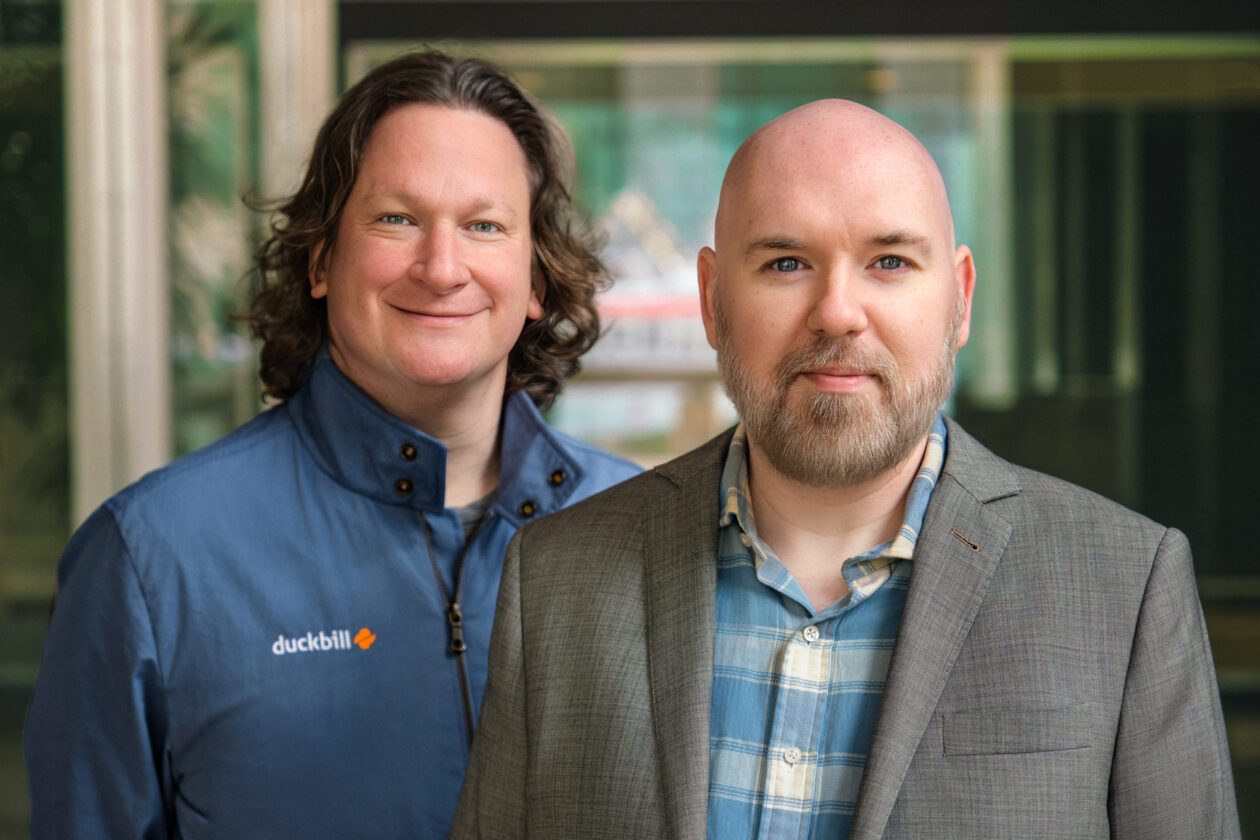
Duckbill, the consulting firm that Quinn co-founded with Mike Julian, is making what amounts to a high-stakes pivot: transforming into a software company with a new platform called Skyway that aims to make cloud spending more predictable for large companies.
The company, based in San Francisco, announced $7.75 million in funding from Heavybit, Uncork Capital, and Encoded Ventures to accelerate product development and grow its 10-person team.
Their contrarian pitch: the cloud cost management sector, commonly known in the industry as FinOps, is fixated on making bills smaller, when the real problem is that nobody can predict what the costs will be next month.
Advertisement
“Finance doesn’t lose sleep over whether your cloud bill is $1 million or $100 million,” Quinn said in a news release. “They lose sleep when it jumps 30% and nobody can explain why.”
Julian, Duckbill’s CEO, said in an interview that the company came to realize that existing cloud cost management tools are built by startups, for startups, for the most part. Many of Duckbill’s large enterprise clients had tried those tools, rejected them, and ended up building their own.
“I have a hypothesis that the people building in FinOps today come from startups and not from enterprise, so they don’t even know many of the problems exist,” Julian said.
Duckbill’s clients, which include companies such as Airtable, Ticketmaster, and New Relic, spend $70 million a year on cloud infrastructure, on average. (Tagline for their consulting business: “Cloud cost management for the nine-figure club.”) That’s well above the $1 million annual minimum that AWS requires for a private pricing contract. At that scale, Julian said, you start to see patterns and problems that don’t exist for smaller companies.
Advertisement
All told, the company says it has negotiated tens of billions of dollars in cloud contracts, giving it unique insights. (“Our schlep is our moat,” reads one of its internal whiteboards.)
Skyway’s first module, called Contract Manager, converts private pricing deals into structured data, validating that customers are getting discounts they negotiated, and projecting spending.
The bigger vision extends well beyond AWS. Duckbill started with a specialization in Amazon’s cloud platform but has expanded into Google Cloud and Microsoft Azure. Julian said the ultimate goal is to structure spending data across every piece of software and infrastructure a company uses: SaaS tools like Datadog and Snowflake, AI providers like Anthropic and OpenAI, and even legacy data centers for customers still using their own mainframes.
Julian acknowledged that the pivot into software will eventually cannibalize a portion of Duckbill’s consulting business, but said he doesn’t expect it to disappear entirely. Big companies need services, he said, pointing to companies like ServiceNow and CrowdStrike that built major software businesses while maintaining significant services revenue.
Advertisement
The market for cloud cost management technology is crowded, and difficult. The latest casualty: Spokane-area startup Vega Cloud, which entered receivership after raising millions in financing.
But Julian contends that it’s not really one market. Companies like Point5 focus on workload optimization. Others like Finout specialize in cost allocation. He sees Duckbill as doing something different: building financial planning and forecasting software for infrastructure.
Duckbill isn’t using artificial intelligence in its own product yet. This will not surprise anyone familiar with Quinn’s aversion to industry hype. However, by bringing structure to messy spending data, Skyway is positioned to create what Julian calls “AI candy” — clean, labeled information that customers can put to use in their own systems.
At the same time, AI is making it harder to predict cloud costs.
Advertisement
“Cloud spend is already one of the largest and least predictable line items in the enterprise,” said Joseph Ruscio, general partner at Heavybit, one of the firms backing Duckbill’s pivot, in the press release announcing the funding. “AI infrastructure is about to compound that volatility.”
Duckbill currently has 10 employees and plans to grow to 15 by the end of the current quarter and 20 by year-end, with most of the new hires in engineering. The company also hired Jim Moses, who previously worked at AWS as a private pricing negotiator, as director of hyperscaler strategy, essentially putting someone from the other side of the table on their team.
It’s not the first time Quinn and Julian have tried to build a product. In 2022, Duckbill attempted to make the leap from services to software. It was an “abject failure,” as Quinn acknowledged in a video discussion with Julian, released by the company as part of the announcement.
“Turns out that if you just assume you know what customers want and don’t talk to them, you’re gonna go somewhere, but not where you wanted to go,” he said.
Advertisement
In addition to its website, Quinn noted, Duckbill can be reached at 833-AWS-BILL.
With an Apple experience on March 4, the rumor mill is in overdrive. These are the best candidates — and the also-rans — for what Apple will launch and then have an “experience” to demo on March 4.
The more likely Apple launches for early March
It seems the March 4 Apple Experience won’t be an actual launch of new products in Apple’s catalog, but instead capping off multiple announcements during the week. That gives Apple a lot of opportunity to promote multiple items. With the breadth of rumored devices on the docket, including many anticipated for launch in early 2026. it certainly needs that opportunity. But, as ever, some have more chance of making an appearance than others. Continue Reading on AppleInsider | Discuss on our Forums
The European Parliament has taken a rare and telling step: it has disabled built-in artificial intelligence features on work devices used by lawmakers and staff, citing unresolved concerns about data security, privacy, and the opaque nature of cloud-based AI processing.
The decision, communicated to Members of the European Parliament (MEPs) in an internal memo this week, reflects a deepening unease at the heart of European institutions about how AI systems handle sensitive data.
The Parliament’s IT department concluded that it could not guarantee the safety of certain AI-driven functions, notably writing assistants, text summarization tools, virtual assistants, and web page summary features, because they rely on cloud-based processing that sends data off the device.
In a workplace where draft legislation, confidential correspondence, and internal deliberations circulate daily, even momentary exposure of sensitive information is viewed as unacceptable.
Advertisement
For now, the measures apply only to these native, built-in AI features on Parliament-issued tablets and smartphones, not to everyday apps like email or calendars. The institution has declined to specify which operating systems or device manufacturers are affected, citing the “sensitive nature” of cybersecurity matters.
The internal memo did more than announce a software rollback. It advised lawmakers to review AI settings on their personal phones and tablets, warning them against exposing work emails, documents, or internal information to AI tools that “scan or analyze content,” and urging caution with third-party AI applications that seek broad access to data.
This guidance implicitly acknowledges a larger truth: for many elected officials and staff, the boundary between official and personal devices is porous. The Parliament’s approach underscores that risks are not confined to issued hardware but extend into the consumer technology choices of its own members.
The move is the latest in a series of precautionary steps by EU institutions. In 2023 the Parliament banned the use of TikTok on staff devices over similar data concerns, and ongoing debates have questioned the use of foreign-developed productivity software. Some lawmakers have even suggested moving away from Microsoft products in favor of European alternatives, part of a broader push for digital sovereignty.
That push is not abstract. The EU’s Artificial Intelligence Act, the world’s first comprehensive regulatory framework on AI, has been in force since 2024 and imposes obligations on AI providers and users alike, categorizing systems by risk and demanding transparency, traceability, and human oversight.
Advertisement
Yet the Parliament’s latest action reveals a paradox: while Europe seeks to regulate and shape AI at scale, it is simultaneously wary of the very tools it aims to master. Stopping short of a full ban on AI use, the institution is essentially saying that in certain contexts, the technology is too unpredictable to trust, especially when critical information could leak outside secure boundaries.
What this means for EU tech policy
The Parliament’s decision may seem narrowly targeted, but it carries broader implications. It signals that even for progressive regulators who have championed innovation alongside rights protections, the practical limits of AI integration are now a central concern. Cybersecurity teams within government institutions are not merely technologists; they are custodians of trust in an era when data is both an asset and a vulnerability.
For businesses and citizens watching Europe’s regulatory trajectory, this episode is instructive. It suggests that the EU’s approach to AI will not only be legal and ethical but deeply pragmatic. Regulations may promote responsible innovation, but European institutions are prepared to pull back when security and control are at stake.
As AI capabilities continue to evolve and become embedded in devices worldwide, the Parliament’s cautionary step highlights a core tension of the digital age: balancing the potential of AI with its unseen and unquantified risks.
Advertisement
Whether other governments follow suit, or whether this stance influences corporate and product strategy, remains to be seen. In the meantime, the message from Brussels is unmistakable: when it comes to AI and sensitive data, trust but verify is no longer enough.
Etsy has been growing at a slowed pace in recent years. It bought Depop for $1.6bn, and sold it at a loss.
eBay is acquiring second-hand fashion marketplace Depop from Etsy in a bid to reach a younger, more “fashion-forward” resale-savvy customer-base. The deal is valued at approximately $1.2bn, expected to close in Q2 this year.
A sleeper hit among younger generations, Depop has around 7m active buyers – nearly all Gen Zs and Millennials under the age of 34 – and more than 3m active sellers. The platform recorded around $1bn in gross sales in 2025, a 60pc year-over-year growth in the US.
Depop competitor ThredUp reported that the US second-hand apparel market grew from $28bn in 2019 to $56bn just last year. While other analysts place the global second-hand fashion market at $210bn in 2025, expected to grow to more than $580bn by 2035.
Advertisement
Second-hand fashion is gaining traction among larger swathes of younger consumers looking for more affordable clothing. A 2025 analysis of fast fashion prices found an average rise of $17 across key categories of clothes in the US, with jackets and outerwear prices rising by 24pc.
Meanwhile, Business Insider finds that the fashion industry contributes to around 10pc of global carbon emissions annually, led by brands such as Shein and Zara. For eBay, fashion sales represents an annual gross merchandise volume of more than $10bn.
Etsy purchased Depop for $1.6bn in 2021. The same year, it bought Brazilian online marketplace Elo7 for $217m. In 2019, it purchased music gear marketplace Reverb. Since then, it has sold all three of them.
The 2005-found company has been seeing slowed growth in recent years. Its year-over-year revenue grew by just 2.2pc in 2024, down from 7.1pc in 2023.
Advertisement
Etsy chief executive said that the Depop sale allows the company to focus growing its core marketplace. It plans to use the sale proceeds for general corporate purposes, continued share repurchases and investment in its core marketplace.
“Depop has built a trusted, social-forward marketplace with strong momentum in the pre-loved fashion category, and we are confident that as part of eBay, Depop will be even more well-positioned for long-term growth, benefiting from our scale, complementary offerings, and operational capabilities,” said eBay chief Jamie Ianonne.
OpenAI has partnered with India’s Tata Group to secure 100 megawatts of AI-ready data center capacity in the country, with plans to scale to 1 gigawatt. The move is part of a broader push to deepen the company’s enterprise and infrastructure footprint in one of its fastest-growing markets.
OpenAI announced on Thursday that the partnership with the Tata Group is part of its Stargate project, which aims to build AI-ready infrastructure and expand enterprise adoption globally. OpenAI will become the first customer of Tata Consultancy Services’ HyperVault data center business, beginning with 100 megawatts of capacity. The deal also includes deploying ChatGPT Enterprise across Tata’s workforce and standardizing AI-native software development through OpenAI’s tools.
The partnership, which falls under the “OpenAI for India” initiative, highlights the company’s expanding footprint in the country, which according to recent estimates from CEO Sam Altman has more than 100 million weekly ChatGPT users spanning students, teachers, developers, and entrepreneurs. The scale of adoption has positioned India as one of OpenAI’s most important growth markets as it deepens enterprise and infrastructure investments in the country.
The local data center capacity will allow OpenAI to run its most advanced models within India, reducing latency for users while meeting data residency, security, and compliance requirements for regulated sectors and government workloads. Hosting compute domestically is critical for enterprises that handle sensitive data and operate under data localization and digital infrastructure rules. These circumstances could widen OpenAI’s access to enterprise customers that require in-country processing.
Advertisement
An initial 100 megawatts of capacity represents a substantial commitment in the context of AI infrastructure, where large-scale model training and inference require power-hungry clusters of graphics processing units, or GPUs. Scaling to 1 gigawatt over time would place the Tata facility among the largest AI-focused data center deployments globally, underlining the scale of OpenAI’s long-term ambitions in India.
Beyond infrastructure, OpenAI and Tata Group will pursue a strategic enterprise collaboration aimed at accelerating AI adoption across Tata’s businesses. The conglomerate plans to roll out ChatGPT Enterprise to its workforce over the coming years, beginning with hundreds of thousands of employees at Tata Consultancy Services (TCS), in what would rank among the largest enterprise AI deployments globally. TCS also intends to use OpenAI’s Codex tools to standardize AI-native software development across its engineering teams.
N Chandrasekaran, chairman of Tata Sons, said OpenAI’s partnership would help build “state-of-the-art AI infrastructure in India” while supporting efforts to skill the country’s workforce for the AI era.
Techcrunch event
Advertisement
Boston, MA | June 23, 2026
Financial terms of the deal were not disclosed, including whether OpenAI is making a capital investment in HyperVault or leasing capacity.
Advertisement
In November 2025, TCS secured backing from private equity firm TPG to develop AI-ready infrastructure in India under its HyperVault data center business. The platform is backed by about ₹180 billion (about $2 billion) in planned investment and is designed to support large-scale compute workloads for hyperscalers and enterprise customers.
OpenAI will also expand its certification programs in India, with TCS becoming the first participating organization outside the United States. The certifications are designed to help professionals build practical AI skills across roles and industries, the company said. The move follows OpenAI’s recent partnerships with leading Indian institutions in engineering, medicine, and design.
OpenAI plans to open new offices in Mumbai and Bengaluru later this year, adding to its existing presence in New Delhi as it deepens operations in the country. The expansion is expected to support enterprise partnerships, developer engagement, and local regulatory coordination as the company scales its footprint in India.
The announcement comes as India hosts its AI Impact Summit in New Delhi, where global AI leaders, including Sam Altman, Anthropic CEO Dario Amodei and Google CEO Sundar Pichai are participating alongside Indian startups and enterprises showcasing AI applications across sectors such as finance, healthcare, and education.
Advertisement
OpenAI has been expanding its presence in India through partnerships with companies including Pine Labs, JioHotstar, Eternal, Cars24, HCLTech, PhonePe, CRED, and MakeMyTrip, as it seeks to embed its models across consumer platforms, enterprise systems and digital payments infrastructure in one of the world’s largest internet markets.
Together, the data center build-out, enterprise deployments, and expanding partner ecosystem signal OpenAI’s most comprehensive push yet to anchor advanced AI infrastructure and applications in India.
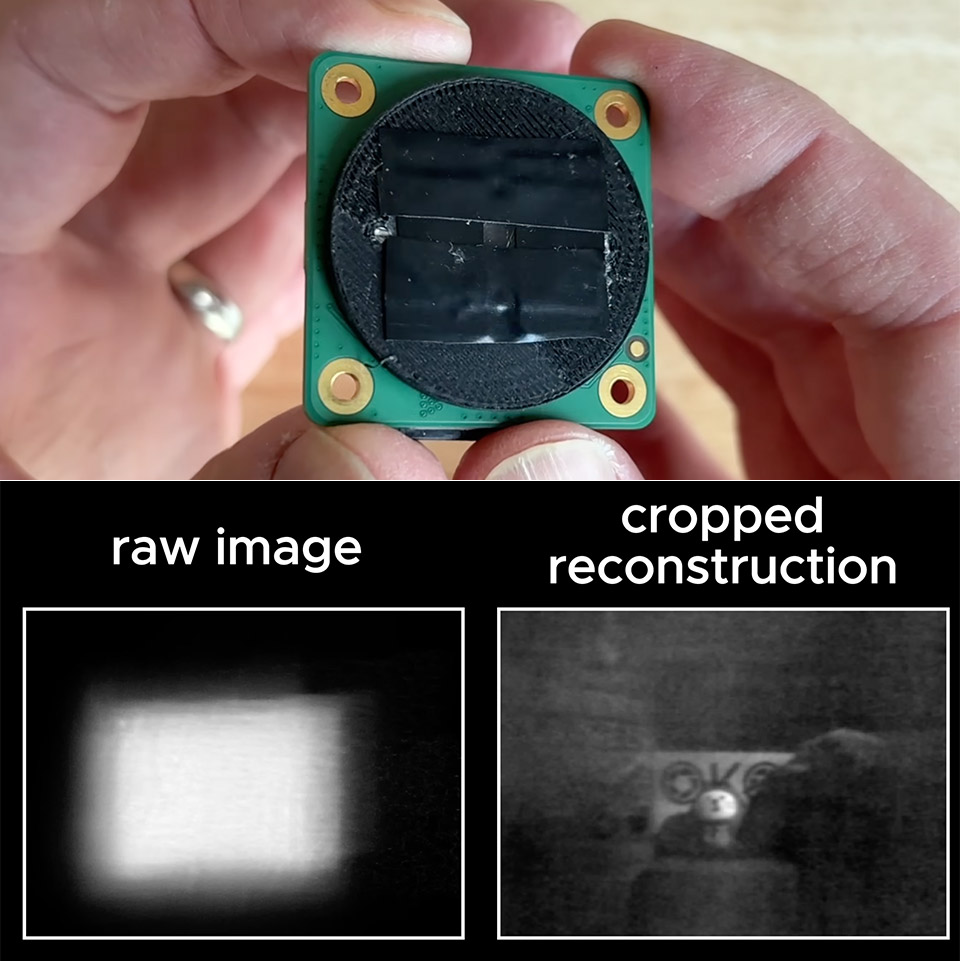
A roll of Scotch tape can do some truly unexpected things, such as completely replacing a camera lens. Maker okooptics puts this to the test in a recent project, transforming an ordinary sensor into a functioning camera using only Scotch tape, smart rigging, and some math after the fact.
Lensless imaging works on a fairly simple principle: light from a scene strikes the sensor in all directions rather than in a focused beam. Traditional lenses perform the job by bending light to create precise projections, but in this case, the Scotch tape diffuses the light in a predictable way, spreading each point in the scene across the sensor in what’s known as a point spread function, or PSF. The raw grab is a confused mess, yet the information is still contained inside it.
Capture Stunning Footage – This vlogging camera features a 1-inch CMOS sensor and records in 4K resolution at an impressive 120fps. Capture…
Effortlessly Frame Your Shots – Get the ideal composition with Osmo Pocket 3’s expansive 2-inch touch screen that rotates for both horizontal and…
Ultra-Steady Footage – Say goodbye to shaky videos. Osmo Pocket 3’s advanced 3-axis mechanical stabilization delivers superb stability. Enjoy smooth…
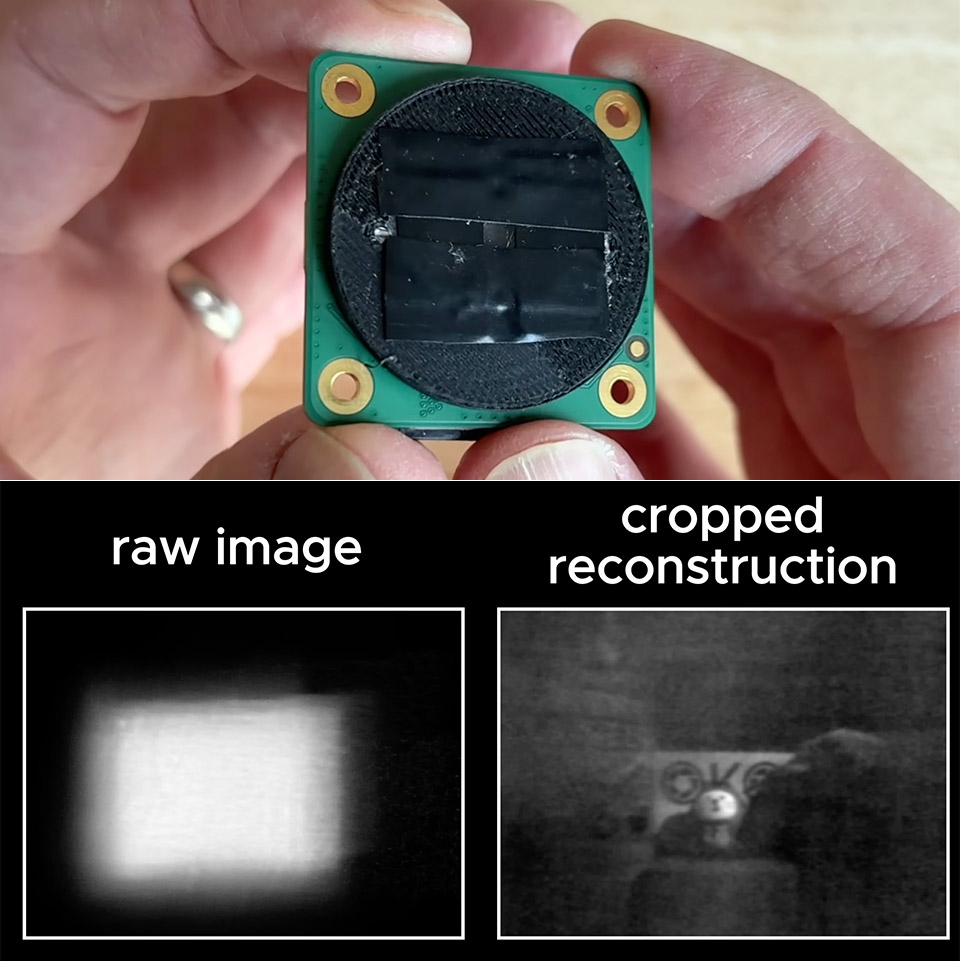
He starts with a Raspberry Pi camera and puts a small piece of Scotch tape around a 3D printed bit only 3 millimeters away from the sensor. A piece of electrical tape holds the tape in place and creates a frame for the image, ensuring that no PSF escapes and causes additional difficulties. Only 3mm was the sweet spot since it kept the PSF nice and small in the center of the sensor, which is where you want it for optimum results.
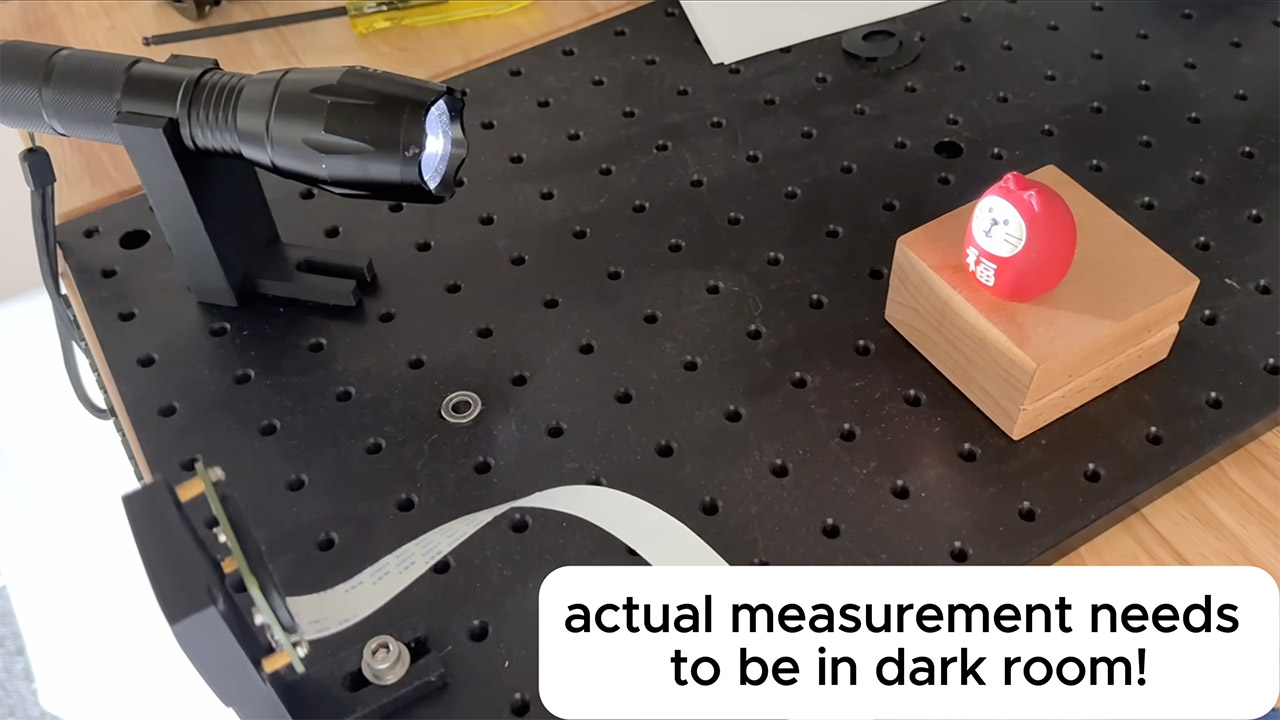
You set it up, point it at a subject, such as a cat, smartphone screen with text, or a turtle silhouette, and capture the shot. The sensor then catches the dispersed light field, which means there’s no need to mess with manual focus or particular exposure settings because everything is handled by the computer.
The magic happens during reconstruction, which uses a technique known as Wiener deconvolution. That’s because the PSF wiped out the true scene, resulting in the hazy image. In the Fourier domain, the convolution converts to a very easy multiplication, so all you have to do is divide by the PSF’s Fourier transform. However, there’s a catch: all that noise in the image causes issues. Wiener deconvolution adds a little extra math to balance out the noise, resulting in a cleaner image if the settings are correct. [Source]