Tech
Inside the World’s Quietest Room, Where Even Your Own Body Becomes Noise

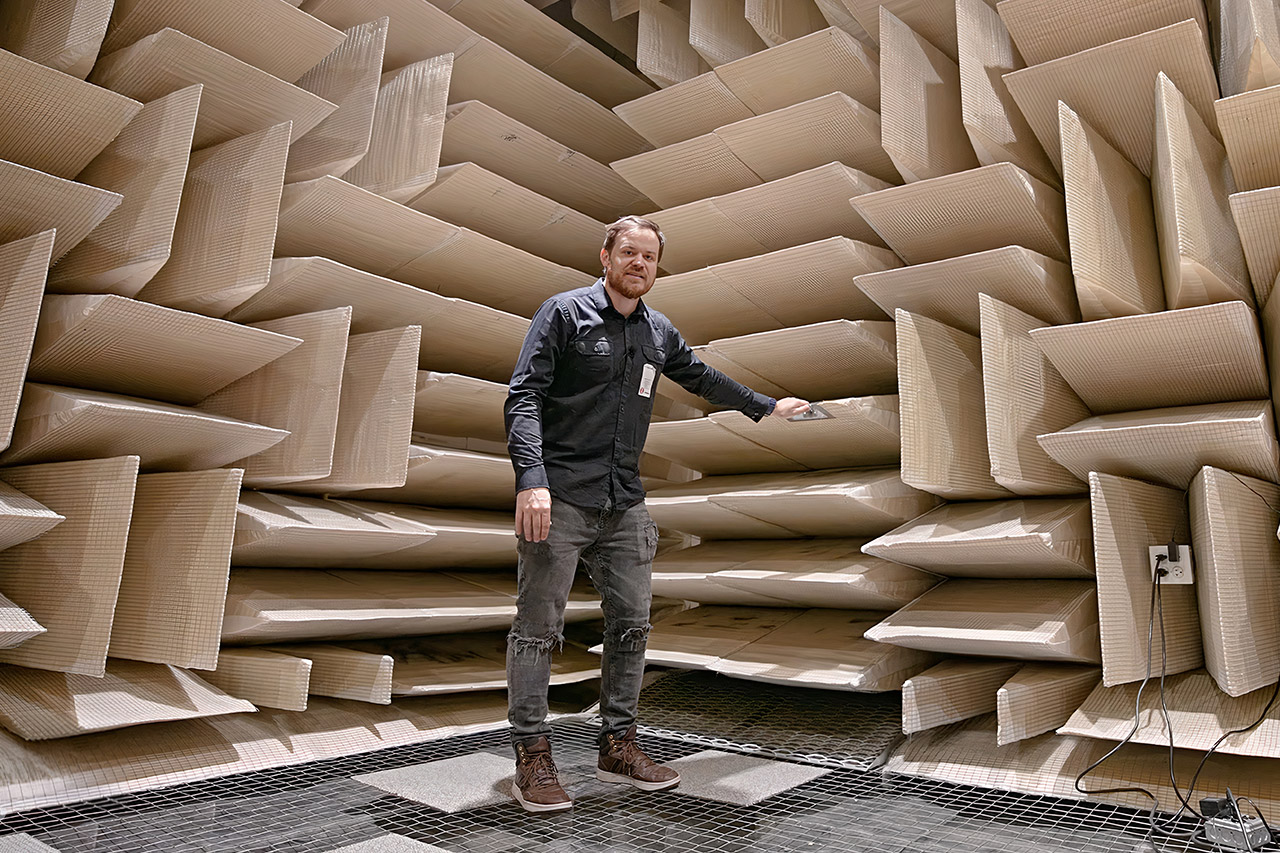
Rob Scallon stands in a room that refuses to answer him. No bounce. No soft wash of air against walls. Just the immediate disappearance of every note, clap, and spoken word. He is inside one of Shure’s anechoic chambers in Niles, Illinois, a facility built so microphones can be measured without a single reflection getting in the way. Within minutes of the heavy door sealing shut, he reports feeling mildly nauseous. The sensation never fully leaves him for the rest of the visit.


The chamber lies on top of a bed of springs tuned to 3 hertz. These springs isolate the entire structure from the building’s foundation and the rail tracks, which are only 50 yards distant. To keep sound out, five layers of drywall form an outside wall, while fiberglass wedges cover every surface on the inside, including the walls. Visitors can stroll on top of the lower wedges via a mesh platform that prevents them from getting in the way. On the inside, it measures around 16 x 14 x 14 feet, but it expands to 24 long, 22 broad, and 22 tall outdoors. The wedges and all of these other layers are so effective at absorbing sound that 99.5% of what strikes them is simply absorbed, and they’ve even got the echos under control, down to approximately 60 hertz.
Sale


Bose QuietComfort Headphones – Wireless Bluetooth Headphones, Active Over Ear Noise Cancelling and Mic…
- NOISE CANCELLING HEADPHONES: Effortlessly combines noise cancellation technology with passive features so you can shut off the outside world, quiet…
- COMFORTABLE HEADPHONES: Plush over-ear cushions softly hug your ears, while a secure and comfortable padded band gently keeps your studio headphones…
- 2 LISTENING MODES: These wireless Bluetooth headphones feature Quiet and Aware Modes that let you toggle between full noise cancelling or full…

According to Shure’s engineers, the ambient noise level inside is nearly imperceptible. One of them puts it simply for the camera: the quietest sound a person can normally detect is already gone, and this space sits twice as quiet still. Average readings inside hover around 5.4 dB across the standard audio band, with quieter moments near zero. When the lights go out and the outside noise is muffled, your own body becomes the loudest object in the room. You can hear your blood pumping and your joints creaking. Breathing begins to feel like a performance.
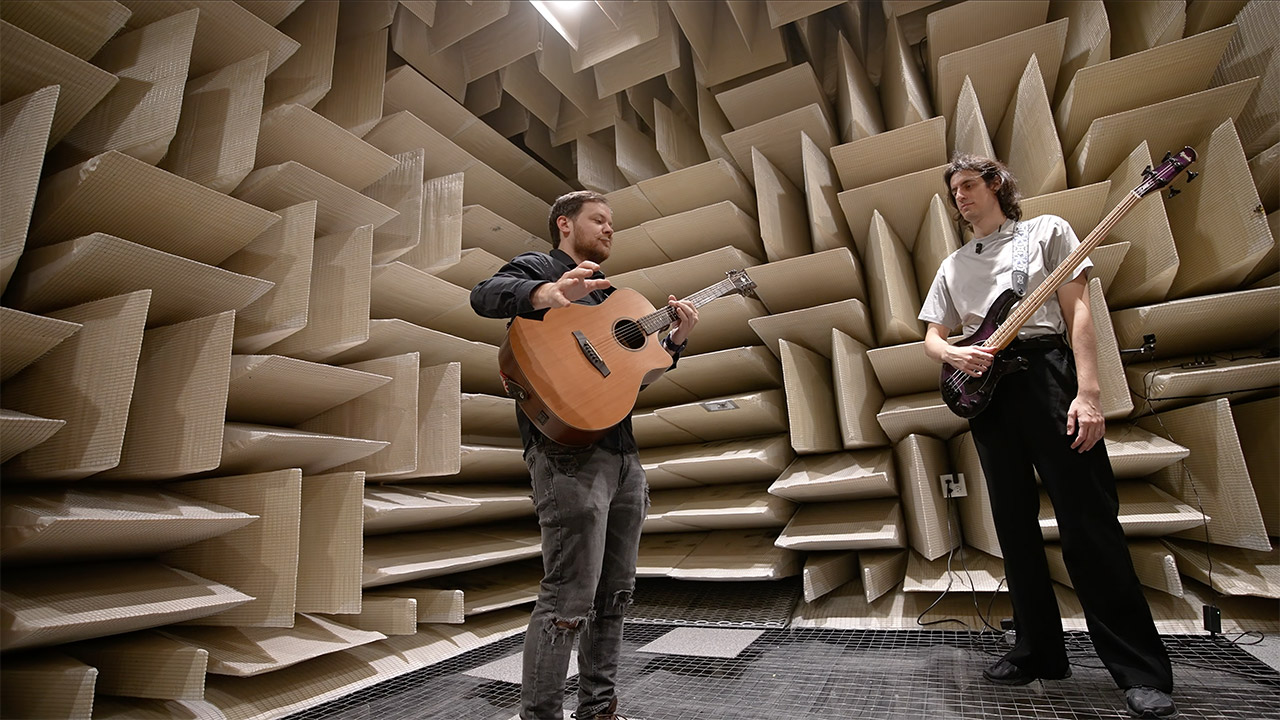
Clapping is an excellent way to demonstrate the effect since, in a regular room, sound bounces around and fades away after a while, but in this room, it simply stops dead, as if nothing happens for a split second when your hands contact. Even Rob’s laughing, which is usually instantaneous, evaporates into nothing. Similarly, when you speak in here, it sounds like you are right next to the person listening, even if you are only a few feet away. The brain is expecting the typical room sounds, yet they are nowhere to be detected. That absence of feedback is what disrupts your sense of balance. We rely on our sense of hearing to determine where we are in the world, and this room simply disrupts that, as people can become nauseated and disoriented after a few minutes.

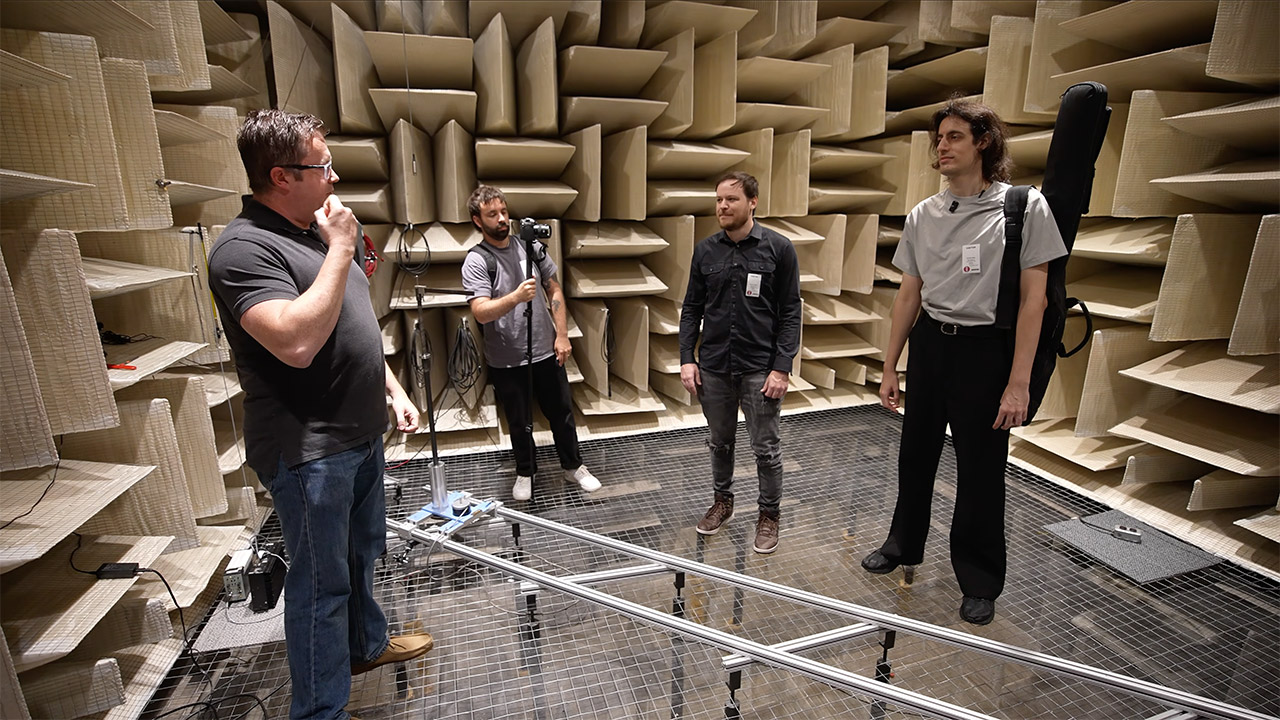
Shure uses this space to research microphones and how they behave. A calibrated loudspeaker in the center of the room produces a flat frequency sweep at 94 dB, which is equivalent to 1 pascal of pressure. Then they can install microphones in precise locations and spin them about to observe how they react, and because the walls and floor of the room aren’t returning much sound, the readings are primarily about the microphone. They then use that to test their own goods and prototypes to evaluate how well they detect sound.
You must be logged in to post a comment Login