For years, rumors have swirled that Apple has been toiling away on a foldable iPhone, nicknamed the iPhone Fold. Over the last year, numerous leaks have suggested that it could actually be released in 2026. The latest rumor, from a leaker on Weibo, suggests that Apple’s first foldable will have a 5,500-mAh battery, which would make it the largest on any iPhone, surpassing the 5,088-mAh capacity on the iPhone 17 Pro Max.
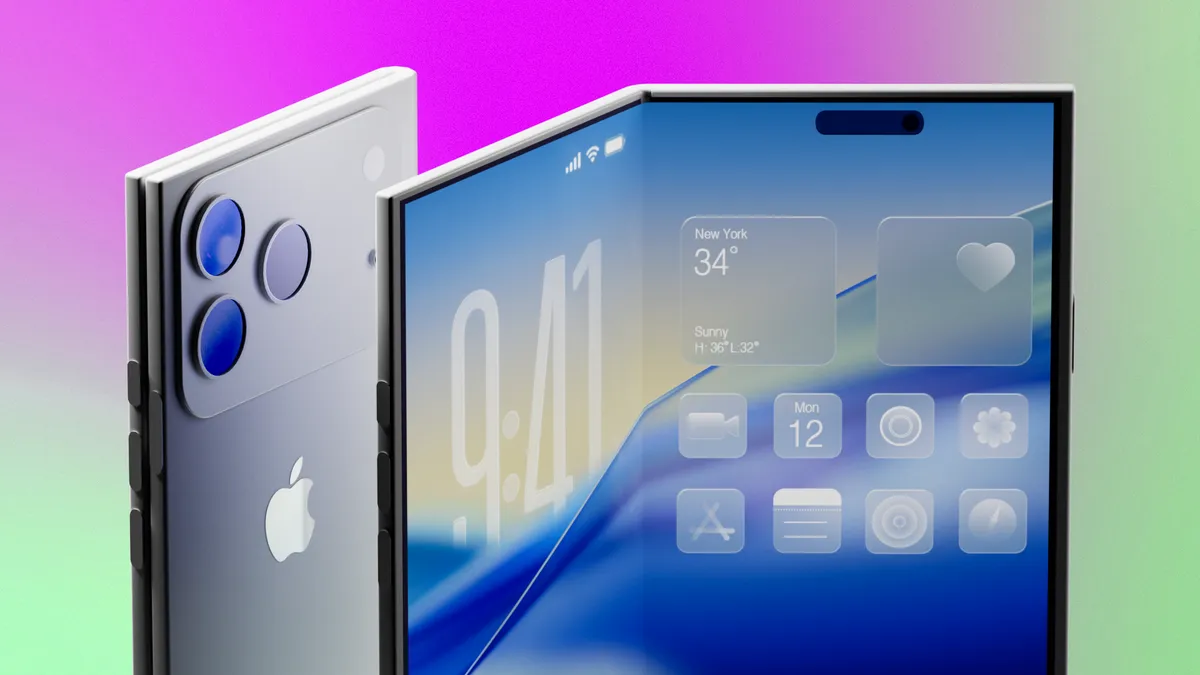
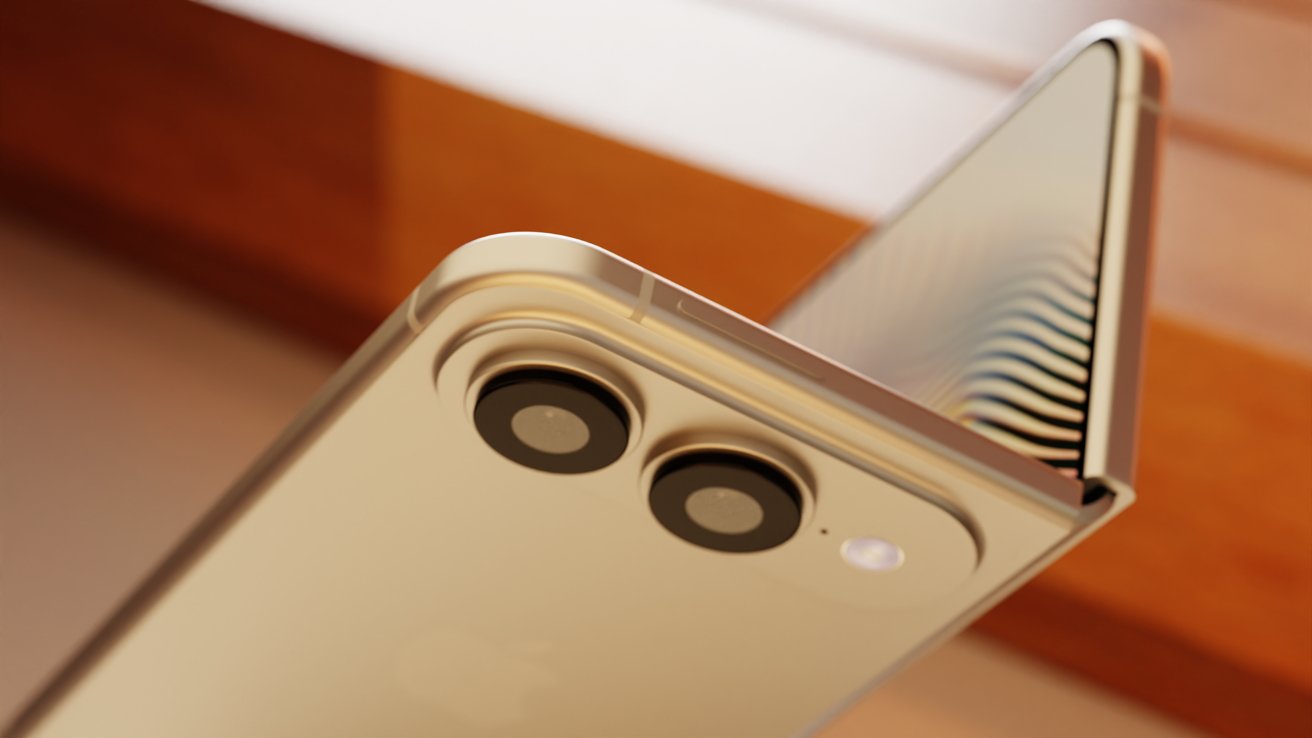
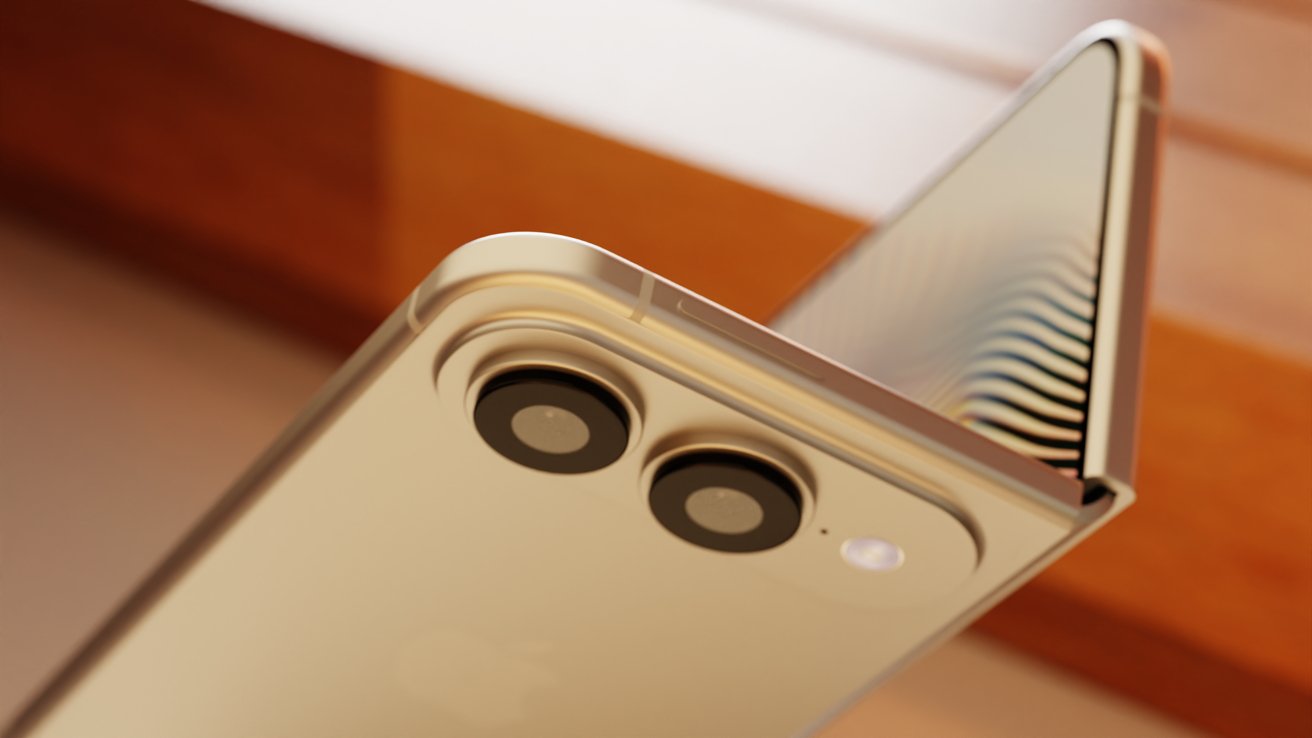
But most of the curiosity has been around how Apple’s mystery foldable will look. Recently, an Apple fan made a 3D-printed mock-up for an Apple book-style foldable’s possible design, looking more like a Microsoft Surface Duo merged with an iPhone 17 Pro than the Galaxy Z Fold 7 or Pixel 10 Pro Fold. In other words, a vision of two separate iPhone screens linked together rather than a continuous, folding display.
That’s an interesting proposition considering rumors have spoken of Apple’s efforts to reduce the seam where a foldable screen bends. The one on the iPhone Fold is rumored to have little or no crease, according to a recent report by the Chinese publication UDN. Screen creases, especially on early foldable phones, have long annoyed some consumers and critics. And while the crease on more recent foldables looks a lot less deep, it’s still there. Samsung’s new Galaxy Z TriFold has two screen creases, one for each of its hinges. It would be a major breakthrough if Apple has indeed found a way to fold a screen in half without leaving a crease.
Advertisement
We’ve yet to hear any official word on a foldable iPhone from Apple.
Mock-ups of potential iPhone foldables, including a clamshell “iPhone Flip” on the left and book-style foldable on the right, along with a flat iPhone for comparison on the bottom.
Zain bin Awais/CNET
Foldable phones represent a tiny fraction of all phones sold globally. CNET found that 64% of people surveyed said they don’t want a foldable phone. But those numbers could change if Apple were to sell a foldable iPhone. Analysts at IDC forecast a 30% year-over-year growth if Apple were to launch a foldable iPhone in 2026.
Advertisement
Apple launched the iPhone 17 series along with the new super-thin iPhone Air in September. Given all the engineering it took to cram cameras and components into the top half of the Air, some have theorized that the device is a stepping stone to a foldable, which could take advantage of the Air’s internal design.
A lot of hope and expectation has been placed on Apple to release one, and if rumors are correct, we won’t have to wait much longer for the company to do so.
Watch this: iPhone Flip: What Apple’s Foldable Future Could Look Like
iPhone Fold history
Advertisement
Mock-ups of what the iPhone foldables could look like.
Zain bin Awais/CNET
Rumors suggest Apple is developing a book-style foldable like the Galaxy Z Fold 7. Years ago, in 2017, folks predicted that a foldable iPhone could launch in the then-near future of 2020 — which didn’t happen. Analysts and leakers have been kicking the release date down the road ever since, and rumors and wish lists have lingered as phone fans keep their hopes alive. Absent any confirmed details from Apple, here’s everything we know so far about the company’s future foray into foldables.
A new patent granted to Apple in July 2024, which was applied for years ago, shows how long the company has been working on a folding iPhone. Kuo’s report in early March said that an Apple foldable could launch at the end of 2026, with a 7.8-inch crease-free inner display and a 5.5-inch outer display.
Advertisement
Accordingly, Kuo believes the price would match that of other similar folding devices, at $2,000 to $2,500. Despite the high price tag, he says projected shipments are 3 to 5 million devices, which is a confident estimate given only 19.3 foldables were sold in 2024, market research firm IDC reported.
Although many reports have focused on the company’s struggles to eliminate the crease within the internal folding display, Apple’s patent indicates that the development has been ongoing for some time. Creases have plagued foldable phones since their introduction in 2020, and although the most recent Samsung Galaxy Z Fold 7 and Samsung Galaxy Z Flip 7 have reduced the crease, it is still visible and noticeable.
By mid-2024, market analysts at TrendForce estimated that display crease issues might push back an Apple foldable until 2027, according to 9to5Mac. Prior rumors said Apple may not launch its own flexible screen device until 2025, and Samsung hasn’t let phone fans forget it by releasing an app that will let Apple phone owners experience a Z Fold-esque experience by placing two iPhones side-by-side.
CNET’s Jeffrey Hazelwood created these custom renders of what an iPhone 18 Pro might look like.
Jeffrey Hazelwood/CNET
There’s no guarantee about which phones Apple will release during its usual September window, but the safest bet is on another series of flat phones, which we expect to be the iPhone 18 series. But what else could be coming alongside the usual lineup?
There could be an iPhone Air 2, though rumors conflict on whether to expect one next year or not. There’s been a lot more evidence for an iPhone Fold, though whether it comes out in 2026 or in later years is still uncertain. If the iPhone Fold does launch next year, more rumors have suggested a clamshell device has been prioritized and may come first — given reports of Apple researching a book-style foldable, we could get one of those as well.
Advertisement
In mid-January, MacRumors reportedly saw a research note from analyst Jeff Pu suggesting that the iPhone Fold will pack 12GB of memory — as will the entire iPhone 18 line. Apple never discloses how much RAM is included in its phones, but specs sites like GSMArena have reported that the standard iPhone 17 has 8GB of RAM, while the rest of the series (iPhone Air, 17 Pro and Pro Max) all have 12GB. If correct, that means Apple doesn’t think its foldable will need more memory than its standard flat phones — it’ll have more screen area, but potentially no better hardware than its iPhone 18 siblings.
It’s also interesting to see the standard iPhone 18 packing 12GB of memory, as the RAM shortage is predicted to hike prices on phones released in 2026. Apple may be willing to pay the price for a more capable basic model of iPhone 18, or perhaps it’ll pass those costs on to the consumer with a price hike.
iPhone Fold or iPhone Air 2?
Here is a mock-up that CNET designer Zooey Liao made showing what an iPhone Air 2 with dual-rear cameras might look like.
Advertisement
Zooey Liao/CNET
There’s the chance that we get an iPhone Fold next year, which rumors have said could launch in 2026 at the earliest, though it could also come out in 2027 or later. It should be noted that analysts and rumors had predicted a foldable iPhone release from as far back as 2022, so the rolling prospective launch windows don’t lend confidence that we’ll necessarily see the device come out next year. Given Samsung’s six-year head start on making foldables, Apple seems to be in no rush to get one out.
While the iPhone Air came out with the iPhone 17 handsets, there are conflicting rumors on whether we’ll see an iPhone Air 2 in 2026. A recent report from The Information says that Apple is delaying the release of the next version of the iPhone, citing people familiar with the matter. This follows rumors that disappointing iPhone Air sales after launch led Apple to dial back production, though even that claim was denounced by TD Cowen, according to a note from the investment research firm that was seen by AppleInsider that asserted the company would continue producing the thin phone. The Information’s story was amended to say that the delay could be caused by engineers who are re-considering the Air’s design so that it could support a second rear camera.
All of which casts doubt on whether we’ll get an iPhone Air 2 next year, but there’s not enough evidence yet to roundly dismiss the possibility.
iPhone Fold specs
Advertisement
A mock-up of a possible book-style foldable iPhone design.
Zain bin Awais
There are no confirmed specs for the iPhone Fold, because Apple hasn’t even confirmed one exists or is coming out. Given we don’t have a year of expected release, we can’t much predict what kind of internal specs the iPhone Fold will have — presumably, Apple will want its most powerful A-series chip to run it, along with enough RAM to handle two or three displays (depending on whether it folds inward or outward and needs a dedicated outer screen).
We do have some predictions for other specs, though only for the book-style Fold (not the clamshell). In March, analyst Kuo predicted the larger Fold could have a 5.5-inch outer screen and 7.8-inch inner display. When folded up, it will be 9-9.5mm thick and 4.5-4.8mm when unfolded. A front-facing camera will be available whether the phone is folded or unfolded, while it will also have two rear cameras.
Kuo predicted that the device will use the same high-density battery cells as used in what he referred to then as the “ultra-thin iPhone 17” which is presumably the iPhone Air. But that trim thickness means the foldable may forgo Face ID, so the device may use Touch ID in a side button.
Advertisement
Some rumors about hardware have emerged. In January, an analyst note seen by MacRumors suggests Apple’s foldable could launch with 12GB of RAM, the same amount in the Galaxy Z Fold 7‘s starting configuration. That could mean Apple doesn’t need a lot of memory to handle multiple screens or that it isn’t banking on big AI features that can take up a lot of RAM.
We finally have a prediction on the iPhone Fold’s battery, with Weibo leaker Fixed Focus Digital posting that it will have a 5,500-mAh capacity, as 9to5Mac first reported. That’s substantially larger than batteries on some other foldables — for example, the Galaxy Z Fold 7 has a 4,400-mAh capacity — but Samsung has been in the foldable game for so many years that it’s bound to have increased efficiency, likely in an effort to slim down the thickness of its devices. Yet if the Weibo leak is true, this will be the largest battery ever on an Apple handset. The iPhone 17 Pro Max has a 5,088-mAh battery.
iPhone Fold release date
Two cross-sectional illustrations of potential displays that fold around a recess where a hinge would go, in Apple’s patent (No. 12,041,738).
Advertisement
USPTO
Apple has neither confirmed the iPhone Fold nor announced a proper release date. Analysts and rumors have predicted that the foldable could come out in 2026 or be pushed until next year.
As for timing, since the iPhone Air was released alongside the iPhone 17 models, the Fold could come alongside the iPhone 18 series. But since Apple released the iPhone 16E early this year, far before the September window for its main iPhone release, the company could do the same with the iPhone 17E in 2026. Apple could even delay the launch of the standard iPhone 18 to the spring of 2027 to make room for the iPhone Fold in Apple’s Sept. 2026 launch, according to an ET News report. Given that Samsung offsets its standard and foldable phone releases at Unpacked events months apart from each other, Apple could do the same.
What Apple’s new patent says about the iPhone Flip
Here is a mock-up of a Galaxy Z Flip running iOS to gives us some idea of what an iPhone FLip could possibly look like.
Advertisement
Justin Reynoso/CNET
After years of rumors that Apple was working on foldable phones, a patent was finally granted to the company, confirming that it has been working toward a folding iPhone. The 22-page patent (PDF), simply titled “Electronic Devices With Durable Folding Displays,” was filed in November 2021 and granted on July 16, 2024.
Sadly for folding iPhone hopefuls, the patent doesn’t offer much illumination of what an iPhone Flip might look like. Most of the pages show figures depicting cross-sections of potential displays that fold about a hinge but not the device they’re folding around.
There are some tidbits deeper into the text of the patent that hint at potential design choices Apple might make, like a hinge that holds the display flat when unfolded but which would let the display “slightly fold about the bend axis when the electronic device is jolted during the drop event” — in other words, if dropped, the device would fold inward slightly so that it lands on its edges to protect the inner display.
It’s important to note that all evidence shows Apple working on a foldable iPhone, but the patent broadly applies to folding displays in general — to wit, some figure schematics describe a device that “may be a cellular telephone, tablet computer, laptop computer, wristwatch device or other wearable device, a television, a stand-alone computer display or other monitor” or screens as far-ranging as on vehicles, in kiosks, in media players or other electronic equipment.
Advertisement
The rest of the patent describes what an Apple device with a folding display may have and categorically lists things like batteries and wireless charging, Bluetooth and Wi-Fi connectivity, LED or LCD displays, microphones and capacitive sensors, haptics and so on. There’s explicit mention of a display folding 180 degrees, or fully flat, which follows most other foldables — presumably, Apple isn’t going to leapfrog the competition in following Samsung’s concept displays we saw at CES that unfold nearly 360 degrees.
Two foldable iPhone Flips?
Foldable iPhone hopefuls will at least be encouraged that Apple seemingly continues to tinker with an iPhone Flip design. The company is said to be working on two sizes of folding iPhones: a book-style and a clamshell-style, according to an older report by The Information, although this may be contradicted by a newer report by the same site suggesting Apple had settled on the latter for a smaller device. This aligns with prior rumors hinting the iPhone Flip will be in the clamshell format similar to the Samsung Galaxy Z Flip series or Motorola Razr Ultra.
It sounds like Apple’s been struggling to meet its high expectations: The company’s design team wants the iPhone Flip to be half as thin as current iPhone models and to have displays on the outside that are visible when the device is folded shut, according to the report.
Development on the iPhone Flip was halted around 2020, the older report noted, in order to focus on a new project, a folding iPad. This device would have an 8-inch display, around the size of the iPad Mini. The foldable tablet supposedly had less strict durability and thickness requirements, as it wouldn’t need to fit in pockets like an iPhone Flip. Apple was still working on ways to reduce the crease in the middle of the folding display and get the iPad to lie fully flat.
Advertisement
Release date: The iPhone Flip could launch in 2027
The logo for Apple’s fall 2025 event invitation is interactive: a heat signature stays where you touch or click and hold.
Screenshot by Jeff Carlson/CNET
The latest indications of an iPhone Flip release date came back in June, when analyst Kuo suggested production could kick off in 2026 with phones coming out that year. This follows Kuo’s earlier prediction in March that the company could release a crease-free foldable by the end of 2026. Furthermore, this would likely be a book-style foldable with a 7.8-inch internal display and 5.5-inch external screen, which is counter to other predictions anticipating a clamshell-style foldable.
It’s possible that these timeline predictions apply to one or the other or, due to the vague nature of rumors, even both — that is, Apple could be working on both a book-style and clamshell style foldable, though it’s less clear if release date expectations would be interchangeable or if Apple would stagger their release.
Advertisement
It’s been an open secret for years that Apple is working toward a foldable iPhone. The company has beenregisteringpatents for foldable technologies for almost a decade, and while there’s no guarantee that one will come out even after all that research (remember AirPower?), there’s still been buzz and possible release dates floated for years — though still not one solid enough to get excited about.
Early rumors pointed as far back as 2021 as a potential target date, but the year passed with no foldable iPhone in sight. A March 2021 report from longtime analyst Kuo (via MacRumors) suggested 2023 might be more realistic (though that year has come and gone). According to Kuo, Apple still needs to figure out technology and mass production issues before bringing a device like this to market, hence the wait. Speculation later in 2021 from Bloomberg’s Mark Gurman aligned with Kuo’s predictions: In his Power On Newsletter, Gurman said that the foldable iPhone may not arrive for another two to three years.
Since then, new rumors have pointed to an even later release. Reliable display analyst Ross Young said in February 2024 that the foldable iPhone had been pushed back to 2025, and Kuo reaffirmed his predicted release window in a tweet in April 2022.
“Apple may launch its first foldable product in 2025 at the earliest, which may be a foldable iPad or a hybrid of iPad and iPhone,” Kuo wrote in the tweet.
Advertisement
Another rumor, first noticed by MacRumors in February of 2024 by Weibo-based blogger Fixed Focus Digital, suggested that the foldable iPhone project is delayed for the foreseeable future. The problem? Apple, which is rumored to be using Samsung folding panels for its iPhone Flip’s display, was dissatisfied with the screens’ performance after they broke down a few days into testing.
That’s echoed by the most recent estimate by TrendForce market analysts, reported in 9to5Mac, which predicted that an Apple foldable might not be released until 2027 at the earliest. Why? Apple’s strict requirements for reliability and the phone display’s crease. But Kuo’s more recent March 2025 predictions explicitly noted a crease-free foldable display, suggesting Apple might have moved past this roadblock — if all these rumors are to be believed, of course.
Watch this: Foldable Phones May Be the Future. In South Korea, They’re the Present
Design: What will the foldable iPhone look like?
This illustration, according to Apple’s patent filing, shows a “device that bends along a flexible portion such as a flexible seam associated with a hinge.”
Apple/US Patent and Trademark Office
A 2021 report from Bloomberg indicated Apple already had a working prototype of a foldable iPhone display. While it wasn’t a working model, it was a step up from a patent — which, until then, was all we had seen.
Apple seems to have taken out every patent under the sun when it comes to foldable displays, including an origami-style folding display, a flip-up display and even a wraparound display. We don’t know which one will make the final cut, but both Kuo and Bloomberg seem to agree that the current prototype is more of a traditional fold-out design.
Advertisement
Unlike Microsoft’s Surface Duo, which has hinges on the exterior, Apple’s would have one continuous display with a hidden hinge mechanism like the Galaxy Fold.
YouTuber ConceptsiPhone also gave us a glimpse into what the iPhone Flip could look with concept art of the foldable iPhone in the colors blue, red, gold and green.
In March 2025, analyst Kuo had some very specific but non-clamshell predictions: that Apple would release a book-style foldable with a 5.5-inch outer screen that unfolded to have a 7.8-inch internal screen, and be 4.5-4.8mm when unfolded but 9-9.5mm thick. It would have the same high-density battery cells as the “ultra-thin iPhone 17” and a hinge with stainless steel and titanium alloy (a favorite material of Apple’s iPhone 16 Pro and Pro Max as well as the Apple Watch Ultra 2).
Advertisement
Per Kuo’s predictions, the foldable will have two rear cameras and a front-facing camera on both the external and internal displays. Most interestingly, Kuo also expects that Apple’s book-style foldable will see the return of Touch ID as a side button, as Face ID might be left out due to space constraints — presumably for the array of depth-of-field sensors and cameras needed for the tech.
Roadblocks: What still stands in Apple’s way?
CNET’s Vanessa Hand Orellana is testing the flexibility of a Corning glass display.
CNET
Samsung and others have been testing the waters, but Apple has been learning from the pain points of their foldable devices and figuring out how they’d be used.
Advertisement
One of these pain points is the crease. A lot of the current cover materials, including the glass and plastic mix that Samsung uses for the Z Fold and Z Flip, show a visible crease when folded out to full screen. To avoid it, Apple would likely have to wait for Corning, Apple’s glass provider, to create some kind of bendable version of its Ceramic Shield screen. The company is already working on a bendable glass but hasn’t announced a launch date for it.
Price is another major problem for these types of devices. Although Samsung still has the most affordable folding phone with the clamshell Motorola Razr at $700, most others in the category are book-style foldables like the Galaxy Z Fold 7 and the Pixel 9 Pro Fold, which are around twice the price of most flagship phones. We wouldn’t expect a foldable iPhone to be cheaper than its rivals. Apple’s foldable needs to be in line with current foldable and nonfoldable models to be able to compete against other brands and entice iPhone users to ditch their single-screen devices and pay more for a foldable.
Analyst Kuo predicted that a book-style iPhone foldable coming in 2026 could be priced anywhere from $2,000 to $2,500 as it’s “expected to generate strong replacement demand-despite the premium price-provided quality meets expectations.”
Advertisement
A report last year found that half of American consumers are interested in buying a foldable phone, though Apple customers are slightly less willing to make the leap than Samsung or LG users. Perhaps the “Apple effect” will change those stats if and when a foldable iPhone ever becomes a reality.
Samsung Display could soon begin producing screens for Apple’s long-rumored foldable iPhone, with a new leak pointing to a manufacturing ramp beginning in mid-2026.
Render of a folding iPhone
The timeline posted on Weibo by Instant Digital matches earlier analyst estimates and fits Apple’s usual production window for a fall iPhone launch. A May panel ramp would align with Apple’s typical iPhone production schedule. Apple usually increases manufacturing during the summer ahead of its fall iPhone launch window. Rumor Score: 🤔 Possible Continue Reading on AppleInsider | Discuss on our Forums
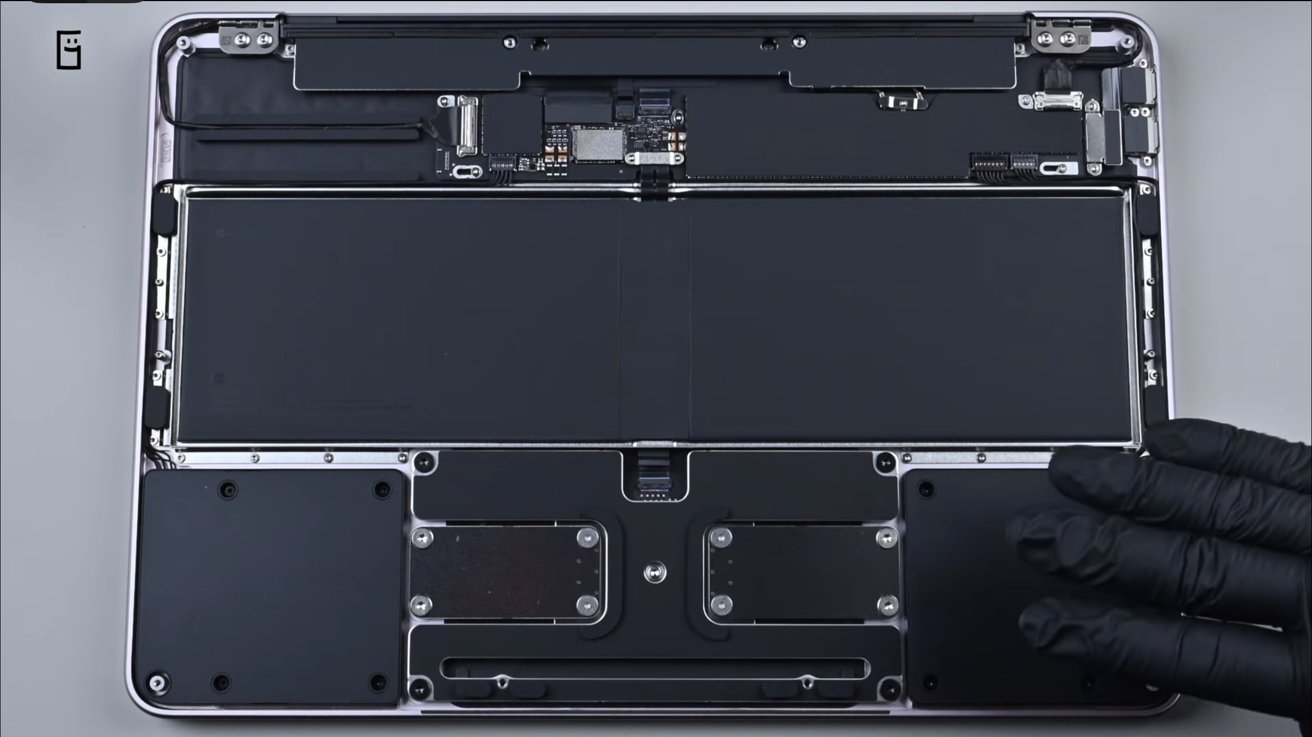
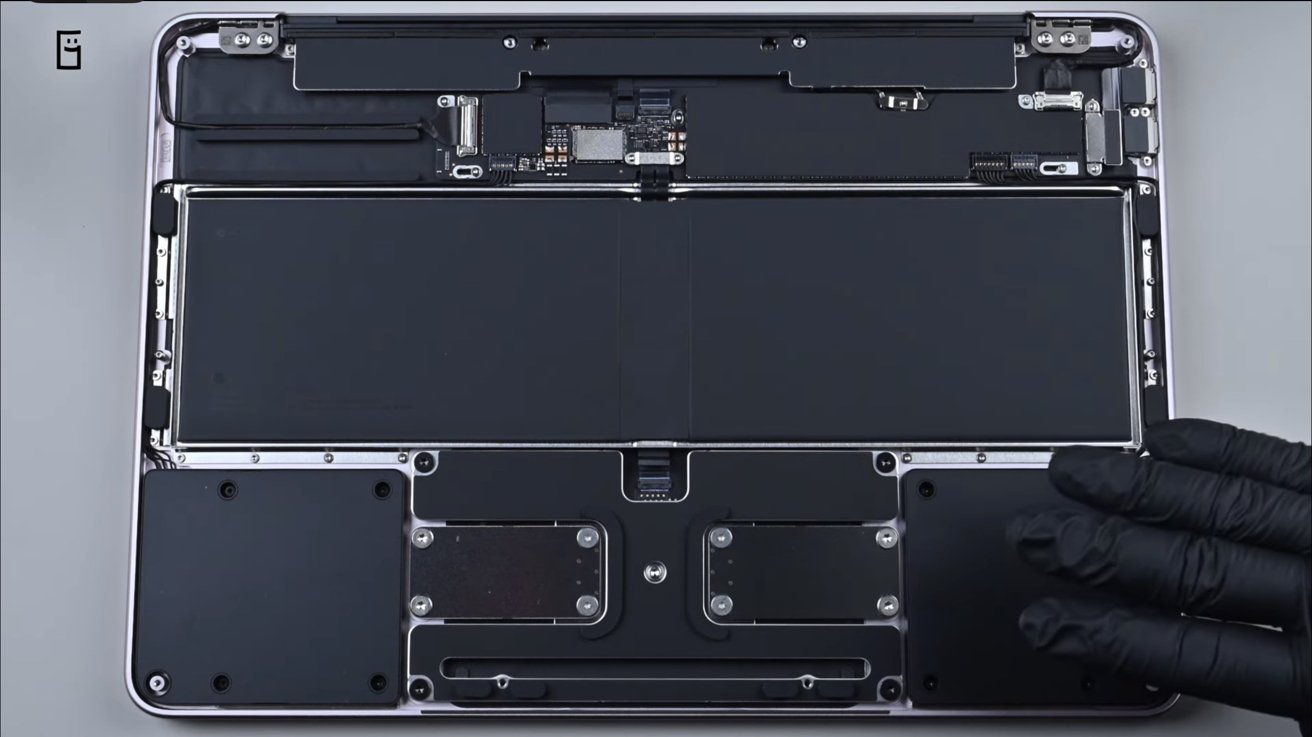
Getting 1TB of storage on the MacBook Neo is possible, assuming you have skill in micro soldering, the ability to remove the chip, and disdain for Apple’s warranty.
MacBook Neo teardown. Image credit: DirectorFeng
Apple introduced MacBook Neo on March 4 as its most affordable notebook, starting at $599 with 256GB of storage. It uses the same A18 Pro chip found in the iPhone 16 Pro models and includes 8GB of unified memory. The company offers the 13-inch system with either 256GB or 512GB of storage. And that’s it. There aren’t any larger options, and the chip is not socketed like it is in the Mac mini or Mac Studio. Continue Reading on AppleInsider | Discuss on our Forums
There may have been some extra incentive for the Trump administration to get the TikTok US deal done. According to a report from The Wall Street Journal, the Trump administration is set to receive a total of $10 billion in the deal that allowed TikTok to remain in the US. The new investors who acquired stakes in the US entity of TikTok already paid a $2.5 billion fee to the administration when the deal closed in January, but WSJ‘s latest report noted that the group of investors would continue to make payments until the total hits $10 billion.
After a group of investors, which includes Oracle along with the Silver Lake and MGX investment firms, acquired stakes in the US-based TikTok entity called TikTok USDS Joint Venture, the WSJ previously reported that the administration would receive a “multibillion-dollar fee” for its work on the deal. To better contextualize the recently-revealed $10 billion fee the Trump administration is receiving, the US entity of TikTok was valued at $14 billion by Vice President JD Vance.
The Trump administration has previously involved itself in major deals with other US corporations. Last year, the administration invested $8.9 billion into Intel and received a nearly 9 percent equity stake. In terms of unprecedented windfalls, the Trump administration also received a Boeing 747-8 as a gift from the Qatari government in May.
Long-timetechjournalistCliveThompson interviewed over 70 software developers at Google, Amazon, Microsoft and start-ups for a new article on AI-assisted programming. It’s title?
Published in the prestigious New York Times Magazine, the article even cites long-timeprogrammingguruKent Beck saying LLMs got him going again and he’s now finishing more projects than ever, calling AI’s unpredictability “addictive, in a slot-machine way.”
In fact, the article concludes “many Silicon Valley programmers are now barely programming. Instead, what they’re doing is deeply, deeply weird…”
Advertisement
Brennan-Burke chimed in: “You remember seeing the research that showed the more rude you were to models, the better they performed?” They chuckled. Computer programming has been through many changes in its 80-year history. But this may be the strangest one yet: It is now becoming a conversation, a back-and-forth talk fest between software developers and their bots…
For decades, being a software developer meant mastering coding languages, but now a language technology itself is upending the very nature of the job… A coder is now more like an architect than a construction worker… Several programmers told me they felt a bit like Steve Jobs, who famously had his staffers churn out prototypes so he could handle lots of them and settle on what felt right. The work of a developer is now more judging than creating…
If you want to put a number on how much more productive A.I. is making the programmers at mature tech firms like Google, it’s 10 percent, Sundar Pichai, Google’s chief executive, has said. That’s the bump that Google has seen in “engineering velocity” — how much faster its more than 100,000 software developers are able to work. And that 10 percent is the average inside the company, Ryan Salva, a senior director of product at the company, told me. Some work, like writing a simple test, is now tens of times faster. Major changes are slower. At the start-ups whose founders I spoke to, closer to 100 percent of their code is being written by A.I., but at Google it is not quite 50 percent. The article cites a senior principal engineer at Amazon who says “Things I’ve always wanted to do now only take a six-minute conversation and a ‘Go do that.” Another programmer described their army of Claude agents as “an alien intelligence that we’re learning to work with.” Although “A.I. being A.I., things occasionally go haywire,” the article acknowledges — and after relying on AI, “Some new developers told me they can feel their skills weakening.”
Still, “I was surprised by how many software developers told me they were happy to no longer write code by hand. Most said they still feel the jolt of success, even with A.I. writing the lines… ”
Advertisement
A few programmers did say that they lamented the demise of hand-crafting their work. “I believe that it can be fun and fulfilling and engaging, and having the computer do it for you strips you of that,” one Apple engineer told me. (He asked to remain unnamed so he wouldn’t get in trouble for criticizing Apple’s embrace of A.I.) He went on: “I didn’t do it to make a lot of money and to excel in the career ladder. I did it because it’s my passion. I don’t want to outsource that passion”… But only a few people at Apple openly share his dimmer views, he said.
The coders who still actively avoid A.I. may be in the minority, but their opposition is intense. Some dislike how much energy it takes to train and deploy the models, and others object to how they were trained by tech firms pillaging copyrighted works. There is suspicion that the sheer speed of A.I.’s output means firms will wind up with mountains of flabbily written code that won’t perform well. The tech bosses might use agents as a cudgel: Don’t get uppity at work — we could replace you with a bot. And critics think it is a terrible idea for developers to become reliant on A.I. produced by a small coterie of tech giants.
Thomas Ptacek, a Chicago-based developer and a co-founder of the tech firm Fly.io… thinks the refuseniks are deluding themselves when they claim that A.I. doesn’t work well and that it can’t work well… The holdouts are in the minority, and “you can watch the five stages of grief playing out.” “How things will shake out for professional coders themselves isn’t yet clear,” the article concludes. “But their mix of exhilaration and anxiety may be a preview for workers in other fields… Abstraction may be coming for us all.”
It’s Pi Day, and while we know that many of you celebrate privately, those that take a moment to put aside their contemplation of all things circular and join us on this mathematically-significant day will likely know the name [Cristiano Monteiro]. Since 2022 he’s made it a yearly tradition to put together a themed project every March 14th, and he’s just put the finishing touches on the 2026 edition.
Generally, [Cristiano] sends in some interesting hardware device that visualizes the calculation of pi, but this year he surprised us a bit by delivering a software project. His Orbital Pi Simulator allows you to see what would happen to an orbiting spacecraft if it’s navigation system suddenly believed the value of pi was something different.
In broad strokes, we can imagine what would happen. If you plug in something significantly higher than 3.14, the orbit becomes elliptical to the point that the craft can fly off into deep space. Drop the value down, and the orbit will intersect with the Earth — a guaranteed recipe for a bad time.
The Kerbal Space Program players in the audience will no doubt point out that in the absence of drag a spacecraft in a stable orbit would more or less stay on that same trajectory indefinitely and not need to manually adjust its velocity in the first place. Further, they would argue that said spacecraft suddenly firing its thrusters retrograde because a flipped bit in its computer resulted in the value of pi suddenly being 1.2 isn’t very realistic. Those people would be correct, but they would also be no fun at parties.
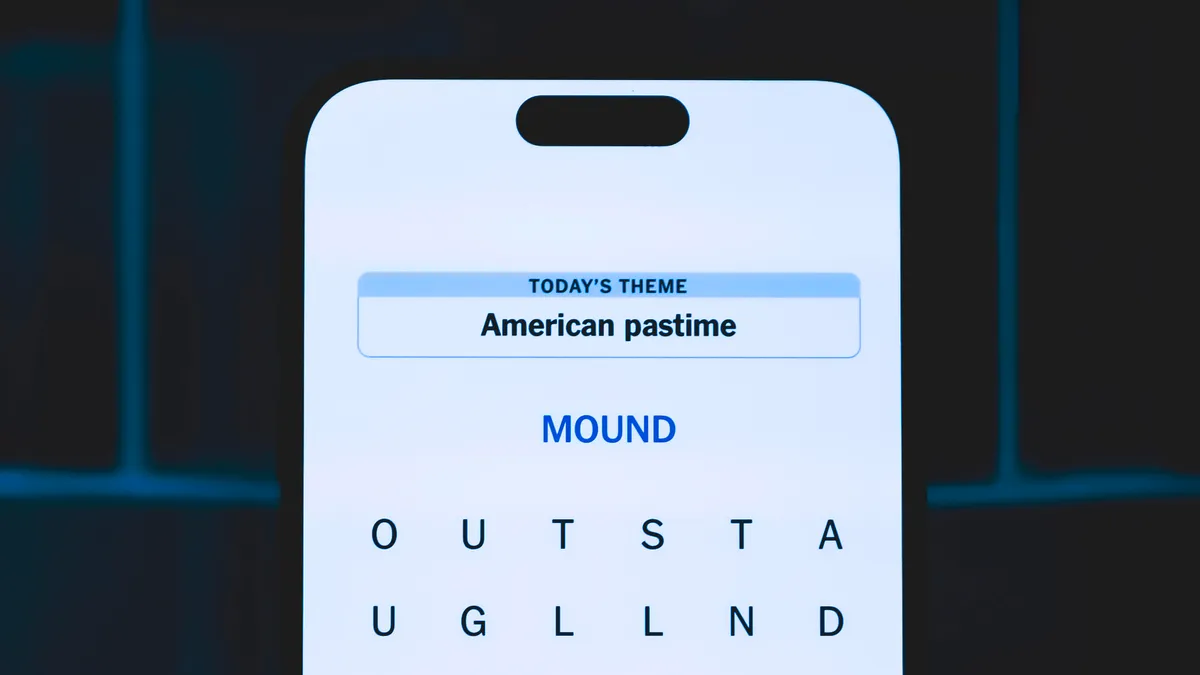
Looking for the most recent Strands answer? Click here for our daily Strands hints, as well as our daily answers and hints for The New York Times Mini Crossword, Wordle, Connections and Connections: Sports Edition puzzles.
Today’s NYT Strands puzzle is fun and timely, relating to a certain big ceremony held this weekend. Some of the answers are difficult to unscramble, so if you need hints and answers, read on.
If that doesn’t help you, here’s a clue: The envelope, please.
Clue words to unlock in-game hints
Your goal is to find hidden words that fit the puzzle’s theme. If you’re stuck, find any words you can. Every time you find three words of four letters or more, Strands will reveal one of the theme words. These are the words I used to get those hints but any words of four or more letters that you find will work:
RATE, RATED, DATE, DOTE, DATED, DOTED, GATE, GATES, TROD, TRODS
Answers for today’s Strands puzzle
These are the answers that tie into the theme. The goal of the puzzle is to find them all, including the spangram, a theme word that reaches from one side of the puzzle to the other. When you have all of them (I originally thought there were always eight but learned that the number can vary), every letter on the board will be used. Here are the nonspangram answers:
SONG, ACTOR, ACTRESS, SOUND, DIRECTOR, PICTURE
Today’s Strands spangram
The completed NYT Strands puzzle for March 15, 2026.
NYT/Screenshot by CNET
Today’s Strands spangram is ACADEMYAWARD. To find it, start with the A that’s five letters down on the farthest-left row, and wind over and up.
If a zipper breaks, a 3D printer might not be the first tool one reaches for — but it’s more feasible than one might think. [MisterJ]’s zipper slider replacement is the kind of 3D print that used to be the domain of well-tuned printers only, but most hobbyist printers should be able to handle it nowadays.
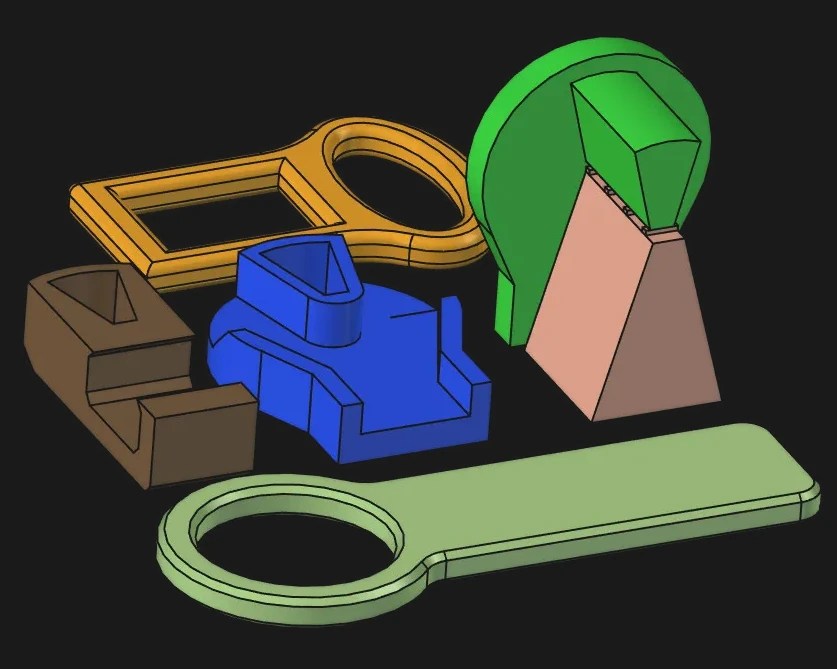
The two-part design allows installation without unsewing the zipper ends. Note the print orientation of the green part, which maximizes the strength of the peg by making the layer lines perpendicular to the load.
What really sets this design apart from other printed versions is its split construction. Putting a new slider onto a zipper usually requires one to free the ends of the zipper by unsewing them. [MisterJ]’s two-part design instead allows the slider to be assembled directly onto the zipper, without the hassle of unsewing and re-sewing anything. That’s a pretty significant improvement in accessibility.
Want to make some adjustments? Good news, because the files are in STEP format which any CAD program will readily understand. We remember when PrusaSlicer first gained native STEP support and we’re delighted that it’s now a common feature in 3D printer software.
[MisterJ]’s zipper slider design is available in a variety of common sizes, in both standard (zipper teeth face outward) and reverse (zipper teeth face inward) configurations. Naturally a metal slider is more durable than a plastic one, but being able to replace broken parts of a zipper with a 3D printer is a pretty handy thing. Speaking of which, you can also 3D print a zipper box replacement should the squarish bit on the bottom get somehow wrecked or lost.
Last election season, you might recall how the Trump campaign lied to everyone repeatedly about how his second administration would “rein in big tech,” and be a natural extension of the Lina Khan antitrust movement. As we noted at the time, that was always an obvious fake populist lie, but it was propped up anyway by a lazy press and a long line of useful idiots (including some purported “antitrust experts“.)
Trump’s latest betrayal to the the MAGA antitrust movement (that never really existed outside the skulls of rubes) is his DOJ’s surprise blindsiding of states by striking a pathetic settlement with Ticketmaster that doesn’t really fix the actual problem: monopoly.
The Biden DOJ and most US states sued Live Nation and its Ticketmaster subsidiary back in 2024, alleging that Live Nation has a monopoly on “the delivery of nearly all live music in America today.”
Advertisement
But while a new Trump settlement with the company requires $280 million in civil penalties and a 15% cap on service fees for people who want to use their amphitheaters, it backs off any attempt to pursue a break up of Live Nation and Ticketmaster, the one move that would actually (more permanently) help protect consumers, artists, and the live music market from predatory behavior.
“The case went to trial, and testimony began last week in US District Court for the Southern District of New York. But the US and Live Nation informed the court of a proposed settlement on March 8, taking state attorneys general by surprise. The judge presiding over the case reportedly said in court today that the way the settlement was announced “is absolutely unacceptable.
States reserving the right to continue litigation filed a motion for mistrial, saying they need time to prepare for a new trial and evaluate the terms of the settlement between the US and Live Nation. The “sudden disappearance” of the US from the case will likely give the jury the incorrect impression that Live Nation’s “antitrust violations have been cured or resolved, or that Proceeding Plaintiff States’ claims lack merit,” the states said.”
Advertisement
This was always going to be the outcome. There were constant signs. Trump is an autocrat, fascist, and opportunist who believes in nothing beyond his own pursuit of power and wealth. The corruption and autocracy was always going to dominate any serious Republican interest in antitrust (which, let’s be honest, even among Gail Slater types was historically inconsistent at best).
The U.S. press also played a giant role here. They spent years propping up Trump’s false claims he “wanted to rein in big tech,” when what the authoritarians really wanted was to abuse government power to scare (quite successfully as it turned out) tech companies away from doing even the most basic content moderation of right wing race-baiting propaganda online.
Now, unsurprisingly, here we are, staring down the barrel of democracy demolishing authoritarianism, with unchecked corporate power in full alignment with the effort.
Happy Pi Day! March 14 is the date that otherwise rational people celebrate this irrational number, because 3/14 contains the first three digits of pi. And hey, pi deserves a day. By definition, it’s the ratio of the circumference and diameter of a circle, but it shows up in all kinds of places that seem to have nothing to do with circles, from music to quantum mechanics.
Pi is an infinitely long decimal number that never repeats. How do we know? Well, humans have calculated it to 314 trillion decimal places and didn’t reach the end. At that point, I’m inclined to accept it. I mean, NASA uses only the first 15 decimal places for navigating spacecraft, and that’s more than enough for earthly applications.
The coolest thing, for me, is that there are many ways to approximate that value, which I’ve written about in the past. For instance, you can do it by oscillating a mass on a spring. But maybe the craziest method of all was proven in 1777 by George Louis Leclerc, Comte de Buffon.
Decades earlier, Buffon had posed this as a probability question in geometry: Imagine you have a floor with parallel lines separated by a distance d. Onto this floor, you drop a bunch of needles with length L. What is the probability that a needle will cross one of the parallel lines?
Advertisement
A picture will help you understand what’s happening. Let’s say I drop just two needles on the floor (feel free to replace the needles with something safer, like toothpicks). Also, just to make things easier later, we can say that the needle length and line spacing are equal (d = L).
You can see that one of the needles crosses a line and the other doesn’t. OK, but what are the chances? This is not the most trivial problem, but let’s think about just one dropped needle. We only care about two values—the distance (x) from the farther end of the needle to a line, and the angle of the needle (θ) with respect to a perpendicular (see the diagram below). If x is less than half the spacing between lines, we get a needle-crossing. As you can see, you’d get a higher probability with a smaller x or a smaller θ.
Apple’s 2026 may have gotten off to a new-product-filled start, but it’s far from done. There are plenty more iPhone and other announcements to come before the year’s end.
There’s still a lot to come from Apple in 2026
Between the launch of the M5 MacBook Air, MacBook Neo, iPhone 17e, and M5 Pro/Max MacBook Pros, Apple has made a solid start to the year. But with the annual WWDC event still to come, not to mention likely hardware announcements this fall, there is still plenty to look forward to. Apple is still expected to unveil a raft of software and hardware in the coming months, including some all-new products. Rumors of the company’s first-ever foldable iPhone continue to gather pace, and that’s just the beginning. Continue Reading on AppleInsider | Discuss on our Forums






 In broad strokes, we can imagine what would happen. If you plug in something significantly higher than 3.14, the orbit becomes elliptical to the point that the craft can fly off into deep space. Drop the value down, and the orbit will intersect with the Earth — a guaranteed recipe for a bad time.