
In the week leading up to President Donald Trump’s war in Iran, the Pentagon was waging a different battle: a fight with the AI company Anthropic over its flagship AI model, Claude.
Tech
Iran war: Is the US using AI models like Claude and ChatGPT in combat?


That conflict came to a head on Friday, when Trump said that the federal government would immediately stop using Anthropic’s AI tools. Nonetheless, according to a report in the Wall Street Journal, the Pentagon made use of those tools when it launched strikes against Iran on Saturday morning.
Were experts surprised to see Claude on the front lines?
“Not at all,” Paul Scharre, executive vice president at the Center for a New American Security and author of Four Battlegrounds: Power in the Age of Artificial Intelligence, told Vox.
According to Scharre: “We’ve seen, for almost a decade now, the military using narrow AI systems like image classifiers to identify objects in drone and video feeds. What’s newer are large-language models like ChatGPT and Anthropic’s Claude that it’s been reported the military is using in operations in Iran.”
Scharre spoke with Today, Explained co-host Sean Rameswaram about how AI and the military are becoming increasingly intertwined — and what that combination could mean for the future of warfare.
Below is an excerpt of their conversation, edited for length and clarity. There’s much more in the full episode, so listen to Today, Explained wherever you get podcasts, including Apple Podcasts, Pandora, and Spotify.
The people want to know how Claude or ChatGPT might be fighting this war. Do we know?
We don’t know yet. We can make some educated guesses based on what the technology could do. AI technology is really great at processing large amounts of information, and the US military has hit over a thousand targets in Iran.
They need to then find ways to process information about those targets — satellite imagery, for example, of the targets they’ve hit — looking at new potential targets, prioritizing those, processing information, and using AI to do that at machine speed rather than human speed.
Do we know any more about how the military may have used AI in, say, Venezuela on the attack that brought Nicolas Maduro to Brooklyn, of all places? Because we’ve recently found out that AI was used there, too.
What we do know is that Anthropic’s AI tools have been integrated into the US military’s classified networks. They can process classified information to process intelligence, to help plan operations.
We’ve had this sort of tantalizing detail that these tools were used in the Maduro raid. We don’t know exactly how.
We’ve seen AI technology in a broad sense used in other conflicts, as well — in Ukraine, in Israel’s operations in Gaza, to do a couple different things. One of the ways that AI is being used in Ukraine in a different kind of context is putting autonomy onto drones themselves.
When I was in Ukraine, one of the things that I saw Ukrainian drone operators and engineers demonstrate is a little box, like the size of a pack of cigarettes, that you could put onto a small drone. Once the human locks onto a target, the drone can then carry out the attack all on its own. And that has been used in a small way.
We’re seeing AI begin to creep into all of these aspects of military operations in intelligence, in planning, in logistics, but also right at the edge in terms of being used where drones are completing attacks.
How about with Israel and Gaza?
There’s been some reporting about how the Israel Defense Forces have used AI in Gaza — not necessarily large-language models, but machine-learning systems that can synthesize and fuse large amounts of information, geolocation data, cell phone data and connection, social media data to process all of that information very quickly to develop targeting packages, particularly in the early phases of Israel’s operations.
But it raises thorny questions about human involvement in these decisions. And one of the criticisms that had come up was that humans were still approving these targets, but that the volume of strikes and the amount of information that needed to be processed was such that maybe human oversight in some cases was more of a rubber stamp.
The question is: Where does this go? Are we headed in a trajectory where, over time, humans get pushed out of the loop, and we see, down the road, fully autonomous weapons that are making their own decisions about whom to kill on the battlefield?
That’s the direction things are headed. No one’s unleashing the swarm of killer robots today, but the trajectory is in that direction.
We saw reports that a school was bombed in Iran, where [175 people] were killed — a lot of them young girls, children. Presumably that was a mistake made by a human.
Do we think that autonomous weapons will be capable of making that same mistake, or will they be better at war than we are?
This question of “will autonomous weapons be better than humans” is one of the core issues of the debate surrounding this technology. Proponents of autonomous weapons will say people make mistakes all the time, and machines might be able to do better.
Part of that depends on how much the militaries that are using this technology are trying really hard to avoid mistakes. If militaries don’t care about civilian casualties, then AI can allow militaries to simply strike targets faster, in some cases even commit atrocities faster, if that’s what militaries are trying to do.
I think there is this really important potential here to use the technology to be more precise. And if you look at the long arc of precision-guided weapons, let’s say over the last century or so, it’s pointed towards much more precision.
If you look at the example of the US strikes in Iran right now, it’s worth contrasting this with the widespread aerial bombing campaigns against cities that we saw in World War II, for example, where whole cities were devastated in Europe and Asia because the bombs weren’t precise at all, and air forces dropped massive amounts of ordnance to try to hit even a single factory.
The possibility here is that AI could make it better over time to allow militaries to hit military targets and avoid civilian casualties. Now, if the data is wrong, and they’ve got the wrong target on the list, they’re going to hit the wrong thing very precisely. And AI is not necessarily going to fix that.
On the other hand, I saw a piece of reporting in New Scientist that was rather alarming. The headline was, “AIs can’t stop recommending nuclear strikes in war game simulations.”
They wrote about a study in which models from OpenAI, Anthropic, and Google opted to use nuclear weapons in simulated war games in 95 percent of cases, which I think is slightly more than we humans typically resort to nuclear weapons. Should that be freaking us out?
It’s a little concerning. Happily, as near as I could tell, no one is connecting large-language models to decisions about using nuclear weapons. But I think it points to some of the strange failure modes of AI systems.
They tend toward sycophancy. They tend to simply agree with everything that you say. They can do it to the point of absurdity sometimes where, you know, “that’s brilliant,” the model will tell you, “that’s a genius thing.” And you’re like, “I don’t think so.” And that’s a real problem when you’re talking about intelligence analysis.
Do we think ChatGPT is telling Pete Hegseth that right now?
I hope not, but his people might be telling him that.
You start with this ultimate “yes men” phenomenon with these tools, where it’s not just that they’re prone to hallucinations, which is a fancy way of saying they make things up sometimes, but also the models could really be used in ways that either reinforce existing human biases, that reinforce biases in the data, or that people just trust them.
There’s this veneer of, “the AI said this, so it must be the right thing to do.” And people put faith in it, and we really shouldn’t. We should be more skeptical.

Continue Reading
Tech
Is Amazon’s Big Spring Sale better than Prime Day? I’ve hand-picked the 55 best deals on TVs, appliances, cheap tech gadgets, and more

Refresh
The AirPods 4 down to $99

Apple devices are always in high demand during holiday sales, and one of today’s best deals is the AirPods 4 for $99.
The AirPods 4 feature a new design for all-day comfort and feature Apple’s H2 chip, which supports personalized spatial audio and voice isolation. You also get a redesigned case with 30 hours of battery life and USB-C wireless charging support.
Apple AirPods 4: was $129.99 now $99 at Amazon
50% off Amazon’s best-selling Fire TV Stick 4K Plus

The Fire TV Stick 4K Plus is Amazon’s best-selling device, and the retailer just slashed 50% off the price, bringing it down to just $24.99 — a deal so good, I’ve already purchased it.
Amazon’s new Fire TV Stick 4K Plus streams shows and movies on your TV in ultra-high definition 4K resolution. This updated version now supports Dolby Vision, Wi-Fi 6, and includes 2GB of RAM — all for just $25.
Amazon Fire TV Stick 4K Plus: was $49.99 now $24.99 at Amazon
Welcome to today’s live coverage of Amazon’s 2026 Big Spring Sale. The sale officially kicks off today and runs through March 31, with new deals released every day.
Please follow our community guidelines.” data-join-the-conversation-text=”Join the Conversation”>
You must confirm your public display name before commenting
Please logout and then login again, you will then be prompted to enter your display name.
Tech
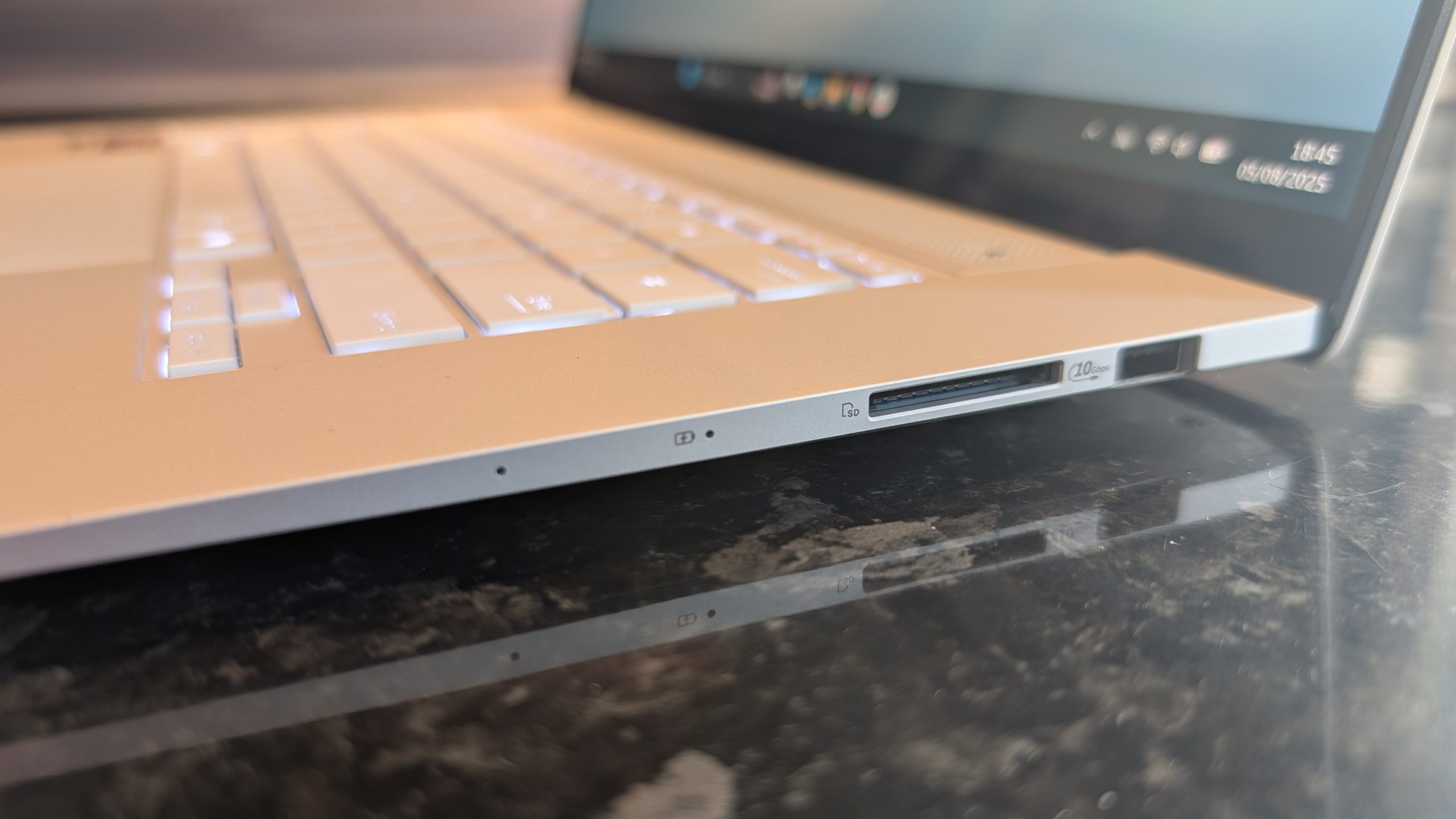
Need a new laptop? You might want to buy now, as Asus just warned that prices could soon jump by up to 30%
- An Asus exec has warned of big price hikes for PCs
- Prices could rise by 25% to 30% in the second quarter in Taiwan, we’re told
- This is likely to be reflected globally, and with other increasingly gloomy predictions hanging over the PC industry, it would seem the time to buy is now
Asus has warned that its laptops are going to get a lot more expensive in Taiwan, and while this doesn’t necessarily apply globally, you can bet it’s reflective of the situation worldwide — and the scale of the increase is seriously worrying.
As reported by UDN in Taiwan (flagged by VideoCardz), Asus said that PC prices in the country are going to rise by 25% to 30% in the second quarter of this year on average (with varying increases depending on the exact model, of course).
This prediction came direct from Liao Yi-hsiang, who is General Manager of Asus United Technology Systems Business, during an interview conducted after a press conference for a new Zenbook laptop.
Article continues below
The Asus exec made it clear that double-digit price increases would apply to all PC makers, as they’re obviously all suffering from the same RAM and storage pricing headwinds (and the rising costs of other components besides, such as GPUs).
The report further notes that price increases of components “may continue in the second half of the year”, and therefore Liao “suggests that consumers who need to upgrade their PCs should buy them as soon as possible”. (Note that this is a translation of the article from Chinese, but the gist is pretty clear).
Analysis: don’t hang around at this point

Granted, the report specifically notes that Asus didn’t say whether this price increase would apply globally, but it also didn’t say it wouldn’t — and I think you can safely draw your own conclusions there. Yes, there will likely be some regional variability, but Taiwan isn’t in a bubble, and warnings of price hikes of nearly a third over the course of the next quarter is a hugely worrying signal of what’s to come with the whole of the PC market.
Meanwhile, we’re hearing gloomier forecasts around PC pricing and the latest twists on the RAM crisis on a weekly — if not daily — basis. Here’s another doom nugget from this week, for example, with memory chip maker Micron letting us know how bad things have got with supply in no uncertain terms. It’s getting dire out there, to the point where hardware is being cancelled — witness Kotaku’s report about the Ayaneo Next 2 getting canned because the price of the handheld would be around four grand at this point.
I’d fully agree with the Asus exec that if you think you’ll need a new desktop PC or laptop in the near future, it makes sense to buy now. These devices will surely only get pricier as 2026 rumbles onwards, with supply difficulties around memory not expected to get any better for a long time. (Indeed, some believe the RAM market won’t be back to normal until 2030, and they include another major memory chip maker).
I think you’ll regret waiting, frankly, especially if you can get a good deal on a laptop now, and there are some tempting bargains floating around still. These offers may not be nearly as compelling a few months down the line, because if Asus is right, serious price jumps could be here before we know it.

The best laptops for all budgets
Follow TechRadar on Google News and add us as a preferred source to get our expert news, reviews, and opinion in your feeds. Make sure to click the Follow button!
And of course, you can also follow TechRadar on YouTube and TikTok for news, reviews, unboxings in video form, and get regular updates from us on WhatsApp too.


US Air Force (USAF) B-2 Spirit stealth bombers recently trained alongside US Navy jet fighters in a maritime strike exercise conducted off the coast of California. The drill brought together aircraft from Carrier Air Wing 11 — the aviation element assigned to the USS Theodore Roosevelt (one of the oldest aircraft carriers still in service) — and at least one B-2 bomber from the USAF’s 509th Bomb Wing based at Whiteman Air Force Base in Missouri. While the USAF publicly announced the exercise, officials didn’t specify exactly when the exercise took place.
The drill was focused on integrated maritime strike operations — a mission that involves coordinating multiple aircraft types to engage seaborne targets. It was a mission that also introduced the $2 billion Spirit bomber to the Navy’s new AIM-174B “Gunslinger” missile — an air-launched weapon based on the service’s SM-6 interceptor. The Gunslingers were loaded on two of the participating Navy F/A-18E/F Super Hornets.
The exercise in itself is not unusual; the Navy and USAF regularly conduct such exercises. However, this one drew attention because it highlighted both the introduction of the AIM-174B and the evolving role of strategic bombers like the B-2 in maritime strike scenarios.
Essentially, this sort of exercise is designed to give military planners an opportunity to test how long-range weapons, stealth aircraft, and naval aviation resources can operate together in complex missions designed to better defend US assets.
Meet the Gunslinger
The AIM-174B “Gunslinger” was not developed from scratch. Rather, it traces its roots back to the Navy’s Standard Missile-6 (SM-6). Developed by Raytheon, the SM-6 is something of a multitool in the missile world. Originally designed for launch from Aegis-equipped warships, it can be used for anti-air warfare, ballistic missile defense, and against sea and ground targets at long ranges (thought to be about 230 miles).
Essentially, the Gunslinger is the same missile as the SM-6 but adapted for air launch. Officially, it’s known as the SM-6 AIM-174B Air Launch Capability; the system is designed to pair with the F-18 Super Hornet, which remains one of the fastest US fighter jets in service today. This combination gives the Navy’s carrier-based fighters access to a much longer-range missile than traditional air-to-air missiles.
Physically, the weapon is larger than many air-to-air missiles, stretching to more than 15 feet in length and weighing close to a ton. This is what allows it to carry both a larger propulsion system and a larger warhead. The result is a new weapon in the Navy’s armory that allows its jet fighters to engage threats at far greater distances.
Why the B-2 is showing up in naval warfare exercises
At first glance, the partnership between Naval assets and the B-2 Spirit might seem like a strange one. After all, the B-2 is more widely known as a platform for delivering precision weapons against land targets, sometimes flying on missions that can last for over 30 hours. However, what this exercise shows is how the US military is increasingly exploring a changing role for the aircraft and how it can be used to target ships.
One area of development is the USAF’s QUICKSINK program (the clue is in the name). This program converts existing weapons platforms into guided anti-ship weapons capable of striking moving targets. Instead of using more expensive purpose-built anti-ship missiles, the concept allows aircraft to use modified munitions equipped with guidance systems to target and sink enemy ships. This approach allows a lower-cost way to expand the military’s anti-ship arsenal, without building advanced missile systems.
This isn’t the first involvement the B-2 has had with the program. In September 2025, a B-2 bomber from Whiteman Air Force Base joined Norwegian F-35 fighters during an exercise in the North Atlantic. The exercise included a maritime strike using a QUIKSINK weapon.
Tech
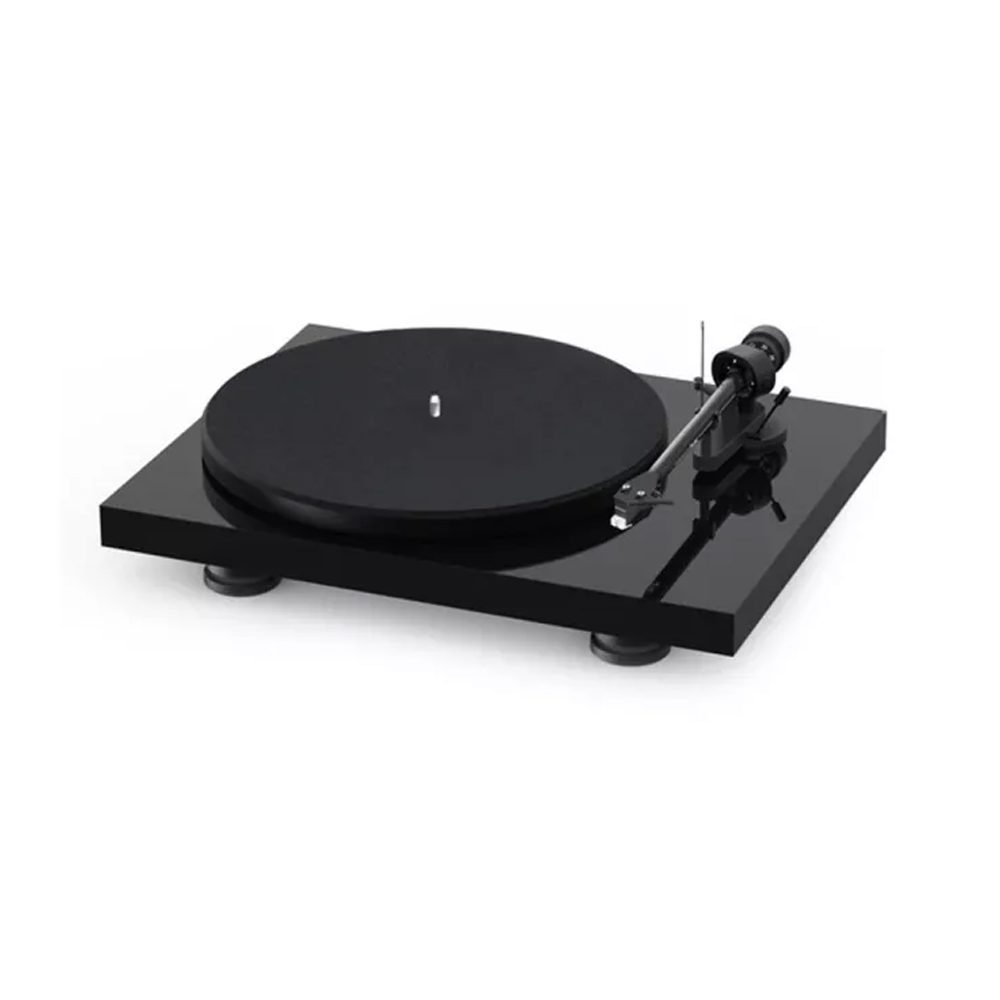
‘Small enough to be tempting’: I need this award-winning turntable company’s new mini automatic vinyl-cleaning machine more than I’ll admit
- Pro-Ject unveils the VC-E Mini
- It’s a vacuum-based automatic vinyl record cleaner
- Designed to use few moving parts
My record collection isn’t mine, but an inheritance I try to take good care of. Or I thought I took great care of, but Pro-Ject’s new release has me thinking I could be doing a better at keeping them pristine.
The company behind the five-star Pro-Ject Debut Carbon and numerous more of the best turntables, has unveiled its latest vinyl cleaning device.
This is the Pro-Ject VC-E Mini, which is going on sale in April. It’s set to cost £249 (about $350, AU$500), so it’s not cheap — but it’s more affordable than the existing VC-E2 and VC-E3.
Article continues below
Since dirt on a vinyl can really hurt its sound quality, machines like this make sense, but to me the VC-E Mini solves a few problems that make this kind of machine out-of-reach for most people.
A smaller cleaning machine
The Pro-Ject VC-E Mini is, as the name suggests, a more compact record cleaner, and it’s designed to minimize moving parts (and cupboard space too).
It saves space by not having a suction arm to clean the vinyl. Instead it uses a brushless vacuum motor to help cleaning fluid trickle across the vinyl and off the machine.
The box also includes a cleaning brush, magnetic clamp, adhesive arm strip and said cleaning fluid, so the cleaning process sounds pretty hands-on.
This fluid is Pro-Ject’s Wash it 2, which is already readily available to buy since other VC-E models use it. It doesn’t use alcohol, and instead is made from “demineralised water and cleaning concentrate”.
As someone who’s always just cleaned their records with a microfiber cloth, I’ve always been put off by the size and price of bespoke upkeep machines like this.
While the VC-E doesn’t fully solve the latter problem, I’ll concede that it’s small enough to be tempting as someone who really does want to preserve these items. Maybe I need it more than I thought…

The best turntables for all budgets
Follow TechRadar on Google News and add us as a preferred source to get our expert news, reviews, and opinion in your feeds. Make sure to click the Follow button!
And of course, you can also follow TechRadar on YouTube and TikTok for news, reviews, unboxings in video form, and get regular updates from us on WhatsApp too.

Sony Honda Mobility, the automotive venture from two of Japan’s most storied companies, has swung the axe on its EV project. In a statement, it said it would “discontinue the development and launch” of the Afeela 1 and 2, its long-in-development electric cars. The company added it would review its “business direction,” and announce its future plans “at the earliest possible opportunity.” Which, if we’re honest, probably means the whole thing is going to be shut down, or scaled back so much it’s no longer worth talking about.
2026 has not been a great year for Honda. On March 12, it posted an up-to $15.7 billion loss as it wrote off a big chunk of its investment in EVs. The US’ pivot toward fossil fuels, removal of federal EV tax credits and the imposition of tariffs has hit its business pretty hard. Not to mention the high-profile embarrassment of its current F1 engine project with Aston Martin, which promised so much and has delivered less than nothing.
Sony’s journey into the automotive world began six years ago with the announcement of the Vision-S, the car which would eventually be re-christened Afeela. But while the product looked good on trade show stands, it stood still while the rest of the car world sprinted ahead. In January, Tim Stevens said Afeela 1 looked a little dated, and a little lacking in emotion, and a lot more expensive than comparable models from rivals. Not to mention that Afeela 1 is a sedan, being sold to a world that’s increasingly fallen out of love with the type in favor of higher-riding SUVs. In Sony’s statement, however, the SUV-aping Afeela 2 didn’t even get a mention by name, which hints that it was as much an afterthought for the company as we might have guessed when it was announced.


OpenAI is finally addressing one of the most frustrating things about working with files in ChatGPT. The company is rolling out two new features to help users quickly access previously uploaded files, including a Recent files menu and a dedicated Library tab.
How do ChatGPT’s new file management features work?
Until now, files in ChatGPT were largely tied to individual conversations, which meant finding them often involved going back to the original chat and scrolling through long threads. The new Recent files option in the attachment menu now lists some of the files you’ve used most recently, making it easier to jump back into ongoing work without digging through older chats.
On the web, there’s also a new Library tab in the sidebar. This acts as a central hub for all your uploaded and generated files, giving you a more organized view instead of tying everything to separate conversations. You can browse, search, and quickly attach files to new chats from this tab.
OpenAI also says ChatGPT can answer questions about files you’ve already uploaded, so you don’t need to reupload them every time you want more insights. Together, these changes make file reuse faster and far less tedious, especially if you regularly juggle files across multiple sessions.
Who’s getting access, and when?
The update is rolling out globally to ChatGPT Plus, Pro, and Business subscribers. Those in the EU, Switzerland, and the UK will have to wait a bit longer, with availability in these regions expected soon. There’s no word yet on whether these features will make their way to the free tier.
With these changes, OpenAI is continuing to position ChatGPT as more than just a chatbot, gradually turning it into a tool for managing ongoing work across conversations.

X is updating its revenue-sharing incentives to give more weight to engagement from a user’s home region, Nikita Bier, the company’s Head of Product has announced. Bier said the change in policy was to “encourage content that resonates with people in [the user’s] country, in neighboring countries and people who speak [their] language.”
Bier continued that while X appreciates everyone’s opinion on US politics, the company is hoping the new policy can “disincentivize gaming the attention of US or Japanese accounts.” The US and Japan have the largest number of users on X. Bier didn’t mention it outright, but dozens of popular accounts tweeting pro-Trump sentiments and commentaries focusing on US politics in general were revealed to be based outside the US late last year, when X rolled out a transparency feature that exposed users’ locations. Those accounts, which pretended to be from the US and garnered millions of likes, views and reposts, turned out to be based in countries like India, Kenya and Nigeria.
“X will be a much richer community when there’s relevant posts for people in all parts of the world,” Bier said. When one user responded to his post that some countries barely have any users, making it hard to earn money from the website, Bier just suggested that they should write about their day-to-day experiences. “Of course, you’re welcome to continue chiming in on America politics. We just won’t send money overseas for that content,” he said. X’s new policy will start taking effect on Thursday, March 26.

Since Donald Trump’s war on Iran started more than three weeks ago, United States military forces have allegedly attacked more than 9,000 sites, creating a climate of fear and constant uncertainty for Iranians in Tehran and across the country. Without an advanced warning system from the government, and amid the longest internet shutdown in Iran’s history, Iranians are left in an information void.
Even before Israel and the United States began dropping bombs, Iran’s lack of a public emergency alert tool and severe state-controlled digital oppression has impacted tens of millions of citizens. Since the 12-day Israel-Iran war last year, though, a group of Iranian digital rights activists and volunteers has been working to fill the gap with a dynamic, regularly updated mapping platform called Mahsa Alert. The project can’t replace real-time early alerts that could come from a coordinated government service, but the tool sends push notifications when Israeli forces warn about attacks, details some confirmed strike locations, and offers offline mapping capabilities.
“There is no emergency alert in Iran,” says Ahmad Ahmadian, the president and CEO of US-based digital rights group Holistic Resilience, which is behind Mahsa Alert and has been developing the platform since last summer. “This was where we saw the traction, we saw the need, and we continued working on it with the volunteers, with some [open source intelligence] experts, and used this to map the repression machinery ecosystem of Iran and surveillance.”
Mahsa Alert is a website but also has Android and iOS apps, which were intentionally designed to be lightweight and easy to use on any device. Given the heavy government connectivity control inside Iran and erratic access to the internet, volunteers also prioritized engineering the platform for offline use. And it can be easily updated if a user does get connectivity for a brief period by downloading APK files that contain new data. The team works to keep these updates extremely small; a recent release was 60 kilobytes, and Ahmadian says they are typically no more than 100 kilobytes.
One overlay on Mahsa Alerts plots the locations of “confirmed attacks” that Ahmadian says his team or other OSINT investigators have verified, using video footage or images that are submitted to a Telegram bot or shared on social media. There are also warnings about areas where Israeli forces have issued evacuation alerts, along with the crucial component of people submitting reports on what is happening around them.
“We have to go through a due diligence and verification process and tag them before putting them on the map,” Ahmadian says of the reported attacks and incidents, adding that the team has a backlog of more than 3,000 reports that it is working through or is unable to verify. Along with attempting to map strikes, the team behind Mahsa Alert have also plotted “danger zones” that could be at risk of attack—such as sites linked to Iran’s nuclear program or military—so ordinary citizens can stay away from them. Ahmadian claims 90 percent of attacks it has confirmed were at sites that were already present on the map. “Some of them that we can confirm, we do it because [a user] has shared a photo or they have shared some details that makes them verifiable,” he says.
The map also includes locations of thousands of CCTV cameras, suspected government checkpoints, and other domestic infrastructure. Medical facilities, such as hospitals and pharmacies, are included on the map along with other resources like the locations of religious sites and past protests.
Mahsa Alert has become more visible on global social media feeds as Iranians around the world share details from the map, encouraging people to look into the service and flagging it for friends and family who could use it as a resource. “The app went from near zero to over 100,000 daily active users in a matter of days,” Ahmadian says, adding that in total there have been around 335,000 users this year, with people first turning to the app during the Iranian regime’s brutal crackdown on anti-government protesters in January. Through the limited user information the app collects, Ahmadian claims there are signs that 28 percent of users are accessing the platform from inside Iran.


Last week’s Nvidia GTC conference highlighted new chip architectures to power AI. But as the chips become faster and more powerful, the remainder of data center infrastructure is playing catchup. The power delivery community is responding: Announcements from Delta, Vertiv, and Eaton showcased new designs for the AI era. Complex and inefficient AC to DC power conversions are gradually being replaced by DC configurations, at least in hyperscale data centers.
“While AC distribution remains deeply entrenched, advances in power electronics and the rising demands of AI infrastructure are accelerating interest in DC architectures,” says Chris Thompson, vice president of advanced technology and global microgrids at Vertiv.
AC to DC Conversion Challenges
Today, nearly all data centers are designed around AC utility power. The electrical path includes multiple conversions before power reaches the compute load. Power typically enters the data center as medium-voltage AC (1kV to 35kV), is stepped down to low-voltage AC (480V or 415V) using a transformer, converted to DC inside an uninterruptible power supply (UPS) for battery storage, converted back to AC, and converted again to low-voltage DC (typically 54 V DC) at the server, supplying the DC power computing chips actually require.
“The double conversion process ensures the output AC is clean, stable and suitable for data center servers,” says Luiz Fernando Huet de Bacellar, vice president of engineering and technology at Eaton.
That setup worked well enough for the amounts of power required by traditional data centers. Traditional data center computational racks draw on the order of 10 kW each. For AI, that is starting to approach 1 MW. At that scale, the energy losses, current levels, and copper requirements of AC to DC conversions become increasingly difficult to justify. Every conversion incurs some power loss. On top of that, as the amount of power that needs to be delivered grows, the sheer size of the convertors, as well as the connector requirements of copper busbars, becomes untenable. According to an Nvidia blog, a 1 MW rack could require as much as 200 kg of copper busbar. For a 1 GW data center, it could amount to 200,000 kg of copper.
Benefits of High-Voltage DC Power
By converting 13.8 kV AC grid power directly to 800 VDC at the data center perimeter, most intermediate conversion steps are eliminated. This reduces the number of fans and power supply units, and leads to higher system reliability, lower heat dissipation, improved energy efficiency, and a smaller equipment footprint.
“Each power conversion between the electric grid or power source and the silicon chips inside the servers causes some energy loss,” says Fernando.
Switching from 415 V AC to 800 V DC in electrical distribution enables 85 percent more power to be transmitted through the same conductor size. This happens because higher voltage reduces current demand, lowering resistive losses and making power transfer more efficient. Thinner conductors can handle the same load, reducing copper requirements by 45 percent, a 5 percent improvement in efficiency, and 30 percent lower total cost of ownership for GW-scale facilities.
“In a high-voltage DC architecture, power from the grid is converted from medium-voltage AC to roughly 800 V DC and then distributed throughout the facility on a DC bus,” said Vertiv’s Thompson. “At the rack, compact DC-DC converters step that voltage down for GPUs and CPUs.”
A report from technology advisory group Omdia claims that higher voltage DC data centers have already appeared in China. In the Americas, the Mt. Diablo Initiative (a collaboration among Meta, Microsoft, and the Open Compute Project) is a 400 V DC rack power distribution experiment.
A handful of vendors are trying to get ahead of the game. Vertiv’s 800 V DC ecosystem that integrate with NVIDIA Vera Rubin Ultra Kyber platforms will be commercially available in the second half of 2026. Eaton, too, is well advanced in its 800 V DC systems innovation courtesy of a medium-voltage solid-state transformer (SST) that will sit at the heart of DC power distribution system. Meanwhile Delta, has released 800 V DC in-row 660kW power racks with a total of 480 kW of embedded battery backup units. And, SolarEdge is hard at work on a 99%-efficient SST that will be paired with a native DC UPS and a DC power distribution layer.
But much of the industry is far behind. Patrick Hughes, senior vice president of strategy, technical, and industry affairs for the National Electrical Manufacturers Association, says most innovation is happening at the 400 V DC level, though some are preparing 800 V DC. He believes the industry needs a complete, coordinated ecosystem, including power electronics, protection, connectors, sensing, and service‑safe components that scale together rather than in isolation. That, in turn, requires retooling manufacturing capacity for DC‑specific equipment, expanding semiconductor and materials supply, and clear, long‑term demand commitments that justify major capital investment across the value chain.
“Many are taking a cautious approach, offering limited or adapted solutions while waiting for clearer standards, safety frameworks, and customer commitments,” said Hughes. “Building the supply chain will hinge on stabilizing standards and safety frameworks so suppliers can design, certify, manufacture, and install equipment with confidence.”
From Your Site Articles
Related Articles Around the Web
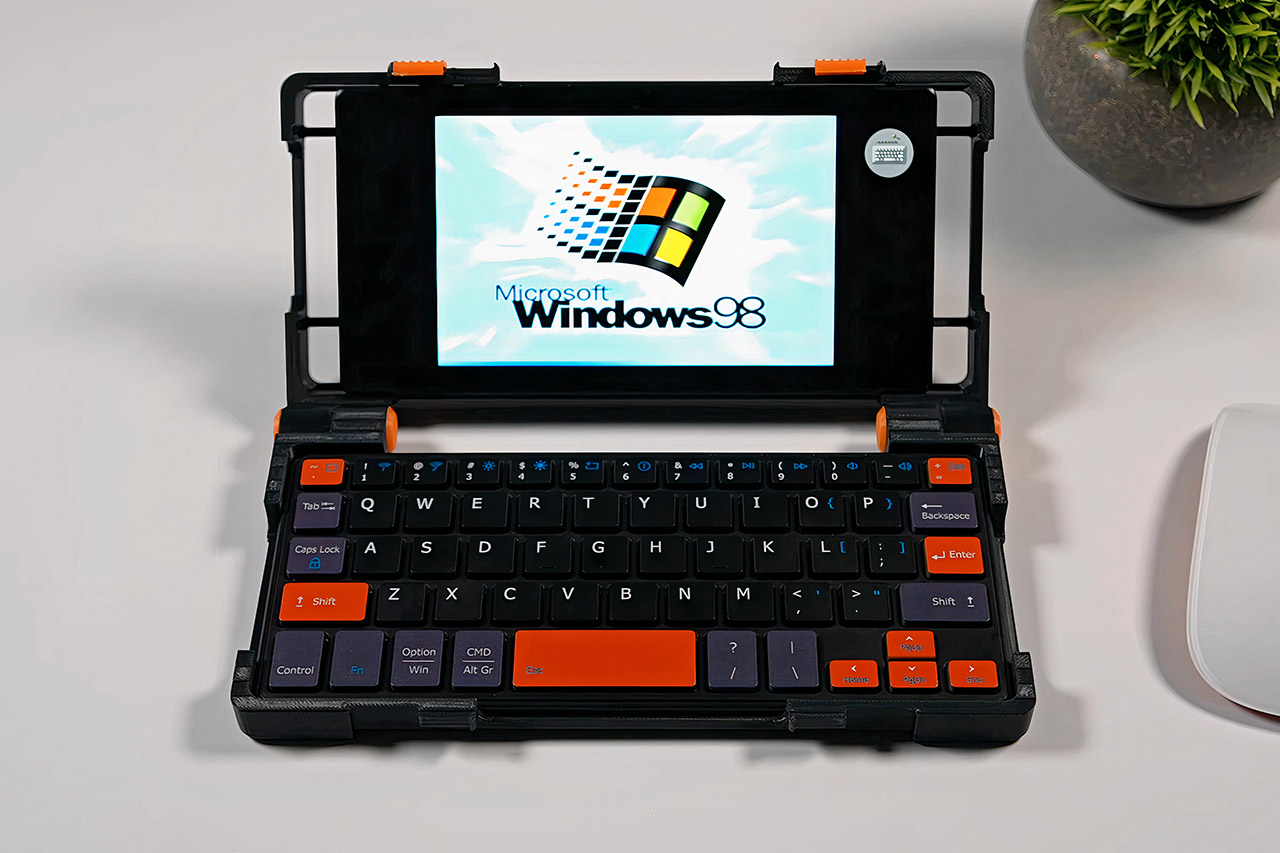
Gamers have long been searching for a computer that can be slipped into a coat pocket and used to complete tasks, a dream that now appears to be within reach due to a creative designer who wrapped a Razer Edge tablet within a custom 3D printed shell.
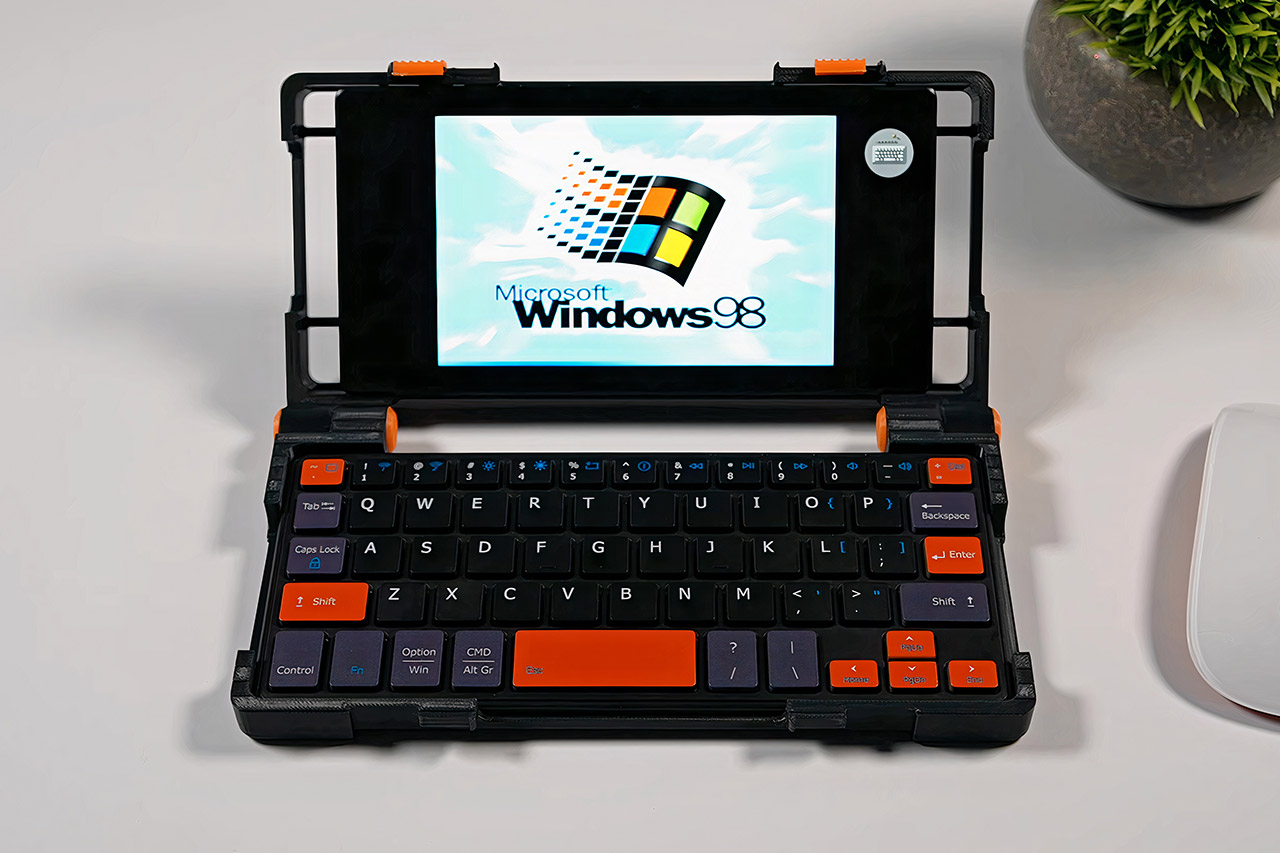
Flip the lid open and a familiar tablet screen greets you, cleanly framed in black plastic with just enough orange trim to make its intentions clear. A compact Bluetooth keyboard sits snugly in the base, and when everything is folded shut the whole thing is no bigger than a large phone, slim enough to disappear into a pocket or bag without a second glance. Those orange accents on the hinges and keycaps are a quiet reminder that this is anything but an ordinary device.
Sale

ASUS ROG Xbox Ally – 7” 1080p 120Hz Touchscreen Gaming Handheld, 3-month Xbox Game Pass Premium…
- XBOX EXPERIENCE BROUGHT TO LIFE BY ROG The Xbox gaming legacy meets ROG’s decades of premium hardware design in the ROG Xbox Ally. Boot straight into…
- XBOX GAME BAR INTEGRATION Launch Game Bar with a tap of the Xbox button or play your favorite titles natively from platforms like Xbox Game Pass…
- ALL YOUR GAMES, ALL YOUR PROGRESS Powered by Windows 11, the ROG Xbox Ally gives you access to your full library of PC games from Xbox and other game…

The project started with a Razer Edge picked up for around $80, a tablet that had largely faded from the spotlight since its release but still packed a capable Qualcomm Snapdragon G3x Gen 1 processor, plenty of RAM, and Android 12 under the hood. It came without the original controllers, but at that price it was too good a candidate to pass up.
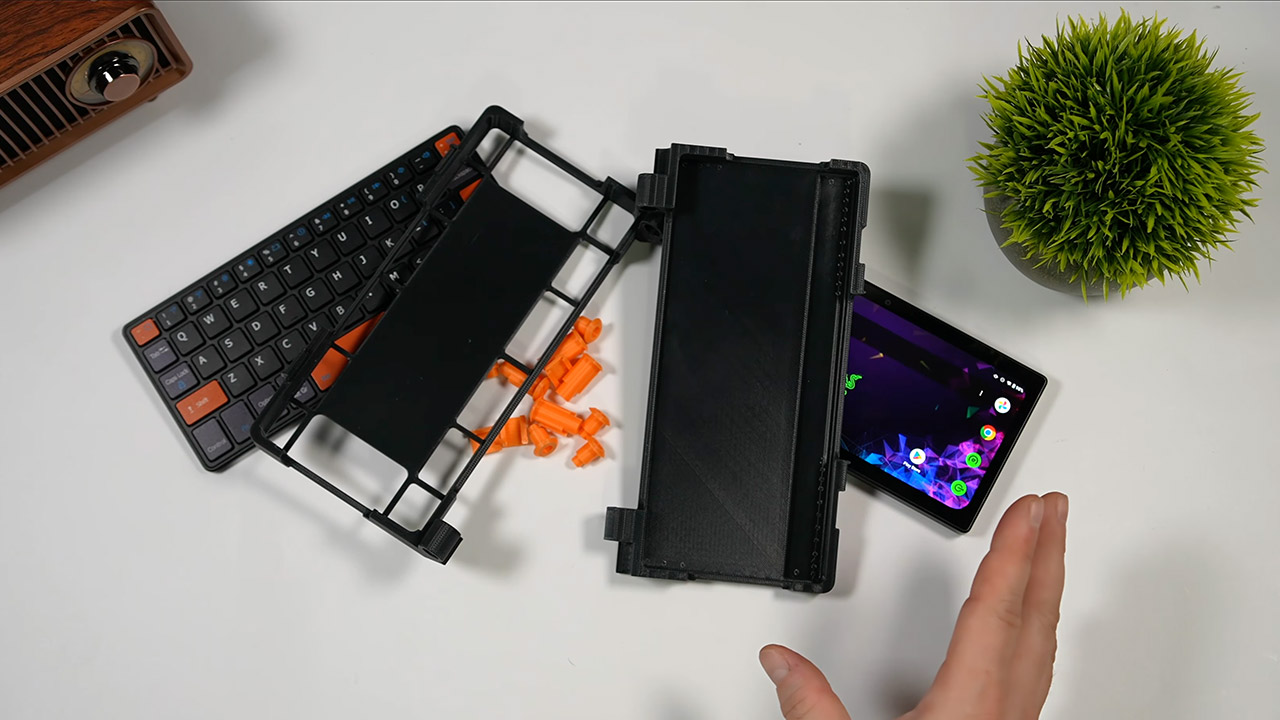
There were already some design files floating around online for modular clamshells that could hold a phone, so it was just a matter of modifying them a little to fit the Razer Edge. Then it was simply a matter of using free editing software to make the necessary changes and printing them on a regular consumer printer. This all came together with simple screws and pins for the hinges, and a few lock sliders on the front keep the whole thing shut securely when you’re traveling.
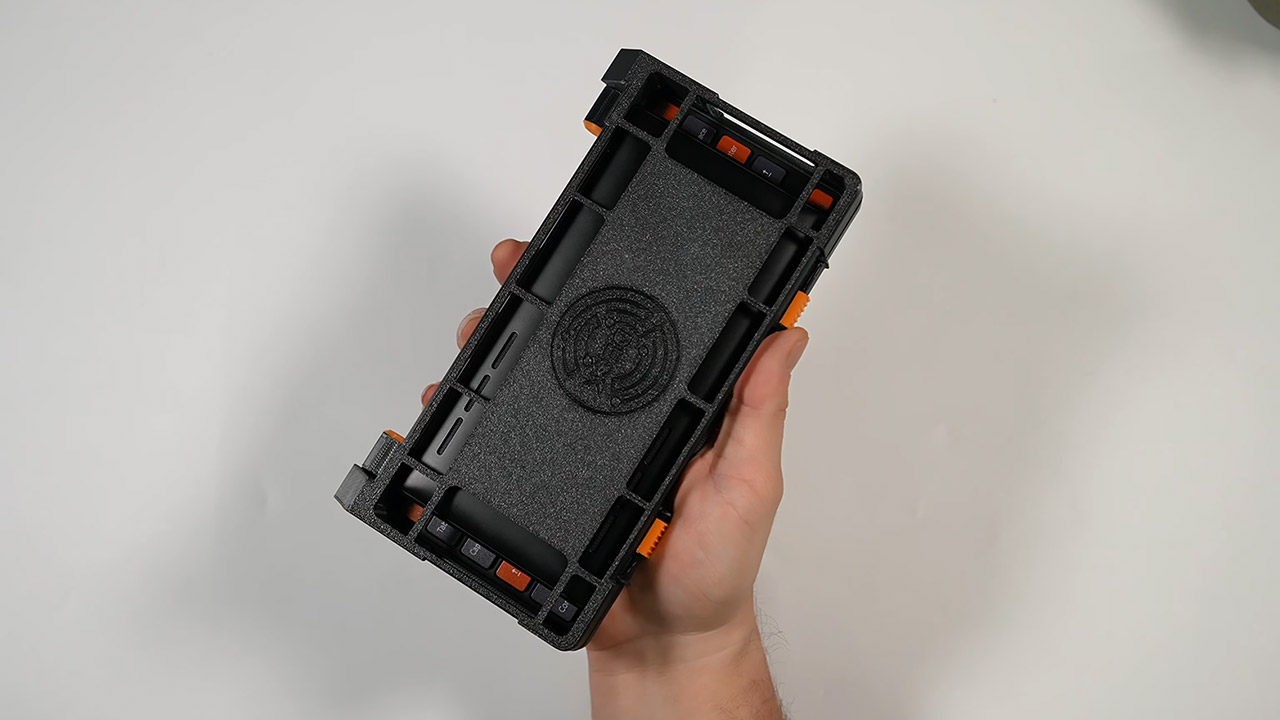
The major challenge was getting the tablet inside without damaging it. A metal ring affixed to the rear of the Razer Edge, combined with a MagSafe-style adaptor on the case, locked everything together with powerful magnets that can be peeled away with some moderate coaxing. The tablet can leave the shell in seconds and return to becoming a tablet whenever it feels like it. The keyboard simply fits into a little tray in the bottom and automatically pairs over Bluetooth. Given its size, the layout is quite decent, and all of the shortcuts for doing daily tasks are available. When the lid closes, everything tucks neatly against the screen.
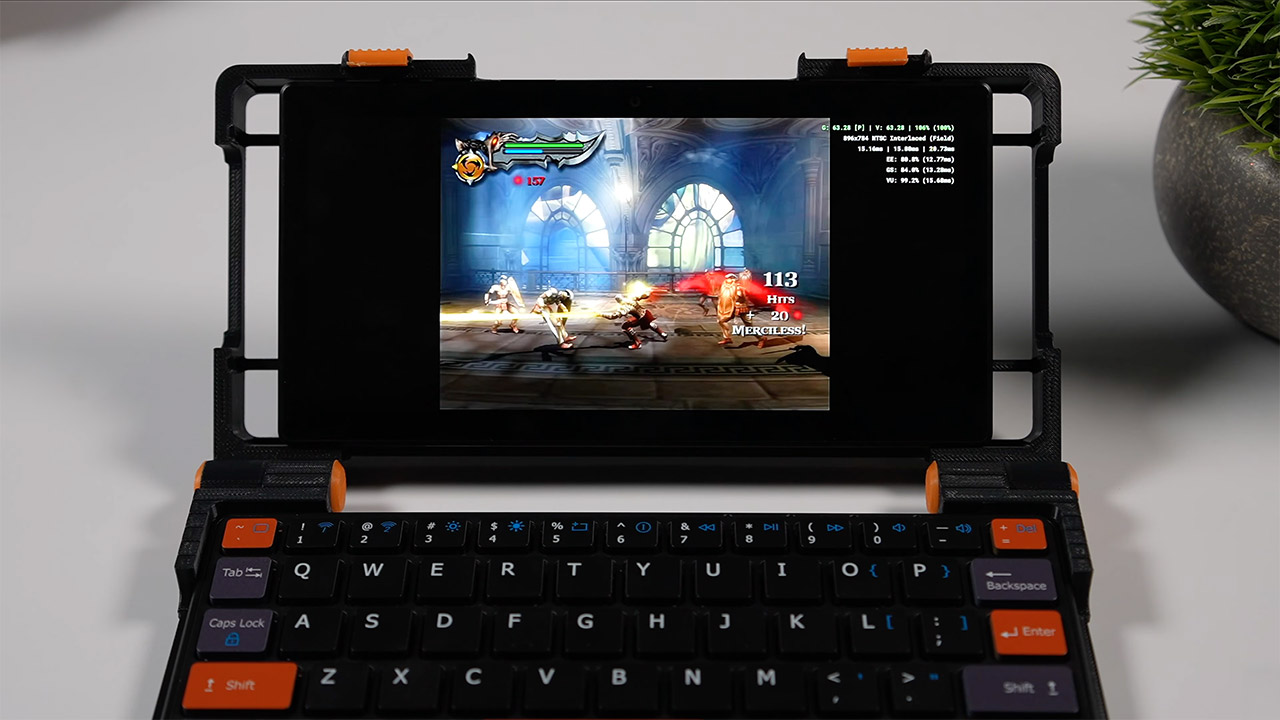
Power it up and things get interesting fast. Android 12 handles all the everyday essentials without breaking a sweat, and cloud streaming over Wi-Fi or mobile broadband opens up a much bigger games library on top of that. Emulation is where it really shines though, running GameCube titles at 720p with a solid frame rate and pushing PlayStation 2 games to 1.75 times their native resolution on many titles. Lighter PC games load up through dedicated apps and run without issue, and for anyone feeling nostalgic there is even a Windows 98 simulator tucked in there for good measure.
[Source]
Business13 seconds ago
ServiceTitan falls 40% after InvestingPro overvaluation warning

Crypto World1 minute ago
Bhutan moves more Bitcoin as state wallet outflows rise in March
Entertainment2 minutes ago
Amazon's Big Spring Sale has stacks of Lego deals from $8, including Easter gifts and display-worthy builds


-
 Crypto World4 days ago
NIO (NIO) Stock Plunges 6.5% as Shelf Registration Sparks Dilution Worries
-

 Fashion5 days ago
Weekend Open Thread: Adidas – Corporette.com
-

 Politics5 days ago
Jenni Murray, Long-Serving Woman’s Hour Presenter, Dies Aged 75
-

 Crypto World4 days ago
Best Crypto to Buy Now: Strategy Just Spent $1.57 Billion on Bitcoin During Fear While Early Investors Quietly Enter Pepeto for 150x Potential
-

 News Videos7 days ago
RBA board divided on rate cut, unusually buoyant share market | Finance Report | ABC NEWS
-

 Crypto World4 days ago
Bitcoin Price News: Bhutan Sells $72 Million in BTC Under Fiscal Pressure, but the Smart Money Entering Pepeto Sees What the Market Does Not
-

 Tech5 days ago
inKONBINI Lets You Spend Summer Days Behind the Register
-

 Crypto World7 days ago
Canada’s FINTRAC revokes registrations of 23 crypto MSBs in AML crackdown
-

 Sports2 days ago
Remo Stars and Kano Pillars Strengthen Survival Hopes in NPFL
-
 NewsBeat7 days ago
Residents in North Lanarkshire reminded to register to vote in Scottish Parliament Election
-
 NewsBeat1 hour ago
Manchester United reach agreement with Casemiro over contract clause amid transfer speculation
-

 News Videos7 days ago
PARLIAMENT OF MALAWI – PAC MEETING WITH REGISTRAR OF FINANCIAL ON AMARYLLIS HOTEL – INQUIRY LIVE
-

 Politics6 days ago
Gender equality discussions at UN face pushbacks and US resistance
-

 Business3 days ago
No Winner in March 21 Drawing as Prize Rolls to $133 Million for Next
-

 Business7 days ago
Who Was Alex Pretti? 5 Key Facts About the ICU Nurse Killed by Federal Agents in Minneapolis
-

 Sports2 days ago
Gary Kirsten Accuses Pakistan Cricket Board Of ‘Interference’, Mohsin Naqvi Responds
-

 Tech3 days ago
Give Your Phone a Huge (and Free) Upgrade by Switching to Another Keyboard
-

 Tech7 days ago
Inventec’s bizarre VeilBook laptop hides its touchpad under a sliding keyboard just to give cooling fans a little breathing room
-

 Sports5 days ago
2026 Kentucky Derby horses, odds, futures, preview, date: Expert who nailed 12 Derby-Oaks Doubles enters picks
-
Sports6 days ago
Vikings Free Agency Enters Phase 2 with Key Questions
You must be logged in to post a comment Login