Tech
Is IMAX for Sale? Sony, Netflix, Apple and Amazon Could Be Potential Buyers

Hollywood consolidation may not be done rearranging the furniture. With the Paramount and Warner Bros. Discovery deal still moving through the final stages, IMAX is now reportedly testing the waters for a possible sale, reaching out to undisclosed major entertainment and technology companies to gauge buyout interest. Nothing is guaranteed, and IMAX has not announced a formal sales process, but the mere suggestion that the premium large-format giant could be in play was enough to send its stock up more than 15%.
The timing is not exactly subtle. IMAX CEO Rich Gelfond opened the door to the idea in December 2025, saying the company could remain “an incredibly valuable player” as an independent business or become part of a larger corporate ecosystem. In an industry where theatrical exclusivity, premium ticket pricing, and branded cinema experiences matter more than ever, IMAX suddenly looks less like a niche exhibition technology company and more like a strategic asset. The kind that tends to attract phone calls from very large companies with very expensive lawyers.
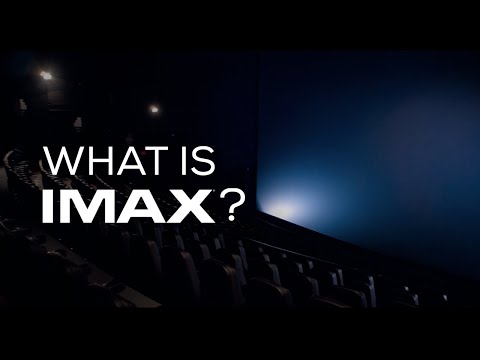
The timing of any potential IMAX sale is what makes this story more than corporate tire-kicking. IMAX is not limping into the room looking for a rescue. The company is coming off record market-share gains and has reaffirmed full-year 2026 guidance of $1.4 billion in global box office from its network, which would be a record for the company. That makes any possible sale less about weakness and more about whether IMAX believes it can extract maximum value while premium theatrical experiences are still one of the few bright spots in the movie business.
That also means any buyer would need to understand what IMAX actually is. This is not AMC, Cinemark, or another traditional theater chain with popcorn margins and real estate headaches. IMAX is a premium large-format technology, licensing, distribution, and brand platform with deep ties to studios, exhibitors, filmmakers, and global audiences.
It also reaches beyond commercial theaters through IMAX Enhanced, its home entertainment certification program developed with DTS for compatible content and consumer electronics. Buy it for the wrong reason, and you risk damaging the very thing that makes it valuable. Very Hollywood. Very expensive. Very possible.

Who Could Buy IMAX?
If IMAX is genuinely testing the market, the buyer list is not hard to sketch. Analysts have floated the usual suspects: Sony, Netflix, Apple, Amazon, AMC, Cinemark, and private equity. Paramount is almost certainly out of the frame given its own Warner Bros. Discovery deal, which leaves the field to companies that either want more control over premium theatrical presentation, a stronger bridge between theaters and streaming, or a globally recognized cinema brand that still has real pricing power.
Sony
Sony may be the cleanest fit for IMAX, especially if the deal is viewed through a cinema technology lens rather than a streaming land grab.
Beyond its consumer electronics business, Sony already has deep roots across the theatrical ecosystem: Sony Pictures, the VENICE digital cinema camera platform, image sensors, professional displays, projection, production, and post-production. In other words, Sony would not need a guided tour of the building before figuring out where the expensive machines are plugged in.
That matters. If Sony acquired IMAX, the learning curve would be shorter than it might be for a company looking at IMAX purely as a brand extension or a content funnel. The more interesting opportunity would be technical integration: pairing Sony’s imaging, production, display, and cinema expertise with IMAX’s premium large format exhibition network and filmmaker relationships.
Sony also has one advantage that Apple, Amazon, and Netflix do not: streaming is not the center of its entertainment strategy. Sony Pictures sells and licenses content broadly, which could reduce some of the tension between theatrical exclusivity and streaming priorities. That does not make a Sony acquisition simple, cheap, or guaranteed. But on paper, Sony looks like one of the few potential buyers that could strengthen IMAX without turning it into just another corporate trophy mounted above the conference room espresso machine.
Netflix
Netflix is the more disruptive name on the potential IMAX buyer list, and not just because it would make theater owners reach for the antacids.
After losing Warner Bros. Discovery to Paramount Skydance, Netflix still looks like a company with an internal appetite to do something large. The company declined to raise its Warner Bros. offer in February 2026, and Paramount’s winning bid reportedly required a $2.8 billion termination payment tied to the abandoned Netflix deal. That does not automatically mean Netflix turns around and buys IMAX. But it does mean the company has both motive and a very public reminder that scale still matters in Hollywood.
An IMAX acquisition would instantly give Netflix a deeper position in the theatrical world without requiring it to buy a traditional theater chain. That distinction matters. Netflix has been expanding its theatrical footprint more selectively, and its upcoming IMAX release of David Fincher’s The Adventures of Cliff Booth gives the company a very visible test case: a two-week exclusive IMAX window before the film lands on Netflix. That is not a takeover strategy by itself, but it is exactly the kind of move that makes people in this business start connecting dots with red string and expensive coffee.
The key would be restraint. If Netflix acquired IMAX, the smartest move would be to leave IMAX’s theatrical team, technical standards, filmmaker relationships, and exhibitor partnerships largely intact. IMAX works because it is not just a logo slapped on a bigger screen. It is a premium format ecosystem with trust built over decades. Netflix would need to strengthen that, not smother it under streaming-first logic.
There is also a Jersey Shore wrinkle that makes this more interesting from an eCoustics perspective. Netflix Studios Fort Monmouth is already underway, with Netflix planning to invest close to $1 billion into the 292-acre former Army post. eCoustics Editor in-Chief Ian White drives through the property daily, where the project is no longer theoretical. It is construction equipment, fencing, dirt, completed exterior soundstage walls, and the unmistakable smell of a very large check being cashed in Monmouth County.
Netflix is also building out its East Coast presence in New York, which gives the company a stronger production and corporate footprint on both sides of the Hudson. And just down the road from Fort Monmouth sits AMC Monmouth Mall 15 in Eatontown, the local AMC with an IMAX auditorium, now sitting inside a mall property being rebuilt into Monmouth Square. That does not make Eatontown the center of the cinema universe, but it does put Netflix’s future production campus and a working IMAX screen in unusually close proximity. Sometimes the map tells its own story.
Pro Tip: Netflix partnering with IMAX on The Adventures of Cliff Booth may not prove anything by itself. But after missing out on Warner Bros. Discovery, spending close to $1 billion on Fort Monmouth, and expanding its East Coast footprint, Netflix clearly wants a bigger seat at the Hollywood table. IMAX would be a very loud chair.
Apple
Apple does not need IMAX in the obvious way. The company already has one of the largest consumer technology ecosystems on the planet, built around iPhone, Mac, iPad, Apple TV, Apple Vision Pro, displays, services, computational photography, spatial video, and its growing Apple Original Films slate.
But that may be exactly why Apple would be interesting.
Apple does not have a meaningful theatrical footprint, and buying IMAX would change that overnight. It would give Apple immediate access to a premium global cinema platform, relationships with filmmakers and exhibitors, and a brand that still means something to audiences who are willing to pay more for a better moviegoing experience. For a company that already controls so much of the hardware, software, and services experience at home and on mobile devices, IMAX could become the missing theatrical piece.
The most logical integration would not be Apple turning IMAX into an Apple Store with reclining seats. Nobody needs that nightmare. The better fit would be technical and experiential: IMAX, IMAX Enhanced, Apple TV, Apple Vision Pro, spatial video, premium displays, and Apple’s broader content ecosystem all feeding into a more controlled high-end viewing pipeline.
That is also where the concern begins. If Apple owned IMAX, studios would immediately wonder whether Apple Original Films would receive preferential access to IMAX screens, premium release windows, or enhanced promotional treatment. Even the appearance of favoritism would create friction with other studios that rely on IMAX for tentpole releases. Hollywood loves partnerships until somebody thinks the lunch bill is rigged.
Apple could afford IMAX. It could probably integrate the brand more elegantly than most. But the question is whether Apple would preserve IMAX as a neutral premium cinema platform or slowly pull it deeper into the Apple ecosystem. The first version could strengthen IMAX. The second could make every rival studio start sharpening knives in conference rooms.
Amazon
Amazon is another obvious name in the IMAX guessing game, because it has something most streamers still want: more credibility in theatrical film.
Amazon MGM Studios has already moved well beyond using movies as Prime Video inventory. Its handling of Project Hail Mary showed that Amazon is willing to treat the right film as a genuine theatrical event, not just a streaming appetizer with a short leash. The film opened in IMAX and was billed as “Filmed for IMAX,” giving Amazon a cleaner lane into premium theatrical presentation than most streaming rivals.
Owning IMAX would give Amazon a much bigger seat at that table. It could help the company secure premium screen space for major Amazon MGM releases, strengthen its position with filmmakers, and create a more direct pipeline from theatrical exhibition to Prime Video. That matters even more when Amazon already controls MGM, owns the James Bond franchise rights through that acquisition, and has the checkbook to chase larger theatrical ambitions without raiding the office couch cushions.
The appeal is not hard to understand. IMAX would give Amazon a premium global cinema brand, a technical platform, and a revenue stream that does not depend solely on Prime Video subscriber math. Even if Amazon never turned IMAX into a fully integrated Amazon MGM release machine, it could still benefit from IMAX’s growing importance as a premium format used by multiple studios.
The risk is the same one that would follow Apple or Netflix into the room. If Amazon owned IMAX, rival studios would immediately ask whether Amazon MGM titles would receive better access, better dates, or more favorable promotion. IMAX has value because it is trusted by the broader industry. Turn it into a house organ for one studio, and the pitchforks come out.
AMC or Cinemark
AMC and Cinemark both understand the theater business because they live in it every day. They operate multiplexes, sell premium tickets, manage screen allocation, and already use IMAX as part of their higher-end auditorium strategy. From an operational standpoint, neither company would need a remedial course in why IMAX matters.
That is the good part.
The problem is neutrality, and it is not a small one. IMAX works because it is available across multiple exhibitors and markets. If AMC bought IMAX, rival theater chains would immediately wonder whether AMC would gain preferential access to new IMAX installations, better terms, stronger marketing support, or more control over where IMAX screens are deployed. The same issue applies to Cinemark. Even if either company promised to keep IMAX open to competitors, the optics would be brutal. Hollywood notices these things, usually while pretending not to.
A theater-chain owner could also create headaches with studios. IMAX has value because filmmakers, distributors, and exhibitors see it as a premium format with broad industry reach. Put it under the control of one exhibitor, and suddenly every competing chain has a reason to rethink its long-term relationship with the format. That does not strengthen IMAX. It makes the room colder.
There is a counterargument. AMC or Cinemark would know how to optimize IMAX inside the real-world exhibition business. They understand seating, scheduling, ticket premiums, concession economics, and how premium large-format screens compete against Dolby Cinema, ScreenX, RPX, and other formats. They could probably find practical ways to improve deployment and squeeze more performance out of the existing footprint.
But ownership is different from partnership. IMAX is most valuable when it remains a neutral premium platform used across the theatrical ecosystem. Selling it to AMC, Cinemark, or another theater chain might create short-term operational logic, but long-term strategic friction.
Private Equity
Private equity might be the least flashy option for IMAX, but it could solve one major issue: neutrality.
A sale to a private equity firm would avoid the obvious conflicts that come with studio, streamer, or theater-chain ownership. Rival studios and exhibitors would have fewer reasons to worry about preferential screen access, release windows, or IMAX being tilted toward one company’s content pipeline. In theory, IMAX could remain an independent premium format serving the entire theatrical ecosystem.
There is an upside if the buyer understands the asset. A smart private equity owner could invest in more IMAX installations, expand internationally, improve the technology stack, and keep IMAX Enhanced alive as a home entertainment licensing opportunity.
But the risk is obvious. Private equity also has a reputation for cost cutting, and IMAX is not a brand that should be managed like a spreadsheet with cupholders. Staff cuts, reduced technology investment, weaker support for underperforming locations, or selling off IMAX Enhanced could all damage what makes IMAX valuable.
IMAX works because audiences, filmmakers, studios, and exhibitors still trust the brand. Preserve that, and private equity could be a clean solution. Misread it, and the premium format starts looking a lot less premium.
The Bottom Line
For now, this is still speculation. IMAX has not announced a formal sale process, and Rich Gelfond may simply be reminding Wall Street that the company is valuable while premium theatrical formats are having a very good moment.
But selling from strength makes sense. IMAX is hot with studios, filmmakers, and moviegoers, and that is when a company usually gets its best price. Waiting until the theatrical business hits another rough patch would be the bargain-bin version of strategy.
Sony still looks like the cleanest fit because of its cinema technology, production, imaging, and theatrical ecosystem. Netflix would be the most disruptive. Amazon would be the most aggressive streaming power move. Apple could integrate IMAX into its broader hardware and content ecosystem, but studio politics would get loud fast. AMC or Cinemark would understand the format, but neutrality would be a serious problem. Private equity could keep IMAX independent, or damage it with cost-cutting.
IMAX does not need a rescue. That is exactly why buyers may be interested. The right owner could expand the brand without breaking the trust that makes it valuable. The wrong one could turn one of cinema’s strongest premium formats into another corporate asset with the life squeezed out of it.
We will continue to follow this story as it develops.
Bonus: Richard Gelford comments on the state of IMAX
You must be logged in to post a comment Login