
Security teams log 54% of successful attacks and alert on just 14%. The rest move through your environment unseen.
The Picus whitepaper shows how breach and attack simulation tests your SIEM and EDR rules so threats stop slipping by detection.



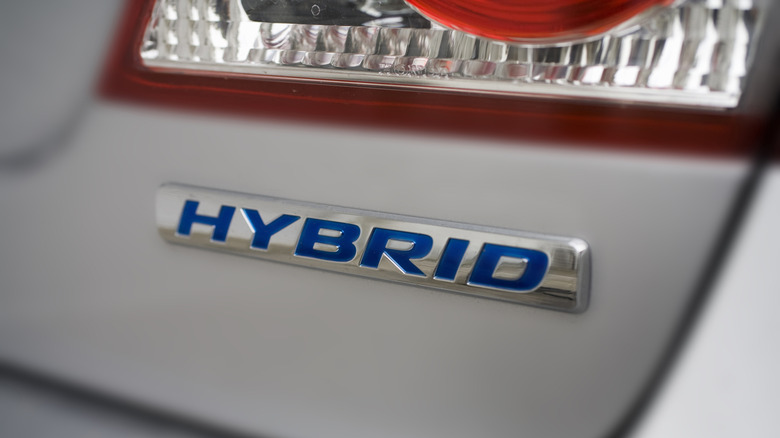
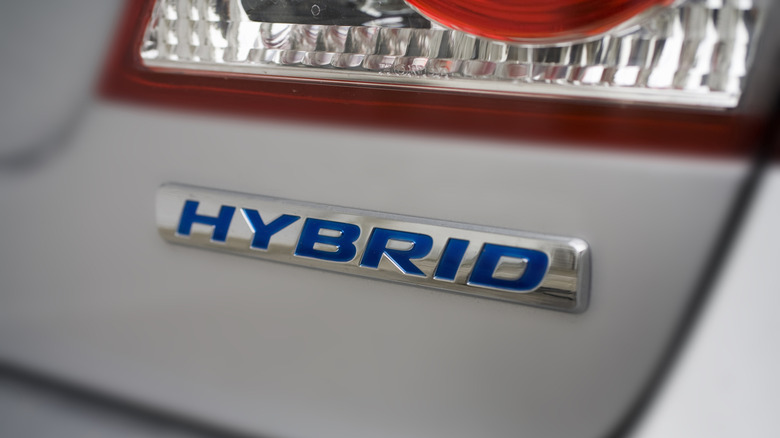
There’s a hybrid vehicle recently named as the one with the highest annual mileage, according to iSeeCars data. The study reflects that conventional hybrids, which don’t need to be plugged in to recharge, are driven 10.3% more miles than pure gas vehicles. Analysts at iSeeCars found that the average conventional hybrid travels a total of 14,696 miles per year, the highest average annual mileage recorded in any category. In contrast, the other primary hybrid category, plug-in electric vehicles (PHEVs), is driven 12.5% fewer average miles than full battery electric vehicles (BEVs).
The conventional hybrid that travels the highest annual mileage within the category is the Toyota Sienna hybrid minivan. This iSeeCars study stated that the average Toyota Sienna traveled 17,368 miles each year. JD Power named the Sienna the most reliable minivan you can buy in 2025. The other conventional hybrids that finished in the top three places included Toyota’s Highlander hybrid (16,795 miles) in second and Toyota’s Camry hybrid (16,605 miles) in third.
For the methodology of this study, iSeeCars analyzed odometer readings of more than 2.1 million three-year-old cars sold in 2025. These vehicles were broken down by the type of drivetrain and number of miles driven annually, with low-sales models eliminated.
The Toyota Sienna hybrid minivan is powered by a 2.5-liter four-cylinder engine boosted by two electric motors for a combined 245 horsepower, channeled through an electronically controlled continuously variable transmission eCVT. It should be noted that the Sienna has been hybrid-only since it received its last redesign in 2021. Front-wheel drive is standard, but all-wheel drive is optional, courtesy of a third electric motor on the rear axle that does not add anything to the 245-horsepower rating. We also discovered that the Sienna is one of the many Toyotas that are great for seniors in more ways than one.
A 2026 Sienna with all-wheel drive can go from 0-60 mph in 7.5 seconds, based on testing by Car and Driver. It has adequate cargo-hauling capability, with 34 cu. ft. of storage behind the third row and 75 cu. ft. with the third row folded. Unfortunately, the latest generation Sienna’s (2021-2026) second row cannot be removed, unlike other rivals such as the Chrysler Pacifica and Honda Odyssey. For those who need to haul lots of stuff, this could be a deal-breaker. Even so, evaluating five of the Sienna’s coolest features might sway you toward a purchase.
The Sienna’s best EPA-estimated fuel economy goes to the front-wheel drive version, which gets 36 combined mpg. The all-wheel drive version gives up one mpg in the city, but maintains 36 mpg on the highway. Sienna pricing starts at $42,415 (base LE trim), including delivery. Standard equipment includes remote keyless entry, three-zone climate control, wireless charging, eight-speaker audio, LED headlights, and dual power sliding side doors.

Apple released new updates for macOS Sequoia and macOS Sonoma, extending security and maintenance support to Macs that haven’t moved to macOS Tahoe.
The updates are available through Software Update on supported Macs. Apple hasn’t identified any major new consumer features, which points to releases focused on security, stability, performance, and compatibility.
Users can install the updates by opening System Settings, selecting General, and choosing Software Update. A Mac will only offer the update that applies to its currently installed operating system.
The new releases give Mac owners another reason to stay current even when they aren’t ready or able to install macOS Tahoe. Some Macs can’t run Tahoe, while businesses and other users may remain on an older version because of software, hardware, or management requirements.
Apple has historically maintained the current version of macOS alongside two earlier releases. The company doesn’t promise a fixed support period, however, and older versions generally receive security and compatibility fixes rather than new features.
Updates for macOS Sequoia and macOS Sonoma keep older Macs secure and compatible while Apple puts most new features into macOS Tahoe and macOS 27 Golden Gate.
Apple introduced macOS 27 at WWDC on June 8 and released the first developer beta later that day. The company followed with the first public beta on July 13.
Apple hasn’t posted complete security documents for the new Sequoia and Sonoma updates. The company often publishes or expands those documents after an operating system update becomes available.
The previous updates, macOS Sequoia 15.7.7 and macOS Sonoma 14.8.7, arrived on May 11 with security fixes for both operating systems. Apple also released Safari 26.5.2 on June 29 for Sequoia and Sonoma.
Safari 26.5.2 fixed WebKit and web extension vulnerabilities that could expose sensitive information, move data across website boundaries, escape web-content restrictions, or crash Safari and related processes.
The separate Safari update showed why older macOS versions still need active maintenance. A Mac doesn’t have to run Apple’s newest operating system to face the same browser and WebKit threats.
Most users running macOS Sequoia or macOS Sonoma should install the applicable update. People who depend on specialized software, drivers, security tools, or managed enterprise systems may want to confirm compatibility before updating.

YouTube Premium will include Peacock Premium at no extra charge beginning in early 2027. “The deal brings a slew of premium content to the [$15.99 per month] YouTube Premium subscription, including live sports like the NFL, NBA and MLB and entertainment like Law & Order, Saturday Night Live and Love Island,” reports The Hollywood Reporter. “It also has the potential to dramatically scale Peacock, which remains smaller than many of its streaming competitors.” From the report: Peacock has 48 million subscribers, while YouTube Premium and YouTube Music have a combined 125 million subscribers, though they don’t break out how many each of those offerings have. The agreement, which expands on the deal the company inked with YouTube parent company Google last year, will also extend the entertainment company’s programming deal with YouTube TV, while bringing some of YouTube’s offerings to Comcast Xfinity and Xumo platforms.
There’s also a notable sports and production element to the deal, with NBC Sports agreeing to stream some live sporting events on its YouTube channels, and with NBC agreeing to serve as the production partner for select live events on YouTube. YouTube will also bundle some of the company’s International streaming offerings like Universal+ and Hayu in select markets.


Hackers are actively exploiting a vulnerability in the FastJson open-source Java library, allowing remote code execution without user interaction or elevated privileges.
The security issue affects FastJson versions 1.2.68 through 1.2.83 and is leveraged in attacks targeting various organizations in the U.S.
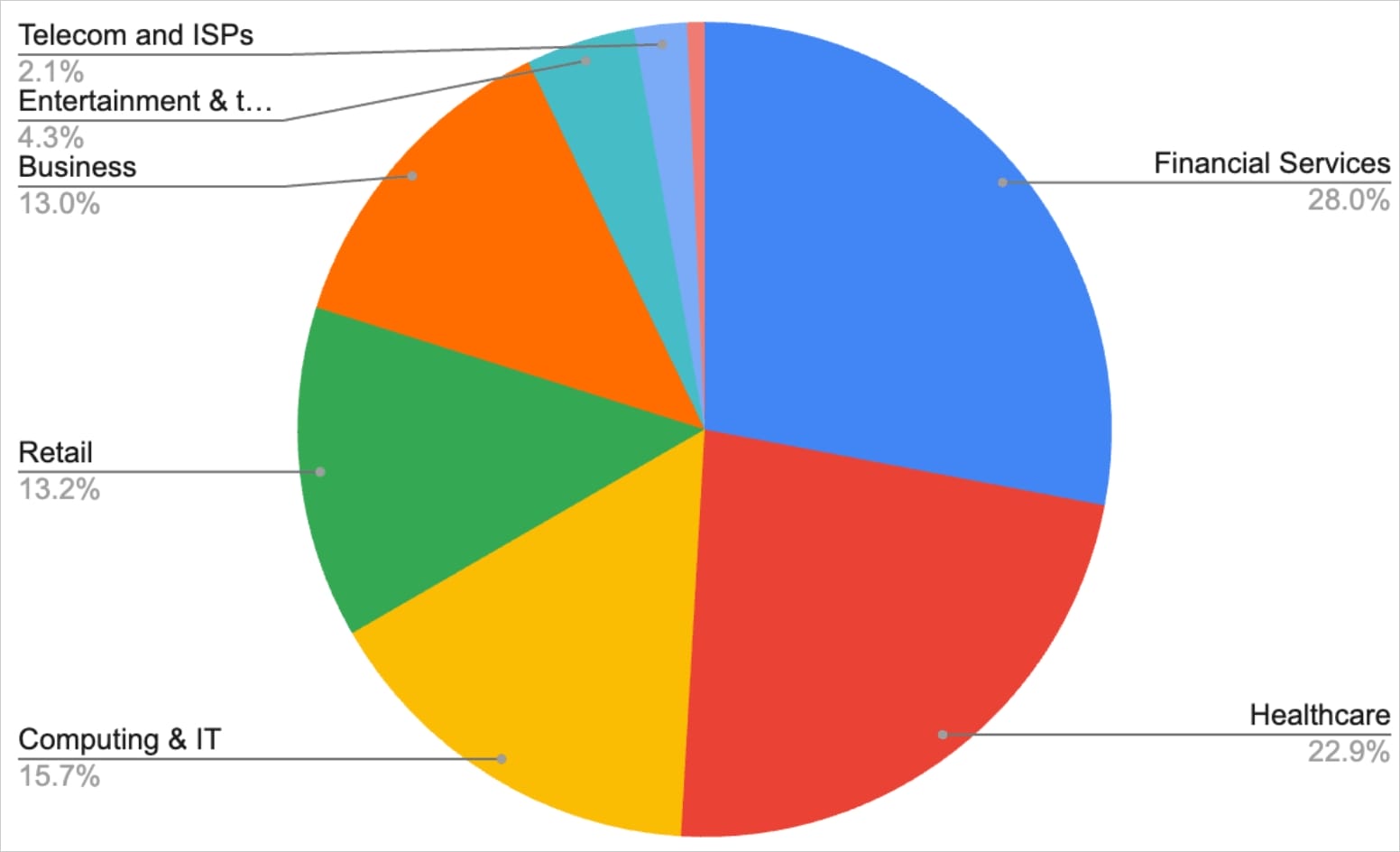
The malicious activity was observed last week by the agentic security company ThreatBook, and researchers at the business protection company Imperva confirmed that it was “targeting a wide range of organizations, across Financial Services, Healthcare, Computing, Retail, Business, and other industries.”

“Attacks are currently almost entirely targeting US-based organizations, with a few attacks in Singapore and Canada, although this will likely continue to expand globally,” Imperva says.
FastJson is an open-source Java library developed by Alibaba, used for serializing Java objects to JSON, and vice versa.
The project has 25,600 stars and 6,400 forks on GitHub, and is especially prevalent in Chinese enterprise software and projects built on Alibaba’s platform.
CVE-2026-16723 was discovered by FearsOff, an offensive security company, which published a technical write-up earlier this month.
The researchers explain that the flaw stems from the library’s type-resolution logic, which performs attacker-controlled resource lookups before enforcing AutoType restrictions. This creates a path for executing code remotely in Spring Boot fat-JAR deployments.
By abusing @type processing, the researchers were able to load and execute malicious classes without AutoType enabled or requiring third-party gadget chains.
In its security bulletin, Alibaba confirmed the critical severity of the vulnerability and warned that it is exploitable on “the most common Spring Boot deployment model.”
“The only deployment prerequisite is that the target runs as a Spring Boot executable fat-jar (i.e., launched via java -jar xxx.jar),” reads Alibaba’s security advisory.
The vendor notes that specifying a target class during deserialization does not mitigate CVE-2026-16723, as attackers can embed malicious payloads within ‘Object’ or ‘Map’ fields.
The vulnerable type-resolution logic is not present in fastjson2, which uses an allowlist-first model for polymorphic deserialization and doesn’t rely on the @JSONType annotation as a trust signal.
Also, FastJson versions 1.2.60 and earlier, and any non-fat-JAR deployments, aren’t affected either.
Developers using a version within the affected spectrum are urged to immediately enable SafeMode or switch to a non-impacted build.
Currently, there’s no fix issued for CVE-2026-16723. Imperva has also noted that FastJson 1.x is no longer actively maintained, so it’s unlikely it will receive a security update.

Security teams log 54% of successful attacks and alert on just 14%. The rest move through your environment unseen.
The Picus whitepaper shows how breach and attack simulation tests your SIEM and EDR rules so threats stop slipping by detection.

Firefighters in France are confronting a phenomenon never seen in the region before: fire clouds. It’s a sign of the intensity of the blazes burning—and how climate change is upping the odds that they appear.
A wave of fires has swept over France and Spain, sending hundreds of thousands fleeing. Firefighters on the frontlines are facing what a spokesperson for the French firefighter association told AFP called an “operational impossibility”—in other words, a “natural force beyond our control.”
As evidence of how out of control the wildfires in France are, look no further than the skies where the blazes have, in some cases, created their own weather. To form a fire cloud—what meteorologists call a pyrocumulonimbus or the even more metal-sounding cumulonimbus flammagenitus—you first need heat, which fires have in spades.
But just as important are dry conditions near the ground and cool, relatively moist conditions aloft in the atmosphere. As superheated smoke rises miles above the flames and into the cool atmosphere, water vapor condenses around the particles of ash to form water droplets. (Yes water vapor and water droplets are two different things.) As the air keeps rising, those water droplets eventually become ice crystals.
At this point, the smoke and water droplets have created a cloud, but unfortunately one that’s unlikely to provide much relief in the form of rain. Instead, these towering fire clouds can unleash lightning strikes that can start more fires and generate powerful downdrafts that reach the ground to fan flames further. At their worst, pyrocumulonimbus clouds can even spawn tornadoes.
Pyrocumulonimbus clouds have been documented in the US, Canada, and Australia, among a handful of other locations. But until now, there were no documented fire clouds in France. While the country is no stranger to wildfires, the size and ferocity of this summer’s blazes is well outside the normal.
Last week was France’s single most destructive week for wildfires over the past 20 years, according to data from the European Forest Fire Information System. It more than doubled the previous record during that period, which coincides with accurate satellite data. This isn’t an isolated bad week either. More than 220,000 acres have burned across the country so far, six times the annual average. That’s 61,000 acres higher than the previous yearly record.
If that sounds like a familiar trend, well, it unfortunately is. Burning fossil fuels has heated the planet up, making explosive wildfires more common and destructive around the world. A 2024 study found the incidence of extreme fires globally more than doubled from 2003 to 2023. Six of the seven most extreme years have happened since 2016.
After a slight weekend reprieve as temperatures dipped, they’re expected to rocket back up above 104 degrees Fahrenheit (40 degrees Celsius) in France and 108 degrees Fahrenheit in Spain later this week. That means firefighters will have to contend with more extreme fire weather—including the possibility of clouds created by the blazes themselves.

After getting his hands on a rope driver module from the Apollo project era that had a big ‘Scrapped Module’ stamped on it, [Mike Stewart] was naturally left curious as to what exactly had failed in this module. Originally destined for the Apollo Guidance Computer, these Raytheon-manufactured modules were the pinnacle of space-grade high-tech of the 1960s, with requisite acceptance testing so as to not endanger a very expensive space mission.
The cool part here is that the acceptance documents for the module in question (B16-B17) have been scanned in and can be found on the Internet Archive. With the part itself being potted and very much inaccessible, this document helpfully lays out the expected measurements on the module’s pins, as well as schematics and mechanical drawings. Unfortunately the reasons for the rejection were not recorded, so replicating the failing test results is required to understand the reason.
A slight complication here is that the testing procedure doesn’t just involve hooking up a multimeter for some voltage and capacitance measurements. There are also temperature and voltage extremes, and vibration tolerance involved, which would be somewhat complex to test, but most of all risk damaging a historical artefact. Thus a somewhat conservative testing procedure was chosen, even if this may not reveal the actual fault.
As noted in the video, sometimes modules were also rejected because someone simply dropped it on the floor along the way. However, generally if a module was found to be faulty they would open it to diagnose said fault, with a closer look at this module indeed revealing suspicious marks in the potting compound where it was apparently opened and conceivably repaired. This also might explain why they also put the ‘For engineering use only’ on it.
With multiple of such locations visible in the potting compound, these locations were mapped to the schematics for the module, to get some idea of what may have been accessed. After this, basic testing was performed on the module, as per the acceptance testing document.
Along the way an error was detected in said document, in the form of the wrong pin number. In table 4-2 the input pin 269 was mistakenly listed as having output pin number 169 when it should have been pin 168. Pin 169 is chassis ground, so this was presumably fixed in a later version of the document.
After all the testing with just stationary, room-temperature conditions, everything appeared to check out. This means that likely this was indeed a repaired module that got subsequently used for engineering purposes rather than installed in flight-ready hardware. The only issue found was that channels were out of calibration, but whether this was an original flaw or due to the module being half a century old is hard to tell in the absence of repair logs.
Overall it’s an exciting opportunity to document another part of history, since so many of the details pertaining to these original modules and related technologies got lost or muddled over the decades.

A new Warner Bros. Discovery lawsuit against Amazon, accusing the tech giant of poaching a top HBO Max marketing executive 16 months before her contract expired, comes with an unusual request: a court order barring Amazon from hiring any employee of the media conglomerate as long as they’re under contract.
The suit, filed July 21 in Los Angeles County Superior Court, centers on Pia Barlow, the longtime HBO Max executive who was announced last week as Amazon MGM Studios’ new head of series marketing. Her Warner Bros. Discovery contract ran through October 2027.
She resigned in June and was due to start at Amazon on Aug. 3.
Warner Bros. Discovery accuses Amazon of “hurriedly seeking to pirate away a number of contracted employees,” calling the company a “digital bull in a china shop” that chose to build its entertainment workforce by raiding Hollywood rather than hiring from scratch.
The suit says Amazon tried weeks earlier to recruit another WBD executive under contract through December 2027 and failed, and was pursuing at least one more when the suit was filed.
The complaint says Barlow’s departure “conveyed a troublesome message throughout Plaintiffs’ executive ranks” — that contractual commitments could be disregarded “whenever a larger paycheck appears.”
Amazon declined to comment in response to GeekWire’s inquiry.
The company acquired MGM in 2022 for $8.5 billion, its second-largest acquisition ever behind the $13.7 billion purchase of Whole Foods in 2017. The deal brought a catalog of more than 4,000 films and 17,000 TV shows, and the studio was rebranded Amazon MGM Studios in 2023.
It’s led by Mike Hopkins, head of Prime Video and Amazon MGM Studios.
Warner Bros. Discovery itself is in the middle of being sold. Paramount Skydance agreed in February to buy the company for about $81 billion, outbidding Netflix, but 12 state attorneys general sued this month to block the deal, and Paramount has pushed its closing deadline to as late as June 2027.
The complaint goes further, alleging Amazon didn’t just recruit Barlow but also picked her lawyer. Warner Bros. Discovery says the firm now representing her is based less than a mile from Amazon’s Seattle headquarters and “has a well-publicized, long-standing relationship with Amazon as outside litigation counsel,” and that Amazon is paying its fees. The firm isn’t named in the complaint.
Barlow, who lives and works in Los Angeles, is not a defendant.
Warner Bros. Discovery says its lawyers exchanged letters with Amazon and with that attorney before filing suit, demanding Barlow not leave. It makes the fee allegation on “information and belief,” a legal phrase indicating a claim based on inference rather than direct evidence.
Arista has patched a maximum-severity command injection vulnerability in on-premises VeloCloud Orchestrator deployments that is being actively exploited in attacks.
The vulnerability, tracked as CVE-2026-16812, is an unauthenticated OS command injection flaw with severity scores of 10.0, the maximum score that can be given to flaws.
VeloCloud Orchestrator, also known as VCO, is a centralized management platform used to configure, monitor, and manage VeloCloud SD-WAN deployments and associated edge devices.
According to an Arista security advisory published Monday, the vulnerability allows remote attackers to access privileged functionality that was intended only for internal use and should not be remotely accessible.
“Successful exploitation may compromise the confidentiality, integrity, and availability of the orchestrator and data managed by the orchestrator,” Arista warned.
The company says VCO is supposed to be exposed by default, with no configuration option that can prevent this exposure. Attackers only require network access to the VCO web interface, and no VCO tenant or operator credentials are needed to exploit the flaw.
Arista says CVE-2026-16812 was discovered externally and is known to be actively exploited, but has not shared when the attacks began, who is behind them, or how the vulnerability is being exploited. BleepingComputer has contacted the company with these questions.
The following VeloCloud Orchestrator on-premises versions are affected:
VeloCloud Orchestrator Hosted and Dedicated deployments were patched before the advisory was published and are not affected. VeloCloud Gateway and VeloCloud Edge products are also not vulnerable to the flaw.
The company says the flaw is fixed in VCO versions 5.2.3.14, 6.1.3.4, and 6.4.2.4 and later. The affected software list also indicates that VCO 7.0.0.1 and later releases are not vulnerable.
Arista warns that end-of-support software versions have not been assessed to determine if they are vulnerable. Customers running unsupported release trains are advised to contact the Arista Technical Assistance Center to discuss available upgrade options.
The U.S. Cybersecurity and Infrastructure Security Agency has also added CVE-2026-16812 to its Known Exploited Vulnerabilities catalog, confirming that the flaw is being used in attacks.
CISA has ordered U.S. federal civilian executive branch agencies to mitigate the vulnerability by Thursday, July 30, 2026, as required by Binding Operational Directive 22-01.
While patches are being deployed, administrators should restrict access to the VCO web interface to administrative networks, monitor for connections from known malicious IP addresses, and review recent administrator activity for unusual changes.
Arista shared three IP addresses that were seen exploiting the vulnerability:
Administrators are advised to block these IP addresses and review their logs for previous connections. However, it is possible that devices could have been compromised from other IPs, so this list is not definitive.
Organizations should review VCO logs for signs of exploitation, including:
If compromise is suspected, organizations should preserve all logs and filesystem timestamps before remediation.
Potentially affected organizations should rotate credentials, review administrator activity, validate managed devices, and consider restoring or replacing compromised instances.
As successful exploitation can compromise both the orchestrator host and the data it manages, installing the security update may not be enough for systems that have already been breached.
Arista warns that compromising a VeloCloud Orchestrator instance could also give attackers access to VeloCloud Edge devices as well.
Security teams log 54% of successful attacks and alert on just 14%. The rest move through your environment unseen.
The Picus whitepaper shows how breach and attack simulation tests your SIEM and EDR rules so threats stop slipping by detection.


Peacock Premium ($11/month) will be included free with YouTube Premium from early 2027. It is Peacock’s largest wholesale distribution deal. NBC Sports will produce live events for YouTube.
Peacock Premium will be included with YouTube Premium in the US at no extra cost starting in early 2027. The deal, announced on Sunday by NBCUniversal and YouTube, is Peacock’s largest wholesale distribution partnership to date and immediately expands its reach to millions of existing YouTube Premium subscribers. Peacock Premium currently costs $10.99 per month on its own. YouTube Premium recently increased to $16 per month for individuals and $27 for families.
The bundle gives YouTube Premium subscribers access to Peacock’s full catalogue: NFL Sunday Night Football, the Olympics, NBA, MLB, Premier League, WNBA, and college sports alongside series including The Office, Saturday Night Live, Law & Order: SVU, Love Island USA, and blockbuster Universal films. Subscribers can upgrade to the ad-free Peacock Premium Plus tier. Peacock Premium will also be available as a standalone add-on through YouTube Primetime Channels starting later this summer.
The partnership extends well beyond the bundle. NBCUniversal’s multi-year distribution deal with YouTube TV, the largest and fastest-growing pay TV provider in the US, is renewed. NBC Sports will produce select live sporting events for YouTube. Some live events from NBCUniversal will stream on NBC Sports’ YouTube channel. The deal also expands Universal+ and Hayu to YouTube Premium subscribers in select international markets and deepens the companies’ advertising technology collaboration through FreeWheel. Google has been rebuilding its products around AI and engagement, and bundling a major streaming service with YouTube Premium turns the subscription from an ad-removal tool into a full entertainment package.
Peacock just turned its first quarterly profit, six years after launch. The YouTube bundle accelerates its next growth phase by trading per-subscriber revenue for scale. Alphabet raised its capex guidance to $205 billion this year as it invests across AI and content, and the Peacock deal positions YouTube Premium as a competitor to Apple One and Amazon Prime’s bundled offerings. “This partnership brings NBCUniversal’s world-class content to YouTube’s unmatched scale,” said Comcast co-CEO Mike Cavanagh. For YouTube, the value is retention: subscribers who get NFL, Premier League, and The Office alongside ad-free YouTube are much harder to cancel.


Microsoft said MDASH with MAI-Cyber-1-Flash received a 96 percent score on CyberGYM, a standard benchmark test. The rating is 12 points higher than Anthropic’s Mythos and also beats Google Gemini and OpenAI GPT. The new MDASH costs half as much to use as the previous MDASH offering.
The second tool Microsoft announced on Monday is named Project Perception. It too is a collection of specialized AI agents that perform red-, blue-, and green-team functions for finding vulnerabilities, investigating them to determine their risk, and taking corrective actions, respectively. Microsoft said the platform selects the models to use based on the assigned task. Considerations that go into the decision include the model’s effectiveness and the end cost to the customer. Microsoft said the decisions are shaped by “ongoing research, benchmarking and evaluation across frontier and specialized models.”
Microsoft said Project Perception is designed to perform 90 percent of tasks for lower costs than similar platforms from competitors. That means customers can turn to the more expensive alternatives only for the remaining 10 percent of tasks.
Microsoft said the new tools respond to a seismic shift in how organizations secure their networks against catastrophic hacks.
“As AI accelerates the speed and scale of cyberattacks, defenders are being asked to secure increasingly complex digital environments with approaches built for a different era,” the company said. “Security teams are often forced to piece together signals, context, and risk insights across vast amounts of data, making it harder to keep pace with emerging threats.”
With last week’s OpenAI incident evoking troubling scenes straight out of the most dystopian sci-fi novels, the tools, which are currently in preview mode, deserve a healthy dose of caution that Microsoft made no mention of. They should be closely scrutinized and evaluated before being used in production. On the other hand, there are clear risks for not adopting such tools. Balancing the risks of using AI agents versus the threat of avoiding them is a work in progress with no clear answers for now.

Apple’s iOS 26.6 update stops attackers from using iPhone Mirroring, Siri, and more to gain user data. Here’s what you need to know.
On Monday, just under a month following the arrival of the security-focused iOS 26.5.2, Apple made iOS 26.6 available to the general public. The latter includes over 75 security enhancements, 14 of which address kernel-related vulnerabilities.
10 of the now-patched kernel issues allowed apps to trigger unexpected system terminations, while others let apps access sensitive user data and write kernel memory. Apple resolved these issues through improved memory handling, memory management, state management, bounds checks, and more.
Additionally, iOS 26.6 prevents attackers from using iPhone Mirroring to access sensitive user data, as an Accessibility issue was resolved through state management improvements. Similar App Store and FrontBoard issues were resolved through improved checks and the use of HTTPS, respectively.

iOS 26.6 contains multiple fixes that protect user data.
Apple also stopped apps from accessing user information through Game Center by improving data protection. Enhanced state management was used to fix similar Managed Configuration and WorkoutKit vulnerabilities.
iOS 26.6 also removed vulnerable Siri code, resolving an information disclosure issue that gave apps access to sensitive information about the user. Entitlement checks were employed to fix an NSColorPanel issue, once again preventing apps from leaking user data.
The Contacts app received three security enhancements as well, as processing a maliciously crafted contact will no longer leak sensitive user data, thanks to the iOS 26.6 update. Additionally, apps can no longer add contacts without user authorization, thanks to validation improvements.
Apple also took security measures to ensure that attackers with physical access to locked devices can’t gain user data, as the company fixed a DriverKit and Wi-Fi issue.

iOS 26.6 prevents DOS attacks and stops apps from gaining root privileges.
iOS 26.6 also addresses a significant MediaRemote issue. The now-patched path handling vulnerability gave apps root privileges. Similarly. the iOS 26.6 update contains an Apple Books fix that prevents apps from accessing protected parts of the filesystem.
Multiple Model I/O issues were resolved as well, meaning that remote attackers can no longer cause unexpected app crashes on iOS 26.6. Three now-patched Scene I/O exploits enabled arbitrary code execution.
Apple also took measures to prevent apps from escaping their sandbox. The company did so by resolving Game Center and libc vulnerabilities with improved path validation and input validation, respectively.
Monday’s iOS update also stops apps from using a WebKit issue to escape their sandbox. In total, iOS 26.6 contains eight WebKit fixes, meant to keep your data safe while browsing the web.

iOS 26.6 contains multiple WebKit fixes.
Notably, iOS 26.6 includes a fix that stops websites from knowing the user visited a specific link. Apple also made UI improvements, as maliciously framed websites were found to spoof select UI elements.
As for the other WebKit patches, one of them prevents denial-of-service attacks, while two prevent Safari crashes on iOS 26.6. Apple similarly included fixes for mDNSResponder and Heimdal to prevent denial-of-service attacks.
Monday’s software update contains a multitude of security enhancements. As Apple’s website notes, fixes for Pro Res, WebRTC, AuthKit, the Apple Neural Engine, and more are present in iOS 26.6.Unlike other iOS releases, however, iOS 26.6 doesn’t include fixes for vulnerabilities that were used in targeted attacks.
Even so, AppleInsider recommends installing it to ensure your devices have the latest security enhancements. Unlike the iOS 27 developer betas, which may contain bugs, glitches, and performance issues, the iOS 26.6 update should be installed by all users.




Weekend Open Thread: Brooks Brothers


Grayscale Files For Worldcoin ETF, WLD Registers Sharp Rise


How a former Blue Peter presenter stunned America’s Got Talent judges


Intel is reversing course and bringing hyper-threading back to its server chips

Turtle Beach Command Series KB7 review: a nifty screen-equipped gaming keyboard

New Jersey voter registration controversy explained: How 6,600 noncitizens got on the rolls, and what happens next

Johnny Depp’s R-Rated Gothic Cult Classic Gets New Release Ahead of Sydney Sweeney Remake


Ethics, other provisions in crypto Clarity Act to be further discussed


Luke Littler dismantles Gerwyn Price to retain title in Blackpool

Shanghai science forum photos show China’s AI and robotics advances in rivalry with US


2026 3M Open leaderboard: Scottie Scheffler finds putter in Round 1, sits three back

Commonwealth Games boxing: Jadumani Singh seals dominant 5-0 win over Pakistan’s Sumama Rehman to enter quarter-finals | Commonwealth Games News


The Peugeot Family: How 200 Years of an “Old Money” Dynasty Died in A Boardroom


16 Dresses for the High Summer Event


Spain sweeps the board at 2026 World Cup with individual awards

A New Post-Apocalyptic Gundam Anime Series Blasts Into SDCC


Andrew Cuomo joins OKX board as crypto exchange expands in U.S.


BITCOIN JUST ENTERED THIS CRITICAL ZONE…


XRP Ledger adds $2.6B as RWA inflows rank second

NADINE DORRIES: I have witnessed first-hand what happens to new Prime Ministers when they enter No 10… and this is why Andy Burnham will be out by May


You must be logged in to post a comment Login