Connect with us
DAPA Banner

Tech

It Was Spelled In Seashells By The Seashore. The DOJ Now Pretends It’s A Felony.

Published

on

from the the-seashell-felonies dept

James Comey is not exactly someone we’ve ever been a fan of on Techdirt. He was a terrible FBI director in so many ways. We’ve spent years criticizing the man — for his crusade against encryption, his supporting the FBI’s ridiculously aggressive impersonation of reporters, his embrace of the FBI’s program to coerce and entrap people down on their luck into fake terrorist plots, and much more. And, while the impact has been exaggerated, it is true that he took multiple actions violating DOJ procedures that likely helped get Donald Trump elected in 2016. So it’s not like I’m rushing to support the guy. He’s a bad cop and has been for some time.

But the indictment the Department of Justice handed down against James Comey on Tuesday is a truly embarrassing legal document, and everyone involved in producing it should be professionally radioactive for the rest of their careers. I would have said it’s one of the most embarrassing legal documents that this DOJ has produced, but remember, just a day earlier they filed a legal brief that was indistinguishable from a Truth Social post.

The charge, in its entirety, concerns this Instagram post from May 2025:

If you can’t see that, it’s an Instagram post from Comey showing some shells on some sand with the shells spelling out 8647 and the caption on the post saying:

Cool shell formation on my beach walk

For this — for posting a photo of arranged seashells in a slightly sassy pattern and posting it to Instagram — Comey has been charged with two federal felonies: threatening the President under 18 U.S.C. § 871, and transmitting a threat in interstate commerce under 18 U.S.C. § 875(c). (For what it’s worth Comey has claimed he didn’t arrange the sea shells, but just found them. It’s unclear if that makes much of a difference, it’s protected speech either way).

Advertisement

Ken “Popehat” White, who has perhaps done more than any other lawyer in America to explain First Amendment doctrine to laypeople, didn’t mince words about what this is:

The charge is preposterous and no competent or honest prosecutor would bring it. It represents a betrayal of the professional and ethical obligations of every U.S. Department of Justice attorney involved, and reflects the complete collapse of the Department’s credibility and independence in favor of a cultish and cretinous devotion to Donald Trump.

He’s right, and the way to understand just how right he is requires understanding the path that brought us here.

Because this is the second time the Trump DOJ has tried to indict Comey. The first attempt collapsed in spectacular fashion last year, after Trump — in what was apparently supposed to be a private direct message but accidentally went out as a public Truth Social post — demanded that Pam Bondi install Lindsey Halligan, a former insurance lawyer with no relevant experience, as a U.S. Attorney specifically because she had promised to indict Comey. The problem: Halligan wasn’t legally appointed. The entire indictment got tossed before the court could dismiss it for being ridiculous (which would have happened) because the person who filed it wasn’t allowed to file it.

As we noted at the time, this pattern of procedural self-sabotage is a recurring feature of an administration that treats legal procedure as an inconvenience rather than the actual point of having a justice system.

Advertisement

So how did the DOJ respond to that humiliation? By coming back with something substantively even worse. In theory, they tried fixing the “wrong person filed it” problem by having an actually legally appointed person file something… even if that something has no legal basis whatsoever. Progress! Sort of?

The seashell indictment was filed by W. Ellis Boyle, the U.S. Attorney for the Eastern District of North Carolina, with Assistant U.S. Attorney Matthew R. Petracca listed as the prosecuting attorney. Remember those names. They put their signatures on this. Boyle is listed as the U.S. Attorney for the Eastern District of North Carolina, but he’s serving in an acting capacity — Trump has nominated him multiple times, yet the Senate has still refused to confirm him.

The legal problem with the indictment is pretty easy to spot: to convict someone under either of the threat statutes the DOJ is invoking, the government has to prove the communication constituted a “true threat.” Under controlling Fourth Circuit precedent (this case is in North Carolina), a true threat is something “an ordinary, reasonable recipient who is familiar with the context in which the statement is made would interpret as a serious expression of an intent to do harm.”

As Ken White noted, the Supreme Court established this framework in Watts v. United States, a 1969 case involving an 18-year-old draft protester who said:

Advertisement

They always holler at us to get an education. And now I have already received my draft classification as 1-A and I have got to report for my physical this Monday coming. I am not going. If they ever make me carry a rifle the first man I want to get in my sights is L. B. J.

The Court found this was protected political hyperbole, not a true threat. An explicit statement about wanting a President in your rifle sights — protected.

If Watts isn’t damning enough, there’s United States v. Bagdasarian, a much more recent Ninth Circuit case where a man posted online statements about wanting to shoot then-candidate Barack Obama, including some genuinely vile racially explicit language about hoping Obama would be killed. The court held that even that did not constitute a true threat under the relevant statutes.

I’d be curious to hear from anyone defending this indictment whether they think Bagdasarian was wrongly decided. Or do we change the “true threat” standard when the target is Trump?

So the descending ladder of seriousness looks like this:

Advertisement
  • Explicit racial language about wanting a President shot: protected
  • Telling a crowd you want LBJ in your rifle sights: protected
  • Posting a photo of seashells arranged on a beach to spell “86 47”: two federal felonies

Any first-year law student who’s taken a basic First Amendment course could tell you the seashell post is constitutionally protected. Any prosecutor with five minutes of research time would know that Bagdasarian and Watts exist. But, of course, as we’ve seen over and over and over again in the Trump era, the point is not to bring a good case or a winnable case. The point is just to punish Trump’s enemies with vexatious, vindictive prosecutions in hopes of creating a chilling effect among the populace and stopping them from criticizing the President with the thinnest skin possible.

Now, “86” has had various meanings over the years — to “86” something in restaurant slang means to remove it from the menu or get rid of it. The DOJ’s theory is apparently that when used about a person, it means to kill them. No one else believes that. This is the kind of motivated reading that requires ignoring both the dictionary and how actual humans use language.

But fine, let’s grant the absolute most uncharitable reading and say “86 47” means “get rid of the 47th President through killing.” Even granting that — even doing all the work for the prosecution — it’s still obviously protected political expression, and still obviously not a true threat under the controlling case law.

Which brings us to the part that genuinely cannot be explained by anything other than pure vindictiveness. Here is a tweet from Jack Posobiec, a prominent Trump loyalist/conspiracy theorist, posted in January 2022:

That tweet is still up. I just made that screenshot minutes ago. As of this writing, it has been online for nearly four years. No FBI investigation. No federal indictment. No felony counts. Literally no one thought that was an actual threat. Because it’s not. Apparently the DOJ’s theory of criminal threats has a loyalty-based expiration date — the same numerical expression is a felony when arranged in shells by a Trump critic and a perfectly fine tweet when posted by a Trump supporter about a different President.

Indeed, the fact that Posobiec seems to have no issue keeping this tweet up is itself a sign that the MAGA world knows it’s engaged in purely theatrical vindictive prosecution — and wants you to know they know. To them, once again, nothing here is about justice or the rule of law. It’s just “will this make the people I dislike upset.” That is their only motivating factor.

Advertisement

The DOJ has baked the selective prosecution argument directly into its own theory of the case. Comey’s lawyers will surely refresh the selective prosecution motion they filed in the first, dismissed indictment, and the facial absurdity of this one — combined with the existence of identical, ignored expression by Trump allies — makes that motion approximately as easy to support as such motions ever get.

There’s a specific kind of institutional rot in play here, driven entirely by Donald Trump and his minions. Competent authoritarianism is dangerous in obvious ways. Incompetent authoritarianism that keeps trying anyway is dangerous in different ways: it normalizes the use of state power for personal vengeance while demonstrating that the people wielding it will stop at nothing — even on the most facially ridiculous grounds. That’s a chilling effect doubled: a politicized DOJ, staffed by people who can’t pass a First Amendment quiz.

White is right that the indictment is unlikely to survive. Comey’s attorneys can challenge it on its face, arguing that even taking every allegation as true, seashells spelling “86 47” are protected by the First Amendment as a matter of law. The assigned judge was appointed by a Republican but is reportedly not a partisan hack, and the case law here is so clear that it would take extreme judicial bad faith to let this proceed. The selective prosecution motion is also stronger now than it was the first time, with Posobiec’s untouched tweet sitting there as Exhibit A.

But as White notes, surviving the motion to dismiss isn’t actually the point:

Advertisement

The point of the indictment is to demonstrate that the United States Department of Justice is wholly an instrument of Donald Trump’s senescent pique, no more independent of him than a boil on his ass. The point is to show that the administration can, and will, use the Department’s mechanisms to punish enemies. The point is to show that the Department can, and will, punish protected speech. The point is to show that the Department is staffed by committed fanatics willing to do anything, however unethical and unconstitutional, to promote Trump.

The point is to show that in the war between Donald Trump and the U.S. Department of Justice, Trump has won. Now they’re on the field slitting the throats of the wounded and looting bodies.

W. Ellis Boyle and Matthew R. Petracca put their names on this indictment. They will, presumably, lose this case the way the previous Comey case was lost — embarrassingly, on grounds that any competent attorney not engaged in cult-like performative fealty to a wannabe authoritarian could have anticipated. And when this is all over, when there is some accounting for what was done to the Department of Justice in these years, the people who signed the seashell indictment should never be trusted with prosecutorial power, a bar membership, or any position requiring professional judgment ever again.

The shells, for what it’s worth, were on a beach. The tide has presumably long since rearranged them. The Instagram post was taken down fairly quickly when the MAGA world lost their minds over it. The federal felony charges, somehow, remain.

Advertisement

Filed Under: 1st amendment, donald trump, ellis boyle, free speech, jack posobiec, james comey, matthew petracca, true threats, vindictive prosecution

Source link

Advertisement
Continue Reading
Click to comment

You must be logged in to post a comment Login

Leave a Reply

Tech

Google Photos feature uses AI to scan your pictures and help pick your clothes

Published

on


Google says Wardrobe will be perfect for streamlining those “nothing to wear” mornings, evenings, and vacations. Essentially, the feature catalogs the clothes you’re wearing in Google Photos to create a so-called digital closet.
Read Entire Article
Source link

Continue Reading

Tech

The iPhone 18 Pro could boast some of the best camera hardware yet

Published

on

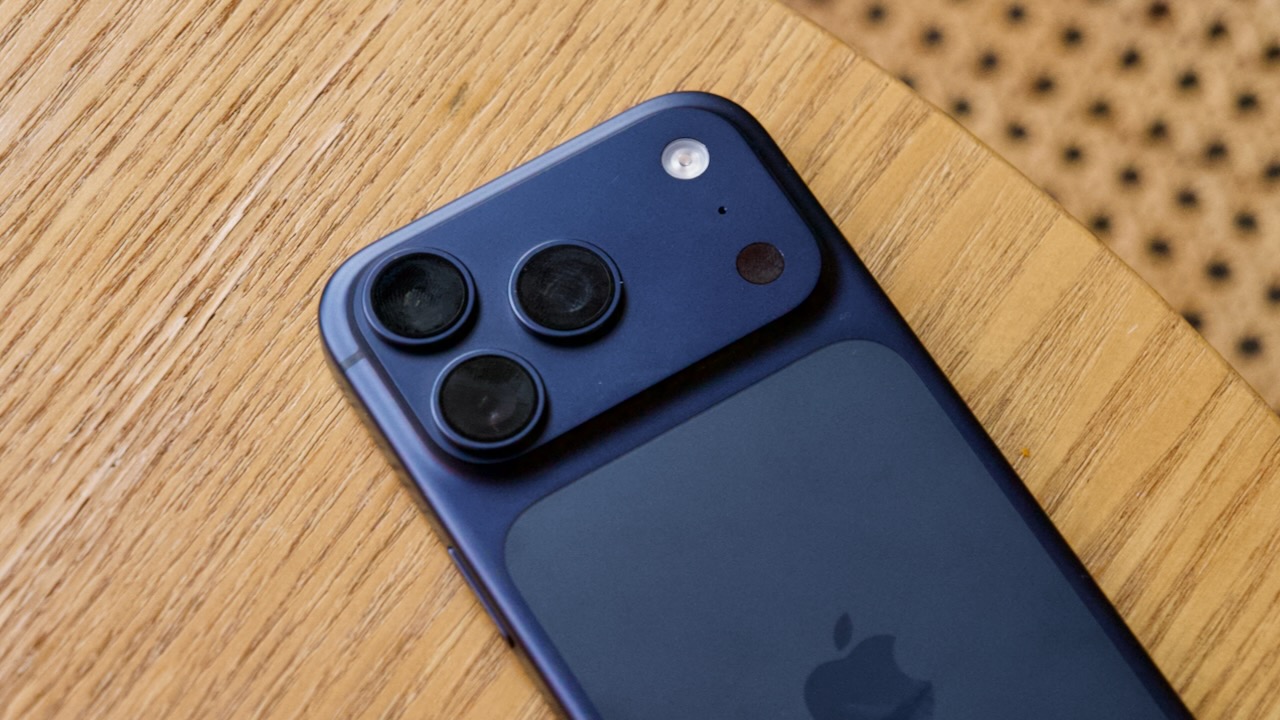
Apple’s next Pro iPhones might be shaping up to be a much bigger camera leap than usual.

According to a new Bloomberg report, the iPhone 18 Pro and Pro Max, expected this autumn, will include what are being described as “some of the biggest camera hardware upgrades in the lineup’s history.”

That’s a strong claim, especially given how incremental iPhone camera updates have been in recent years. However, the report itself is light on specifics. Instead, it mostly frames the upgrades as part of a broader shift happening across Apple’s imaging ecosystem.

The timing lines up with other recent leaks about Apple’s camera direction. Bloomberg previously reported that iOS 27 will introduce a new “Siri mode” in the Camera app. This mode brings visual intelligence features directly into shooting and scene recognition.

Advertisement

Moreover, separate reports also point to new AI-powered editing tools arriving in Photos. This suggests Apple is tightening the link between hardware capture and on-device image processing.

Advertisement

As for the hardware itself, earlier rumours give a slightly clearer (but still incomplete) picture. The iPhone 18 Pro’s main camera is said to feature a variable aperture system that’ll allow users to adjust depth of field and exposure more manually than before. Meanwhile, the telephoto camera may gain a wider aperture, which should help in low-light zoom shots.

But beyond that, details are thin. And that’s part of why Bloomberg’s “biggest upgrades ever” framing stands out. It’s more of a hint than a breakdown, and doesn’t yet line up with known changes.

Advertisement

On paper, variable aperture and improved optics are meaningful steps, but not necessarily the kind of generational leap Gurman’s wording suggests. This leaves some uncertainty around what else might be coming. It’s unclear whether it’s sensor improvements, computational upgrades, or something that hasn’t leaked yet.

For now, the iPhone 18 Pro camera story feels like it’s still forming. The direction is deeper integration between AI tools and camera hardware. However, the full picture likely won’t land until Apple gets closer to launch.

Source link

Advertisement
Continue Reading

Tech

How can organisations ‘stay safe’ amid intense geopolitical pressures?

Published

on

Matthew Lloyd Davies discusses the steps companies must take to stay ahead of malicious behaviours and advanced threats.

“Periods of geopolitical instability have historically been accompanied by increased cyber activity and today’s situation is no different,” Matthew Lloyd Davies, a principal security author at Pluralsight, told SiliconRepublic.com. 

He explained, state-aligned threat groups, criminal networks and politically motivated hacktivists often exploit periods of heightened tension, in order to launch harmful campaigns targeting world governments, infrastructure providers and organisations in the private sector. 

In April alone there were multiple breaches and security incidents reported by organisations dealing with sensitive information. For example, Dublin recruitment platform Healthdaq recently suffered a cyberattack from hacker group XP95, which claims to have accessed hundreds of thousands of files.

Advertisement

Also in April, OpenAI said that the organisation would be working on safeguarding and updating the certification process for its apps running on MacOS following reports of a security issue around a third-party development tool. It was also reported that a private Discord group possibly gained unauthorised access to Anthropic’s new AI model Mythos

“Operations vary widely in sophistication,” noted Lloyd Davies, who added, “Some involve advanced espionage or long-term infiltration carried out by highly capable threat actors, while others are less complex but still disruptive, such as distributed denial-of-service attacks, defacement campaigns, or the release of stolen data.”

He said, “Crucially, organisations do not need to be directly involved in a geopolitical dispute to feel the impact. Shared infrastructure, third-party suppliers and cloud platforms create indirect pathways through which cyber activity can spread globally. This means cybersecurity teams must prepare not just for highly sophisticated attacks, but also for waves of opportunistic disruption that often accompany geopolitical events.”

The skills safety net

The security industry is evolving quickly to a point where threat actors and genuine professionals alike are increasingly using AI and other advancements to create new opportunities. On top of that employers are finding it difficult to create a consistent talent pool in a space where cyber resilience is now dependent on the defensive skills evident across the wider workforce, not just within specific teams.  

Advertisement

“Developers, cloud engineers, IT administrators and security teams must all understand how to build, deploy, and maintain secure systems. Without continuous upskilling across these roles, as global tensions rise and attacks become more complex, even well-funded security programmes can struggle to keep pace with evolving threats,” he said. 

The organisations that invest in developing their cloud and cybersecurity skills, across the workforce, will find themselves better positioned to detect security threats earlier, respond faster and adapt.

“This means moving beyond reactive security measures and embedding cybersecurity capability into the broader technology workforce. Upskilling developers in secure coding, strengthening cloud security expertise and ensuring security teams can effectively use emerging technologies like AI all contribute to a stronger defensive posture.”

He suggested that organisations could benefit from letting go of traditional ideas of training such as the one-size-fits-all model and instead of assuming proficiency based on roles or certifications, should consider merit-based hiring, wherein companies quickly identify gaps, creating teams that can adapt, learn new skills and keep pace with threats as they occur. 

Advertisement

Lloyd Davies said, “Training programmes need to be aligned to real-world operational demands, directly drawing on the evolving attack vectors that security teams encounter daily and the conflict scenarios behind them. Infrastructure can’t be secured by theory alone. Scenario-based learning is crucial.”

To be truly effective he said, “Cyber teams must be given opportunities to practice and hone their skills in safe sandbox environments and as cyber threats evolve continuously, upskilling must too. Organisations need to invest in simulation platforms and scenario-based exercises that mirror modern attack vectors including ransomware and identity compromise. 

“Continuous learning without the risk of real-world consequences can allow teams to build confidence while being updated on emerging threats. Equally important is embedding this learning into regular workflows, avoiding skill development being seen as a ‘one-off,’ so that professionals remain agile and prepared to respond effectively to cyber attacks.”

Don’t miss out on the knowledge you need to succeed. Sign up for the Daily Brief, Silicon Republic’s digest of need-to-know sci-tech news.

Advertisement

Source link

Continue Reading

Tech

Netflix gets its own “Clips” vertical video feed to lure you away from TikToks and Reels

Published

on

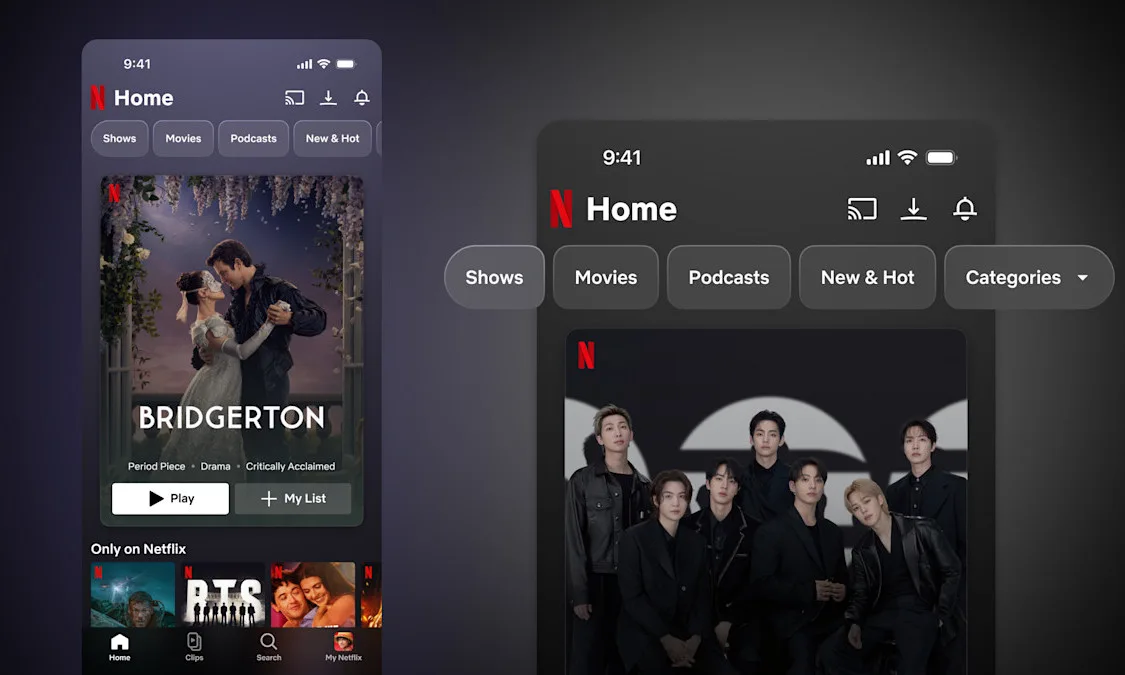
Netflix is adding a new way for you to watch content on its app. The company’s latest rework is bringing the vertical TikTok and Instagram Reels-style system with “Clips”, which is designed to make the process of finding something to watch more interactive.

The new vertical video feed shares short snippets of movies and shows, blending the addictive interactive experience of social media with the streaming platform.

How this isn’t a TikTok rip-off

While such a format was popularized by apps like TikTok, Netflix Clips has a bigger angle than just showing short-form video content. The company has been testing this for a while, and the main goal is to make discovery faster and more intuitive. You’ve probably been through that tedious process of deciding what to watch on Netflix, which is where Clips comes in.

It lets users get a quick taste of the movies and shows on Netflix. Clips also focuses entirely on Netflix’s own content. The broader plan is also expected to include other forms of media, like podcasts and live events, over time.

Why Netflix made this for smartphone users

Netflix wants to keep users engaged throughout the day, and not just during long viewing sessions at home. Executives have said the platform is aiming to become more of a “daily companion,” using features like Clips to fill shorter attention windows that are already dominated by social media apps like TikTok, Instagram Reels, and YouTube Shorts.

The redesign also introduces a more streamlined navigation system that can curate collections based on genres or moods, turning the app into a more personalized experience.

Advertisement

The Clips section lets users add movies or shows straight to the list from their feed and share the snippets with friends. Even if Netflix isn’t outright saying it, this does make it closer to a social app.

Source link

Advertisement
Continue Reading

Tech

Goal Zero Yeti 1500 Power Station Review (2026): More Power, Better Chemistry

Published

on

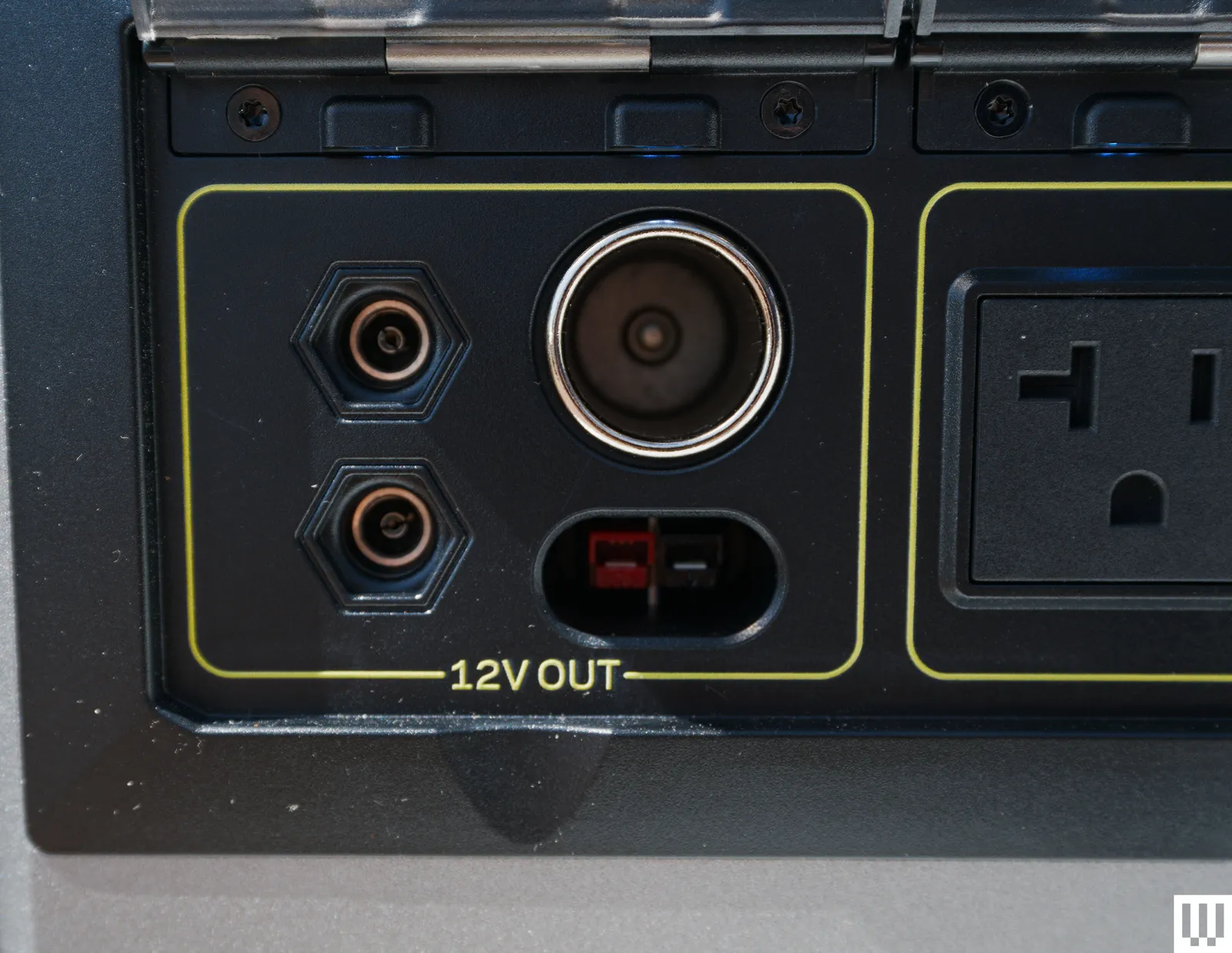
All those ports are fairly standard for a power station in this class, and similar to what was on the previous model—although the 140-W USB port is new and very nice to have. Where the new Yeti 1500 shines is the 12-V charging options, which include a high-power 12-V port capable of 30 amp output. That’s enough for most van and overlanding vehicle power systems, meaning you can tie the Yeti 1500 directly to your house power 12-V distribution panel. There’s also standard Anderson connector outputs and a cigarette-lighter-style outlet available.

There are three ways to charge the Yeti 1500. There’s AC wall power, which can charge at up to 1,800 watts, getting you from 0 to 100 percent in just over an hour. (There’s a switch to slow this down to 1,500 W if you’re plugged into a campground pole, which typically can’t handle the full draw.) You can also hook the Yeti up to a max of 900 watts of solar panels. There are both 8-mm inputs and HPP inputs for Goal Zero solar panels. You don’t need Goal Zero panels, though; you can use just about anything so long as you get the right adapters and stick within the charging limits (I use an adapter like this to plug just about any solar panel into just about any power station/charger). The rear charging panel is also where you’ll find the ground lug for semi-permanent installs in a vehicle or off-grid tiny home.

Goal Zero’s Yeti app allows you to control the system from your phone, potentially from the other side of the world if you have the battery connected to your Wi-Fi. I opted for direct connection via Bluetooth, bypassing the network, since I don’t always have my Starlink network up and running in my camper. This still allows me to toggle all the output types on and off, get basic battery status like charge state, current power draw (by type), change the charge profile (there are four), and some charge and discharge history information. The latter is not as full-featured with direct connection as it would be with a network connection, and I found it often had trouble loading, but overall I found the app handled everything I needed it to do. I particularly like the ability to turn off the 12-V output from bed at night, shutting off all power to eliminate any phantom drains on the battery.

The Only One

Image may contain Camera Electronics Tape Player Speaker and Stereo

Photograph: Scott Gilbertson

I’ve relied on a fourth-gen Yeti 1500 as supplemental power for many years now. I’ve run everything from power tools to space heaters to full-size refrigerators, and as a backup for my RV when I needed to do something to the built-in system. In all that time it’s never let me down, and in my experience strikes the best balance between portability and power. It’s heavy, but the dual handles make it pretty easy to carry. I’ve also tested the 1000X and the 500X models, which while lighter and smaller, lack some of the things that make the 1500 great.

Advertisement

Source link

Continue Reading

Tech

How TTY Opened Up The Phones For The Hard Of Hearing

Published

on

The telephone was an invention that revolutionized human communication. No more did you have to physically courier a letter from one place to another, or send a telegram, or have a runner carry the message for you. Instead, you could have a direct conversation with another person a great distance away. All well and good if you can speak and hear, of course, but rather useless if you happen to be deaf.

Those hard of hearing were not left entirely out of the communication revolution, however. Well before IP switched networks and the Internet became a thing, there was already a way for the deaf to communicate over the plain old telephone network—thanks to the teletypewriter!

Over The Wires

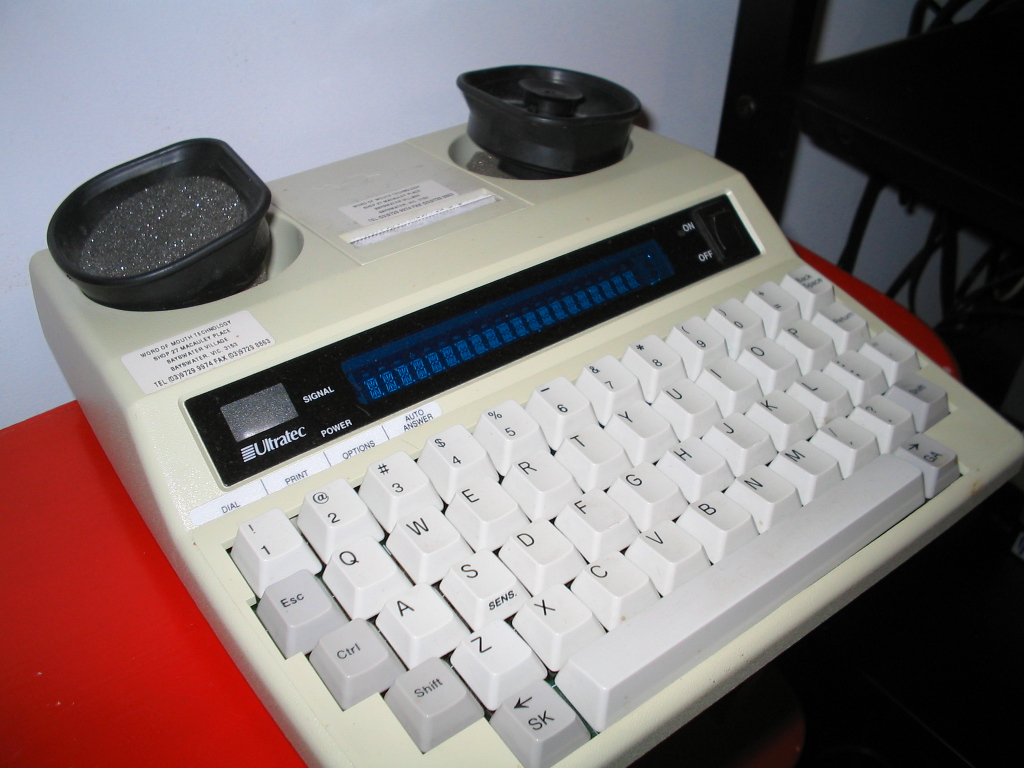
The teletypewriter (TTY) has been around for a long time. The first device came into being in 1964, developed by James C. Marsters and Robert Weitbrecht, both deaf. Their idea was to create a method for deaf individuals to communicate over the phone network in a textual manner. To this end, the group sourced teleprinters formerly used by the US Department of Defense, and hooked them up with acoustic couplers that would allow them to mate with the then-ubiquitous AT&T Model 500 telephone. Thus, the TTY was born. A user could dial another TTY machine, and key in a message, which would print out at the other end. The receiving user could then respond in turn in the same manner.

A Miniprint 425 TDD device. Note the acoustic coupler on top,  the VFD for displaying messages, the printer, and the SK and GA keys which automatically key in these regularly-used abbreviations. Credit: public domain

The early machine used simple frequency-shift keying to encode the characters of the alphabet and some basic control codes, allowing text messages to be sent back and forth via a regular analog telephone call. In the US, where the devices eventually became known as telecommunications device for the deaf (TDDs), the devices used an improved development of Baudot code (the USA-TTY variant of ITA-2) to send signals over the phone lines.

This involved representing characters with five bits, which was enough to cover the 26 characters of the English alphabet, plus 0-9 and a few control codes. Transmission rates were slow—typically just 45.5 to 50 baud. With a 5-bit code, this limited transmission to approximately 10 characters per second.

Advertisement
The sign on the left indicates a payphone with a TTY device attached. These were rare installs back in the landline era, and vanishingly few remain today. Credit: CC BY-SA 4.0

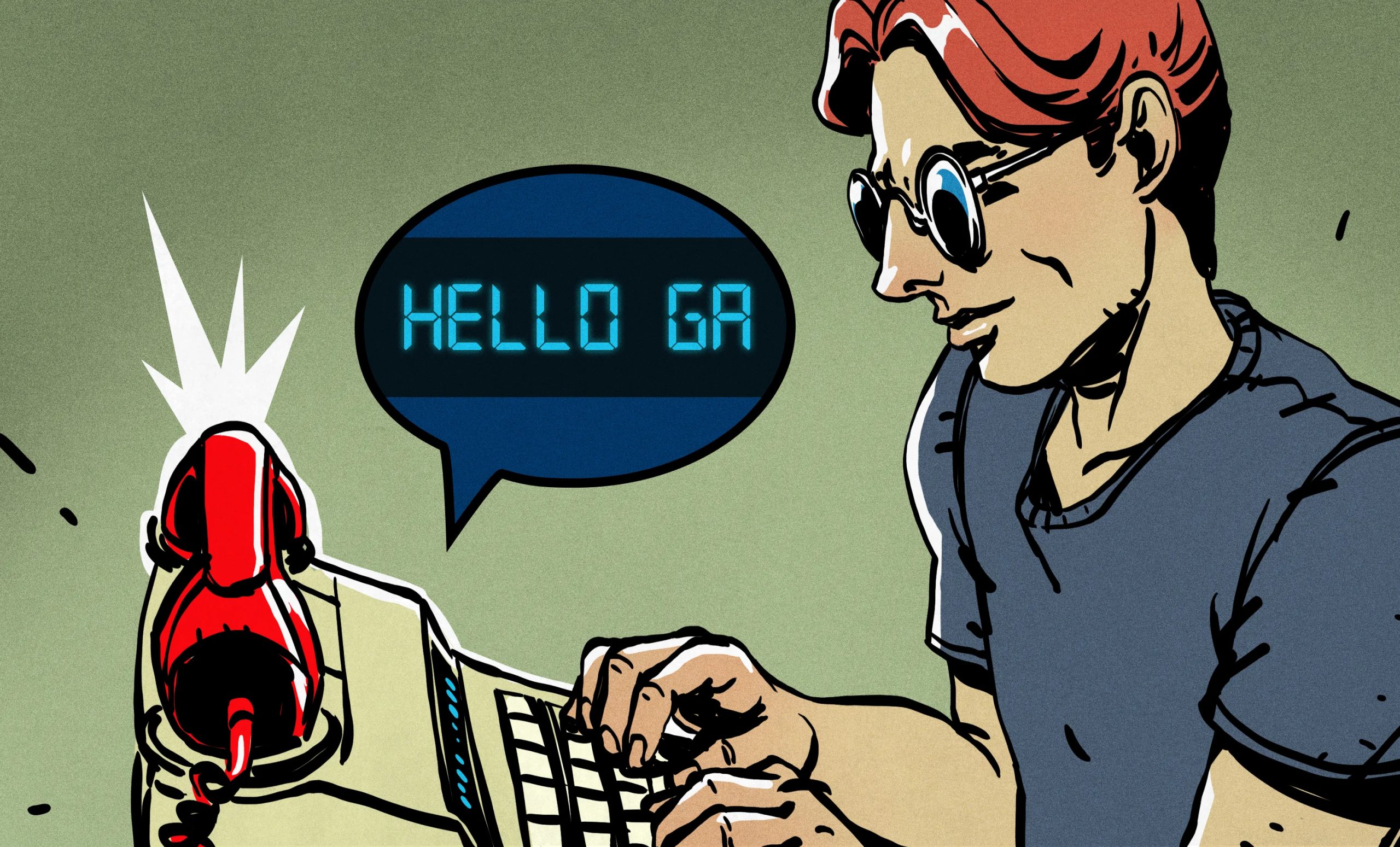
TTYs quickly caught on as a useful device for the deaf and hard of hearing, and developed its own norms similar to other textual telecommunications methods that came before. Users would key “GA” for “go ahead,” to indicate the other party could “speak” on the half-duplex link, as two users typing at the same time would lead to garbled messages. “SK” stood for “stop keying” to indicate the ending of a call. Abbreviations were common to save effort, such as “CU” (see you) and “TMW” (tomorrow).

Relay Service

At its heart, the TTY was a very useful device for allowing its users to communicate via textual means to others with compatible hardware. However, alone, a TTY could not allow a deaf user to communicate effectively with regular telephone users. To enable greater accessibility, many organizations developed telecommunications relay services.

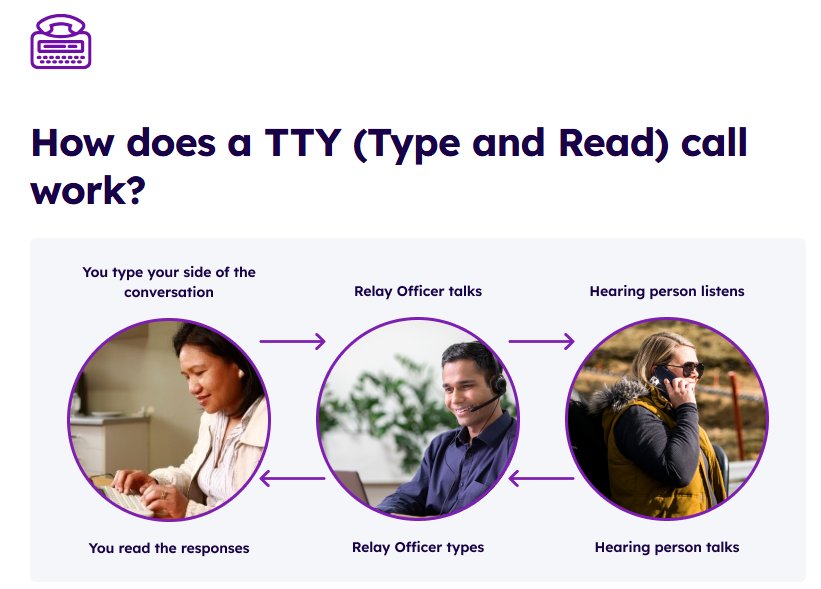
TTY machines led to the establishment of relay services that allowed deaf users to make regular phone calls with assistance from an operator. Credit: screenshot, Australian National Relay Service

These first existed as a number that deaf TTY users could call in order to connect to a human operator with their own TTY machine. This operator would place calls on behalf of the deaf individual, speaking on their behalf to other parties based on the deaf user’s inputs to their TTY device. In turn, the operator would key out the responses from the called party so the deaf individual could read back the conversation.

The first relay service was established by Converse Communications in Connecticut in 1974. The concept was quickly picked up by many other telecommunications operators around the world to provide an accessibility aid to those who needed it. These days, relay services still exist, though a great many relay services now operate over IP-based systems rather than via phone lines and TTY devices.

Hanging On

TTY still exists to some degree out in the world today. There are still subscribers with analog phone lines, and the basic TTY technology still fundamentally works over these links. However, the rise of SMS text messaging and widespread Internet connectivity have somewhat negated a lot of use cases for TTY technology these days. There have also been cases where digital upgrades to the phone network have made TTY operation more difficult, though some efforts have been made to ensure compatibility in some networks, particularly for emergency uses.

Ultimately, TTY was a technology that brought telecommunications access to a greater number of people than ever before. Like the landline phone and the fax machine, it’s no longer such a feature of modern life. However, it was an important link to the world for many in the deaf and hard of hearing community, and was greatly valued for the connection and accessibility it provided.

Advertisement

Source link

Continue Reading

Tech

Motorola RAZR Ultra 2026 Show Why Flip Phones Finally Feel Complete Again

Published

on

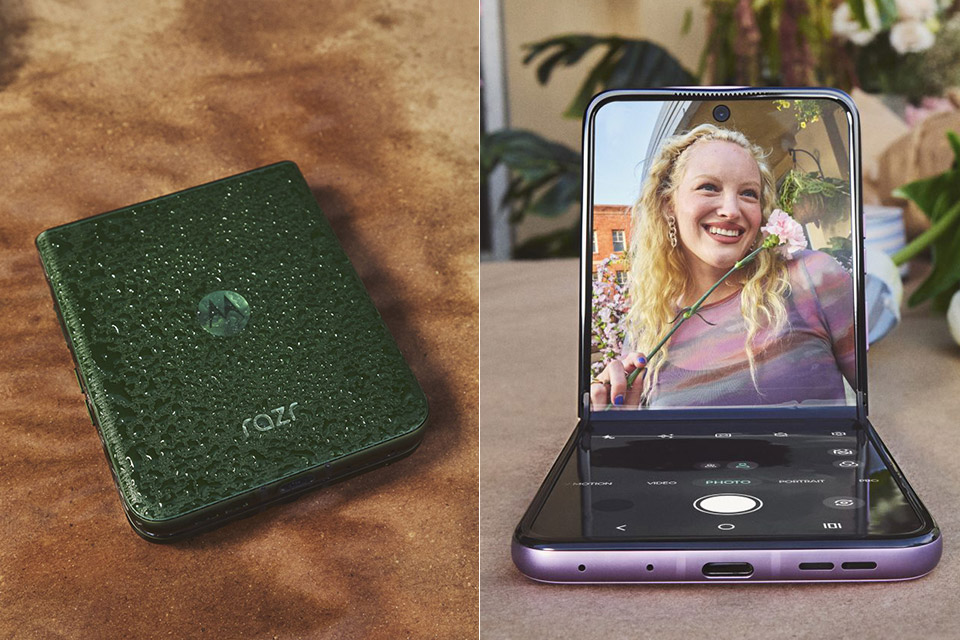
Motorola RAZR Ultra 2026 Foldable Flip Phone
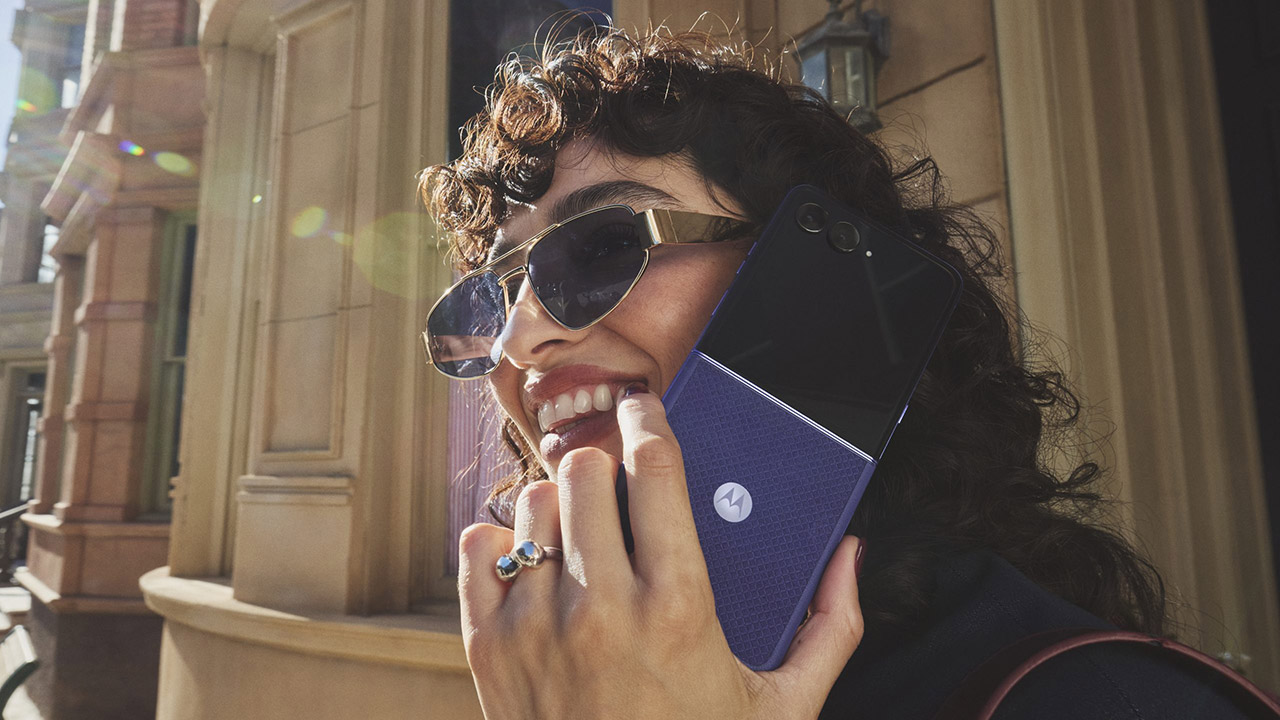
Spring brought three fresh flip phones from Motorola, and one rises above the rest in every measurable way.The Motorola RAZR Ultra 2026 takes the basic flip phone design and adds some completely sensible features that make carrying it around a joy.


From the time you pick it up, the RAZR Ultra 2026 has a very quality feel to it. There are various finishes available, including one in a stunning Pantone Orient Blue with a slight texture that catches the light, and the cloth is even imported from Italy. Another option is a natural wood veneer in a warm Pantone Cocoa tone, which gives the overall look a very unique, earthy feel. But whichever finish you choose, it’s all kept together by a pretty robust titanium-reinforced hinge designed to resist years of opening and closing. Don’t get me started on the glass, which has built-in drop protection and meets some major military standards for heat, cold, and humidity.

Sale


Samsung Galaxy S26 Ultra, Unlocked Android Smartphone, 256GB, Privacy Display, Galaxy AI, AI Camera…
  • PRIVACY DISPLAY: Automatically hide your screen from those beside you. The built-in privacy display can be preset¹ to turn on when receiving…
  • TYPE IT IN. TRANSFORM IT FAST: Enhance any shot in seconds on your smartphone by using Photo Assist² with Galaxy AI.³ Add objects, restore details…
  • NIGHTS, CAPTURED CLEARLY: From gigs to city lights, record and capture moments after dark with clarity using Nightography so your photos and videos…

The screens on both sides are the real deal, with the brightness and speed you’d expect from a high-end smartphone. When you open it, you’ll see a stunning seven-inch screen that just lights up with color and brightness and is silky smooth to scroll around. To top it all off, it’s bright enough to be read in direct sunshine. Close it, and the four-inch exterior display takes over, which is more than enough to keep track of messages, notifications, and even whole apps without having to unlock the phone. Simply hover your palm over the top and the screen will come to life, or fall to sleep if you like. If you need to accomplish something quickly, simply give the phone a voice command and it will take care of it.

Advertisement


Under the hood, the RAZR Ultra 2026 is extremely well-specced, with a strong Snapdragon 8 Elite processor, 16GB of RAM, and a whopping 512GB of storage, allowing you to jump between programs in the blink of an eye while still having enough of memory for all your games and videos. The battery life is the best in class, with 5,000mAh and over 36 hours of mixed use from a single charge. If you need a charge, simply plug it into the 68w charger for a full day’s worth of juice in eight minutes, or leave it on the 30w wireless charger overnight and it will take care of itself.

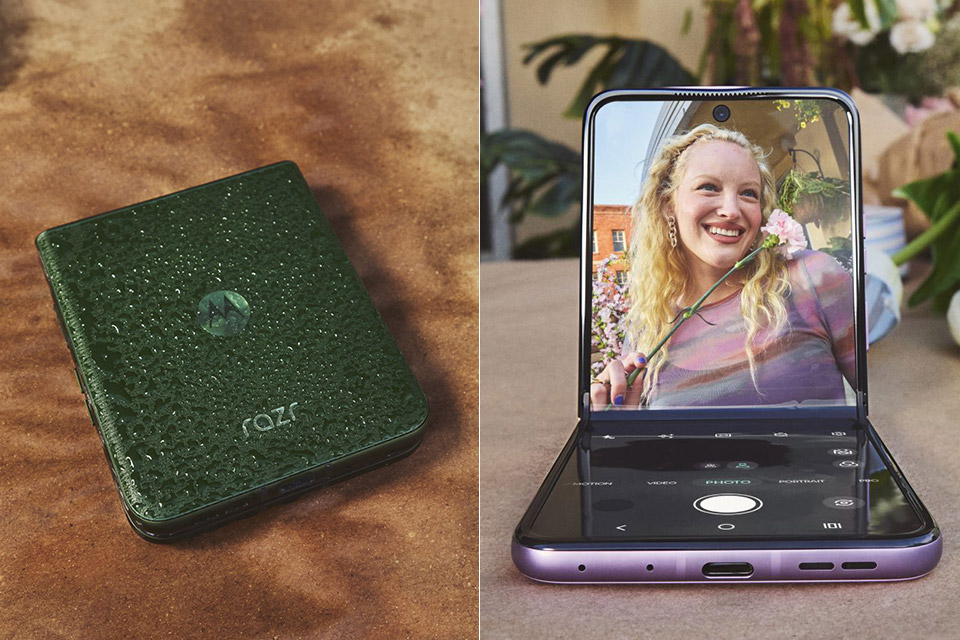
Motorola RAZR Ultra 2026 Foldable Flip Phone
Finally, there are three fifty-megapixel lenses to play with, so whether you’re attempting to record a bright sunset or a dark room, they’ll still catch all of the detail, plus there’s a super-wide shot for landscapes and a macro mode for microscopic subjects up close. The front camera is also impressive, with automatic framing adjustments to ensure you always get the perfect group image. Then there’s the AI, which helps out without complicating matters. Want to zoom in on a specific subject in a video? Simply rotate the phone as if it were an antique video camera. Want a group shot in which everyone looks their best? Just let the AI handle it. If you consistently utilize the same editing styles, the system will learn your tendencies and automatically apply them to new photographs.

Motorola RAZR Ultra 2026 Foldable Flip Phone
Preorders begin on May 14th for $1,499.99 at all major retailers and on the Motorola website, with unlocked phones available on May 21st. In other regions of the world, the device is called as the Razr 70 Ultra with similar timing.
[Source]

Source link

Advertisement
Continue Reading

Tech

What to get the mom who says she doesn’t need anything

Published

on

This post is brought to you in paid partnership with SKG

Buying a meaningful Mother’s Day gift is harder than it sounds, and most of the usual options don’t hold up beyond the day itself. The SKG G7 Pro Fold 3.0 neck massager and the SKG W9 Ultra 2.0 lower back massager, engineered for daily, intelligent recovery, are a different kind of gift. Both are 15% off from April 25th to May 8th, both are built around daily use rather than novelty, and both address the kind of neck and back discomfort that tends to build up quietly over years of desk work, commuting, and everything in between.

Mother’s Day gifts at a glance:

SKG G7 Pro Fold 3.0 Neck Massager: $199.99 $169.99

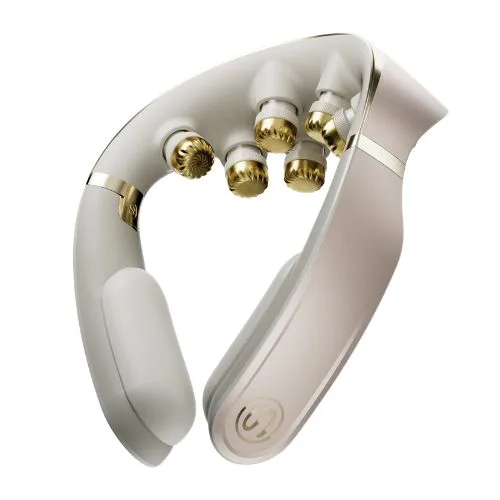
The SKG G7 Pro Fold 3.0 is the definitive upgrade for daily neck care. The nine independent floating massage heads are coated with TiN-treated 316L stainless steel, which gives them a matte gold finish and a durability advantage over plastic-headed competitors, while remaining hypoallergenic and incredibly gentle on the skin. The heads move independently to maintain contact across different neck shapes, delivering a targeted, human-like massage.

The heating system pairs 640nm red light with 850nm near-infrared across four heat levels, covering the kind of deep tissue warmth that superficial heat pads don’t reach. Beyond surface-level relief, the device integrates a dual-pulse system that combines TENS and EMS technologies. By delivering 4-7 kHz mid-frequency pulses, it actively bypasses the skin to stimulate deeper muscle layers, effectively blocking pain signals and accelerating real recovery. These technologies power eleven distinct massage modes, all seamlessly managed through intuitive app control. Rather than fumbling for buttons behind her neck, she can easily adjust heat levels, fine-tune pulse intensity, or select the app-exclusive “Dopamine Tech” mode directly from her smartphone, while the 2,400mAh battery delivers up to 140 minutes of use between charges.

Advertisement

What makes the SKG G7 Pro Fold 3.0 neck massager particularly well-suited as a gift is the foldable design. Weighing just 0.6 pounds and folding down smaller than popular over-ear headphones like the AirPods Max, it slips easily into a daily tote or carry-on, making recovery accessible on a long flight, at the office, or on the sofa. Its first generation won the German iF Design Award in 2024, which speaks to the care in the industrial design as much as the functionality. As a bonus, it also arrives in packaging that reads like a considered present rather than a last-minute purchase.

SKG W9 Ultra 2.0 Lower Back Massager: $199.99 $169.99

Where the G7 Pro Fold 3.0 targets the neck, the SKG W9 Ultra 2.0 addresses the lower back with the same commitment to intelligent recovery. The wearable belt wraps around the lumbar region and delivers kneading through eight TiN-coated titanium heads, each mimicking the layered pressure of a hand massage rather than the flat vibration that cheaper belts rely on. A mid-frequency pulse combines TENS and EMS technologies to bypass the surface and stimulate deeper muscle layers, effectively blocking pain signals and accelerating lumbar recovery.

The dual-spectrum light system runs 11 near-infrared emitters alongside 31 red light sources across a 20,000mm² heating zone, which is a meaningfully larger coverage area than most competing back massagers offer. Three temperature levels can run independently or in combination with the kneading function, and eight independently controlled zones let you focus on exactly where the discomfort sits rather than treating the entire back as a single area.

The W9 Ultra 2.0 runs cordlessly for up to 100 minutes on a single charge and comes equipped with a dedicated remote control. It also has a 30cm extension strap so it can comfortably fit different waists. This thoughtful design makes it genuinely wearable during everyday activity. It charges via USB-C and can be worn discreetly under clothing, which makes it as practical during a workday as it is during a recovery session after exercise. Plus, whether she uses the included remote or the companion app on her phone, she can fine-tune settings instantly—no reaching for hidden buttons required.

Why they make good Mother’s Day gifts

Both the SKG G7 Pro Fold 3.0 neck massager and the W9 Ultra 2.0 lower back massager are designed to be used daily. That’s what separates a useful gift from one that ends up in a cupboard after a few weeks. Neck and back tension are among the most common physical complaints for people who spend significant time at a desk or on their feet, and both devices address those complaints with technology that goes beyond what a heating pad or standard massage cushion can offer.

Advertisement

At $169.99 each during the Mother’s Day sale, they hit that sweet spot of high-end tech and profound personal care. Choose one for targeted relief, or bundle both for the ultimate wellness package. (Make sure to grab the 15% discount before the promotion ends on May 8th.)

The gift that gets it right

If you’re looking for a Mother’s Day gift that holds up well past the occasion itself, the SKG G7 Pro Fold 3.0 neck massager and the SKG W9 Ultra 2.0 lower back massager are both worth serious consideration. The neck massager covers travel and desk use with a foldable design and deep tissue heat, while the back massager wraps around the lumbar region with targeted kneading and infrared therapy. Either one makes a considered gift; both together make a complete one.

If you’re looking to introduce her to intelligent active recovery at a different price point, SKG offers a complete ecosystem of wellness devices. They deliver the brand’s signature targeted relief and smart features, ensuring you can find the perfect, thoughtful gift no matter your budget.

Advertisement

Source link

Continue Reading

Tech

Microsoft Is All-In on Agentic AI and Vibe Coding Now That It’s ‘Working’

Published

on

During Microsoft’s latest earnings call on Wednesday, CEO Satya Nadella perhaps unintentionally summed up the current state of the company’s massive agentic AI push.

AI Atlas

“It sort of didn’t work until it started working,” Nadella said, referencing the Agent Mode feature in Microsoft Excel, “and that’s just because the model showed up.”

Agent Mode, a feature that uses AI to create and edit Excel workbooks in tandem with your actions, is now the default mode for Microsoft 365 Copilot and Premium subscribers in Excel, Word and PowerPoint as of last week. He said Microsoft’s investments in its AI infrastructure gave the company the usage capacity to implement the model that worked.

Advertisement

(Nadella used the term Agent Mode, but officially, Microsoft has retired that term, preferring the simpler “edit with Copilot.”)

That capacity played a big role during the earnings call, as Microsoft shifts toward charging customers for how much they use the AI, not just for access licenses. “We have a structural position in knowledge, work, coding [and] security,” he said. “And then you couple that with the right business model… which is user plus usage.”

Nadella said nearly 90% of Fortune 500 companies now have active agents built with “our low-code/no-code tools,” and the company is seeing its Copilot Credit consumption nearly double quarter-over-quarter as customers employ custom agents tailored to their workflows.

There was also a significant milestone, Nadella said: Microsoft Bing, the company’s 17-year-old search service, reached 1 billion active monthly users for the first time.

Advertisement

Usage pricing comes to GitHub

Nadella frequently mentioned GitHub, the software development platform that Microsoft purchased in 2018, as another standout. Starting June 1, GitHub Copilot is moving to a usage-based pricing model.

The number of enterprise subscribers on the platform has nearly tripled year-over-year, he said, with nearly 140,000 organizations now using GitHub Copilot.

Every GitHub Copilot plan will include a monthly allotment of GitHub AI Credits. According to the GitHub blog, “Usage will be calculated based on token consumption, including input, output and cached tokens, using the listed API rates for each model.”

Microsoft announced $82.9 billion in revenue for the quarter, an 18% increase from the previous year’s third quarter, during the period from January to March. Capital expenditures are expected to rise to over $40 billion to build out more capacity for AI tools — including massive data centers.

Advertisement

Source link

Continue Reading

Tech

Why Savvy Gamers Are Embracing Digital Marketplaces for Gear and Games

Published

on

Waiting in line for a midnight game release or scrambling to find a sold-out gaming headset at your favorite electronics store feels far less appealing in a world where instant digital access is just a click away. Today’s gamers are done chasing physical stock and juggling dozens of store accounts. Instead, they’re seeking out a more streamlined, cost-effective way to buy gear and titles, often without ever leaving their chair.

Digital marketplaces have exploded in popularity among gaming enthusiasts aiming to make every dollar and minute count. For those new to this shift, sites like Eneba.com have made a strong mark by combining everything from rare peripherals to discounted digital game codes in one convenient space. With fierce competition driving prices lower and generous selection on offer, these platforms now rival traditional game shops, yet offer far more flexibility, whether it’s a late-night shopping urge or a flash sale on the latest blockbuster.

While there are plenty of options to buy digital games online, many in-the-know buyers gravitate toward platforms like Eneba for several reasons. Eneba stands out by offering instant access to game keys, which allow players to redeem titles directly on platforms such as PlayStation, with no disc or shipping required. This gives buyers more choice and frequently better prices than traditional platform stores, while an enormous catalog and up-front global or region-locked information make for transparent shopping. Plus, with verified sellers and robust marketplace controls, the risk of counterfeits drops markedly. Beyond game keys, Eneba also features gift cards for services like Xbox, PSN, and Steam, meaning players can top up accounts and snag games or content of their choice, skipping the hunt for specific game keys.

The Big Draws: Price, Speed, and Selection

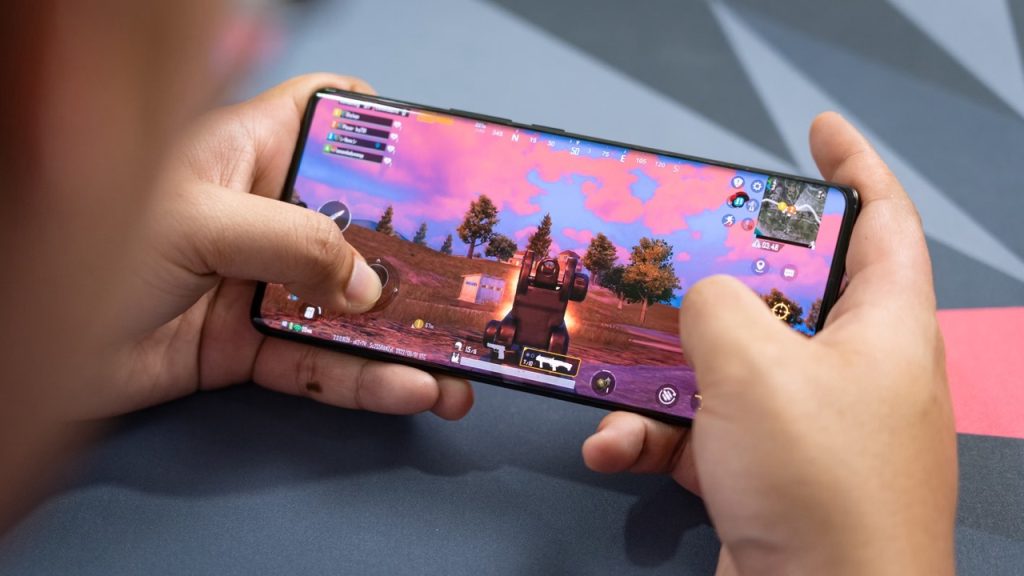
Image of a person playing BGMI
Amanz/Unsplash

What drives players to trust digital marketplaces over the tried and tested big-name stores? Savings are a major factor: prices for both hardware and digital game keys can dip well below official retailer listings. Flash sales or limited-time discounts mean buyers can seize deals at odd hours, no camping out, no extra fees for international shipping.

But it’s not just the cost that wins people over. Instant access is non-negotiable for gamers who want a new release the second it drops, or need to replace a mic in time for tonight’s match. Digital codes and direct-to-home shipping let buyers skip wait times entirely. On top of that, curated stock and real-time availability mean less hunting around, which saves effort. Every moment not spent scrolling is one more minute playing.

Advertisement

Security and Transparency Keep Gamers Loyal

A son and dad gaming

Skepticism around digital goods is only natural when you’re entering codes worth fifty or even a hundred dollars. Digital marketplaces have worked hard to build trust by publishing clear security guarantees, requiring third-party merchant verification, and setting strict standards for compliance and sourcing. Buyers know that when issues arise, support teams are ready to step in, a far cry from faceless classified ads or auction sites.

Transparency is a dealbreaker for many. Region-locked codes? Out-of-stock hardware? Sites that label everything clearly and show purchase history on demand find it easier to retain picky shoppers. Gamers remember who wasted their time and who made the experience simple.

Flexibility for Modern Gaming Lifestyles

Physical games and hardware still have a place, but the digital approach caters to how gamers actually live and play. Swapping consoles with friends, jumping from PC to mobile, and redeeming codes while traveling all become easier with digital ownership. The global reach of digital marketplaces makes it possible to find rare or region-specific gear and content not available locally.

With the cycle of new releases and old favorites never ending, staying ahead of the next hot thing is less stressful when your shopping list can be satisfied in one place. Digital marketplaces like Eneba, offering deals on all things digital, continue to reshape how players discover, buy, and enjoy what they love most.

Source link

Advertisement
Continue Reading

Trending

Copyright © 2025